The family Sabiaceae consists of trees, shrubs, and sometimes climbing woody plants. Leaves are alternate, simple or pinnately compound, and lack stipules. They produce cymes or racemes, sometimes panicles. Flowers are usually bisexual, sometimes unisexual, and bilaterally symmetrical. Sepals are 2-5, sometimes fused at the base, and arranged in a tile-like pattern. Petals are 4-5, fused at the base. Stamens are (3-)5, opposite the petals, and have legs. The ovary is superior, with 2-3 carpels. Fruits are berries or dry fruits. Seeds are solitary in each chamber and lack endosperm. In the APG IV system, they belong to the Proteales order along with the Nelumbonaceae, Platanaceae, and Proteaceae families. There are approximately 50 species in 3 genera worldwide. In Japan, there are 8 species in 2 genera (Sabiaceae and Sabiaceae).
This article provides a comprehensive, field guide-style introduction to plants belonging to the Melia family.
The basic information is based on the Kanagawa Prefecture Flora Survey Association (2018). Photos are replaced as better ones become available. While the identification is done by the author, please note that misidentifications may be corrected without notice.
No.1315 Meliosma rigida
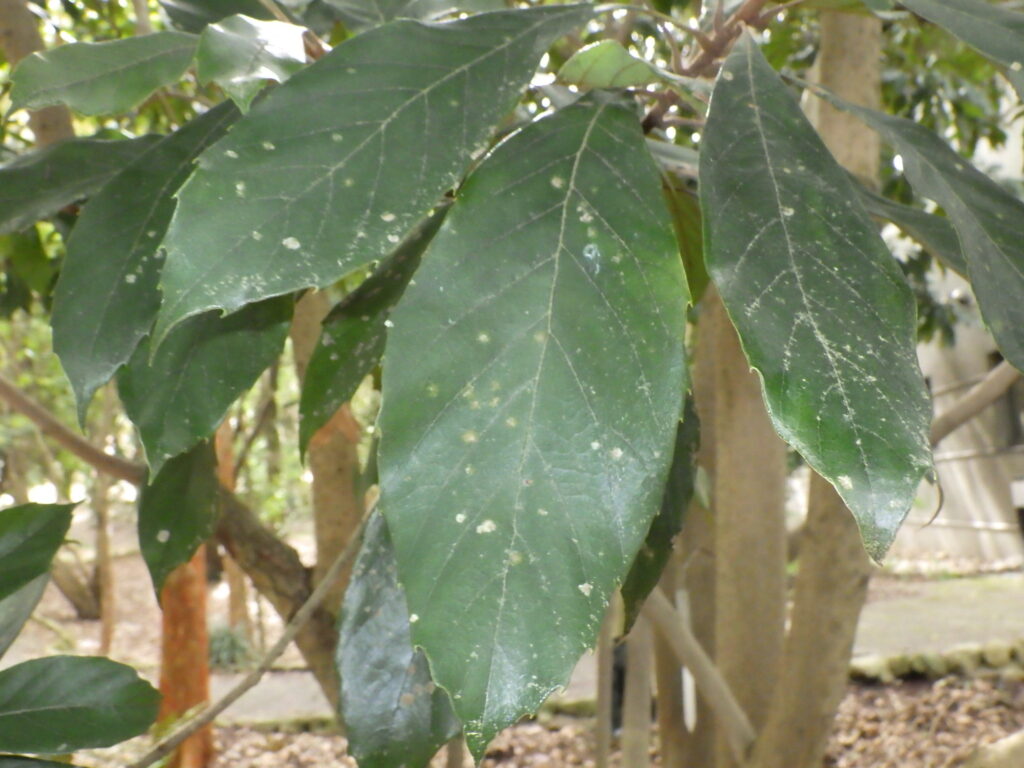
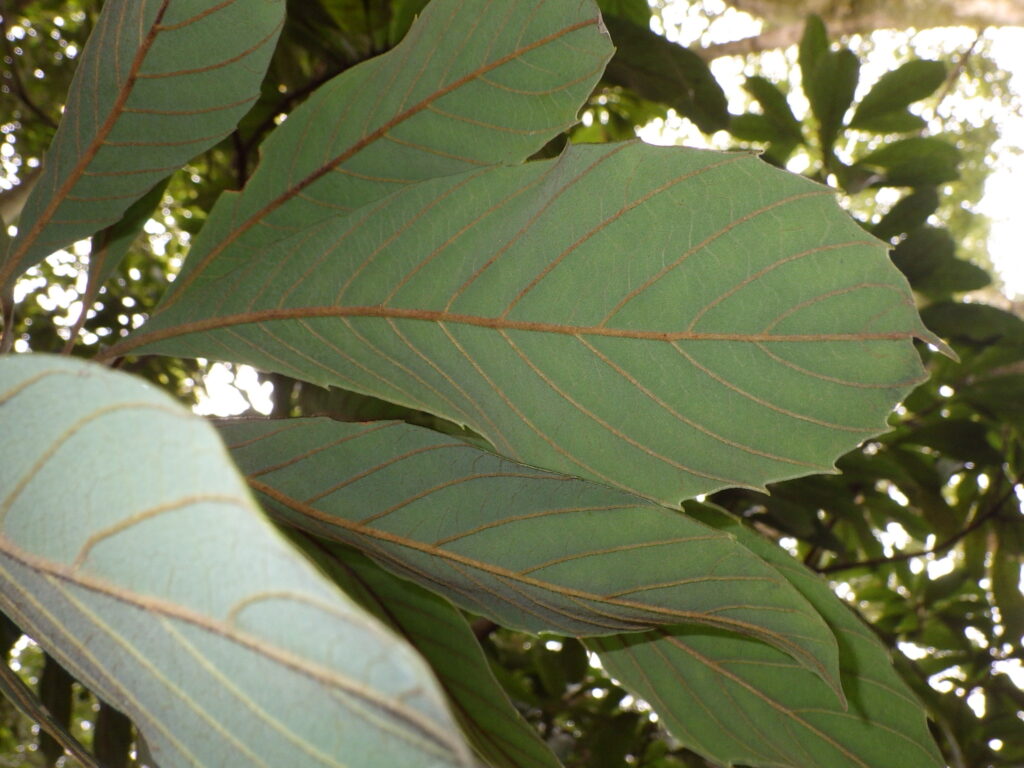
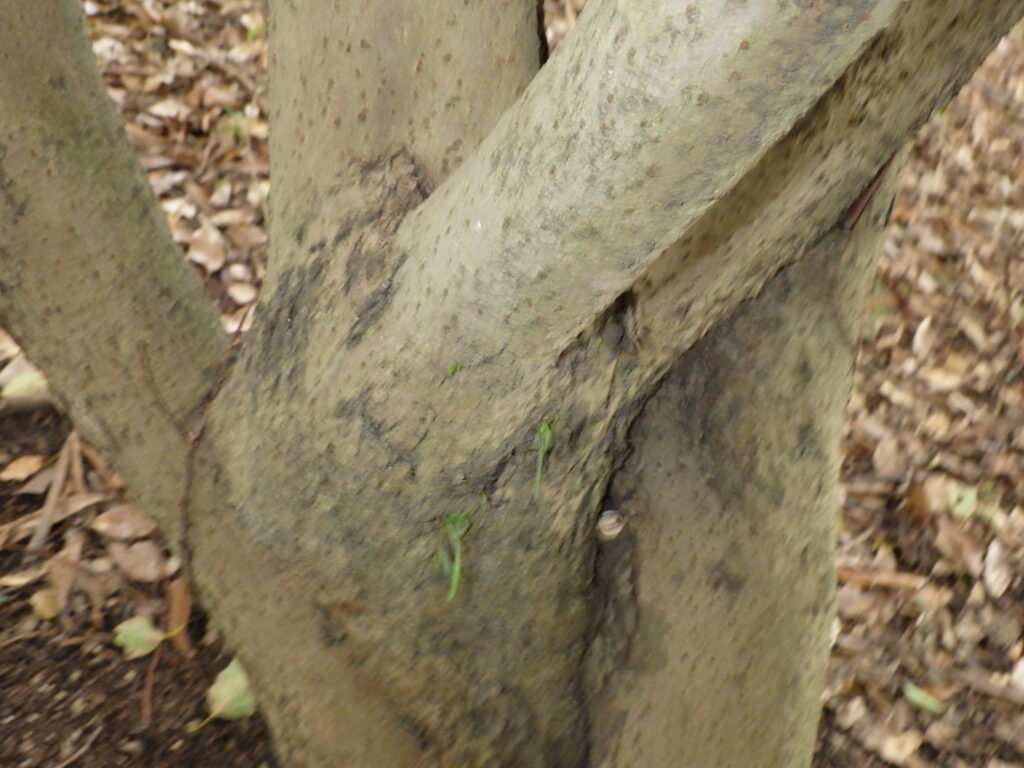
This is an evergreen small tree (Satake, 1999). Its Japanese name means "mountain loquat," due to the resemblance of its leaves to those of the loquat tree. It reaches a height of 7m. The bark is reddish-brown and smooth. Young branches, inflorescences, petioles, and the undersides of leaves are densely covered with reddish-brown downy hairs. The leaves are alternate and somewhat clustered, with petioles 2-4cm long, and leaf blades that are narrowly oblanceolate to oblanceolate, sometimes oblanceolate-elliptic, with a sharply pointed tip and a gradually tapering base towards the petiole, reaching 12-22cm in length, up to 30cm in larger cases, and 3-7cm in width. The leaves are leathery in texture, with coarse serrations along the edges, the tips of which protrude like awns, but are sometimes inconspicuous. There are 10-16 pairs of lateral veins; the upper surface is hairless and glossy, but the underside clearly shows even the fine veins. It flowers in June. It produces large conical inflorescences at the tips of its stems. The inflorescences are 10-20 cm long, with white flowers 4-6 mm in diameter, pedicels 2 mm long, and brown hairs covering the pedicels and sepals. There are 5 sepals, smaller than the larger petals. There are 5 petals; the three outer ones are large, broadly ovate, 2-3 mm long, and open wide when in bloom. The two inner ones are small and vestigial. There are 2 stamens and 3 staminodes, oblong, 2 mm long. The drupe is spherical, 6-7 mm in diameter, initially red, and later ripening to blackish-purple. It is distributed in Honshu west of the Kii Peninsula, Shikoku, Kyushu, the Ryukyu Islands, Taiwan, and China, growing in mountainous areas and evergreen broad-leaved forests.
References
Satake, Yoshisuke. 1999. Wild Plants of Japan (New Edition, Woody Plants 1). Heibonsha, Tokyo. 321pp. ISBN: 9784582535044