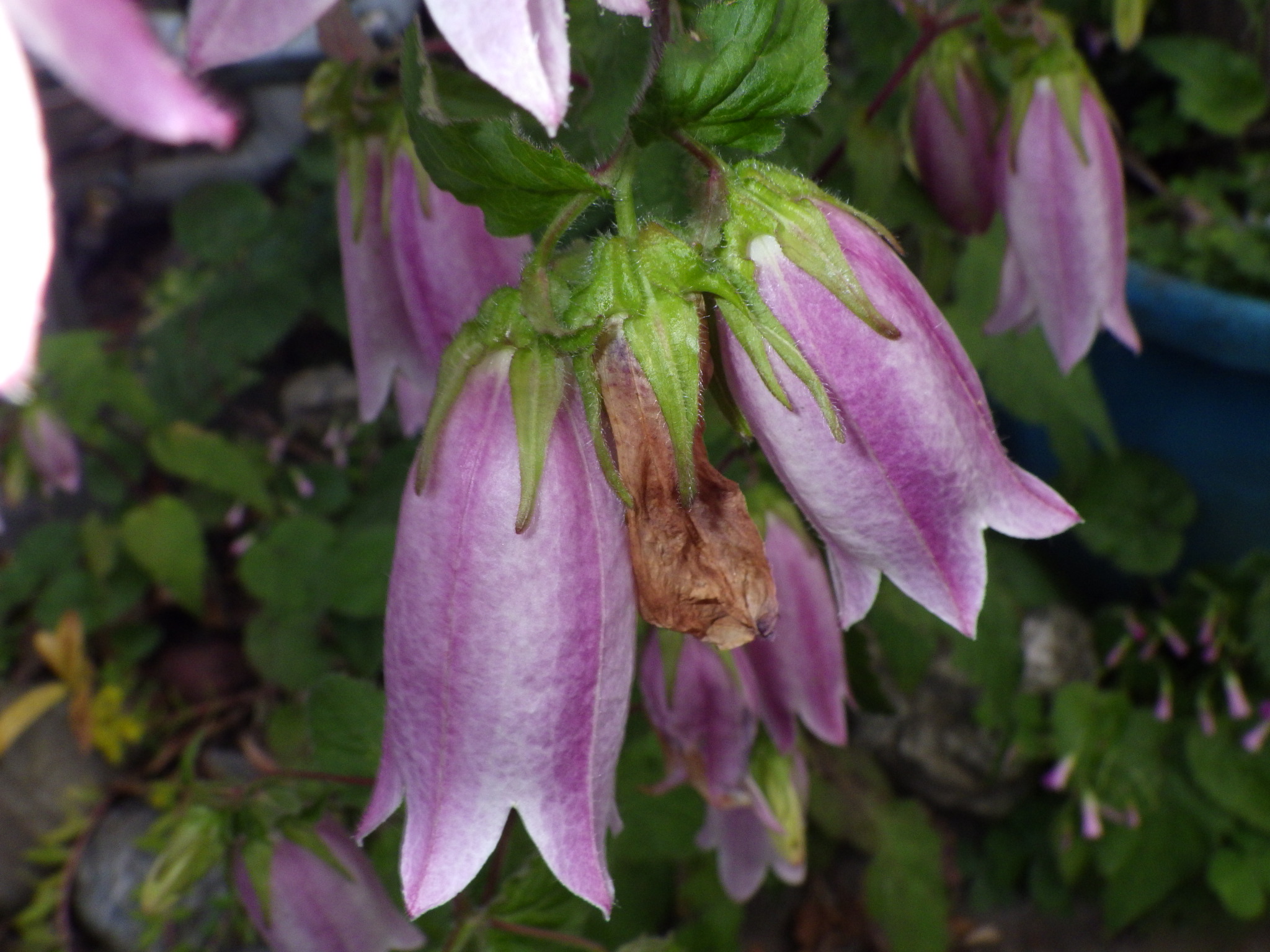
Both Campanula punctata and Campanula punctata are perennial herbs belonging to the genus Campanula in the family Campanulaceae, and are very familiar plants in Japan, both as wildflowers and cultivated species. They are classified as the same species, differing only at the variety level. Their flower shapes are identical, with a urn-shaped corolla ranging from white to reddish-purple, making them difficult to distinguish. However, they can be reliably differentiated by examining the reflexed appendages between the sepals. They are completely different in flower orientation and shape from Campanula punctata, also known as "bellflower" or "bellflower." The urn-shaped flowers are not visited by fireflies, but almost exclusively by one species of bee, the bumblebee (Bombus ignitus). The inside of the flower is lined with hairs, which the bee uses as a foothold to enter, and pollination occurs when pollen gets on its back or touches the stigma of the pistil. The fruit is a capsule that, when ripe, scatters tiny seeds like dust, which are dispersed by the wind. Some even cross the ocean. This article will explain the classification, morphology, pollination ecology, and seed dispersal of Campanula punctata and Campanula punctata.
- What are Campanula punctata and Campanula punctata?
- What is the difference between Campanula punctata and Campanula punctata?
- What is the variety of bellflower?
- What is the difference between this and Campanula bellflower?
- What is the structure of a flower?
- How is pollination done?
- What is the structure of the fruit?
- What are the seed dispersal methods?
- References
What are Campanula punctata and Campanula punctata?
Campanula punctata var. punctata, also known as the bellflower (or bellflower), is a perennial herb distributed in Hokkaido (southwestern part), Honshu, Shikoku, and Kyushu in Japan; as well as in Korea and China. It grows in grasslands, forest edges, bright forest floors, collapsed bare ground, and stone walls from lowlands to mountainous areas (Kanagawa Prefecture Flora Survey Association, 2018). It prefers relatively lowlands. It also grows in urban areas and is cultivated for ornamental purposes.
Campanula punctata var. hondoensis, also known as mountain bellflower, is a perennial herb distributed in Honshu, Japan (southern Tohoku region to Kinki region), growing in hilly and mountainous areas. It prefers relatively high altitudes.
There are two theories regarding the origin of the Japanese name: one suggests it comes from the fact that children used to play by putting fireflies inside the bag-like flowers of this plant, and the other suggests it means "firefly bag," referring to a paper lantern.
Both are perennial plants belonging to the genus Campanula in the family Campanulaceae, and are very common plants in Japan. In addition to growing as wildflowers, Campanula punctata in particular is cultivated for ornamental purposes, so it is often seen even in urban areas. However, distinguishing it from Campanula punctata var. japonica can be difficult. Campanula punctata and Campanula punctata var. japonica are classified as the same species, with only differences at the variety level. The characteristics of their corollas, which are urn-shaped and white to reddish-purple in color, are exactly the same, and no differences have been found in the shape of their leaves.
What is the difference between Campanula punctata and Campanula punctata?
The difference between Campanula punctata and Campanula punctata is slight, but they can be clearly distinguished when they are in bloom.
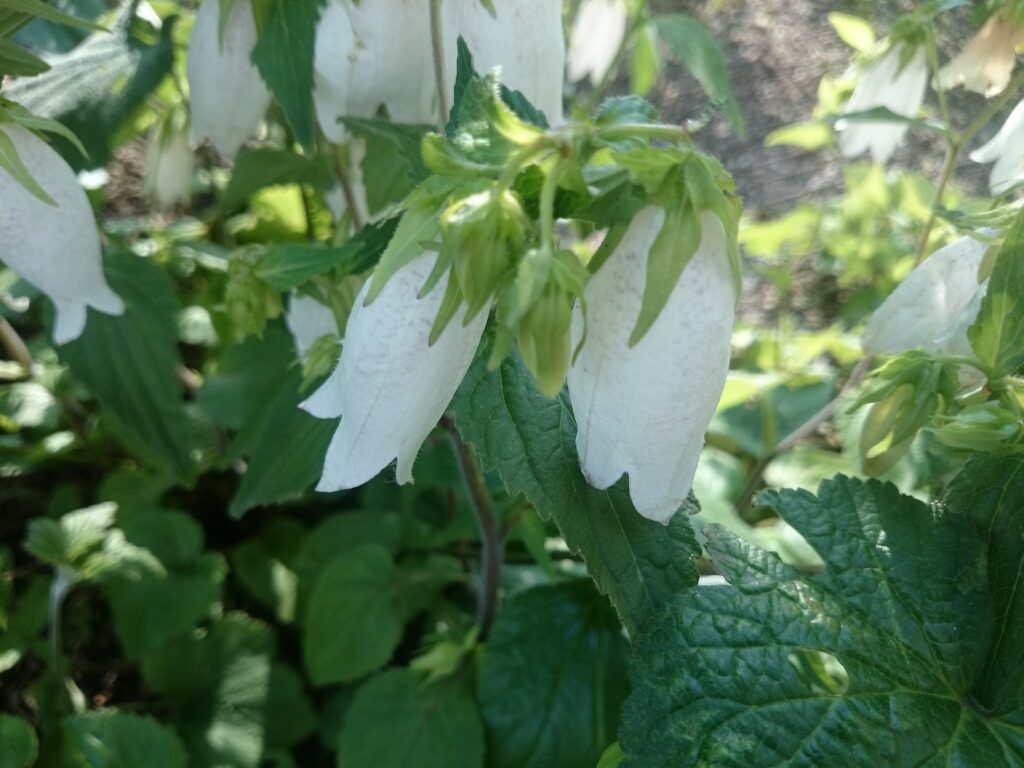
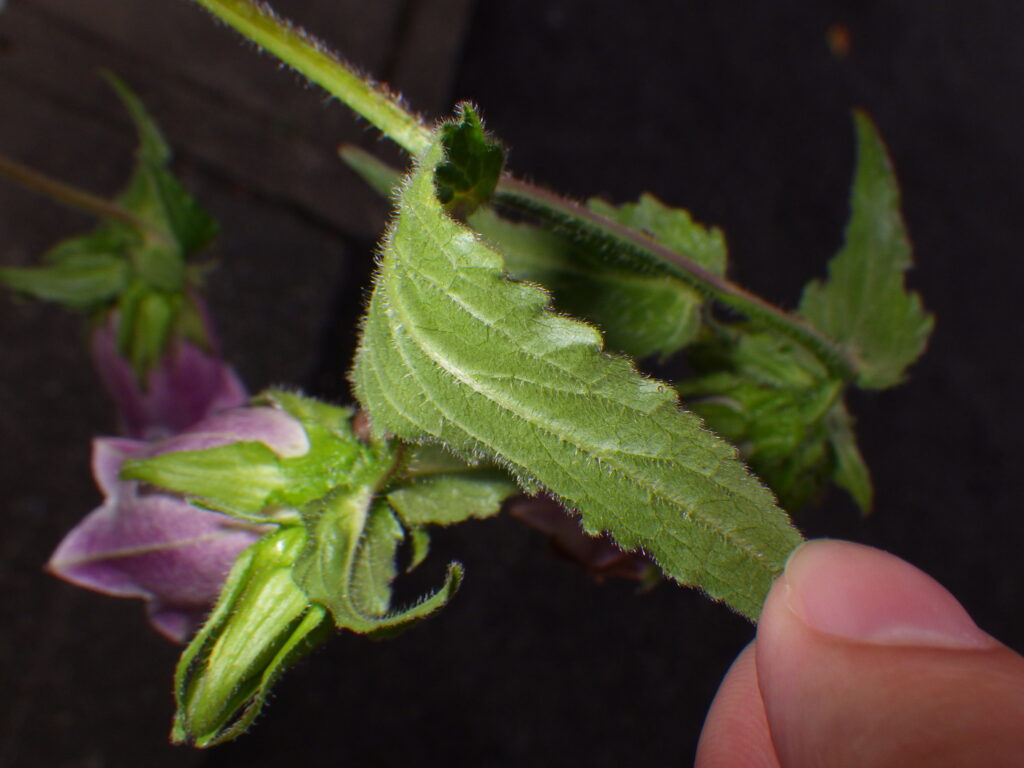
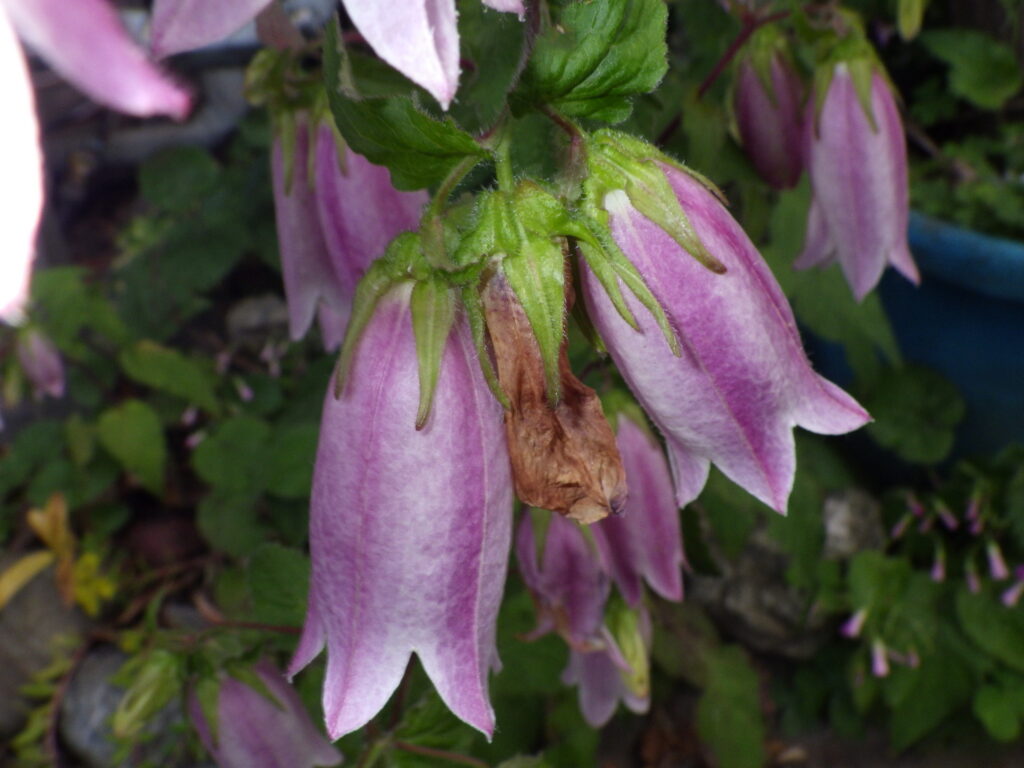
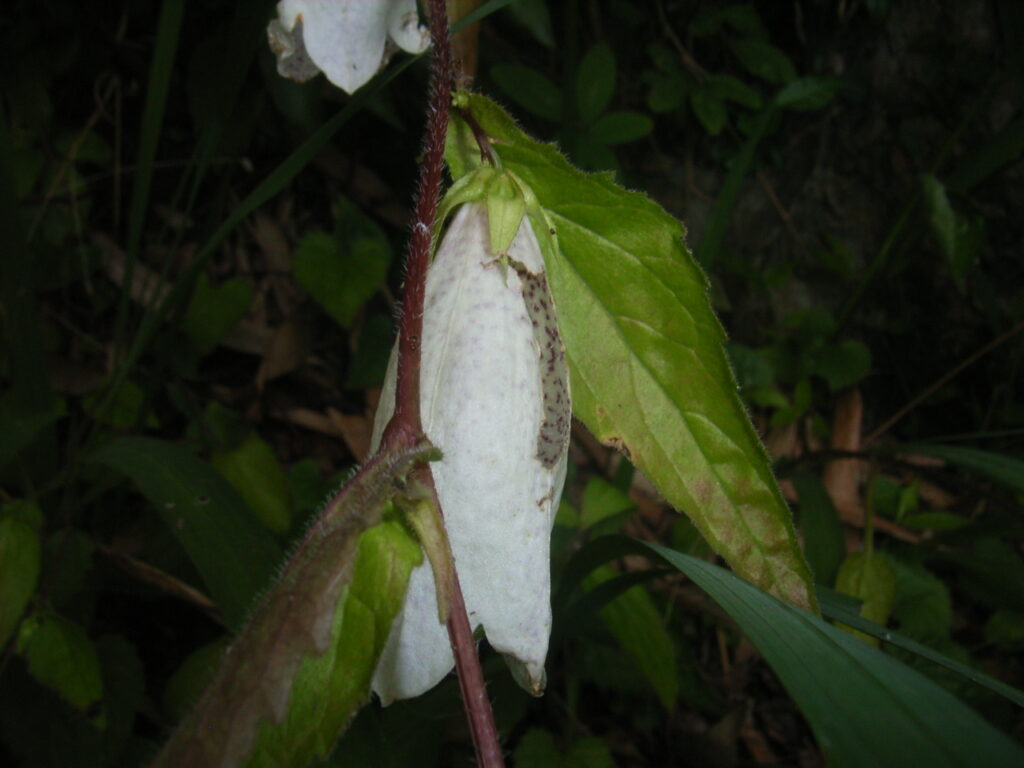
Specifically, the difference is that Campanula punctata has reflexed appendages between the calyx lobes, while Campanula punctata does not.
The expression "curved appendages" is used in various botanical guides, but it may be difficult to understand. In other words, it means that there is a curved part between each of the sepals (each individual sepal).
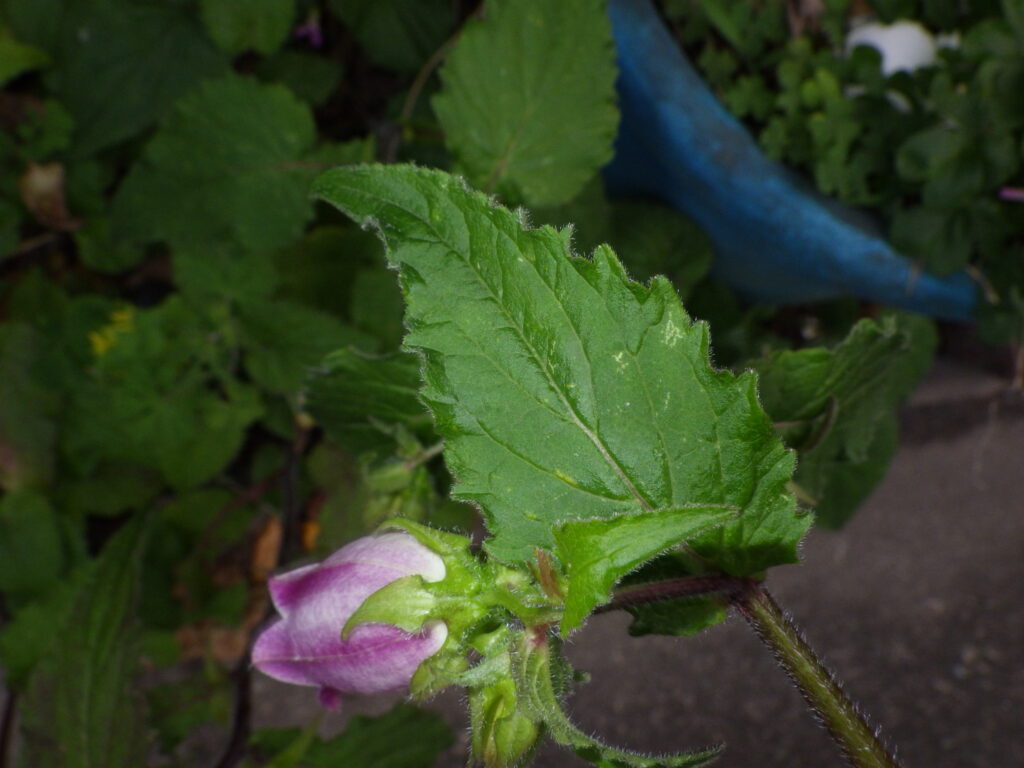
It's obvious from the photo, so please take a good look at the shape of the calyx.
Furthermore, while the seeds of Campanula punctata have almost no wings, those of Campanula punctata have narrow wings.
This point might be difficult to observe, but it would be interesting to take a look if you have the time.
Regarding habitat, while Campanula punctata is more common in lower elevations and Campanula punctata is more common in higher elevations, their distributions often overlap, so this should only be considered as a general guideline. It is safe to assume that most plants cultivated in urban areas are Campanula punctata, but it is best to confirm their morphology for certainty.
What is the variety of bellflower?
Several varieties of Campanula are known.
There are several varieties of Campanula punctata, including Campanula inpunctata f. inpunctata, which has flowers without spots; Campanula lucida f. lucida, which has glossy leaves; and Campanula rubriflora f. rubriflora, which has purple flowers.
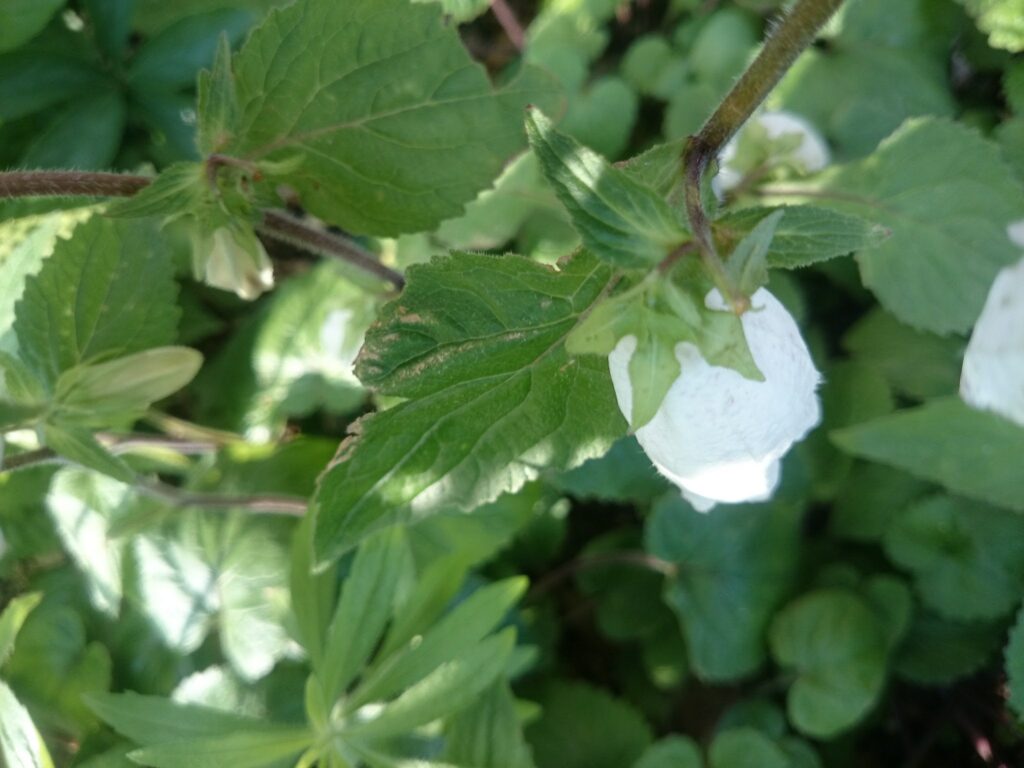
There is a variety of Campanula punctata called f. albiflora, which has white flowers.
While both Campanula punctata and Campanula punctata have flower colors that vary from white to reddish-purple, the wild species of Campanula punctata is said to have white flowers, while the wild species of Campanula punctata is said to have purple flowers, which can be a bit confusing. This is related to the order in which they were scientifically described.
Other species, such as Campanula microdonta (a different species) found in the Izu Islands and Campanula takeshimana (a different species) found on Takeshima Island, are also known.
What is the difference between this and Campanula bellflower?
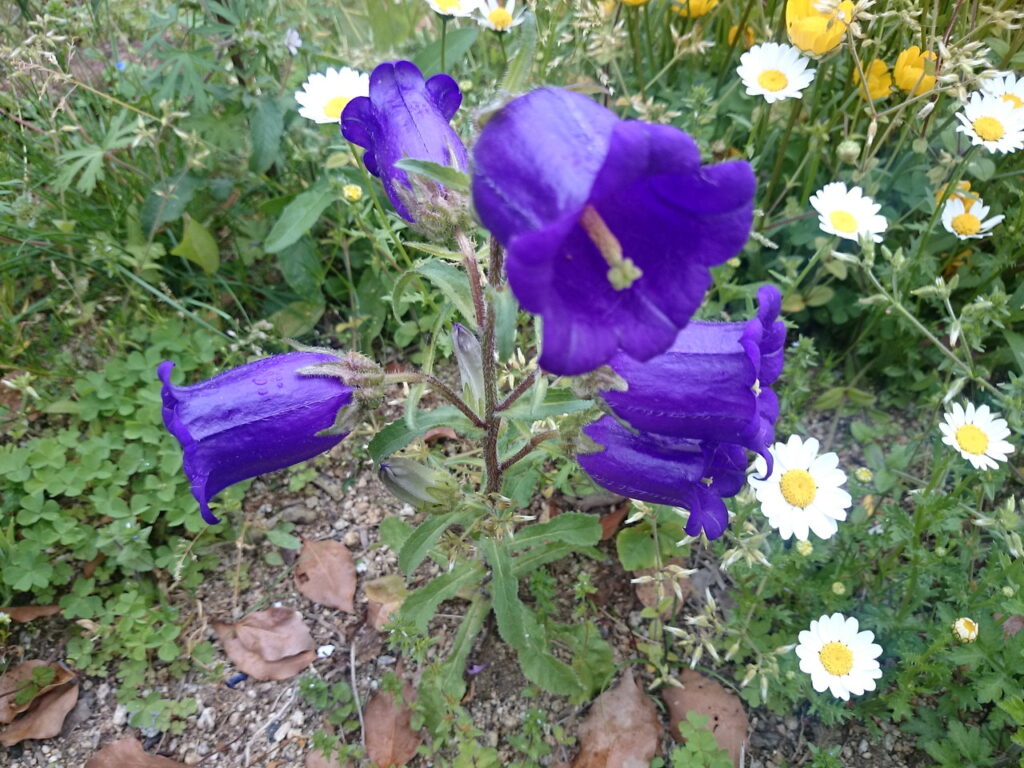
In horticulture, various introduced species such as Campanula medium are cultivated under the name "Campanula," and while we won't introduce all of them here, their corollas are usually not long enough to form a pouch like those of the Campanula genus, and most of them face sideways or upwards, so they can usually be easily distinguished.
What is the structure of a flower?
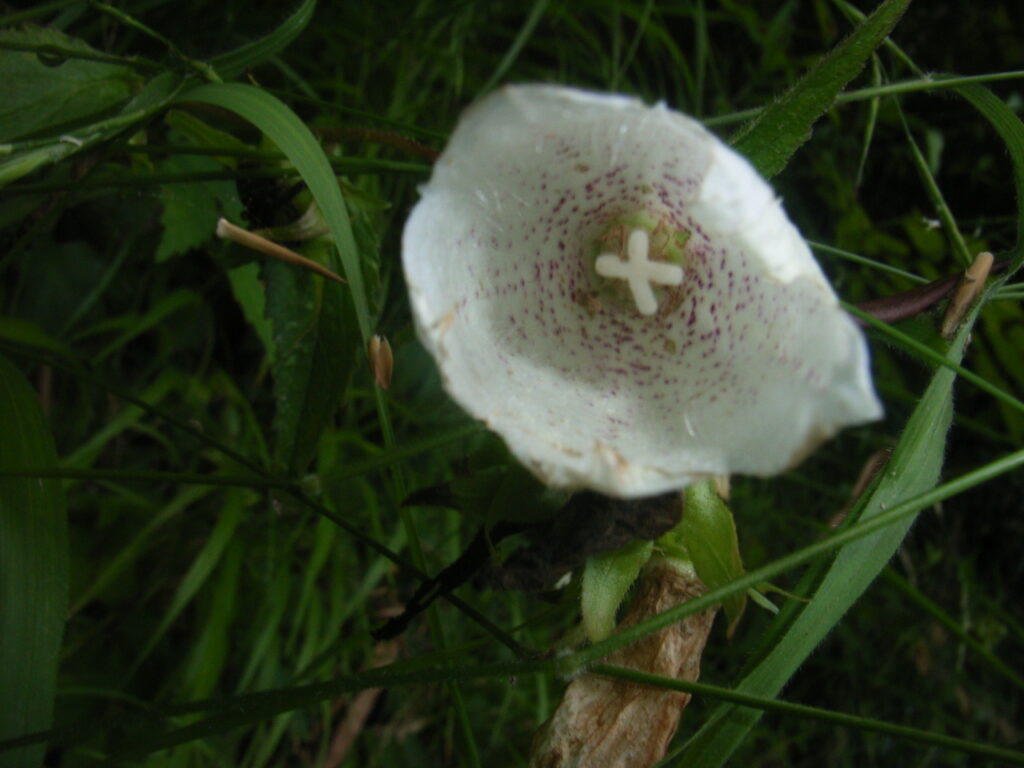
Flowers of the Campanula genus generally have bell-shaped corollas. However, Campanula punctata is distinctive in that its flowers face downwards, are elongated, and have a shape that is close to a vase.
Campanula punctata bears several downward-facing flowers in a spike-like inflorescence at the top of the stem (Wu et al., 2011). The corolla is 3-6.5 cm long, large and bell-shaped, shallowly 5-lobed at the tip, reddish-purple or white, with spots on the inner surface and densely covered with long hairs. There are 5 stamens. The stamens mature protogynously, releasing pollen while still in the bud. The pistil's style receives pollen, causing the flower to open, and the stigma opens after flowering. The calyx is 5-lobed, with narrow, elongated triangular sepals, and reflexed appendages in the indentations between the sepals, with many hairs along the edges.
The corolla of the Japanese bellflower (Campanula punctata) is 4-5 cm long, and otherwise it is almost the same as the common bellflower (Campanula punctata), but it does not have the reflexed appendages between the sepals.
How is pollination done?
Most of the Campanula punctata populations distributed on Honshu Island are self-incompatible. Therefore, cross-pollination by insects is essential. However, as the Japanese name suggests, fireflies do not naturally enter the area.
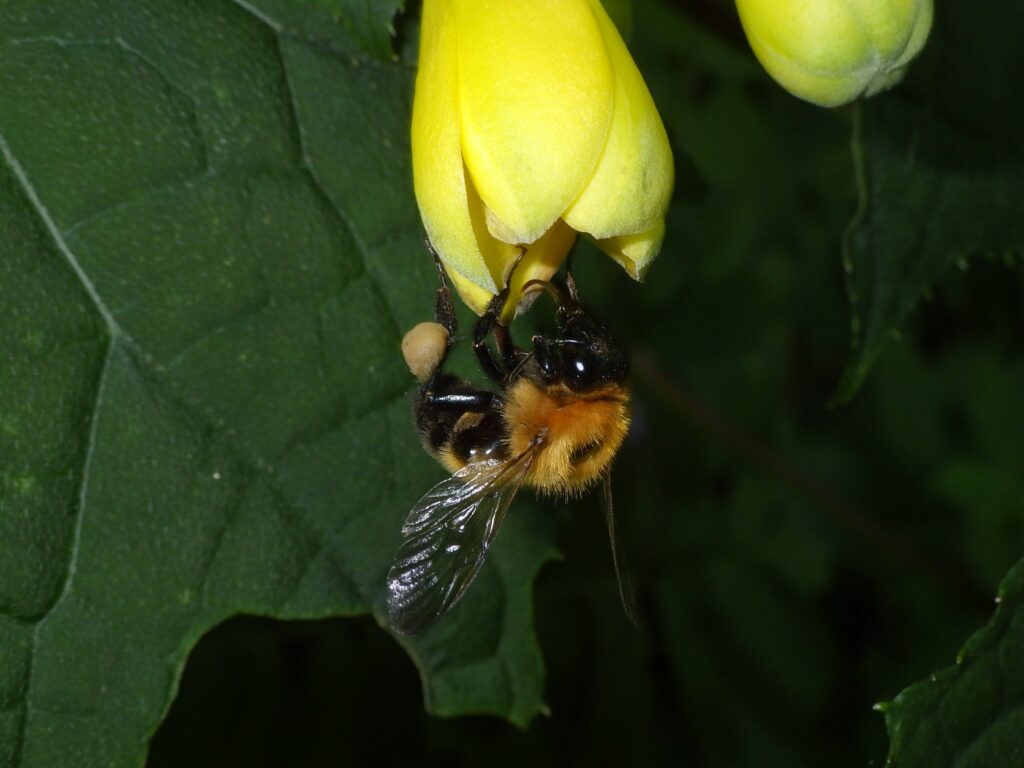
It is known that only the bumblebee Bombus diversus diversus visits Campanula punctata in the lowlands of Honshu (Inoue & Amano, 1986; Kobayashi et al., 1999; Tanaka, 2001; Nagano et al., 2014).
The flowers of the Campanula punctata undergo a type of sex change called "protandry," in which the sexual role changes from male to female over time (Tanaka, 2001). While in the bud stage, the stamens mature, but once the flower opens, the pollen from the stamens is transferred to the pollen-collecting hairs on the pistil's style. In this way, the pollen is concentrated in the pistil, preparing to be handed over to the bees (male phase). Flowers that move pollen in this manner are rare.
The arriving bee, seeking nectar, uses the hairs growing inside the corolla as a foothold to penetrate deep into the flower. At this time, the style of the pistil, which is covered in pollen, comes into contact with the bee's back, allowing it to pollinate the flower.
After about three days, the pollen is gone and the male phase ends, and the tip of the pistil (stigma) splits into three parts, transitioning to the female phase.
Similarly, bees penetrate deep into the corolla in search of nectar glands, but this time, as they penetrate, their backs come into contact with the curved stigma, receiving pollen from another individual and thus pollinating the flower.
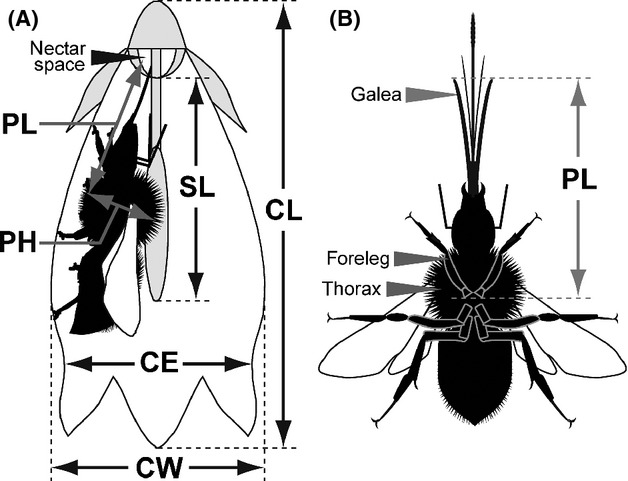
In Honshu, the only pollinating insect is the bumblebee *Bombus spp.*, but interestingly, in the mountainous areas of central Honshu where *Bombus spp.* is scarce or absent, the small bumblebee *Bombus beaticola* is present (Nagano et al., 2014).
Furthermore, it has been found that on Oshima Island in the Izu Islands, where the species Campanula microdonta, which evolved from the common bellflower, is distributed, Bombus ardens ardens and members of the family Halictidae are found, while on Niijima, Shodoshima, and Hachijojima, only members of the family Halictidae are found (Inoue & Amano, 1986).
Consequently, the size of the flowers has also changed to adapt to the size of these bees. Furthermore, self-incompatibility has decreased in Campanula punctata, making self-pollination possible. This is thought to be a way to mitigate the risk of pollinating insects not visiting the flowers. This microevolution of flowers in response to pollinating insects, which has been observed in various plants, has now been confirmed in Campanula punctata. It can be said that this demonstrates the resilience of Campanula species, which enables pollination even in remote areas.
What is the structure of the fruit?
The fruits of the Campanula genus are all capsules. A capsule is a type of dry fruit, and a single fruit consists of multiple fused, sac-like pericarps.
The capsules of the Campanula punctata are bell-shaped or inverted cone-shaped, and the seeds are grayish-brown, smooth, and oval-shaped, about 1 mm in length.
The capsules of Campanula punctata are almost identical to those of Campanula punctata, but the seeds have narrow wings.
What are the seed dispersal methods?
When the capsule dries, it releases its seeds from the inside, and it is thought that at least gravity dispersal occurs.
However, the fact that the Japanese bellflower (Campanula punctata) has wings is interesting. Perhaps the Japanese bellflower is adapted to wind dispersal. However, both are dust-like and very small, so they are easily affected by wind in the first place, and the difference may be negligible.
While there are no records of this in *Campanula punctata*, it has been suggested that wind or water flow dispersal is the cause for *Campanula punctata* and *Campanula punctata var. japonica* (Oiki et al., 2001; Cheong et al., 2020). It appears that the ancestors of *Campanula punctata var. japonica* underwent long-distance seed dispersal across the sea by being carried by the wind.
References
Cheong, WY, Kim, SH, Yang, J., Lee, W., Pak, JH, & Kim, SC 2020. Insights from chloroplast DNA into the progenitor-derivative relationship between Campanula punctata and C. takesimana (Campanulaceae) in Korea. Journal of Plant Biology 63: 431-444. https://doi.org/10.1007/s12374-020-09281-3
Inoue, K., & Amano, M. 1986. Evolution of Campanula punctata Lam. in the Izu Islands: changes of pollinators and evolution of breeding systems. Plant Species Biology 1(1): 89-97. https://doi.org/10.1111/j.1442-1984.1986.tb00018.x
Kanagawa Prefecture Flora Survey Association. 2018. Kanagawa Prefecture Flora 2018 (Electronic Edition). Kanagawa Prefecture Flora Survey Association, Odawara. 1803pp. ISBN: 9784991053726
Kobayashi, S., Inoue, K., & Kato, M. 1999. Mechanism of selection favoring a wide tubular corolla in Campanula punctata. Evolution 53(3): 752-757. https://doi.org/10.1111/j.1558-5646.1999.tb05369.x
Nagano, Y., Abe, K., Kitazawa, T., Hattori, M., Hirao, AS, & Itino, T. 2014. Changes in pollinator fauna affect altitudinal variation of floral size in a bumblebee-pollinated herb. Ecology and Evolution 4(17): 3395-3407. https://doi.org/10.1002/ece3.1191
Oiki, S., Kawahara, T., Inoue, K., Ohara, M., & Maki, M. 2001. Random amplified polymorphic DNA (RAPD) variation among populations of the insular endemic plant Campanula microdonta (Campanulaceae). Annals of Botany 87(5): 661-667. https://doi.org/10.1006/anbo.2001.1389
Tanaka, Hajime. 2001. Flowers and Insects: A Collection of Discoveries of Mysterious Deception. Kodansha, Tokyo. 262pp. ISBN: 9784062691437
Wu, ZY, Raven, PH, & Hong, DY (Eds.). 2011. Flora of China (Vol. 19 Cucurbitaceae through Valerianaceae, with Annonaceae and Berberidaceae). Science Press, Beijing, and Missouri Botanical Garden Press, St. Louis. ISBN: 9781935641049