Both Japanese flowering quince (Chaenomeles speciosa) and Japanese quince (Chaenomeles japonica) belong to the Chaenomeles genus of the Rosaceae family. They are deciduous shrubs characterized by the simultaneous unfolding of leaves and vibrant flowering. Perhaps for this reason, Japanese flowering quince, in particular, is quite popular in horticulture and is frequently seen planted. Furthermore, its fruit is edible. However, Japanese flowering quince and Japanese quince share many similarities and are often confused. Although the distinguishing features of the two species are clearly pointed out in botanical guides, there are surprisingly many intermediate cases, making differentiation difficult. Basically, the size of the tree and the presence or absence of stolons are important, and it is also necessary to observe the leaves, flowers, and fruits comprehensively. They look quite different from plums and camellias. This article will explain the classification of the Chaenomeles genus.
What are "boke" and "kusaboke"?
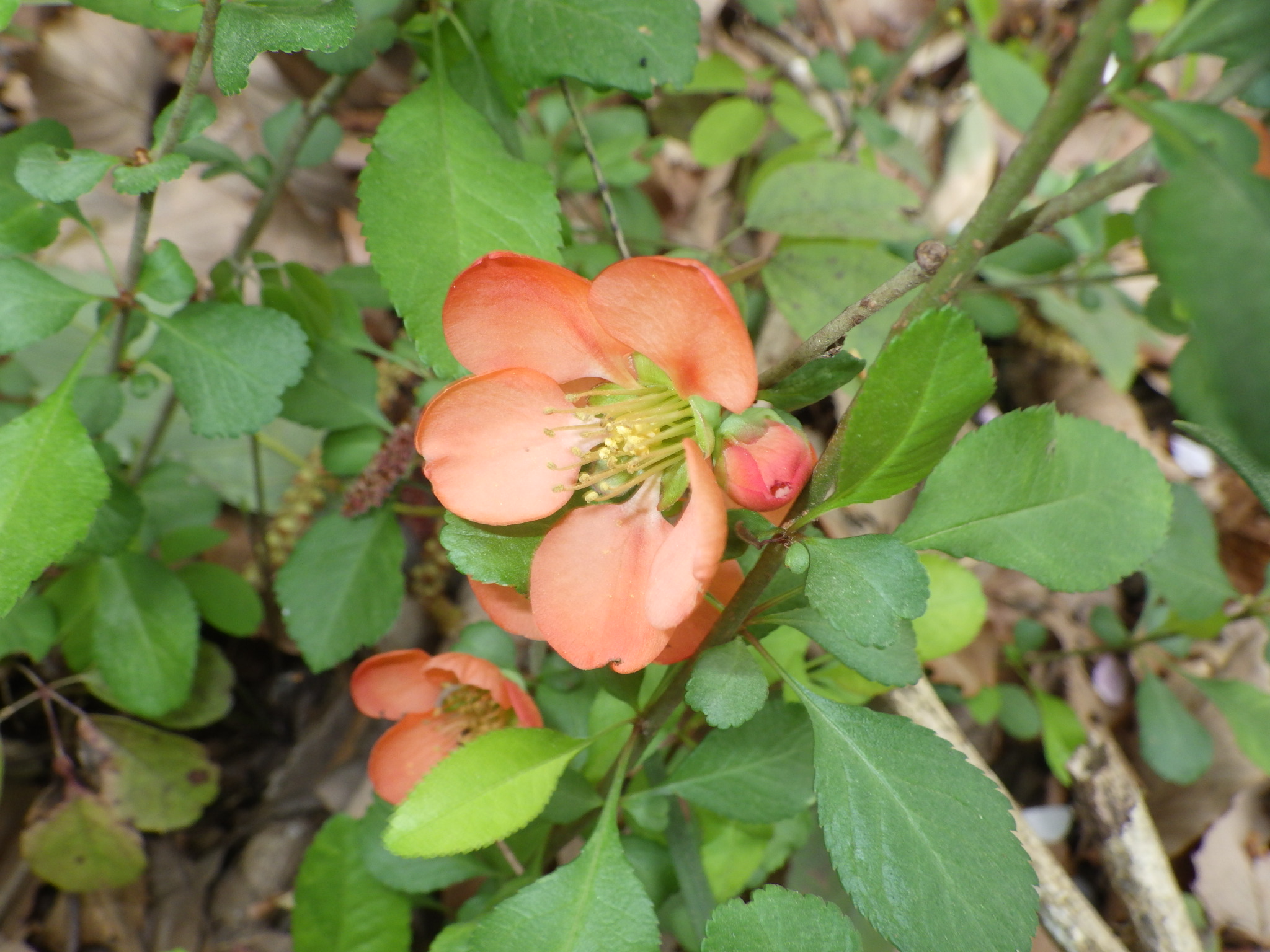
Japanese flowering quince (Chaenomeles speciosa) is a deciduous shrub native to China, cultivated for ornamental purposes in Japan, Korea, Europe, and the United States. In Japan, it is extremely common as a garden tree and in parks, and occasionally escaped plants can be seen in the wild.
Chaenomeles japonica, also known as Japanese quince, is a deciduous shrub distributed throughout Honshu, Shikoku, and Kyushu in Japan. It grows in sunny grasslands and woodlands, and is also common in logged areas and forest edges. White-flowered Chaenomeles f. alba is a variety with white flowers, while double-flowered Chaenomeles f. plena is a variety with double blossoms.
Both belong to the genus Chaenomeles in the Rosaceae family, and are deciduous shrubs characterized by the simultaneous unfolding of leaves and vibrant flowering. Perhaps for this reason, quince is quite popular in horticulture and is frequently seen planted.
The fruit of the Japanese quince is sometimes processed into jam, honey preserves, syrups, and fruit wines for consumption.
The name is amusing and might sound like an insult, like "dementia," but this is completely unrelated. It's believed to originate from the fact that the fruit resembles a melon, and that it was originally called "moke" (木瓜), meaning "a melon that grows on a tree," which then evolved into "boke."
Morphologically, the main common features are the spoon-shaped leaves with serrated edges and the presence of large stipules at the base of the leaves, which are important clues when distinguishing them from other species.
Other minor similarities include the presence of numerous (4 to many) ovules on the carpel, five styles with fused bases, and detached sepals.
Therefore, many people may not understand the differences between these two things.
What's the difference between bokeh and kusaboke?
The scientific methods for distinguishing between Chaenomeles speciosa and Chaenomeles japonica are clearly defined (Kanagawa Prefecture Botanical Survey Association, 2018; Hayashi, 2019). However, in reality, it can be more difficult than one might imagine.
First and foremost, in Japan, the Japanese flowering quince (Chaenomeles speciosa) is a cultivated variety, while the Japanese quince (Chaenomeles japonica) is a wild species. Therefore, if you see it in an urban area, it is likely to be a Japanese flowering quince, and if you see it in the wild, it is likely to be a Japanese quince. However, it is important to note that Japanese flowering quince occasionally escapes into the wild, and Japanese quince is sometimes planted in gardens.
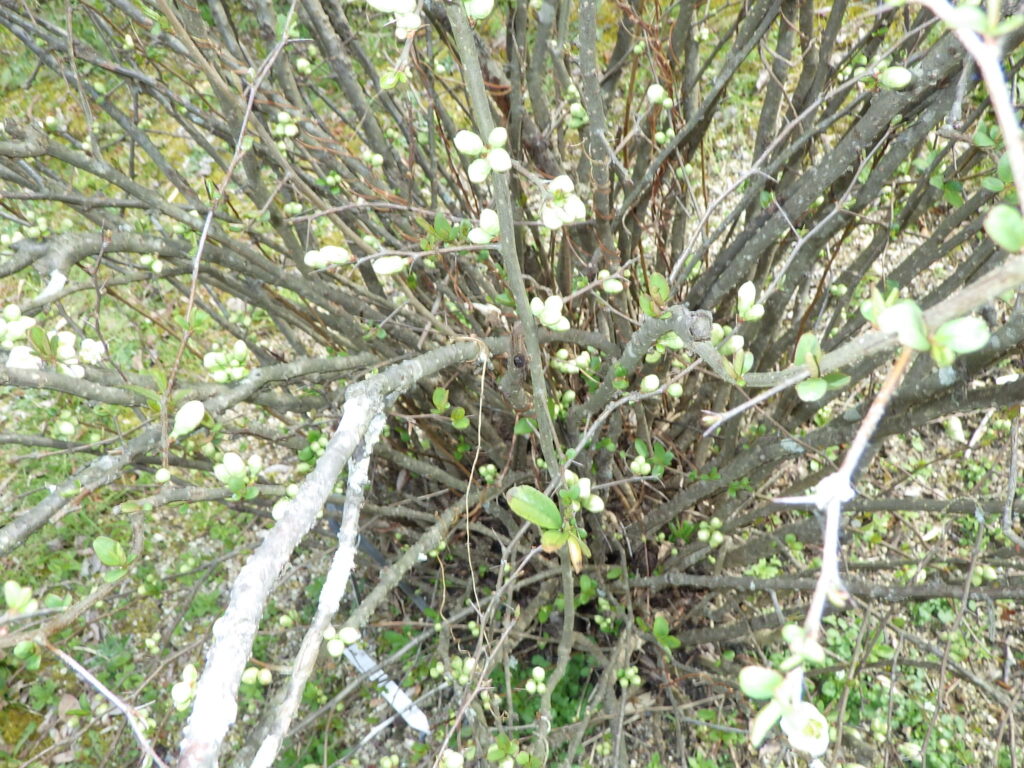
The most important morphological difference is that Japanese quince (Chaenomeles speciosa) grows as a shrub about 50 cm to 3 m tall, growing upright in clumps, while Japanese quince (Chaenomeles japonica) grows as a small shrub less than 100 cm tall, with a long, creeping trunk at the base.
In short, the Japanese quince (Chaenomeles speciosa) grows larger and straighter than the common quince (Chaenomeles japonica). If you can confirm this, you should be able to distinguish between them based on that alone.
However, this alone may not be sufficient to distinguish between small, still-growing individuals.
The field guide also often describes the differences in the leaves.
In Japanese quince (Chaenomeles speciosa), the leaves often have sharply serrated edges and pointed tips, while in Japanese quince (Chaenomeles japonica), the leaves often have bluntly serrated edges that curve inward and rounded tips. Also, the leaves of Japanese quince are slightly smaller in size.
However, this point also shows considerable variation within and between individuals, and leaves with the opposite characteristics are often seen, so it doesn't seem very practical.
If the flowers or fruits are in bloom, the clues will be a little clearer.
Regarding the flowers, in Japanese quince (Chaenomeles speciosa), the narrow base of the petals is short, resulting in no space between the petals, whereas in Japanese quince (Chaenomeles japonica), the narrow base of the petals is long, resulting in often gaps between the petals. Also, the color of Japanese quince is red, pink, or white, while in Japanese quince it is vermilion or rarely white (white individuals are called white-flowered Japanese quince f. alba).
Regarding the fruit, in Japanese quince (Chaenomeles speciosa), the fruit is often large and oblong, while in Japanese quince (Chaenomeles japonica), it is often small and nearly spherical. However, there are many exceptions to this rule.
As you can see, there are few clear distinguishing features other than size. This is likely because Chaenomeles x superba, a hybrid of Chaenomeles japonica and Chaenomeles speciosa, is mixed in with the other species of Chaenomeles.
In summary, it seems best to refer to various aspects and check for the presence or absence of "creeping branches." If there are none, it's likely a common quince; if there are, it's likely a grass quince. Most of the trees you see in town can be identified as common quince.
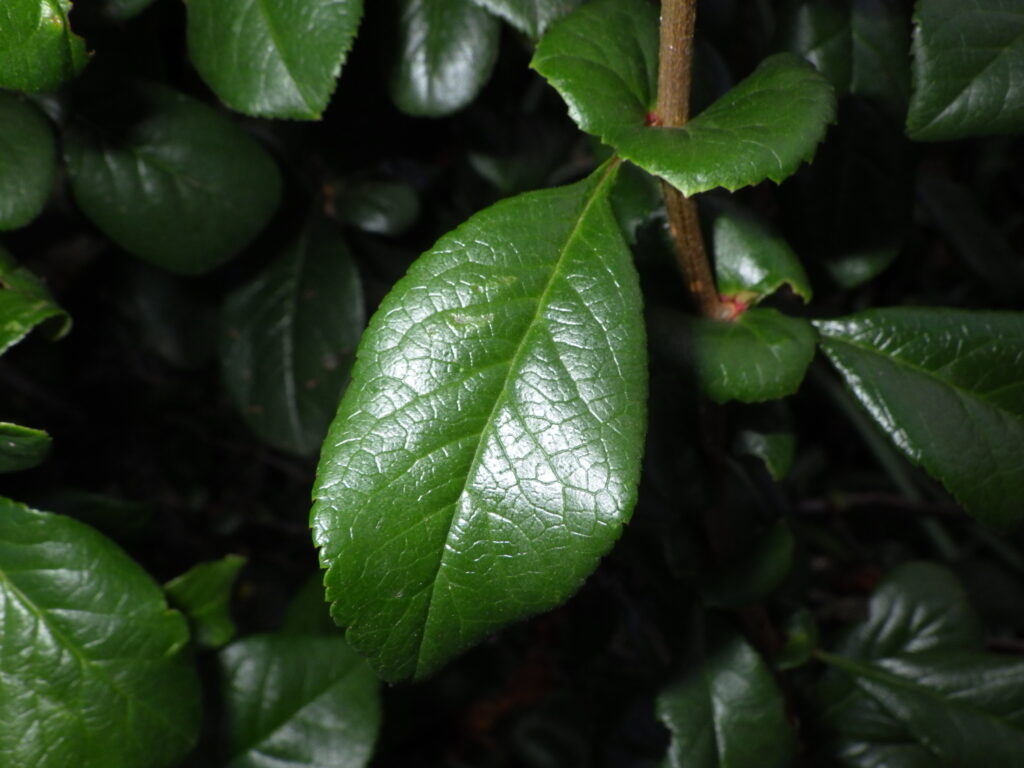
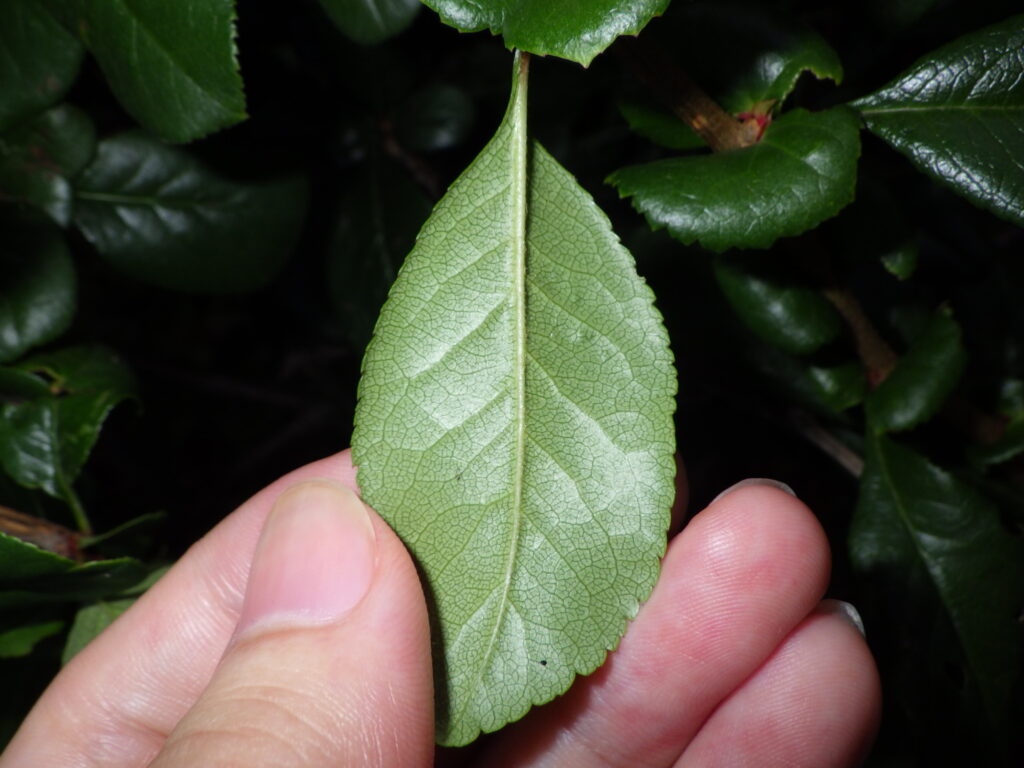
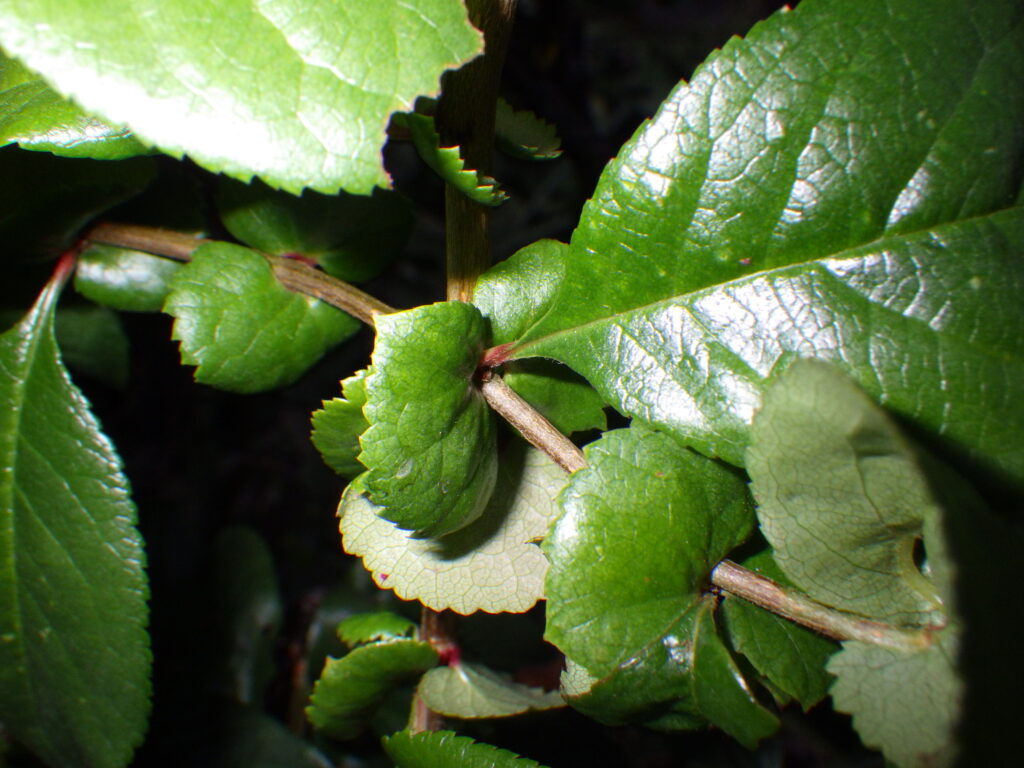
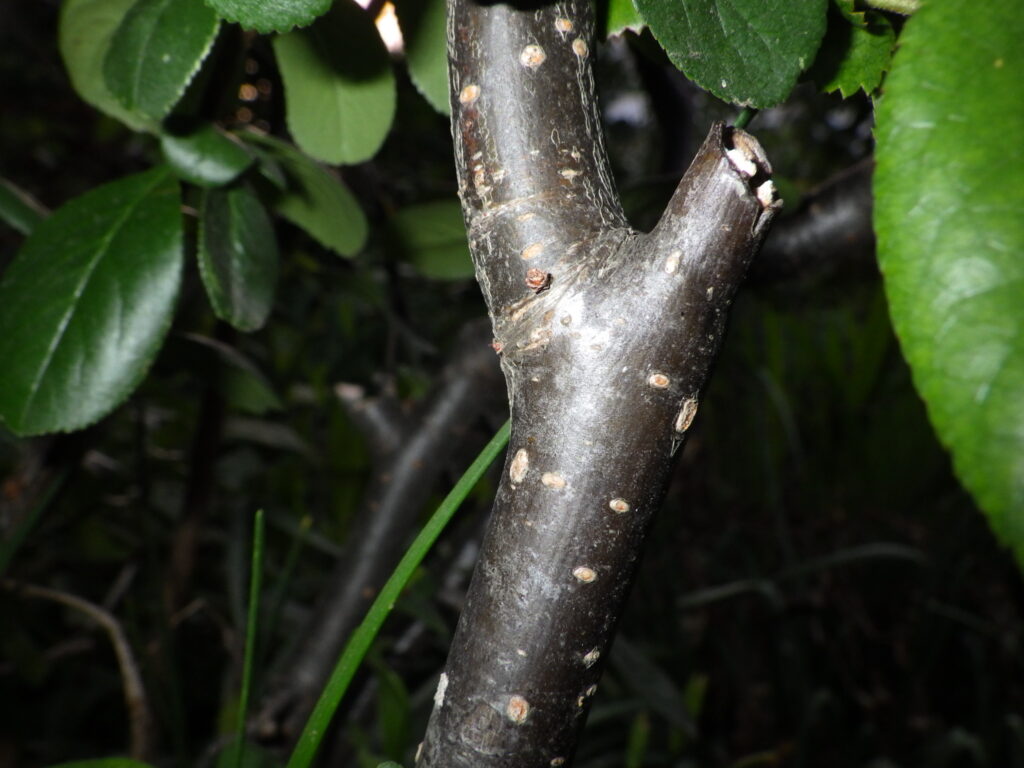
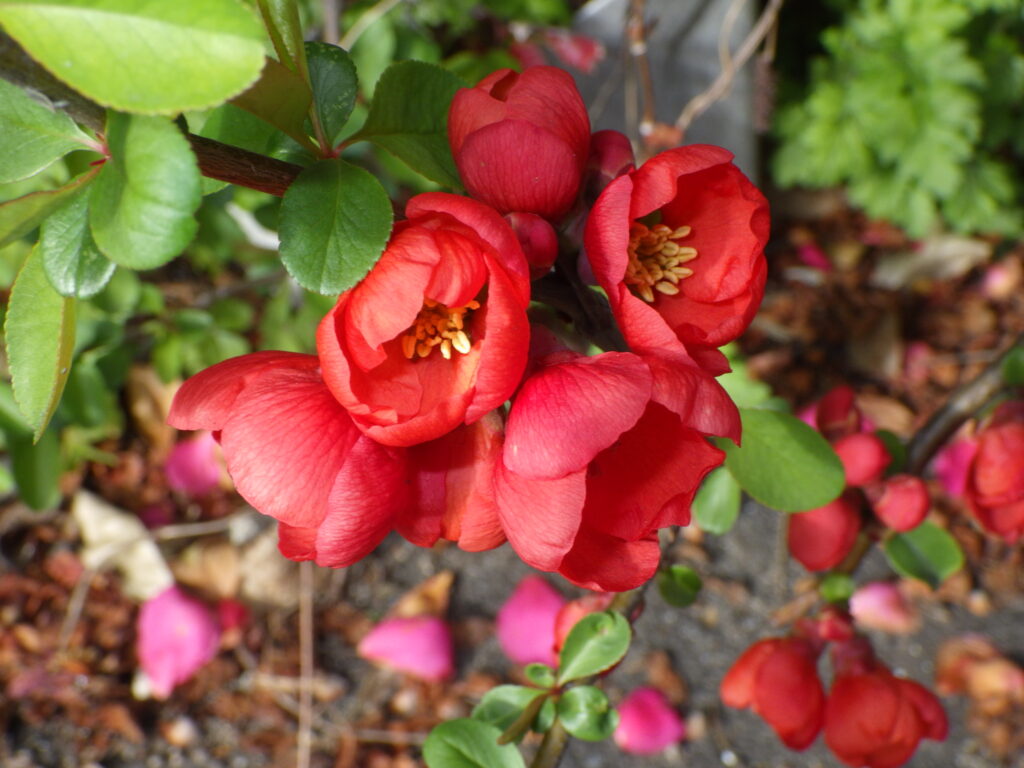
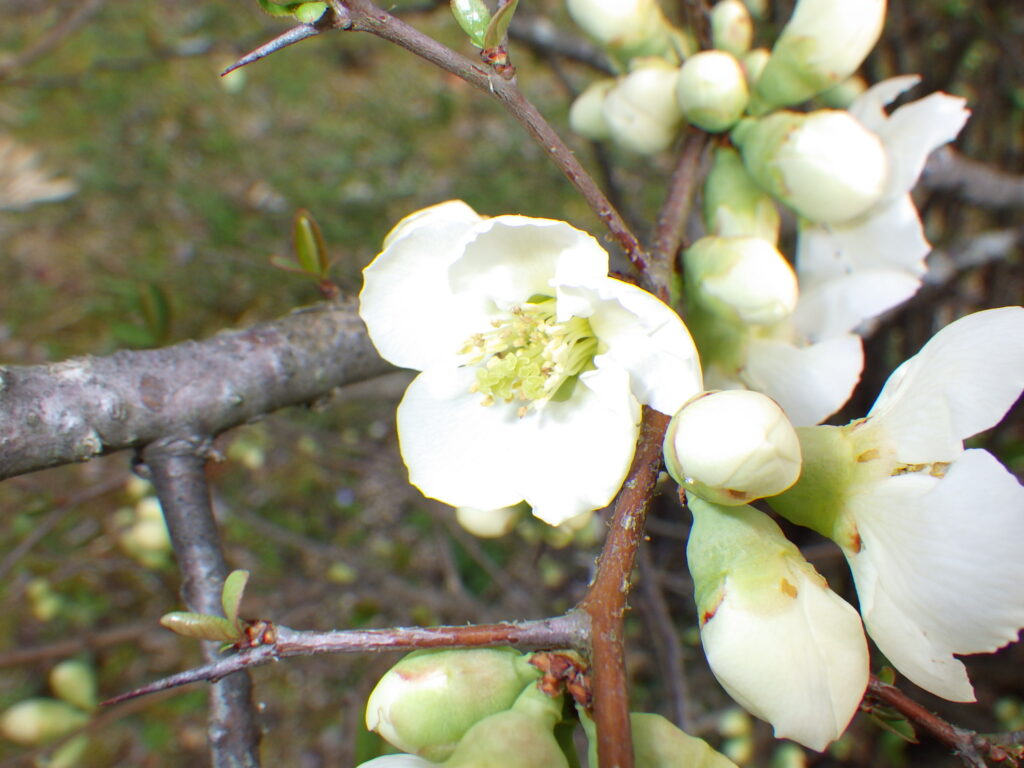
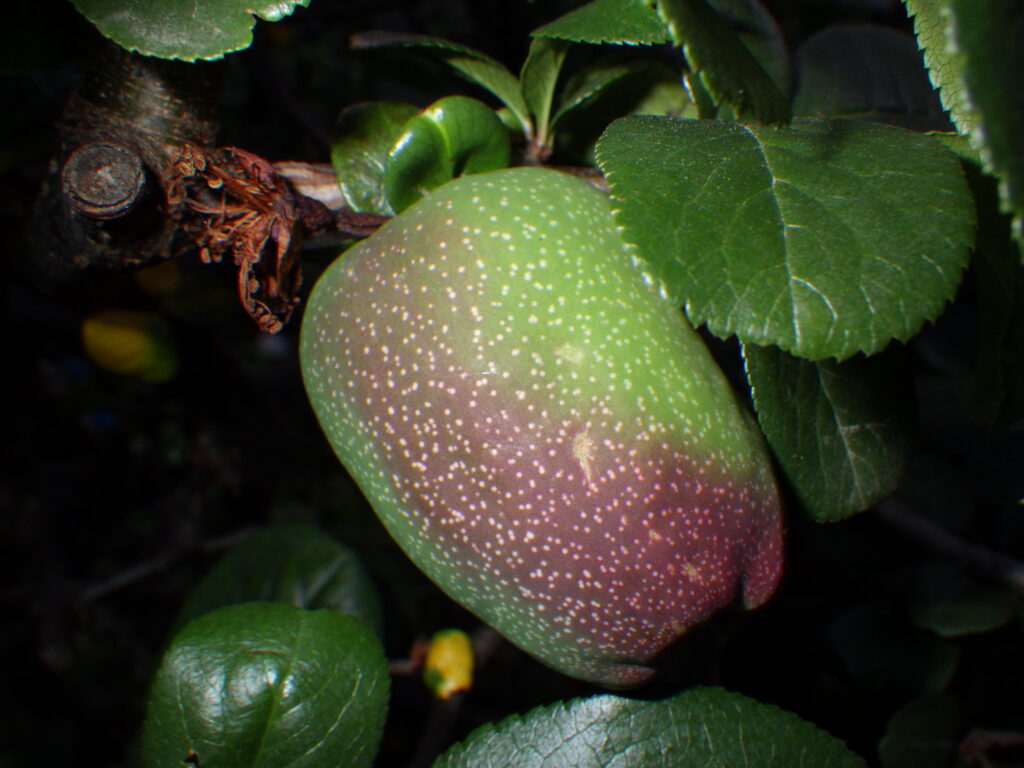
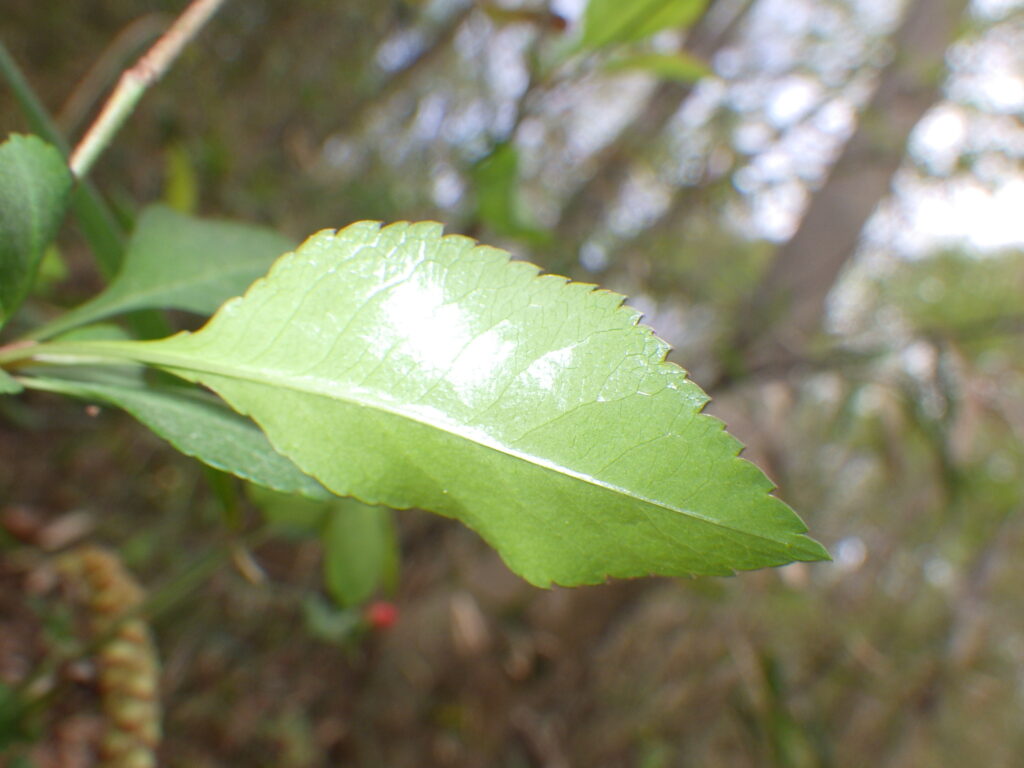
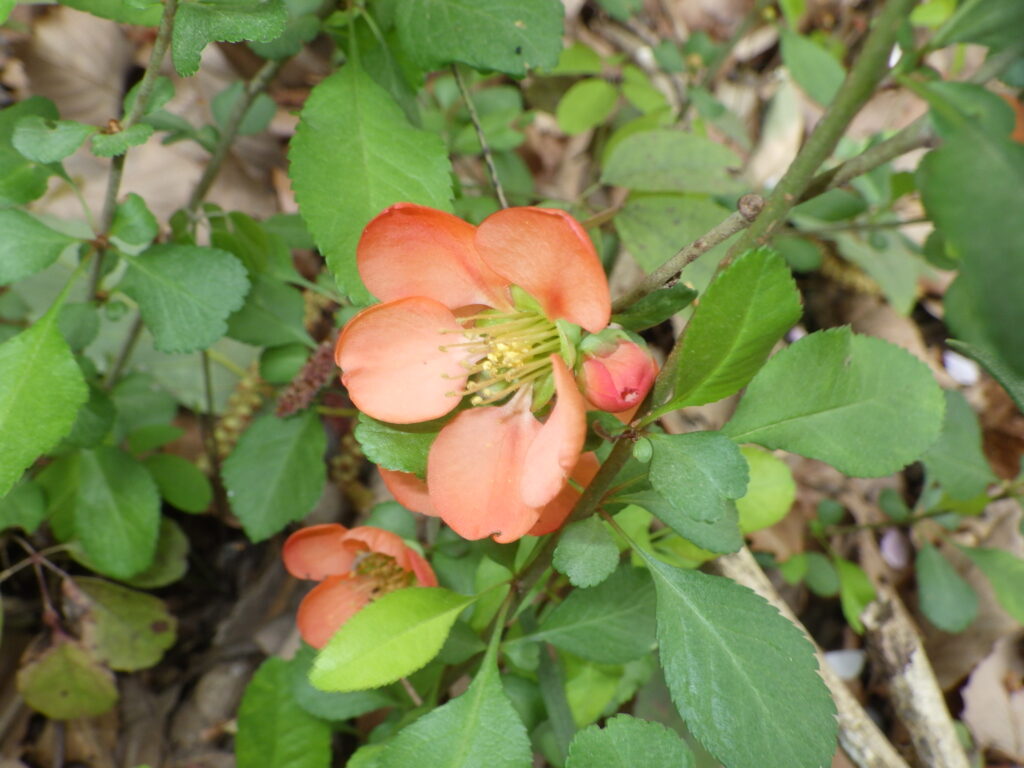
What are the differences between the Japanese flowering quince (Chaenomeles speciosa), plum blossom (Ume), and camellia (Tsubaki)?
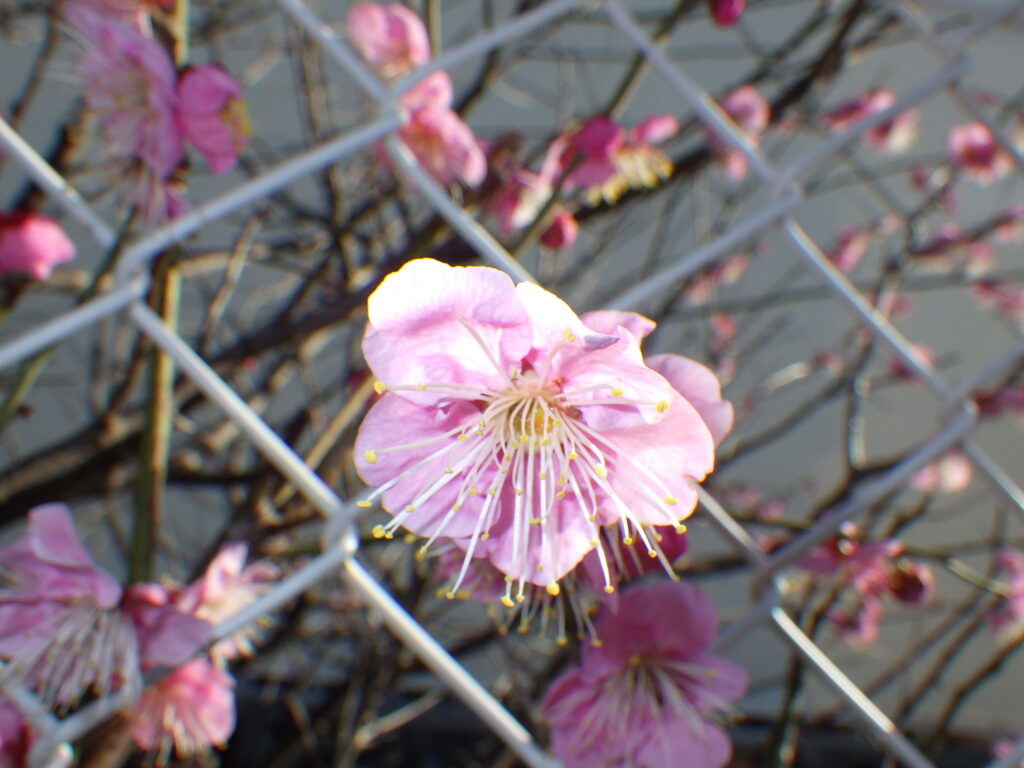
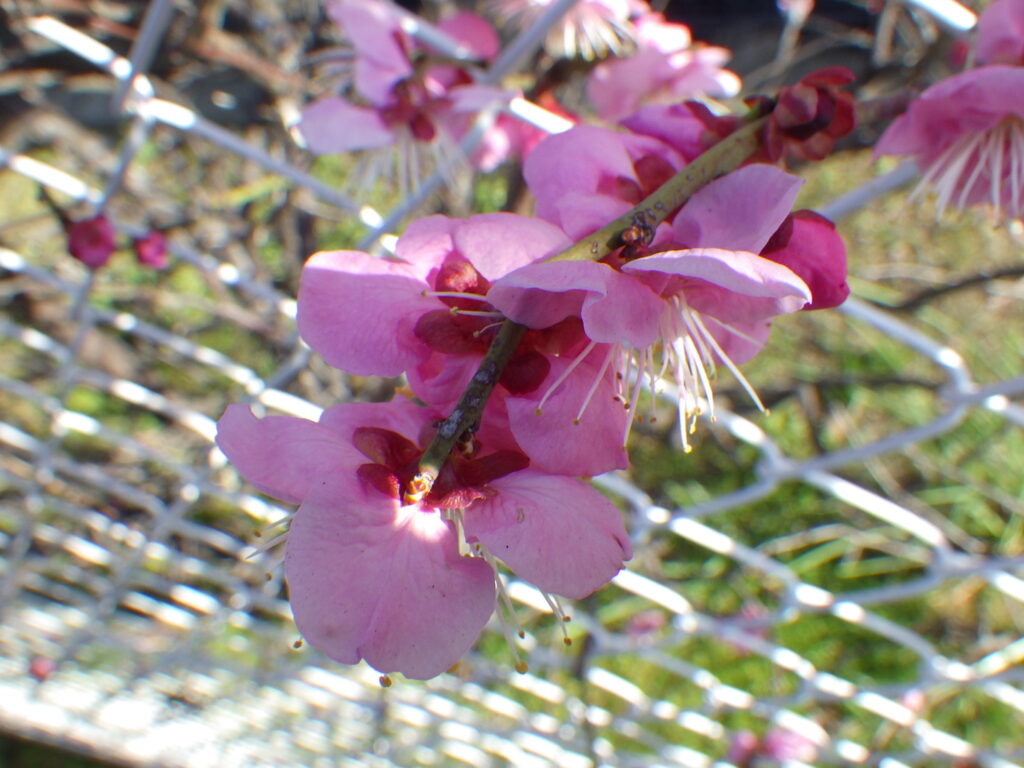
The differences between Japanese quince (Chaenomeles speciosa), plum (Prunus mume), and Japanese camellia (Camellia japonica) are also frequently searched for on the internet.
They might be confused because both bloom from winter to spring. In particular, the Japanese apricot (Ume) belongs to the plum family, just like the Japanese flowering quince (Chaenomeles speciosa), and the shape of its flowers is quite similar.
You can distinguish between Japanese quince (Chaenomeles speciosa) and Japanese apricot (Prunus mume) by checking the number of pistils in their flowers.
While the Japanese quince (Chaenomeles speciosa) has five pistils, the Japanese plum (Apricot) has only 0 to 1, so from a distance it often appears as if it only has stamens.
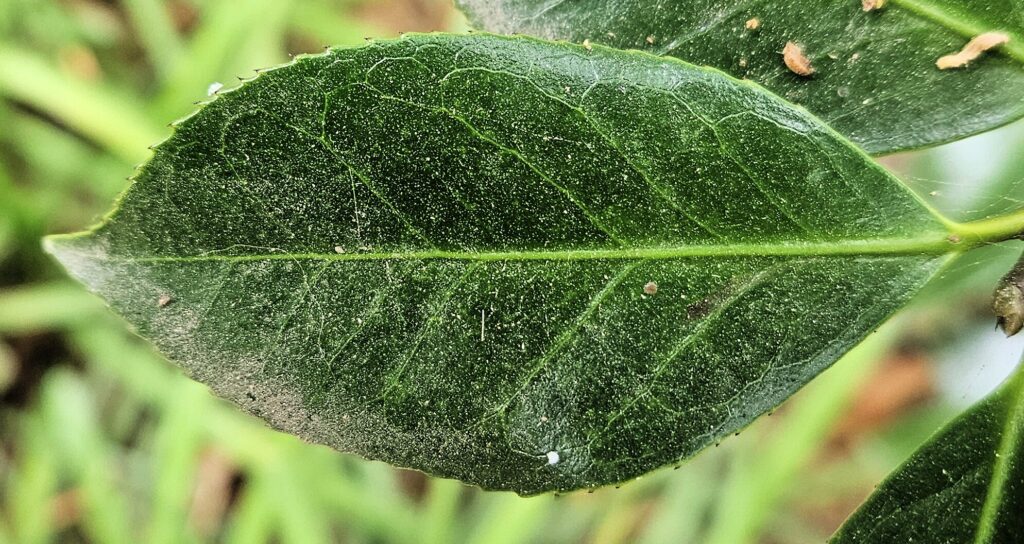
Furthermore, the leaf shapes are completely different; plum leaves do not become spoon-shaped like quince leaves.
The fruit is small, as you would see in pickled plums, and does not grow into the large, oddly shaped fruit of the Japanese quince.
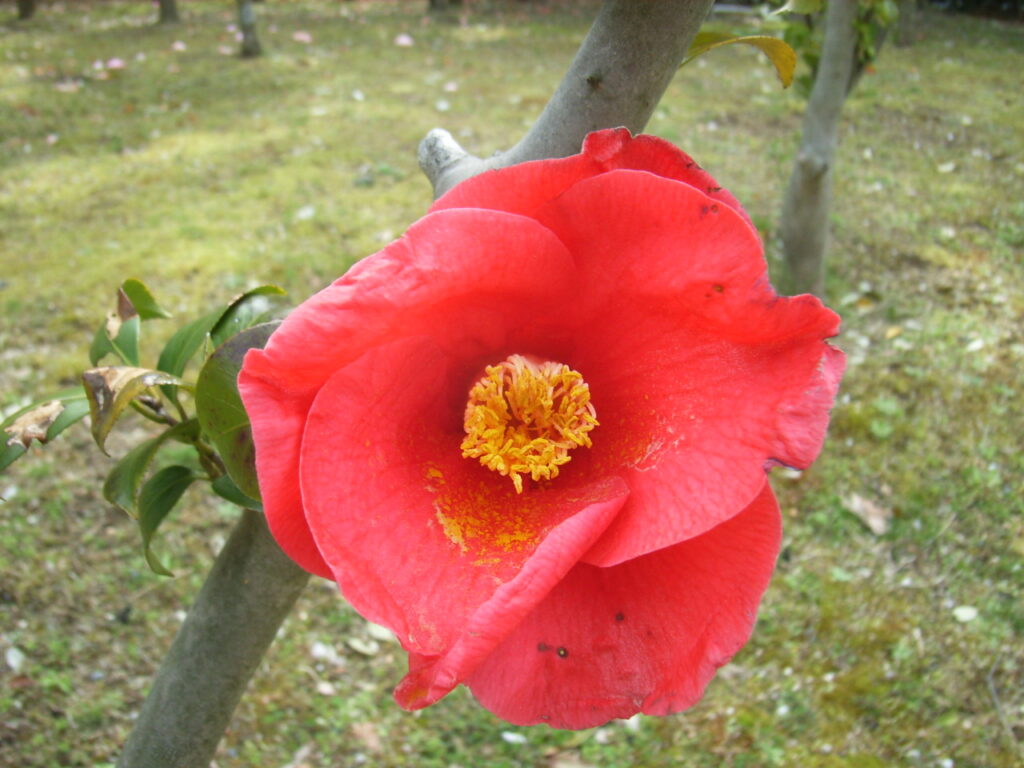
Camellias belong to the Camellia family and are completely different from flowering quince. They have large flowers and are evergreen trees, so their glossy leaves remain even in winter.
References
Hayashi, Masayuki. 2019. Tree Leaves: Expanded and Revised Edition - Identifying 1300 Species Through Real-Life Scans. Yama-kei Publishers, Tokyo. 824pp. ISBN: 9784635070447
Kanagawa Prefecture Flora Survey Association. 2018. Kanagawa Prefecture Flora 2018 (Electronic Edition). Kanagawa Prefecture Flora Survey Association, Odawara. 1803pp. ISBN: 9784991053726