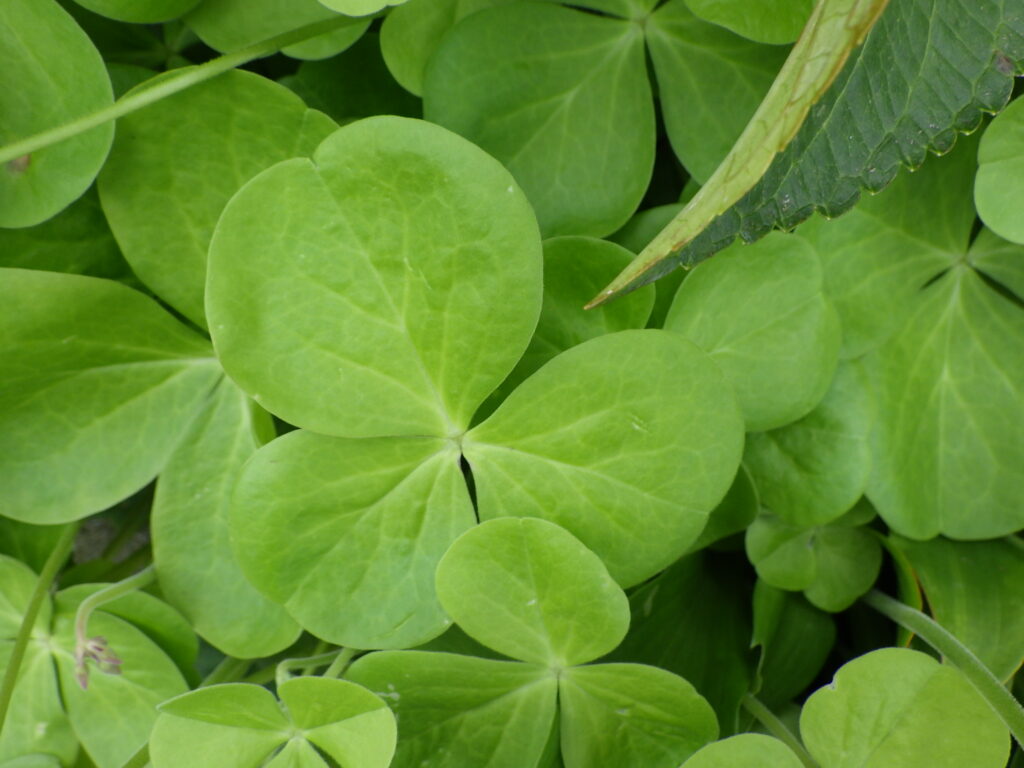
Purple wood sorrel, potato wood sorrel, red wood sorrel, and flowering wood sorrel all belong to the genus Oxalis in the family Oxalidaceae. Among the vast Oxalis genus, they all share the characteristics of having obovate leaflets with rounded corners and red to pink flowers. They are also naturalized introduced species that were originally cultivated for ornamental purposes, and although they are now common, it can be difficult to distinguish between them. With some practice, the four species can be distinguished mainly by observing their flowers and leaves. Other Oxalis species with red flowers include triangular wood sorrel and hibiscus wood sorrel. This article will explain the classification and morphology of Oxalis species with red flowers.
What are purple wood sorrel, potato wood sorrel, red wood sorrel, and flower wood sorrel?
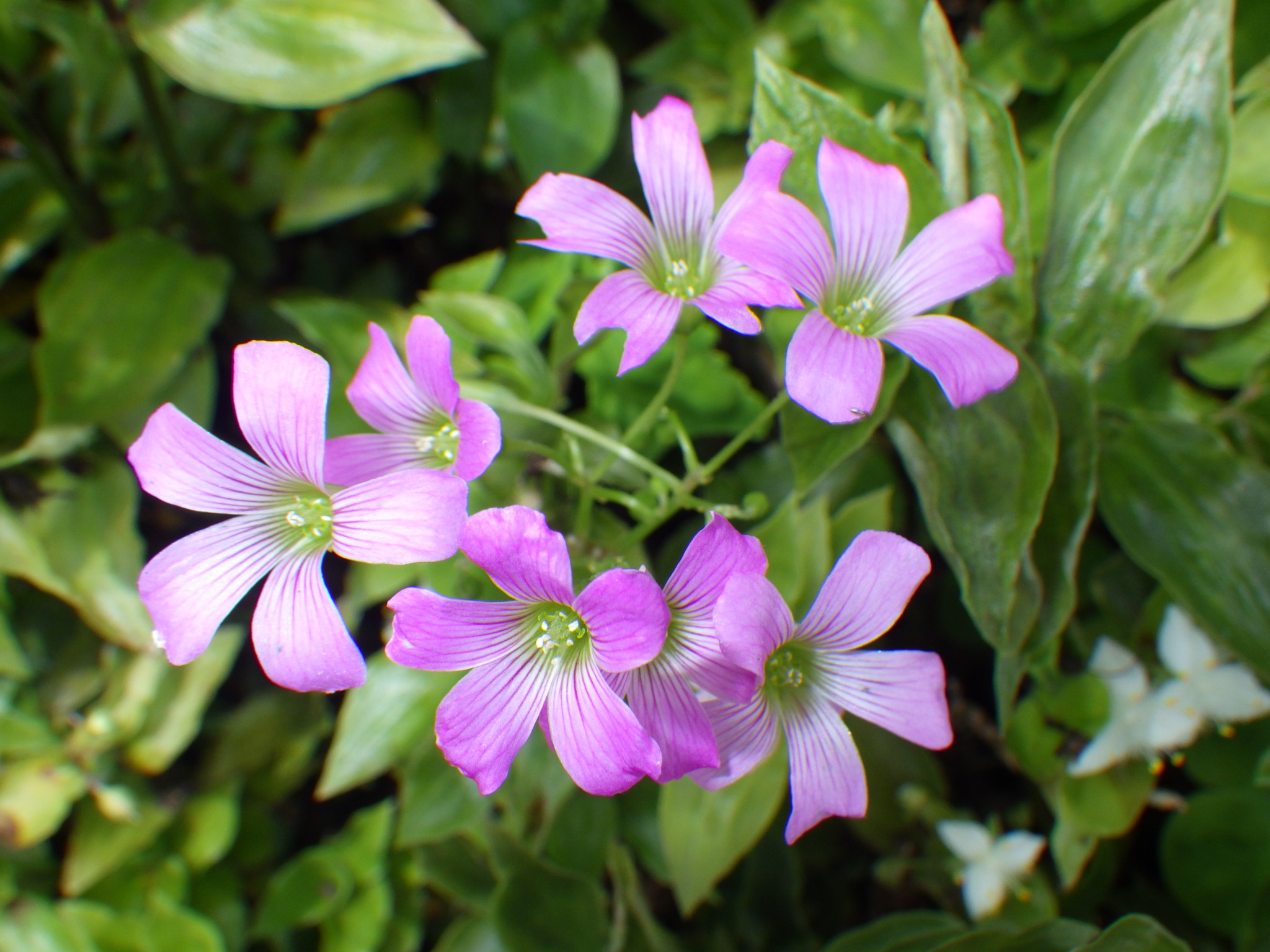
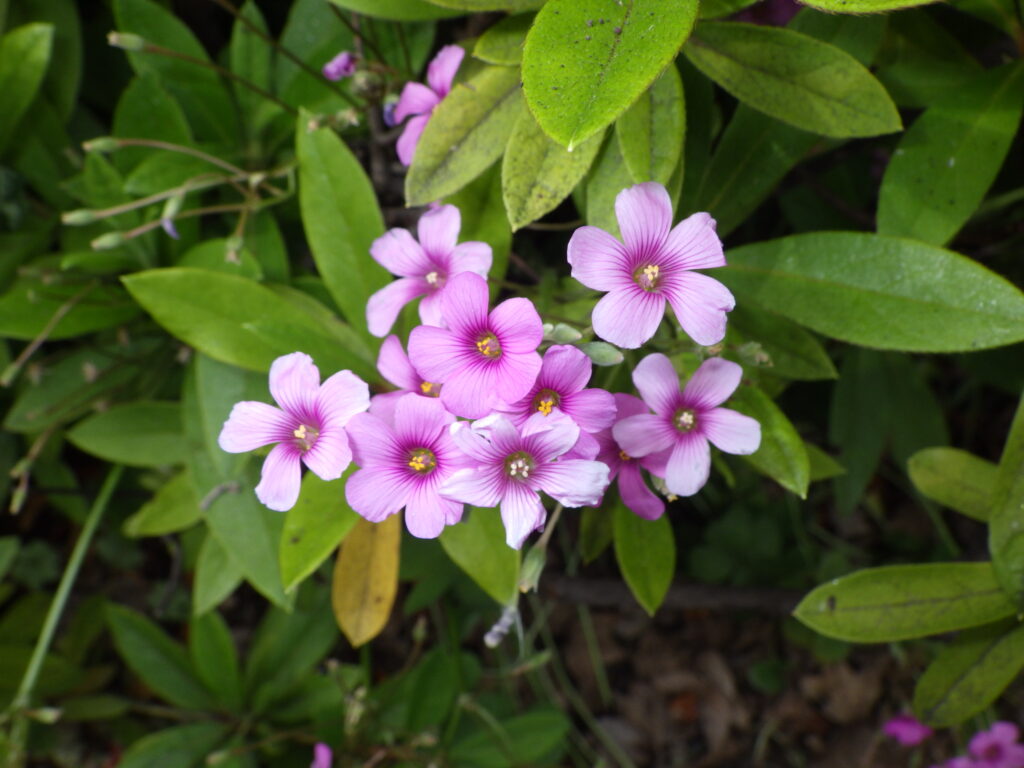
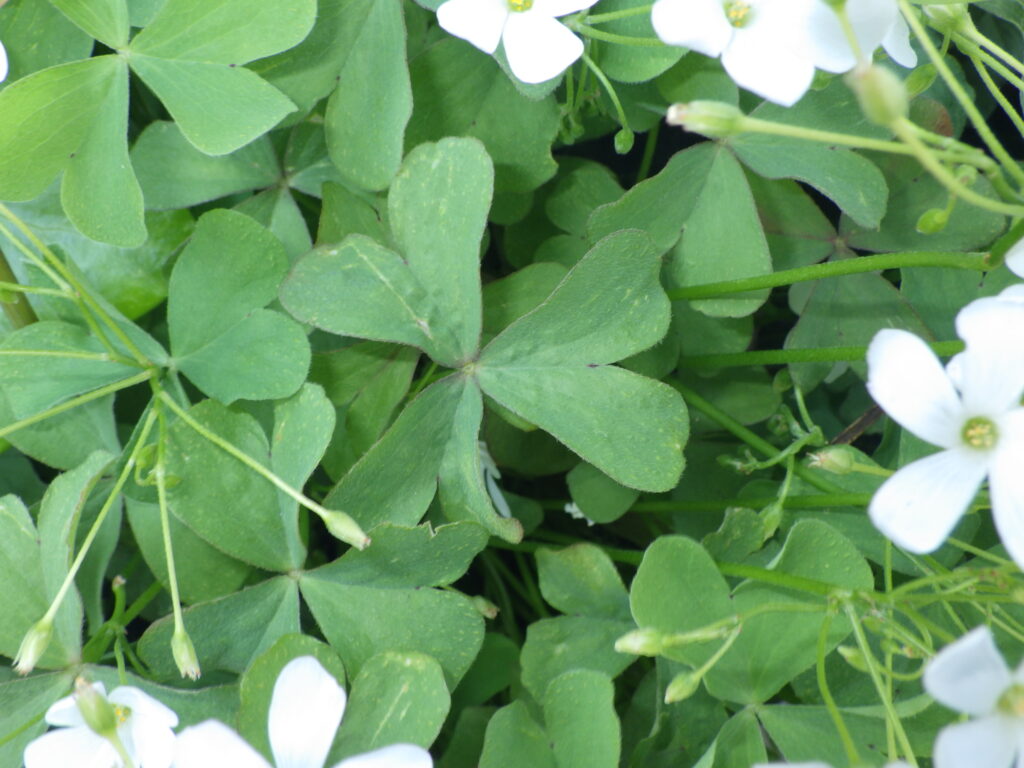
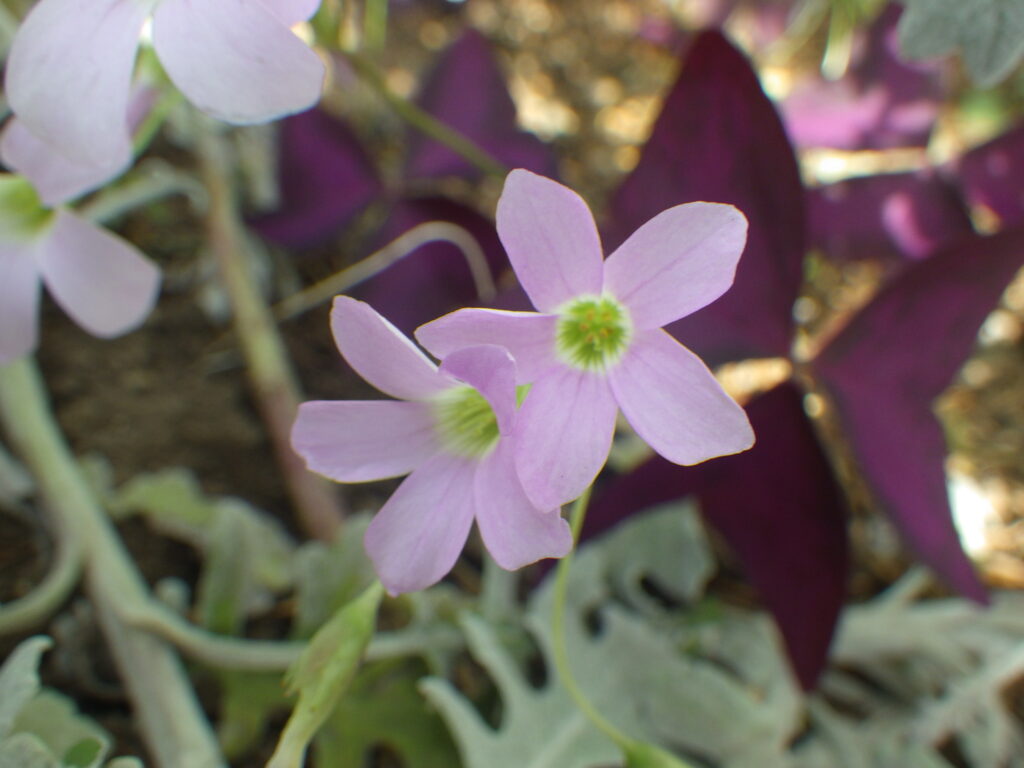
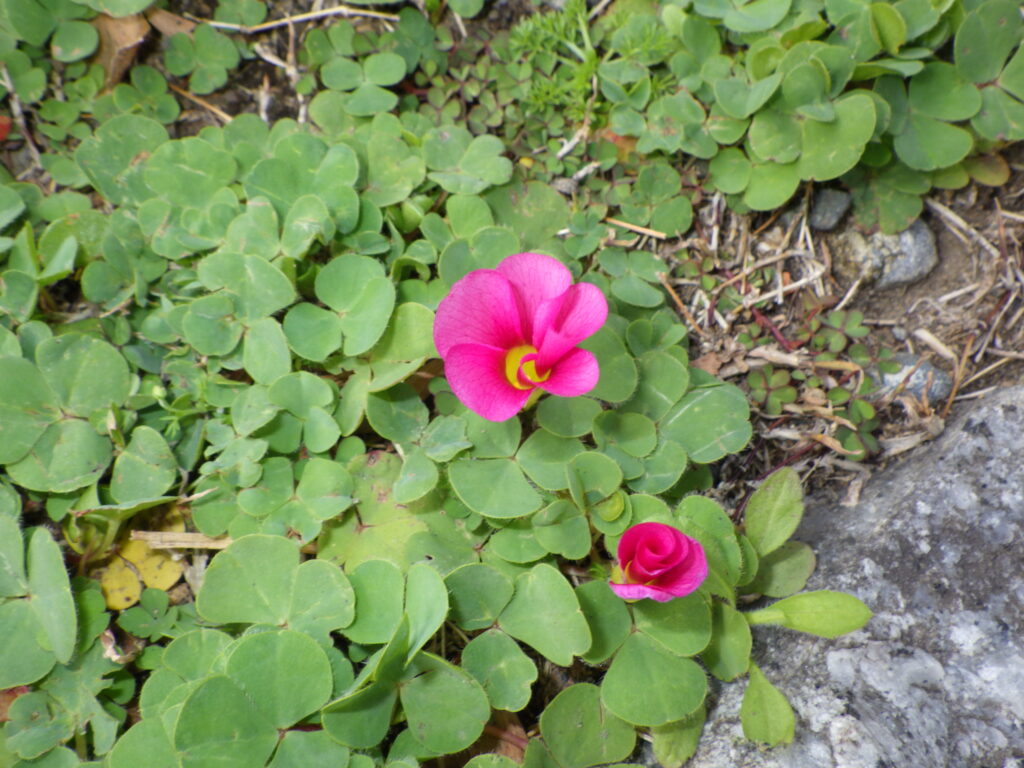
Purple wood sorrel (Oxalis debilis subsp. corymbosa), also known as bellflower wood sorrel, is a synonym (former scientific name) of Oxalis corymbosa. Native to northern South America (RBG Kew, 2025), it has naturalized worldwide and in Japan, it was cultivated for ornamental purposes from the Bunkyu era of the Edo period (1861-1863). However, it has escaped cultivation throughout the country and is a perennial plant that grows along roadsides, in vacant lots, and in some agricultural areas (Kanagawa Prefecture Flora Survey Association, 2018).
Oxalis articulata, also known as potato wood sorrel or potato oxalis, is a perennial plant native to South America (Argentina, Uruguay, and Brazil) that has naturalized worldwide. In Japan, it was introduced after World War II and has naturalized in various parts of the country (west of the Kanto region?), growing along roadsides and in vacant lots near human settlements.
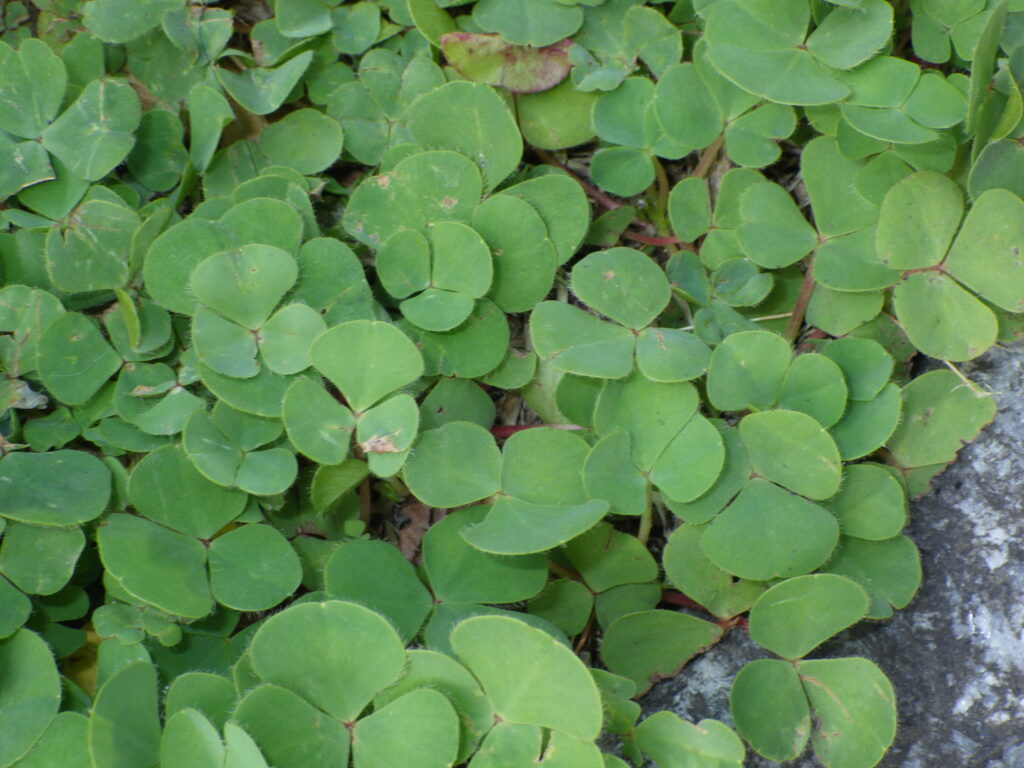
Oxalis brasiliensis, also known as Brazilian wood sorrel, is native to South America (Argentina, Uruguay, and Brazil) and has naturalized worldwide. It was introduced to Japan in 1924 during the Taisho era as an ornamental plant, and after World War II, it escaped cultivation and naturalized in various parts of the country. It is a perennial plant that grows in vacant lots and roadsides near human settlements.
Oxalis bowiei, also known as flower wood sorrel or flower oxalis, is native to South Africa (Cape Province, South Africa) and has naturalized throughout the world. In Japan, it was introduced during the Tenpo era of the Edo period and escaped cultivation in warmer regions of the country, becoming a perennial plant that grows near human settlements.
All of these species belong to the genus Oxalis in the family Oxalidaceae, and in horticulture, they are often collectively referred to simply as "Oxalis" without distinction. Among the vast genus Oxalis, they share the common characteristics of having obovate leaflets with rounded corners, red to pink flowers, and being introduced species that were originally cultivated for ornamental purposes.
Wild specimens can frequently be seen growing in urban areas, but some people may have trouble distinguishing them because they look very similar.
What are the differences between purple wood sorrel, potato wood sorrel, red wood sorrel, and flowering wood sorrel?
The four species can be distinguished fairly clearly, mainly by looking at their flowers, but it requires some practice (Kanagawa Prefecture Flora Survey Association, 2018).
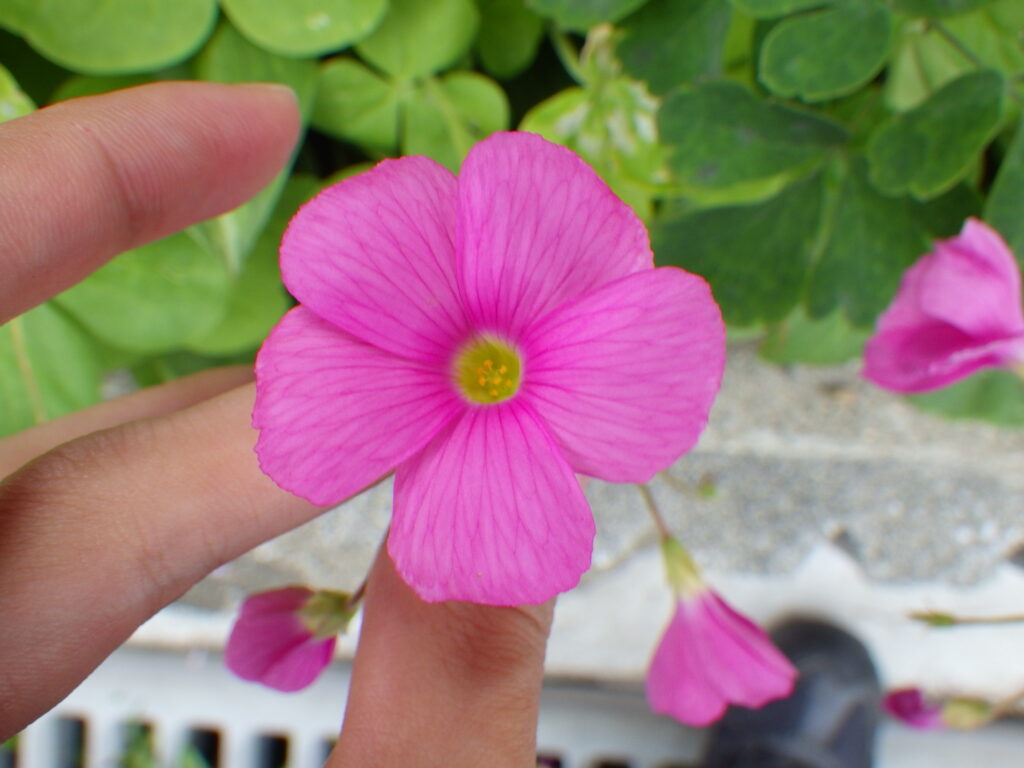
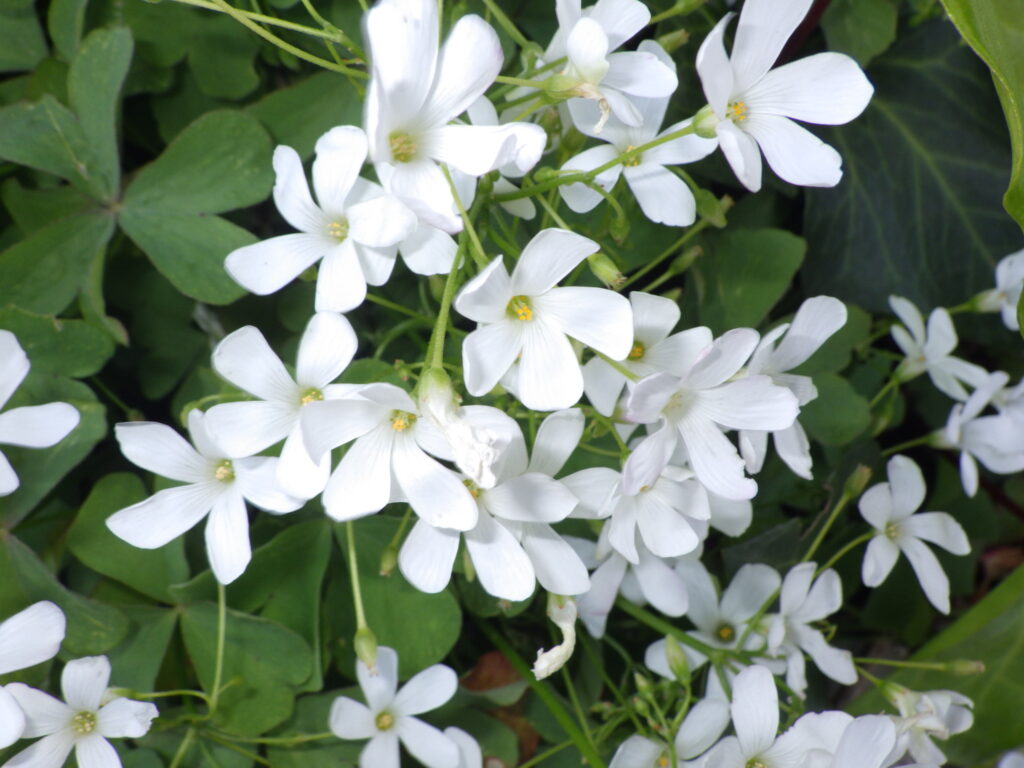
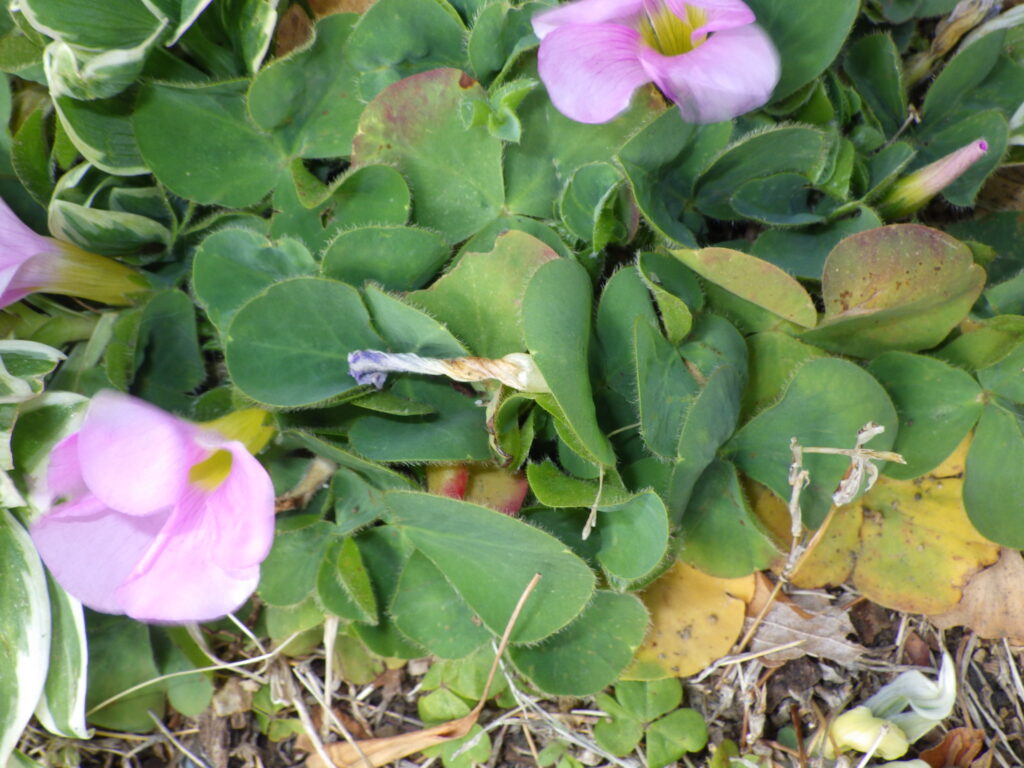
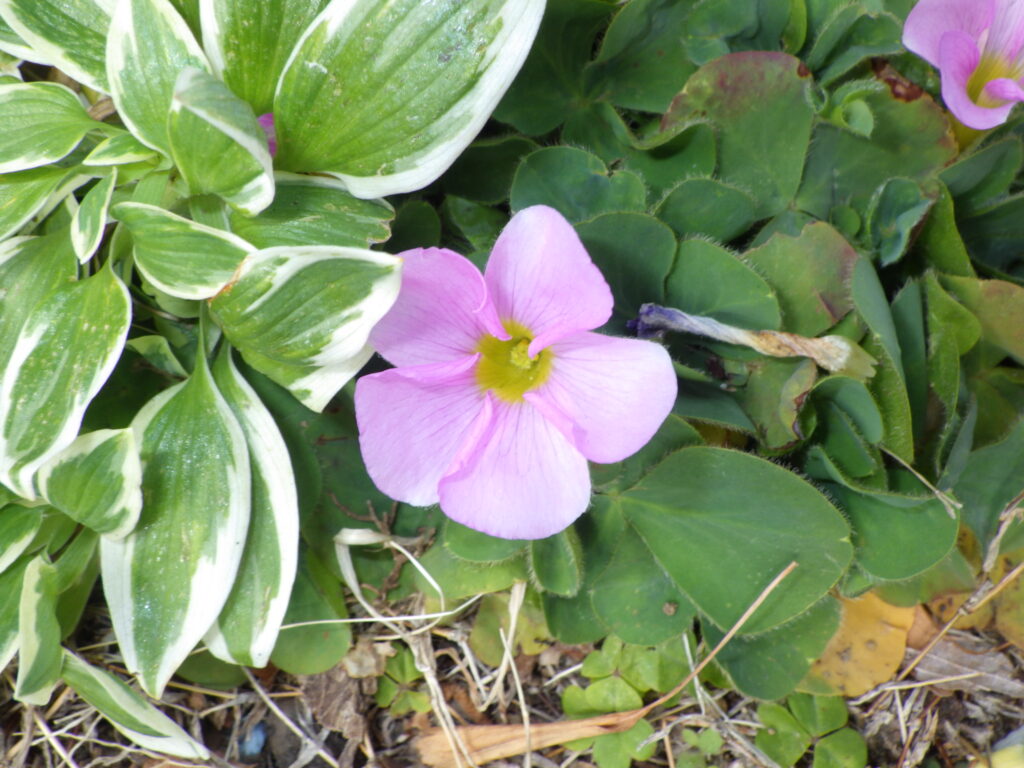
First, there is a difference in that purple wood sorrel, potato wood sorrel, and red wood sorrel have flowers that are 1.5 to 3 cm in diameter and do not have glandular hairs on their flower stalks, while flower sorrel has flowers that are 3 to 5 cm in diameter and does have glandular hairs on its flower stalks.
Unlike the other three species of wood sorrel, which are native to South America, this species is native to South Africa, and perhaps because of this, it differs considerably in appearance in several ways. Its flowers have a single, thick, large corolla lobe, its leaves are somewhat thicker, the upper surface is slightly glossy, and the veins are prominent, which is a unique distinguishing feature. It is likely that the name "flower sorrel" comes from the fact that its flowers are conspicuous.
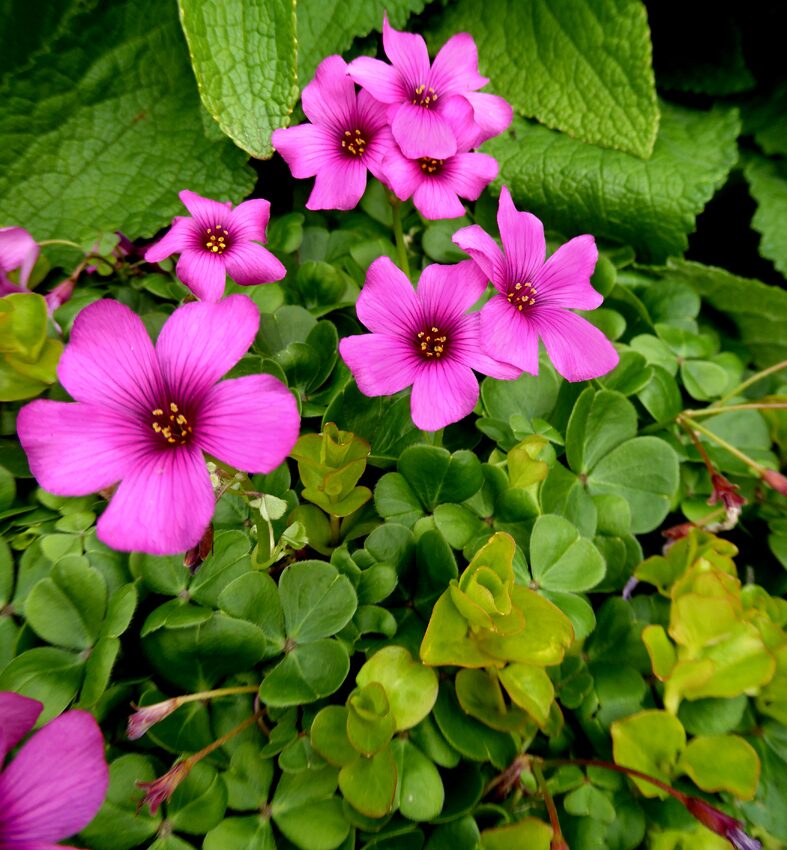
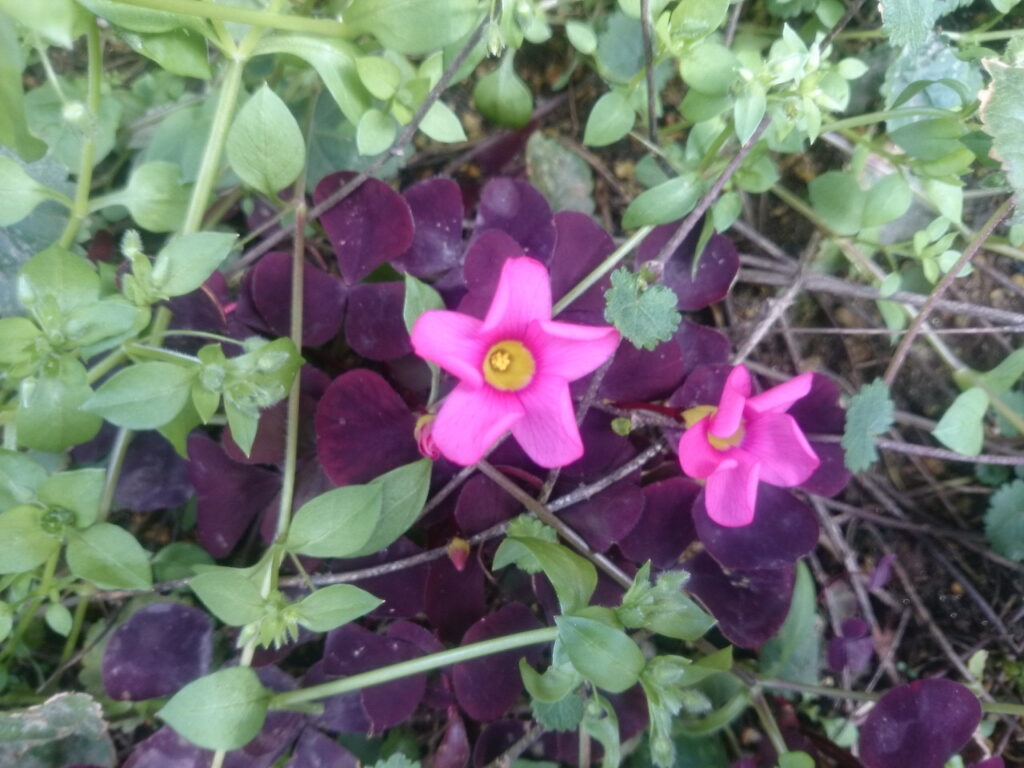
Regarding the remaining three species, purple wood sorrel and tuberous wood sorrel have pink flowers 1.5-1.8 cm in diameter and do not produce rhizomes, while red wood sorrel has dark reddish-purple flowers 2-3 cm in diameter and extends slender rhizomes that bear small bulbs at the end.
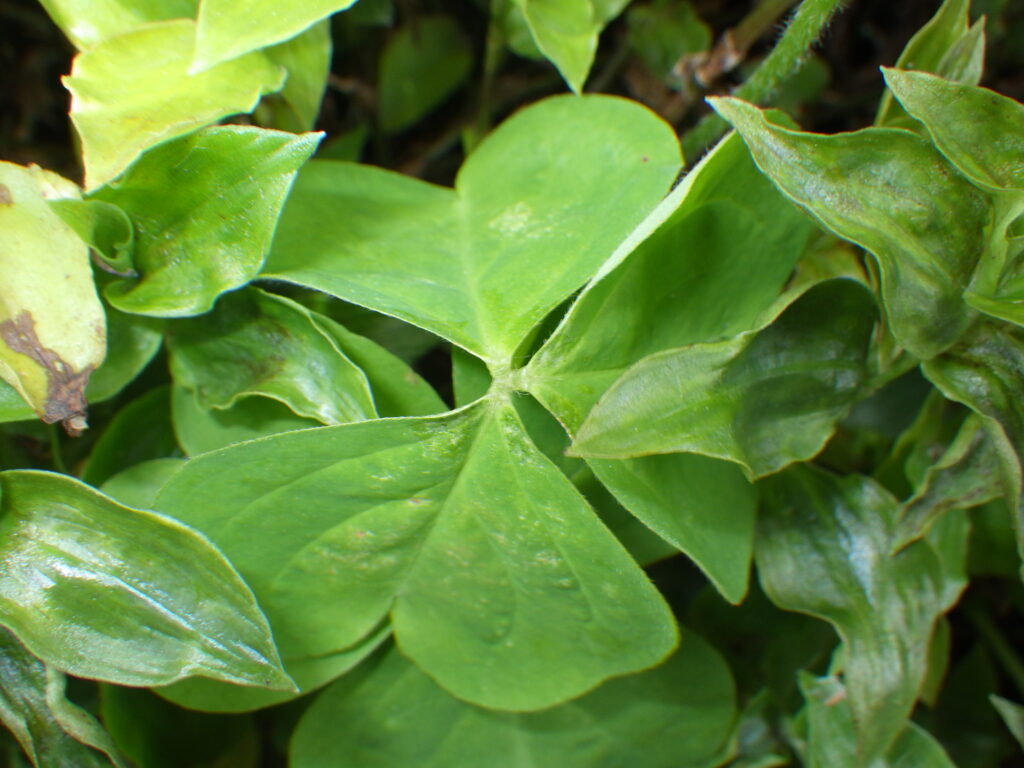
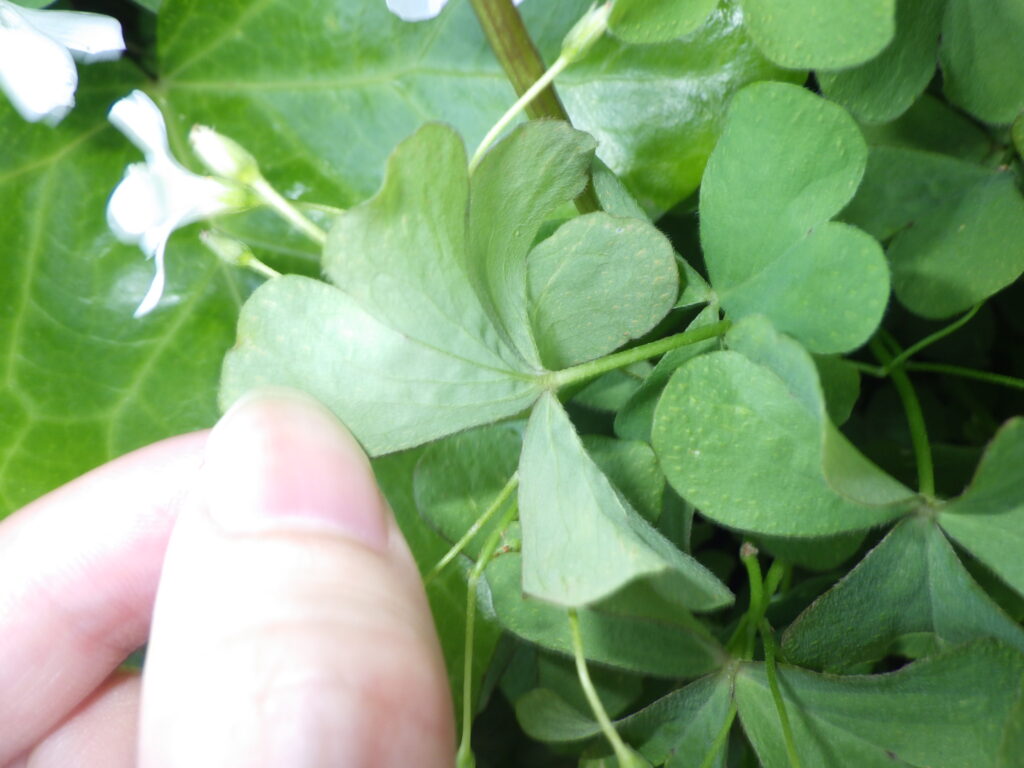
If the flower color is subtle, this distinguishing feature might necessitate digging up the plant, but only Oxalis acetosella has shallower heart-shaped incisions in its leaflets, so this alone is sufficient for identification.
Regarding purple wood sorrel and tuberous wood sorrel, purple wood sorrel has a bulb underground, the center of the flower is pale, and the sepals are almost hairless, while tuberous wood sorrel has a tuber underground, the center of the flower is dark reddish-purple, and the sepals are hairy.
Once again, plant guides list distinguishing features that seem to assume the plants will be dug up, but the flower color alone is sufficient for differentiation.
However, the condition of the underground stems and roots may create ecologically significant differences (Oberlander et al., 2009).
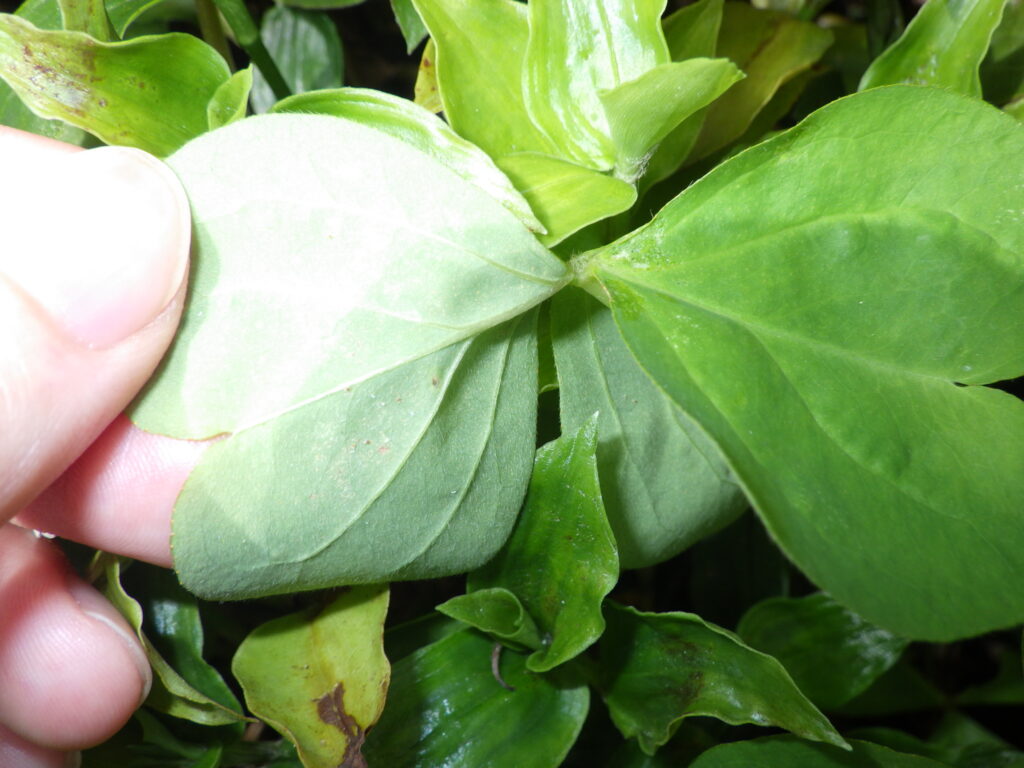
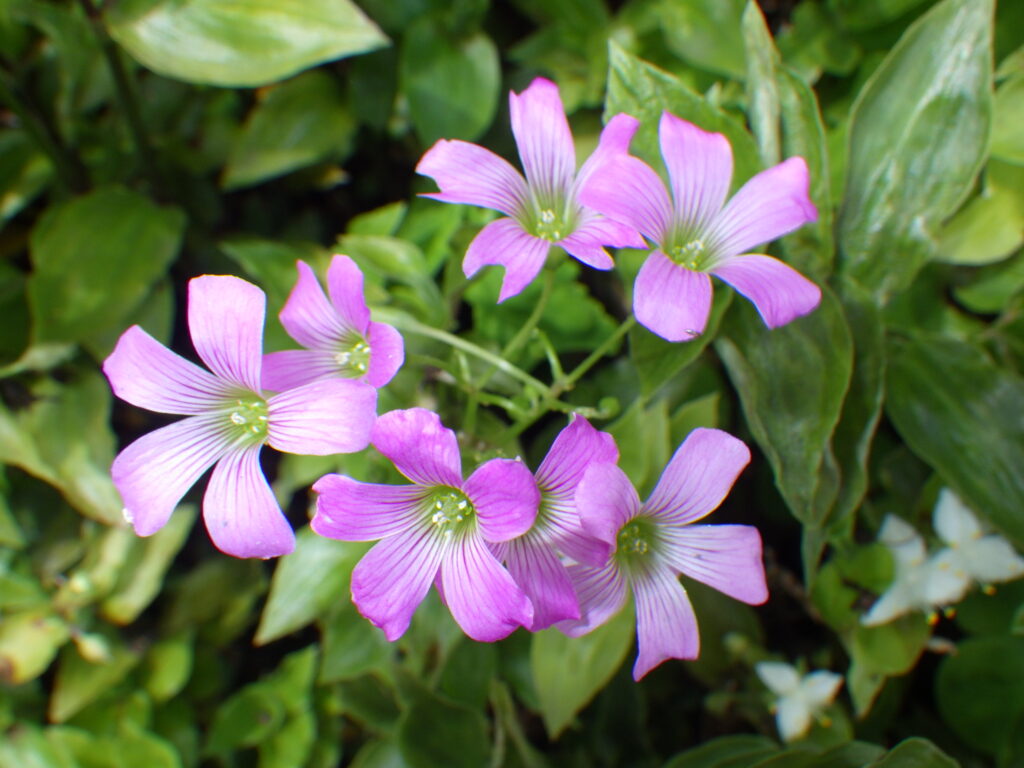
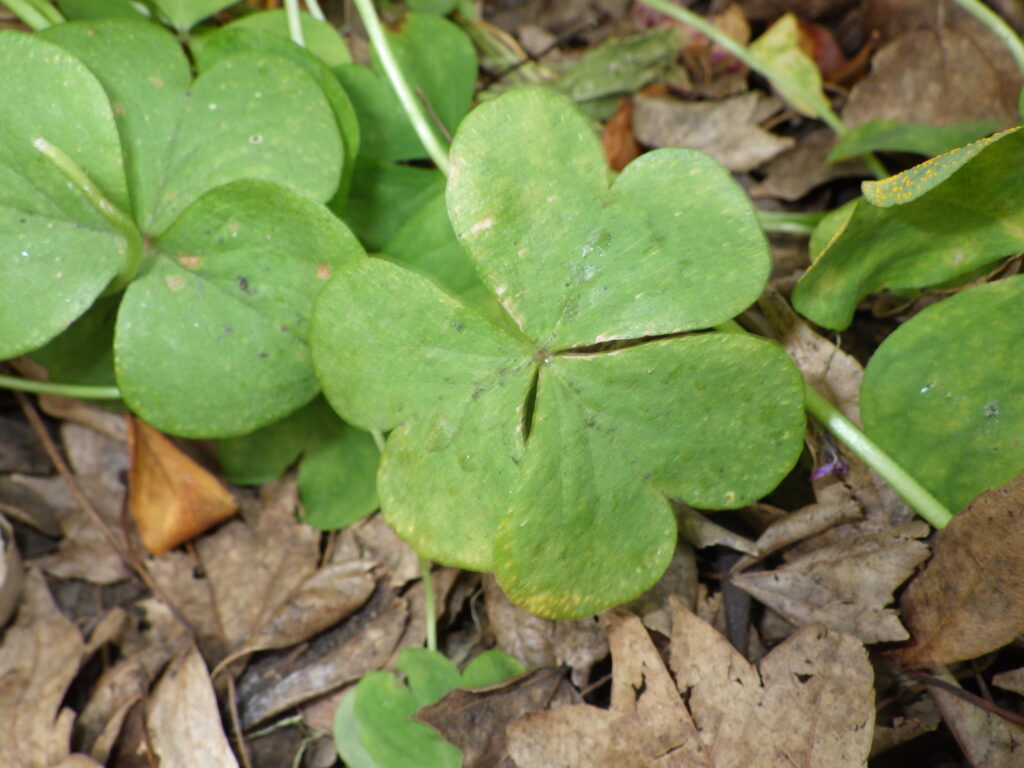
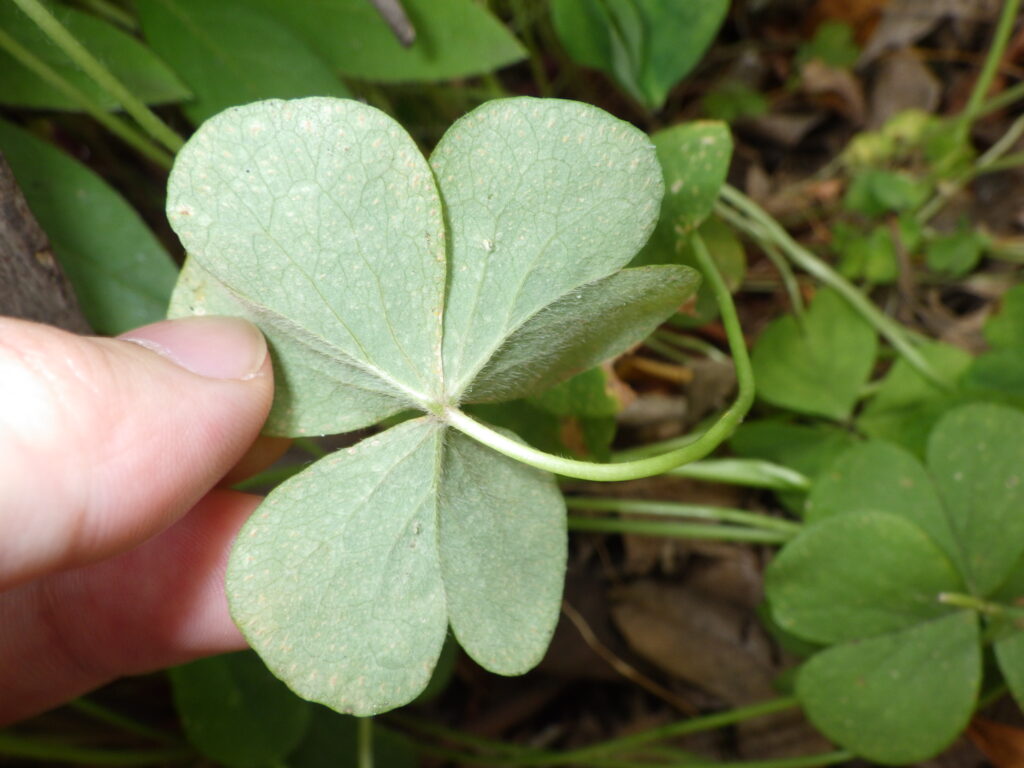
What is the variety of Oxalis tuberosa?
A known variety of Oxalis articulata is 'Alba', which simply has white flowers.
Are there any other similar types?
In Japan, there are likely two species of the Oxalis genus that have red flowers.
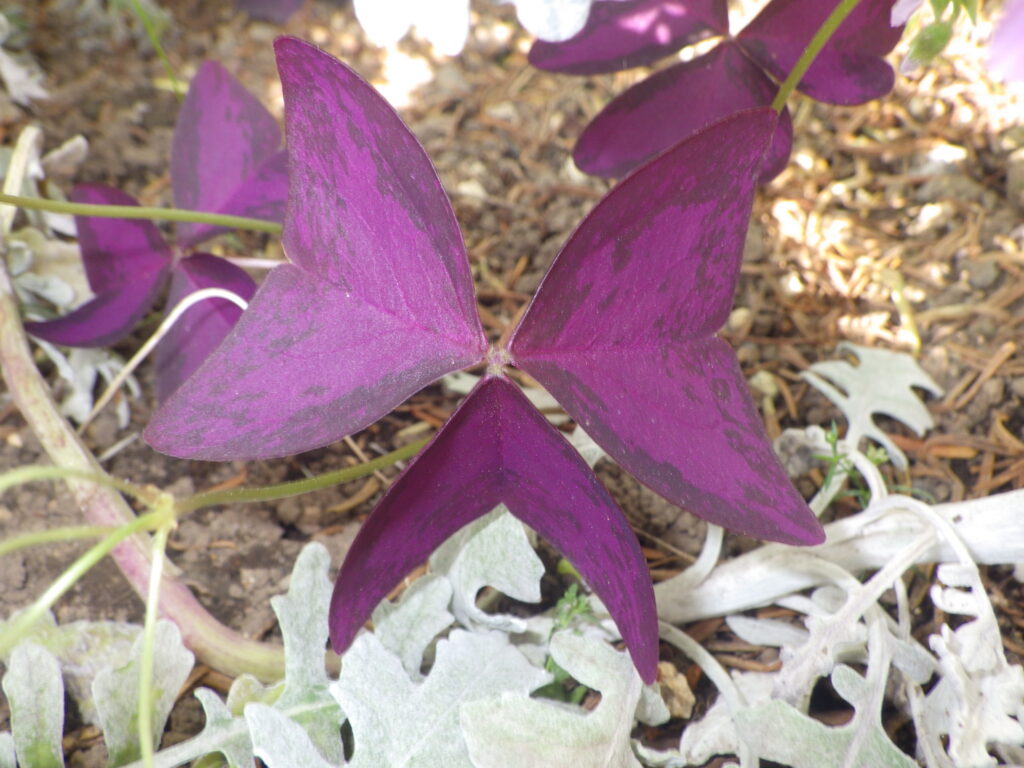
Oxalis triangularis, also known as Inca's Oxalis, Triangular Oxalis, or Crow's Oxalis, is native to South America and occasionally escapes cultivation as an ornamental plant. However, its leaflets are distinctly triangular, not heart-shaped.
Oxalis purpurea, also known as hibiscus, is native to South Africa and cultivated for ornamental purposes. It rarely naturalizes in Honshu, Shikoku, and Kyushu, but a key difference from the species introduced here is that it has only one flower per stem. The flower color is not limited to pink; it comes in various colors, the tips of the leaflets are not indented, and it has a bulb underground.
References
Kanagawa Prefecture Flora Survey Association. 2018. Kanagawa Prefecture Flora 2018 (Electronic Edition). Kanagawa Prefecture Flora Survey Association, Odawara. 1803pp. ISBN: 9784991053726
Oberlander, KC, Emshwiller, E., Bellstedt, DU, & Dreyer, LL 2009. A model of bulb evolution in the eudicot genus Oxalis (Oxalidaceae). Molecular Phylogenetics and Evolution 51(1): 54-63. https://doi.org/10.1016/j.ympev.2008.11.022
RBG Kew. 2025. The International Plant Names Index and World Checklist of Vascular Plants. Plants of the World Online. http://www.ipni.org and https://powo.science.kew.org/