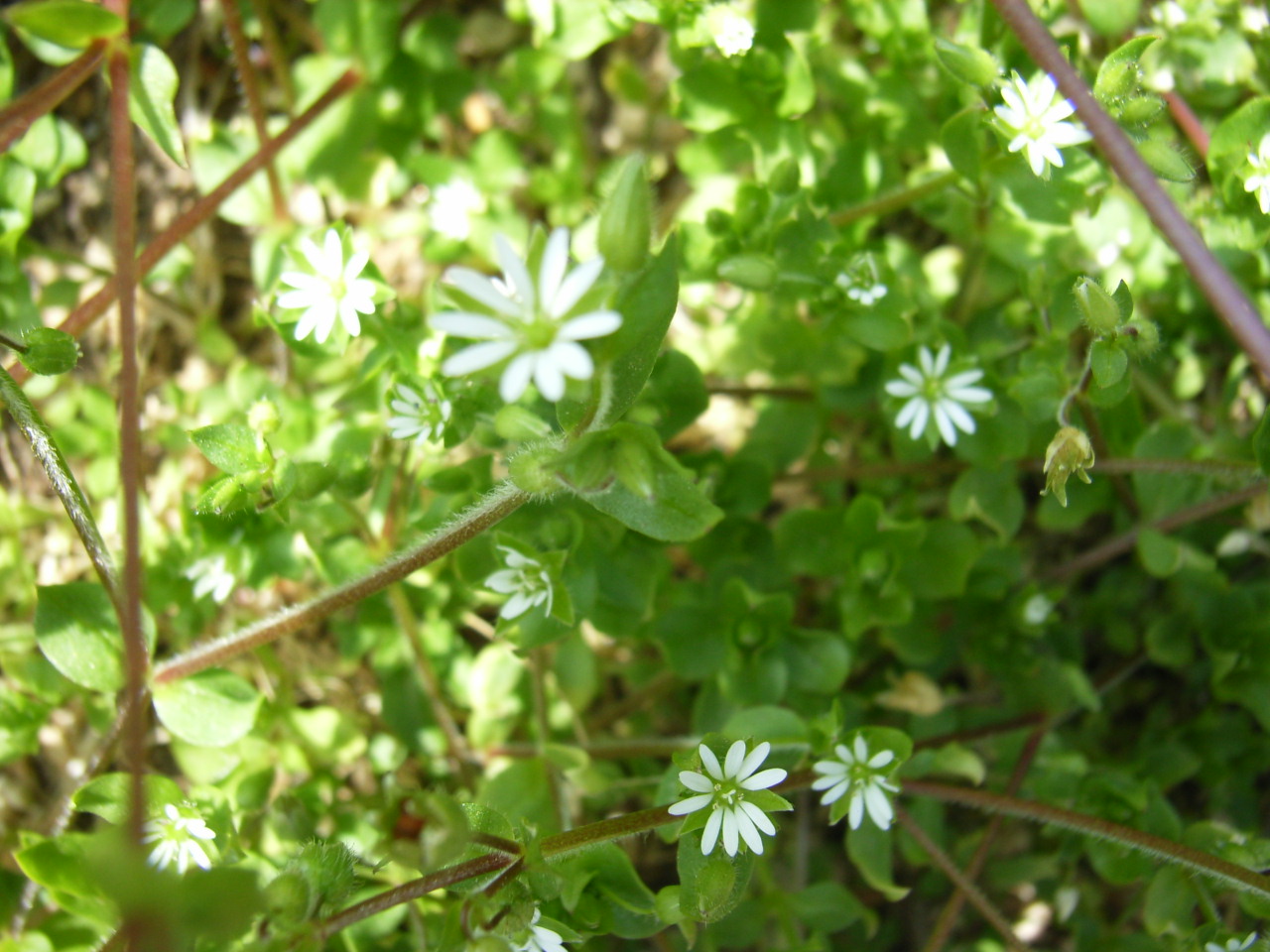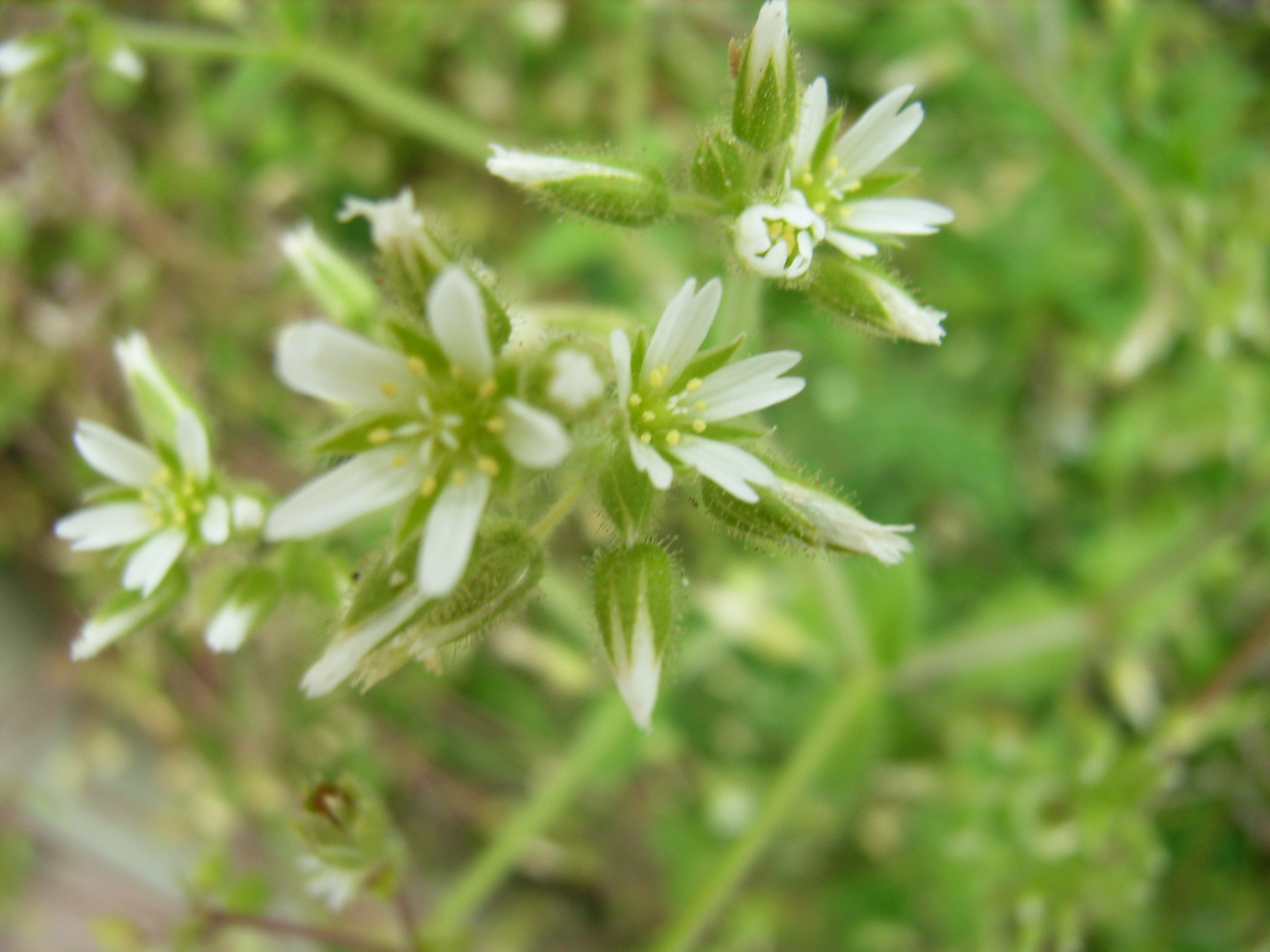
Both Chickweed (Cerastium holosteoides) and Dutch Chickweed (Cerastium holosteoides) belong to the genus Cerastium in the family Caryophyllaceae, and are extremely common plants that grow by the roadside as representative spring weeds. However, few people may be able to accurately distinguish between the two species . In some cases, close observation is necessary to distinguish between the two species, and it is recommended to pay attention to the color of the stem and the length of the flower stalks. Differences in habitat can also be helpful. Note that it is not recommended to distinguish them by checking the length of the calyx. They may often be confused with members of the genus Stellaria, but although there are exceptions, it is best to check the degree of petal division. This article will explain the classification and morphology of the genus Cerastium.
What are chickweed and Dutch chickweed?
Cerastium fontanum subsp. vulgare var. angustifolium, also known as ear chickweed, is distributed in Hokkaido, Honshu, Shikoku, Kyushu, the Ryukyu Islands, and the Ogasawara Islands in Japan; as well as in Korea, China, Sakhalin, and India. It grows along roadsides and in fields, particularly preferring semi-shaded areas and being common in slightly damp places. It is a biennial herb (Kanagawa Prefecture Flora Survey Association, 2018). Due to confusion in classification, its scientific name has been debated, with names such as Cerastium holosteoides var. hallaisanense and C. fontanum subsp. triviale var. angustifolium being used in the past, but the above scientific name is currently adopted.
Cerastium glomeratum, also known as Dutch ear chickweed, is native to Europe and has naturalized in Japan, found in Honshu, Shikoku, Kyushu, the Ryukyu Islands, and the Ogasawara Islands. It grows along roadsides and in fields, and is a biennial plant that is especially common in sunny, dry areas.
Both belong to the genus Cerastium in the family Caryophyllaceae, and are extremely common plants that grow as "weeds" along roadsides. They often grow dominantly, and when they bloom all at once from March to May in spring, they are one of the plants that signal the arrival of spring.
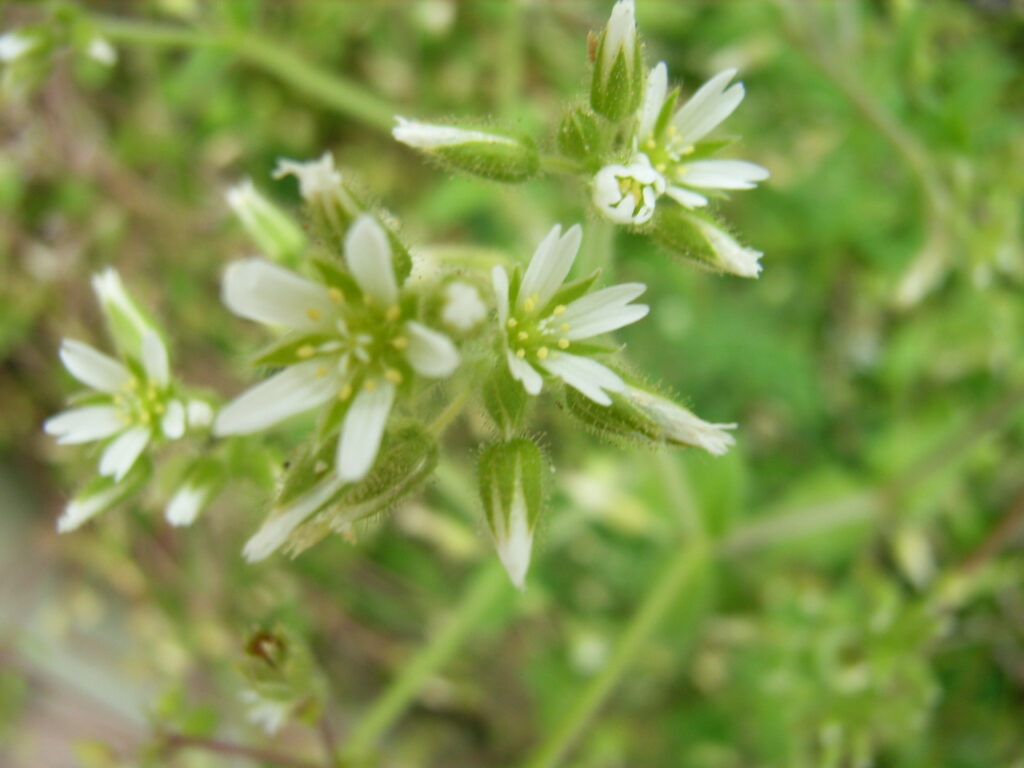
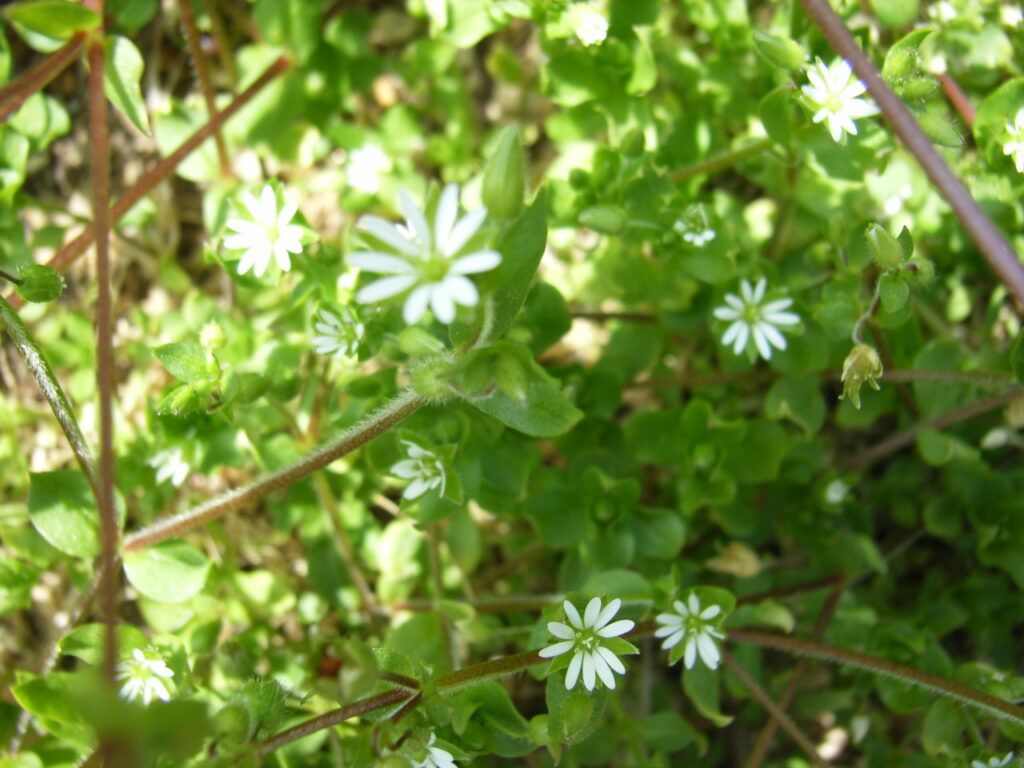
A common characteristic of these flowers is that they have five white petals, the tips of which are slightly split, resembling a fork. They also feel sticky to the touch, and you can see that they are covered in numerous glandular hairs.
However, few people may be able to accurately distinguish between the two.
Furthermore, because they grow in almost the same locations and are closely related in classification, many people may confuse them with other members of the Stellaria genus.
What is the difference between chickweed (Eurya japonica) and Dutch chickweed (Eurya japonica var. japonica)?
The two species are quite similar, so in some cases, close observation may be necessary (Kanagawa Prefecture Flora Survey Association, 2018).
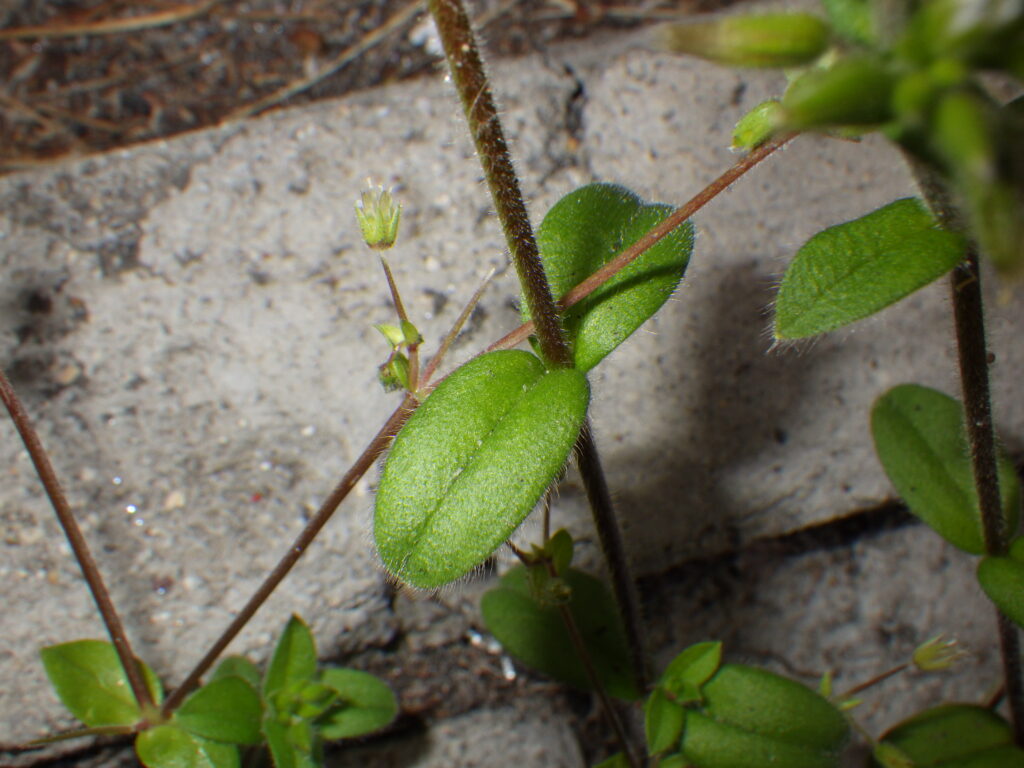
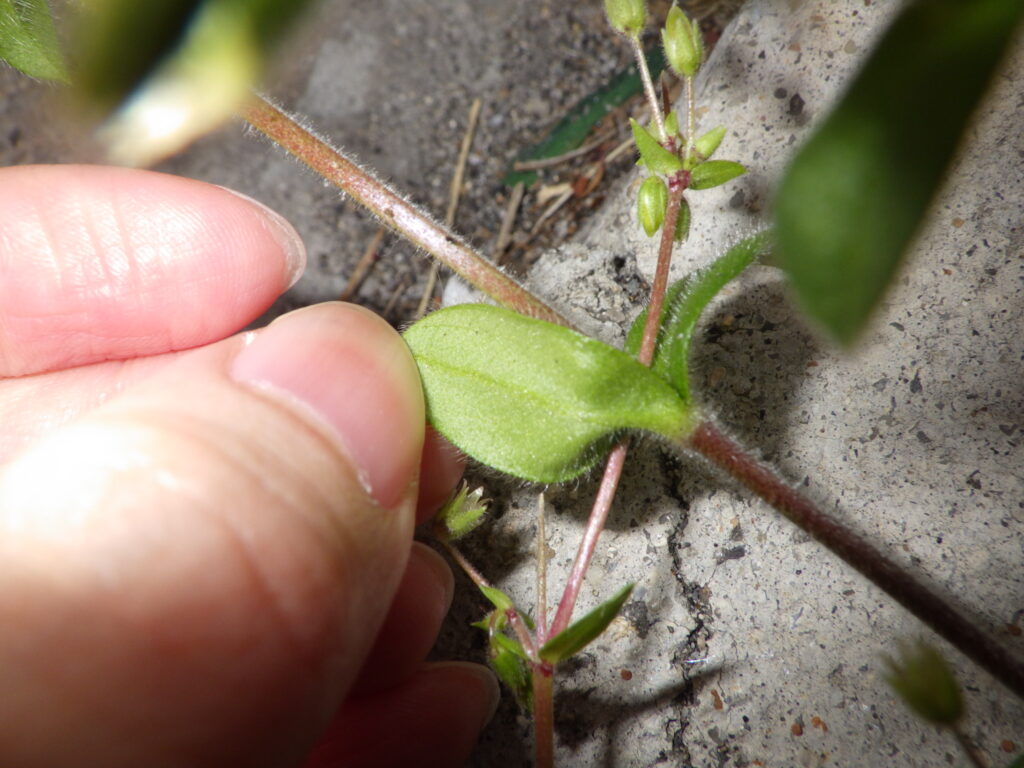
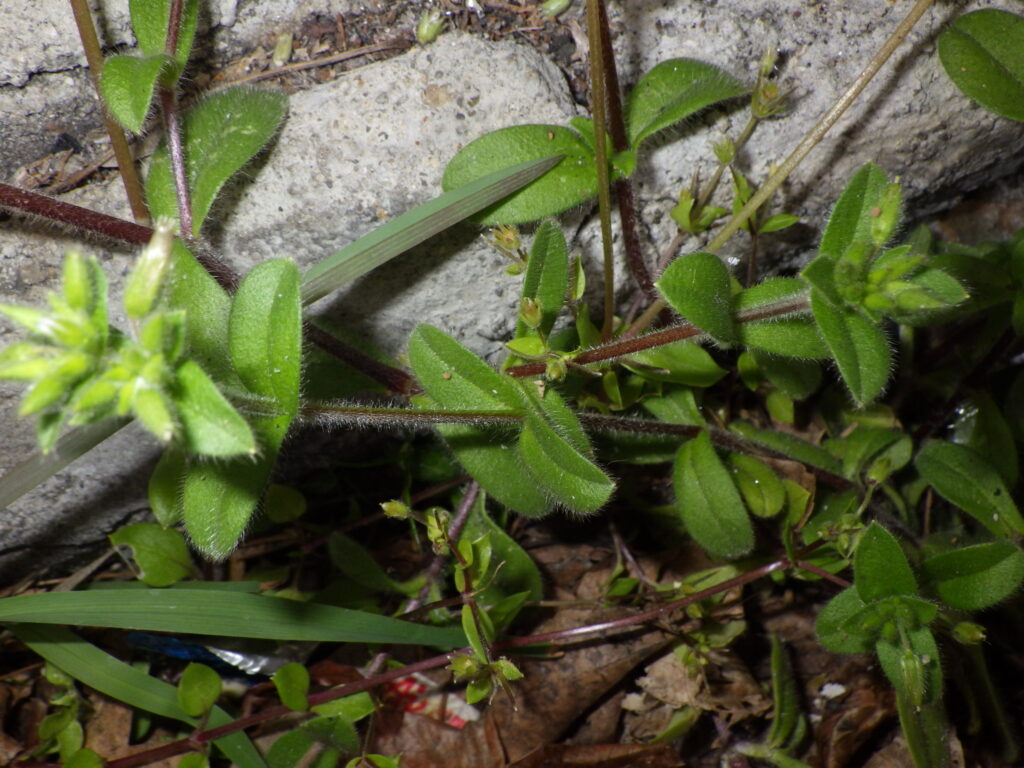
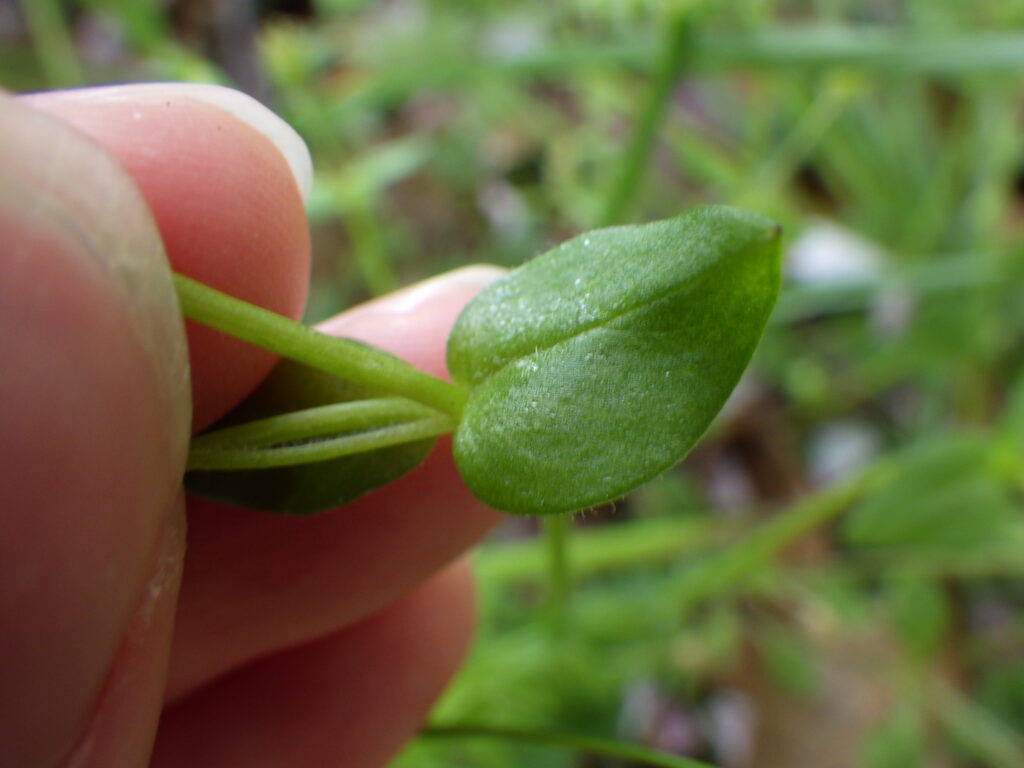
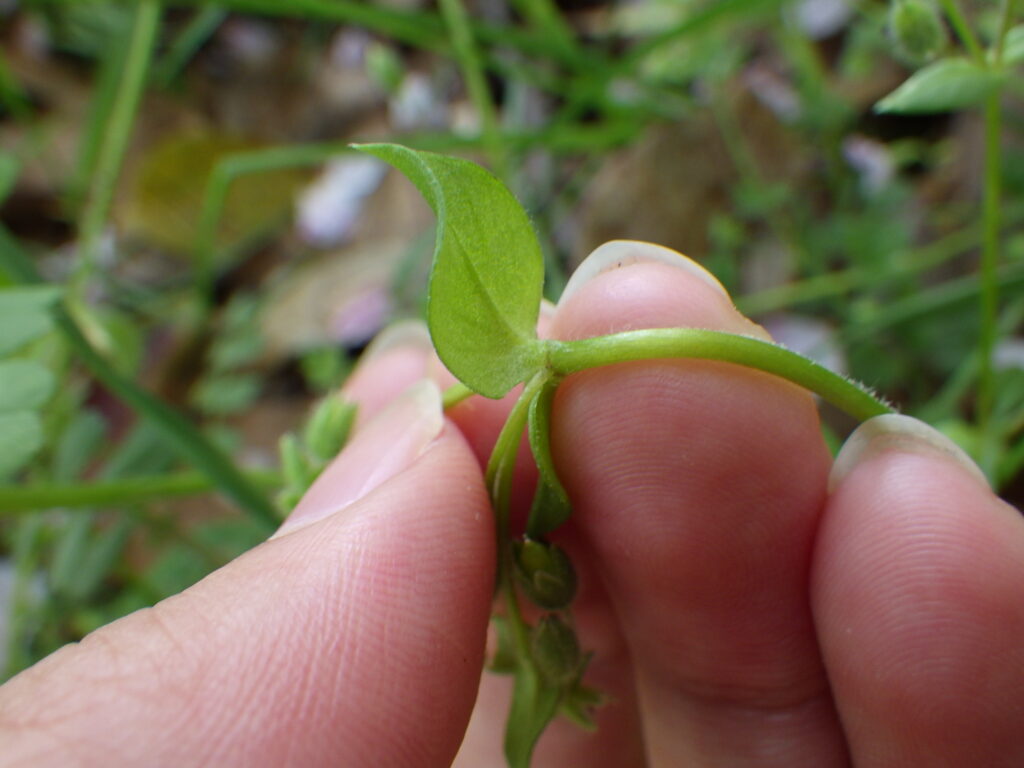
The easiest way to tell is by the color of the stem.
While the stems of *Cerastium holosteoides* are generally green, sometimes having a partially purplish tint, *Cerastium holosteoides* is predominantly purple.
However, because there is considerable individual variation and intra-individual variation, it is important to observe the whole picture rather than just looking at a part of it before making a decision.
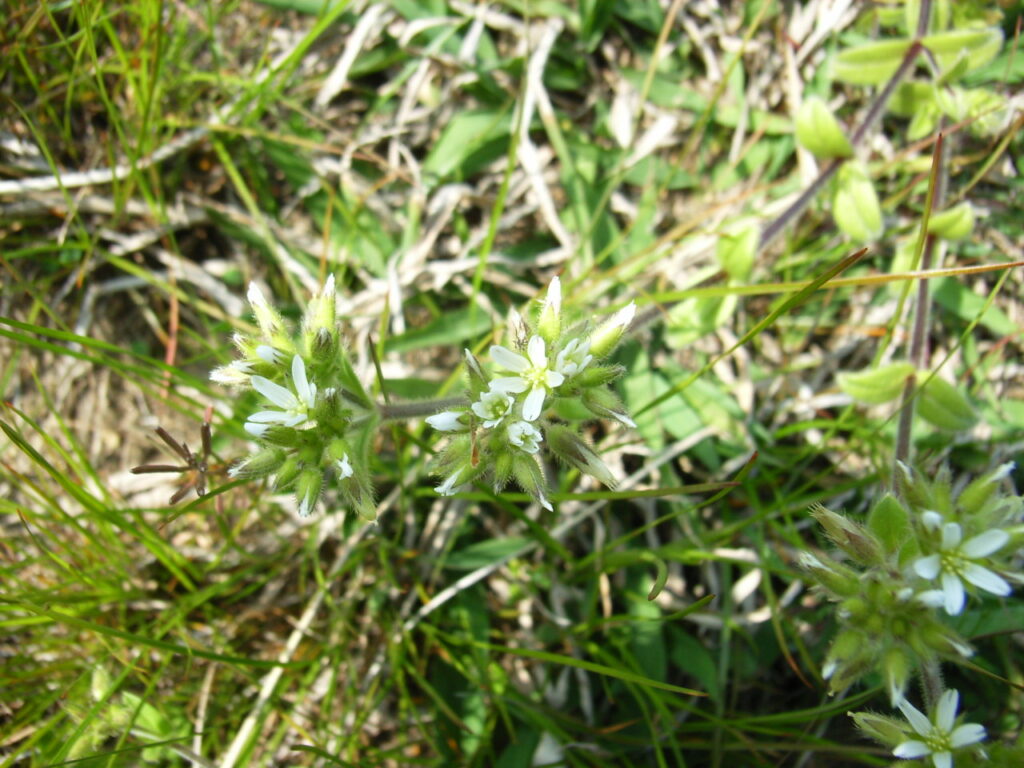
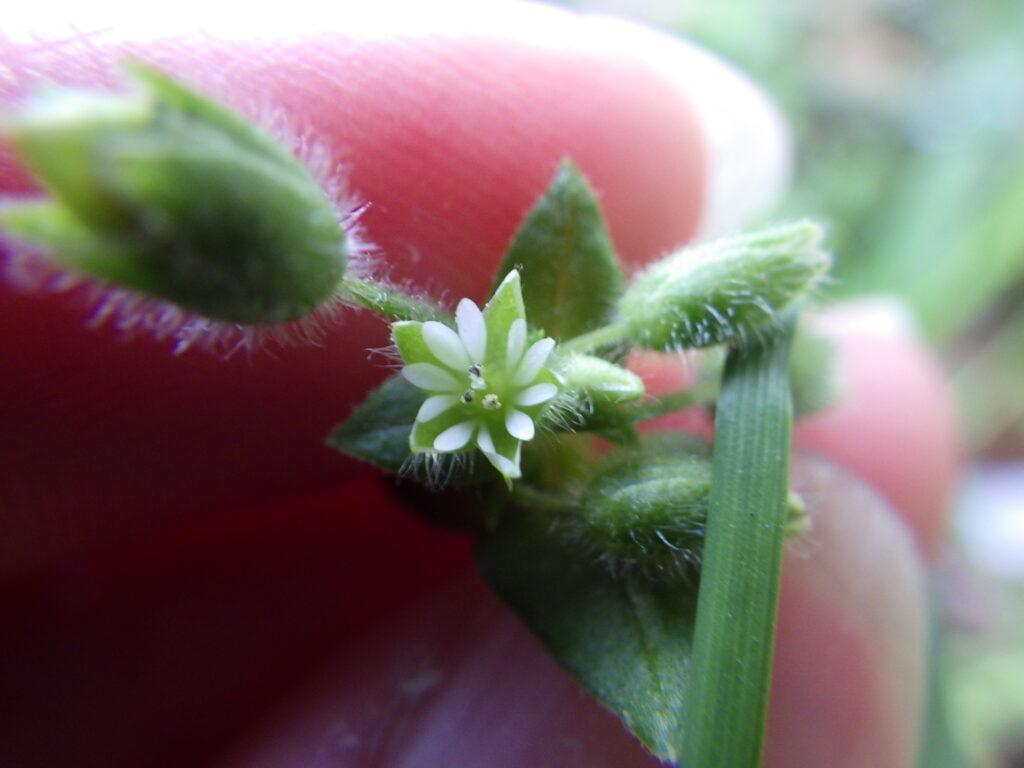
Another difference is that in chickweed, the pedicels are longer than the calyx, resulting in a sparse-looking inflorescence, while in Dutch chickweed, the pedicels are shorter than the calyx, resulting in a dense-looking inflorescence.
This is a more accurate explanation of the difference, but it might be a little difficult to understand.
As mentioned above, there are differences in their habitats; while chickweed prefers slightly damp places, Dutch chickweed prefers sunny, dry places.
If you're walking around in an urban area, you can be fairly certain that what you see on sunny roadsides is mostly chickweed (Cerastium holosteoides).
Several websites highlight the difference between the two species, stating that "in the case of chickweed, the petals and calyx are roughly the same length, and when in bud, the petals are mostly hidden by the calyx, whereas in the case of Dutch chickweed, the petals are longer than the calyx, so when in bud, the petals appear to protrude from the calyx."
However, while this is true for Cerastium fontanum, it is known that there is variation in the length of the calyx of Cerastium, and the only variety of Cerastium that fits the above description is Cerastium fontanum subsp. vulgare var. vulgare, which has sepals 5-9 mm long.
The sepals of typical chickweed are 3.5 to 5 mm long, sometimes even shorter than those of Dutch chickweed (4 to 5 mm), so let's not use this as a distinguishing feature.


What is the difference between chickweed and other types of chickweed?
Chickweeds, like ear chickweeds, belong to the genus Stellaria in the family Caryophyllaceae, but some people may not know the difference between them.
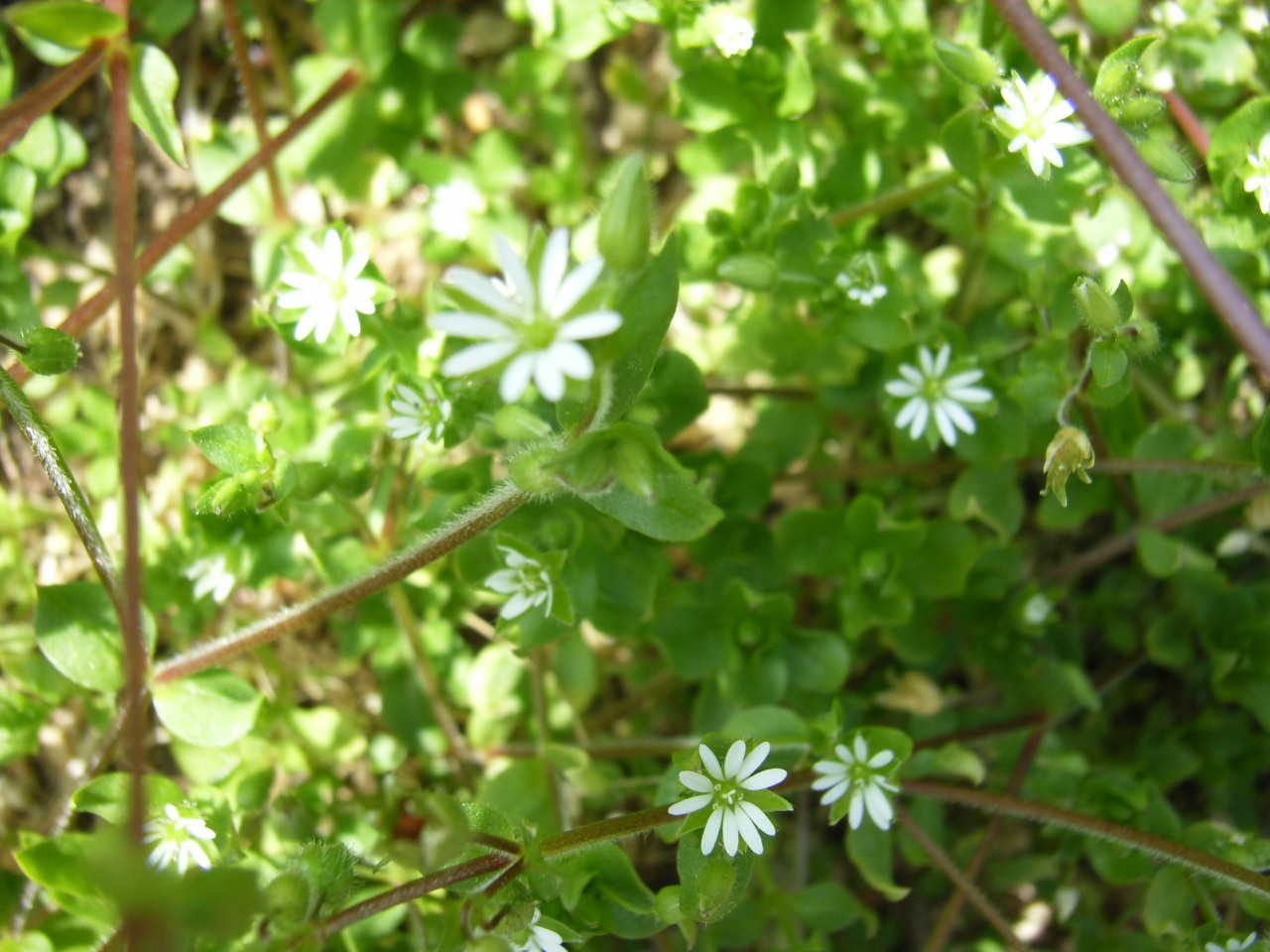
They often grow together along roadsides, especially in urban areas of Japan, which can be confusing.
I think the most obvious difference is the shape of the petals.
In chickweed species, the tips of the five petals are slightly split, resembling a fork, whereas in most chickweed species, the tips of the five petals are almost completely divided, making it appear as if there are ten petals.
Strictly speaking, the classifications of the *Cerastium* and *Stellaria* genera don't apply to all plants, but you probably won't have much trouble finding them along the roadside.
In terms of taxonomy, the genus Chickweed has five styles (part of the pistil) that are opposite to the sepals, rarely three to four, and the capsule is cylindrical, while the genus Stellaria has three styles, rarely five, that are alternate with the sepals when there are five, and the capsule is ovate or spherical.
However, as you can see, there are many exceptions and you need to look at some very fine details, so it may not be very helpful for beginners.
References
Kanagawa Prefecture Flora Survey Association. 2018. Kanagawa Prefecture Flora 2018 (Electronic Edition). Kanagawa Prefecture Flora Survey Association, Odawara. 1803pp. ISBN: 9784991053726