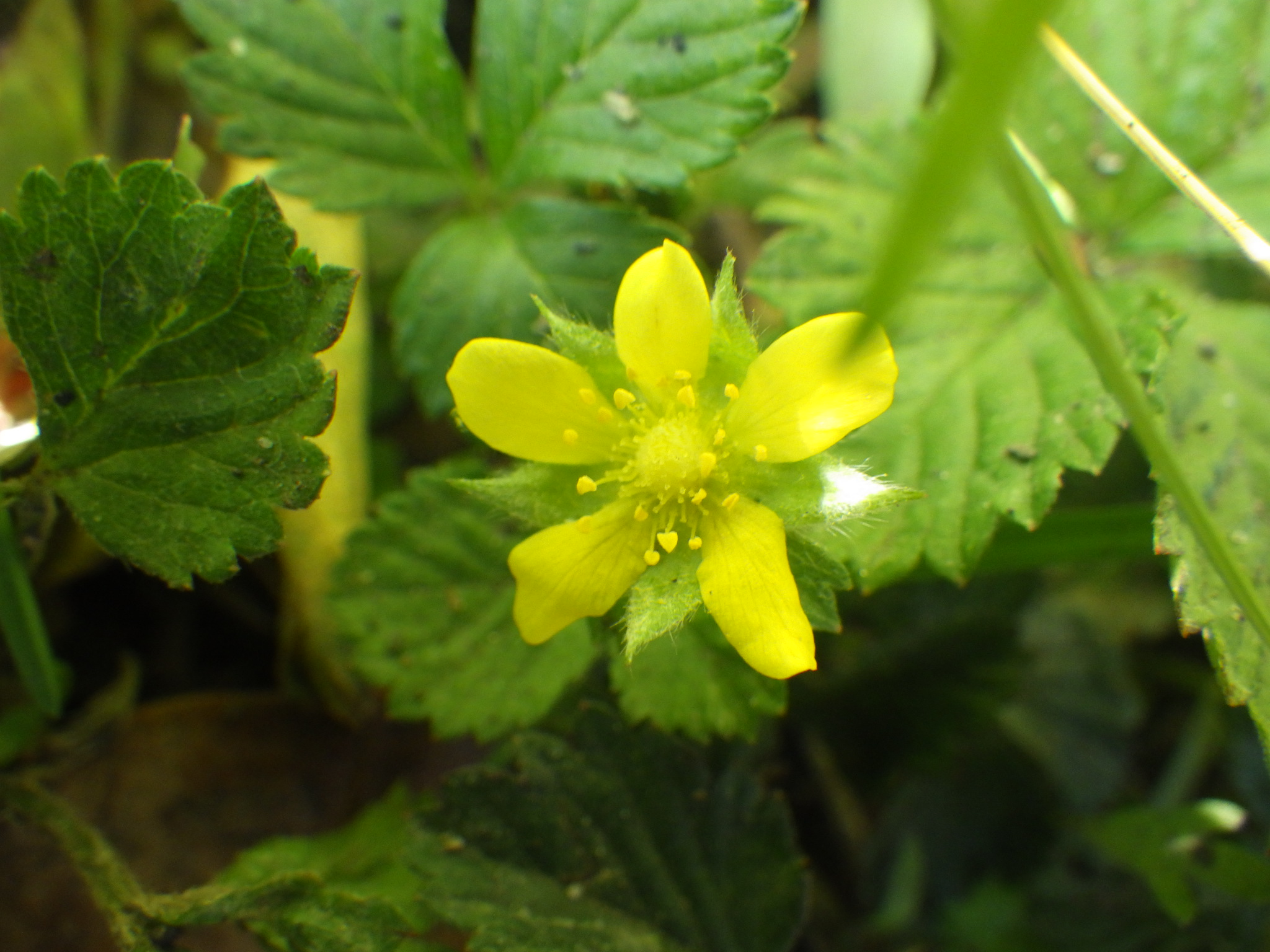
Mock strawberry, wild strawberry, and large-leaved wild strawberry are all members of the genus Potentilla in the Rosaceae family. They are three species of Potentilla that develop stolons and spread along the ground, making them representative spring weeds in Japan. Occasionally, they are called "wild strawberries" along with members of the Rubus genus. These are often featured in botanical guides, but even botanists sometimes get confused about how to distinguish them. Distinguishing between mock strawberry, wild strawberry, and large-leaved wild strawberry is easy; you can tell by looking at the leaves. The most important difference in distinguishing between mock strawberry and wild strawberry is the surface condition of the countless "bumps" on the red aggregate fruit. These bumps are botanically considered to be the true fruit. However, if there is no aggregate fruit, it is necessary to examine the leaves and flowers comprehensively, but this is not very reliable as intermediate individuals can also be found. This article will explain the mock strawberry species of the genus Potentilla.
- What are wild strawberries, bush strawberries, and large wild strawberries?
- What are the differences between wild strawberry, bush strawberry, and common wild strawberry?
- Are there any other similar species? What are the differences between this and wild strawberries and Japanese raspberries?
- References
What are wild strawberries, bush strawberries, and large wild strawberries?
Potentilla hebiichigo (wild strawberry) is an evergreen perennial herb distributed in Hokkaido, Honshu, Shikoku, Kyushu, and the Ryukyu Islands in Japan; as well as in Korea, southern China, Taiwan, and Southeast Asia, growing from the forest floor of deciduous forests to sunny grasslands (Kanagawa Prefecture Flora Survey Association, 2018).
Potentilla indica, also known as wild strawberry (Potentilla indica), is an evergreen perennial herb distributed in Hokkaido, Honshu, Shikoku, Kyushu, the Ryukyu Islands, Korea, China, Southeast Asia, India, and other regions, growing on the forest floor in forest edges and bamboo groves. It is cultivated as an ornamental plant in Europe and North America, where it has escaped cultivation and become naturalized.
Potentilla anemonifolia, also known as the snake strawberry, is distributed in Honshu, Shikoku, and Kyushu in Japan; as well as in Korea, China, the Indochina Peninsula, Indonesia, and India. It is an evergreen perennial herb that grows abundantly in sunny, humid grasslands such as rice paddy ridges and riverbanks.
All three species belong to the genus Potentilla in the family Rosaceae, and are known as representative Japanese weeds that develop stolons and spread along the ground. Occasionally, they are referred to as "wild strawberries" along with members of the genus Rubus.
The Japanese name "hebiichigo" (snake strawberry) is said to have originated from two theories: one is that it grows in places where snakes are found, and the other is that it is a strawberry that humans do not eat (but snakes do). Personally, I think the name may also be derived from the fact that it grows by crawling like a snake. However, snakes do not actually eat wild strawberries.
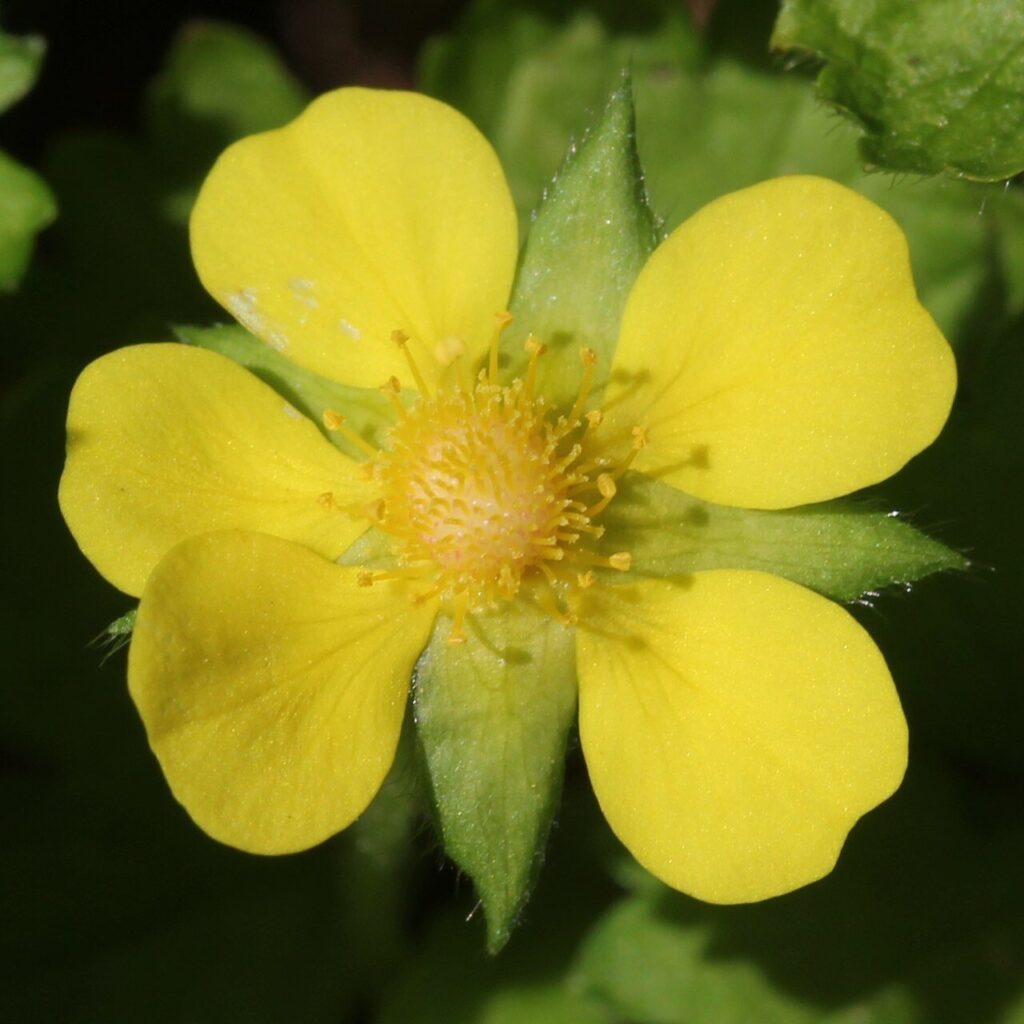
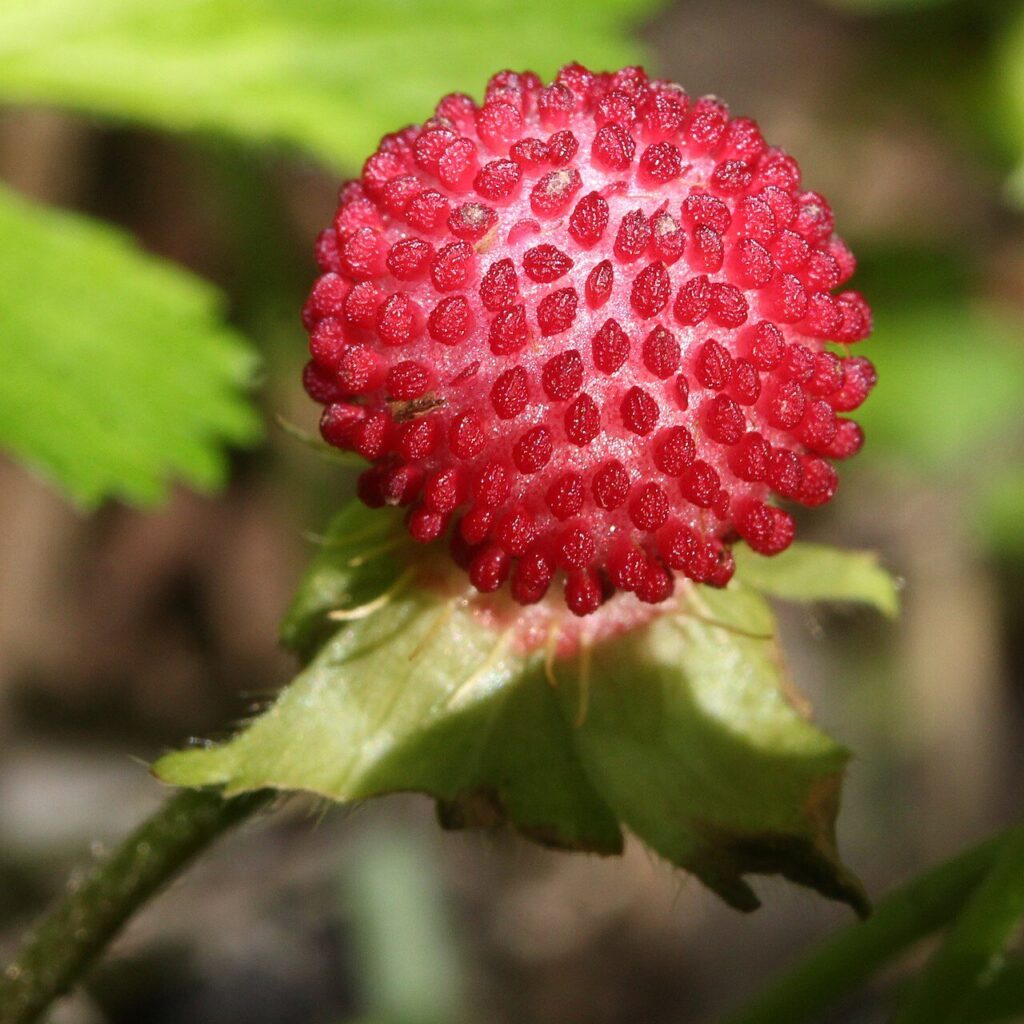
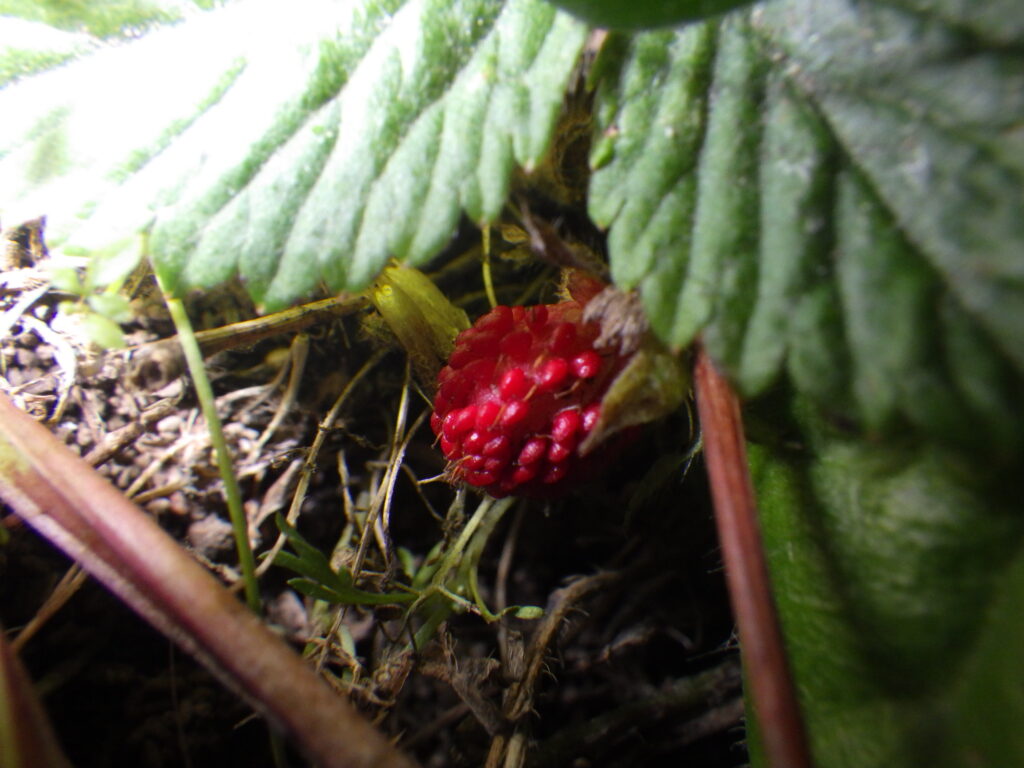
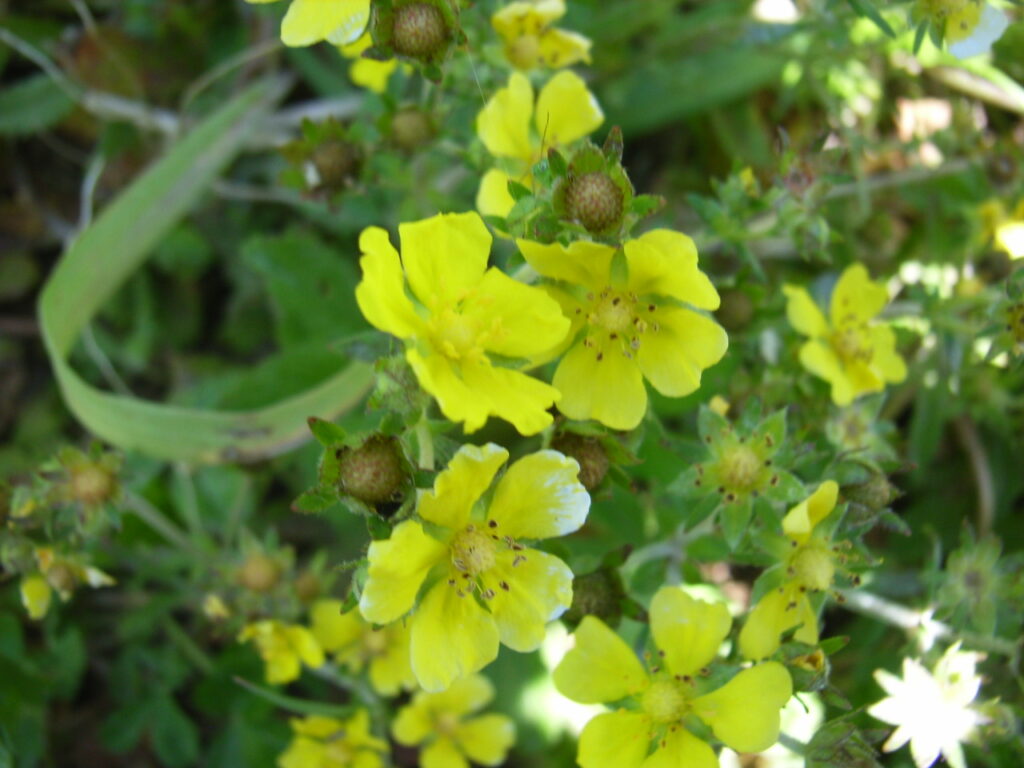
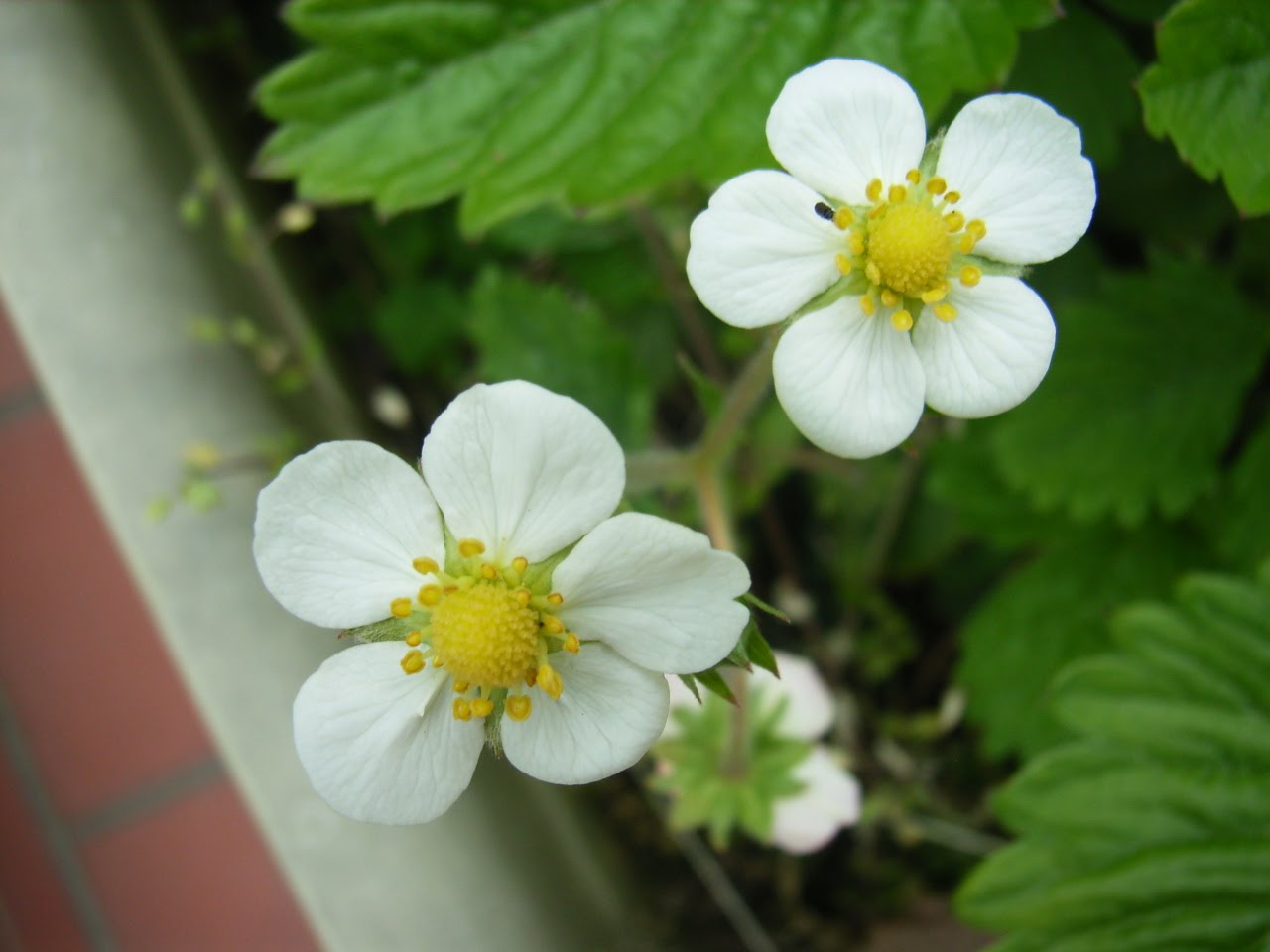
The plant blooms in spring, from April to June, producing yellow flowers composed of five petals. After pollination, it produces bright red, ripe fruits, but these are called "aggregate fruits" and are not true fruits. Aggregate fruits are formed when the receptacle (the part that looks like a seed) enlarges, and numerous achenes (the small, bumpy parts) that are the actual fruits attach to it. This is a special structure called an "etaerio," similar to other plants in the Potentilla genus and the dessert strawberry. However, unlike the strawberry, the receptacle is not sweet and is not tasty to eat.
Although these "wild strawberries" are very common, how to distinguish between them may not be widely known.
What are the differences between wild strawberry, bush strawberry, and common wild strawberry?
Distinguishing between these three species is somewhat difficult, despite them being frequently featured in botanical guides (Kanagawa Prefecture Flora Survey Association, 2018).
However, distinguishing between wild strawberries and other species is easy.
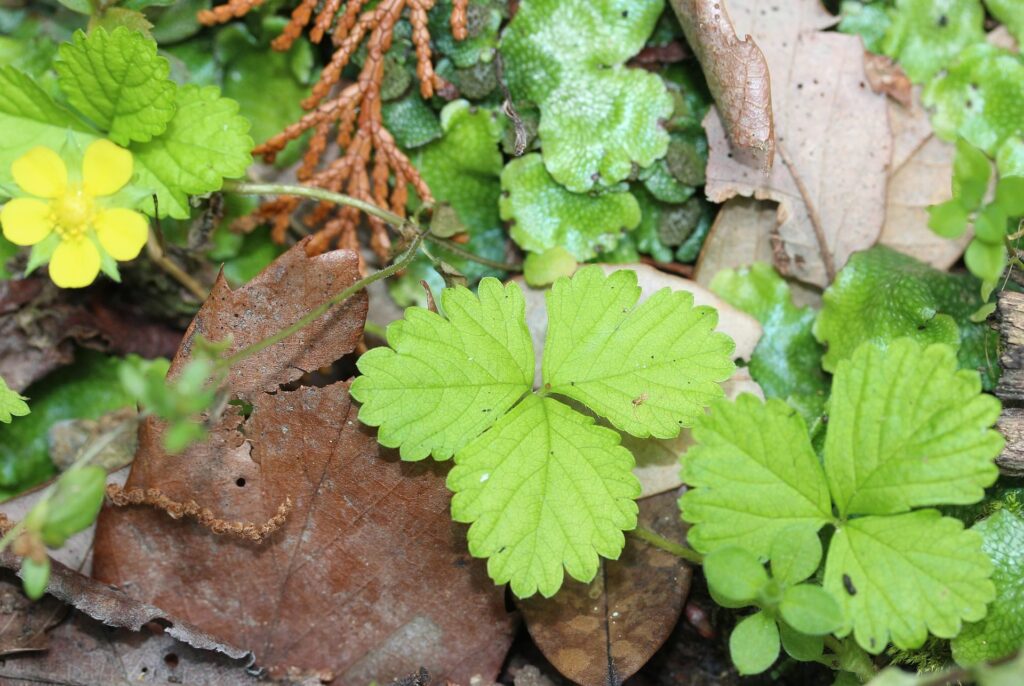
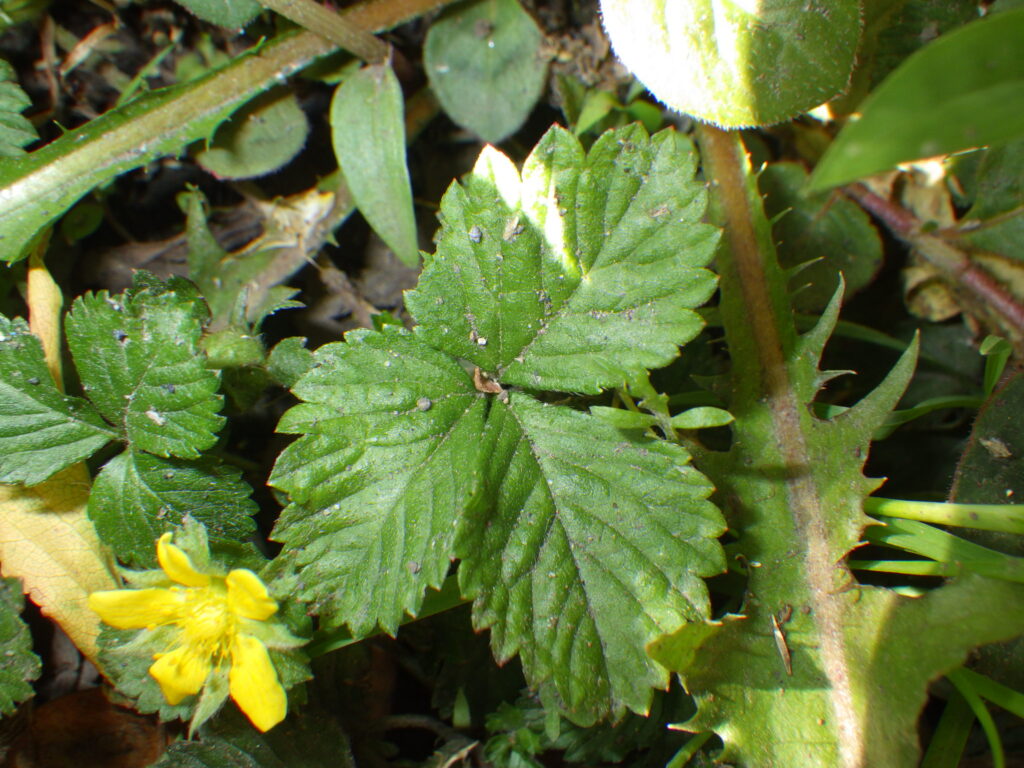
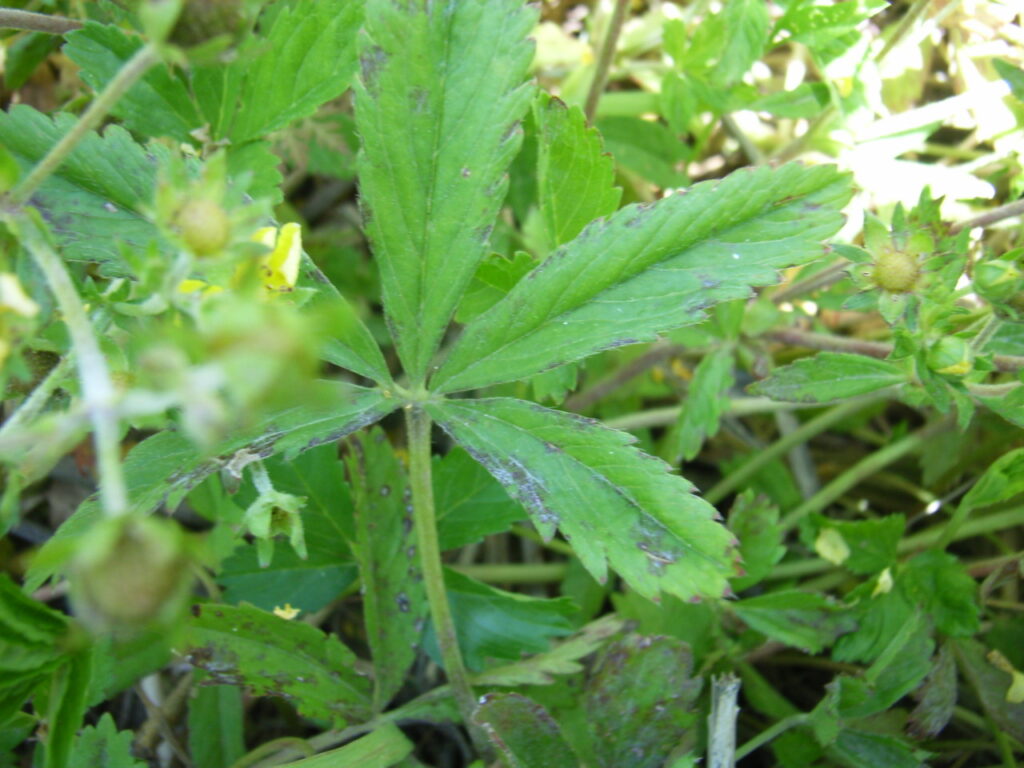
The difference between wild strawberry and Japanese wild strawberry is that the leaves are trifoliate compound leaves (where one leaf is divided into three), while those of the common wild strawberry are pentafoliate palmate compound leaves (where one leaf is divided into five).
This distinction can be easily made by simply looking at the leaves. Also, the wild strawberry often does not creep along the ground completely.
The question is, what is the difference between wild strawberry and bush strawberry?
The most important difference between these two species lies in the surface of the fruit (achene) attached to the aggregate fruit.
In contrast to the wild strawberry (Potentilla indica), the surface of the achene is dull and has distinct knob-like protrusions, while in the Japanese wild strawberry (Potentilla fragarioides), the surface of the achene is glossy and almost smooth.
If you check this point during the period when the plant bears aggregate fruit (May to June), you should be able to distinguish them reliably.
However, it can be difficult to distinguish between them at other times.
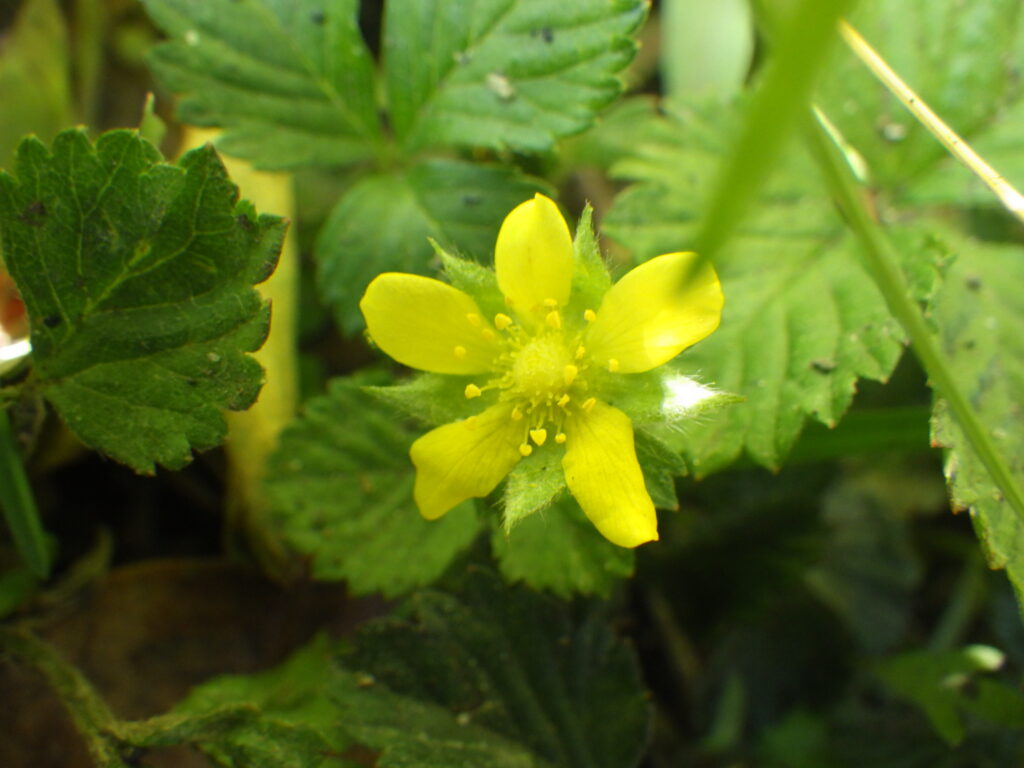
Other differences often mentioned in botanical guides include the fact that in wild strawberry, the terminal leaflet (the uppermost of the three leaflets) is broadly ovate with a blunt tip, the margin is often doubly serrated, and the petals are broader and obcardiate (heart-shaped), while in Japanese wild strawberry, the terminal leaflet is rhomboid-oblong with an acute tip, the margin is rarely doubly serrated, and the petals are more elongated and narrowly obovate.
However, individuals with intermediate traits are often found, which can make it difficult even for those creating botanical guides to make a judgment.
If there are no fruits, it seems the only option is to check these three characteristics and make a comprehensive judgment.
The differences in their habitats are also known; wild strawberries (Potentilla indica) are often found in damp, sunny places such as rice paddy dikes, while Japanese wild strawberries (Potentilla fragarioides) are more common in shady areas. This point may also be helpful.
If you find no fruit at all despite the plant flowering between April and June, it is highly likely to be Potentilla x hara-kurosawae, a hybrid of wild strawberry and Japanese wild strawberry. Potentilla x hara-kurosawae is sterile and does not produce seeds to reproduce.
Are there any other similar species? What are the differences between this and wild strawberries and Japanese raspberries?
There are many other plants in the rose family that are called "strawberries," with the Rubus genus and the wild strawberry (Fragaria serrata) being representative examples.
The method for distinguishing them is explained in a separate article, so please refer to that.
References
Kanagawa Prefecture Flora Survey Association. 2018. Kanagawa Prefecture Flora 2018 (Electronic Edition). Kanagawa Prefecture Flora Survey Association, Odawara. 1803pp. ISBN: 9784991053726