Rosaceae

Sponsored Link
plant

What are the differences between Gomphrena globosa (globe amaranth) and Gomphrena globosa (yellow gomphrena)? What are the differences between them and crape myrtle (Lagerstroemia indica), Sanguisorba officinalis (burnet), and white clover (Trifolium repens)? We'll explain how to distinguish between similar species.

Both Gomphrena globosa (globe amaranth) and Gomphrena globosa (yellow globe amaranth) belong to the genus Gomphrena in the Amaranthaceae family. Their bright, almost fluorescent-colored flowers and long flowering periods make them popular ornamental plants frequently planted in gardens. However, the differences between these two species are not well understood...
plant

What are the differences between *Persicaria filiformis*, *Persicaria thunbergii*, and *Persicaria filiformis*? An explanation of how to distinguish between similar species.

*Persicaria filiformis*, *Persicaria thunbergii*, and *Persicaria filiformis* are all perennial herbs belonging to the genus *Persicaria* in the rose family, and in Japan they grow in forest edges and other similar areas. Their most distinctive features are the hook-shaped thorns beneath the calyx and their fruits, which are burrs that stick to surfaces. These two species, as their names suggest, differ primarily in their overall size...
plant

What are the differences between Parnassia palustris, Parnassia japonica, and Parnassia japonica? We'll explain how to distinguish between similar species! What are the structures of their flowers and fruits?

Parnassia palustris, Parnassia japonica, and Parnassia japonica are all perennial herbs belonging to the genus Parnassia in the family Celastraceae. Their names are similar, and their leaves and flowers are morphologically alike, which can sometimes make identification difficult. These three species can be distinguished primarily by the number of lobes in the staminodes of the flower...
plant

What are the differences between Hypericum patulum, Hypericum patulum, Hypericum humile (Hidcote), and Hypericum patulum? An explanation of how to distinguish between similar species.

Hypericum patulum, Hypericum patulum, Hypericum humile (Hidcote), and Hypericum patulum are all evergreen shrubs belonging to the Hypericaceae family, genus Hypericum, and are cultivated in Japan for ornamental purposes. They are frequently seen in urban areas and are very popular for their yellow flowers, but their characteristics...
Seed Plant Encyclopedia

[Seed Plant Encyclopedia #072] What are the species of the Smilax family? Photo list

The family Smilacaceae, also known as the Smilax family, is a perennial herb or subshrub, mostly climbing plants. They typically have short rhizomes. Leaves are alternate, with tendrils on the petioles. Inflorescences are usually umbels. Perianth segments are usually free, with three of each being identical in shape and texture to the outer and inner segments. The ovary is...
plant

How dangerous is the poison in oleanders? Why are they a symbol of peace in Hiroshima? The oleander flower, which doesn't secrete nectar, mimics an endangered species!?

Oleander is a common ornamental tree found in various locations throughout Japan, such as in parks and as street trees. However, it originally thrives in the Mediterranean and Southeast Asia. While there are various theories, it's said that 5 to 15 leaves are a lethal dose, and although extremely rare, there have been reports of poisoning in Japan. Furthermore, the smoke from burning oleander is also toxic...
plant

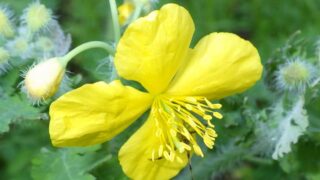
What are the differences between Greater Celandine and Japanese Kerria? We'll explain how to distinguish between similar species! Are they poisonous? Why do Greater Celandine flowers bloom at an angle?

Both *Chelidonium majus* and *Cornus kousa* are wild species of the poppy family, composed of four yellow petals, so it can be difficult to distinguish between them. Their leaves can be differentiated by the presence or absence of serrations on the leaflets, and their flowers are almost identical, but there are differences in the arrangement of the inflorescence and the shape of the stamens and pistils...
plant

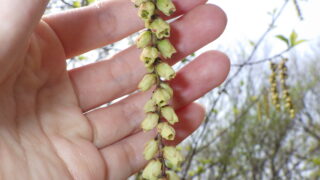
What are the differences between *Kibushi* and *Hachijo-kibushi*? What are the different species in the *Kibushi* genus? We'll explain how to distinguish between similar species! Do the fruits turn your teeth black? Did the flowers have a strategy to attract different insects during the day and night?

Stachyurus praecox, once considered endemic to Japan, is now widely distributed throughout the country. Although there are only two distinct species, their varieties are quite diverse, making identification difficult. While some argue that these variations exhibit continuity and should not be distinguished, this article will deliberately avoid making distinctions...
plant

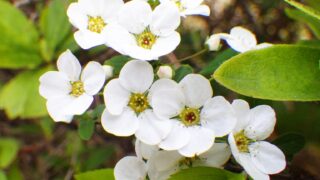
What are the differences between Spiraea thunbergii, Spiraea cantoniensis, and Lycaena phlaeas? We explain how to distinguish between similar species! Did you know that flies surprisingly love the flowers of Spiraea thunbergii in gardens?

Spiraea thunbergii, Spiraea cantoniensis, and Spiraea thunbergii are representative species of the Spiraea genus in Japan, blooming with white flowers in spring. They are also cultivated for ornamental purposes. Distinguishing between them is relatively easy; you can quickly tell them apart by examining the inflorescence and flower shape. Their leaf shapes are also distinctive, so if you look closely, you can identify them even when they are not in bloom...
plant

What are the differences between Ternstroemia gymnanthera, Pittosporum tobira, Rhaphiolepis indica, and Ilex crenata? We explain how to distinguish between similar species! Did you know that Ternstroemia gymnanthera is a rare species in the biological world, possessing both male and hermaphroditic flowers on separate plants? And that its fruit deceives birds?

Ternstroemia gymnanthera is an evergreen tree that grows in relatively dry areas near the coast and is quite popular as a garden tree. However, because its leaves are entire and have no serrations, it lacks distinctive features and is often confused with completely different species such as Pittosporum tobira, Rhaphiolepis indica, and Ilex crenata. However, in many cases, the color of the leaf stalks...
Sponsored Link