Clerodendrum trichotomum, named for the foul odor of its leaves, is a tree distributed in East Asia. Several varieties and closely related species are known. These can be distinguished mainly by the length of the stamens on the flowers and the amount and shape of the hairs on the leaves. The leaves do have an odor, but not everyone finds it unpleasant; some people find it to have a pleasant scent, like peanut butter. This odor is thought to have an effect in protecting the plant from insects. The flowers of Clerodendrum trichotomum have very long stamens, which is thought to be an adaptation for pollination by hawk moths at night and by butterflies during the day. This article will explain the classification, distribution, characteristics, pollination ecology, and seed dispersal of Clerodendrum trichotomum.
- A smelly tree that grows on the forest edges of East Asia?
- What are the differences between Clerodendrum trichotomum, Clerodendrum sibiricum, Clerodendrum humile, and Clerodendrum sibiricum?
- Does Clerodendrum trichotomum really smell bad? What role does its odor play?
- The flowers of the Clerodendrum trichotomum, with their unusually long stamens, attract nocturnal hawk moths!?
- Butterflies were the primary pollinators during the daytime!?
- The fruits of the Clerodendrum trichotomum plant attract birds with their strikingly contrasting colors!?
- References
- Source
A smelly tree that grows on the forest edges of East Asia?
Clerodendrum trichotomum, also known as Kusagi (in the broad sense), is written in kanji as "臭木" (stinky tree). It is a deciduous small tree distributed in Korea, China, and Japan (from Hokkaido to Okinawa), inhabiting roadside bushes, forest edges, and degraded forests (Satake, 1999).
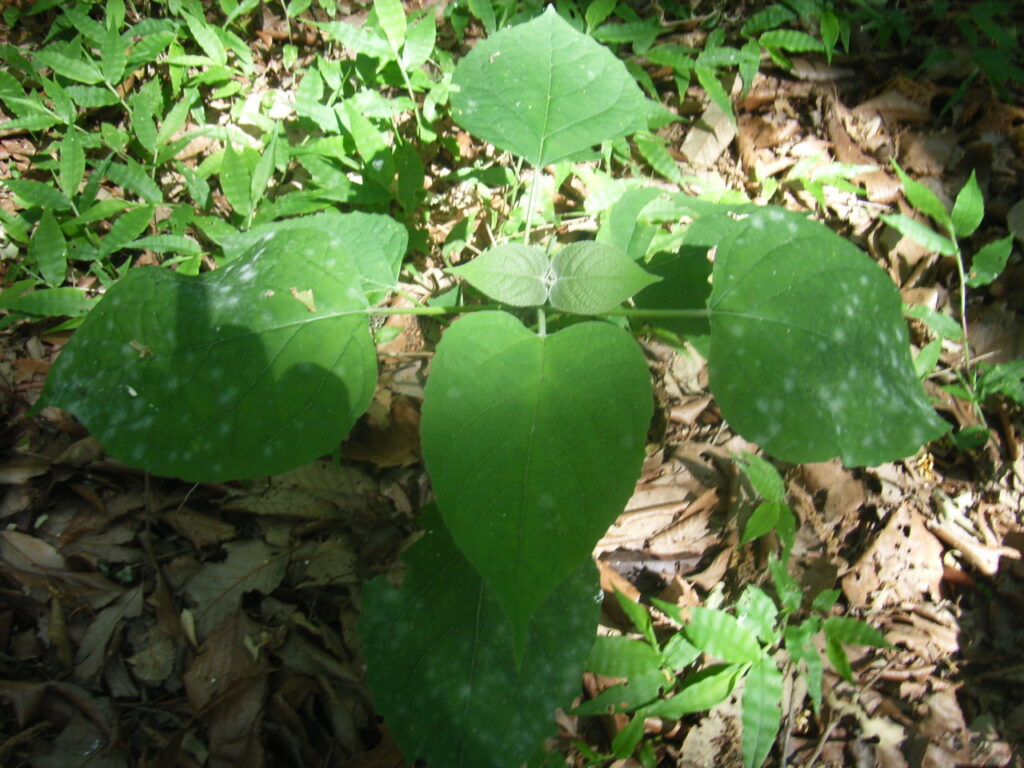
Although it is a small tree belonging to the genus Clerodendrum in the Lamiaceae family, young trees can often be seen growing at ground level.
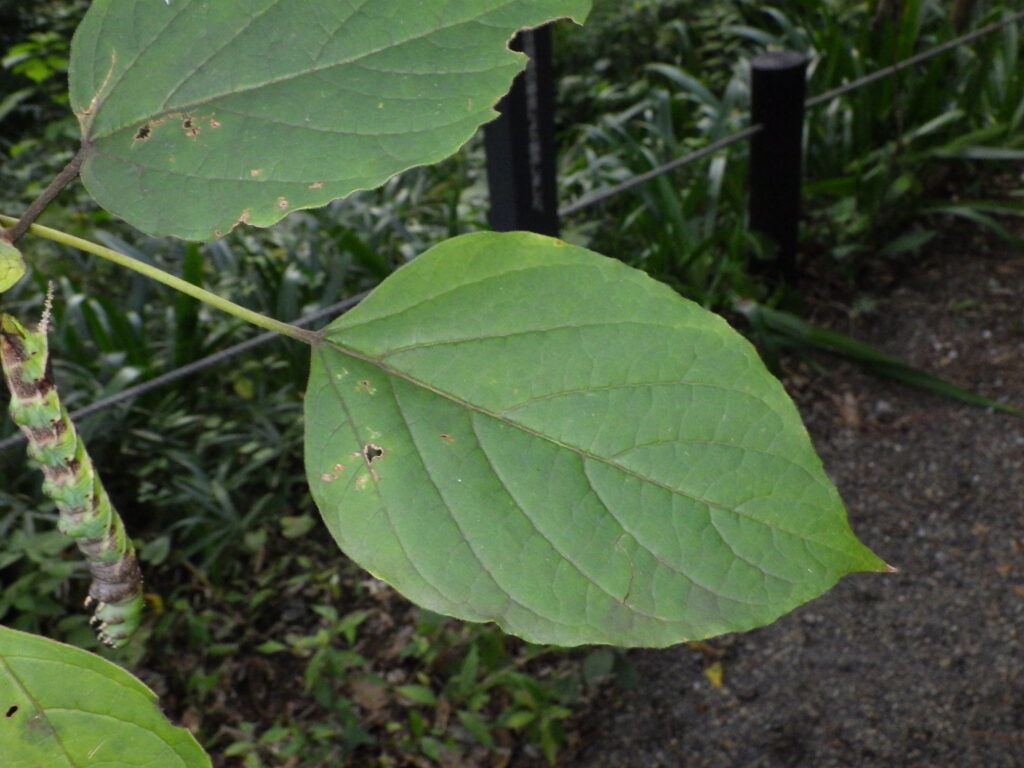
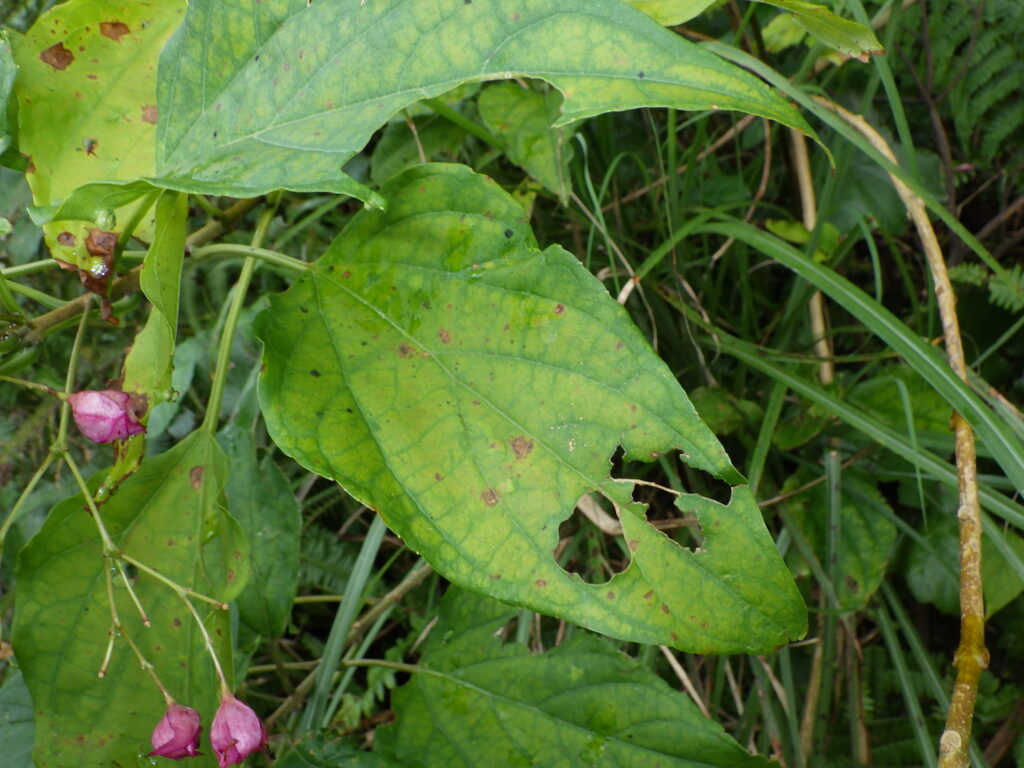
The leaves are rounded triangular in shape and somewhat large. Young trees often have leaves with blunt serrations, but mature trees tend to have more leaves with entire margins (Hayashi, 2014).
When the leaves are rubbed or otherwise disturbed, they emit a distinctive odor, which is the origin of the plant's name.
What are the differences between Clerodendrum trichotomum, Clerodendrum sibiricum, Clerodendrum humile, and Clerodendrum sibiricum?
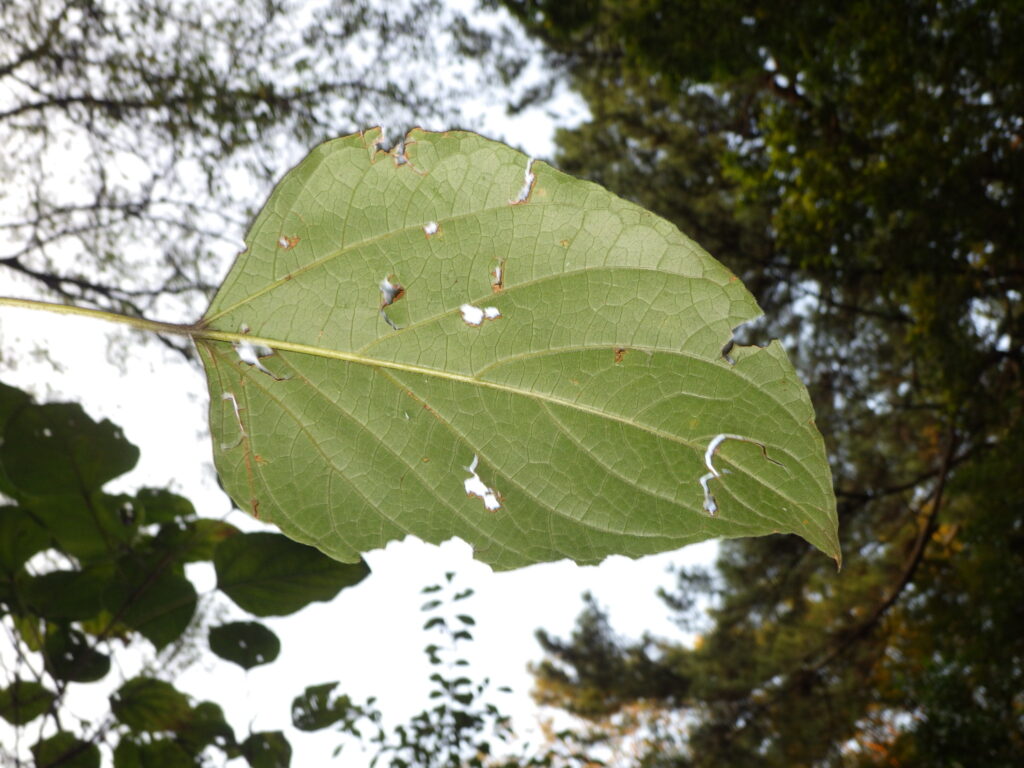
Several varieties have been identified, and Clerodendrum trichotomum var. trichotomum (in the narrow sense) is distributed from Hokkaido to Kyushu and is the most common variety in Japan. The leaves are hairy on both sides. In particular, those with dense hairs on the underside of the leaves are called velvet Clerodendrum f. ferrugineum, but the variation appears to be continuous (Kanagawa Prefecture Flora Survey Association, 2018).
Furthermore, Clerodendrum trichotomum var. fargesii is distributed in southern Kyushu and Okinawa, and can be distinguished from Clerodendrum trichotomum by its nearly hairless and somewhat thicker leaves (Hayashi, 2014). It is also known to have been introduced to the Izu Islands (Mizusawa, 2017).
Clerodendrum trichotomum var. esculentum, also known as Shōrokusagi, is distributed in southern Shikoku, southern Kyushu, and Okinawa. It can be distinguished from Clerodendrum trichotomum and Clerodendrum sibiricum by its slightly longer leaves and weaker odor (Hayashi, 2014).
However, it seems that even these changes can sometimes be difficult to distinguish clearly.
Clerodendrum izuinsulae, also known as island clover, is distributed in Honshu (Izu Islands and Miura Peninsula) and is considered a separate species from Clerodendrum sibiricum. The differences from Clerodendrum sibiricum are that in Clerodendrum sibiricum, the stamens of the flower protrude 15-35 mm from the flower tube, and the upper surface of the leaves is usually hairy and not glossy, whereas in Clerodendrum izuinsulae, the stamens protrude only 5-15 mm from the flower tube, and the upper surface of the leaves is almost hairless and slightly glossy. In addition, the color of the flower tube and sepals differs; in Clerodendrum sibiricum, they are reddish, while in Clerodendrum izuinsulae they are hardly reddish at all (Mizusawa, 2017).

Does Clerodendrum trichotomum really smell bad? What role does its odor play?
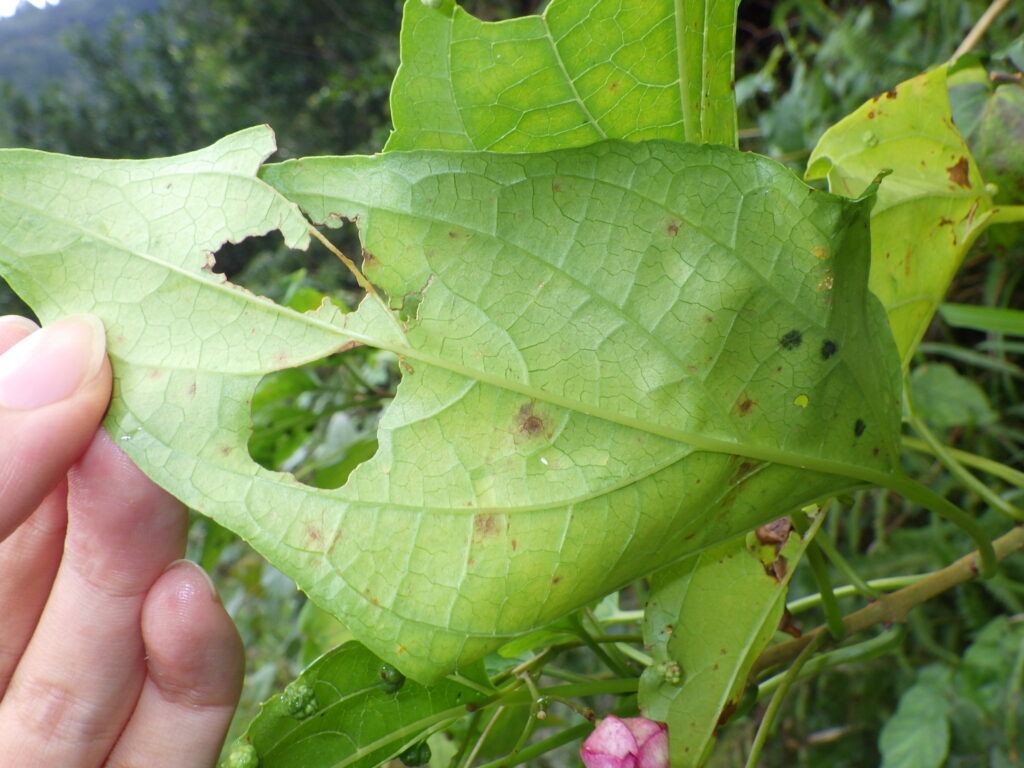
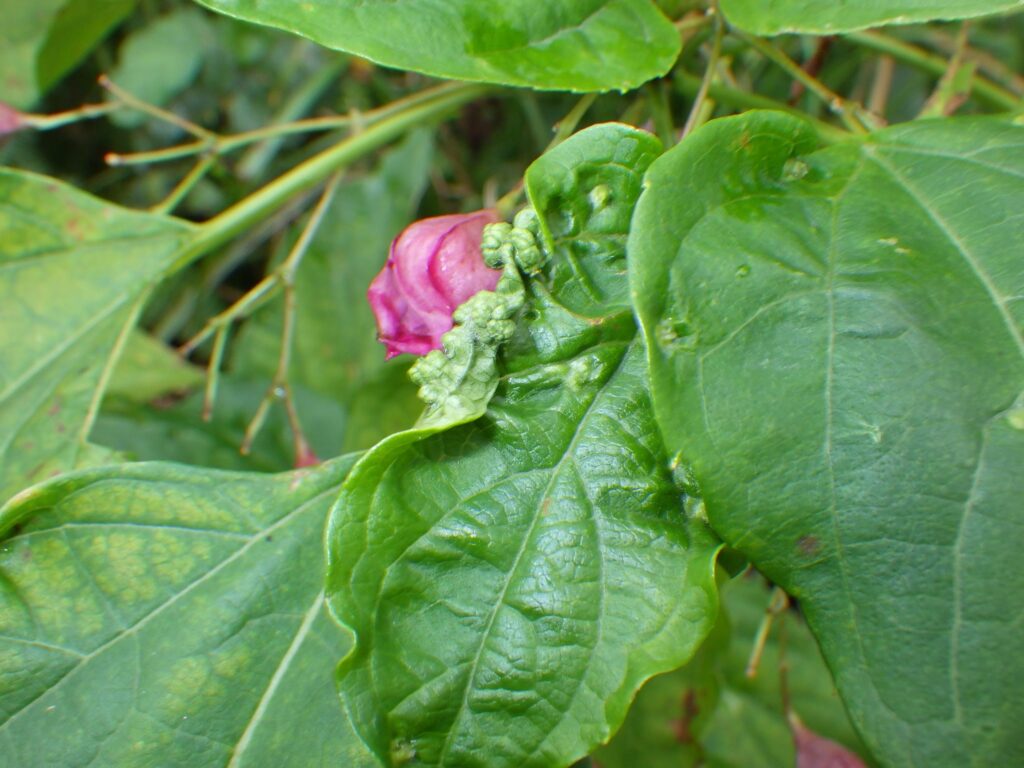
As mentioned above, Clerodendrum trichotomum has a distinctive odor when rubbed or otherwise stimulated. The underside of the leaves has tiny glandular dots and a few larger glandular dots (Mogi et al., 2003), from which it is thought that the odor components are secreted.
But does Clerodendrum trichotomum really smell bad?
According to Hayashi, 2021, one in three people who smell it without any preconceived notions would rate it as "quite a nice smell." It is also known as the "peanut butter tree" in English, and some people perceive it as having a peanut-like scent.
These are all subjective opinions, but if you're going to smell it anyway, I think it's not a bad idea to try to view it positively.
By the way, what role does this smell play?
While I haven't found any research directly showing that it prevents damage from insects or mammals, there is an interesting fact: the Japanese turnip sawfly , Athalia rosae ruficornis, after becoming an adult, deliberately seeks out and stores a substance called neoclerodanide diterpenoid (clerodanoid) secreted from the leaves of Clerodendrum trichotomum and Ajuga decumbens (Kawai et al., 1998).
Why do Japanese turnip sawflies take clerodanoids into their bodies? Insects like wasps, which undergo holometabolism, essentially complete their growth during the larval stage, so it doesn't seem like they're seeking nutrients. Perhaps it serves as a defensive substance.
To investigate this, the susceptibility of Japanese cabbage sawflies that ingested clerodanoids to those that did not was compared to that of the broad-winged mantis Hierodula patellifera (Singh et al., 2022).
As a result, Japanese turnip sawflies that ingested clerodanoids were less likely to be preyed upon, and even if they were killed, less of their bodies were eaten.
This fact suggests that the Japanese turnip sawfly uses clerodanoids as a defense mechanism against predation, and that the odor of the Clerodendrum trichotomum plant from which these secretions originate is also effective in protecting itself, at least from insects.
I'm not sure about mammals, but if it feels strange to humans, it might have some effect.
Clerodendrum trichotomum was formerly classified under the Verbenaceae family, but is now included in the Lamiaceae family. Perilla is a familiar plant known for its glandular dots on its leaves, its pungent scent, and its resistance to herbivory. Considering its Lamiaceae family affiliation, these characteristics may not be so unusual after all.
The flowers of the Clerodendrum trichotomum, with their unusually long stamens, attract nocturnal hawk moths!?
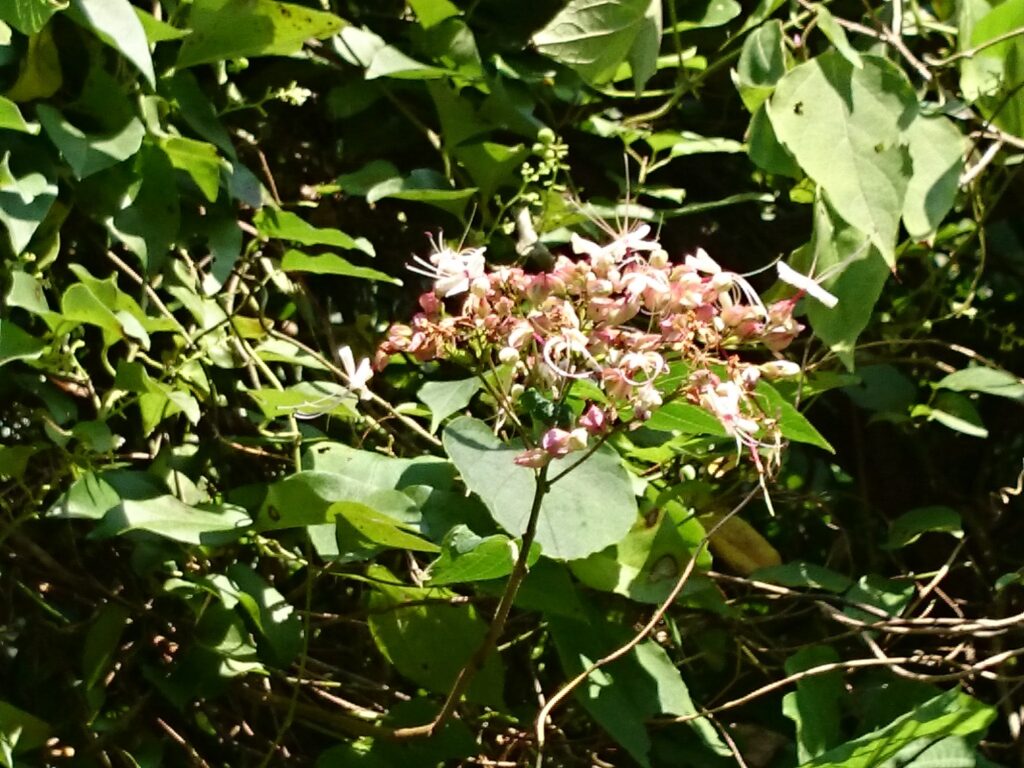
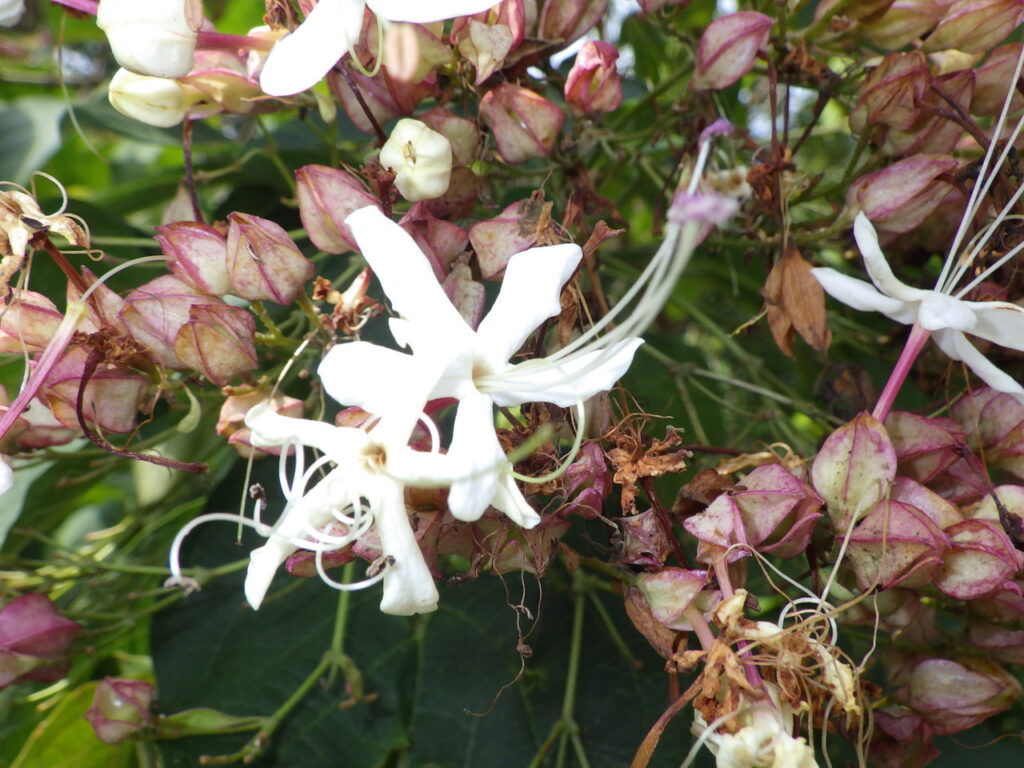
It produces cymose inflorescences from the branch tips and upper leaf axils, bearing numerous sweet-smelling flowers. The corolla is 5-lobed, with the lobes resembling petals. The lobes are white, broadly linear, 1.1–1.3 cm long, and the corolla tube is slender and reddish-purple.
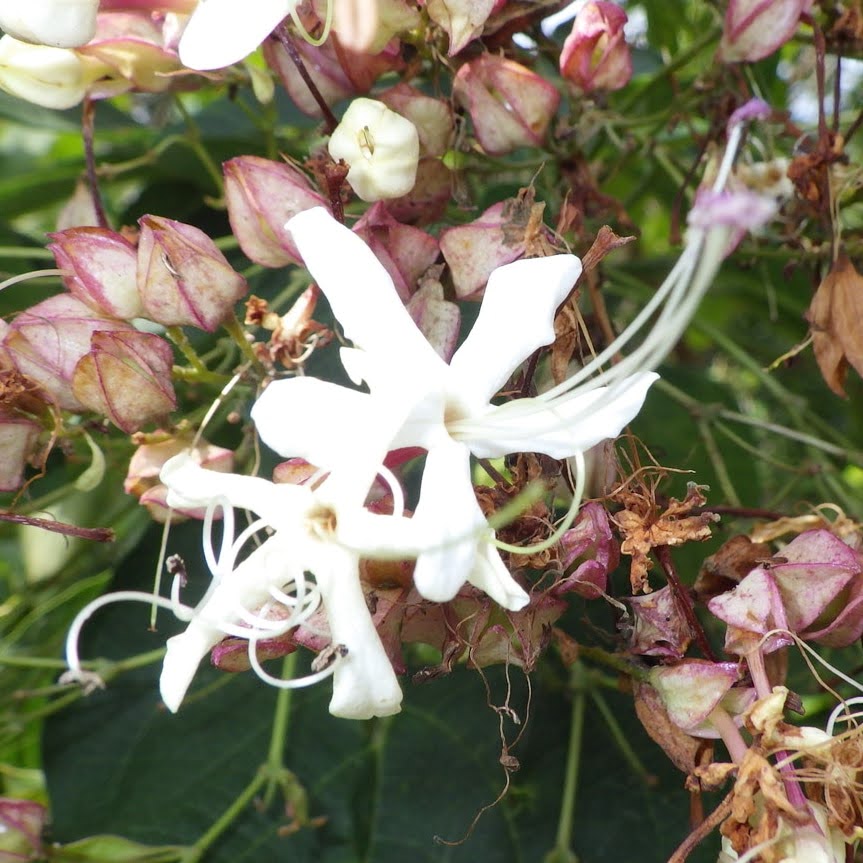
The most striking feature of this flower is its unusually long stamens. There are four stamens, and the pistil protrudes 2.5 to 3.5 cm from the corolla.
The flowers bloom for about three days, and their state changes from male (extending stamens) → neutral (curling stamens while slightly extending the pistil) → female (completely curling stamens and straightening the pistil) (Tanaka, 1973; Sumiyoshi & Kawakubo, 1995). This type of flower change is called "protandry."
This "protandry" behavior is thought to prevent self-pollination by separating the period when the plant acts as a male, transferring pollen to other individuals, from the period when it acts as a female, receiving pollen from other individuals.
What kinds of insects visit the distinctive flowers of the Clerodendrum trichotomum?
Generally, flowers that have a sweet scent, are white, have long corolla tubes, and have long stamens and pistils are known to be common characteristics of flowers that attract hawk moths, which are crepuscular to nocturnal moths with long proboscises (pollination syndrome).
In the case of these flowers, even if a hawk moth uses its long proboscis to try to suck nectar from as far away as possible, the stamens and pistils are also elongated to accommodate this, making it easier for pollen to be forcibly attached to the hawk moth's body.
Clerodendrum flowers meet these characteristics well, so it is likely that hawk moths will come to them.
In fact, Japanese studies have confirmed that hawk moths were indeed visiting (Tanaka, 1973; Sakamoto et al., 2012). Specifically, the crepuscular Macroglossum saga and the nocturnal Theretra japonica were observed (Tanaka, 1973), and it was confirmed that 68.1% of Macroglossum saga and 81.3% of Theretra japonica definitely touched the stamens or pistils, so it can be concluded that they are undoubtedly responsible for pollination.
Butterflies were the primary pollinators during the daytime!?
However, Clerodendrum trichotomum also blooms during the day. If pollination were completed solely by hawk moths, there would be no need for the flowers to bloom during the day. But since this is not the case, it can be assumed that insects are visiting the flowers during the day. So, what kind of insects visit during the day?
A 2012 study conducted in Gifu Prefecture, focusing on insects that visit flowers during the daytime, found that the insects that visited flowers included 411 TP3T of forest-dwelling black swallowtail butterflies, 461 TP3T of Macroglossum pyrrhosticta (a type of hawk moth), and 81 TP3T of Xylocopa appendiculata circumvolans (a type of bumblebee) (Sakamoto et al., 2012).
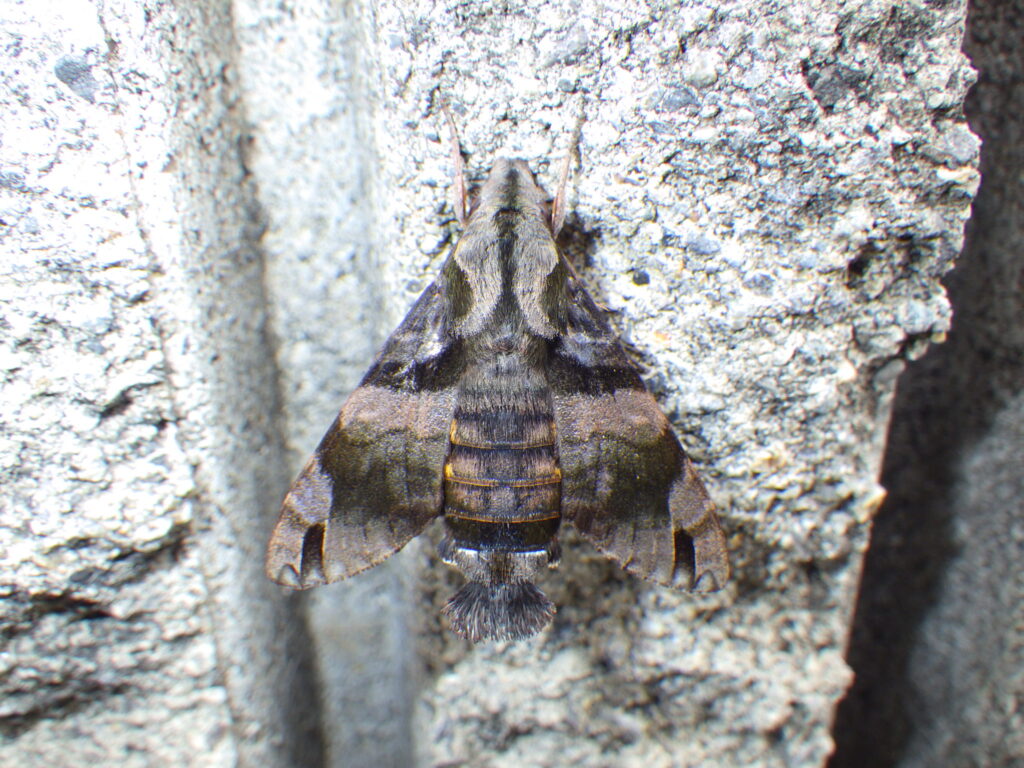
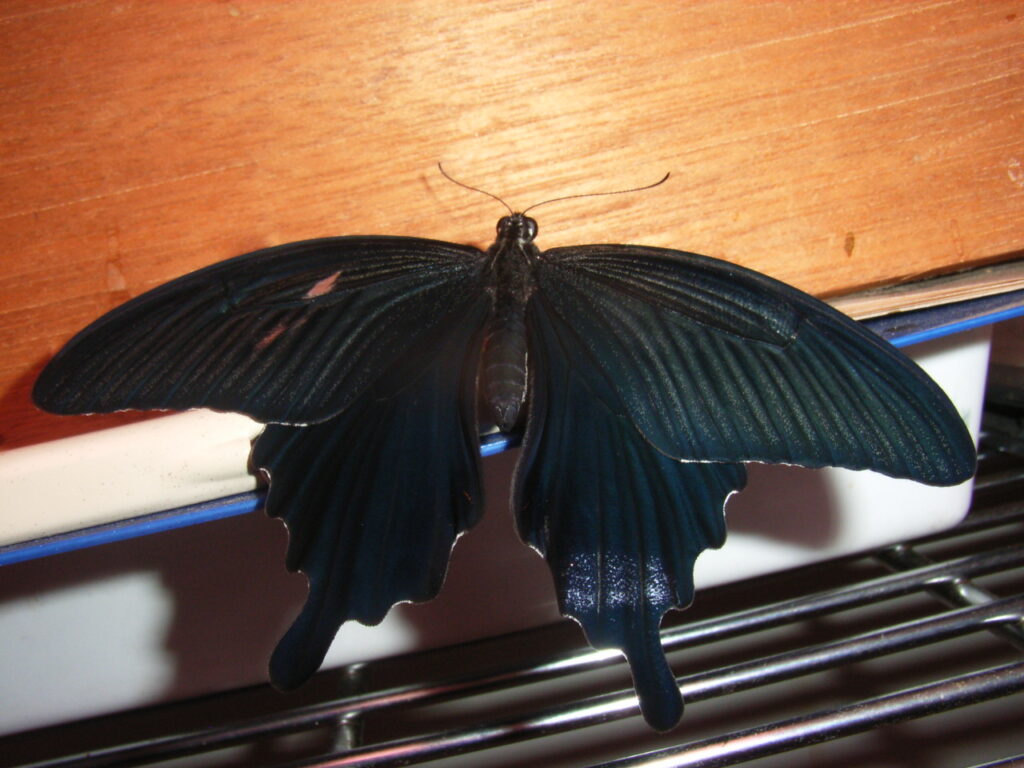
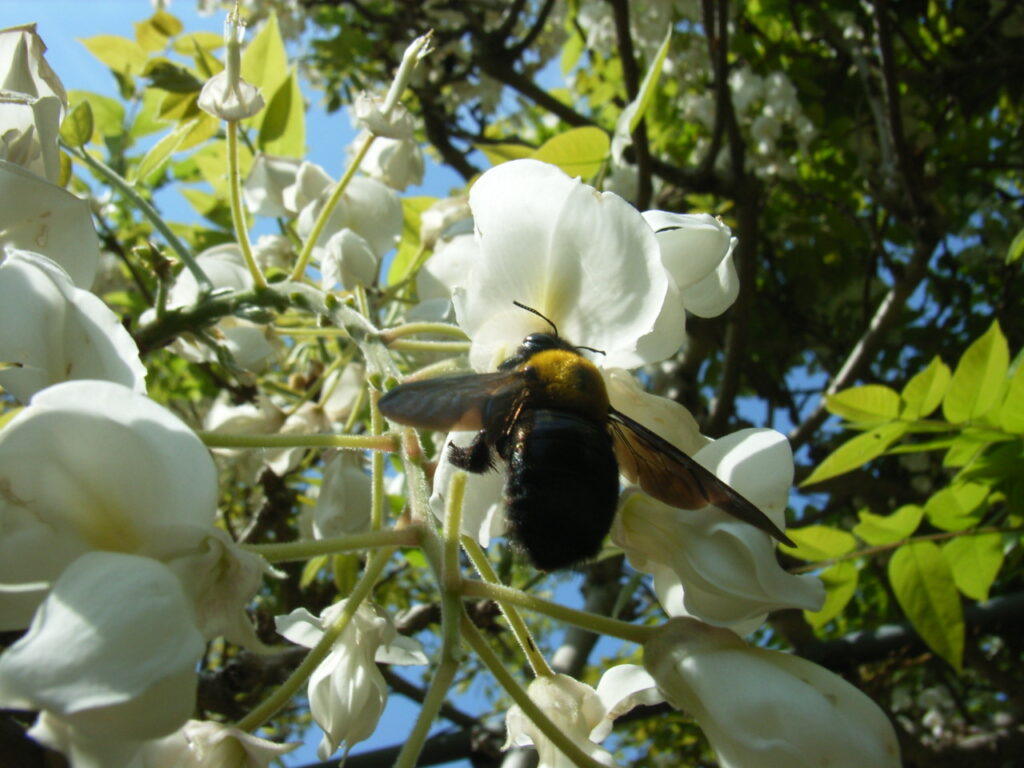
This indicates that the Clerodendrum trichotomum does not rely solely on hawk moths for pollination.
By the way, if you learn about the insects that visit during the day, you might think, "Is the hummingbird hawk-moth the most important daytime pollinator?"
However, the reality is more complex. While many hummingbird hawk-moths do visit, they seem to have a "habit" of repeatedly visiting the same flower, which promotes self-pollination (neighboring flower pollination). Furthermore, they rarely come into contact with the pollen (Tanaka, 1973).
Butterflies, on the other hand, visit many different flowers, making them the most important insects for pollination. Therefore, although they are the second most frequent visitors during the day, they are arguably the most helpful insects for pollination.
Butterflies naturally have remarkably long proboscises compared to other insects, and often only collect nectar without carrying pollen. Therefore, utilizing butterflies as pollinators often requires special adaptations. In that sense, the fact that Clerodendrum trichotomum relies on butterflies for pollination is a surprising result.
Finally, there's the yellow-breasted bumblebee, which might make you wonder, "If it's 8%, maybe it's not such an important pollinating insect?" In fact, it "robberies" by drilling holes in the tubes and stealing only the nectar, so it seems not only unimportant but even harmful. However, surprisingly, it does properly touch the stamens and pistils, so even considering these drawbacks, it is thought to still play a role in pollination.
Although not recorded in this study, there are also records of a very large number of hummingbird hawk-moths (Cephonodes hylas) visiting Tokyo. The pollination rate for these moths was also high.
Although the flowers of Clerodendrum trichotomum seemed to be clearly adapted to hawk moths, they cleverly utilized butterflies and moths for pollination both during the day and at night. This was not a coincidence, and given its physiological characteristic of blooming all day long (Sumiyoshi and Kawakubo, 1995), it is natural to assume that this was a deliberate strategy.
Furthermore, the stamens of Clerodendrum trichotomum are shorter. Does this mean that the insects that visit it differ in any way from those that visit Clerodendrum trichotomum? This is something that hasn't been studied yet, and it's intriguing.
The fruits of the Clerodendrum trichotomum plant attract birds with their strikingly contrasting colors!?
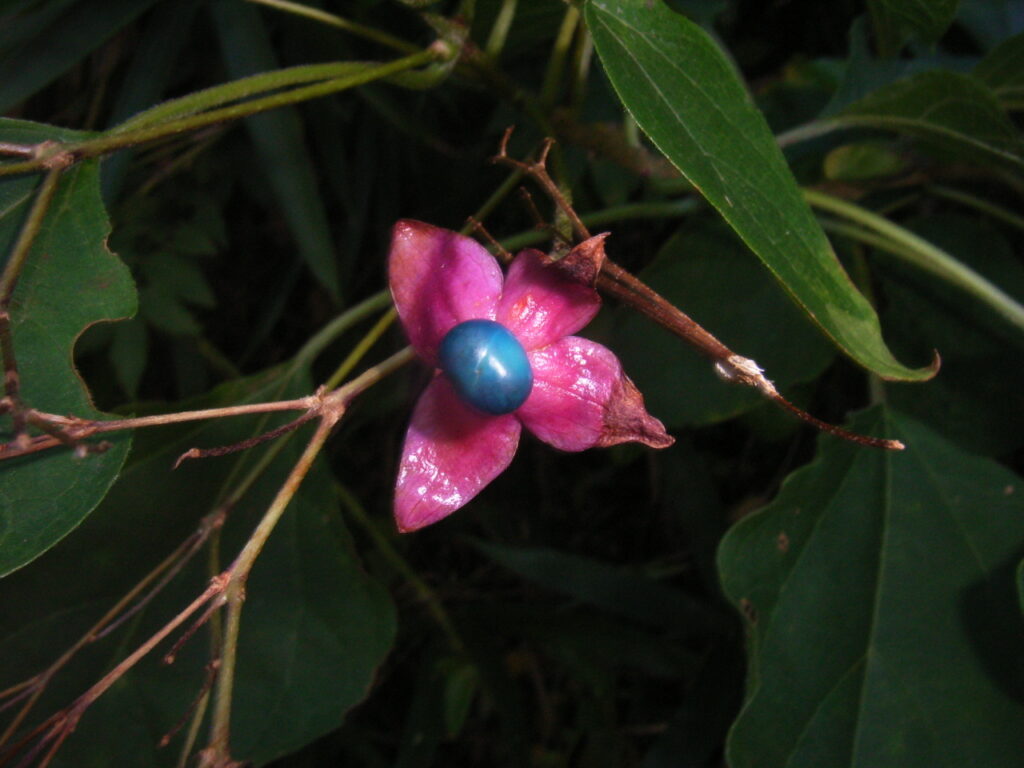
After flowering, the calyx turns dark red, deeply lobed, and opens in a star shape, with the fruit in the center (Mogi et al., 2003). The fruit is a drupe, spherical in shape with a diameter of 6-7 mm, and becomes glossy indigo when ripe in October-November. This indigo component is known as "trichotomin" (Iwadare et al., 1978).
The fact that the calyx changes color to a deep crimson and other very vivid colors is quite unusual, but does it have any particular function?
Besides Clerodendrum trichotomum, some plants have appendages other than the fruit, such as pedicels, pedicels, and remaining sepals, that are conspicuously colored, such as red. These are called "morphological bicolor" (Kamitani, 1999).
It is believed that this "morphological dichromaticity" allows the fruit to stand out to fruit-eating birds due to the striking contrast between its bright red calyx and blue fruit.
Similar changes are also known to occur in the fruits of dogwood and Japanese angelica tree.
Even to the human eye, it clearly looks out of place in nature and is sure to stand out. However, the calyx of the striped clover does not turn red. Why is this the case? It is thought that for some reason the need to attract birds has increased, but this point has not yet been studied and remains a very intriguing mystery.
References
Hayashi, Masayuki. 2014. 1100 Tree Leaves Identified Through Real-Life Scans. Yama-kei Publishers, Tokyo. 759pp. ISBN: 9784635070324
Hayashi, Masayuki. 2021. An Interesting Illustrated Guide to Trees: Surprising! Bizarre! Mysterious? Shufunotomo Co., Ltd., Tokyo. 255pp. ISBN: 9784074455645
Iwadare, S., Shizuri, Y., Yamada, K., & Hirata, Y. 1978. Synthesis of trichotomine, a blue pigment obtained from Clerodendron trichotomum Thunb. Tetrahedron 34(10): 1457-1459. https://doi.org/10.1016/0040-4020(78)80166-5
Kanagawa Prefecture Flora Survey Association. 2018. Kanagawa Prefecture Flora 2018 (Electronic Edition). Kanagawa Prefecture Flora Survey Association, Odawara. 1803pp. ISBN: 9784991053726
Kawai, K., Amano, T., Nishida, R., Kuwahara, Y., & Fukami, H. 1998. Clerodendrins from Clerodendron trichotomum and their feeding stimulant activity for the turnip sawfly. Phytochemistry 49(7): 1975-1980. https://doi.org/10.1016/S0031-9422(98)00431-2
Kamitani, Tomohiko. 1999. The two-color display strategy of fruits. In: Ueda, Keisuke (Ed.), Seed Dispersal: The Evolution of Mutual Aid Vol. 1 Seeds Carried by Birds (pp. 52-63). Tsukiji Shokan. ISBN: 9784806711926
Mizusawa, Reiko. 2017. Confirmation of the growth of Clerodendrum trichotomum (Lamiaceae), which is thought to have been introduced artificially, on Hachijojima Island in the Izu Islands. Classification 17(1): 75-81. https://doi.org/10.18942/bunrui.01701-12
Mogi, T., Takahashi, H., Katsuyama, T., & Ishii, E. 2003. Flowers Blooming on Trees: Sympetalous Flowers, Monocotyledons, Gymnosperms. Yama-kei Publishers, Tokyo. 719pp. ISBN: 9784635070058
Sakamoto, RL, Ito, M., & Kawakubo, N. 2012. Contribution of pollinators to seed production as revealed by differential pollinator exclusion in Clerodendrum trichotomum (Lamiaceae). PloS One 7(3): e33803. ISSN: 1932-6203, https://doi.org/10.1371/journal.pone.0033803
Satake, Yoshisuke. 1999. Wild Plants of Japan (New Edition, Woody Plants 2). Heibonsha, Tokyo. 305pp. ISBN: 9784582535051
Singh, P., Grone, N., Tewes, LJ, & Müller, C. 2022. Chemical defense acquired via pharmacophagy can lead to protection from predation for conspecifics in a sawfly. Proceedings of the Royal Society B 289(1978): 20220176. https://doi.org/10.1098/rspb.2022.0176
Tanaka, Hajime. 1973. Pollination of Clerodendrum trichotomum by moths. Journal of Plant Research 48(7): 209-214. ISSN: 0022-2062. http s://doi.org/10.51033/jjapbot.48_7_6289
Sumiyoshi, Keizo and Kawakubo, Nobumitsu. 1995. Protandry and nectar secretion in Clerodendrum trichotomum Thunb. Kagoshima University Faculty of Education Research Bulletin, Natural Science Series 47: 47-55. http://hdl.handle.net/10232/7233
Source
This article is a significantly expanded version of one included in the following book.