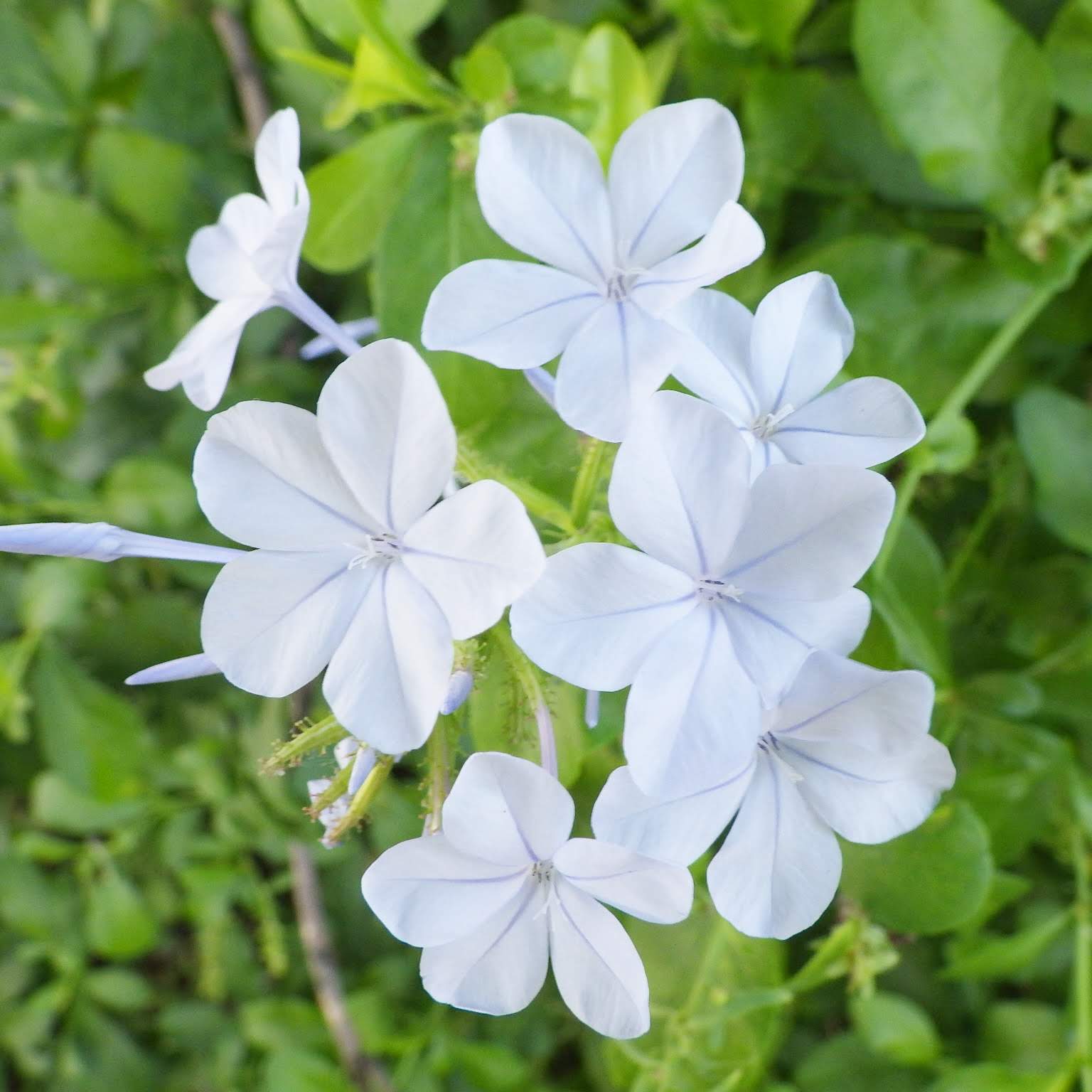
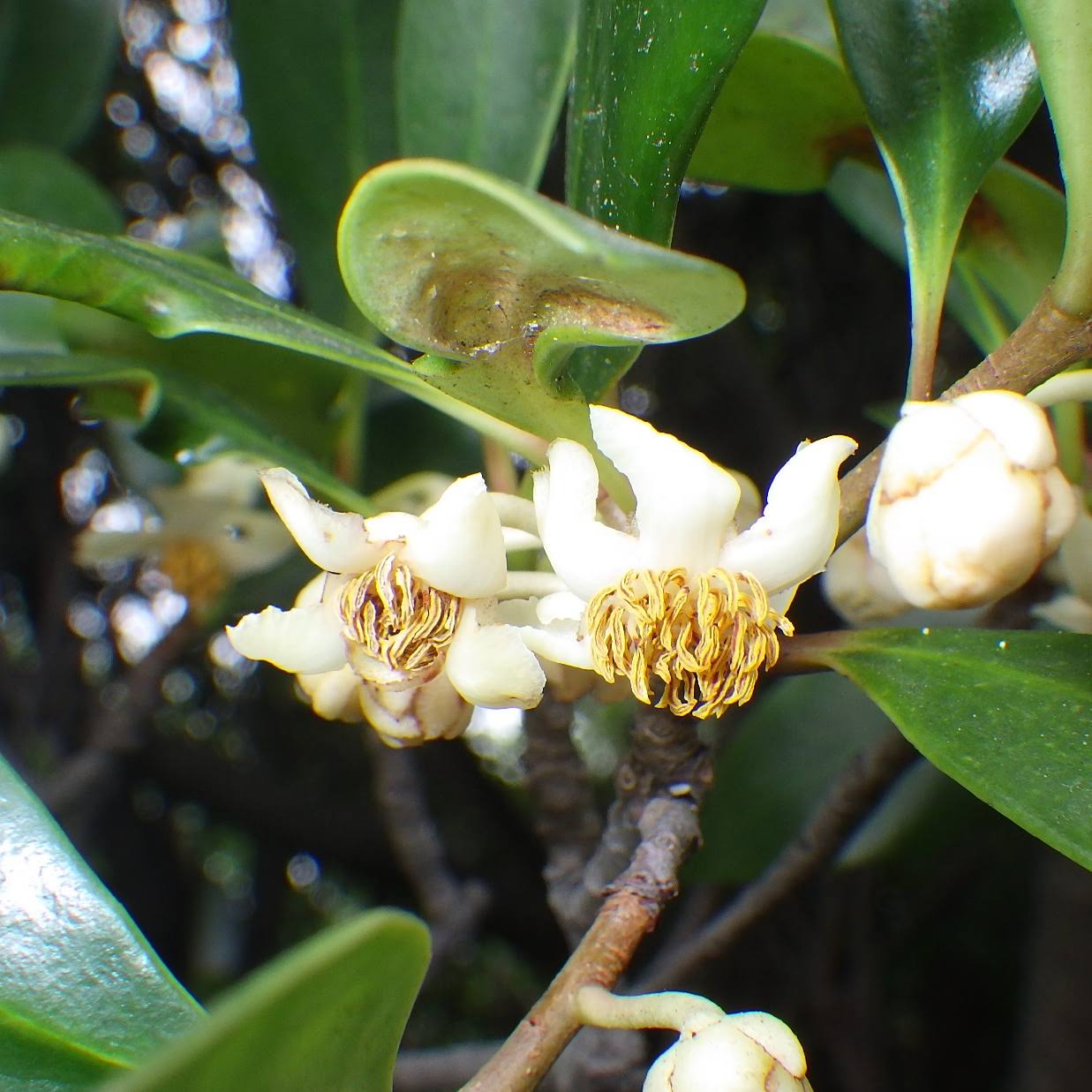
Bryophyllum sempervirens and Bryophyllum sempervirens are two species of plants native to Europe that bear pretty pink flowers and have become commonly seen in Japan in recent years, since around 1960. These two species can be distinguished by carefully observing their life cycle, basal leaves, and corolla. Bryophyllum sempervirens is not well known in Japan, but in Europe it is known as a medicinal herb, and its bitter components are mainly used as a gastrointestinal medicine, and it is still used today to treat a variety of other ailments. This is exactly the same use as the East Asian gentian, and it is interesting that the uses of closely related species have developed independently in different regions. A Belgian study revealed that 90% of the genus Bryophyllum, to which Bryophyllum sempervirens belongs, is visited by hoverflies. However, they do actually self-pollinate. Therefore, when comparing the self-pollination and cross-pollination trends of the genus Gentiana inhabiting various environments, it was found that species living in unstable environments with sparse vegetation and few pollinating insects had smaller flowers and a higher rate of self-pollination, while species living in stable environments with abundant vegetation and many pollinating insects had larger flowers and a lower rate of self-pollination. This is thought to be a result of evolution in response to the habitat of the genus Gentiana. This article will explain the classification, history, medicinal effects, and pollination ecology of Gentiana scabrida and Gentiana scabrida.
- Two species native to Europe that bear pretty pink flowers.
- What are the differences between *Gentiana scabrida* and *Gentiana scabrida*?
- Was safflower gentian used as a medicinal herb in Europe?!
- What are the flower shapes of *Swertia japonica* and *Swertia sempervirens*?
- 90% of the insects that visit flowers are hoverflies!?
- Despite being a conspicuous flower, it somehow also self-pollinates?
- Gradient of pollination strategies in the genus Swertia.
- The fruit is a capsule.
- References
- Source
Two species native to Europe that bear pretty pink flowers.
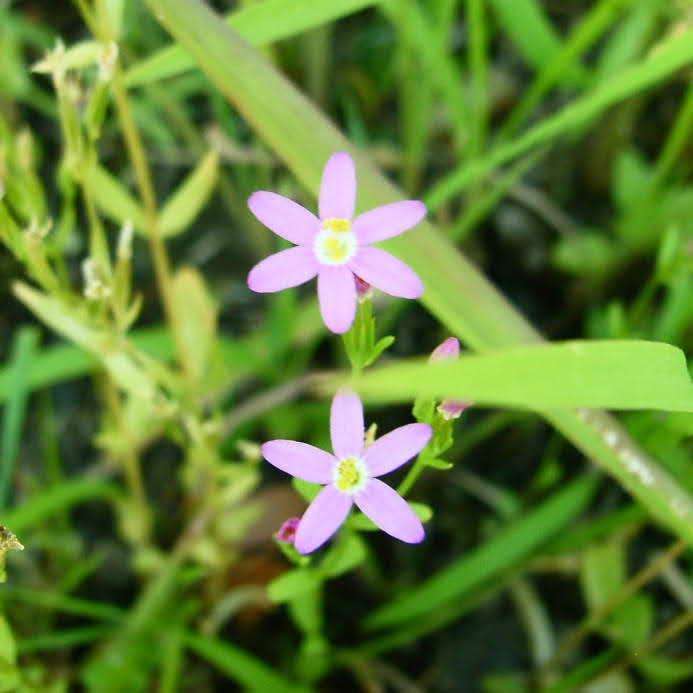
Centaurium tenuiflorum, also known as Hanahamasenburi, is native to Western Europe and the Mediterranean coast, distributed from northern France to southern and western Europe, and has naturalized in Australia, New Zealand, and Japan. It is a summer-growing annual that prefers sandy areas and grasslands near the sea (Kanagawa Prefecture Flora Survey Association, 2018). It was confirmed as a newly introduced naturalized plant in Japan in the "Kanagawa Prefecture Flora 1988".
Centaurium erythraea, also known as red-flowered gentian, is native to Europe, West Asia, and North Africa. It is distributed in Europe, Southwest Asia, and the Pamir region, and has naturalized in North America, New Zealand, and Australia. It is a biennial plant (winter-growing annual) that prefers dry grasslands and sandy areas. In Japan, it was imported as an ornamental plant in the mid-Taisho era (1912-1926) and spread widely. The first naturalized specimens were confirmed in Kure City, Hiroshima Prefecture, around 1960.
Both belong to the genus Gentiana in the family Gentianaceae, and they grow wild in grasslands. They are very similar in appearance, with erect, well-branched stems, opposite, sessile leaves, and small pink or white flowers, making identification difficult.
What are the differences between *Gentiana scabrida* and *Gentiana scabrida*?
However, some differences in characteristics have been observed.
First, regarding their life cycles, *Gentiana scabrida* is a summer-growing annual that germinates in spring, while *Gentiana scabrida* is a biennial (winter-growing annual) that germinates in autumn.
Summer-growing annuals germinate in spring and flower, fruit, and die by winter. On the other hand, biennial plants (winter-growing annuals) germinate in autumn and flower, fruit, and die by summer.
In other words, while there are no plant bodies on the ground surface in winter in *Gentiana scabrida*, there are in *Gentiana scabrida*.
However, some literature suggests that *Gentiana scabrida* is a biennial plant (Shimizu et al., 2001), so the actual situation remains unclear.
Regarding the basal leaves, in *Gentiana scabrida*, they are the same length as or smaller than the lower stem leaves, elliptic to ovate-elliptic with a blunt tip, and wither by the time of flowering. In contrast, in *Gentiana scabrida*, the basal leaves are larger than the stem leaves, spatulate-elliptic with a rounded tip, and remain present even during flowering.
Regarding the corolla, in *Gentiana scabrida*, the corolla is 9-11 mm in diameter, with narrowly oblong lobes and a white center, while in *Gentiana scabrida*, the corolla is 11-13 mm in diameter, with narrowly ovate lobes, and the center of the corolla is pink, the same color as the rest of the flower.
However, if you actually look at the photos, the very center of the corolla is white even in the case of the red-flowered gentian. However, the white area in the red-flowered gentian is not as thick as that of the lily-of-the-mouth gentian, and it does not form a distinct white ring like the lily-of-the-mouth gentian.
While a closer look is needed, the above should allow you to distinguish between them. It's worth keeping in mind that *Gentiana scabrida* is the majority species, and *Gentiana scabrida* has very limited naturalization locations, officially recorded only in Mie, Hyogo, and Kanagawa prefectures.
Previously, * Schenkia japonica*, which grows in salt marshes from Yakushima to the Ryukyu Islands, was included in the genus *Centaurium * and referred to as the "genus *Schenkia*." However, molecular phylogenetic analysis has now established * Schenkia* as an independent genus and it is no longer included in the genus *Centaurium *.
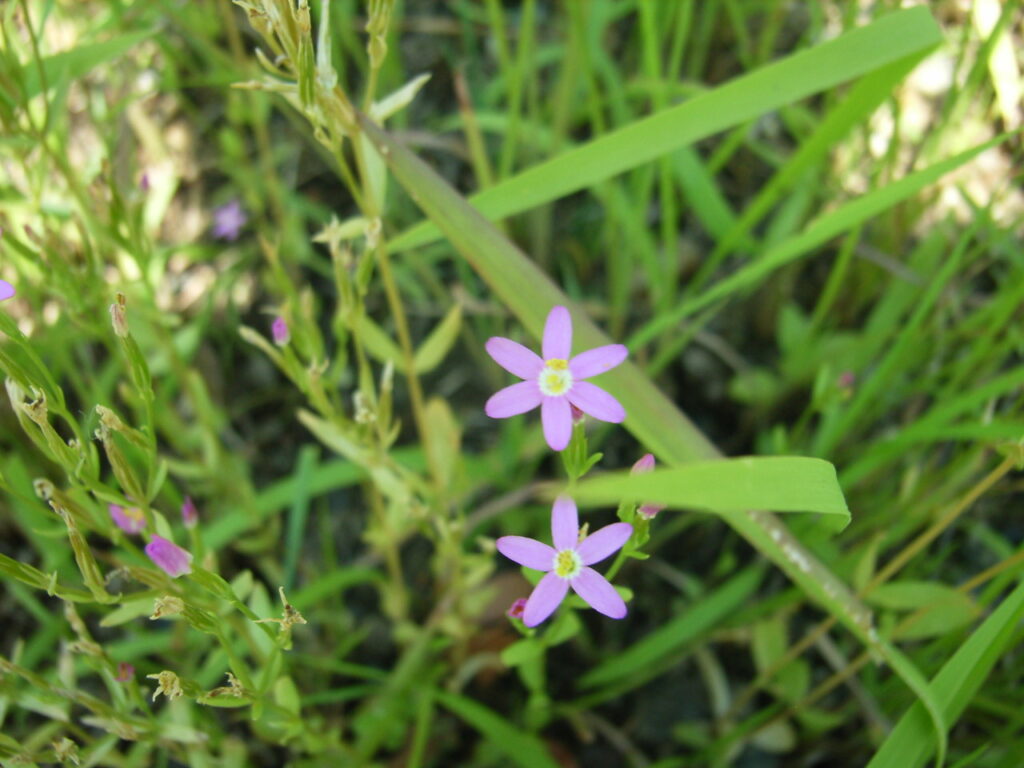

Was safflower gentian used as a medicinal herb in Europe?!
The Japanese names Hanahamasenburi and Benibanasenburi come from the same gentian family plant, Swertia japonica, and the name Senburi (千振) comes from the fact that the entire plant is bitter, and even after shaking it a thousand times (shaking means soaking the herb in boiling water to dissolve its components), it is still bitter.
While the flowers of *Swertia japonica* and *Swertia chinensis* are pink, the flowers of *Swertia japonica* are white, making them easy to distinguish.
While this Japanese name might seem to have been derived from the similarity in the shape of the flowers, in fact, the safflower gentian has been treated as an ancient medicinal plant with a long tradition in Europe. It does have a bitter taste. This fact is not widely known in Japan, but perhaps the name is actually related to this.
It already appears in the "De Materia Medica" (also known as "Greek Herbal Medicine") by Pedanius Dioscorides (c. 40–90 AD), a Greek writer, physician, pharmacologist, and botanist of the Roman Empire (Simonović et al., 2020), and has been used, particularly as a gastrointestinal medicine, in the form of a herbal tea brewed from it.
Swertia japonica contains physiologically active substances such as phenolic acids, alkaloids, monoterpenoids, triterpenoids, secoiridoid glycosides, xanthones, and flavonoids throughout the entire plant. Furthermore, the flowers and stems contain a large amount of iridoid glycosides (Budniak et al., 2021).
Secoiridoid glycosides and iridoid glycosides are also found in Swertia japonica and are the main components of its bitter taste.
In modern times, it is used to treat metabolic disorders, anemia, leukemia, and cancer caused by alcoholism. It is also used for liver, biliary tract, kidney, hemorrhoid, and diabetic diseases.
The bioactive substances it contains affect the secretion of gastrointestinal glands, increase bile secretion, enhance uterine muscle contraction, and have anti-inflammatory, analgesic, mild laxative, and antioxidant effects.
Svertiamarin, a type of secoiridoid glycoside, is converted to gentianine in the body, which has a calming effect on the central nervous system and is sometimes used for hysteria, neurasthenia, and neurosis. Gentianine is also an alkaloid and therefore has anthelmintic properties.
Secoiridoid glycosides stimulate taste receptors, causing a reflex secretion of gastric juice, thereby increasing appetite and having a tonic effect. Various studies have also shown that iridoid glycosides affect gastric secretory function.
This is a very similar use to that of Swertia japonica, which is distributed in East Asia. It's interesting that similar uses have been found for similar plants in completely different regions.
What are the flower shapes of *Swertia japonica* and *Swertia sempervirens*?
*Centella asiatica* blooms from June to July, with dense, typically flat-topped inflorescences. It bears numerous pink, five-lobed flowers, 9-11mm in diameter (sometimes as small as 8mm). The corolla is generally pink, but the white center is thick and conspicuous. Incidentally, the six petals in my photo are rarely reported, so they may be rare.
Swertia japonica blooms from July to September. Its inflorescence is a diaphthous cyme (overall corymb-like), dense, and flat-tipped. It bears numerous five-lobed flowers that are 11-13 mm in diameter (sometimes 12-15 mm) and are pale red to dark pink. The corolla is basically pale red to dark pink, but the part that folds inward in the center is white.
Another difference between these two types of flowers, besides those mentioned above, is that their flowering periods are staggered. However, in reality, there may be some variations depending on the region.
90% of the insects that visit flowers are hoverflies!?
What kinds of insects visit these small, pretty flowers?
While no records of insects visiting *Gentiana scabrida* could be found, research on *Gentiana scabrida* has been conducted along the coast from Oostdeinkerke to De Panne in West Flanders, southwestern Belgium.
As a result, various taxonomic groups of insects, including dance flies, sarcophagi, bees, and butterflies, visited the site, but proportionally, hoverflies accounted for 901 TP3T (Brys & Jacquemyn, 2011).
It seems that this flower relies quite heavily on hoverflies for pollination. Hoverflies are a type of fly that mimics bees, are not aggressive, and generally have short, flat tongues that only visit flowers.
Indeed, the flowers of the safflower gentian open flat, making it easy for hoverflies with relatively short tongues to feed on the nectar and pollen. However, it is still not well understood why they have priority over bees and other flies.
Since the flower shape is very similar in *Centella asiatica*, it is highly likely that the results will be the same.
Despite being a conspicuous flower, it somehow also self-pollinates?
However, research from the same Belgian institution has revealed that the situation is not that simple.
Many members of the genus Gentiana, which includes Gentiana scabrida, are self-pollinating. In this case, insects are unnecessary, as the flowers simply transfer their own pollen to their pistils, meaning that the flowers that appear to attract insects are not functioning at all.
Ultimately, the genus Swertia produces seeds in two ways: through cross-pollination relying on insects and through self-pollination that does not rely on insects.
Gradient of pollination strategies in the genus Swertia.
So, when is it best to perform cross-pollination and when is it best to perform self-pollination?
In this regard, a Belgian study investigated three species: Centaurium pulchellum and Centaurium littorale, which are not found in Japan, in addition to the safflower gentian.
As a result, it was found that in the genus Gentiana, there are significant differences in flower size and self-pollination rate depending on the habitat.
Swertia japonica grows in well-developed, late-succession-rich dune grasslands.
Centaurium pulchellum grows in harsh, open areas of the intertidal zone, surviving under conditions of poorly developed, open vegetation.
Centaurium littorale grows in sandy, gravelly areas, often in desolate conditions with low plant diversity.
In other words, the richness of the vegetation is Centaurium pulchellum < Centaurium littorale < Senna obtusifolia.
The flower sizes are in the following order: Centaurium pulchellum < Centaurium littorale < Senna obtusifolia.
This study revealed that the self-pollination rates are in the order of Scarlet Swertia < Centaurium littorale < Centaurium pulchellum.
How can we interpret this?
It is likely that species living in unstable environments with sparse vegetation and few pollinating insects tend to have smaller flowers, a higher rate of self-pollination, and reproduce on their own. On the other hand, species living in stable environments with abundant vegetation and many pollinating insects tend to have larger flowers, a lower rate of self-pollination, and rely on cross-pollination and insects.
Generally, cross-pollination is thought to be necessary in many cases to allow offspring to adapt to parasites and environmental changes by exchanging genes with other individuals and introducing diversity into the species.
In environments with sparse vegetation, cross-pollination is difficult, so self-pollination likely developed to ensure at least seed production.
On the other hand, in environments with abundant vegetation, plants evolved to make their flowers larger in order to better attract insects.
It can be said that the large size of the flowers of the safflower gentian is an adaptation to increase their appeal to insects.
By the way, although not covered in this study, the flowers of *Gentiana scabrida* are smaller than those of *Gentiana scabrida*.
Based on the above research, it is possible that *Gentiana scabrida* has a high rate of self-pollination.
This may be related to the fact that *Gentiana scabrida* is more dominant than *Gentiana scabrida* in Japan. We don't know much about it yet, but I'm looking forward to future research.
The fruit is a capsule.
Both fruits are capsules.
In *Gentiana scabrida*, the capsule is about 8-9 mm long. The seeds are 0.25-0.35 mm in diameter, reticulated, and light brown to reddish-brown in color.
In Swertia japonica, the capsule is 6-8 (up to 9) mm long and enclosed in the calyx. The seeds are 0.4 mm long and 0.3 mm wide, reticulated, and reddish-brown in color.
When ripe and dry, the fruit splits in two at the top, dispersing its seeds. This is thought to be gravity dispersal, but the exact mechanism is unknown.
References
Brys, R., & Jacquemyn, H. 2011. Variation in the functioning of autonomous self-pollination, pollinator services and floral traits in three Centaurium species. Annals of Botany 107(6): 917-925. ISSN: 0305-7364, https://doi.org/10.1093/aob/mcr032
Budniak, L., Slobodianiuk, L., Marchyshyn, S., & Klepach, P. 2021. Investigation of the influence of the thick extract of common centaury (Centaurium erythraea rafn.) herb on the secretory function of the stomach. Pharmacologyonline 2: 352-360. ISSN: 1827-8620, https://pharmacologyonline.silae.it/files/archives/2021/vol2/PhOL_2021_2_A038_Budniak.pdf
Kanagawa Prefecture Flora Survey Association. 2018. Kanagawa Prefecture Flora 2018 (Electronic Edition). Kanagawa Prefecture Flora Survey Association, Odawara. 1803pp. ISBN: 9784991053726
Shimizu, K., Morita, H., & Hirota, S. 2001. Illustrated Guide to Naturalized Plants of Japan: 600 Species of Plant Invaders (Revised). National Rural Education Association, Tokyo. 553pp. ISBN: 9784881370858
Simonović, AD, M. Trifunović-Momčilov, M., Filipović, BK, Marković, MP, Bogdanović, MD, & Subotić, AR 2020. Somatic embryogenesis in centaurium erythraea Rafn—current status and perspectives: a review. Plants 10(1): 70. https://doi.org/10.3390/plants10010070
Source
This article is a significantly expanded version of one included in the following book.