
Amachazuru is a perennial vine that grows in mountainous areas and thickets in Japan, but it is often confused with other species such as Yabugarashi and Amacha (sweet tea). Both Amachazuru and Yabugarashi have palmate compound leaves and their fruits are berries, so they are similar, and Amachazuru and Amacha also have similar names. However, they are all completely different in classification, and Amachazuru and Amacha are different in every way except for their uses. You can distinguish between Amachazuru and Yabugarashi by carefully examining the shape of their palmate compound leaves and the hairs. This article will explain the classification, uses, and morphology of Amachazuru.
- What are Amachazuru, Yabugarashi, and Amacha?
- What are the differences between Gynostemma pentaphyllum, Cayratia japonica, and Gynostemma pentaphyllum?
- What are the differences in how Amacha (sweet tea) and Amachazuru (Gynostemma pentaphyllum) are used?
- What is the structure of a flower?
- What is the structure of the fruit?
- References
What are Amachazuru, Yabugarashi, and Amacha?
Gynostemma pentaphyllum, also known as Amachazuru or Narrow-leaved Indigo, is a climbing perennial herb distributed in Hokkaido, Honshu, Shikoku, Kyushu, and the Ryukyu Islands in Japan; as well as in Korea, China, and Malaysia, growing in mountainous areas and thickets (Hayashi et al., 2013; Kanagawa Prefecture Flora Survey Association, 2018).
Cayratia japonica, also known as Japanese bush lily (or bush killer), is a climbing perennial herb widely distributed in southwestern Hokkaido, Honshu, Shikoku, Kyushu, and the Ryukyu Islands in Japan; as well as in Korea, China, India, and Malaysia, growing in bushes and cultivated fields. It is sometimes called "Yabugarashi," but the botanical Japanese name is "Yabukarashi" without the voiced consonant mark.
Amacha (sweet tea), Hydrangea serrata var. thunbergii, is thought to be a variety of Hydrangea serrata (in the broad sense) with smaller leaves (Hayashi, 2019). Therefore, it is a deciduous shrub that looks almost exactly like a hydrangea. It is distributed in Honshu, Japan (Kanto and Chubu regions), but there is also a theory that it is originally a cultivated variety. It grows along valleys in mountainous areas.
Amachazuru and Yabukarashi may be similar because both have palmate compound leaves and their fruits are berries that ripen to black.
Also, Amachazuru and Amacha (sweet tea) have similar names, so people unfamiliar with them might not be able to tell them apart.
What are the differences between Gynostemma pentaphyllum, Cayratia japonica, and Gynostemma pentaphyllum?
However, these three species are completely different in terms of classification.
First, Gynostemma pentaphyllum belongs to the Cucurbitaceae family, Cayratia japonica belongs to the Vitaceae family, and Hydrangea macrophylla belongs to the Hydrangeaceae family. At this point, you can expect there to be significant differences in their morphology.
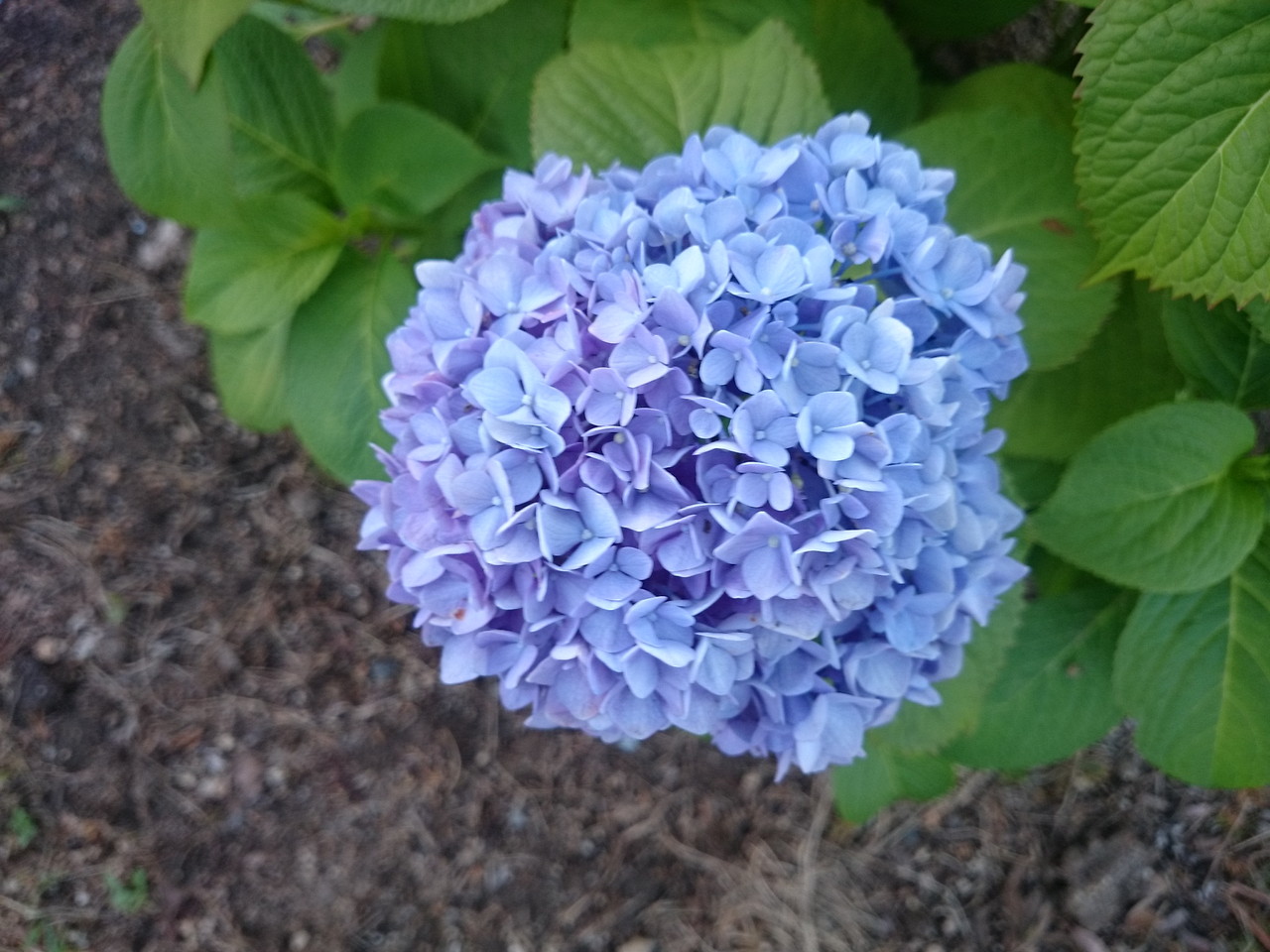
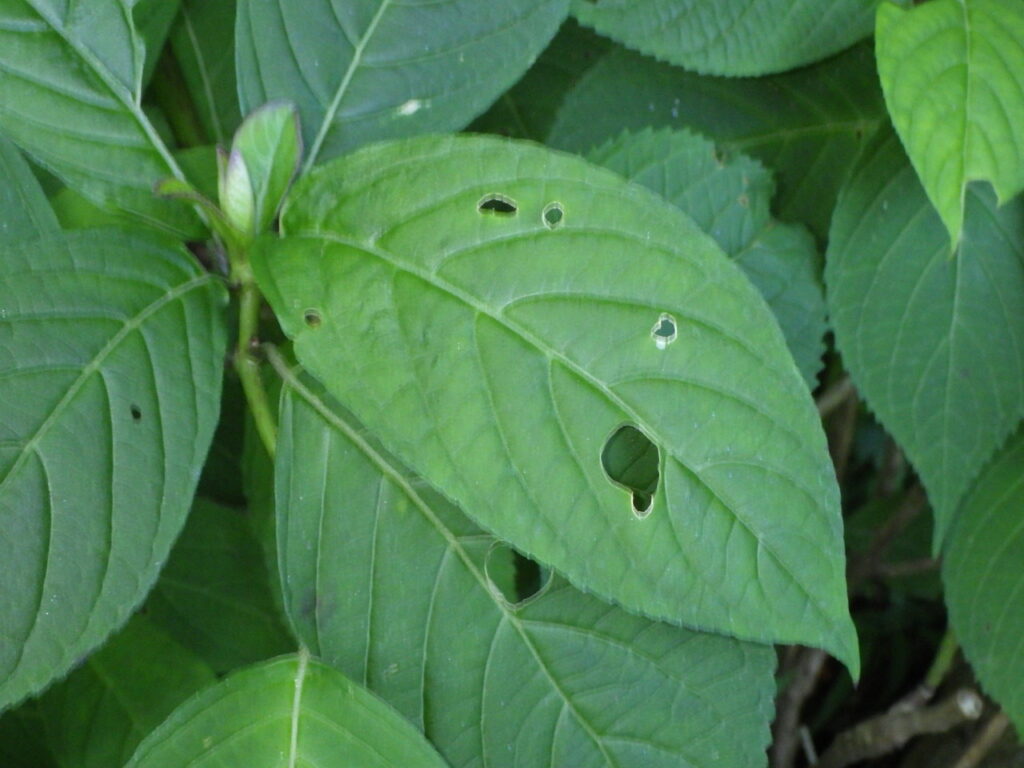
There are countless differences between Gynostemma pentaphyllum and Hydrangea serrata. In fact, the only similarities are their names and uses. The leaves of Gynostemma pentaphyllum are palmate compound leaves, while those of Hydrangea serrata are ordinary simple leaves. As the classification suggests, the flowers of Hydrangea serrata closely resemble those of hydrangeas. The fruit of Gynostemma pentaphyllum is a berry, while that of Hydrangea serrata is a capsule.
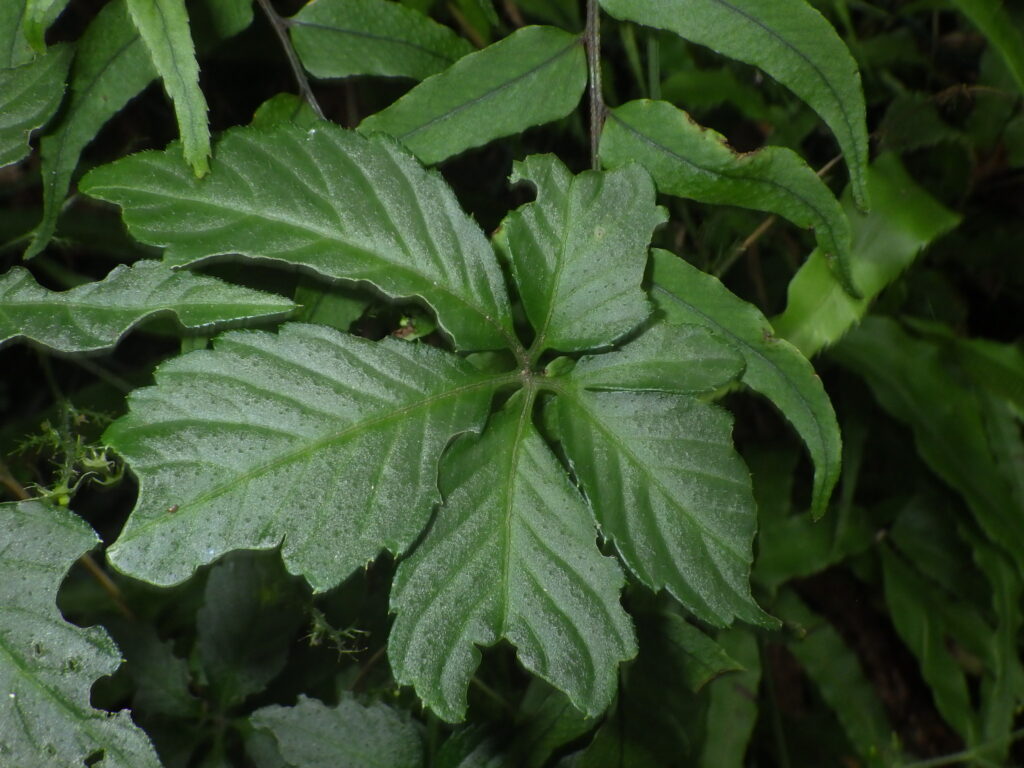
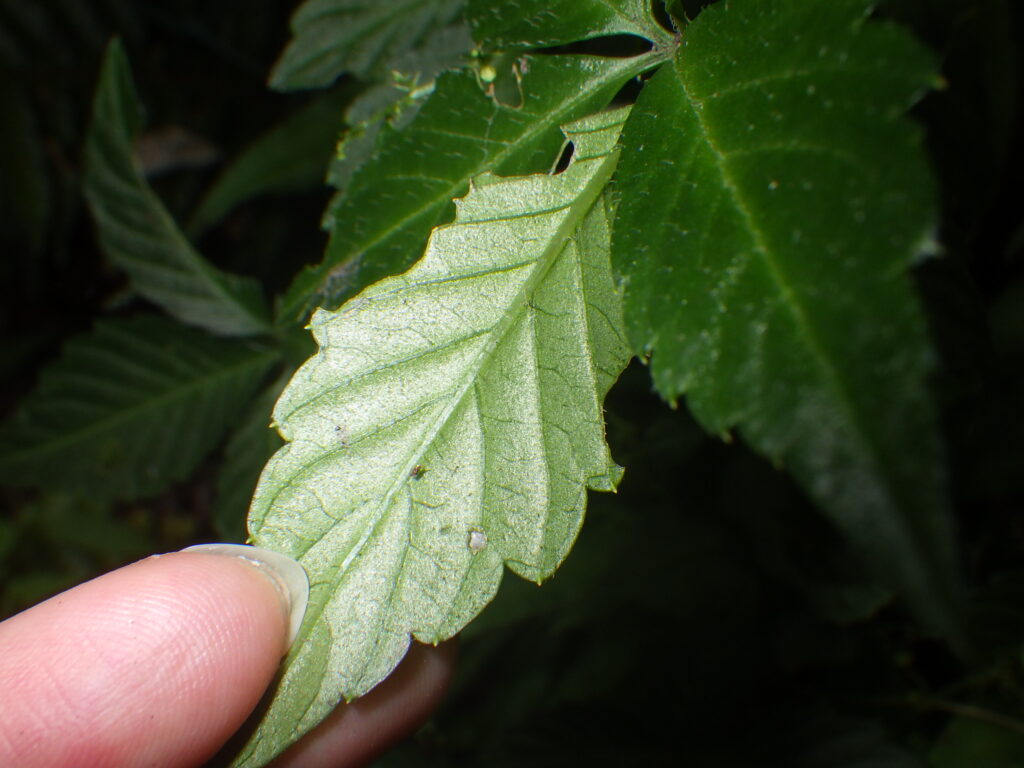
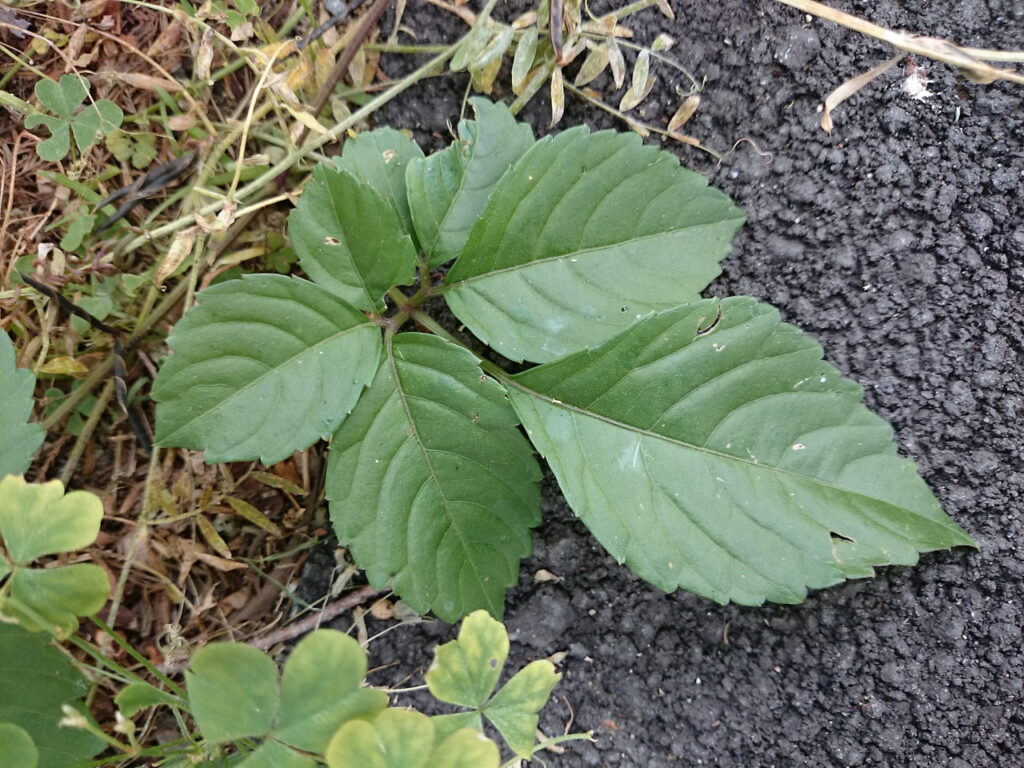
While the leaves of Gynostemma pentaphyllum and Cayratia japonica are indeed very similar, Gynostemma pentaphyllum has hairs on the upper surface of its leaves and short petioles (the thin parts that connect one leaflet to another), whereas Cayratia japonica has hairless upper surfaces and long petioles, especially the petiole of the uppermost terminal leaflet, which is more than a quarter the length of the leaf blade of the terminal leaflet.
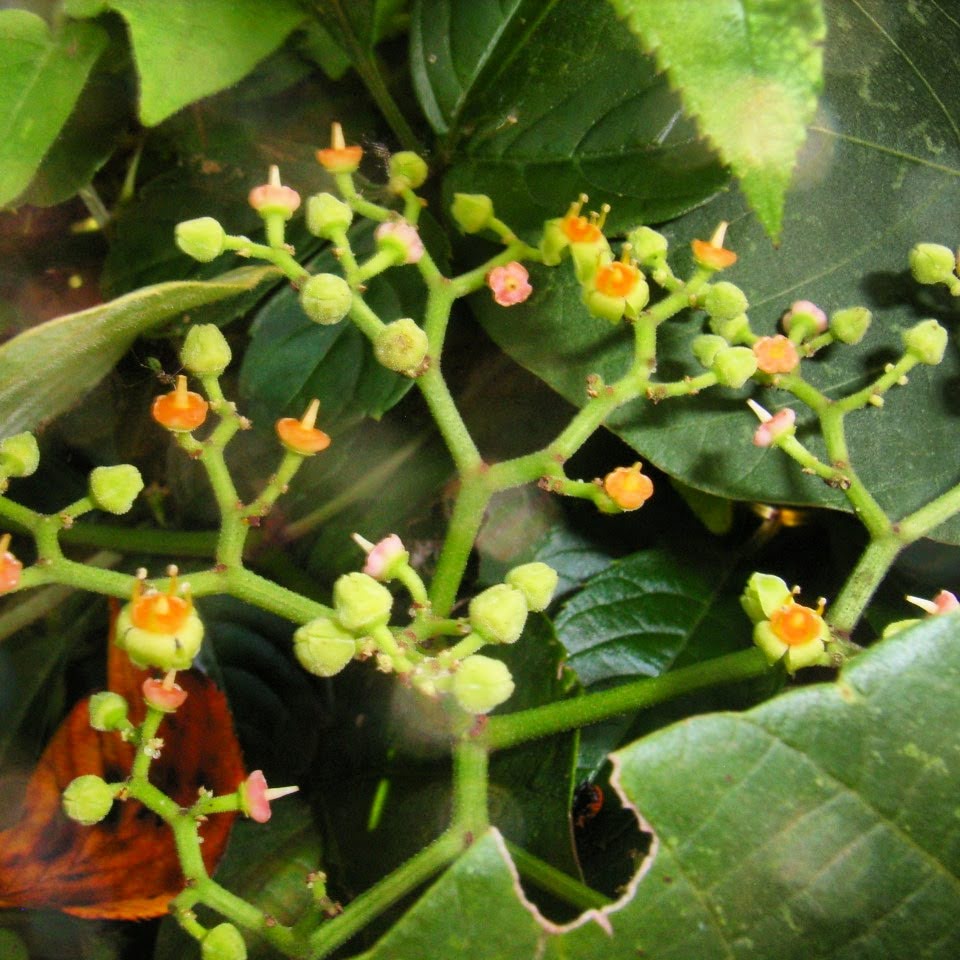
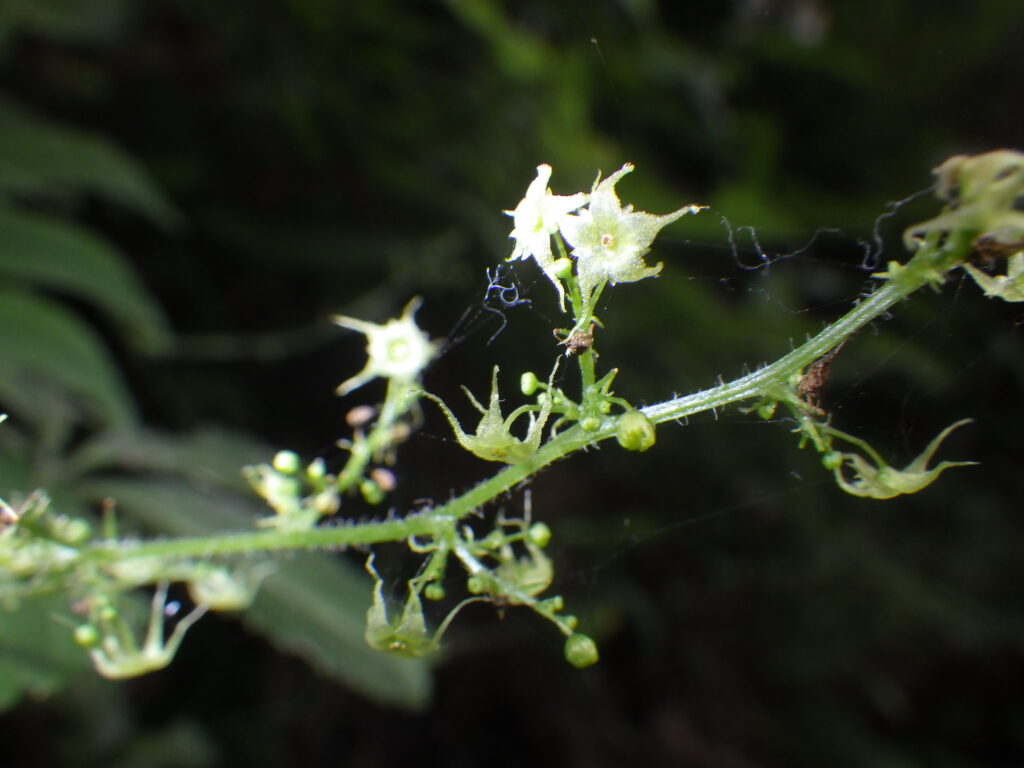
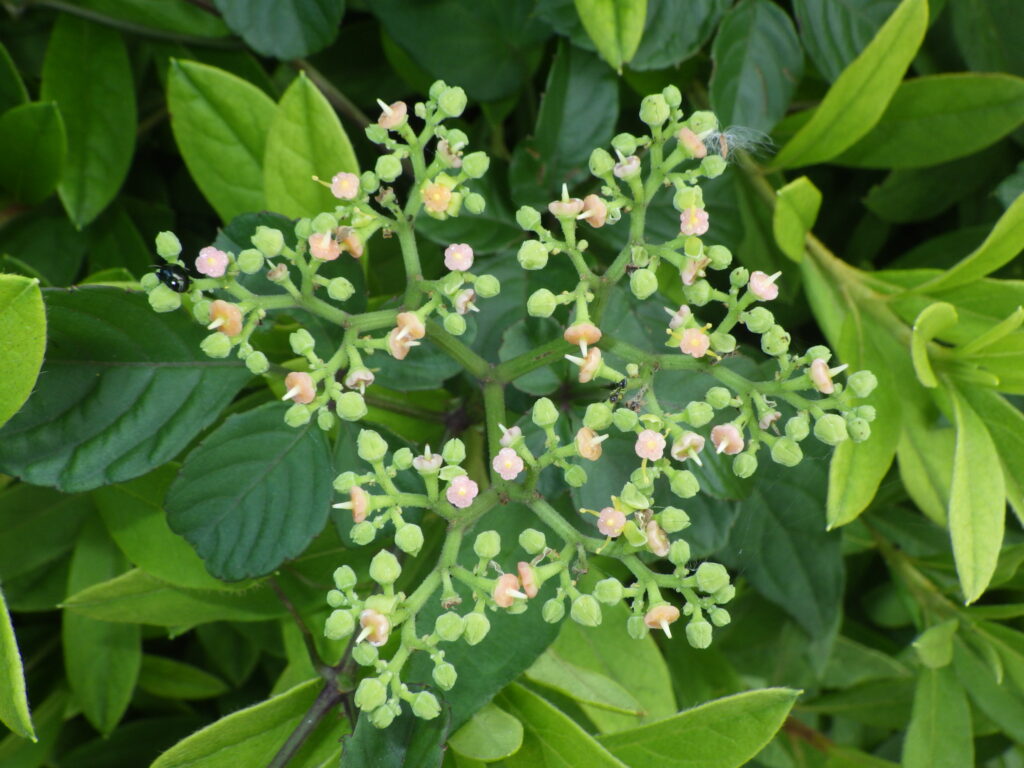
The flowers are completely different. Amachazuru has small, yellowish-green flowers arranged in racemes, with fused petals that are five-lobed and have pointed, tail-like tips, while Yabugarashi has cymose inflorescences that are open and saucer-shaped, with nectar coming from an orange part called the floral disc, and is a separate-petaled flower with four pale green petals.
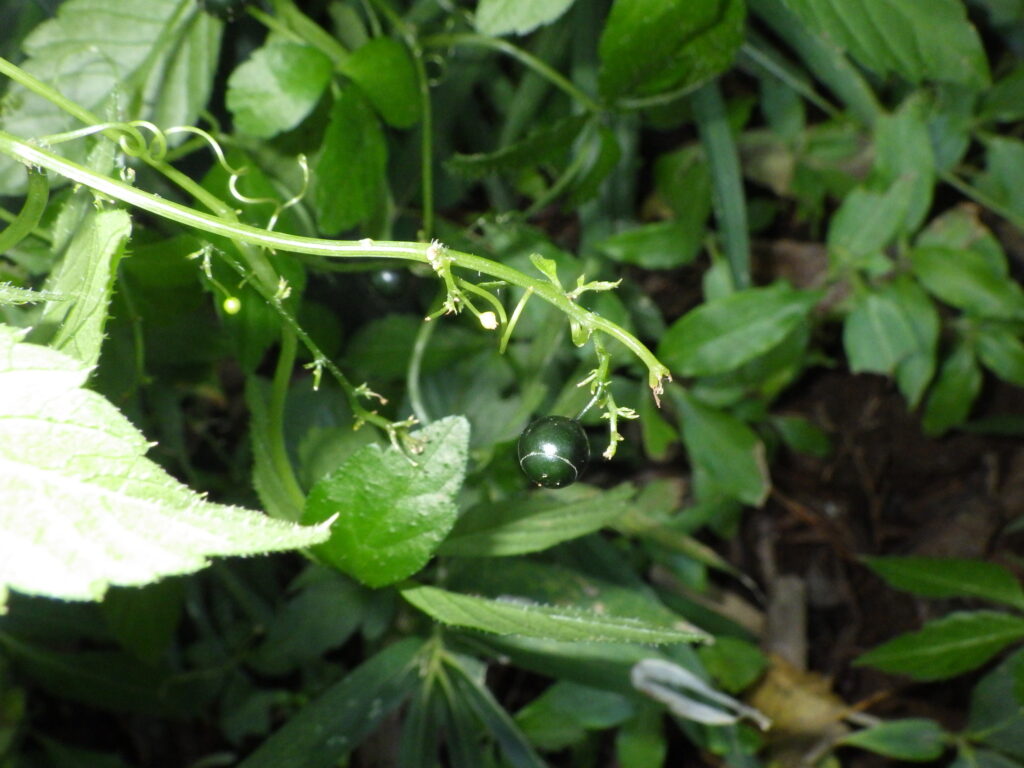
The fruits are somewhat similar, but the difference is that the fruits of Gynostemma pentaphyllum hang downwards, while those of Cayratia japonica protrude upwards.
With the above information, you shouldn't mistake them for each other. For differences between hydrangeas and wild grapes (Vitis coignetiae), please see our other articles.
What are the differences in how Amacha (sweet tea) and Amachazuru (Gynostemma pentaphyllum) are used?
Although Amacha (sweet tea) and Amachazuru (Gynostemma pentaphyllum) have similar names, this is due to their common uses.
In the case of Amacha, young leaves are harvested in late August, sun-dried, sprayed with water, packed into barrels, and fermented for 24 hours. These leaves are then steamed, kneaded, dried again, and brewed to produce "Amacha." It is a type of tea in a broad sense.
With Gynostemma pentaphyllum, a beverage is made by extracting the leaves or the entire plant with hot water. This is also sometimes called "amacha," but the tea made using "amacha" is the original amacha.
While both are considered luxury items, Amacha is different in that it is fermented, whereas Amachazuru is not.
Furthermore, in terms of intended use, Amacha has a strong connection to Buddhism, as it has been traditionally used since the Edo period to pour a sweet drink over Buddha statues during the Kanbutsu-e (Flower Festival) to celebrate the birth of Gautama Siddhartha (Buddha/Shakyamuni), following historical precedent (Kobayashi, 1999). However, Amachazuru, which has been called "Shibori-mata-ai" since ancient times, has only been used as a folk remedy for inflammation, detoxification, cough suppression, expectoration, and chronic bronchitis since ancient times, which is a significant difference (Bu et al., 2018).
However, amacha is not without medicinal properties. In folk medicine, it is used as a sweetener for diabetic patients and as a tea to treat weak stomachs, loss of appetite, diuresis, and bad breath. It is said to have antitumor, anti-allergic, antibacterial, and choleretic effects (Yamahara et al., 1994). Filodulcin and isophyllodulcin are the source of its sweetness and are not digested or absorbed, making it calorie-free. As a sugar substitute, it has attracted attention and is used by diabetic patients (Fujii & Yoshida, 2005; Kojima et al., 2018).
However, in rare cases, there have been instances of food poisoning caused by amacha in Kanagawa Prefecture in 2009 and 2010 (Kojima et al., 2018). It is puzzling that amacha, which has a long history of being consumed as a beverage, would cause food poisoning, and although the causative substance has not been identified, it has been suggested that it may have been brewed and consumed in a way that contained a high concentration of bitter components, so caution is advised in this regard.
What is the structure of a flower?
Gynostemma pentaphyllum flowers from August to September. It is dioecious (having separate male and female plants). Small, yellowish-green flowers, about 5 mm in diameter, bloom in racemes in the leaf axils. The corolla is 5-lobed and tapers to a point at the tip. The calyx is small.
While Japanese knotweed (Cayratia japonica) can reproduce asexually using its rhizomes, it does flower from June to August. It forms cymose inflorescences, and the flowers are open and saucer-shaped, secreting nectar from an orange part called the floral disc. They are initially reddish and later change to orange. The flowers are 5 mm in diameter, with four pale green petals, four stamens, and one pistil. After initially producing stamens, it undergoes a sex change and produces a pistil, a process called "protandry" that prevents self-pollination.
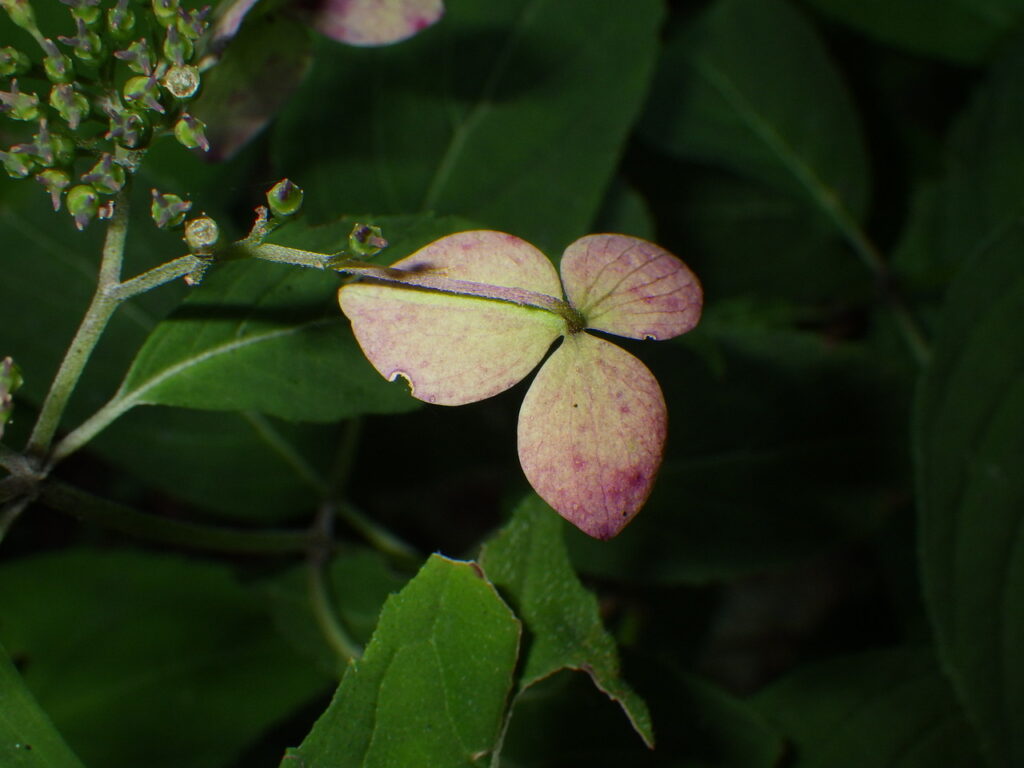
Hydrangea serrata flowers from June to July. Its inflorescence consists of inconspicuous "hermaphrodite flowers" that later produce seeds, and "decorative flowers" that are located on the periphery of the inflorescence, lacking petals and composed only of sepals, which only increase its appeal to insects and do not produce seeds. The decorative flowers are purplish to reddish, and their sepals are circular to broadly ovate and overlap. The hermaphrodite flowers are blue.
What is the structure of the fruit?
The fruit of Gynostemma pentaphyllum is a berry, spherical in shape about 7 mm in diameter, and ripens to a dark green color. The remnants of the calyx and corolla remain in a ring shape.
The fruit of Cayratia japonica is a berry, spherical, rarely somewhat rounded, and ripens to black. However, while the diploid variety distributed west of the Kanto region readily bears fruit, the triploid variety distributed east of the Kinki region and more common in eastern Japan does not bear fruit. Therefore, you may not often have the opportunity to see the fruit of Cayratia japonica.
The fruit of the Amacha plant is a capsule, ovate to elliptical in shape, 3-4 mm long, and ripens in October and November. The seeds are small and elliptical, with wing-like projections at both ends.
References
V.T. Gokuha, Hiroko Hashida, Misaki Kurawaka, Haruka Tatehana, Anna Arita, Naho Sasaki, Fumio Shimura, and Yuko Yamazaki. 2018. Examination of the safety of Gynostemma pentaphyllum products in accordance with the methods for evaluating the safety of food additives. Jumonji Gakuen Women's University Bulletin 48(2): 85-97. ISSN: 2424-0591, https://jumonji-u.repo.nii.ac.jp/records/159
Fujii, Toshio & Yoshida, Tomohiko. 2005. Characteristics of Hydrangea serrata in the Hydrangea genus. Journal of the Crop Science Society of Japan 74(1): 52-57. https://doi.org/10.1626/jcs.74.52
Hayashi, Yasaka, Kadota, Yuichi, and Hirano, Takahisa. 2013. Yamakei Handy Illustrated Guide 1: Wildflowers (Revised and Expanded New Edition). Yama-kei Publishers, Tokyo. 664pp. ISBN: 9784635070195
Hayashi, Masayuki. 2019. Tree Leaves: Expanded and Revised Edition - Identifying 1300 Species Through Real-Life Scans. Yama-kei Publishers, Tokyo. 824pp. ISBN: 9784635070447
Kojima, T., Kai, S., Kishi, H., Uemura, J., Miyazawa, M., & Satake, M. 2018. Food poisoning suspected to be caused by sweet tea. Journal of the Japanese Society for Food Science and Technology 51(2): 133-134. https://doi.org/10.11402/cookeryscience.51.133
Kanagawa Prefecture Flora Survey Association. 2018. Kanagawa Prefecture Flora 2018 (Electronic Edition). Kanagawa Prefecture Flora Survey Association, Odawara. 1803pp. ISBN: 9784991053726
Kobayashi, Mayumi. 1999. Hyakuseki Santan and the Buddha's Birthday Celebration. Seijo Kokubun Gakuronshu 26: 1-19. ISSN: 0286-9063, https://seijo.repo.nii.ac.jp/records/380
Yamahara, J., Matsuda, K., Shimoda, H., Ishikawa, H., Kawamori, S., Warishi, N., and Yoshikawa, M. 1994. Functional Development of Hydrangea macrophylla (Part 2): Anti-ulcer activity, anti-allergic activity, and choleretic activity of Hydrangea macrophylla extract. Yakugaku Zasshi 114(6): 401-413. https://doi.org/10.1248/yakushi1947.114.6_401

