Bohemian waxwings and Japanese waxwings are both brightly colored winter birds of the Waxwing genus, possessing crests of red, yellow, and other vibrant colors. They are very similar, and it can be difficult to distinguish between them. However, you can reliably differentiate them by checking the tips of their tail feathers, and there are also subtle differences in coloration. Their distributions differ significantly; Bohemian waxwings are found throughout the Holarctic region, including Europe and North America, while Japanese waxwings are found only in the Far East of the Palearctic region. In their wintering grounds, they can form flocks of over 100 birds, as their Japanese name "Renjaku" (連雀) suggests, feeding exclusively on plant fruits and migrating. Pairs are formed during this time. In their breeding grounds, they form weak colonies, and insects are added to their diet. They are monogamous and nest and breed in coniferous trees. Waxwings have quite conspicuous crests, black throats, and yellow/red feathers, which are sexually distinct. These features are related to their strong social nature, and it is known that females use them in same-sex fighting, while males use them in same-sex and opposite-sex fighting. Furthermore, it has been found that the red, waxy substance found in all waxwing species is produced from their fruit diet and is highly likely to indicate their age. Individuals with a clearly visible red waxy substance may be older and physically and experientially more adept at raising young. This article will explain the classification, life cycle, diet, reproductive ecology, and morphological adaptations of the Bohemian waxwing and the Japanese waxwing.
- Two species of winter birds with brightly colored red and yellow plumage and crests.
- What are the differences between Bohemian waxwings and Japanese waxwings?
- What is life like in the wintering grounds?
- What is life like in the breeding grounds?
- What are the uses of the crest, black throat, and yellow/red feathers?
- What is the role of that red, waxy substance? It turns out it can actually tell you your age!?
- References
Two species of winter birds with brightly colored red and yellow plumage and crests.
The Bohemian Waxwing (Bombycilla garrulus) is distributed throughout the Holarctic region, with a breeding distribution in Scandinavia, Siberia, northern China, and northern North America, a considerably wider distribution than that of the Japanese Waxwing (Nakamura & Nakamura, 1995). Its wintering distribution extends south from its breeding grounds, encompassing all of Europe, Iran, China, Japan, and Sakhalin. In Japan, it arrives as a winter visitor around November and may stay until around April, although the number of migrating birds varies from year to year. It inhabits deciduous broadleaf forests, urban parks, and areas near villages in Hokkaido, Tohoku, Hokuriku, and the San'in region.
The Japanese waxwing (Bombycilla japonica) is distributed in the Palearctic region, with breeding grounds in Siberia, northern China, the Amur River region, and Ussuri. Its wintering grounds are southward from its breeding grounds, including southern China, Taiwan, Sakhalin, and Japan. It is endemic to the Far East and is known as the "Japanese waxwing" in English. In Japan, it migrates as a winter visitor to areas north of central Okinawa Prefecture, but the number of migrants varies significantly from year to year, with some years seeing no sightings at all. They appear around November and inhabit areas such as farmlands in the plains, mountain settlements, wooded urban areas, and parks until around May.
Both belong to the genus Waxwing in the family Bombycidae, order Passeriformes. In Japan, they are winter visitors, and they are very similar in that they are brightly colored and have crests, so it can be difficult to distinguish between them.
What are the differences between Bohemian waxwings and Japanese waxwings?
However, these two types can be distinguished by checking the following points (Birder, 2014).
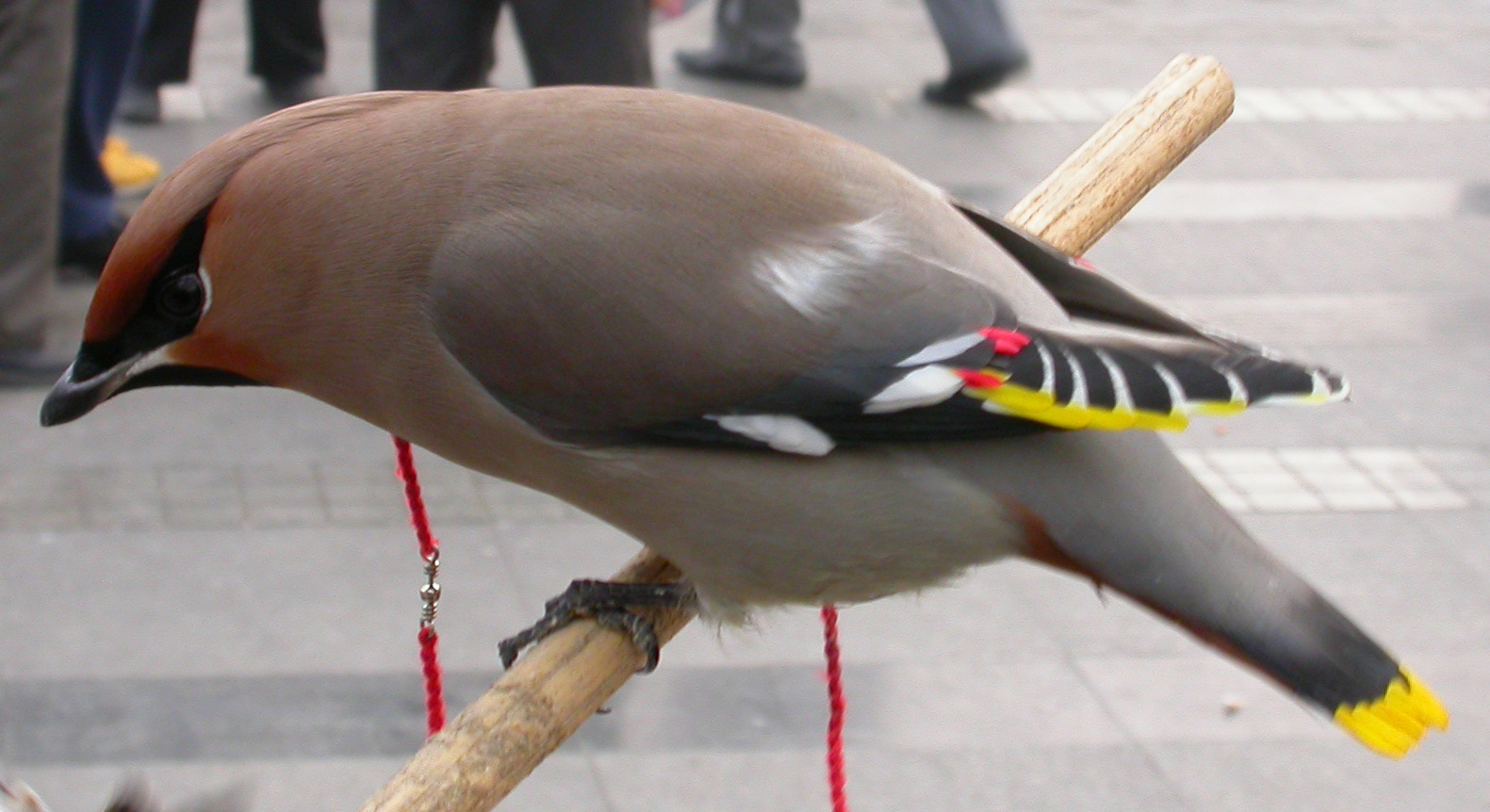
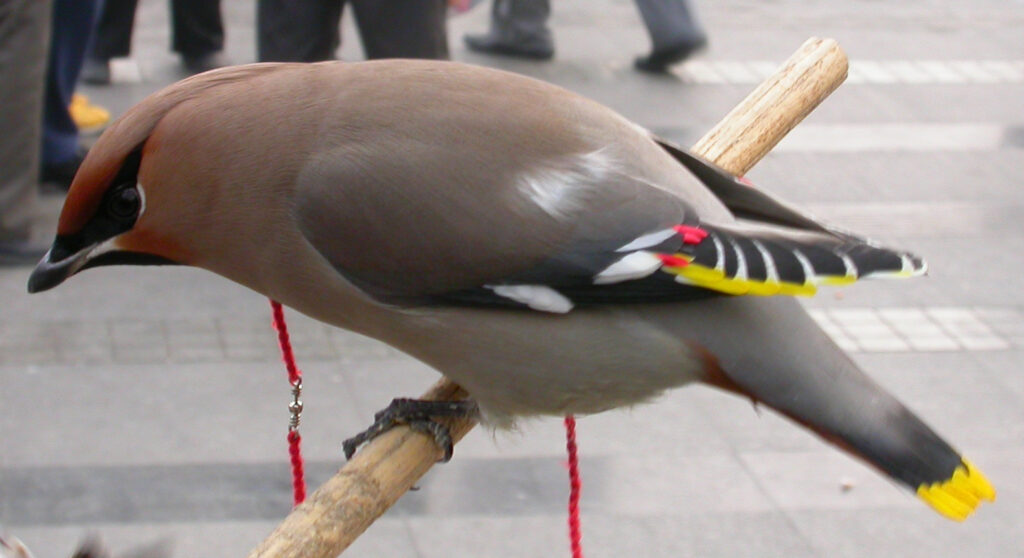
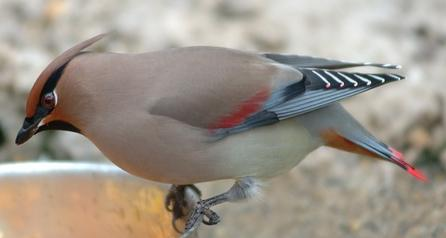
The most significant difference between the Bohemian Waxwing and the Japanese Waxwing is that the tips of the tail feathers are yellow in the Bohemian Waxwing, while the tips of the tail feathers are red in the Japanese Waxwing (Morioka and Udagawa, 2003).
However, just like the Bohemian waxwing, the Japanese waxwing also has a red, waxy substance at the tips of its secondary flight feathers, so it's important to pay close attention to its tail feathers.
Furthermore, while the black eye stripe in the Bohemian Waxwing does not reach the crest, in the Japanese Waxwing, the black eye stripe extends far back and the black color extends down to the lower part of the crest.
Furthermore, while Bohemian waxwings have no markings on their abdomen, Japanese waxwings have a yellow underside. This can be helpful if you cannot identify the tail feathers.
Regarding distribution, an important indicator for observation is that Bohemian waxwings are more commonly observed in western Japan, while Japanese waxwings are more frequently observed in eastern Japan. However, the two species sometimes form mixed flocks.
The Bohemian Waxwing (Bombycilla cedrorum), like the Japanese Waxwing, has yellow tips on its tail feathers, but it is found only in the Americas and is smaller in size.
What is life like in the wintering grounds?
The Japanese name for the Bohemian Waxwing is written with the kanji characters "連雀," which literally means "a string of sparrows (small birds)" (Ohashi, 2016). They are particularly known for their habit of forming large flocks, which is perhaps the most symbolic characteristic of this group. Flocks can number over 100 birds, and in an extreme example, more than 500,000 Bohemian Waxwings were recorded in Germany alone during the winter of 2004-2005 (Fouarge & Vandevondele, 2005).
Both Bohemian waxwings and Japanese waxwings live in flocks in their wintering grounds and migrate widely in search of fruits on plants that serve as food. They prefer red fruits, but also eat black and white fruits.
Bohemian waxwings are said to feed on the fruits of trees such as rowan, crabapple, privet, persimmon, and mistletoe.
Bohemian waxwings are known to frequently eat the fruits of plants such as privet, Japanese privet, euonymus, and mistletoe.
Waxwings, in particular, are known to be fond of the fruit of mistletoe (Viscum album), and after eating it, they produce sticky droppings derived from the fibers attached to the seeds. This is thought to be a particularly effective way to promote the dispersal of mistletoe seeds (Ando et al., 2016).
In Japan, pyracantha is included in their diet, and there's a theory that eating pyracantha can cause sudden death, but personally, I'm skeptical about that.
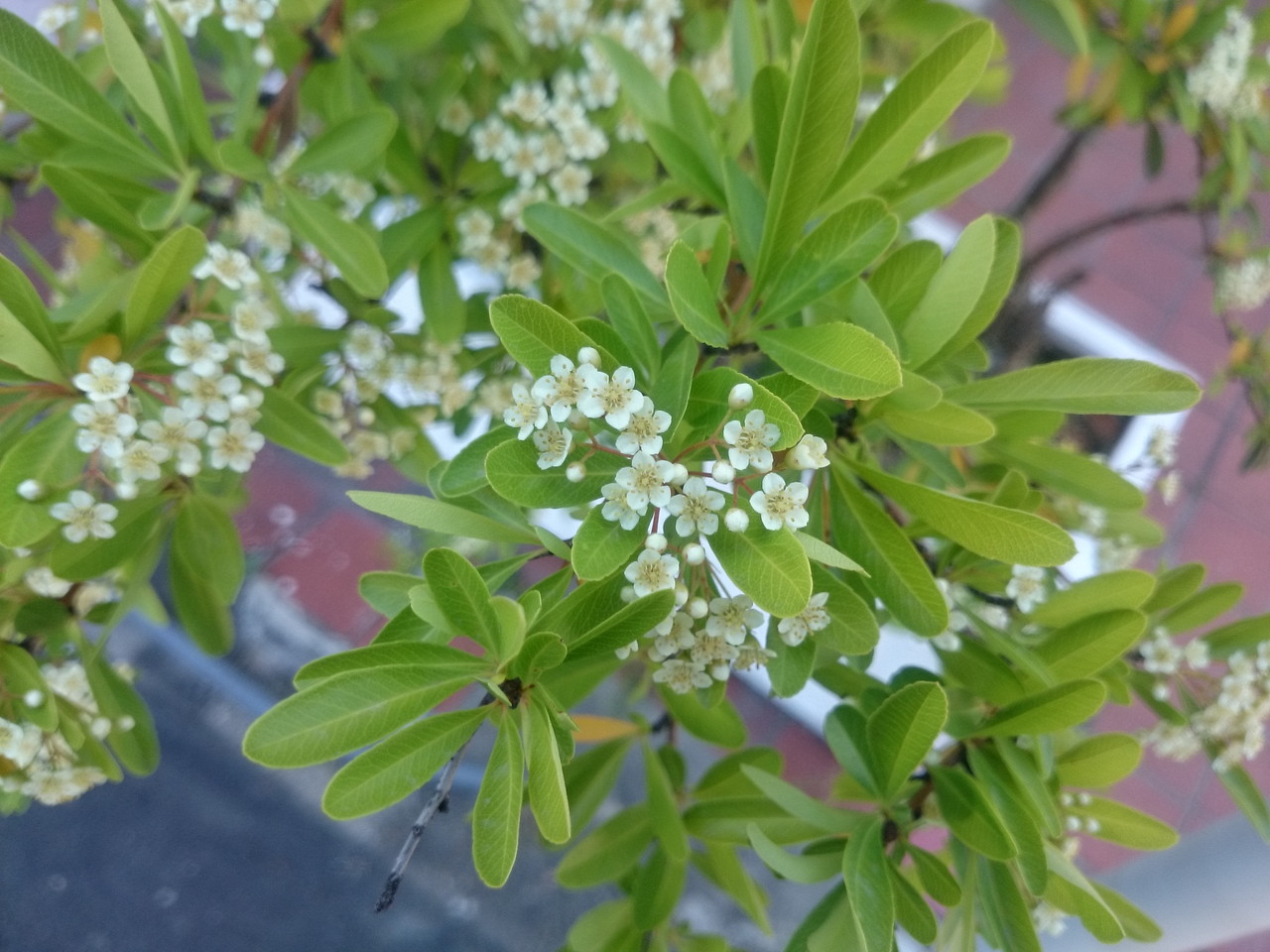
Both species forage exclusively in trees, never descending to the ground except to drink water. They forage by pecking at fruit as they move from branch to branch. While the fruit is rich in sugar, it lacks other nutrients, which means they need to eat large quantities. To put it in human terms, it's like eating only sweets. In winter, there are no insects, so it's unavoidable, but it's safe to say they face more hardship than one might imagine.
Male and female pairs form in their overwintering grounds and are known to repeatedly exchange small gifts, including food such as tree fruits, with each other, performing a unique courtship display similar to courtship feeding.
What is life like in the breeding grounds?
Once they move to their breeding grounds, pairs do not defend their territory except in the immediate vicinity of their nest, and in some areas they form loosely organized colonies.
In their breeding grounds, they feed not only on plant fruits but also on insects, mainly small flies, and spiders.
Bohemian waxwings begin laying eggs around mid-June in the Nordic region and typically breed once a year, often as monogamous females.
They prefer coniferous trees as nesting sites, and build crude, bowl-shaped nests on branches about 3 to 15 meters above the ground, using moss, dead leaves, and occasionally lichens as materials.
Both males and females participate in nest building, but the female does most of the work. Each nest contains 5-6 eggs, and the female incubates them alone for 14-15 days, during which time she brings food to the male who is incubating. The chick rearing period is 14-15 days, but can be 17 days or more in bad weather. Both males and females feed the chicks.
The breeding ecology of the Bohemian Waxwing is not well understood, but it is believed to be similar to that of the Japanese Waxwing.
What are the uses of the crest, black throat, and yellow/red feathers?
Waxwings are known for being quite ornate birds. In addition to the crest on their heads, they have a black throat, yellow and red tail feathers, and primary flight feathers, giving them a stylish appearance.
What roles do these play?
While not fully understood, this appears to be related to the fact that waxwings form weak colonies and exhibit social behavior even in their breeding grounds.
However, it seems that males and females have slightly different uses for their markings. As evidence of this, there are slight differences in the patterns of males and females. In Bohemian waxwings, the yellow at the tip of the tail is paler and narrower, while in Japanese waxwings, there is no white spot at the tip of the primary flight feathers, and the red areas on the wings and undertail coverts are smaller. Furthermore, in both species, the boundary of the black area on the throat is clearly defined in males, while it is blurred and indistinct in females. It is generally thought that this is a result of sexual selection, where the males use these markings more often, and the markings have become stronger as a result.
Specifically, the following examples of pattern usage have been observed (Meaden & Harrison, 1965).
In females, competition can arise among them for nesting sites in breeding grounds. During such competitions, they will stand upright to appear tall and slender, lower their feathers and crest, expose their black throat, and open their beaks while calling out as a display.
In males, competition can occur among them for females in breeding grounds, and in such cases, they will perform the same displays as females towards their rivals.
However, males also use their body markings in courtship displays to attract females. This courtship display is almost the opposite of the adversarial display; the male raises its feathers and crest feathers until they are vertical, showing off its body to the female. At this time, it turns its face away from the female, which is likely to make its entire body more visible to her.
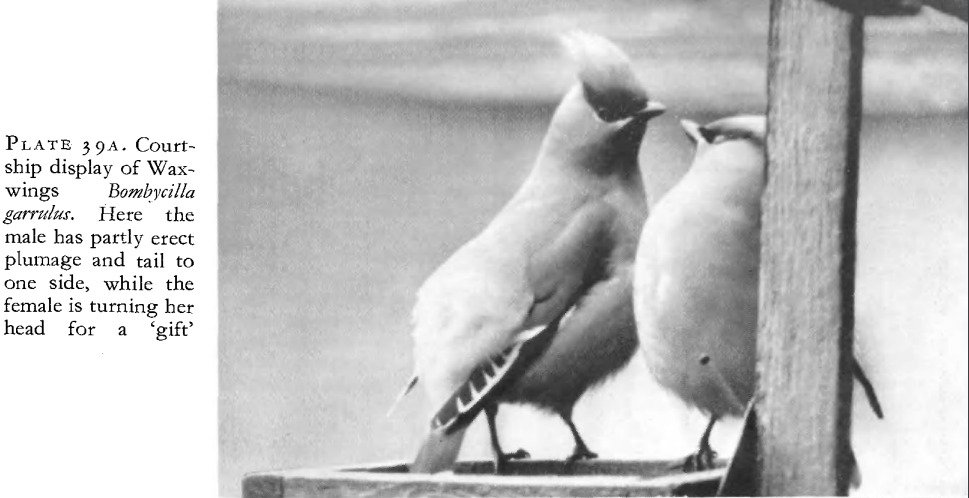
Afterward, when the female raises her feathers in a similar gesture of acceptance, the male and female exchange small gifts containing food in their open beaks, as described above. This can be repeated up to 14 times in a row, and they do not make any noise during this display. However, even after such a long period of confirming their love, one observation indicated that only 10% of them actually mated. It seems that a fairly strict selection process is at play.
It is natural to assume that body ornamentation serves as a means of competition among males, among females, and between males and females. A more pronounced ornamentation indicates a healthier and stronger individual. However, why do Bohemian waxwings and Japanese waxwings have different colorations? It could be to prevent interspecies hybridization, but there doesn't seem to be any proper research on this yet.
What is the role of that red, waxy substance? It turns out it can actually tell you your age!?
As mentioned above, members of the Waxwing genus have many ornaments, but it is known that they all share a common feature: a red, waxy substance at the tips of their secondary flight feathers.
This color is caused by astaxanthin, a carotenoid pigment also found in the feathers of other birds. The precursor to this pigment is thought to originate from the fruits of the birds' feed plants.
What is the role of this red, waxy substance? I have never seen any Japanese literature that addresses this point.
It was once thought that this was to prevent feather wear. However, studies of live birds and museum specimens have found no clear relationship between the color of the feather tips and feather wear, thus refuting this theory.
A more prominent role has been suggested by Queen's University in Canada, based on research from Ontario (Mountjoy & Robertson, 1988).
That's an "age" display.
In this study, we captured Japanese waxwings in a national wildlife refuge, determined whether they were juveniles or adults, and identified their sex based on their brood markings, and investigated the correlation between these factors and the presence of a red, waxy substance.
As a result, it was found that both males and females possess this red, waxy substance in adult birds, but young birds up to the second instar usually have none at all, or only a few strands. This is the first reported example of a bird species exhibiting "delayed plumage maturation (DPM)" in both sexes.
So, the appearance of the red, waxy substance can indicate age (or whether the person is in a health condition appropriate for their age to produce that substance), but what does that mean?
Simply put, it means that older people are more likely to be popular.
Older birds are known to start nest building earlier than younger birds, giving this pair the chance to raise offspring twice in one season. In that case, you'll want to choose an older bird as your partner, and it would be worthwhile to emphasize that point.
In addition, older birds are thought to have a higher success rate in breeding.
One possible reason for this is that, in females, older females have larger ovaries than younger females, resulting in a higher number of eggs per nest, larger eggs, and a higher success rate for chicks to fledge.
In monogamous systems, the number of offspring a male produces is directly related to how well the female raises her young (in polygamous systems, infidelity would suffice). Therefore, when mating opportunities are limited, males may prefer to choose older females as mating partners.
While human males tend to prioritize younger women due to factors like reproductive age and menopause, waxwings seem to have fewer such constraints, and physical maturity is likely the more important factor.
On the other hand, older males are also thought to have a higher breeding success rate. Males provide most of the female's food during incubation and feed the chicks more frequently than the female. Older males take better care of the chicks and feed the female more efficiently, which reduces the cost that the female has to bear in raising the young, and as a result, the chicks are more likely to grow up healthy.
Therefore, females also have a motivation to choose an older partner. This means that females are looking for a "dad to raise children," which is something that modern people can easily understand.
When observing waxwings, try focusing on the "red waxy substance" they have; it might be interesting to see what social status each individual has!
References
Ando, Masanori, Tadayuki Kagimoto, Shogo Kato, and Akira Komiyama. 2016. The influence of canopy structure in deciduous forests on the distribution of mistletoe. Journal of the Japanese Forest Society 98(6): 286-294. https://doi.org/10.4005/jjfs.98.286
Birder. 2014. A thorough comparison of two popular winter bird species, the Bohemian Waxwing. Birder 28(1): 1-4. ISSN: 0913-5219
Fouarge, J. & Vandevondele, P. 2005. Synthèse d'une exceptionnelle invasion de Jaseurs boréaux (Bombycilla garrulus) en Europe en 2004-2005. Aves 42(4): 281-312. https://aves.natagora.be/fileadmin/Aves/Bulletins/Articles/42_4/42_4_281.pdf
Meaden, FM & Harrison, CJO 1965. Courtship display in the Waxwing. British Birds 58 (6): 206-208. ISSN: 0007-0335, https://britishbirds.co.uk/wp-content/uploads/article_files/V58/V58_N06/V58_N06_P206_208_A046.pdf
Morioka, Hiroyuki & Udagawa, Tatsuo. 2003. New Illustrated Guide to Birds in Color. Hokuryukan, Tokyo. 358pp. ISBN: 9784832607521
Mountjoy, DJ, & Robertson, RJ 1988. Why are waxwings “waxy”? Delayed plumage maturation in the cedar waxwing. The Auk 105(1): 61-69. https://doi.org/10.1093/auk/105.1.61
Nakamura, Noboru & Nakamura, Masahiko. 1995. Illustrated Guide to the Ecology of Wild Birds of Japan: Land Birds. Hoikusha, Osaka. 301pp. ISBN: 9784586302055
Ohashi, Koichi. 2016. Dictionary of Wild Bird Names: Understanding Their Origins. Sekai Bunka Publishing, Tokyo. 127pp. ISBN: 9784418164134