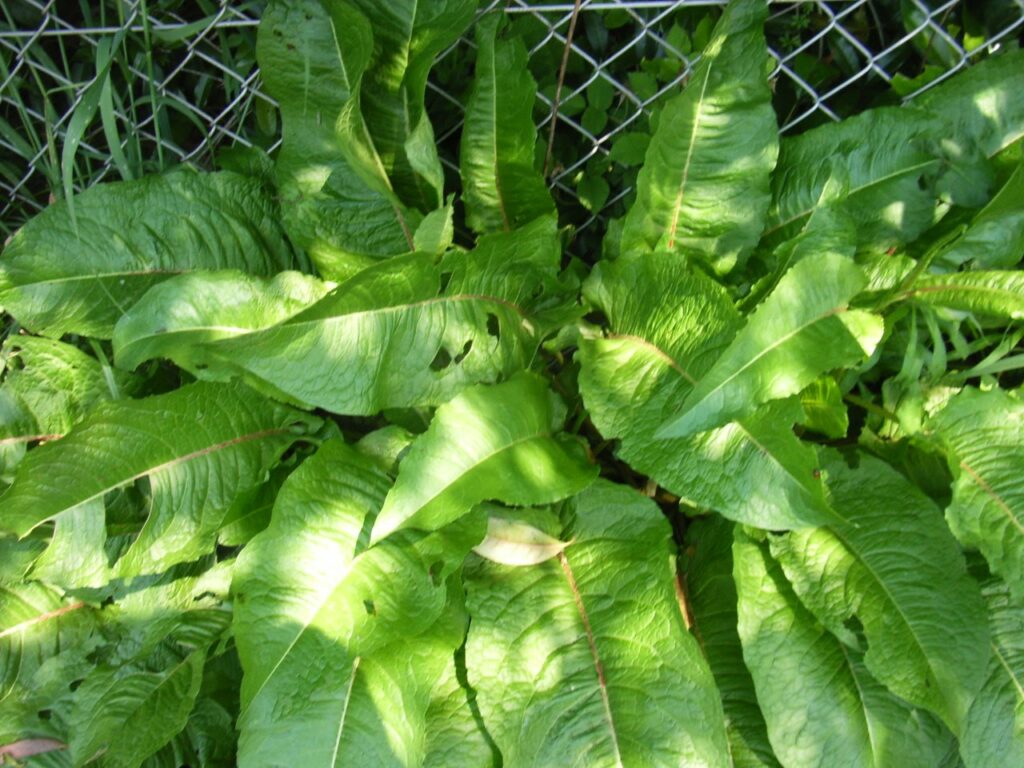
Rumex japonicus, Rumex longifolius, Rumex crispus, and Rumex serrata all belong to the genus Rumex in the family Polygonaceae. Originally, only Rumex japonicus was distributed in Japan, but multiple species have invaded and become extremely common weeds. They all share a preference for disturbed ground, and are often found growing together. Furthermore, the appearance of their flowers and fruits is very similar, making identification difficult without careful comparison. They can be distinguished from sorrel species by the shape of their leaves and flowers. More than 10 species of Rumex have been confirmed in Japan, and accurate identification requires a field guide, but if we limit ourselves to the four most common species, the most accurate method of identification is by the shape of the "inner perianth that encloses the fruit." The flowers are very inconspicuous and small, with no distinction between the inner perianth (petals) and outer perianth (sepals). This is because they are wind-pollinated, not pollinated by insects. After pollination, the inner perianth remains, swells and flattens, and encloses the fruit (achene). This structure allows the seeds to be carried to other locations by wind and water. However, the presence of thorns (serrations) on the inner perianth and "white, knob-like protrusions" suggests the possibility of "dispersion by attachment to animals" or "dispersion by animal feeding," although this has not been adequately researched. This article will explain the classification, pollination ecology, and seed dispersal of dock species.
- What are Rumex japonicus, Rumex longifolius, Rumex crispus, and Rumex serrulata?
- What is the difference between dock and sorrel?
- What are the differences between *Rumex japonicus*, *Rumex longifolius*, *Rumex serrata*, and *Rumex japonica*?
- What is the structure of a flower?
- How is pollination done?
- What is the structure of the fruit?
- What are the methods for seed dispersal? There are many methods besides "wind dispersal"!
- References
What are Rumex japonicus, Rumex longifolius, Rumex crispus, and Rumex serrulata?
Rumex japonicus, also known as dock (or pygmy dock), is a common perennial herb found in Hokkaido, Honshu, Shikoku, Kyushu, and the Ryukyu Islands in Japan; as well as in Korea and China, growing in wastelands, roadsides, and fields in urban areas and around human settlements.
Rumex crispus, also known as long-leaved dock, is native to Europe and has naturalized widely throughout the Eurasian continent. It is a perennial herb that grows in wastelands and roadsides in urban areas and around human settlements.
Rumex conglomeratus, also known as "wasteland dock," is native to Europe and has naturalized widely throughout Eurasia. In Japan, it was introduced during the Meiji era and is commonly found in central Honshu, growing in wastelands and roadsides in urban areas and around human settlements.
Rumex obtusifolius, also known as Ezo dock, is native to Europe and has naturalized widely throughout the world, including Japan. It is a perennial herb that grows in wastelands and roadsides in urban areas and around human settlements.
All of these species belong to the genus Rumex in the family Polygonaceae. Originally, only Rumex japonicus was found in Japan, but now several species have invaded from Eurasia and have become extremely common weeds. They also share a preference for disturbed soil, and are often found growing together. Furthermore, their flowers and fruits look very similar. Therefore, they may be easily confused if not carefully observed.
What is the difference between dock and sorrel?
Before considering these four species, it's important to note that the genus Rumex also includes other species besides the common dock (Rumex acetosa) and the dwarf sorrel (Rumex acetosella). What are the differences between these two species?
First, there is a difference between dock species (Rumex serrata) and sorrel species (Rumex acetosa). In other words, all dock species have "hermaphrodite flowers" that have both stamens and pistils, but sorrel species have two types: individuals with "male flowers" that have only stamens (male plants) and individuals with "female flowers" that have only pistils (female plants).
The female flowers of this sorrel species are very red and conspicuous, so you can spot the red inflorescence of sorrel species even from a distance. This is not the case with dock species.
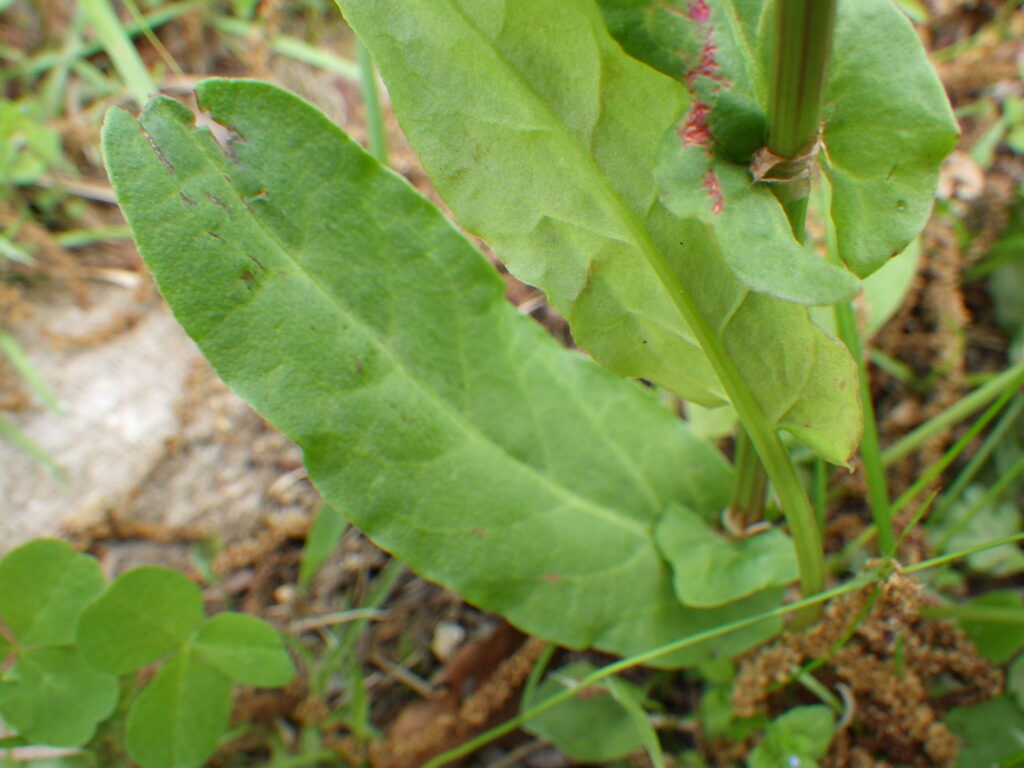
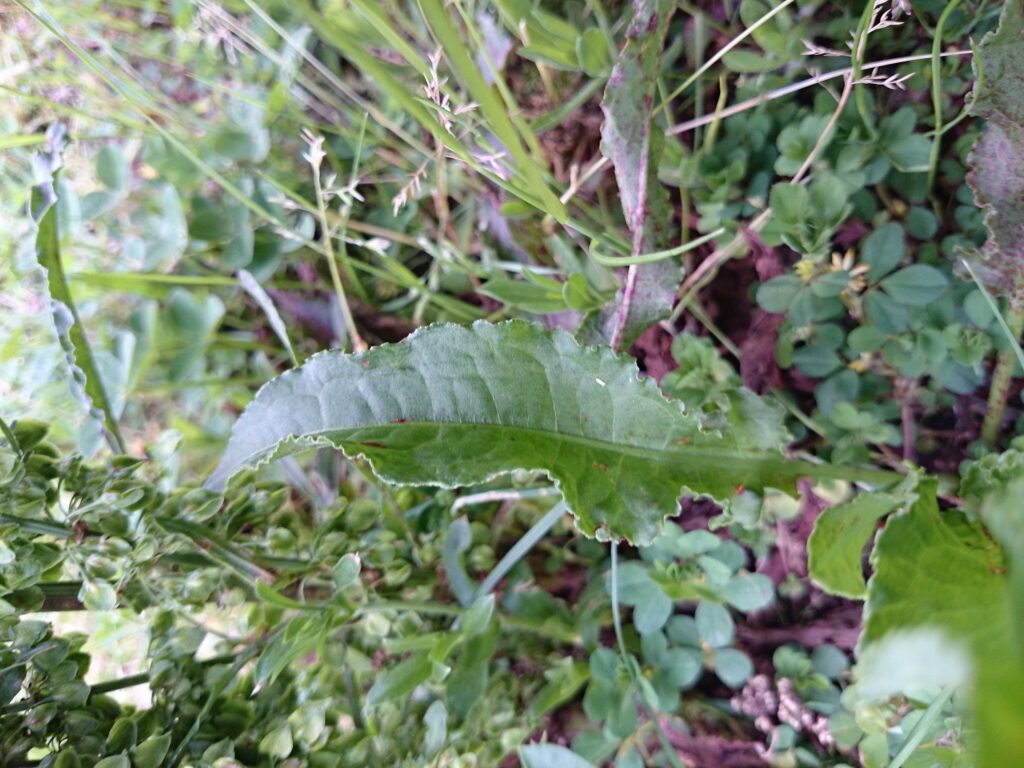
In terms of leaf morphology, dock species have wedge-shaped, rounded, or heart-shaped leaf bases, while sorrel species have scaly or lanceolate leaf bases. This difference may be useful when observing plants outside of their flowering season.
In addition, the Japanese name for sorrel (suiba) is said to be "suiba" (sour leaf), derived from its sour taste. This sourness comes from oxalic acid, which is also found in dock plants, but sorrel seems to be more sour, possibly because it contains more oxalic acid. According to someone who actually compared the two, "suiba is clearly more sour" (Ayumin, 2021). Therefore, this can be used to distinguish them, but it seems that no one has confirmed whether all dock plants are not sour.
What are the differences between *Rumex japonicus*, *Rumex longifolius*, *Rumex serrata*, and *Rumex japonica*?
More than 10 species of the genus Rumex have been identified in Japan, including the sorrel species mentioned earlier, making accurate identification difficult without consulting a field guide. However, the four species listed at the beginning are the most commonly found in urban areas and are frequently encountered. Therefore, this section will explain how to distinguish between these four species. For those who want to accurately distinguish all species, please refer to Ohashi et al. (2017) or the Kanagawa Prefectural Flora Survey Association (2018).
Firstly, in Rumex japonicus, the edges of the inner perianth surrounding the fruit have prominent thorns, whereas in Rumex crispus, Rumex longifolius, and Rumex serrata, the edges of the inner perianth surrounding the fruit are entire or have only shallow serrations.
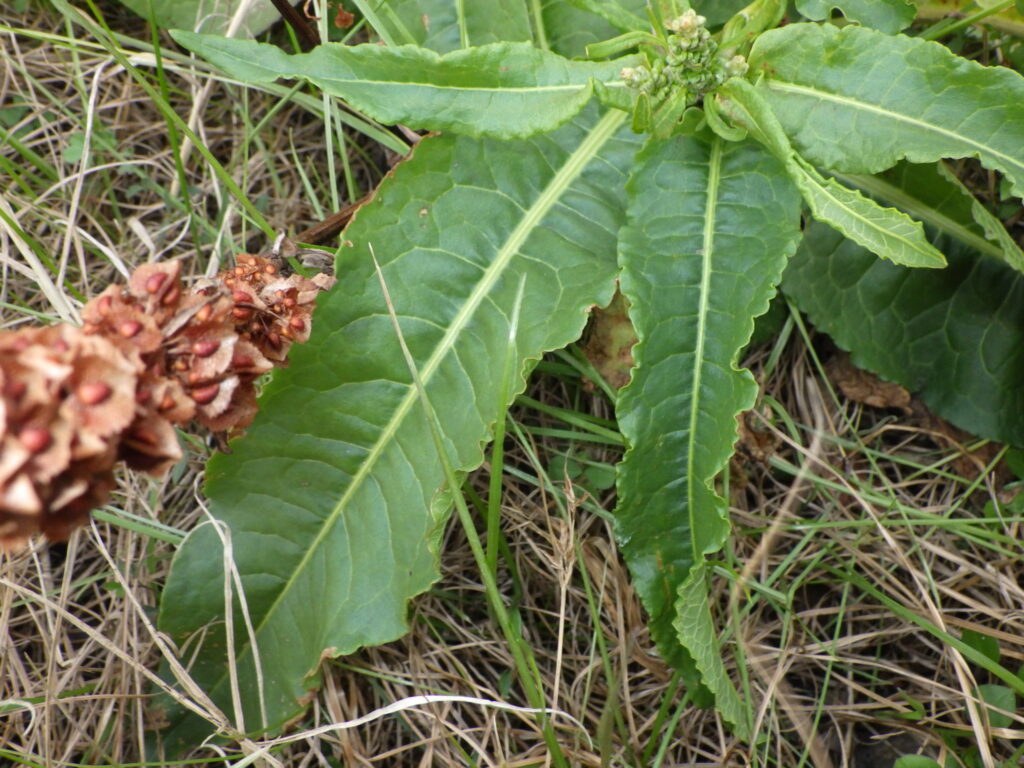
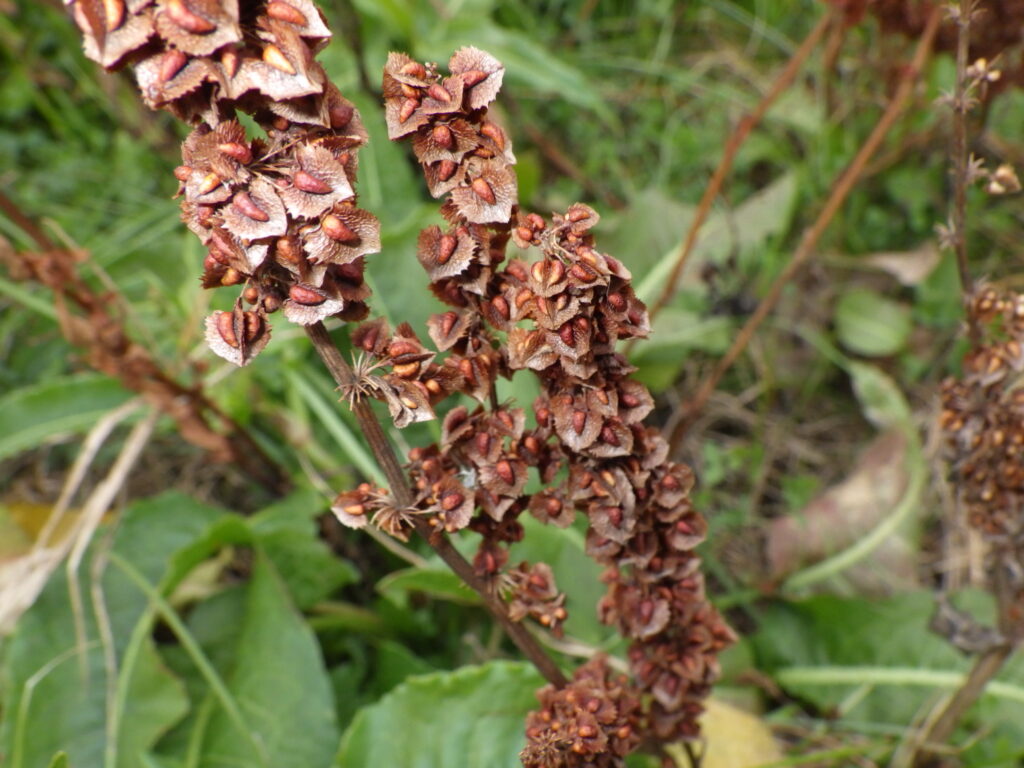
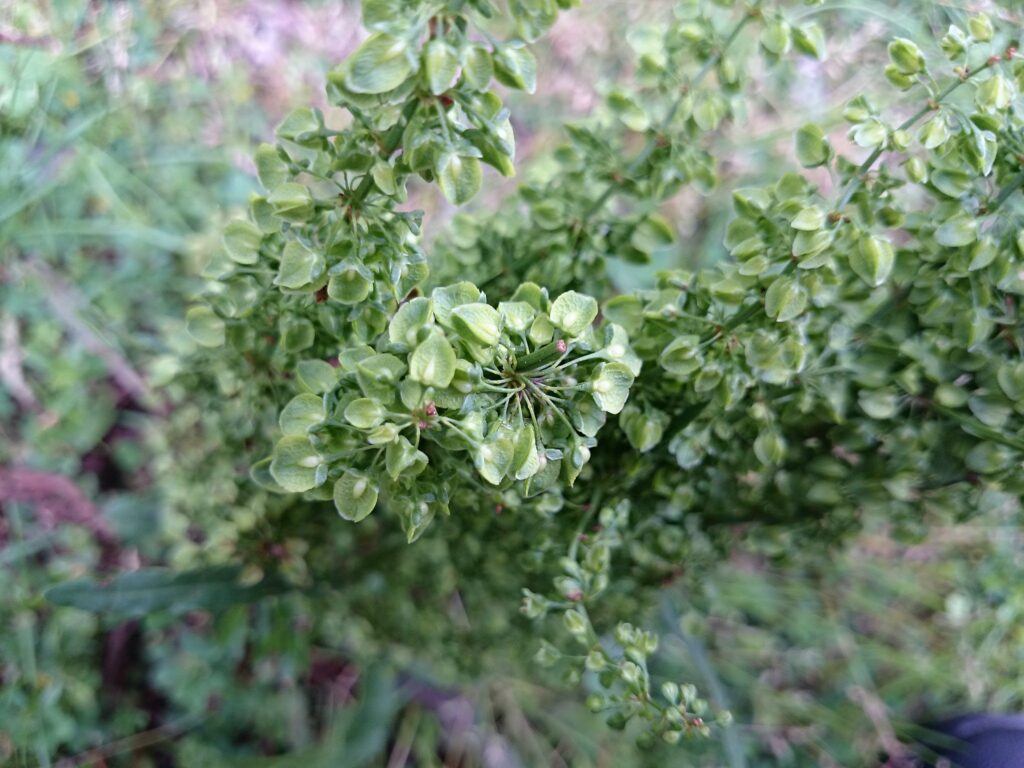
The "inner perianth surrounding the fruit" is a structure unique to the Rumex genus. It is the inner perianth that was present between the flowers, which remains after flowering and becomes thinner, with a white, knob-like projection attached to the center. This is quite noticeable even from a distance.
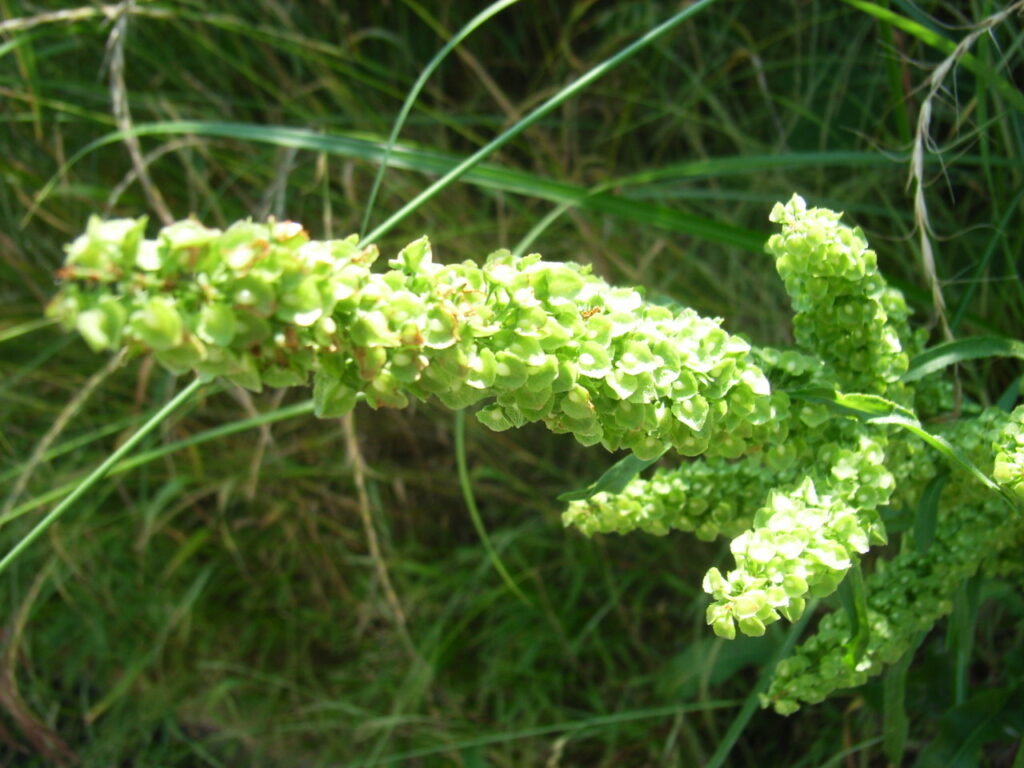
Regarding the remaining three species, in *Rumex crispus*, the flowers and fruits are spaced apart and arranged in whorls, so the inflorescence appears sparse, and the inflorescence and fruit clusters have bracts. In contrast, in *Rumex rotundifolia* and *Rumex longifolia*, although the flowers and fruits are also arranged in whorls, they are spaced closely together, forming a large panicle inflorescence overall, and the inflorescence and fruit clusters lack bracts.
Regarding dock (Rumex japonicus) and long-leaved dock (Rumex crispus), the difference is that in dock, the inner perianth surrounding the fruit has low serrations along the edge and a slightly pointed tip, while in long-leaved dock, the inner perianth has an entire margin with a rounded tip.
In addition, it may be possible to distinguish them based on the leaves alone, but this would be complicated due to differences between stem leaves and basal leaves, so we will omit that here. The period when the inner perianth is present is limited, but it would be desirable to confirm this point if possible.
Furthermore, these four species prefer similar environments and coexist, leading to the observation of many hybrids. If fruiting is infrequent and intermediate characteristics are present, it may be necessary to consider the possibility of a hybrid.

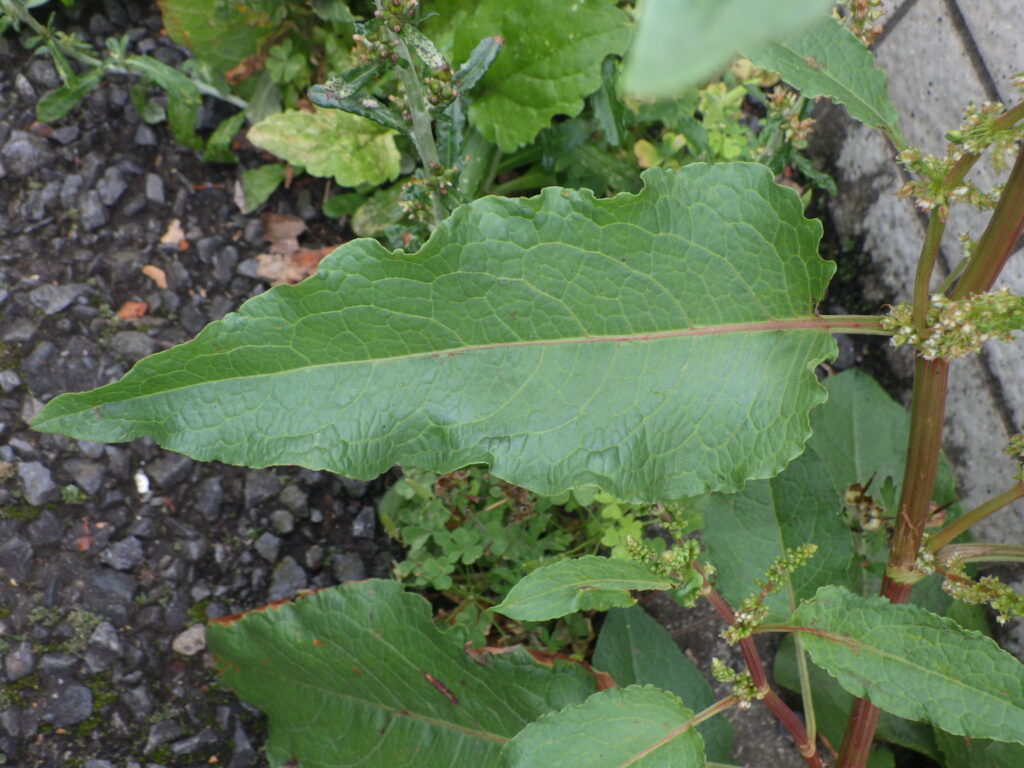
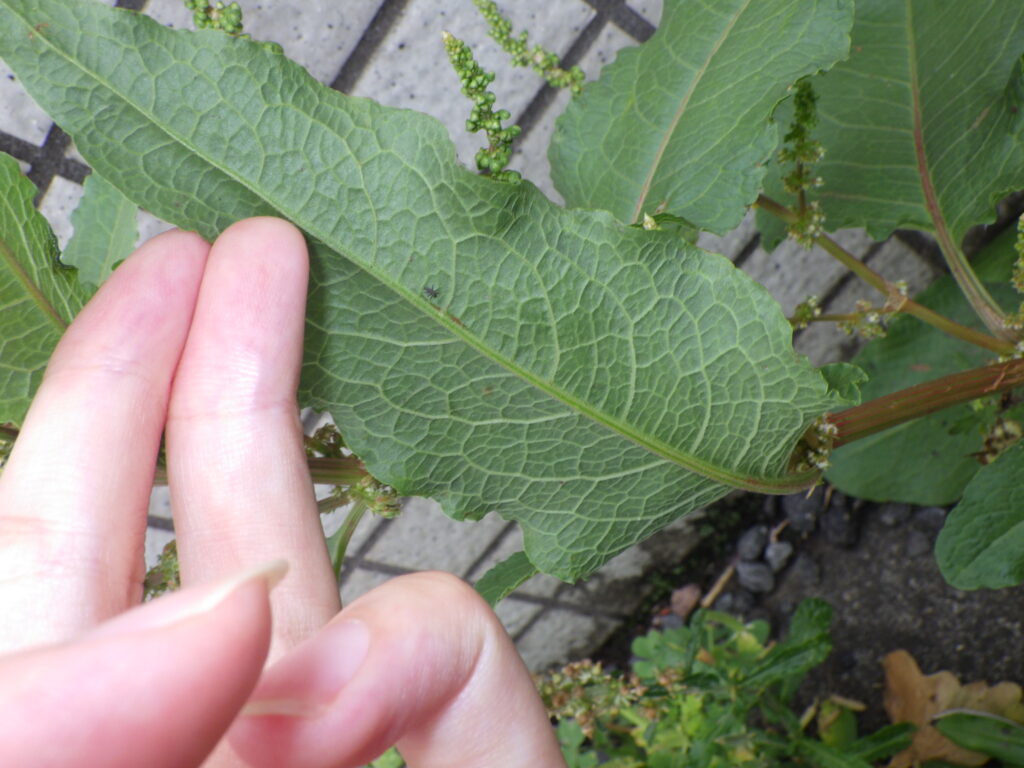
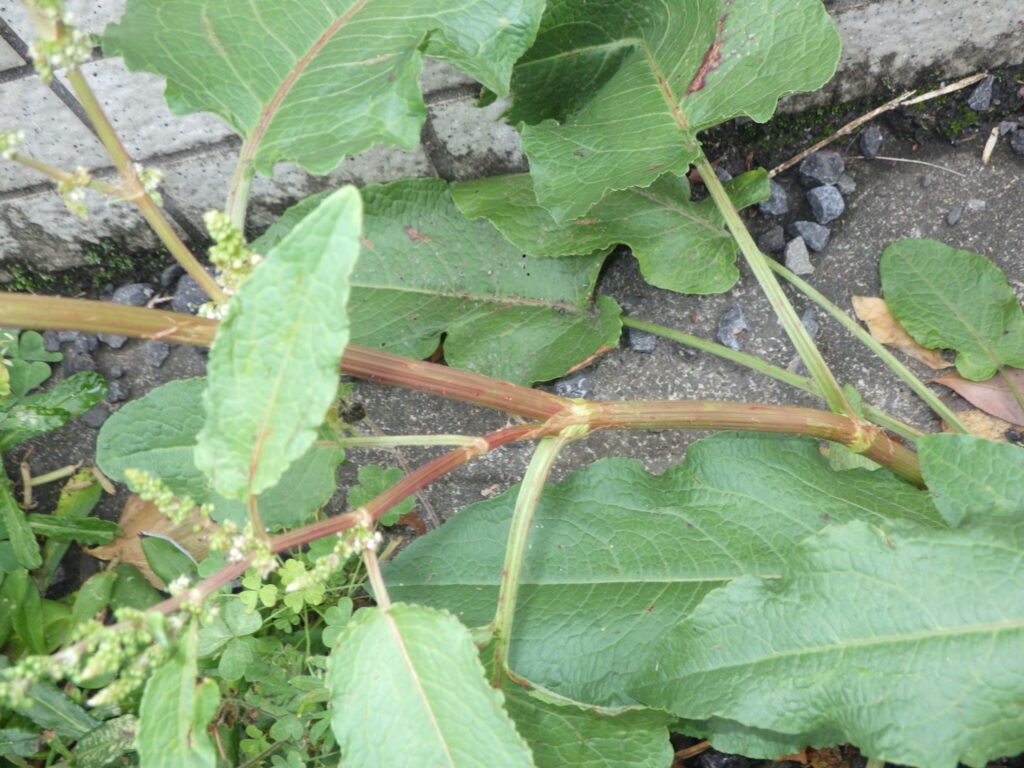
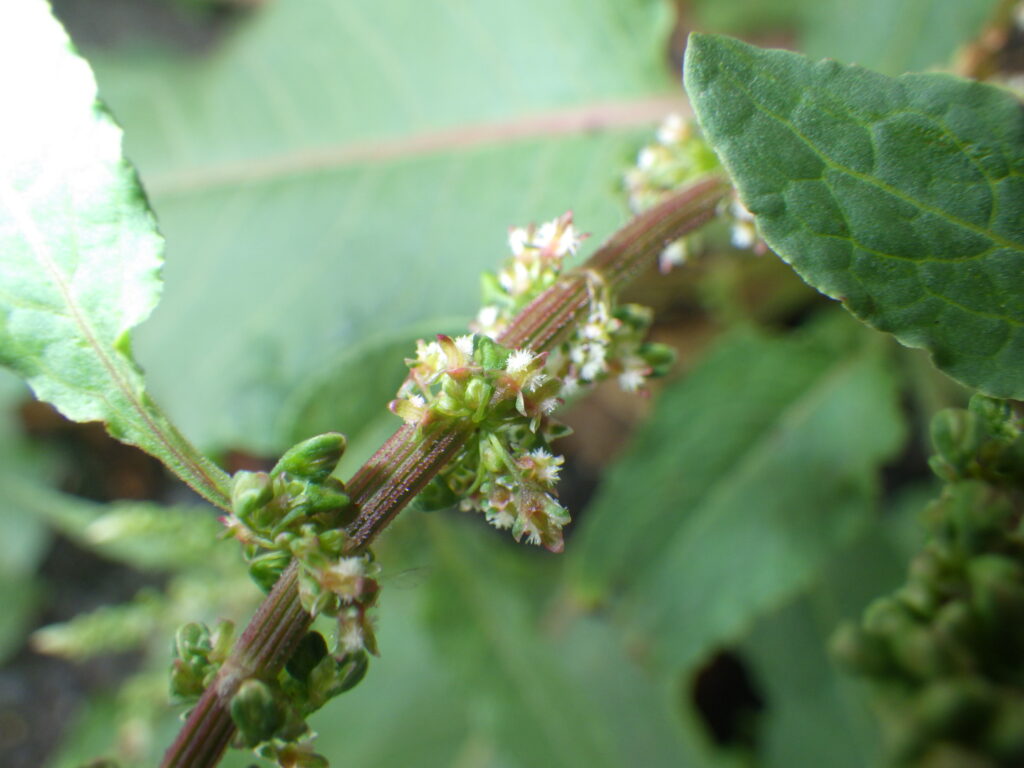
What is the structure of a flower?
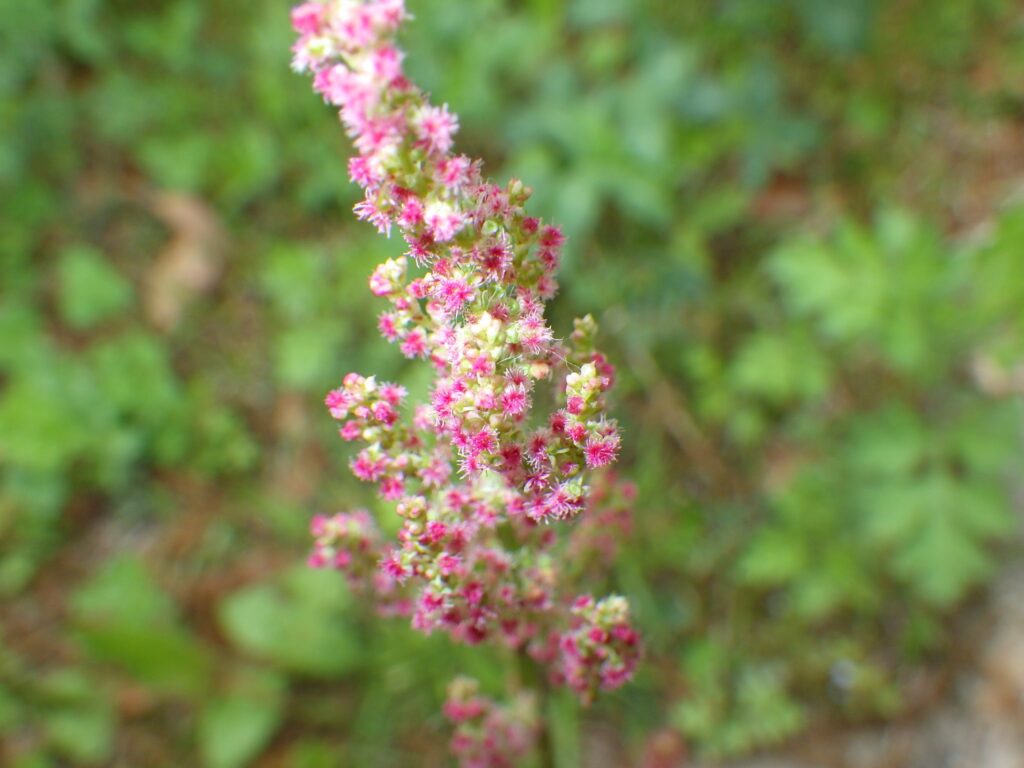
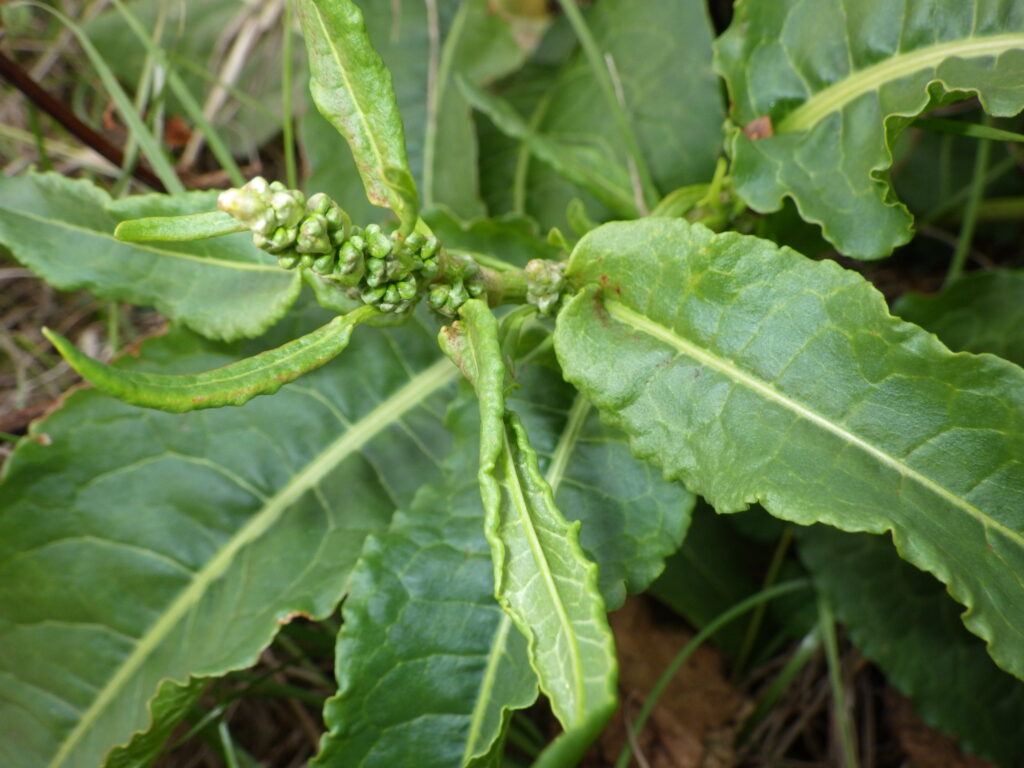
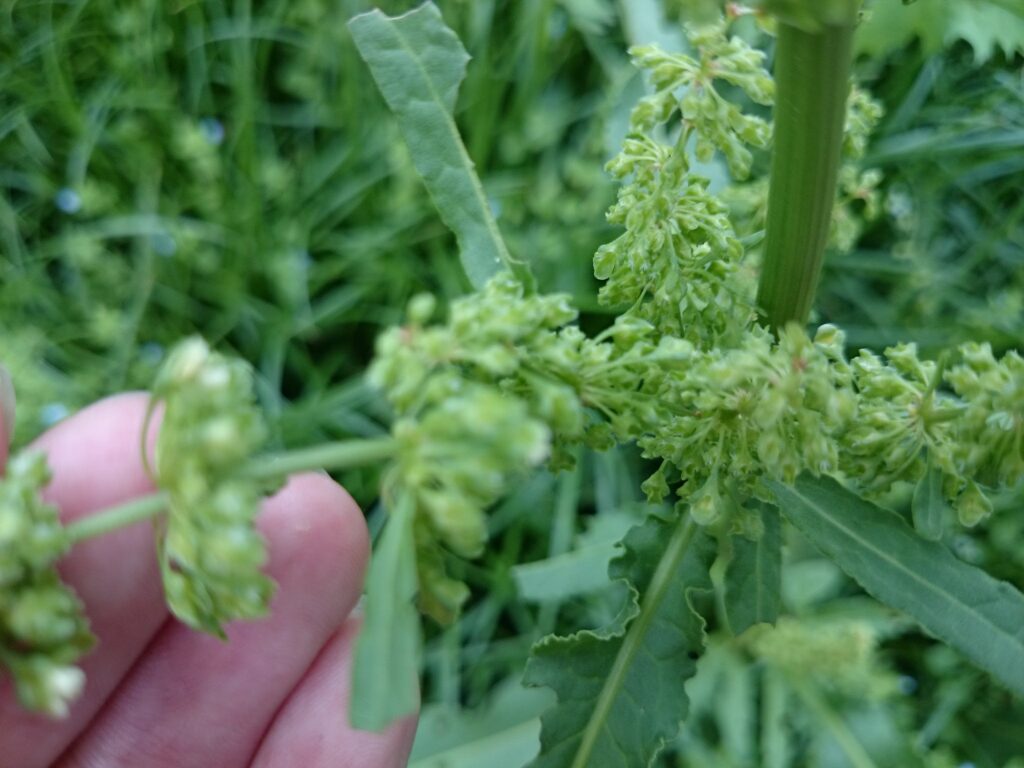
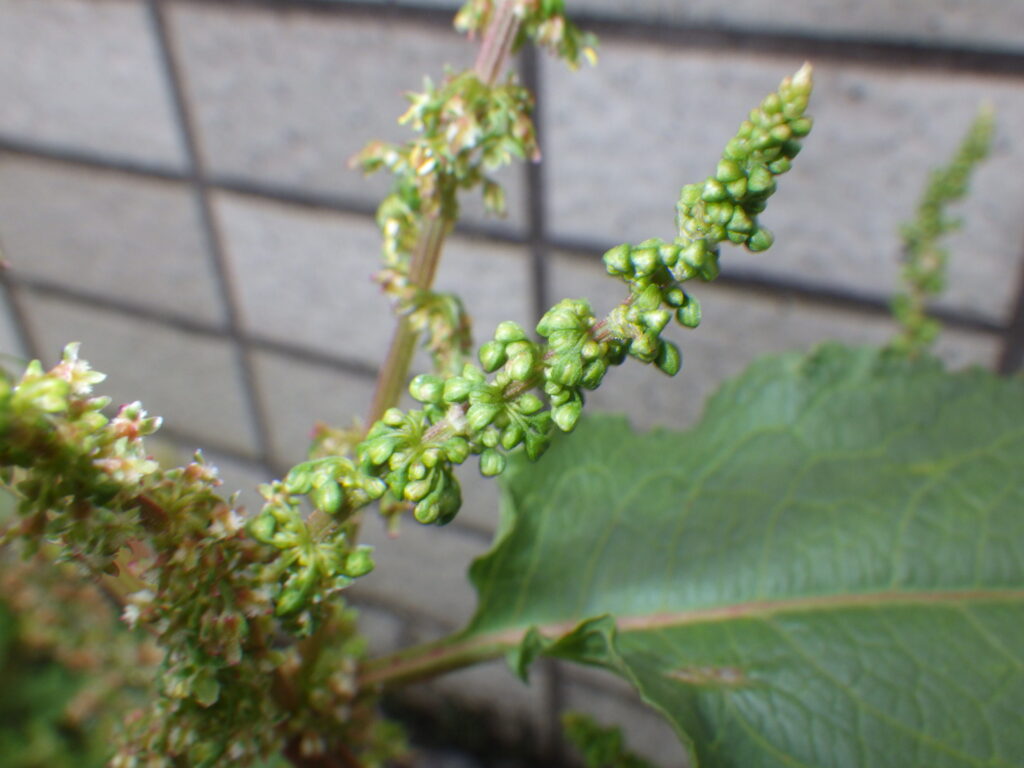
The flowers of the Rumex genus have a similar structure to typical flowers. However, they are very inconspicuous and small, and the calyx and petals are almost indistinguishable in appearance. For this reason, the part corresponding to the calyx is often called the "outer perianth," and the part corresponding to the petals is called the "inner perianth."
Dock (Rumex rotundifolia) flowers from June to August (Wu et al., 2003). Its inflorescence is a panicle, densely arranged in multiple whorls. It is monoecious, with both hermaphroditic and female flowers. The pedicels are slender, with nodes located below the middle and clearly defined. Each flower consists of three outer perianth segments, three inner perianth segments, six stamens, and one pistil.
Rumex rotundifolia flowers from June to August, with flowers borne in long racemes that are densely arranged in multiple whorls. It is monoecious, with both hermaphroditic and female flowers. Each flower consists of three outer perianth segments, three inner perianth segments, six stamens, and one pistil. The pistil has three styles, and the stigma is finely divided.
Rumex crispus flowers from June to July. Its flower stalks are branched with long internodes, and the flowers are densely arranged in whorls at each node. The pedicels are 1-4 (up to 5) mm long. The flowers are small, with the inner perianth measuring 2-3 mm in length and 1-1.6 (up to 2) mm in width.
Rumex japonicus flowers from June to August. The flowers are borne in long racemes, arranged in whorls with spacing between tiers. It is monoecious, with both hermaphroditic and female flowers. Each flower consists of 6 perianth segments (sepals), 6 stamens, and 1 pistil.
How is pollination done?
It is known that flowers of the Rumex genus, including sorrel species, are commonly pollinated by wind (Wagatsuma et al., 1974; Zaller, 2004; CABI, 2021). In fact, airborne pollen has been discovered in Japanese research. Morphologically, the indistinguishable nature of the sepals and petals indicates a lack of appeal to insects, and the absence of nectar secretion suggests that there is no need to attract insects.
Among wind-pollinated flowers, it is classified as a "pendulous type," and because the flower stalks extend downwards, the flowers appear to droop and are easily swayed by the wind (Utsumi, 2002).
What is the structure of the fruit?
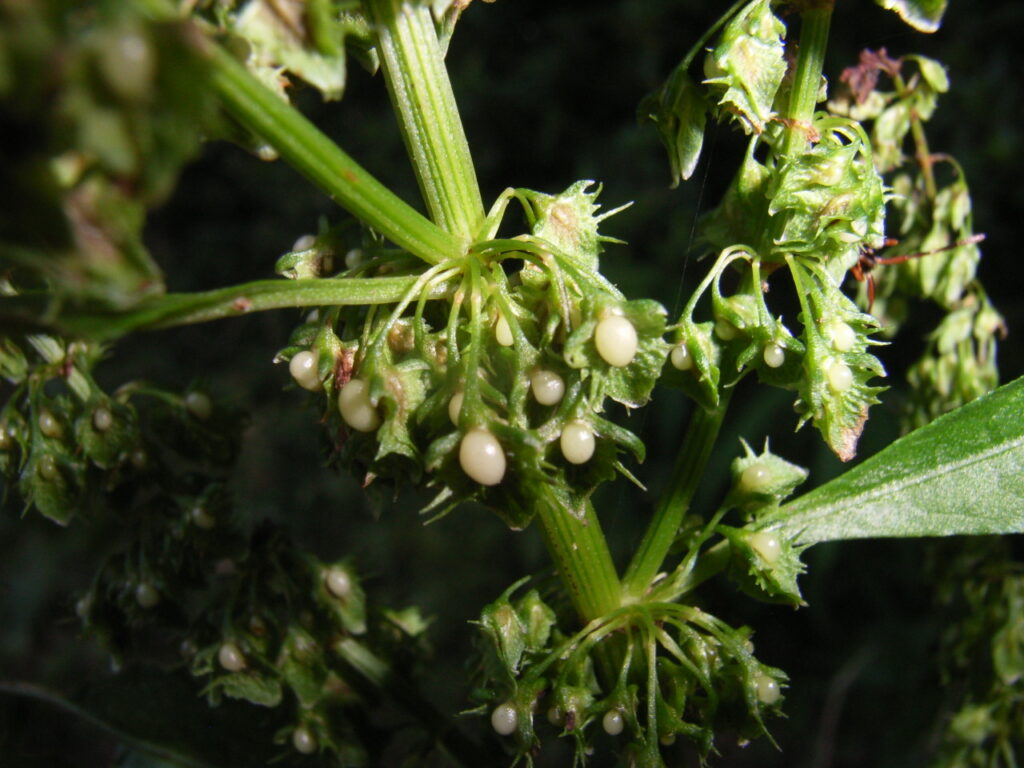
The fruits of the Rumex genus are all achenes. An achene is a fruit with a hard, membranous pericarp that dries when ripe and contains one seed in each chamber. However, as mentioned above, the three inner perianth segments enlarge during fruiting and enclose the fruit, so the shape of the fruit cannot be seen from the outside (Iwase et al., 2021). In addition, some species have "white, knob-like projections (tubercles)" on the inner perianth segments, which is also a distinctive feature, but some species, such as Rumex acetosa and Rumex chinensis, do not have these. Only one fruit (achene) is enclosed within the three inner perianth segments.
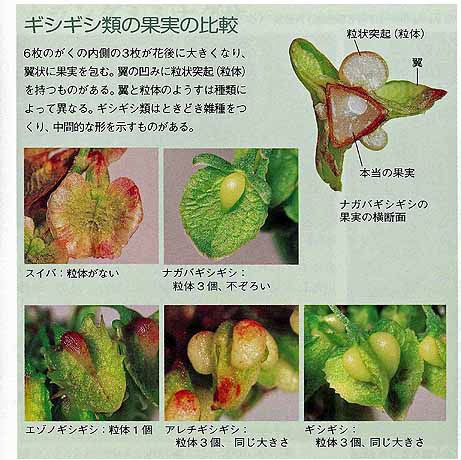
The three inner perianth segments of the dock are broadly heart-shaped, 4-5 mm long and 5-6 mm wide. All inner perianth segments have white, knob-like projections, distinct reticulate venation, a heart-shaped base, irregularly toothed margins, and an acute apex, with the teeth measuring 0.3-0.5 mm in height. The inner achenes are dark brown, glossy, broadly ovate, sharply triangular, about 2.5 mm long, with a narrow base and an acute apex.
The three inner perianth segments of *Rumex japonicus* are broadly ovate, entire, with rounded tips and a knob-like projection in the center. The size of the knob-like projection varies. The inside of the inner perianth is slightly concave, but otherwise almost flat. The achene is three-angled and brownish-red.
The three inner perianth segments of *Rumex crispus* are oblong-ovate, entire, and the central knob-like projection is often reddish. The achenes are the smallest among the *Rumex* species, measuring 1.5–2 mm in length and 1–1.6 (2) mm in width, and are dark brown.
The three inner perianth segments of *Rumex japonicus* are ovate, with a slightly elongated, pointed tip, long projections along the edges, and a knob-like projection in the center. The projections along the edges are often sparse, and the knob-like projection is usually red. The achenes are 2–2.7 mm long and 1.2–1.7 mm wide, triangular in shape, and brown to reddish-brown in color.
What are the methods for seed dispersal? There are many methods besides "wind dispersal"!
The most common seed dispersal method for the Rumex genus is wind dispersal (CABI, 2021). The three flattened inner perianth segments are carried away by the wind, spreading to various locations. This is the same method used for pollen dispersal, and by not relying on luck factors like insects or animals, it can spread very effectively in open, disturbed areas. The flattened structure is also well-suited to floating on water, so water dispersal also occurs.
However, the presence of various appendages suggests that dispersal is not simply wind-based. For example, in some species, including Rumex japonicus, the inner perianth segments have serrations. This is thought to allow them to adhere to the fur and feathers of animals (mammals and birds), including humans, enabling them to travel long distances (CABI, 2021). In other words, they act as "burrs" and disperse by attaching to animals. However, the specific animals involved are unclear. Their shape makes it seem unlikely they would adhere to human clothing.
In addition, while many species exhibit "white, knob-like protrusions" on the inner perianth segments, some species lack them. What role do these protrusions play? It seems that lighter protrusions would be preferable if they were to be carried by wind or water.
I couldn't find any proper research on this. I think there are several different ideas about this role.
Firstly, after being carried away by wind and water, seeds accumulate in the soil, but this is not always a suitable environment for their survival. Therefore, it is already known that they wait underground until they are ready to germinate, forming a "seed bank" (CABI, 2021). In one study, 83% of Rumex japonicus seeds remained viable after being buried for 21 years.
Therefore, it may exist to supply nutrients to the seeds while it is in existence as a seed bank. However, structurally, the protrusions do not appear to be in contact with the seeds, so it is unclear whether this is possible, and it is questionable whether dormancy is impossible without such a structure.
Secondly, it may serve the purpose of providing nutrients to animals that eat the seeds. In fact, it is known that the seeds are eaten by mammals such as birds and cows (CABI, 2021; Bhandari & Park, 2022). This is called "animal dispersal." In the case of birds, it is said that they will eat the fruits of the dock family if there are no other good food sources. It is also known that the ingested seeds are difficult to digest and can be dispersed through feces. Based on this fact, it is natural to think that there is something about the fruit that makes animals think, "It's delicious!"
The third reason is that it's a structure for buoyancy. The cross-section of the white, knob-like protrusions looks like cork. Perhaps having such a structure actually makes the seeds float more easily.
It is thought that one or more of these roles exist, but this has not been verified at all. They may have a great many seed dispersal methods, but which one they primarily rely on likely varies depending on the species.
References
Ayumin. [Ayumin's Weed Cafe]. (January 20, 2021). Thorough Comparison! Sorrel vs. Dock ① ~Comparing raw and boiled versions by color~ [Video]. YouTube. https://www.youtube.com/watch?v=cTcnUJvmrkQ
Bhandari, GS, & Park, CW (2022). Molecular evidence for natural hybridization between Rumex crispus and R. obtusifolius (Polygonaceae) in Korea. Scientific Reports, 12 (1), 5423. https://doi.org/10.1038/s41598-022-09292-9
CABI. (2021). Rumex obtusifolius (broad-leaved dock). CABI Compendium. https://doi.org/10.1079/cabicompendium.48064
Iwase, T., Kawana, K., & Iijima, K. (2021). Weeds in schoolyards (revised edition). National Rural Education Association. ISBN: 9784881371992
Kanagawa Prefecture Flora Survey Association. (2018). Kanagawa Prefecture Flora 2018 Electronic Edition. Kanagawa Prefecture Flora Survey Association. ISBN: 9784991053726
Ohashi, Hiroyoshi; Kadota, Yuichi; Murata, Hitoshi; Yonekura, Koji; and Kihara, Hiroshi. (2017). Wild Plants of Japan (Revised New Edition, Vol. 4: Malvaceae to Apocynaceae). Heibonsha. ISBN: 9784582535341
Utsumi, Shusaku. (2002). Why are flowers beautiful? 1. Insects and pollination. Research Bulletin of the Faculty of Education, Chiba University, 50, 441-448. ISSN: 1348-2084, https://opac.ll.chiba-u.jp/da/curator/900026751/
Yoshinori Wagatsuma, Ryuji Matsuyama, Mikiya Sato, Koji Ito, Tamiko Mizutani, and Yoko Fujisaki. (1974). Rumex acetosa and dock pollen allergy (hay fever). Allergy, 23(3), 245-246. https://doi.org/10.15036/arerugi.23.245_2
Wu, ZY, Raven, PH, & Hong, DY (Eds.). (2003). Flora of China (Vol. 5 Ulmaceae through Basellaceae). Science Press, and Missouri Botanical Garden Press. ISBN: 9781935641056
Zaller, JG (2004). Ecology and non-chemical control of Rumex crispus and R. obtusifolius (Polygonaceae): a review. Weed Research, 44 (6), 414-432. https://doi.org/10.1111/j.1365-3180.2004.00416.x