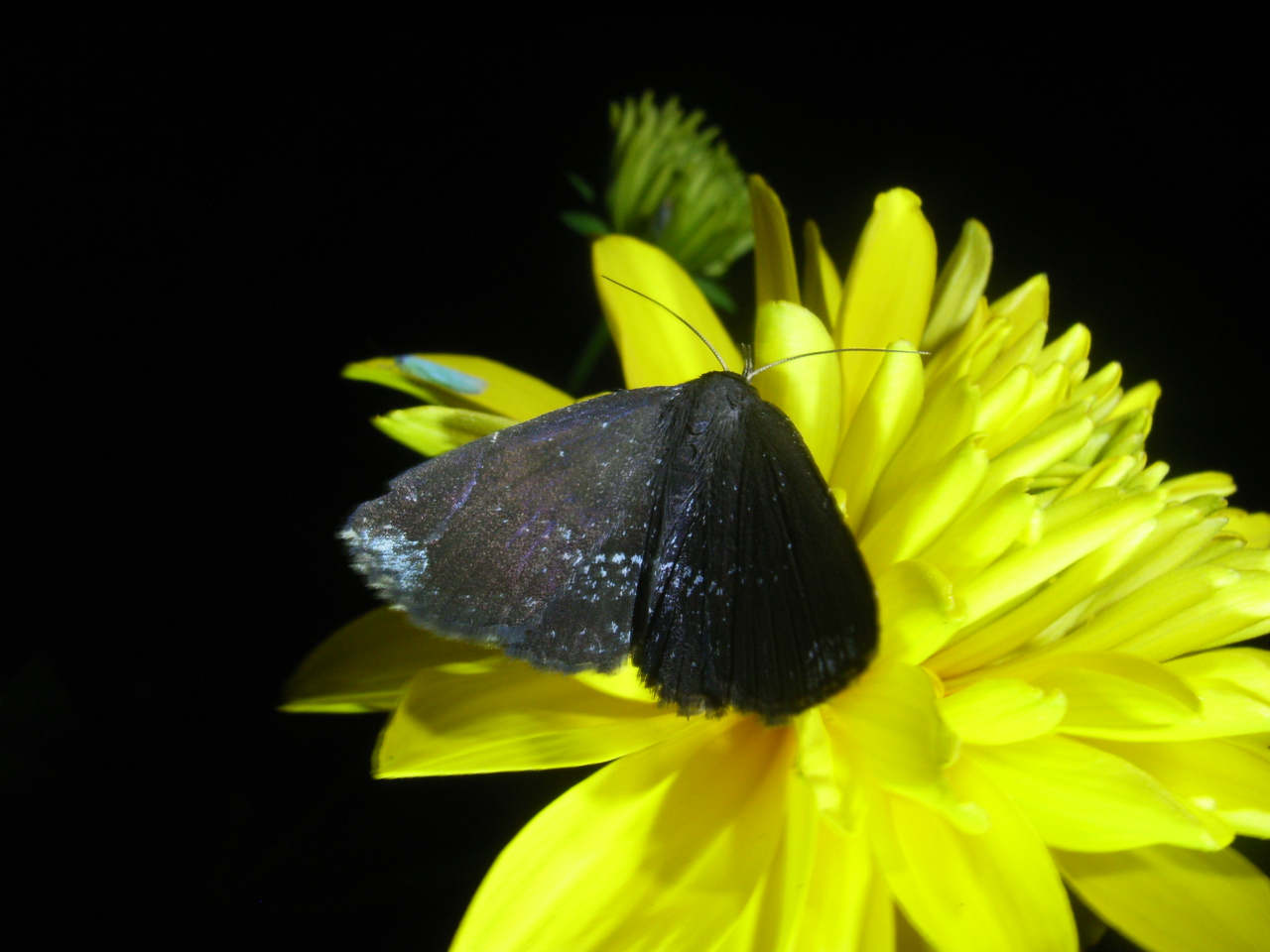
This article contains a draft of the report "A Record of the Sugitani Moth in Sakai City, Osaka Prefecture," which was published in the following journal.
Citation method: Ikeda, Kenichi. 2020. Records of the Sugitani moth in Sakai City, Osaka Prefecture. Nature Study 66(12): 8. ISSN: 0466-6089
Purchase here
This was written with the intention of documenting the Sugitani moth, a species of moth classified as Near Threatened in Osaka Prefecture.
There may be minor changes in wording, but the cited references remain the same. For more accurate information, please refer to the journal.
Distribution record of the Japanese magpie moth (Sugitani's madder moth) in Japan and the Kansai region.
Rhodoneura sugitanii Matsumura, 1921 is a species of moth in the family Rhodoneura, found in Honshu, Shikoku, Kyushu, and Tsushima in Japan, and on the Korean Peninsula (Yoshiyasu, 2013). Adults emerge once a year, from June to August, while the larval stage is unknown, and the host plants of the larvae are also unknown.
In the Kansai region, this species has been recorded in Hyogo Prefecture (Matsumoto, 1983; Fujie et al., 2011), Shiga Prefecture (Togo and Yuma, 2009), and Kyoto Prefecture (Kyoto Prefecture, 2015). In Osaka Prefecture, it was newly listed as Near Threatened (NT) in the 2014 edition of the Osaka Prefecture Red List (Osaka Biodiversity Conservation Network, 2014). Within Osaka Prefecture, this species has been recorded in the Toyono and Sennan regions (Osaka Prefecture, 2000).
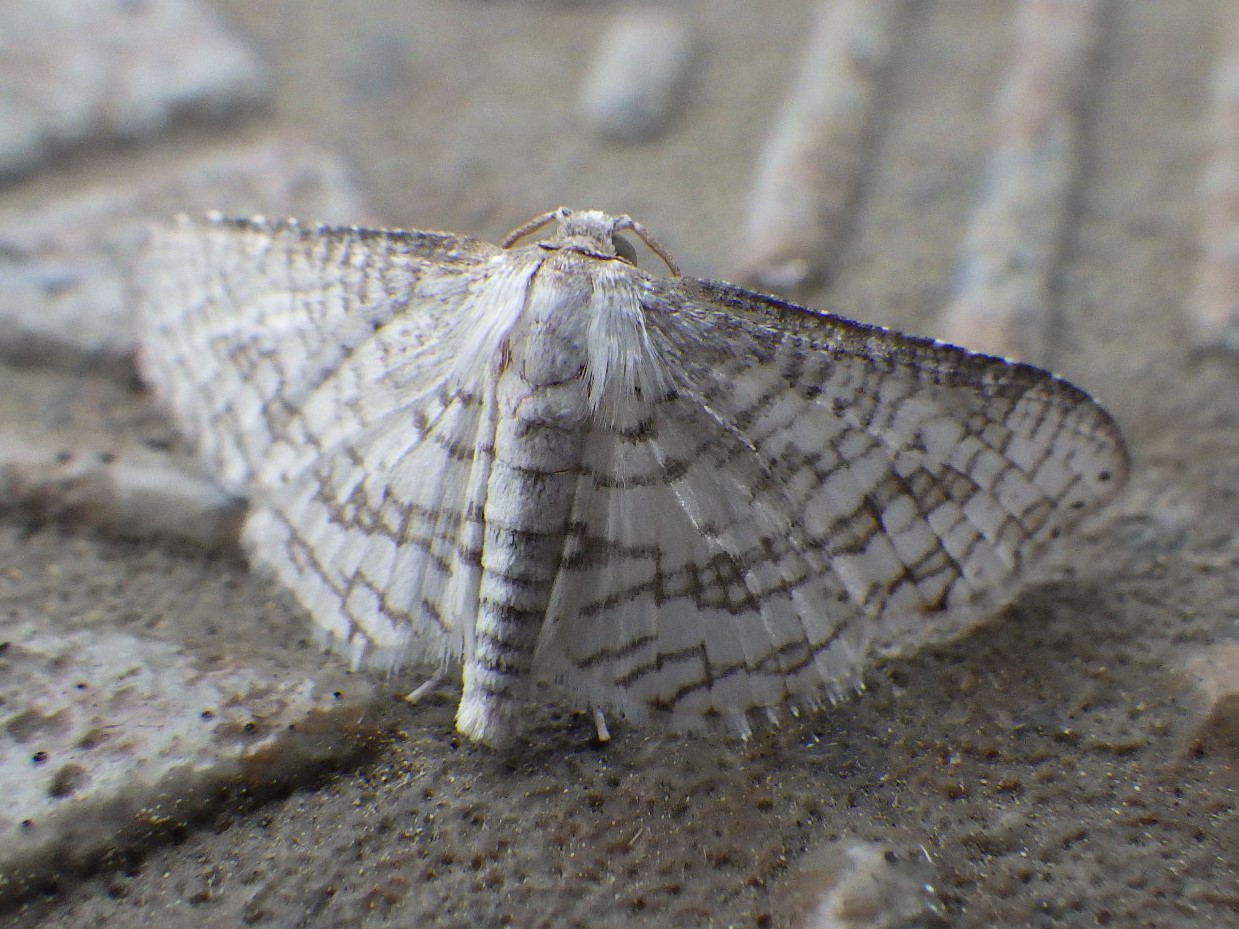
Author's record
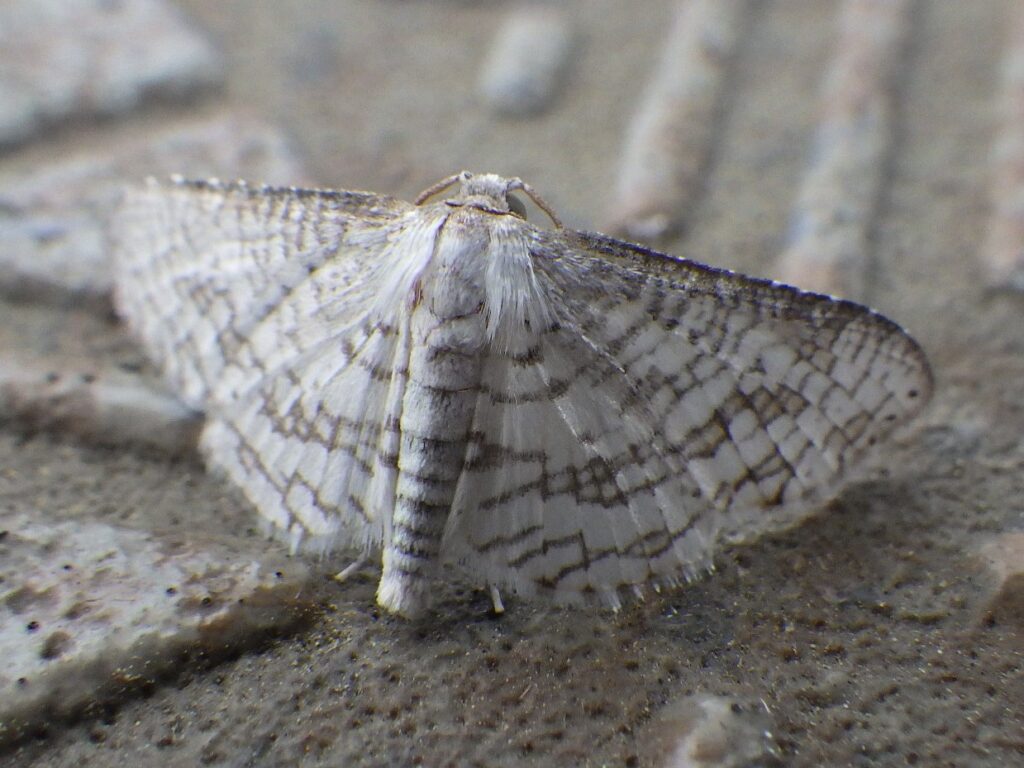
I photographed this species around 5:00 PM on July 5, 2017, in the corridor of an apartment building near Shirasagi Station in Shirasagi-cho, Higashi-ku, Sakai City, Osaka Prefecture, and report it here. There are no records of this species in Sakai City (Sakai City, 2015), so this is believed to be the first record in the Senboku area. The apartment building's corridor is lit at night, and it is thought that the insect was attracted to this light or was in the process of dispersing. The area around Shirasagi Station is a residential area, and the only green spaces are Shirasagi Park, Osaka Prefecture University Nakamozu Campus, and planted areas along the road. It is difficult to speculate as the species' range and host plants are unknown, but it is possible that it originated at one of these locations.
References
Junpei Fujie, Hirofumi Yoshida, Masafumi Adachi, Takahiro Yoshida, Kazuya Asahi, Junichi Fujiwara, and Takuro Yasuoka (2011). Insect fauna around Sayo Town Insectarium: On Coleoptera, Hymenoptera, Diptera obtained by Malase traps and Lepidoptera obtained by light traps. Kiberihamushi 33(2): 4-20. https://www.konchukan.net/pdf/kiberihamushi/Vol33_2/kiberihamushi_33_2_4-20.pdf
Kyoto Prefecture (2015). Kyoto Prefecture Red Data Book 2015, Supplementary Volume (Kyoto Prefecture Natural Environment Catalog). Kyoto Prefecture Natural Environment Conservation Division, Kyoto. 415pp. https://www.pref.kyoto.jp/kankyo/rdb/
Matsumoto, Kenji (1983). Major moths of the Kobe and Akashi coastal areas (Part 1). Kiberihamushi 11(1): 3-6. https://www.konchukan.net/pdf/kiberihamushi/Vol11_1/kiberihamushi_11_1_3-6.pdf
Osaka Prefecture (2000) Osaka Prefecture Wildlife Catalog. Green Environment Improvement Office, Department of Environment, Agriculture, Forestry and Fisheries, Osaka. 351 pp.
Osaka Biodiversity Conservation Network (2014) Osaka Prefecture Red List 2014. Green Promotion Division, Green and Urban Environment Office, Environmental, Agriculture, Forestry and Fisheries Department, Osaka Prefecture. 49p. https://www.pref.osaka.lg.jp/attach/21490/00148206/6.konchu.pdf
Sakai City (2015) Sakai City Wildlife Catalog. Environmental Conservation Division, Environmental Bureau, Sakai City, Osaka. 84pp.
Togo, Yuki and Yuma, Masahide (2009). Moth community structure in "Ryukoku Forest". In: Ryukoku University Satoyama Studies Research Center (ed.). 2009 Annual Report of the Ryukoku University Satoyama Studies Research Center. pp. 146-151. Ryukoku University Satoyama Studies Research Center, Otsu.
Yoshiyasu, Y. (2013) Family: Mothidae. In: Kishida, Y. (ed.) Standard Illustrated Guide to Japanese Moths, Vol. 4. pp. 307-313. Gakken Educational Publishing, Tokyo.