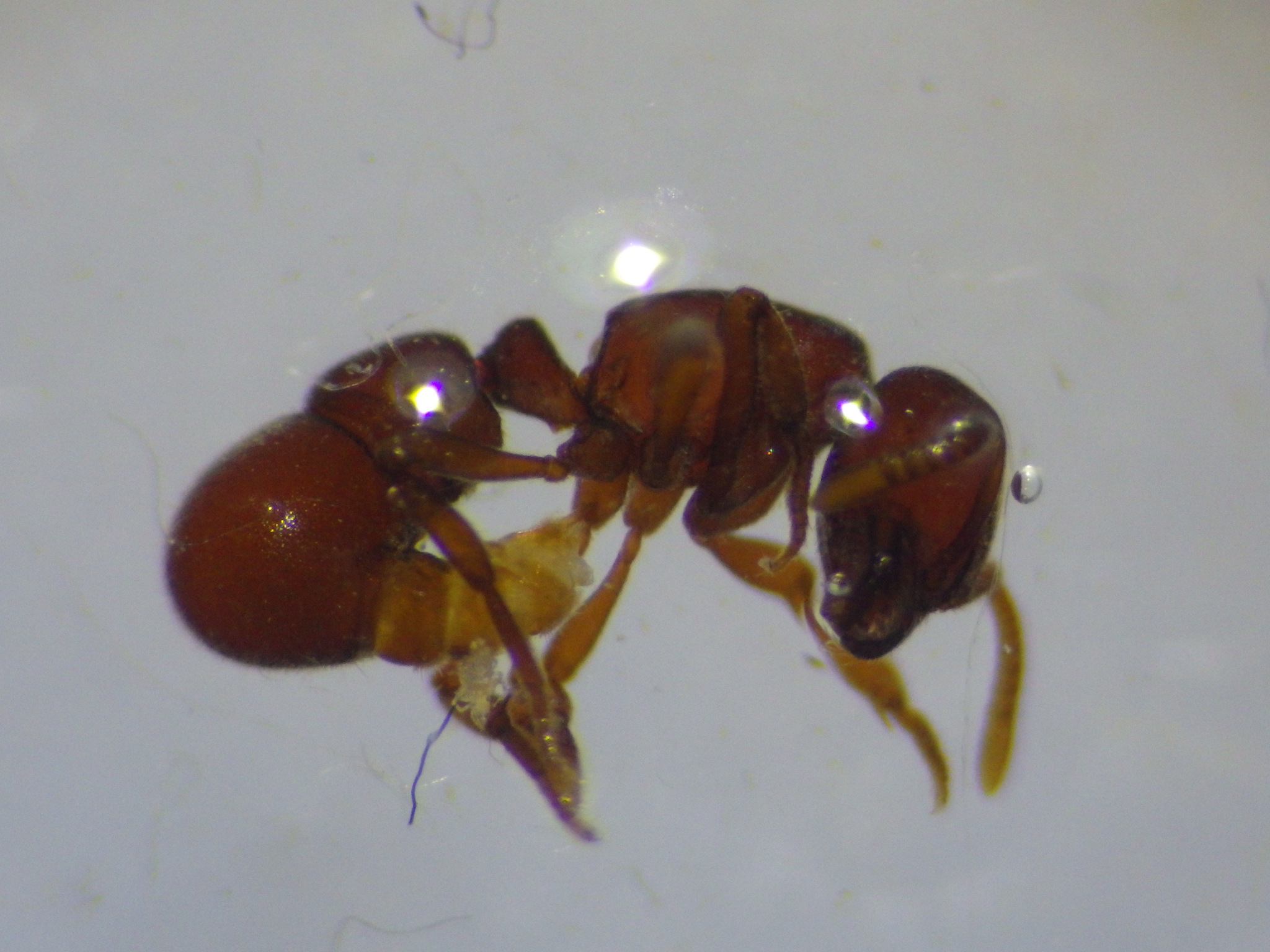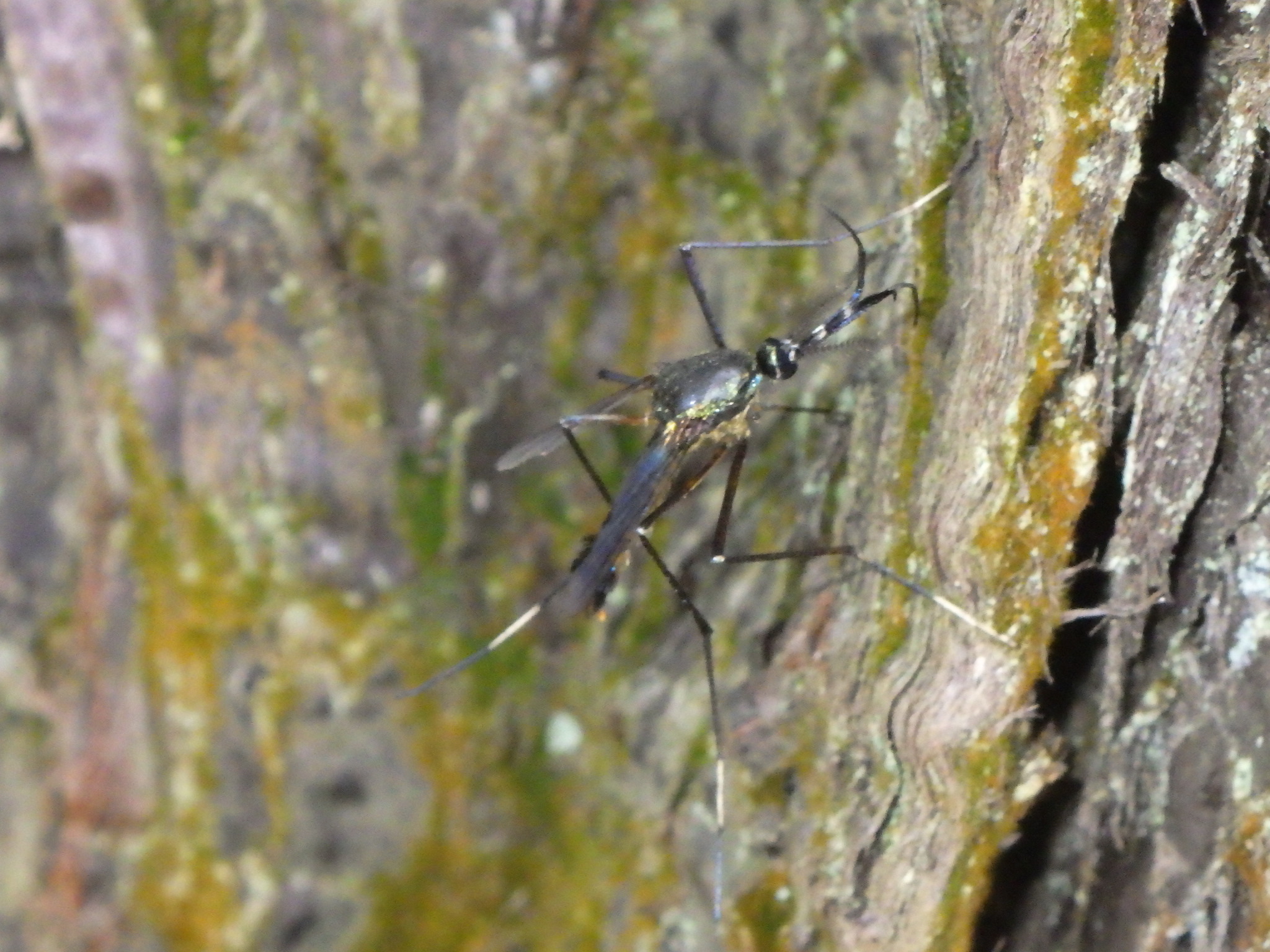
When you think of mosquitoes, you probably imagine blood-sucking creatures that are a real nuisance in the summer. However, there is a type of mosquito in Japan that does not suck blood at all. The Towada mosquito is harmless as an adult, does not suck blood, and is the largest and most beautiful mosquito in Japan, which is in itself a distinctive feature. Surprisingly, its larvae live in puddles of water in tree hollows, where they feed on the larvae (wrigglers) of other mosquitoes. This article will explain the ecology of the Towada mosquito.
The Towada wolf mosquito is a harmless and beautiful mosquito.
When you think of mosquitoes, you probably imagine them as blood-sucking creatures that are a real nuisance in the summer. (However, only female mosquitoes suck blood because they need nutrients to lay eggs.)
In tropical regions, they can transmit infectious diseases such as dengue fever, which is another reason why they are disliked by humans.
But did you know that there are mosquitoes in Japanese forests that, despite being related to mosquitoes, do not suck blood at all?
Its name is Toxorhynchites towadensis, and as its name suggests, it is a very large mosquito, measuring 10-13 mm, and is known as the largest mosquito in Japan. Incidentally, "Towada" comes from Lake Towada (Aomori Prefecture to Akita Prefecture), where it was first discovered. In reality, it is known to be widely distributed in Hokkaido, Honshu, Shikoku, Kyushu, Tsushima, and Yakushima (Sasaki et al., 1995).
While most mosquitoes have scales on their body surface, the Towada mosquito has a shimmering bluish-purple coating, making it very beautiful to look at.
I once saw this mosquito in Minoo Park in Osaka Prefecture. It flew around the tree trunks leisurely and with ease, giving off a dignified and elegant impression.
Adult Towada wolf moths appear from May to August, and both males and females are known to feed on nectar and other bodily fluids.
Therefore, it can be said that this type of mosquito is completely harmless to humans.
Although it is not included in the Ministry of the Environment's Red List, it is listed in the Red Data Lists of 14 prefectures and is considered an endangered species.
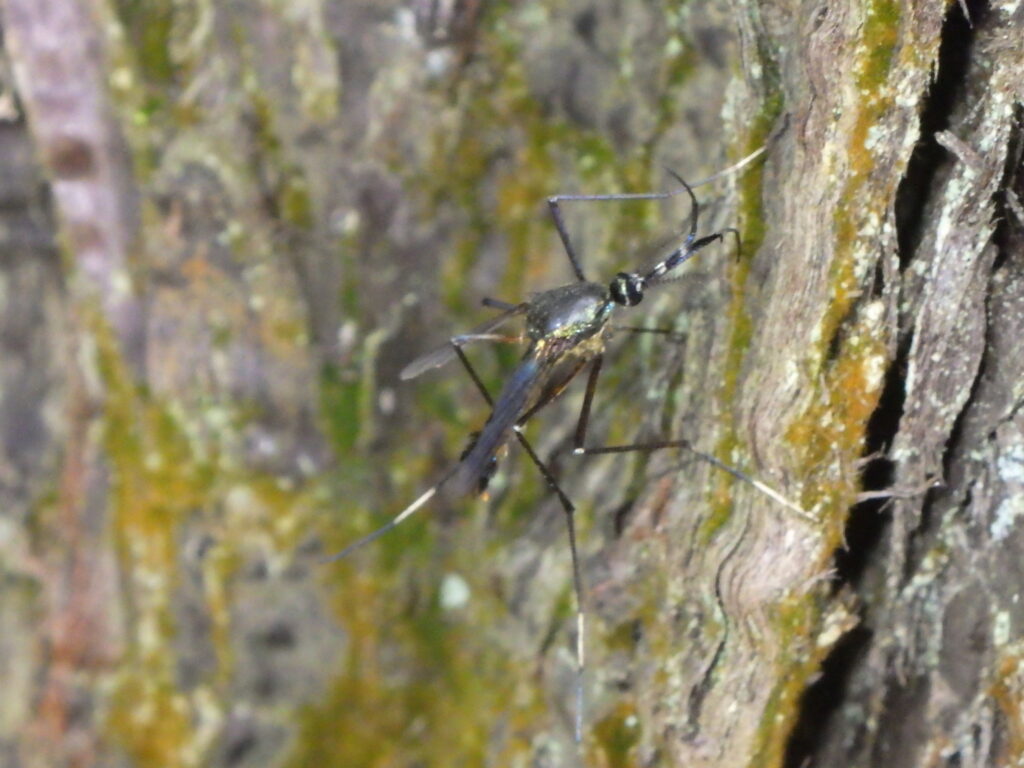
The Towada wolf was a "mosquito that eats mosquitoes"!?
However, some might wonder what such a large mosquito eats and how it grows. Normally, female mosquitoes feed on blood to obtain protein for egg-laying. So how does such a large mosquito obtain nutrients without feeding on blood?
This aspect remained a mystery for a long time, ever since the discovery of the Towada mosquito in 1916. However, the ecology of this mosquito was finally revealed in 1952 (Ishimura, 1952).
The study revealed that the larvae of the Towada mosquito live in puddles of water inside tree hollows (holes in the base or trunk that are accidentally formed by injuries or obstacles), and that they prey on the larvae (wrigglers) of other blood-sucking mosquito species that are also present in these cavities.
Specifically, mosquitoes such as Aedes niveus, Aedes oreophilus, Aedes flavopictus, and Tripteroides bambusa are believed to inhabit tree hollows.
This essentially means it's a "mosquito that eats mosquitoes." This fact is quite interesting. However, it seems that it sometimes preys on the larvae of midges (a different group of flies that resemble mosquitoes but don't suck blood) and water beetles (a type of beetle).
In July and August, newly hatched first-instar larvae of the Towada genus will bite and eat larger larvae (1st to 3rd instar) of the Aedes genus, surfacing to devour them. They typically do not actively pursue prey, but quickly capture approaching larvae by moving only their cephalothorax. They then begin eating from the bitten area, leaving only the head and part of the thorax remaining.
It is thought that the reason why adult Towada wolf larvae can maintain their large size is because they are actually high-level predators.
Another interesting finding is that when other mosquito larvae are found in high densities, they begin to kill their prey without consuming any of it (Yasuda, 1995).
The reason for this strange behavior is not well understood, but it turns out that other Towada wolves in the same area are quite formidable rivals, and cannibalism has occurred.
Therefore, it's possible they're launching preemptive attacks without determining whether the target is prey or a rival, or that they're eliminating their rivals' food sources, but these are still just hypotheses.
Is the Towada wolf useful?
This type of behavior may be regulating the population of the Aedes mosquito species. The tree hollows act like traps, and if Aedes mosquitoes lay their eggs there, it could lead to their complete extinction. While some aspects of their role in the natural world remain unclear, it's undeniable that the Towada mosquito, as well as the tree hollows and the trees themselves, play some kind of role.
More recently, members of the genus Aedes, including Aedes towada, are attracting attention as biological control agents (biopesticides) (Sukupayo et al., 2024). This is because they can kill Aedes mosquitoes in an environmentally friendly way without using chemicals like insecticides. This may reduce the number of infectious diseases they transmit.
As mentioned above, when other mosquito larvae are present in high densities, they will kill the prey without consuming any of it, so it's possible that there are effects beyond simply using them as food.
While it's still unclear whether this will be put into practical use, please do pay attention to these kinds of mosquitoes when you walk through the forest!
References
Sasaki, Hitoshi; Kusui, Yoshihisa; Nishijima, Hiroshi; Hasegawa, Tsutomu; and Kanasugi, Takao. 1995. Collection records of *Towada's wolf* in Hokkaido. *Sanitary Zoology* 46(1): 75-76. https://doi.org/10.7601/mez.46.75
Sukupayo, PR, Poudel, RC, & Ghimire, TR 2024. Nature's Solution to Aedes Vectors: Toxorhynchites as a Biocontrol Agent. Journal of Tropical Medicine 2024(1): 3529261. https://doi.org/10.1155/2024/3529261
Yasuda, H. 1995. Effect of prey density on behavior and development of the predatory mosquito, Toxorhynchites towadensis. Entomologia Experimentalis et Applica 76(1): 97-103. https://doi.org/10.1111/j.1570-7458.1995.tb01949.x
Ishimura, Kiyoshi. 1952. On the larval stage of the Towada wolf. Sanitary Zoology 3(1-2): 12-19. https://doi.org/10.7601/mez.3.12