The Vitaceae family consists of climbing woody or herbaceous plants. They ascend by tendrils, which are modified stems, although a few genera lack tendrils. Tendrils and leaves are opposite. Leaves are alternate, simple, or compound. Simple leaves are often palmately lobed. Inflorescences are usually opposite the leaves. Flowers are bisexual, monoecious, or dioecious. Calyxes are small, cup-shaped, and 4-5 lobed. Petals are 4-5 in number, symmetrized, and unfold at flowering. Stamens are 4-5 in number, opposite the petals. Fruits are berries with soft flesh, or dried out, 2-chambered or 1-chambered, enclosing 1-4 seeds. Seeds are usually obovate with a beak, and the seed coat is hulled. In the APG system, it has been separated into a single family, the Vitales order. More than 800 species in 14 genera are known worldwide, from tropical to temperate regions.
This article provides a comprehensive, illustrated guide to plants belonging to the Vitaceae family.
The photos are replaced as soon as better ones are taken. Also, while the identification is done by the author, please note that if there are any misidentifications, they may be changed without notice.
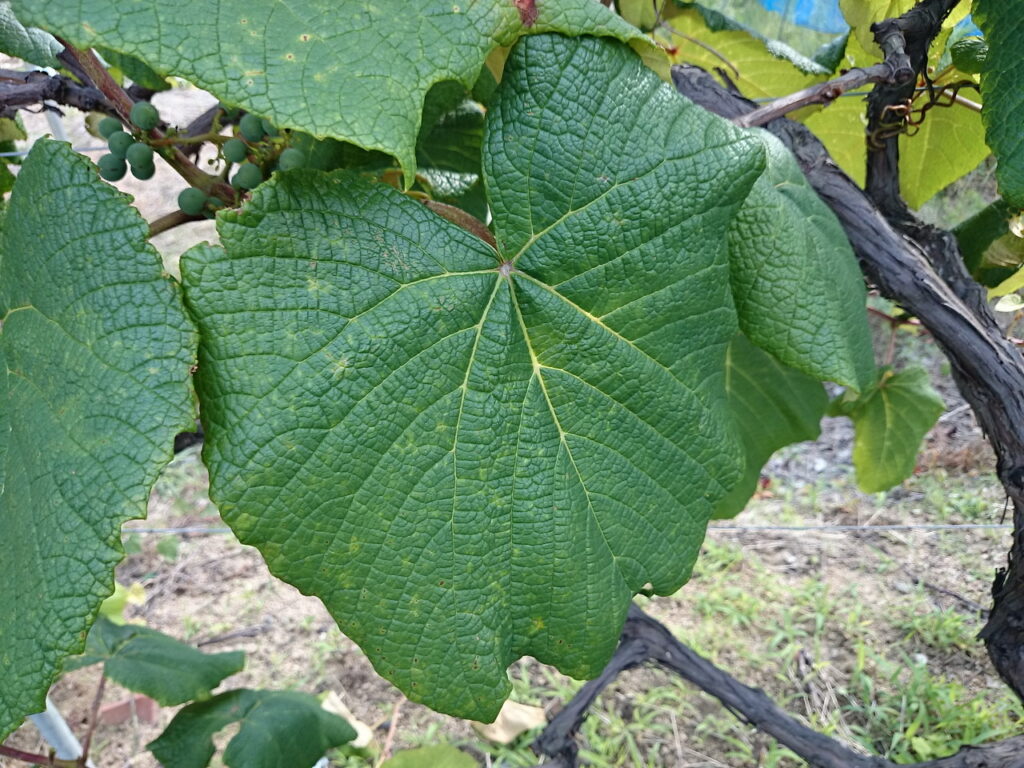
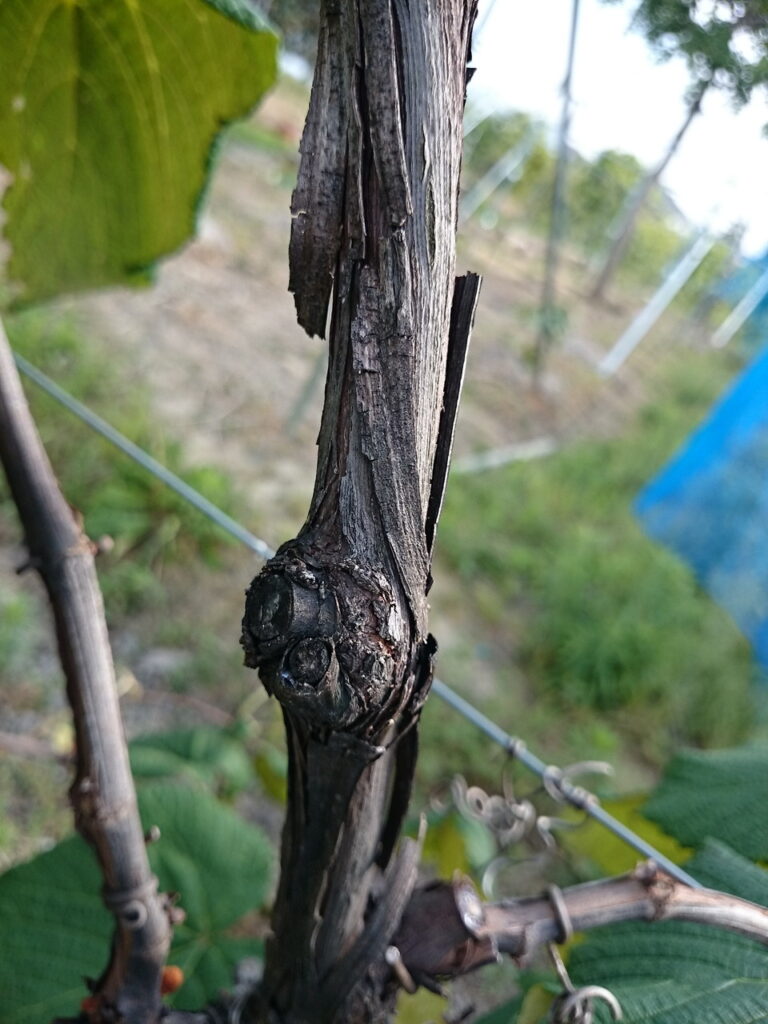
No. 1441 European Grape Vitis vinifera subsp. vinifera
A climbing woody plant (Flora of China). Stems spread irregularly, climb high, and branch sparsely. The bark of the branches peels off in ragged pieces. The septa of the nodes are 3-5 mm thick. The twigs are cylindrical to slightly angular, hairy, and sometimes glabrous. Leaves do not develop at the growing tips. Tendrils are present from end to end of the twig and are persistent. Tendrils (or inflorescences) are present only on two consecutive nodes. The nodes are not marked with a red band. Stipules are usually 3.5 mm or longer. Petioles are approximately equal in length to the leaf blade. The leaf blade is cordate-ovate to cordate-orbicular, 12-20 cm long, usually 3 shoulders or shallowly 3-5 lobed, sometimes deeply lobed, with an acute to short acute apex. The underside is not powdery white, sparsely hairy or nearly glabrous, and hairy overall. The upper surface is normal. Flowering occurs from April to June. The inflorescence is 10–20 cm long, sparse to dense, opposite the leaves, with well-developed basal branches. The peduncle is 2–4 cm long, glabrous or sparsely covered with cobwebby hairs. The pedicel is 1.5–2.5 mm long, glabrous. The flower bud is obovate, 2–3 mm long, with a rounded apex. The calyx is glabrous and wavy. The flowers are bisexual. The filaments are thread-like, 0.6–1 mm long. The anthers are yellow, elliptical, 0.4–0.8 mm long. The pistil is immature in male flowers. The ovary is elliptical. The style is short. The stigma is spreading. Fruiting occurs from August to September. The berry is usually reddish-purple to almost black, sometimes yellowish-green, ± powdery white, spherical to oblong to elliptical, 8–25 mm in diameter (usually 15–20 mm), with the skin tightly attached to the flesh and no lenticels. The seeds are obovate to elliptic, with a nearly rounded tip, an elliptic chalazal knot, a slightly raised raphe, and a wide groove extending about a quarter of the way up from the base of the ventral cavity. While botanical distinctions between grapes are not properly documented on the Japanese internet, * Flora of North America * states that it can be distinguished from the American grape (Vitis labrusca) by its hermaphroditic flowers, oblong fruit, and pericarp attached to the pulp. Native to southwestern Asia and southeastern Europe, it was harvested by Neolithic hunter-gatherers and early farmers, and although there are various theories, it is thought to have been cultivated around 4000 BC in the Fertile Crescent alongside olives, figs, dates, and pomegranates (Diamond, 1997). Its wild species is * Vitis vinifera subsp. sylvestris *. Domestication has led to morphological changes, including larger fruit and bunch sizes, higher sugar content, altered seed morphology, and a shift from dioecious to hermaphroditic mating systems, all for the sake of human cultivation convenience and improved taste (Zhou et al., 2017). The oldest documented records can be found in the ancient Sumerian Epic of Gilgamesh, dating back to around 3000 BC. Cultivation and winemaking techniques were developed by the ancient Egyptians, Greeks, Etruscans, Phoenicians, and eventually the Romans, with grapes being cultivated particularly for wine in the Roman Empire (Charters, 2006). Wine also spread as an inexpensive and safe drinking water, but it also led to an increase in alcoholism, resulting in legal regulations on grape cultivation (Robinson, 2006). In the Middle Ages, wine was commonly consumed in southern Europe, while beer was drunk in the north and east. France and Germany (then the Holy Roman Empire), in particular, remain the largest wine-producing countries today, producing Champagne, Burgundy, and Bordeaux wines, among others. In the Americas, wine was introduced by Catholic Spain for the essential communion rituals, leading to the development of Mexican and American wines. Grapes are eaten fresh as a dessert, dried to make raisins and kneaded into bread to make raisin bread, rum-soaked raisins are used in ice cream, cakes, and chocolates, and raisin butter, made by kneading raisins into butter, is a popular snack to accompany alcoholic beverages (especially Western spirits) and is sometimes served in biscuits. In addition to grape juice and verjus (a drink made from unripe grapes), the most representative wine (grape wine) is traditionally a type of fruit wine made by fermenting the squeezed juice in barrels or jars with budding yeast Saccharomyces cerevisiae, then removing the lees, aging it in barrels for several months to several years, and finally bottling it. During aging, malolactic fermentation occurs by lactic acid bacteria such as Lacobacillus, Pediococcus, and Oenococcus oeni, converting malic acid into lactic acid, which reduces acidity (Fugelsang & Edwards, 2007), and also creates unique terroir flavors. Wine is classified into three types: white wine, which is made from grapes with light-colored skins, such as white grapes, and uses only the juice for fermentation; red wine, which is made from whole grapes, including black and red grapes, and is more astringent than white wine due to the pigments and tannins in the skins, and can be stored for a long time; and rosé wine, also called pink wine, which has a pale reddish hue and is made by blending white and red wines through various production processes.
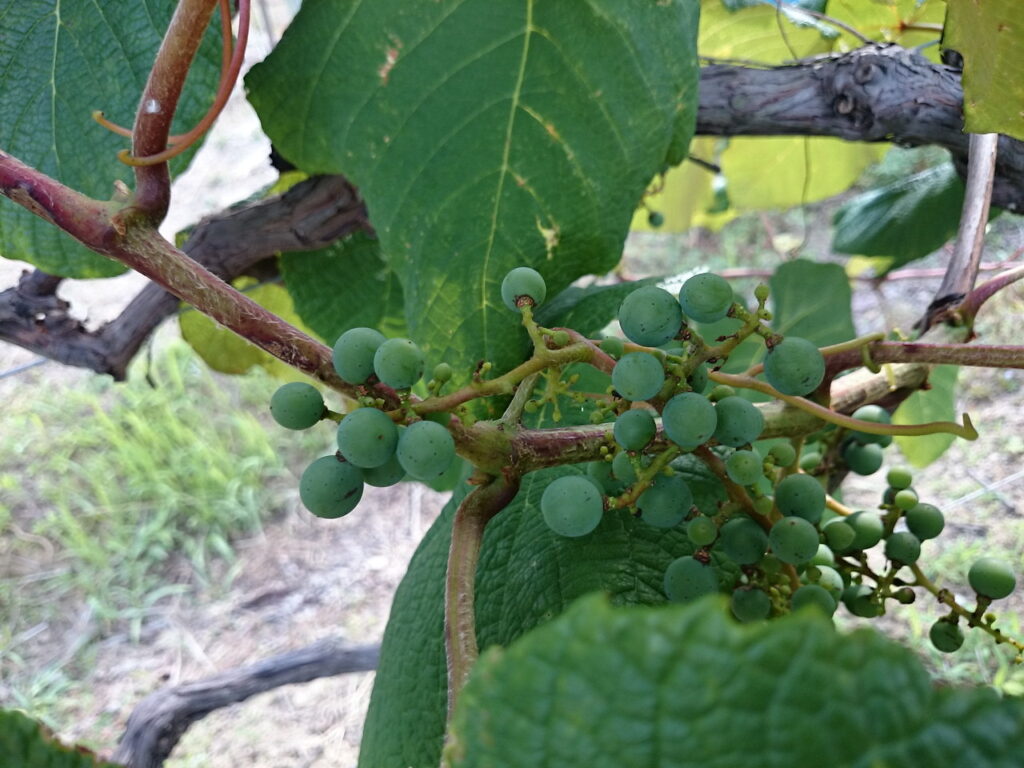
No. 1443 Wild Vine (Vitis ficifolia)
This is a deciduous climbing woody plant (a tree with flowers). It twines around other objects with tendrils. The current year's branches are slender and initially covered in cobwebby hairs. The leaves are alternate. The leaf blade is ovate to broadly ovate-triangular, 5-8 cm long and wide. It is usually 3-5 lobed, but the degree of lobing varies greatly. The margins have shallow serrations. The base is deeply heart-shaped. The upper surface is initially covered in cobwebby hairs, but later becomes hairless. The underside is covered in light brown or white cobwebby hairs, which remain until autumn. The petiole is 2.5-8 cm long. It is dioecious (having separate male and female plants). The flowering period is from June to August. Opposite the leaves, it produces panicles 6-12 cm long, bearing small yellowish-green flowers. The petals fall off as soon as the flowers open. The inflorescences of hermaphrodite flowers are smaller than those of male flowers, and the flowers are sparsely arranged. The stamens of male flowers are long, while those of hermaphrodite flowers are short. The fruit is a berry. The fruit is spherical, about 6 mm in diameter, and ripens to black. The seeds are dark reddish-brown and about 4 mm long. It is distributed in Hokkaido, Honshu, Shikoku, Kyushu, Korea, and China. It grows in forests and forest edges from hills to mountainous areas.
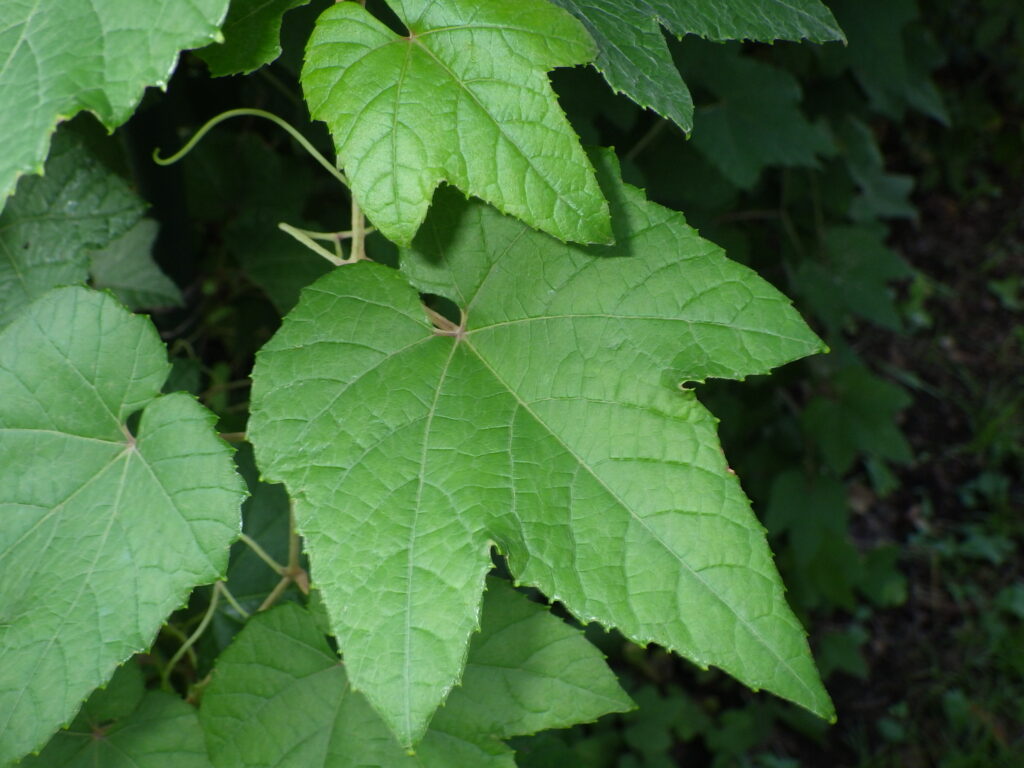
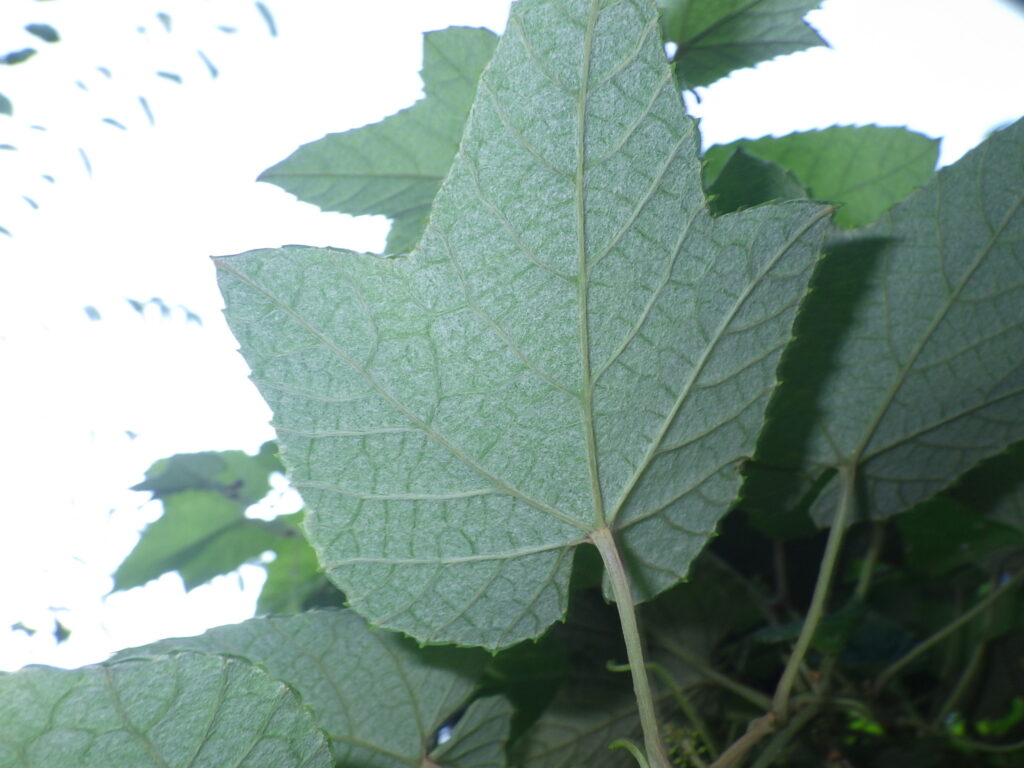
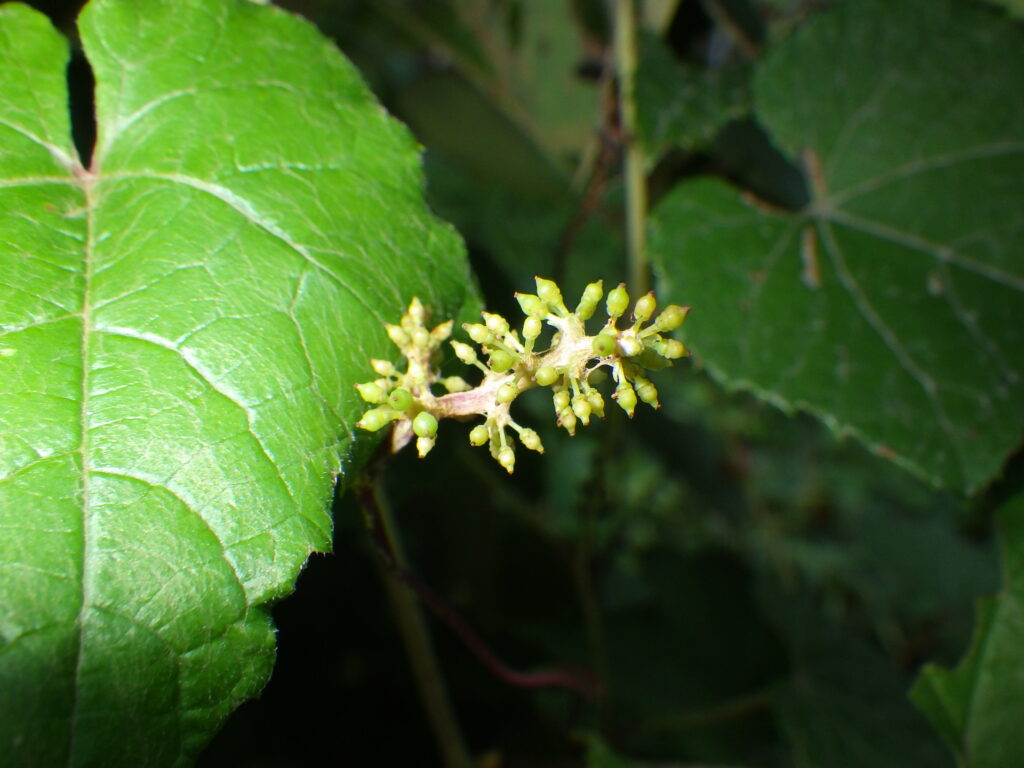
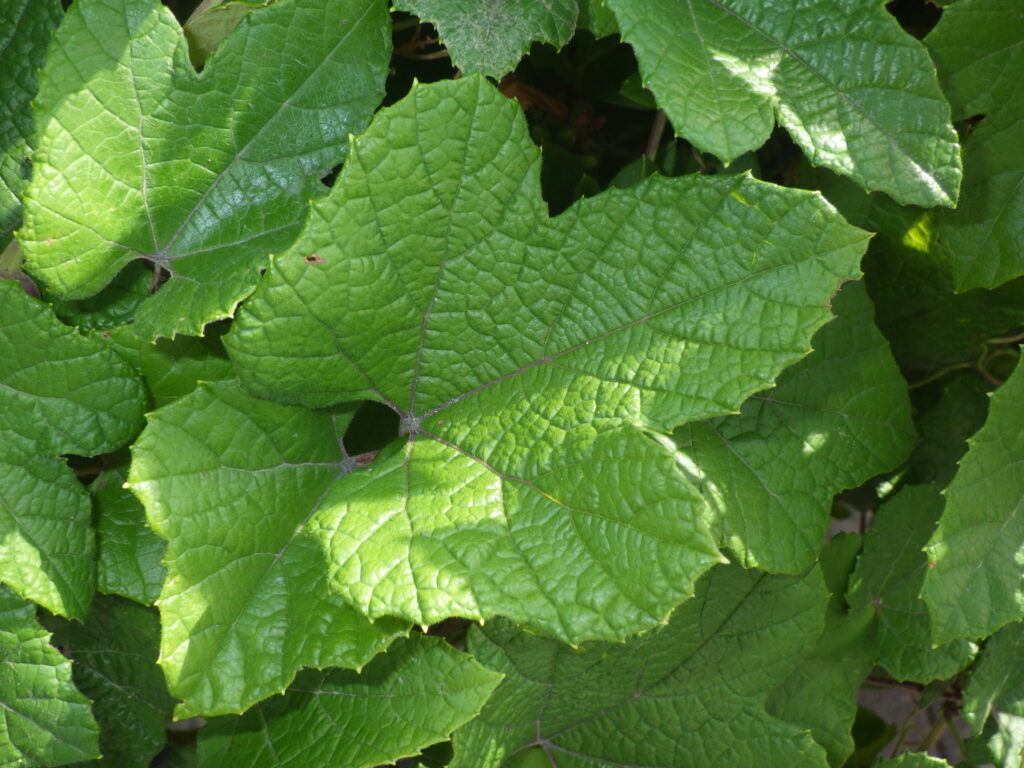
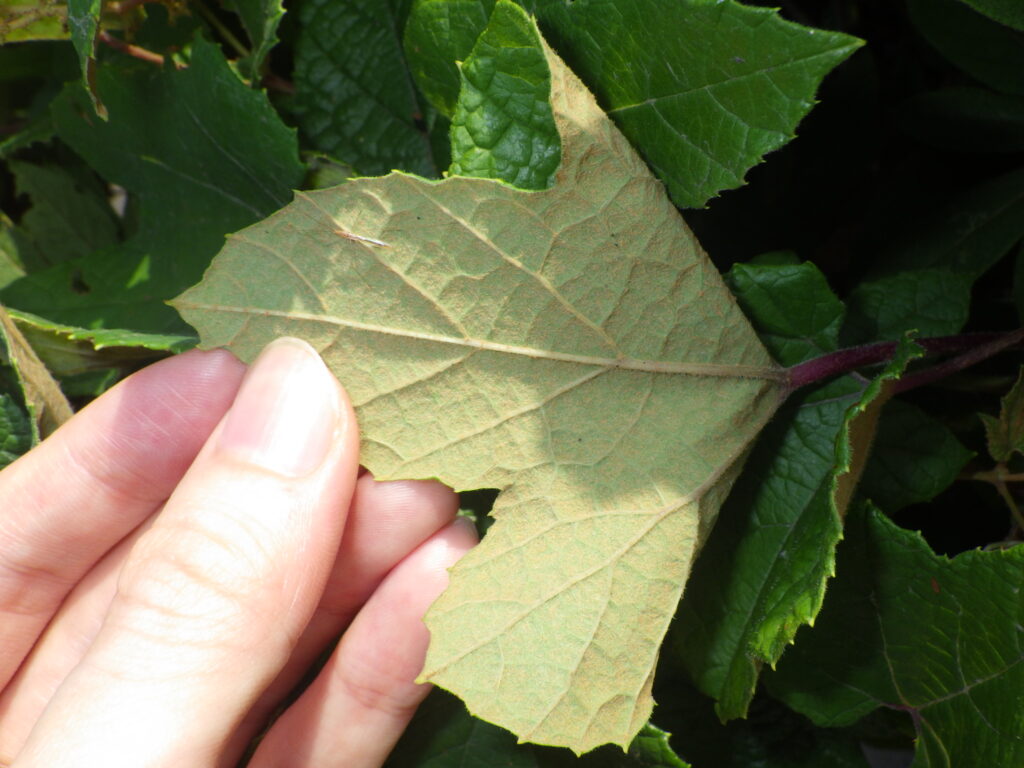
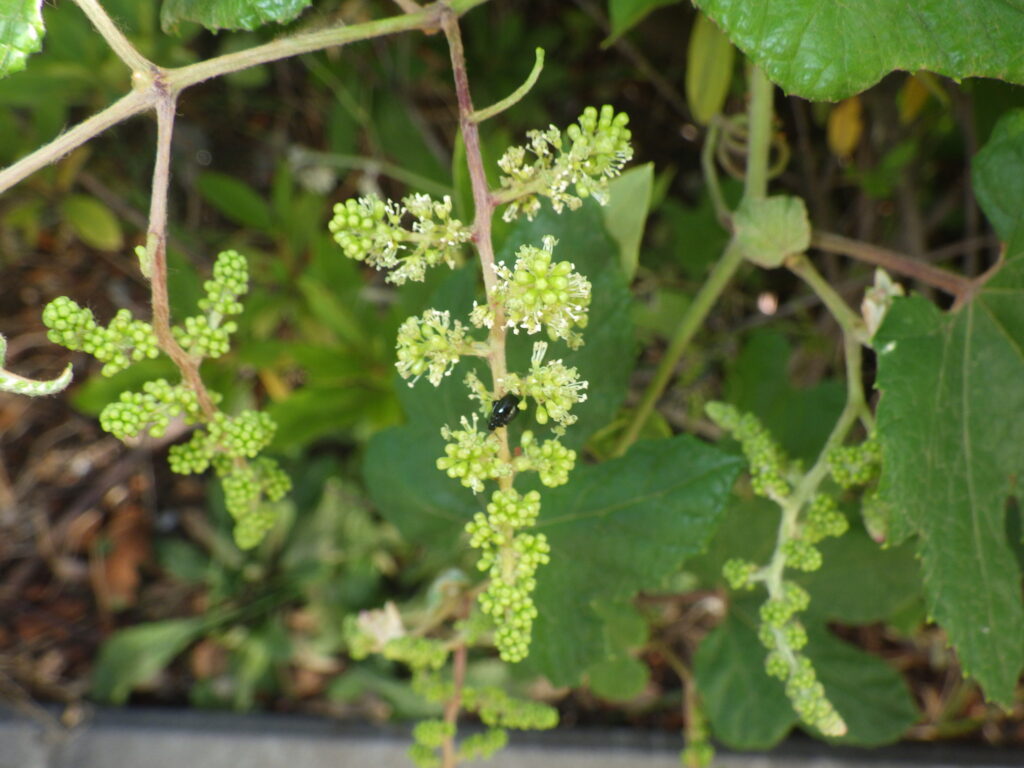
No.1449 Ivy Parthenocissus tricuspidata
Also known as summer ivy. A deciduous climbing woody plant (flowers that bloom on trees). The bark is dark brown. Tendrils with suction cups at the tips extend from the nodes, allowing it to climb tree canopies and rock faces. The current year's branches are reddish-brown to yellowish-brown and hairless. They have numerous round lenticels. Short branches develop. The leaves are dimorphic; the leaves on flowering short branches are large and have long petioles. The leaf blade is broadly ovate, 5-15 cm long and wide, with three lobes at the top, the tips of the lobes are sharply pointed, and the margins have sparse serrations that become awns at the tips. The base is deeply heart-shaped. The texture is somewhat thick and almost hairless. The petiole is about 15 cm long. The leaves on long branches that do not flower are small and have short petioles. They range from unlobed to 1-3 lobed, and some have three leaflets. The flowering period is June to July. It produces cymose inflorescences 3-6 cm long from short branches, bearing numerous small yellowish-green flowers. The flowers are 2-3 mm in diameter, with 5 petals and 5 stamens. The fruit is a berry, spherical 5-7 mm in diameter, ripening to a bluish-black color in autumn. The surface is covered with a white powder. The seeds are obovate, 4-5 mm long. The winter buds are conical, 1-2 mm long, with 3-5 brown bud scales. The leaf scars are nearly circular. It is distributed in Hokkaido, Honshu, Shikoku, Kyushu; Korea; and China. It grows in forests and forest edges in mountainous areas.
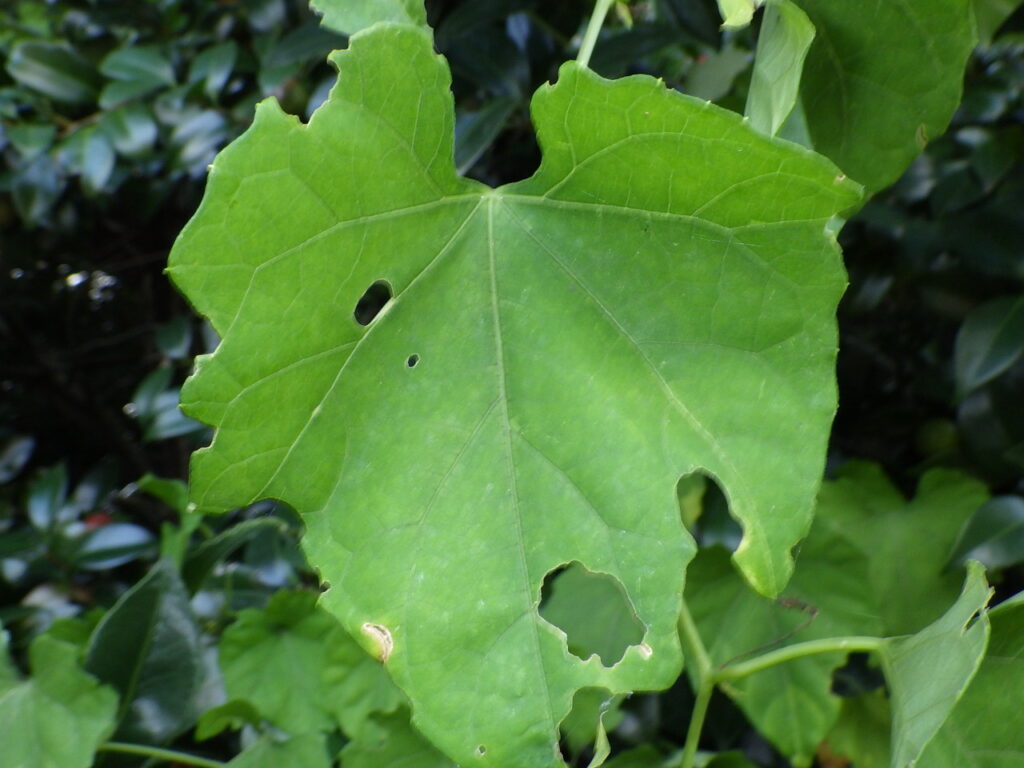
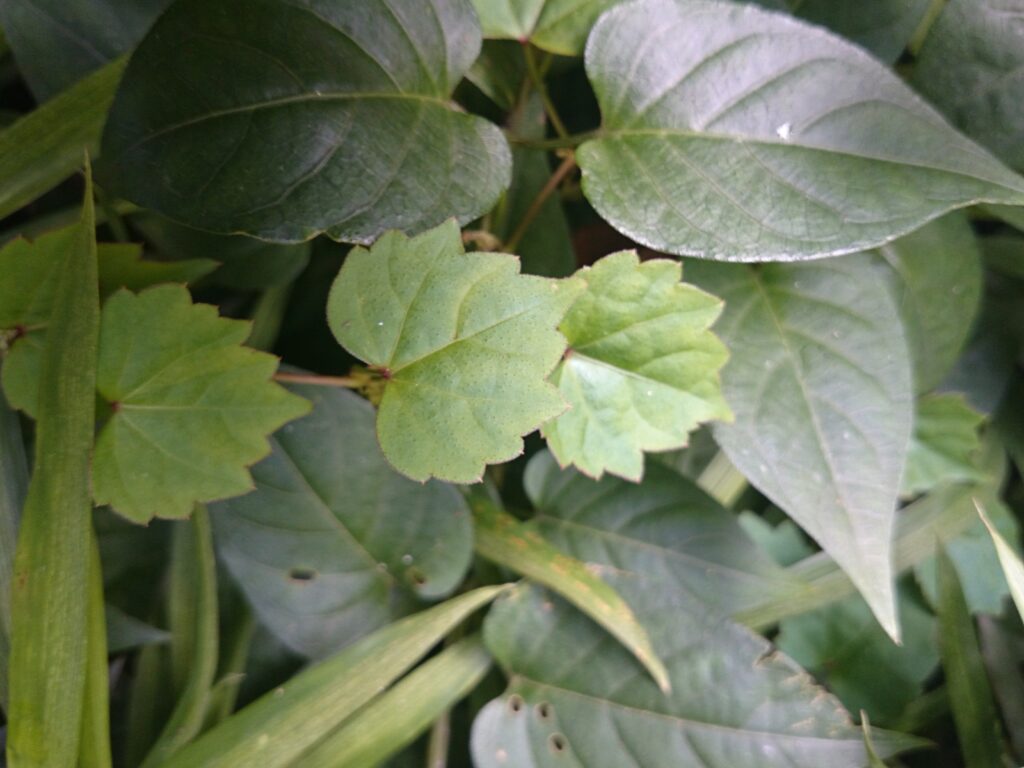
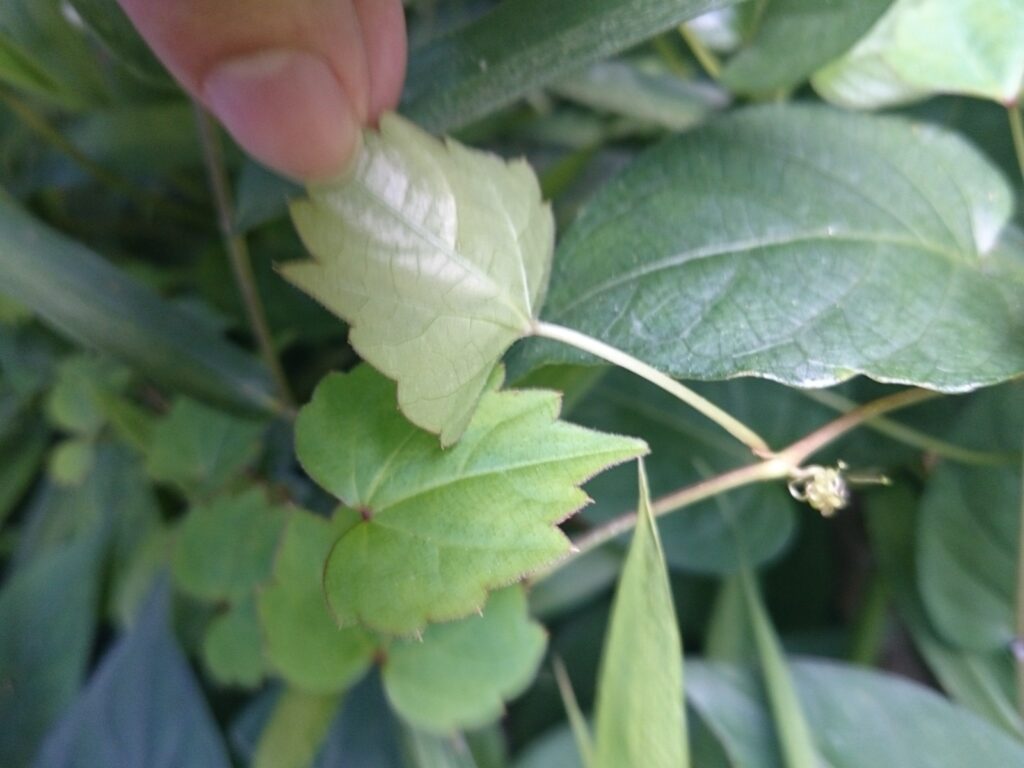
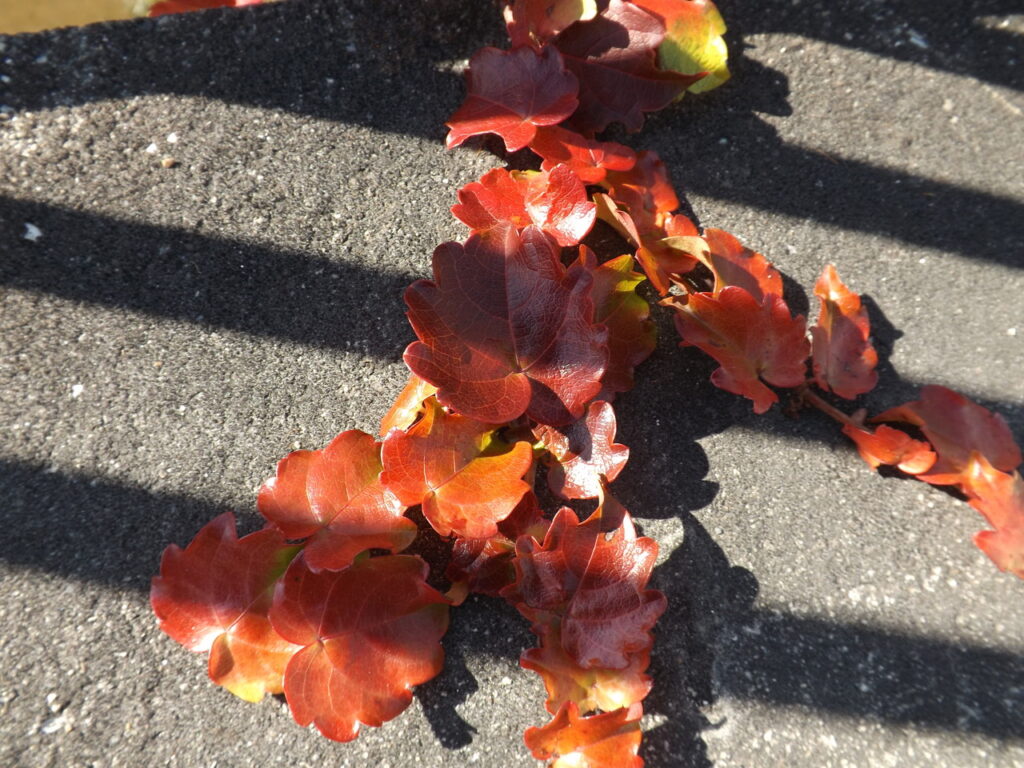
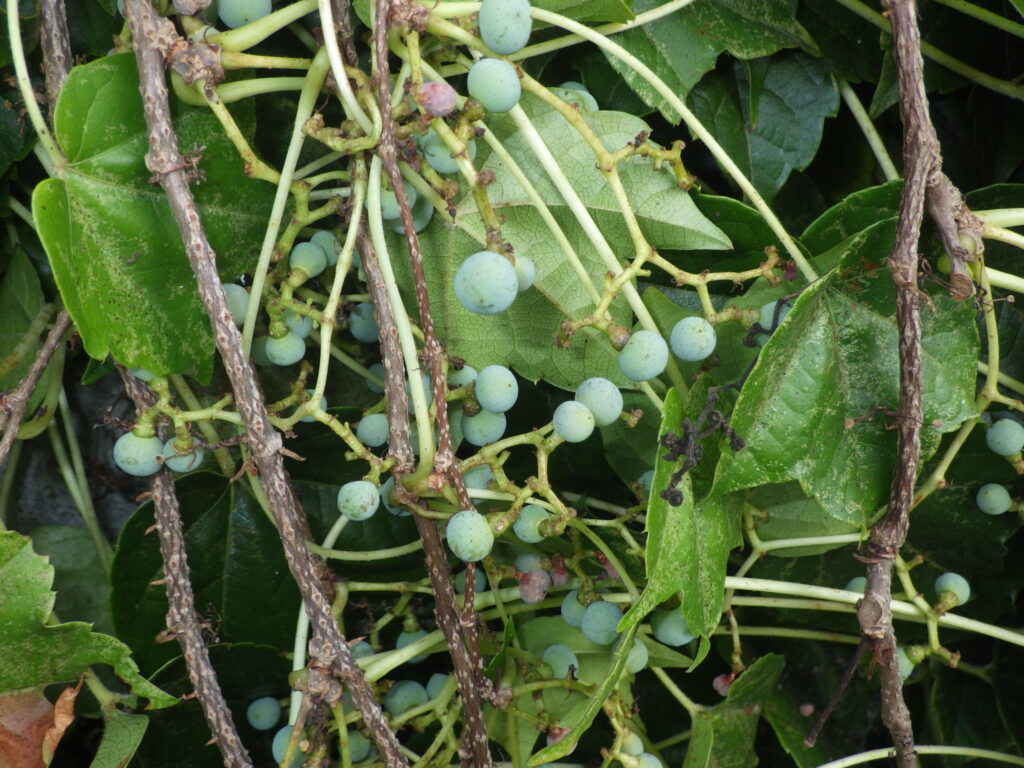
No. 1451 Cayratia japonica
Also known as Japanese knotweed (Cayratia japonica). A climbing perennial herb (a wild flower). It propagates by creating long roots. The young parts have granular, protruding hairs. The stem is ridged, and the stipules are ovate-triangular and membranous. The leaves are alternate, petiolate, and consist of 5 leaflets arranged in a bird's-foot pattern. The terminal leaflet has a petiole 1-3 cm long, is narrowly ovate and pointed, 4-8 cm long, with wavy serrations, the tips of which end in small projections. The upper surface is dark green, with 6-8 pairs of lateral veins, which are depressed on the upper surface and raised on the lower surface. The lateral leaflets are smaller than the terminal leaflet and have shorter petioles. Tendrils are opposite to the leaves or inflorescence and branch at the tip. The flowering period is from June to August. The inflorescence is a flattened cyme with protruding hairs. The flowers are 5 mm in diameter. The sepals are low. The flower has four petals, ovate-triangular in shape, 3 mm long, pale green, spreading flat, with protruding hairs on the back and a mitre-shaped tip. There are four stamens with oblong anthers. The floral disc spreads flat, initially reddish, later changing to orange. There is one ovary and one style, which is columnar and erect. The berry is spherical, rarely somewhat rounded, and ripens to black. The seeds are broadly ovate, 4 mm long. Diploid varieties distributed west of the Kanto region bear fruit readily, but triploid varieties distributed east of the Kinki region and common in eastern Japan do not. It is distributed in Hokkaido (southwest), Honshu, Shikoku, Kyushu, Ryukyu Islands; Korea, China, India, and Malaysia. It commonly grows in fields and thickets.
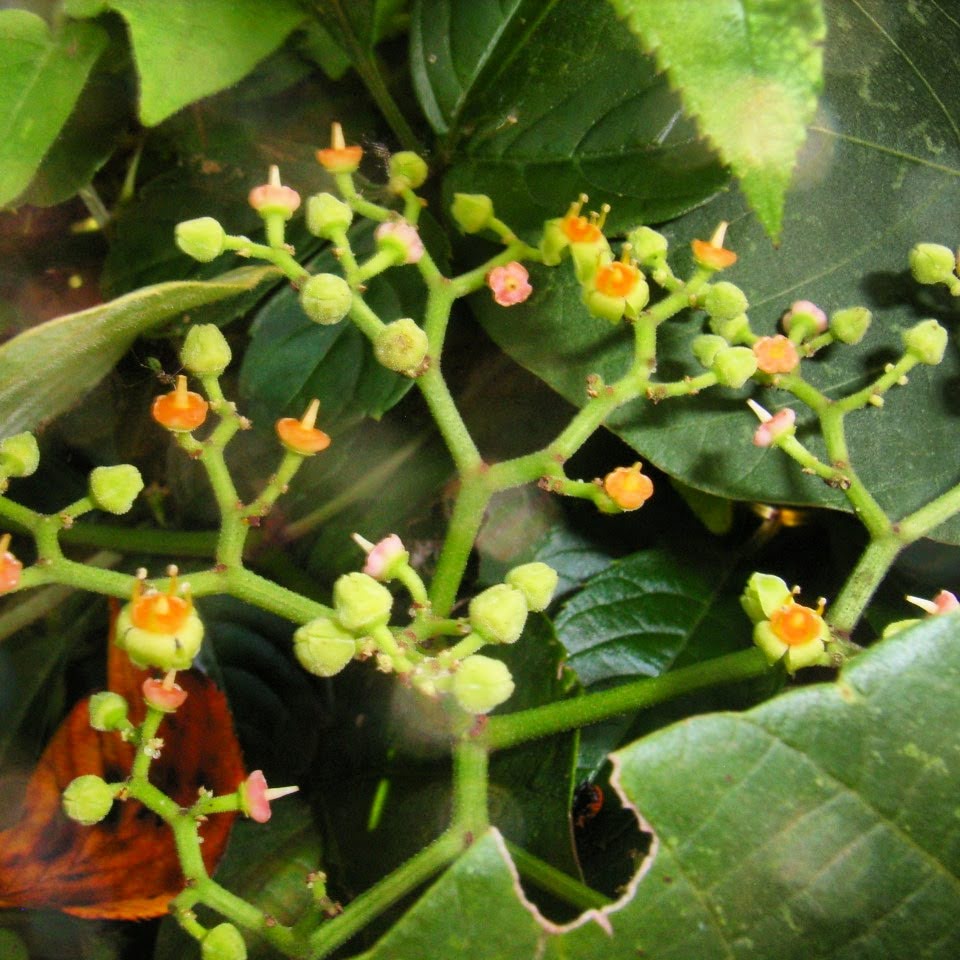
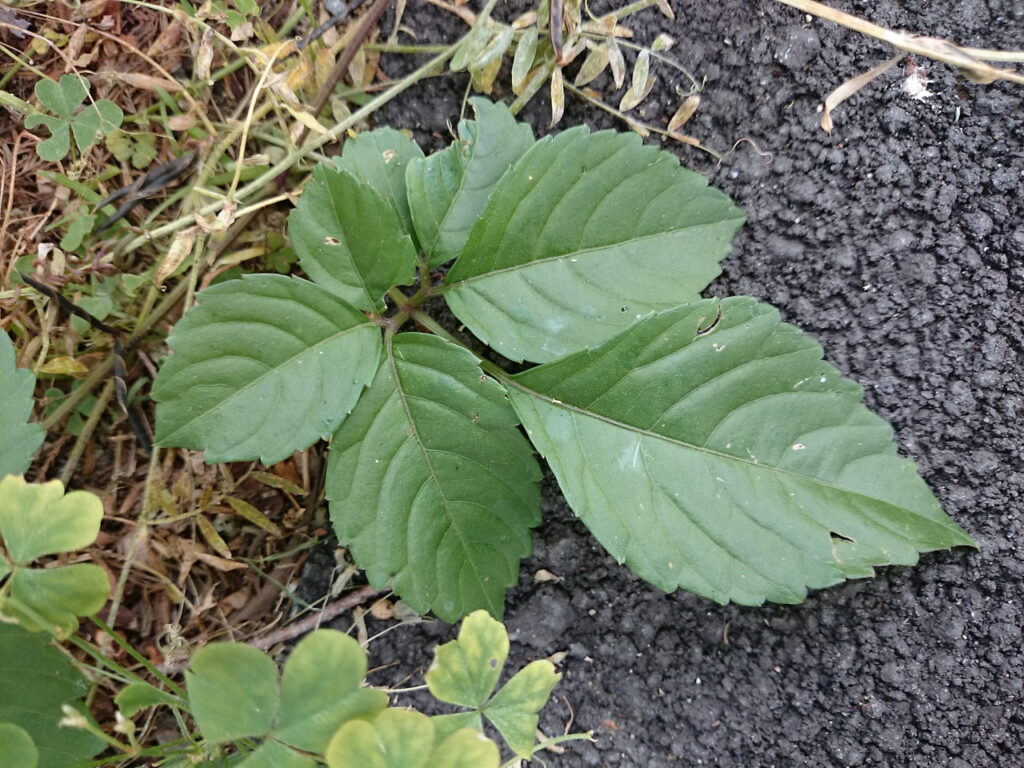
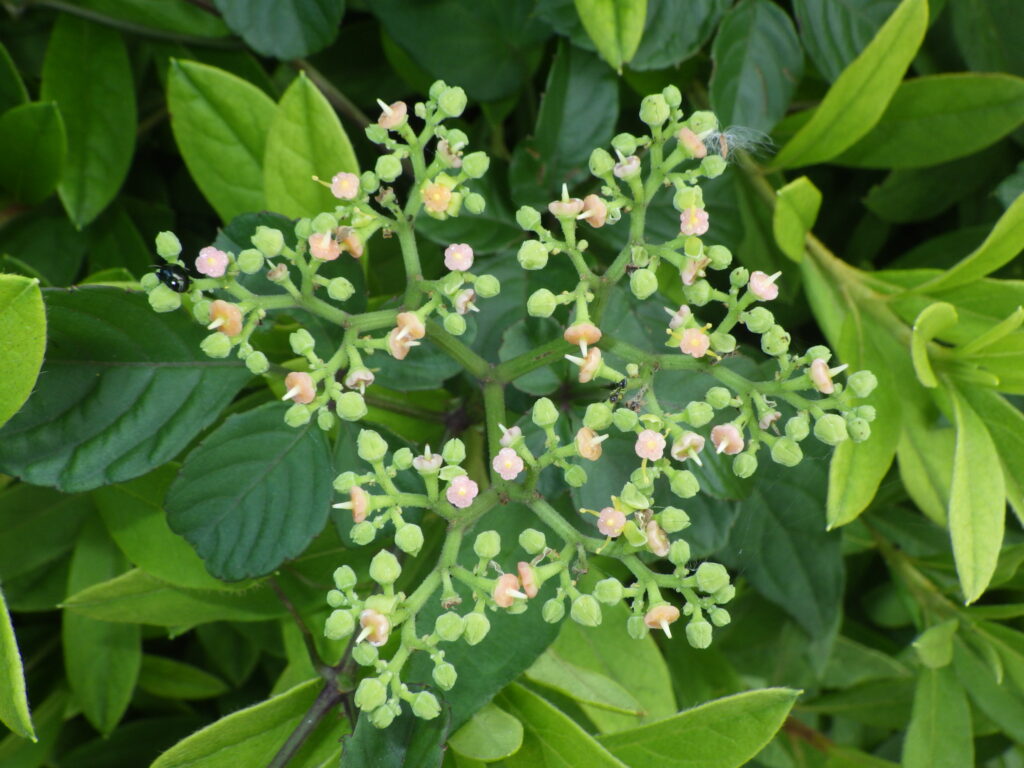
No.1452 Ampelopsis glandulosa var. heterophylla
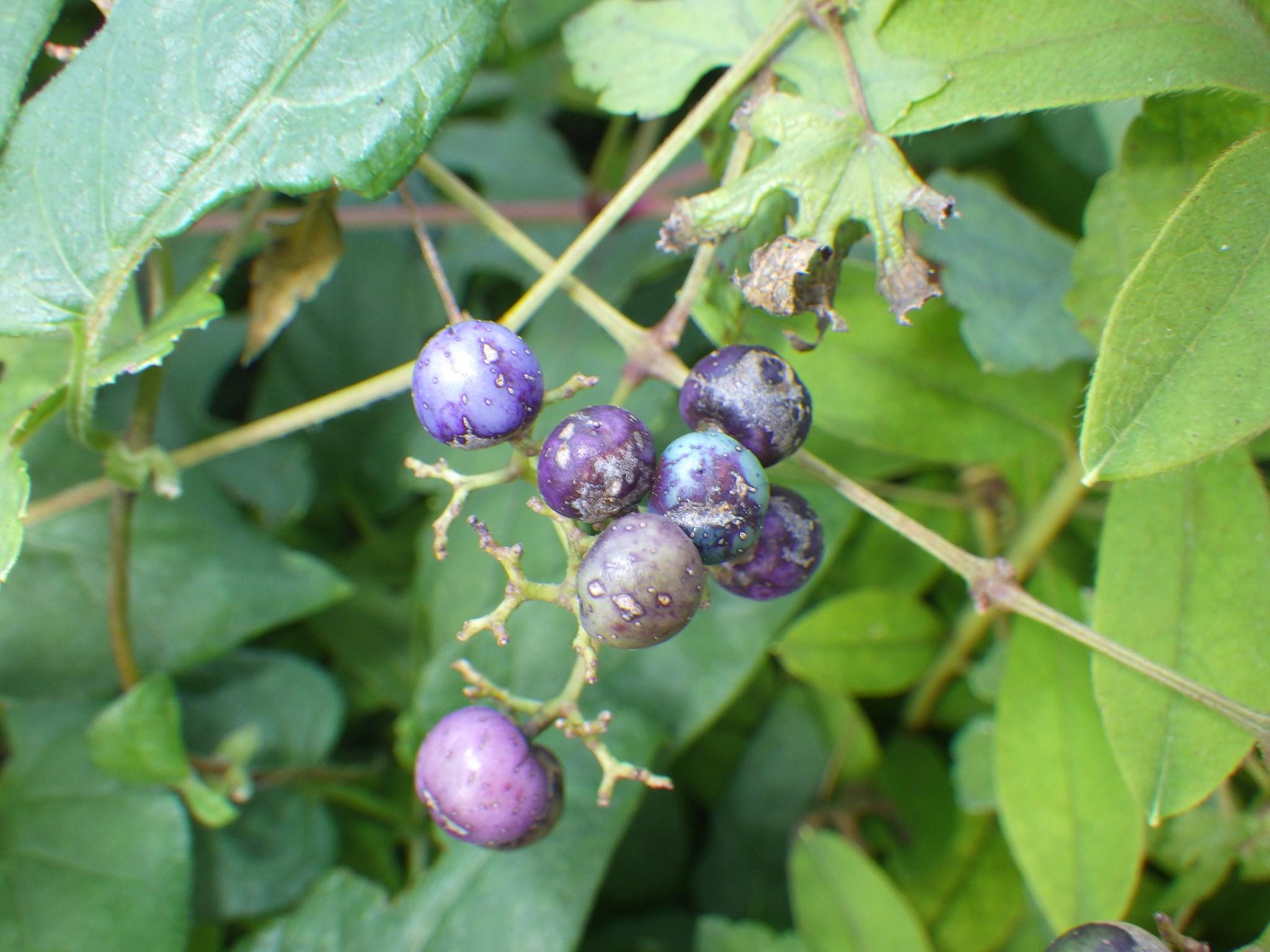
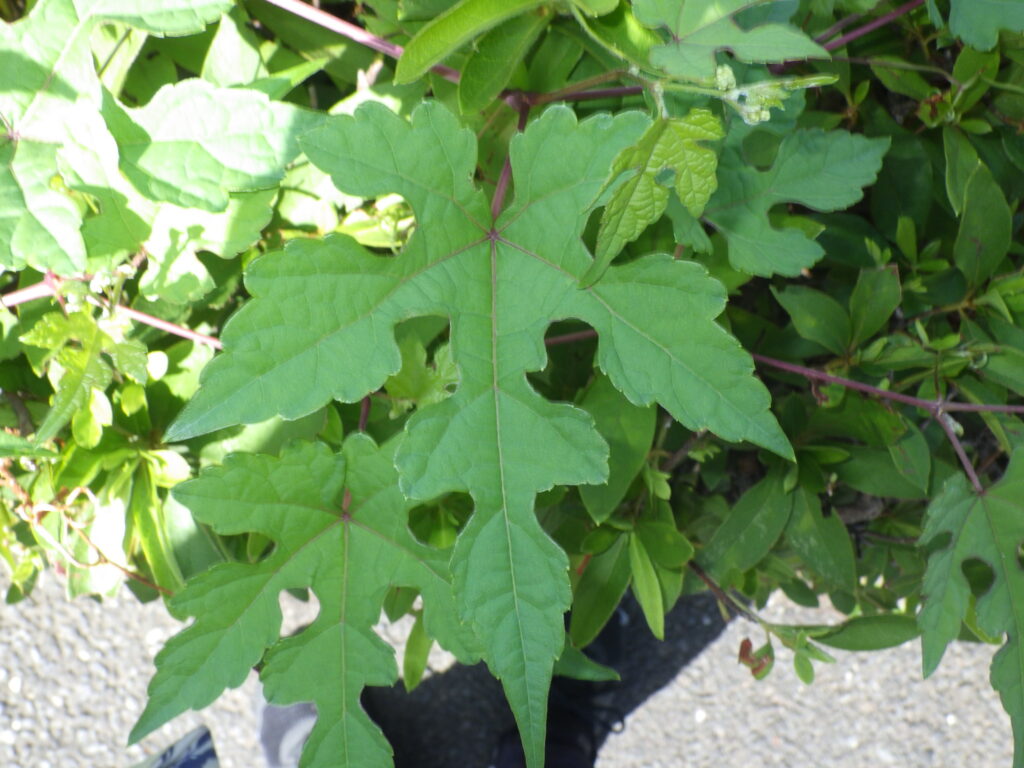
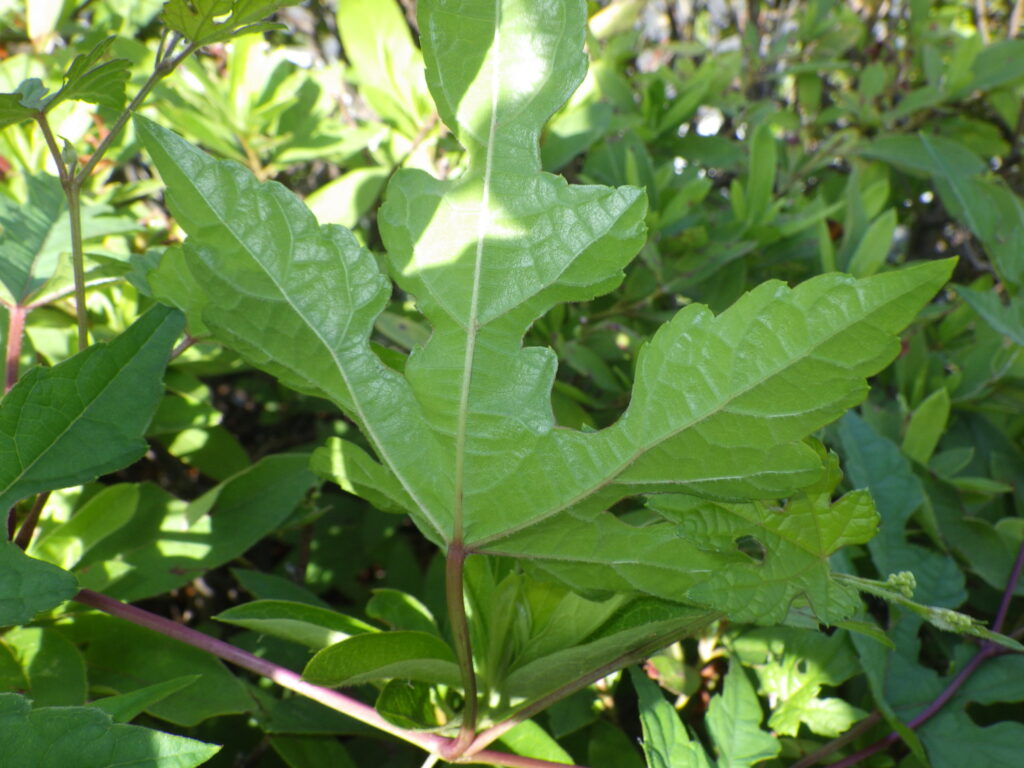
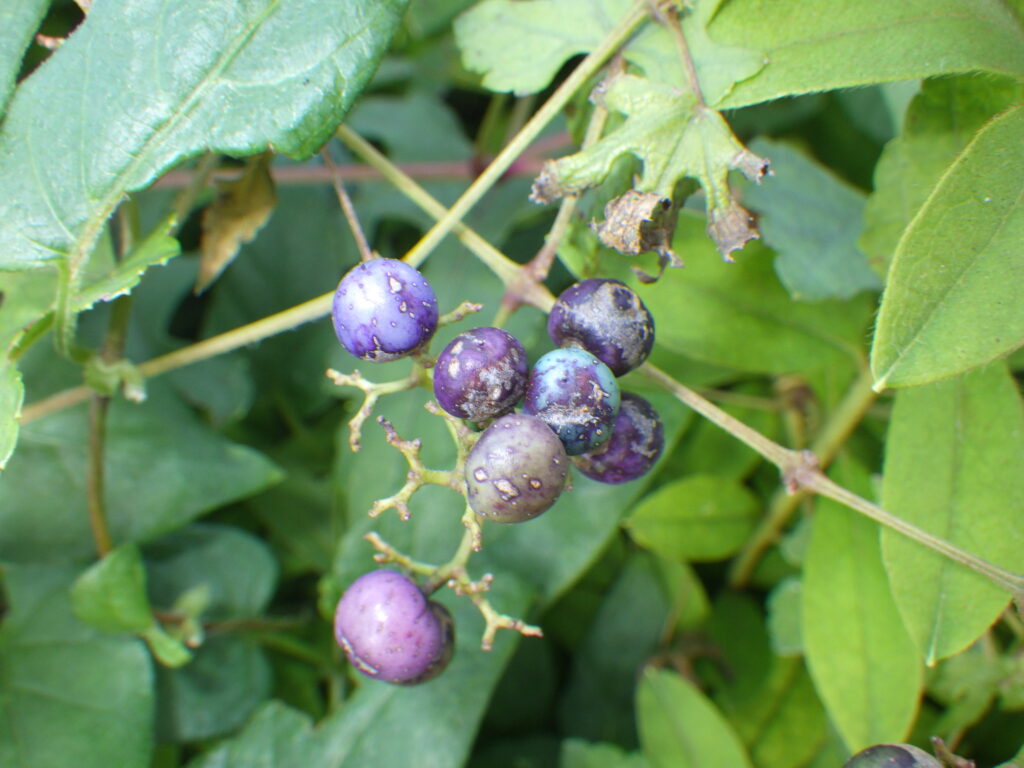
This is a deciduous climbing woody plant (a tree-flowered plant). It twines around other objects with bifurcated tendrils. The stems are dark grayish-brown, and the nodes are swollen. The stems die back every year, but the base becomes woody and grows to about 4 cm in diameter. The branches are initially densely covered with coarse hairs, but later become hairless. There are many circular lenticels. Tendrils emerge from each node. The leaves are alternate. The leaf blade is nearly circular, 8-11 cm long and 5-9 cm wide, and is 3-5 lobed. The tips of the lobes are pointed, and the edges have coarse, shallow serrations. The base is heart-shaped. There are sparse hairs in the vein axils on the underside of the leaf. The flowering period is from July to August. It produces cymose inflorescences opposite the leaves, bearing many small flowers. The flowers are 3-5 mm in diameter. There are 5 petals and 5 stamens, and 1 pistil. The fruit is often parasitized by the larvae of grape gall midges and grape dart wasps, forming galls and turning purple or bluish-green (this point is highly questionable; see article below). Normal fruit is rare (this is also suspicious). Seeds are 3-5 mm long. Winter buds are hidden deep within semicircular leaf scars and are not visible. Distributed in Hokkaido, Honshu, Shikoku, Kyushu, Ryukyu Islands; Korea, China, the Kuril Islands, and Ussuri. Grows in mountainous and wild areas.
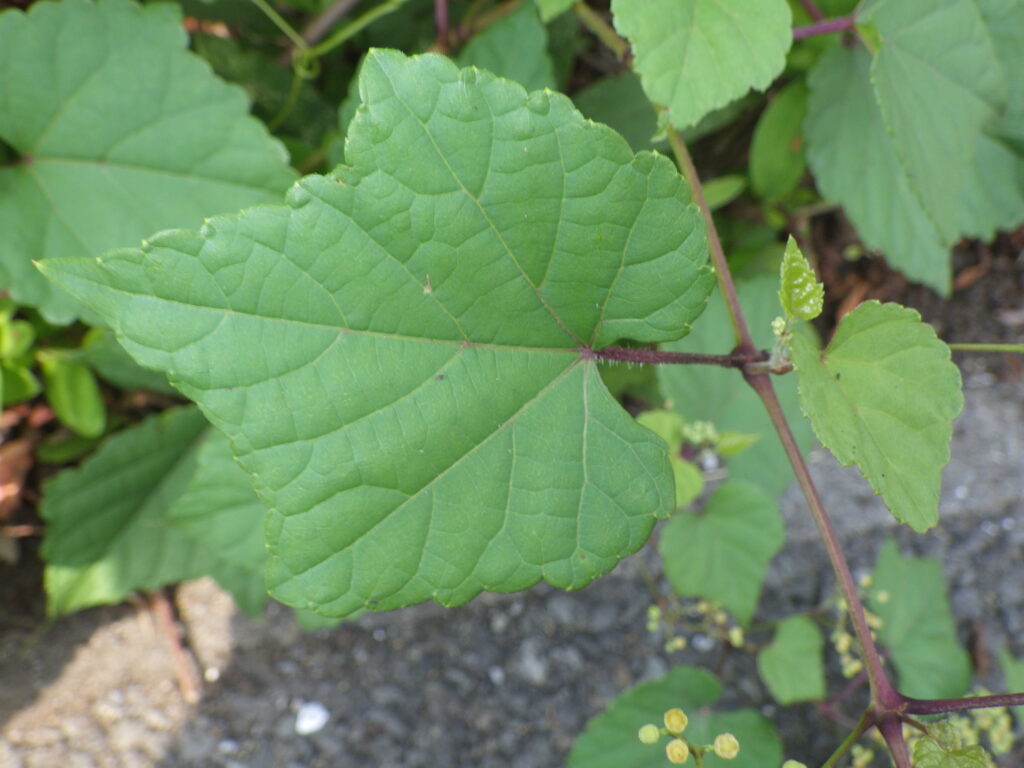
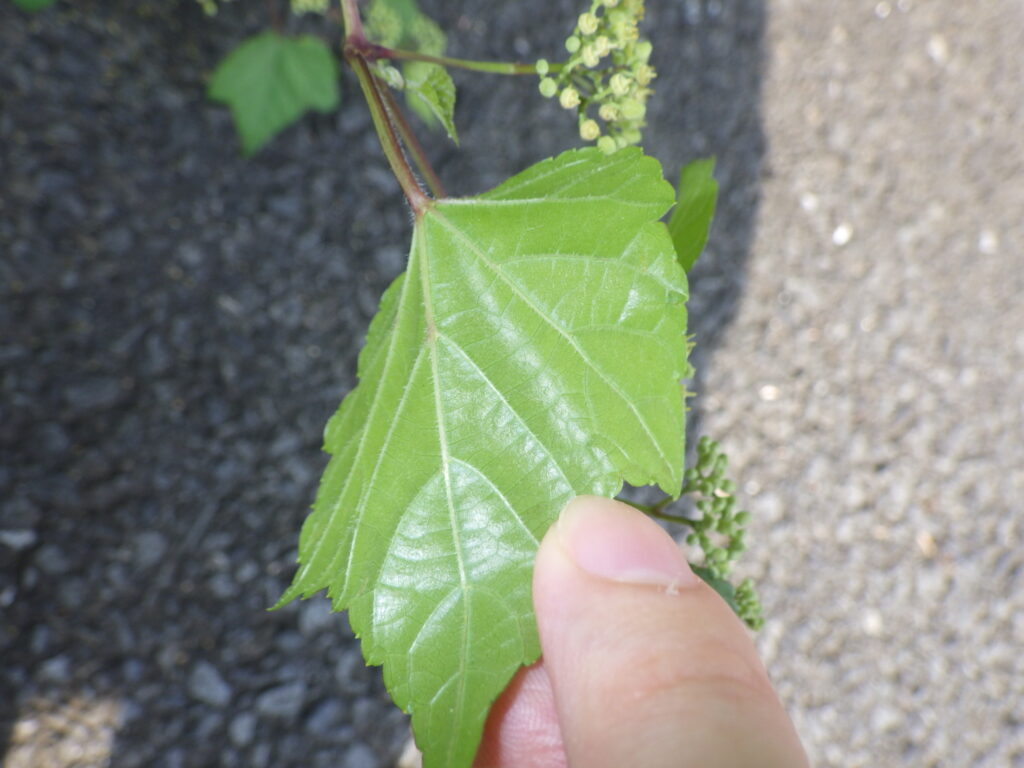
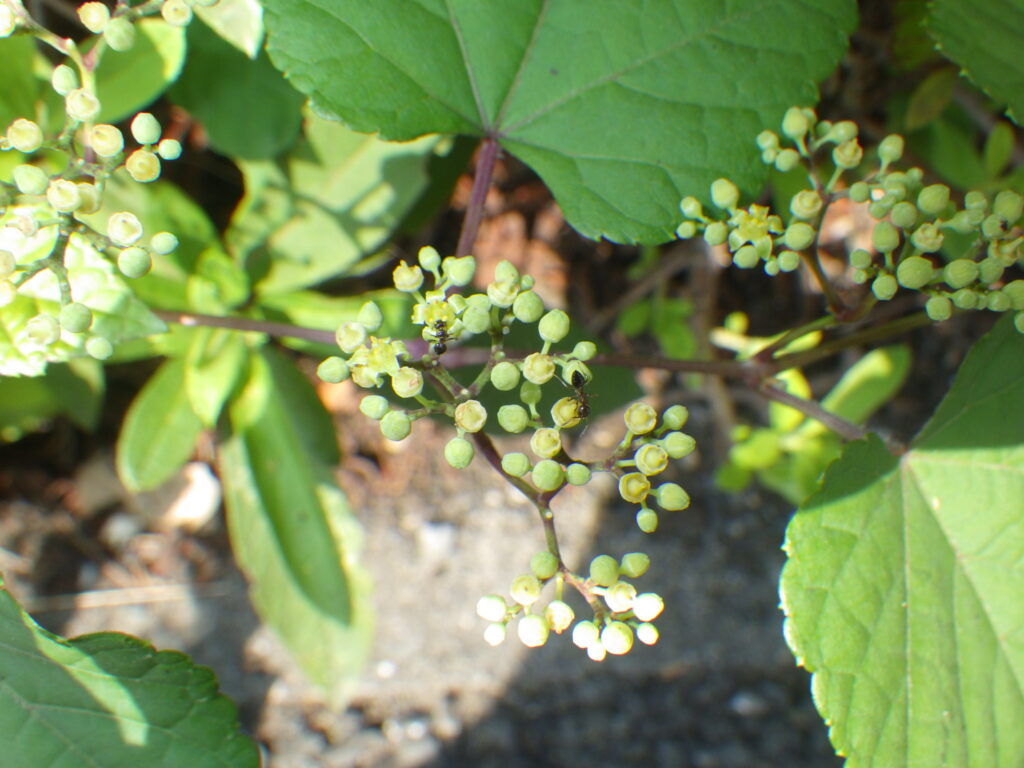
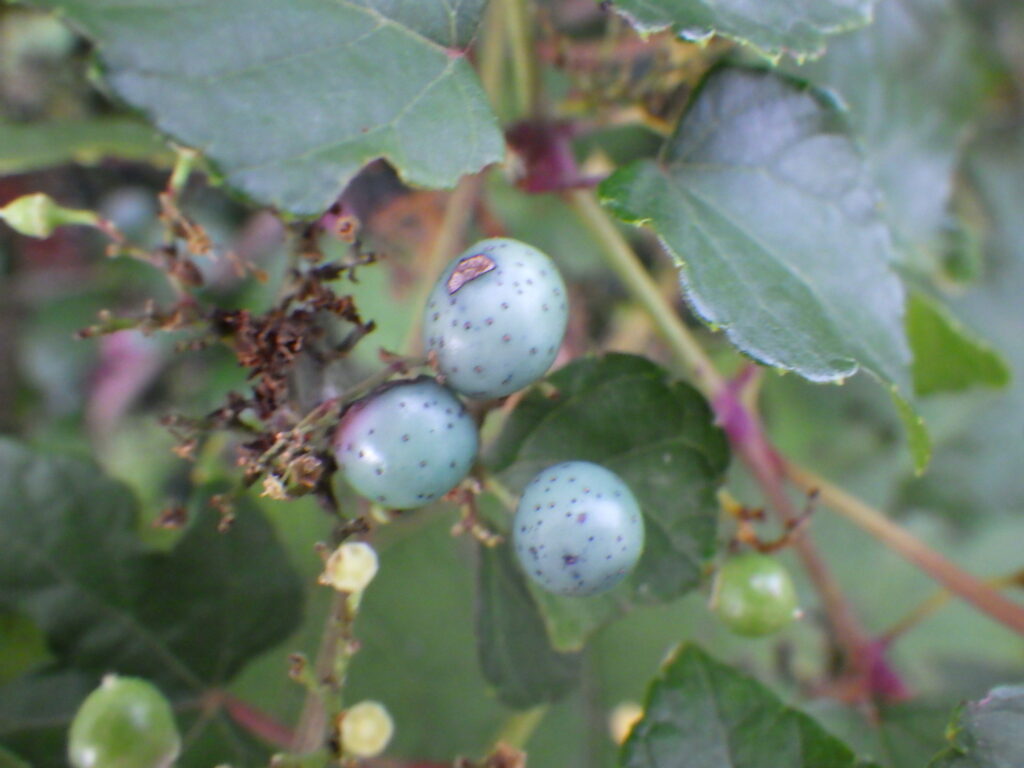
No.1452.1 Ampelopsis glandulosa var. heterophylla f. citrulloides
This wild grape variety has deeply lobed leaves with indentations on the lobes resembling those of a watermelon leaf.
References
Charters, S. 2006. Wine and Society: The Social and Cultural Context of a Drink. Routledge, London. 376pp. ISBN: 9780750666350
Diamond, JM 1997. Guns, germs, and steel: the fates of human societies. W.W. Norton, New York. 480pp. ISBN: 9780393038910 [=2012. Guns, germs, and steel, Volume 1. Sōshisha, Tokyo. ISBN: 9784794218780]
Robinson, J. 2006. The Oxford Companion to Wine (3rd ed.). Oxford University Press, Oxford. 813pp. ISBN: 9780198609902
Fugelsang, KC, & Edwards, CG 2007. Wine microbiology: practical applications and procedures. Springer, Boston. 414pp. ISBN: 9780387333410
Zhou, Y., Massonnet, M., Sanjak, JS, Cantu, D., & Gaut, BS 2017. Evolutionary genomics of grape (Vitis vinifera ssp. vinifera) domestication. Proceedings of the National Academy of Sciences 114(44): 11715-11720. https://doi.org/10.1073/pnas.1709257114