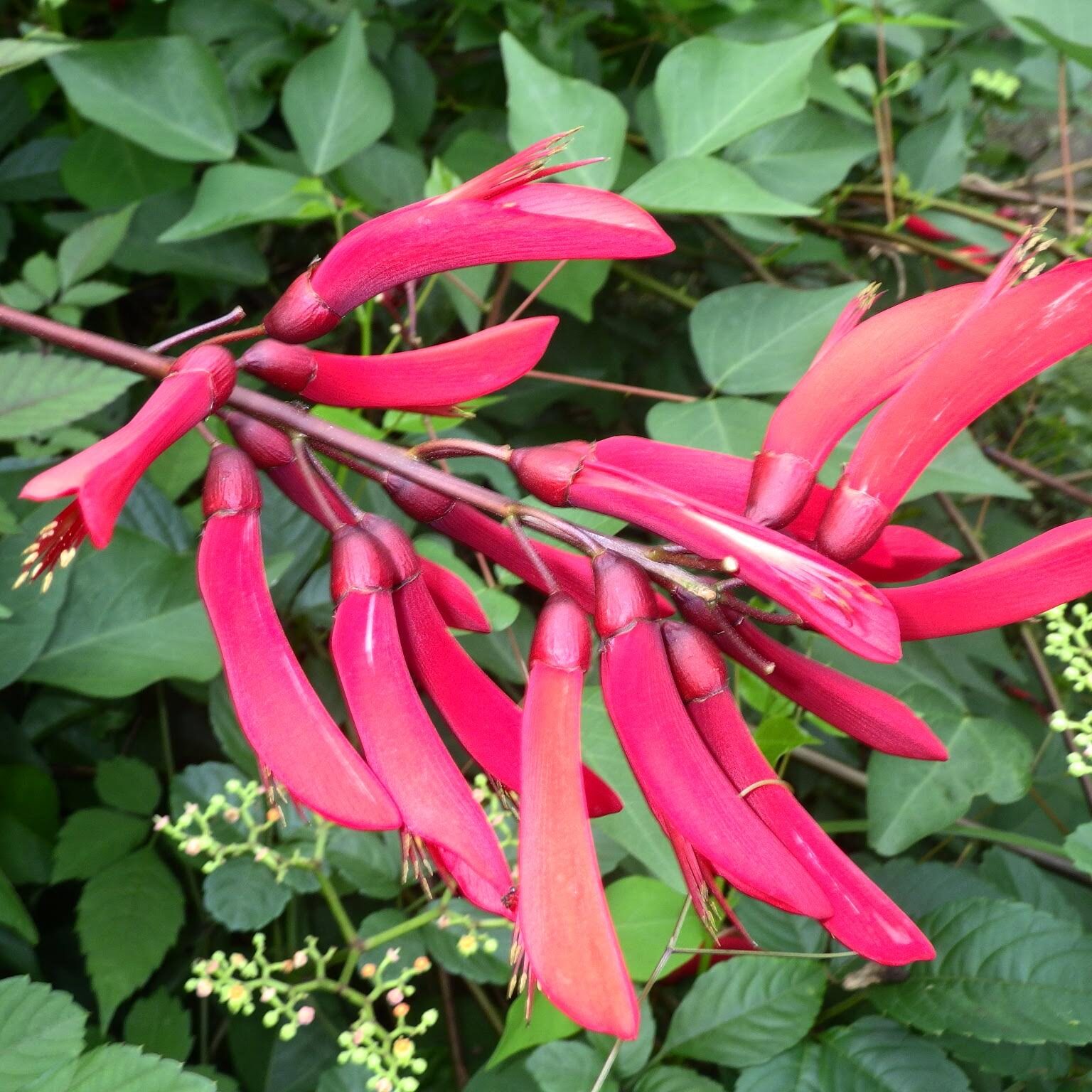
The three species of coral tree (Erythrina variegata), Erythrina variegata (American coral tree), and Erythrina variegata (coral tree) are relatively common in Japan and are cultivated for ornamental purposes. They are sometimes confused with each other because they have red flowers and trifoliate compound leaves. The leaves are very similar, but they can be reliably distinguished by carefully observing the shape of the leaflets, the thorns, and the petioles. There are even greater differences in the flowers. In Erythrina variegata and Erythrina variegata, the butterfly-shaped flowers, typical of the legume family, are inverted with the standard petal spreading downwards, while in Erythrina variegata, the standard petal is closed and slender. Also, the stamens of Erythrina variegata are long, while those of Erythrina variegata are short. Erythrina variegata is a beloved plant in Okinawa, but surprisingly, its origin is unclear. It is believed to have been introduced at least during the Meiji era, and it is widely thought that it did not grow wild in ancient times. Erythrina variegata has spread its distribution not only in Japan but also worldwide through cultivation to the point where it is difficult to distinguish from its native habitat. It is said that it became the prefectural flower of Okinawa because it symbolizes tropical Okinawa and is a tourist resource. Even among the three species of coral trees found in Japan, the flowers of the Coral Tree genus exhibit distinctly different shapes. This is thought to be the result of dramatic evolution adapted to their respective habitats. This article will explain the classification, history, culture, pollination ecology, and seed dispersal of these three species.
- What are Deigo, Kaikouzu, and Coral Tree?
- What are the differences between Deigo, Kaikouzu, and Coral Tree?
- Is the coral tree (Erythrina variegata) actually an invasive species in Okinawa?
- Why did it become the prefectural flower of Okinawa?
- What is the structure of a flower?
- Do coral trees bloom for birds, bats, and bees?
- Did the ancestor of the coral tree adapt to hummingbirds in the New World?!
- The Kaikouzu remained unchanged even in the New World!?
- The fruit is a legume, and the seeds are dispersed by ocean currents or water currents?
- References
- Source
What are Deigo, Kaikouzu, and Coral Tree?
Erythrina variegata, also known as coral tree (Erythrina variegata), is a deciduous tree widely distributed from Amami Oshima to Okinawa; India, Sri Lanka, Southeast Asia (Bangladesh, Cambodia, Indonesia, Laos, Malaysia, Myanmar, Philippines, Thailand, Vietnam), Australia, and the Pacific Islands, and has been introduced to Africa and Central and South America (Wu et al., 2010). However, as will be discussed later, its natural distribution is unclear, and its distribution in Japan may also be due to introduction. In nature, it grows in coastal forests with sandy soil. It is planted as a street tree and park tree.
Erythrina crista-galli, also known as the American coral tree (Tsukamoto, 1994), is a deciduous tree native to southeastern Brazil and northern Argentina. In Japan, it is cultivated somewhat rarely as a park tree or garden tree. While there are inconsistencies in botanical guides regarding which is the standard Japanese name, the Ylist, which organizes the Japanese names and scientific names of Japanese plants, uses "kaikouzu." The kanji characters are "海紅豆," which is said to mean "red bean from overseas."
Erythrina x bidwillii, also known as coral tree, is a horticultural variety created in Australia by crossbreeding Erythrina bidwillii, native to South America, with Erythrina herbacea, native to North America (Mogi et al., 2000; Tsuchihashi, 2013). It is also cultivated in Japan. The kanji characters for its name are "珊瑚刺桐" (sango-shito), where "刺桐" is the Chinese name for coral tree, and is said to derive from the color and shape of its flowers, which resemble red coral.
The three species mentioned above are common in Japan and are cultivated for ornamental purposes. All three have trifoliate compound leaves and red flowers, and since one of their alternative names is American coral tree, people living on the mainland may not be very familiar with the differences between them.
What are the differences between Deigo, Kaikouzu, and Coral Tree?
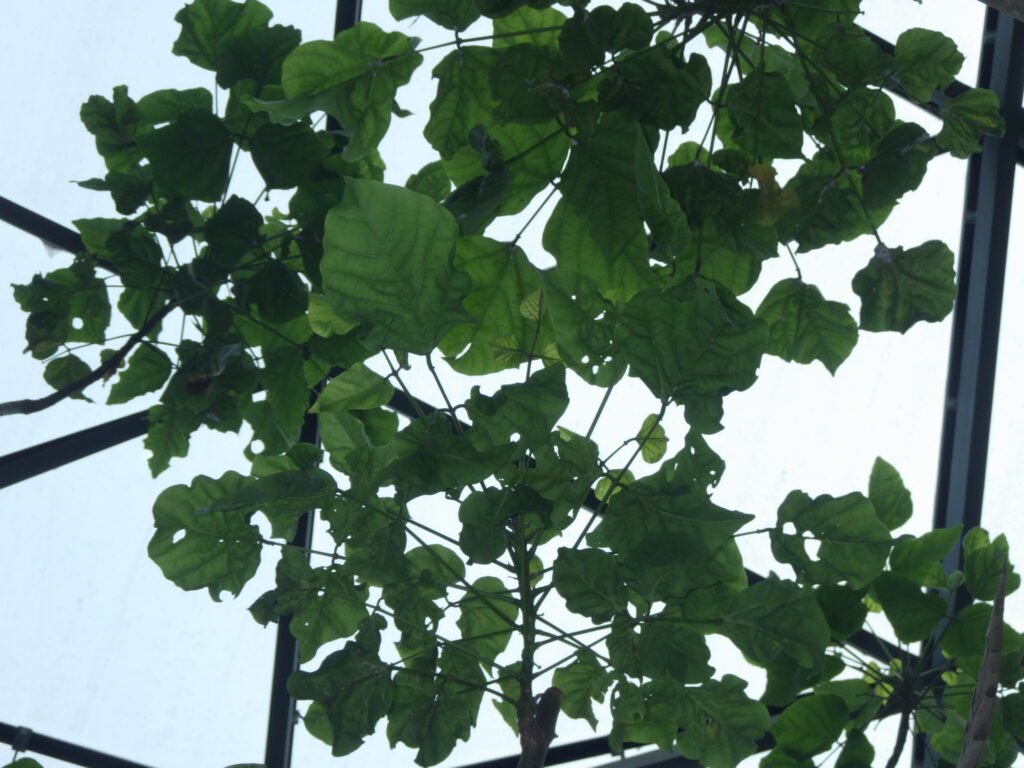
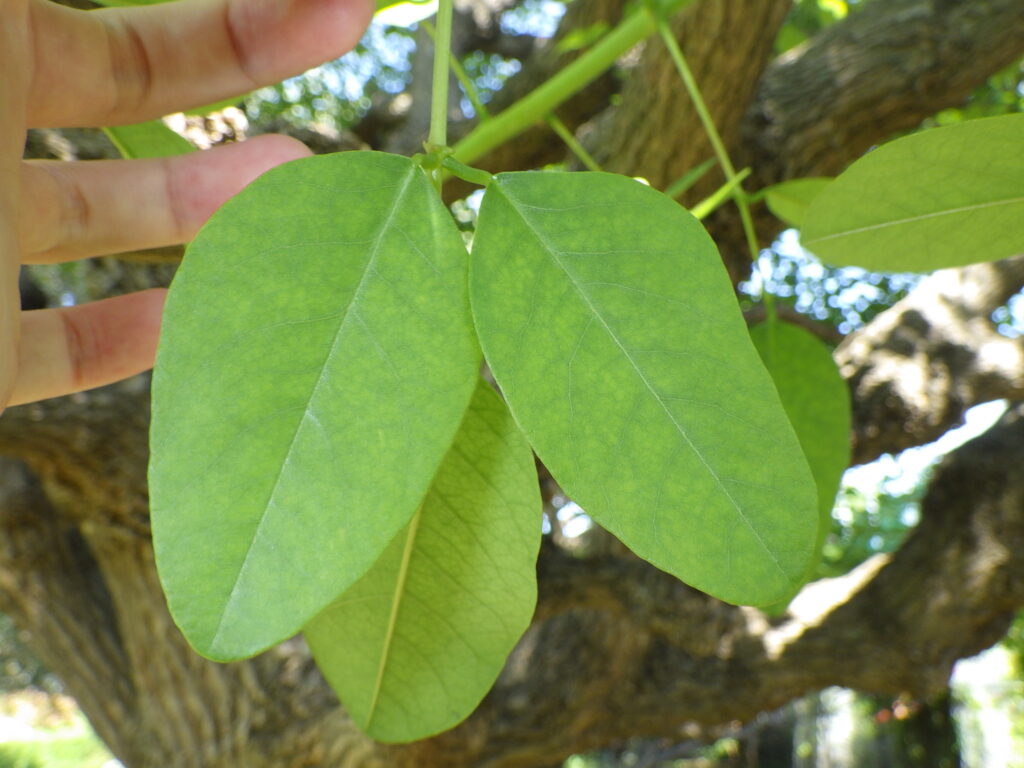
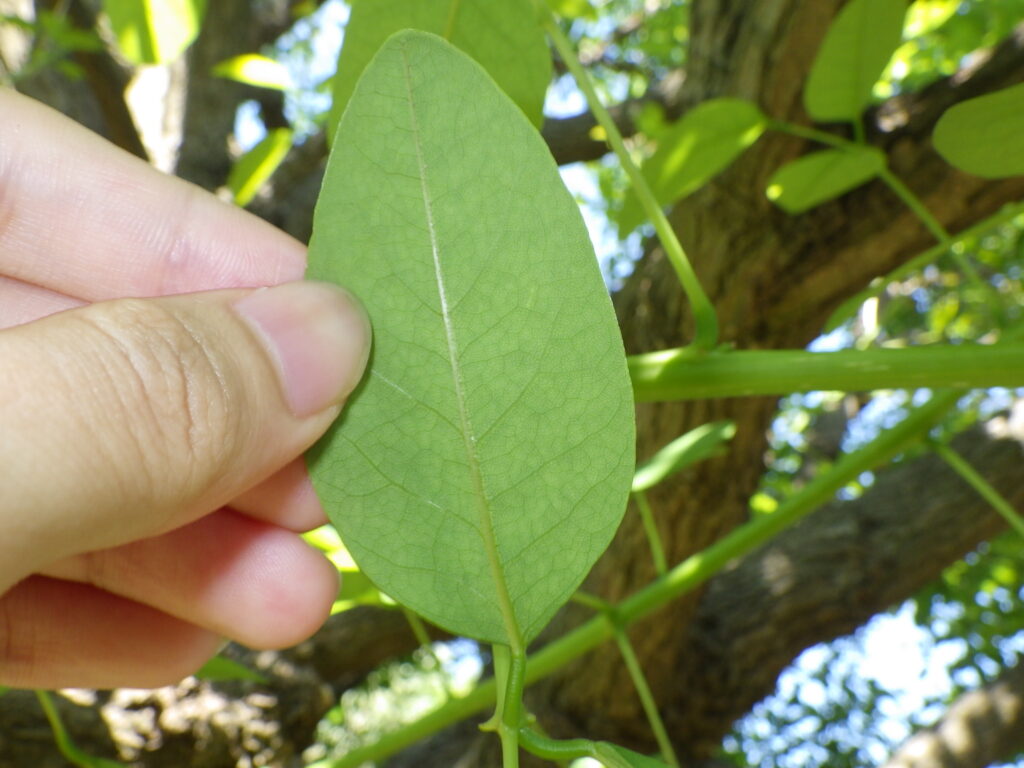
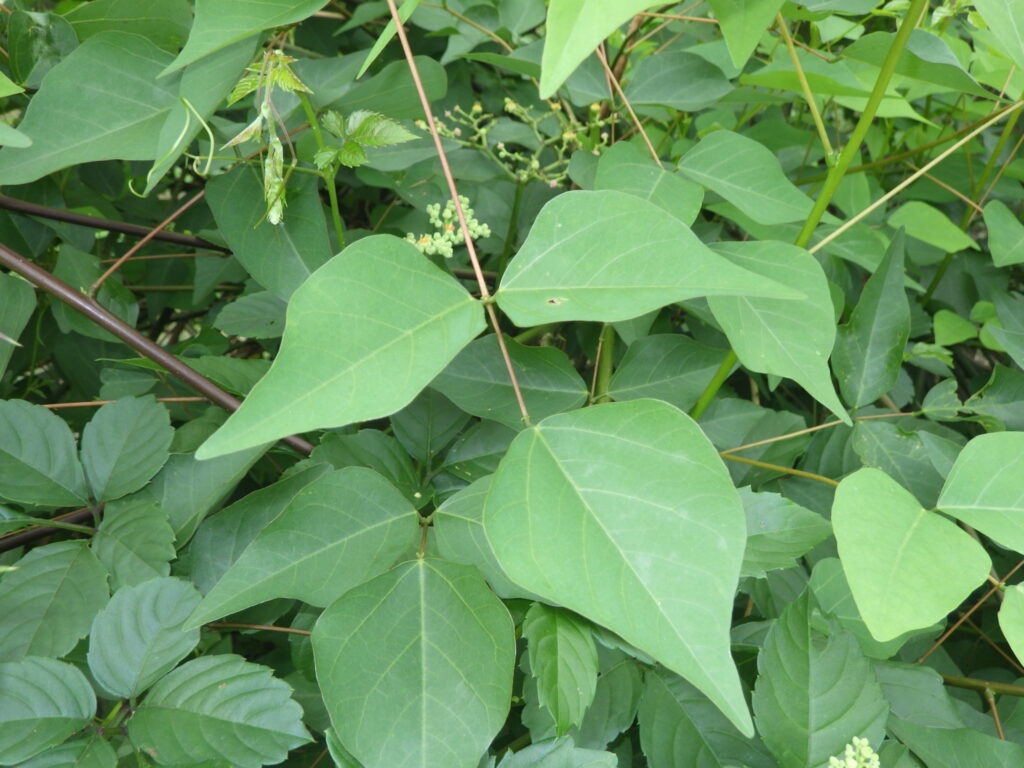
However, upon closer observation, the leaf shapes are all different, and the flower shapes are completely different (Hayashi, 2014).
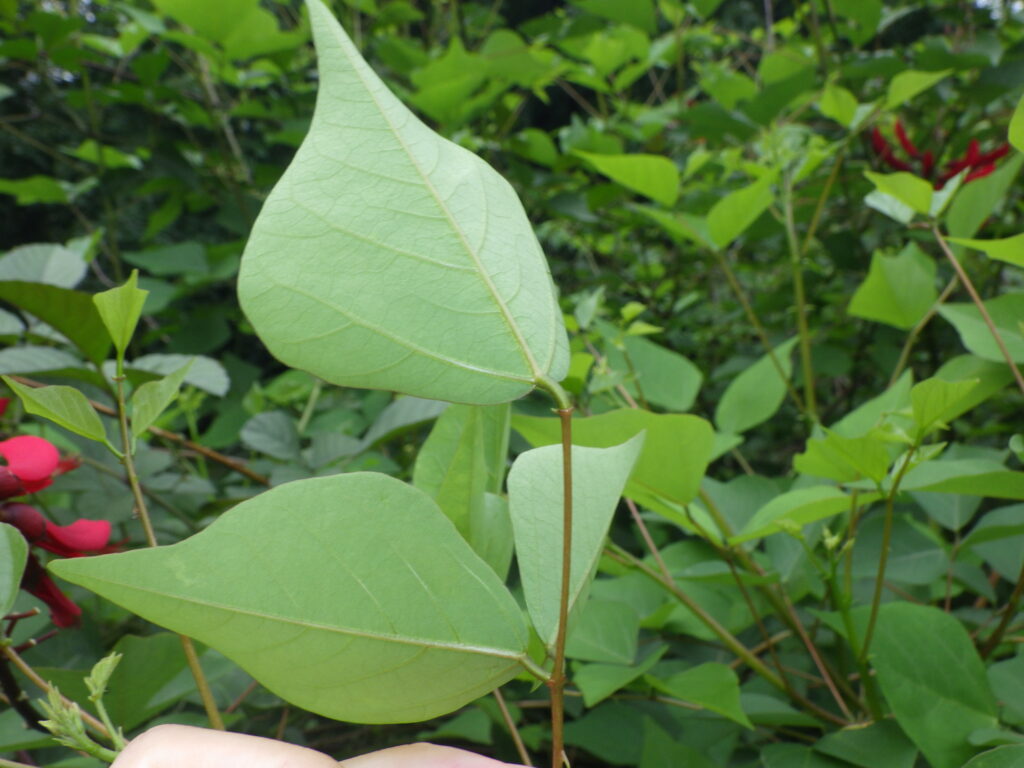
First, the leaflets of Erythrina variegata and Erythrina argentea are rhomboid to triangular with pointed tips, whereas those of Erythrina japonica are clearly rounded and oval with rounded tips.
However, this is a characteristic found in the cultivated variety of coral tree, *Erythrina variegata*. That said, it shouldn't be a problem for ordinary research in Japan.
Regarding the leaflets of Erythrina variegata and Ligustrum sibiricum, in Erythrina variegata, the width is slightly shorter than or about the same as the length, and the left and right leaflets together often form a nearly triangular, asymmetrical, and distorted shape. In contrast, in Ligustrum sibiricum, the width is shorter than the length, and the overall shape is closer to a rhomboid, and often closer to symmetrical. Also, the petioles of Erythrina variegata are green, while those of Ligustrum sibiricum are reddish.
Furthermore, while the Erythrina variegata may have thorns on its petioles, the main vein on the underside of the leaf, and its branches, the Erythrina variegata and Erythrina japonica have no thorns at all.
This alone is enough to distinguish them, but the flowers are even more different.
In the coral tree and the lily-of-the-valley, the butterfly-shaped flowers typical of the legume family are inverted, and the standard petal (the single wide petal at the top of the butterfly-shaped flower) spreads downwards, whereas in the coral tree, the standard petal is closed and has a slender shape.
Regarding the flowers of the coral tree (Erythrina variegata) and the silkworm (Calanthe discolor), in the coral tree, the stamens and pistils, excluding the anthers, are clearly red, elongated, and extend horizontally from above, while in the silkworm (Calanthe discolor), the stamens and pistils, excluding the anthers, are clearly white, short, and attached downwards.
By comparing the above, you should be able to reliably distinguish between common species of the genus Erythrina.
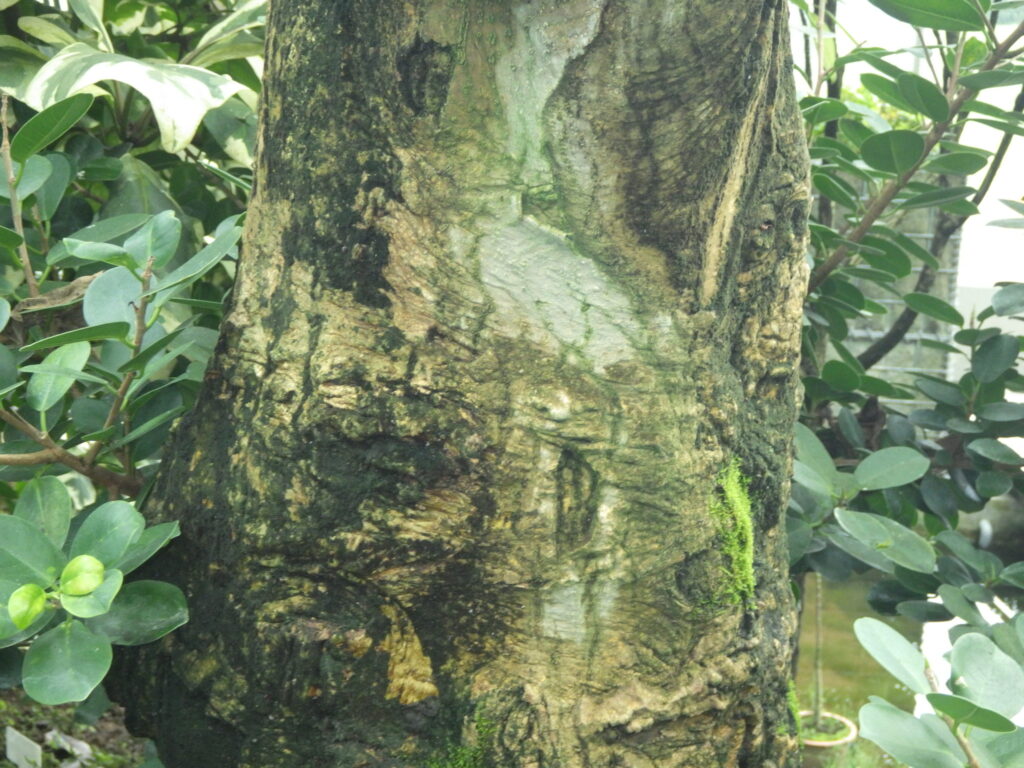
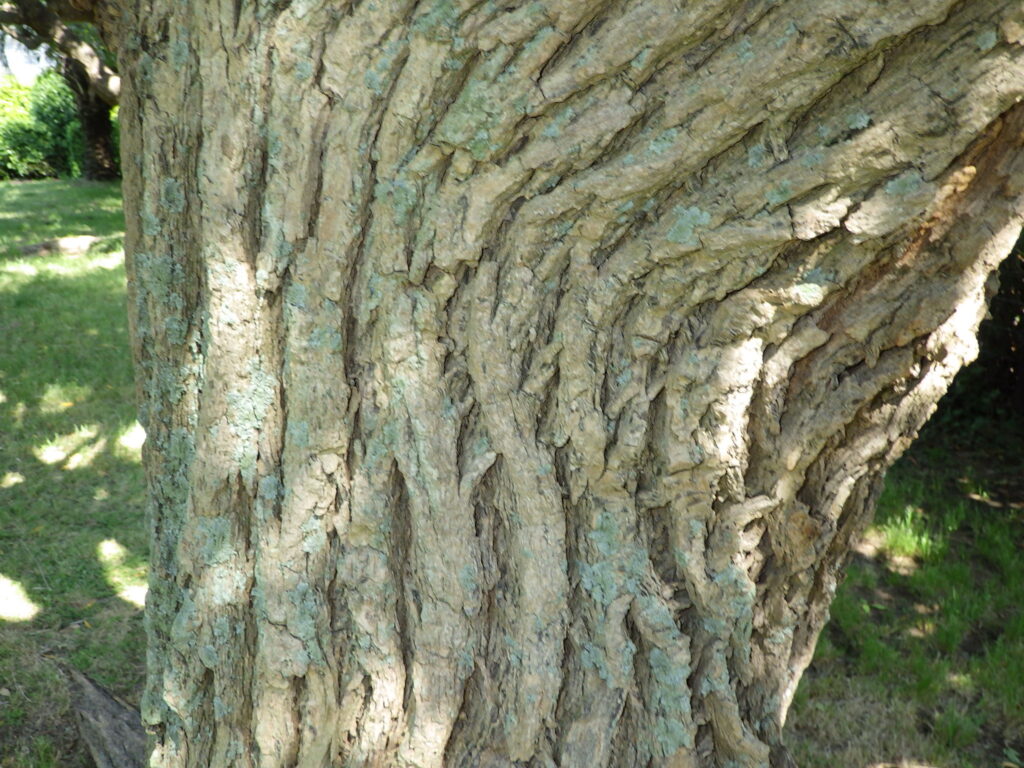
Is the coral tree (Erythrina variegata) actually an invasive species in Okinawa?
Although the coral tree (Erythrina variegata) is widely distributed across Japan, India, Sri Lanka, Southeast Asia, Australia, and the Pacific Islands, there are various theories regarding its actual natural distribution. Even in areas like Okinawa, Japan, some websites explicitly state that it grows wild, but in reality, there are differing opinions. Why is this the case?
It's difficult to understand this by only reading Japanese literature, but it's explained in detail in reports from English-language research institutions that are read worldwide.
According to this, it is originally thought to be native to the area from India to Malaysia, but because it has been cultivated in tropical regions for a very long time, it is difficult to define its original distribution (Duenas-Lopez, 2022).
The coral tree (Erythrina variegata) is a multipurpose species, cultivated in many places for ornamental purposes, hedges, fences, supports, green manure, and fodder in agroforestry, thanks to the beauty of its large red flowers and colorful leaves.
Although no definitive historical records have been found regarding its distribution, particularly in Okinawa, Japan, a paper investigating the ecology of the coral tree (Erythrina variegata) treats it as a naturalized plant dating back at least to before the Meiji era (Nakamoto & Izawa, 2013). Furthermore, it states that "the timing and origin of the coral tree's introduction to Okinawa are unclear."
Considering these facts together, the claim that it was distributed since ancient times seems quite questionable.
It's a little sad, considering it's a plant representative of Okinawa, but there are many other Japanese plants and cultural elements like that, and I think it's fine to cherish current values.
Why did it become the prefectural flower of Okinawa?
The reason the coral tree became the prefectural flower of Okinawa Prefecture was that it received overwhelming support from the people of Okinawa in 1967 (winning 66,252 votes out of a total of 75,653 votes) (Nakamoto and Izawa, 2013).
Okinawa Prefecture explains that the reason is that "the deep red flowers are fitting to symbolize tropical Okinawa and have a great effect as a tourist resource, and the trunk wood is used as a material for lacquerware, giving it high economic value."
Furthermore, it was believed that when the coral trees bloomed profusely, that year would be a year of many typhoons and natural disasters (drought) (Saito et al., 2019), and it seems that they were also used as a marker to predict such disasters. However, although this is a legend, there is no definitive research on whether it can actually predict disasters. In the lyrics of THE BOOM's song "Shima Uta," the word "storm" is sung in reference to the Battle of Okinawa.
Meanwhile, on the mainland, the coral tree can also be found on the Shodon coast of Kakeroma Island in the Amami Islands of Kagoshima Prefecture, and it is believed to have been planted for the sake of trade with Ryukyu. The reason given is that trading ships would enter the inlet drawn by the bright red flowers of the coral tree.
Considering this, although I previously said it dates back to at least the Meiji era, the history of the Japanese coral tree (Deigo) in Japan (Ryukyu) may go back even further. This is another area where research is lacking.
What is the structure of a flower?
The coral tree (Erythrina variegata) blooms in Japan from March to May. The flowers are butterfly-shaped, like those found in the legume family, but inverted, with the standard petal (the single, wide petal at the top of the butterfly-shaped flower) spreading downwards. The stamens and pistil, excluding the anthers, are red, clearly elongated, and extend sideways from the top.
In Japan, the flowering period for Kaikouzu is from June to September. The flowers are butterfly-shaped, but they are inverted with the standard petal spreading downwards. The stamens and pistils, excluding the anthers, are white, distinctly short, and point downwards.
The coral tree (Sangoshitou) blooms in Japan from June to September. Its standard petal is closed, giving it a slender shape.
Although they share the same flower color and basic legume structure, their actual shapes differ significantly. Why do these differences exist?
This is thought to be the result of each species evolving to suit the animals that visit flowers in its specific environment.
Do coral trees bloom for birds, bats, and bees?
What kinds of animals visit the flowers of the coral tree?

Studies in India, its place of origin, have confirmed that nine bird species feed on its nectar (Rangaiah et al., 2004).
Because of their color vision, only a limited number of insects can see red, while birds are known to be strongly attracted to it. Therefore, it is thought that the colors of flowers have evolved to suit the color vision of birds.
It is also known that the flowers bloom in the morning and secrete nectar only during the day. Based on these facts, it can be considered that these are ornithophilous flowers, primarily pollinated by various types of diurnal birds.
Other features, such as the horizontal inflorescence and the simple flower tube that makes nectar and stamens easily visible, are not particularly specialized, but rather adaptations that make it easier for birds with shorter beaks to visit.
While it is common in the Old World genus Erythrina for species like the coral tree (Erythrina variegata) to be pollinated by passerine birds (which include many small birds) (Bruneau, 1997), it is considered rare among legumes.
However, research in Okinawa Prefecture has revealed something different (Nakamoto & Izawa, 2013).
Approximately 60% of the blooming flowers had their nectar depleted by daytime visitors, such as the Japanese white-eye (Zosterops japonicas), while of the remaining 40%, 30% of the flowers had their nectar depleted by nocturnal visitors, such as the ring-necked flying fox (Pteropus dasymallus).
Furthermore, it has been confirmed that invasive species such as the European honeybee and the white-headed bee also visit the flowers.
These facts demonstrate the versatility of the coral tree. While it was originally pollinated by only a few birds in its native habitat, it had the potential to attract a variety of animals to suit the environment in which it was introduced.
If the coral trees in Okinawa are cultivated, it suggests they have a high adaptability to establish new pollination relationships.
Did the ancestor of the coral tree adapt to hummingbirds in the New World?!
In the coral tree, the standard petal is closed and slender. This is the result of a change from its original form, where the butterfly-shaped flower was inverted and the standard petal spread downwards, similar to the coral tree. Why does it have this shape?
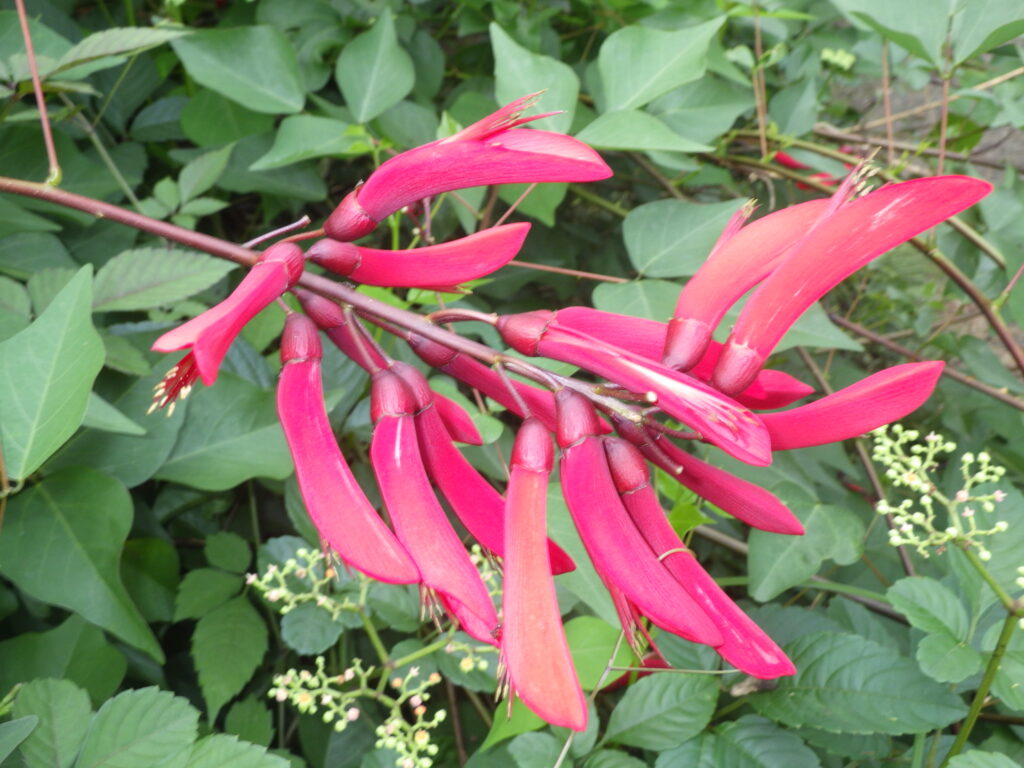
The closed, slender shape of this flag petal is derived from its parent, Herbacea. In fact, Herbacea's pollen was originally carried by a bird called the Red-throated Hummingbird (Bruneau, 1997).
Hummingbirds have long, slender beaks and tongues, and it is thought that this shape is an adaptation.
Furthermore, to make it easier for hummingbirds to feed on the nectar while hovering, the inflorescence is located on a long stem, supported by leaves, and stands perpendicular to the ground. It is also thought that the sugar content has been increased to appeal to hummingbirds, who love nectar.
The ancestors of the Herbacea expanded their distribution to North America, where there were hummingbirds that were more efficient at dispersing pollen than those found on the Eurasian continent.
Therefore, in order to adapt to hummingbird pollination, the shape of the flower and the structure that supports it changed, evolving specifically for hummingbirds. Moreover, this change occurred in other locations besides the ancestor of Herbacea, so although not discussed here, similar species with similar flowers can now be observed at different locations.
With this background, the coral tree, a horticultural variety that traveled through South America, North America, and Australia, is cultivated all over the world, appreciated for its red flowers and suitable characteristics for gardening. The fact that it is cultivated in Japan, where there are no hummingbirds, is quite dramatic.
The Kaikouzu remained unchanged even in the New World!?
Finally, I'd like to think about the flowers of the silkworm.
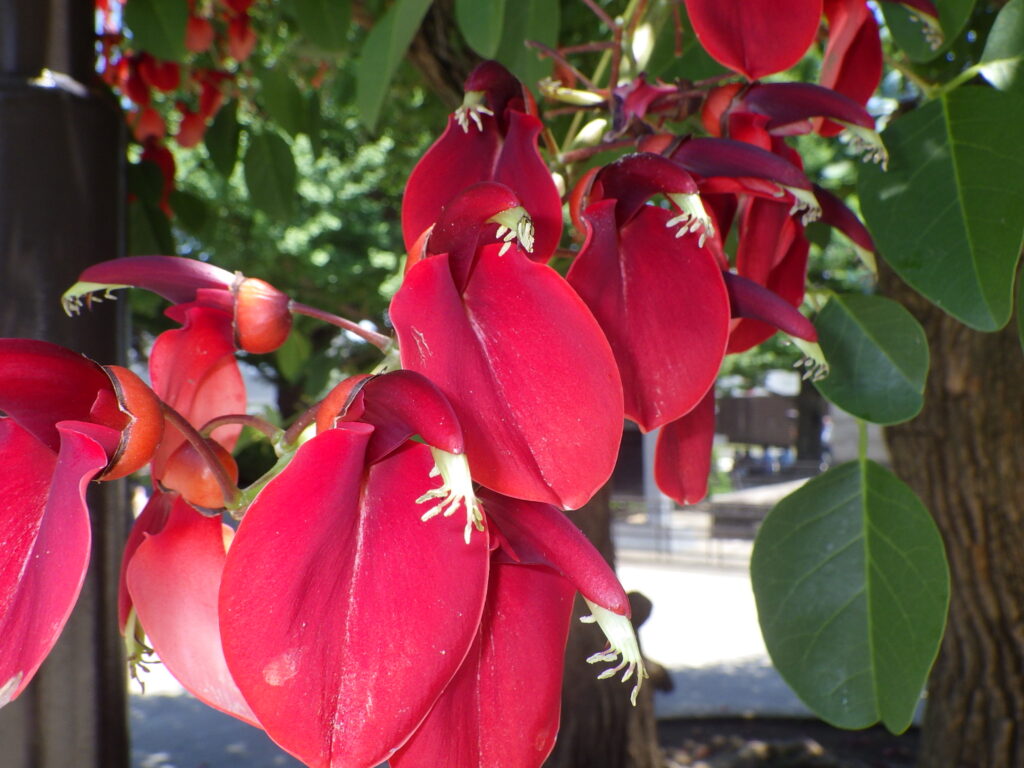
The coral tree (Erythrina variegata) is native to South America. Despite hummingbirds being present in the area, its flower shape tends to resemble that of the coral tree (Erythrina variegata). Why is this?
While the exact reason is unclear, it's thought that for some reason, such as a scarcity of hummingbirds in their habitat, they became dependent not only on hummingbirds but also on small passerine birds like the coral tree.
Studies have shown that small passerine birds actually visit the flowers (Bruneau, 1997). Furthermore, it has been found that hummingbirds such as Calypte anna also visit. This suggests that the flowers may have an intermediate morphology that can accommodate both, rather than specializing in one or the other.
The shape of the stamens, pistils, and keel petals of the butterfly-shaped flowers differs from those of the coral tree, and this difference may seem to reflect these characteristics.
However, another study conducted in Argentina and Uruguay yielded different results. While four species of hummingbirds did indeed visit the flowers and pollinate them, bees, including bumblebees, wasps, and honeybees, also visited them (Galetto et al., 2000).
While the presence of European honeybees, which are not native to the Americas, is not particularly relevant, the fact that Hymenoptera bees visited the site is interesting.
Corydalis fuscipes is considered to be the most primitive species within the Corydalis genus. Researchers speculate that the ancestors of the Corydalis genus were originally insect-pollinated, and that Corydalis fuscipes may be in an intermediate stage, utilizing both insect and bird pollination.
Perhaps the difference in flower shapes is related to this.
The fruit is a legume, and the seeds are dispersed by ocean currents or water currents?
All species in the genus Coral Tree have legumes, with seeds (beans) inside the pod. In Coral Tree 'Kaikouzu', the pod is 10-15 cm long and 1-2 cm wide, brown in color, and contains 8-10 seeds, which are chestnut brown in color.
While the seed dispersal of Coral Trees and Silkworms is not well understood, Coral Trees are thought to be dispersed by ocean currents or water currents because they have buoyant seeds (Duenas-Lopez, 2022). In fact, in Hawaii, seeds have been observed along the coast and ocean currents, but it appears that dispersal is complete within Hawaii and that they cannot travel very far.
References
Bruneau, A. 1997. Evolution and homology of bird pollination syndromes in Erythrina (Leguminosae). American Journal of Botany 84(1): 54-71. ISSN: 0002-9122, https://doi.org/10.2307/2445883
Duenas-Lopez, M. 2022. Erythrina variegata (Indian coral tree). CABI Compendium. https://doi.org/10.1079/cabicompendium.22055
Galetto, L., Bernardello, G., Isele, IC, Vesprini, J., Speroni, G., & Berduc, A. 2000. Reproductive biology of Erythrina crista-galli (Fabaceae). Annals of the Missouri Botanical Garden 87(2): 127-145. https://doi.org/10.2307/2666157
Hayashi, Masayuki. 2014. 1100 Tree Leaves Identified Through Real-Life Scans. Yama-kei Publishers, Tokyo. 759pp. ISBN: 9784635070324
Mogi, Toru; Ota, Kazuo; Katsuyama, Teruo; Takahashi, Hideo; Shirokawa, Shiro; Yoshiyama, Hiroshi; Ishii, Hidemi; Sakio, Hitoshi; and Nakagawa, Shigetoshi. 2000. Flowers Blooming on Trees: Polypetalous Flowers (Vol. 2, 2nd edition). Yama-kei Publishers, Tokyo. 719pp. ISBN: 9784635070041
Nakamoto, Atsushi & Izawa, Masako. 2013. Visitor communities of Erythrina variegata planted on Okinawa Island and their diurnal variations. Conservation Ecology Research 18(2): 111-119. https://doi.org/10.18960/hozen.18.2_111
Rangaiah, K., Raju, AS, & Rao, SP 2004. Passerine bird-pollination in the Indian coral tree, Erythrina variegata var. orientalis (Fabaceae). Current Science 87(6): 736-739. https://www.jstor.org/stable/24109348
Saito, Saya; Nakamura, Shinya; Kimura, Takumi; and Sekiya, Naoya. 2019. Disaster culture related to typhoons in Okinawa Prefecture: A comparison with Kagoshima Prefecture and Tokyo. Journal of the Japan Society for Regional Safety 35: 295-304. https://doi.org/10.11314/jisss.35.295
Tsuchihashi, Yutaka. 2013. Handbook of Tropical Flowers Found in Japan. Bun-ichi Sogo Shuppan, Tokyo. 176pp. ISBN: 9784829981139
Wu, ZY, Raven, PH, & Hong, DY (Eds.). 2010. Flora of China (Vol. 10 Fabaceae). Science Press, Beijing, and Missouri Botanical Garden Press, St. Louis. ISBN: 9781930723917
Source
This article is a significantly expanded version of a piece originally published in the following book.