Rhaphiolepis indica, Rhaphiolepis umbellata, and Rhaphiolepis ternata all belong to the genus Rhaphiolepis in the family Rosaceae. They naturally grow on coastlines, but are frequently seen planted in urban areas. However, the classification of the genus Rhaphiolepis is complex even at the species level, and since there are varieties and cultivars for each of the three species mentioned above, it can be difficult for the average person to distinguish between them. While the three species mentioned above can be distinguished by leaf shape and flower color, the variations can be continuous, making clear distinction difficult. In addition, various other varieties and cultivars, such as Rhaphiolepis indica var. japonica, are known. This article will explain the classification and morphology of the genus Rhaphiolepis.
What are Rhaphiolepis indica, Rhaphiolepis umbellata, and Ternstroemia gymnanthera?
Rhaphiolepis indica var. umbellata, also known as Sharinbai, is an evergreen shrub distributed in Honshu, Shikoku, Kyushu, the Ryukyu Islands, and the Ogasawara Islands of Japan; as well as in Korea, China, Taiwan, and Southeast Asia, growing near the coast (Kanagawa Prefectural Flora Survey Association, 2018). In Japan, it is cultivated as a park tree, street tree, and garden tree. Research institutions in China and the UK use the scientific name Rhaphiolepis umbellata (Wu et al., 2003; RBG Kew, 2024).
Rhaphiolepis indica var. umbellata f. ovata, also known as round-leaved Rhaphiolepis, is a variety of Rhaphiolepis indica, an evergreen shrub that grows near the coast. In Japan, it is cultivated as a park tree, street tree, and garden tree. According to research institutions in China and the UK, its scientific name is Rhaphiolepis umbellata f. ovata (Wu et al., 2003; RBG Kew, 2024).
Rhaphiolepis indica var. indica, also known as red-flowered Rhaphiolepis, is an evergreen shrub distributed in southeastern China, Taiwan, Vietnam, Cambodia, Laos, and Thailand, growing on slopes, roadsides, and in thickets along rivers. In Japan, it is cultivated as a park tree, street tree, and garden tree. Although its name includes "Mokkoku," it is unrelated to the Japanese holly (Mokkoku).
Both belong to the genus Rhaphiolepis in the family Rosaceae, and while they naturally grow on coastlines, they are frequently seen planted in urban areas as well.
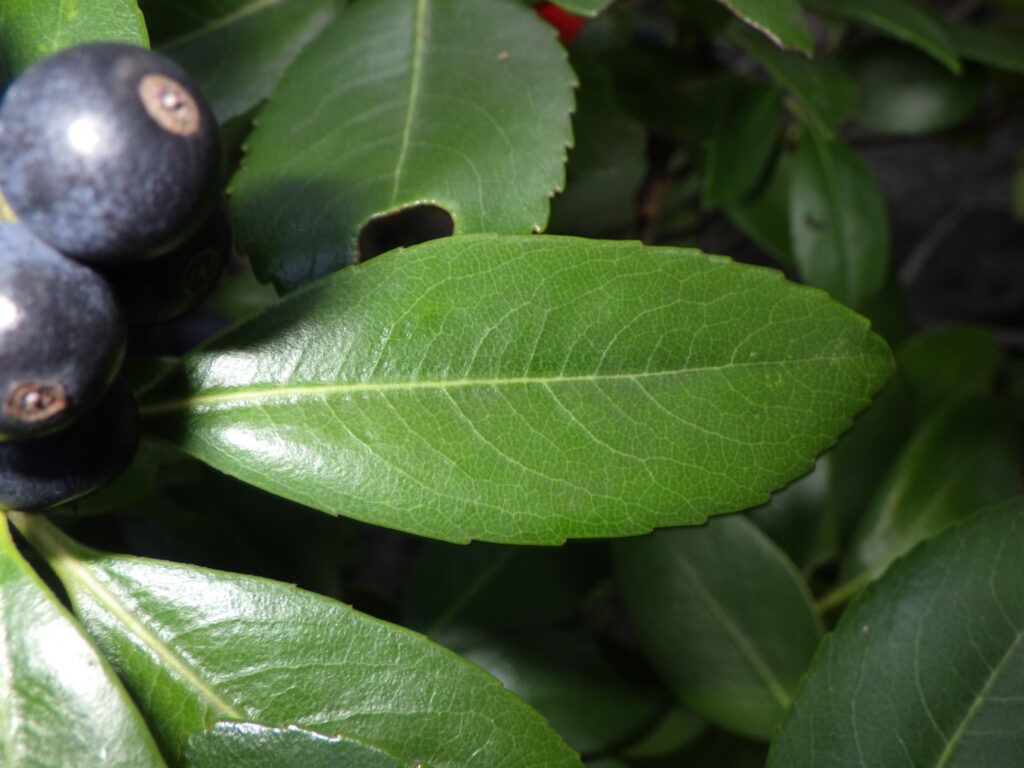
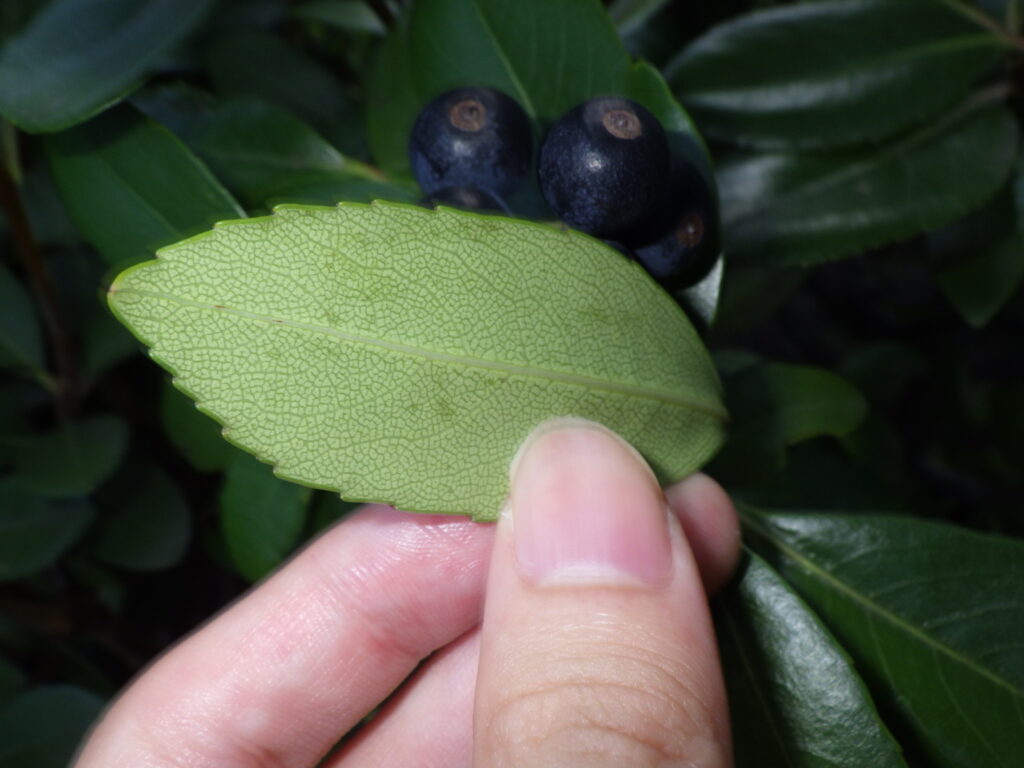
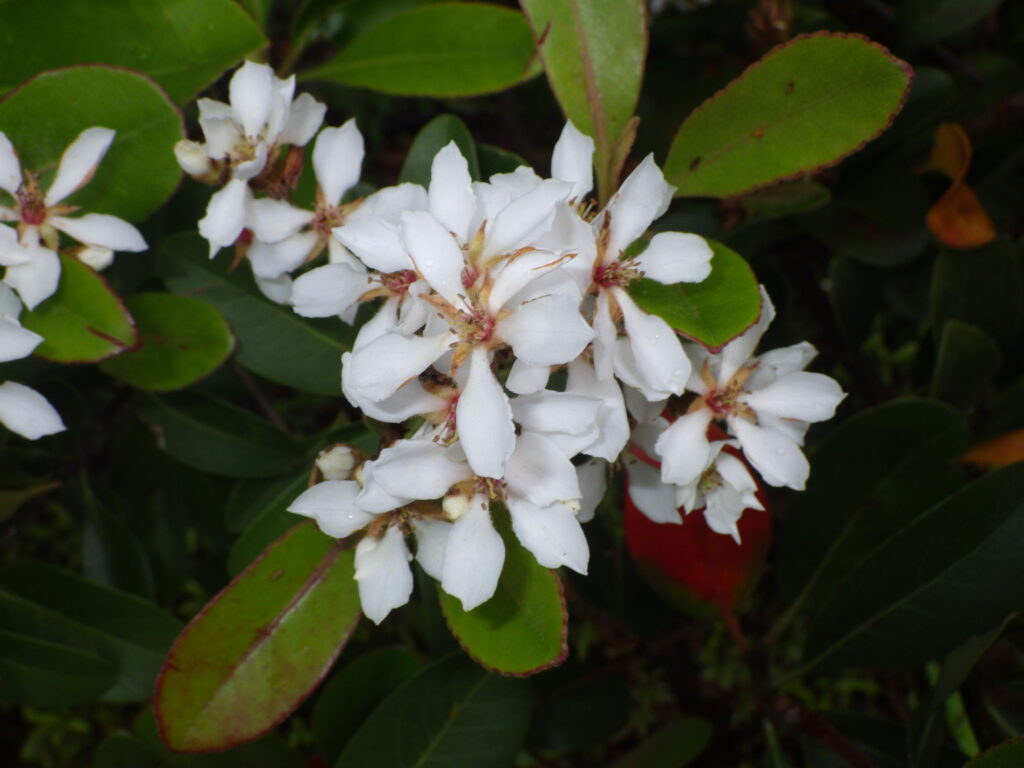
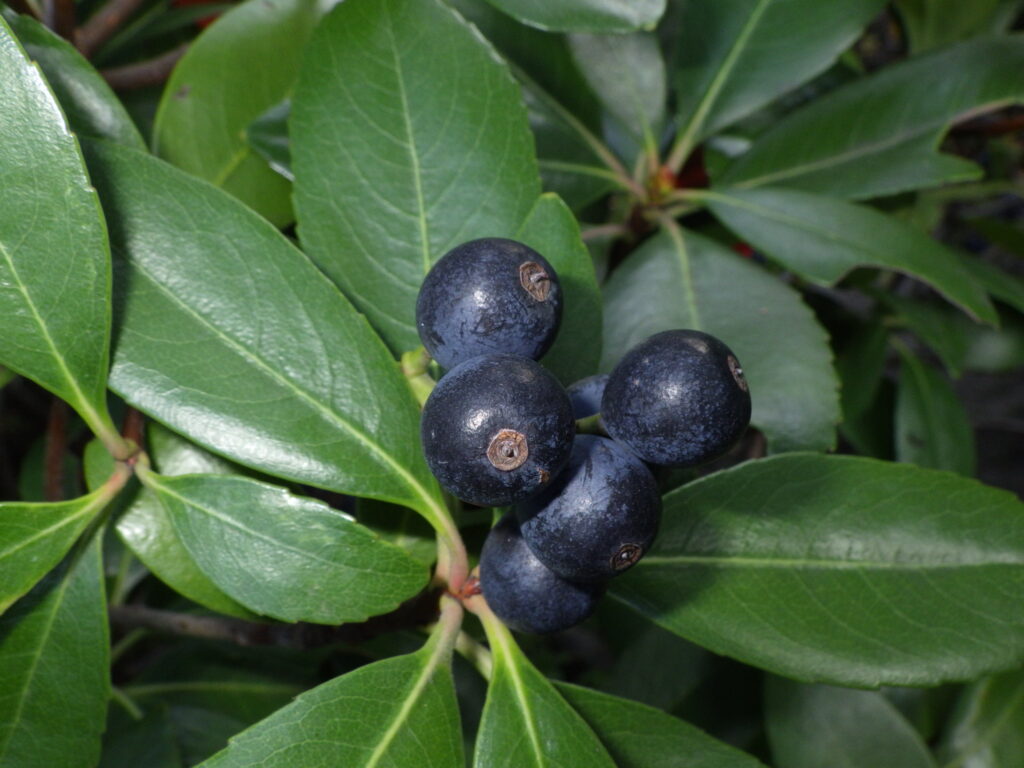
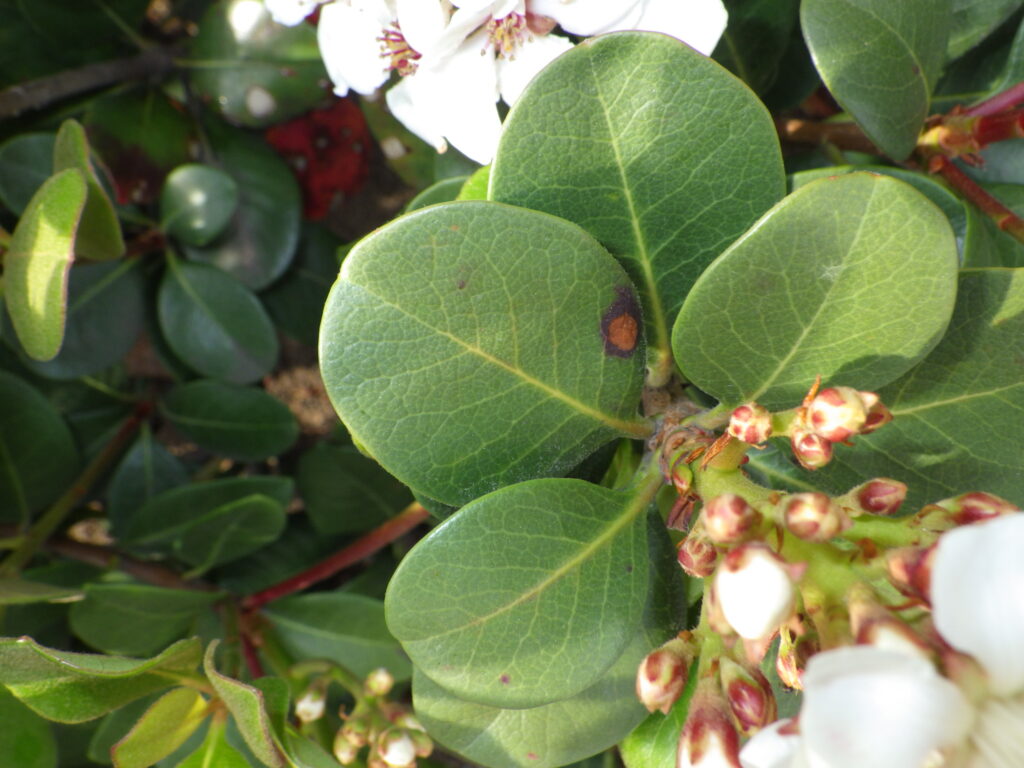
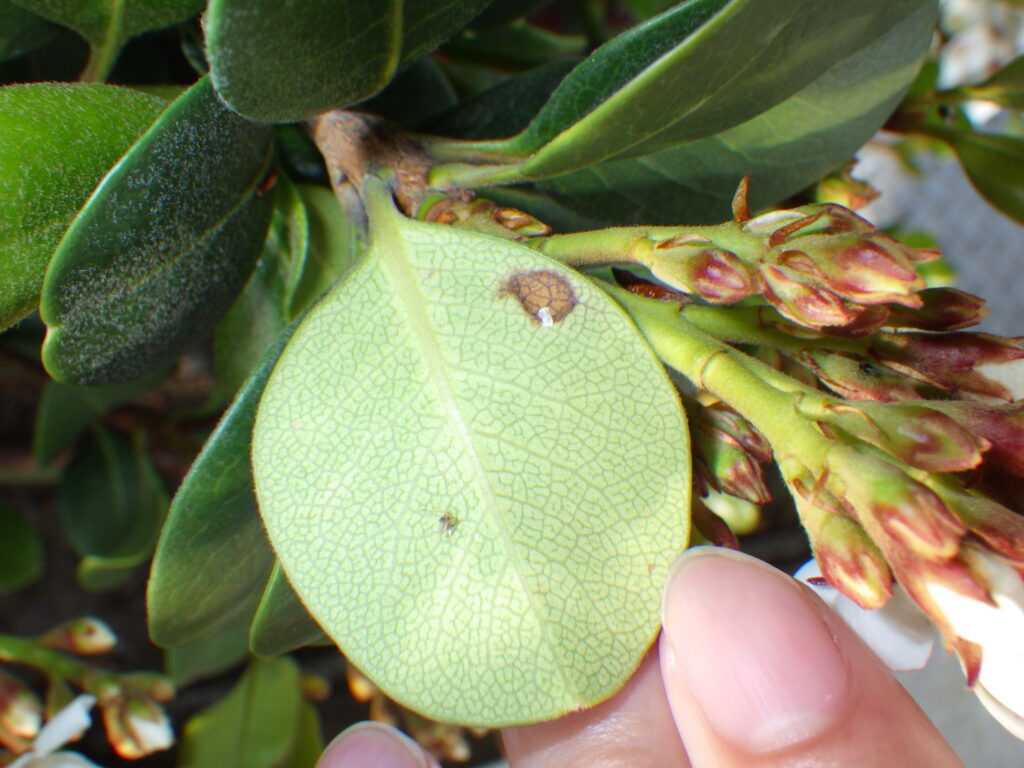
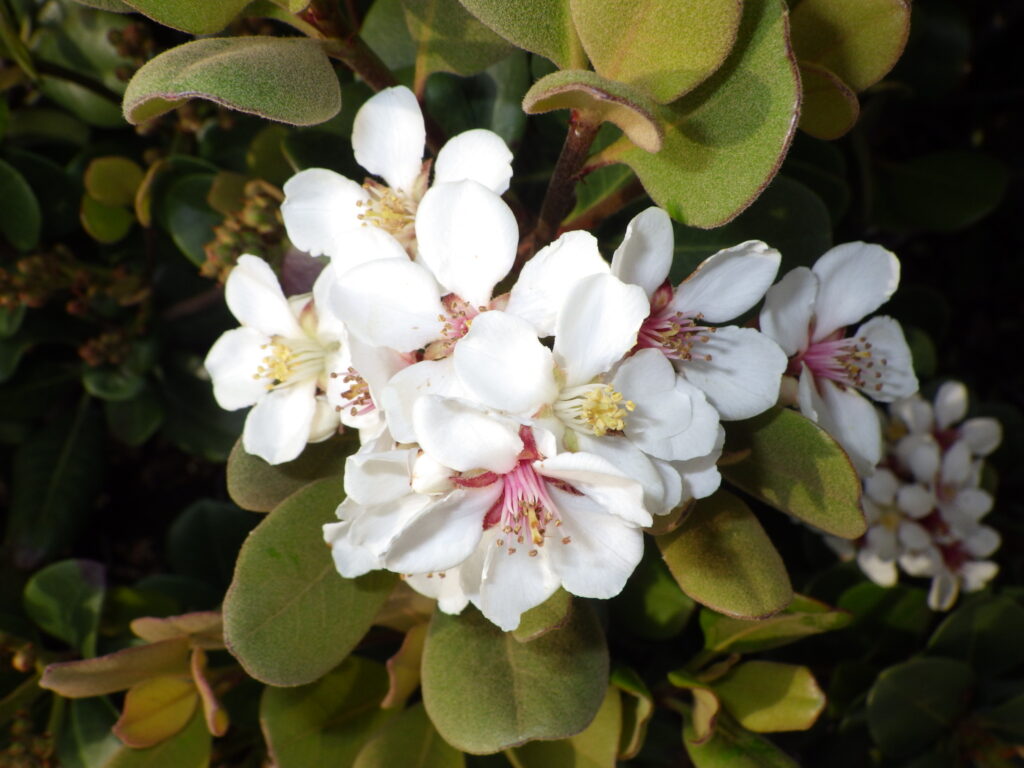
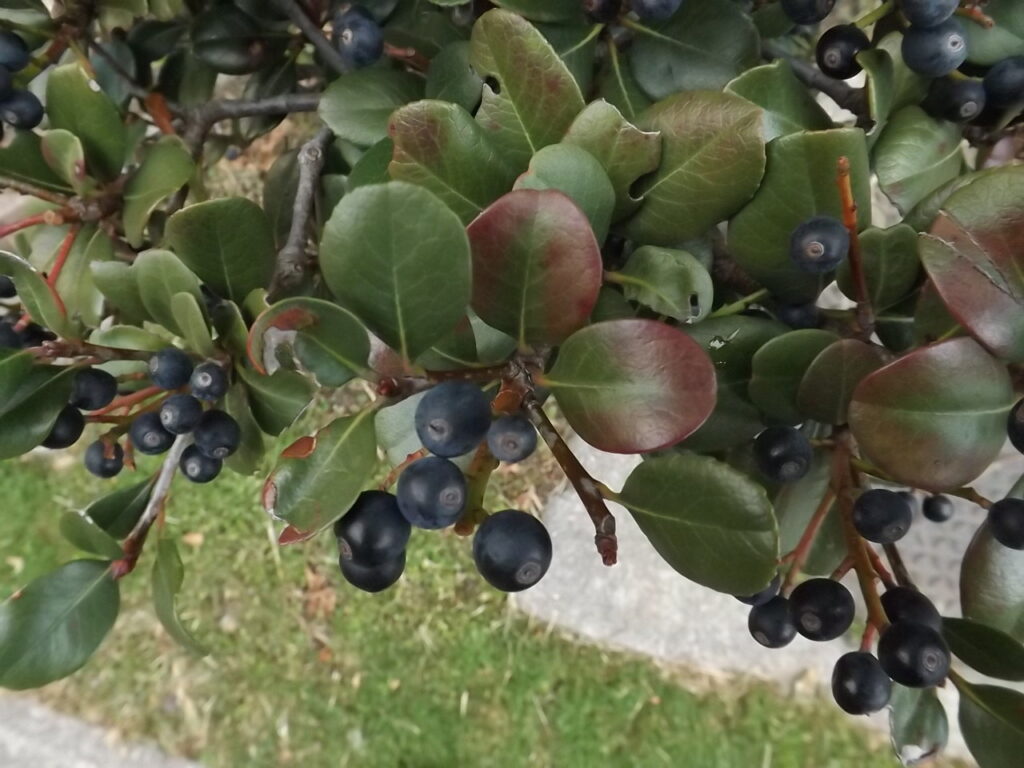
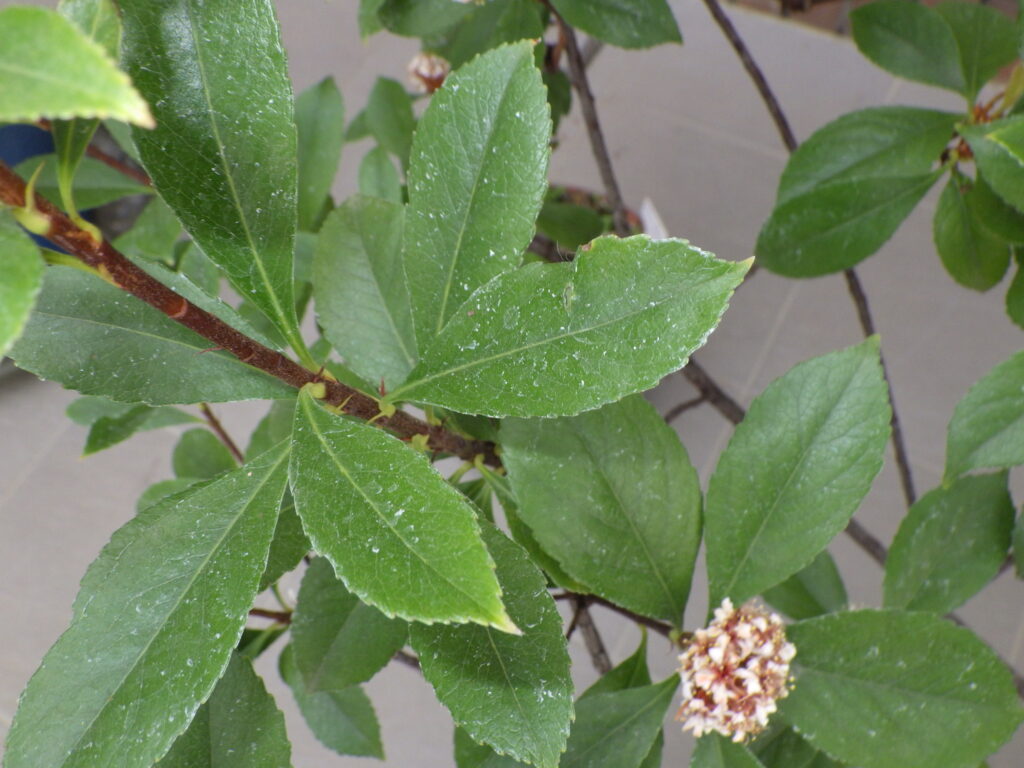
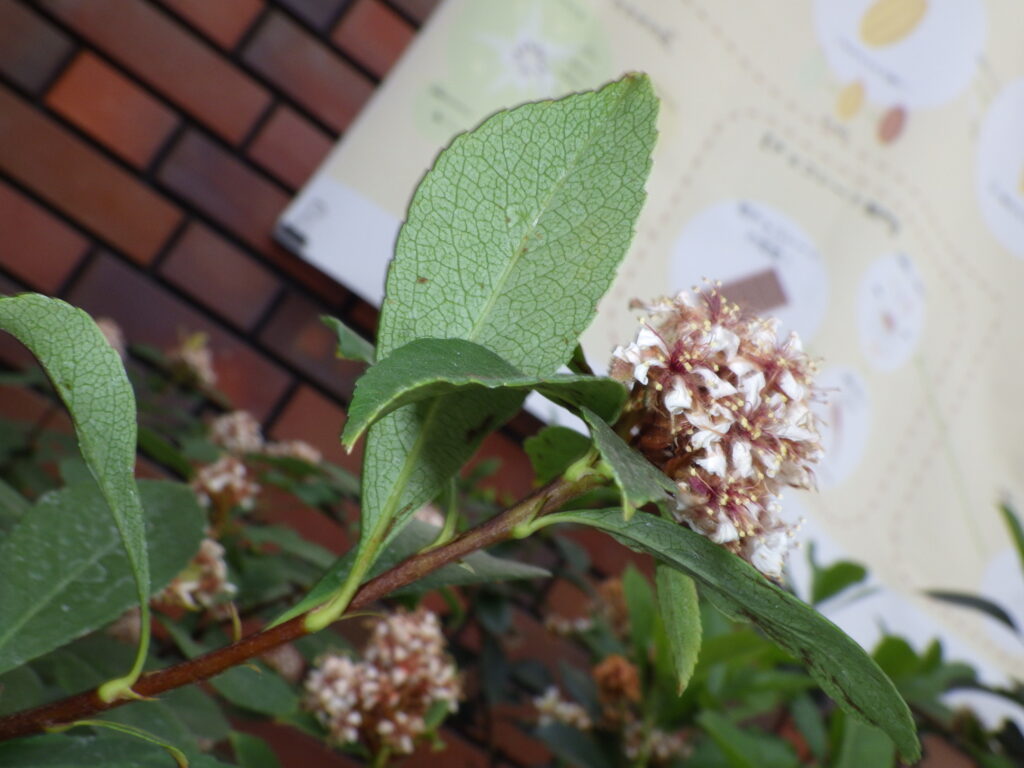
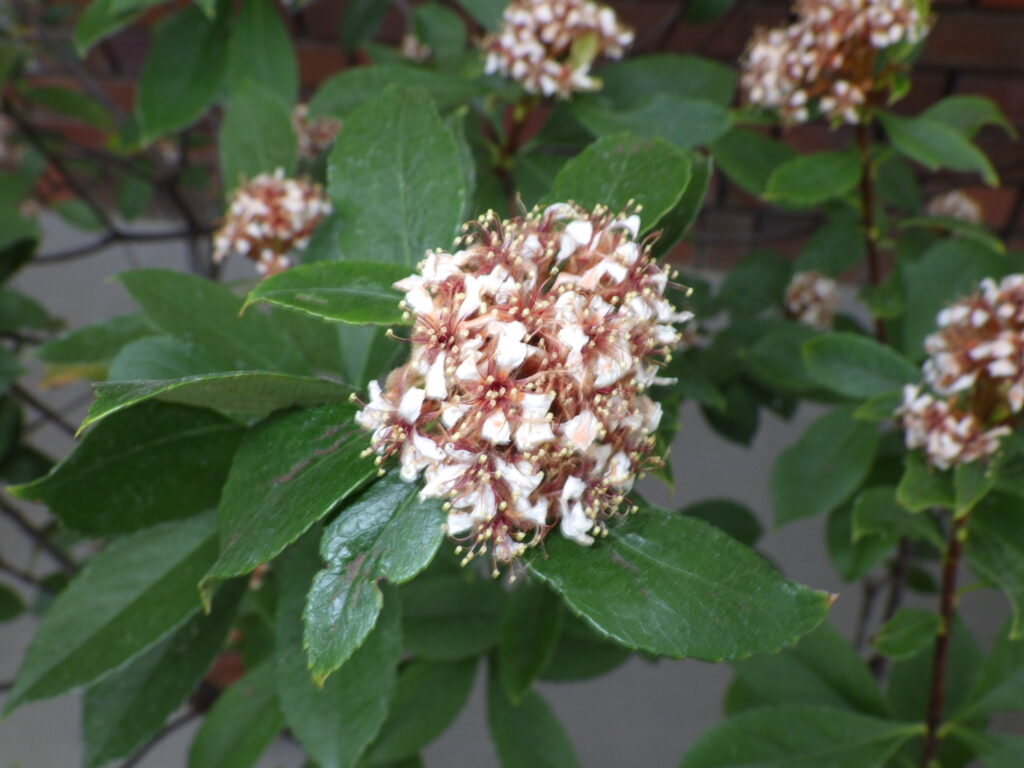
This evergreen plant is characterized by its prominent, reticulated lateral veins on the underside of its leaves. In spring (May-June), it produces a mass of five-petaled flowers. It also bears distinctive pear-like fruits, about 1 cm in diameter, that ripen to a dark purple color in October-November.
However, the classification of the Rhaphiolepis genus is complex even at the species level, and since there are varieties and cultivars for each of the three species mentioned above, it would be difficult for the average person to distinguish between them.
Furthermore, even among experts, there are differences in opinion between Japan and other countries, leading to different scientific names, which only adds to the complexity.
What are the differences between Rhaphiolepis indica, Rhaphiolepis umbellata, and Ternstroemia gymnanthera?
This time, let's consider three species: Rhaphiolepis indica, Rhaphiolepis umbellata, and Ternstroemia gymnanthera.
First, as can be seen from their scientific names, the three species can be broadly classified into Rhaphiolepis indica, Rhaphiolepis umbellata, and Ternstroemia gymnanthera, according to a Chinese botanical guide (Wu et al., 2003; Lin, 2019).
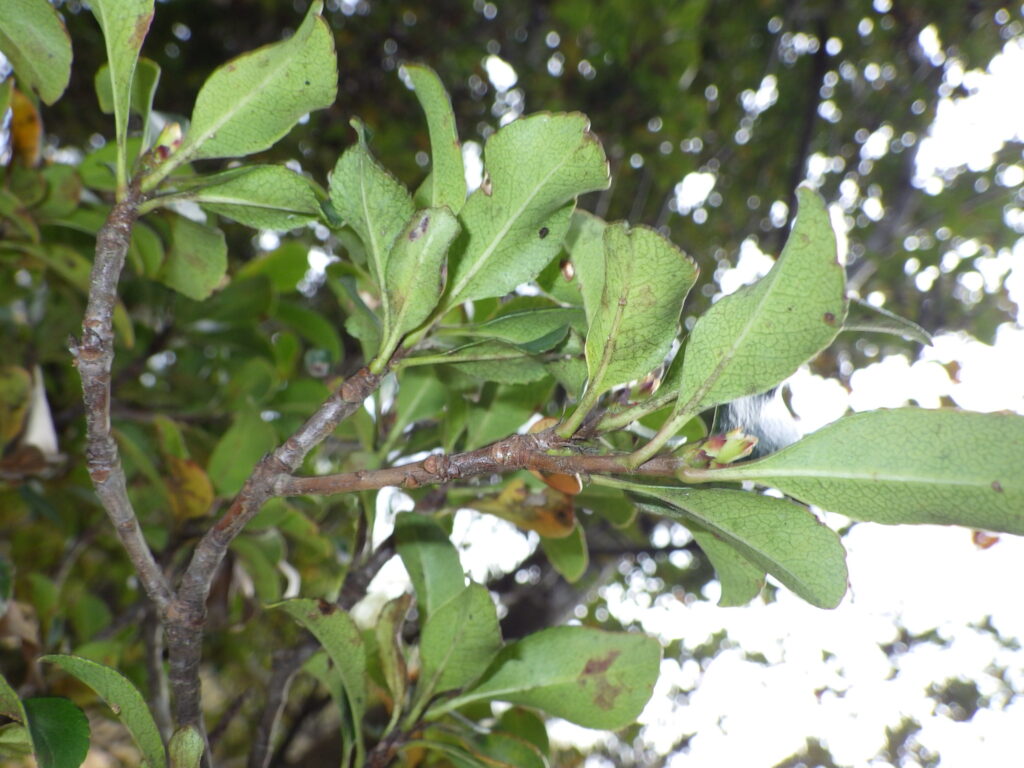
Specifically, one difference is that Rhaphiolepis indica and Rhaphiolepis umbellata have two types of leaves, serrated and entire, while Ternstroemia gymnanthera has only one type of leaf, serrated.
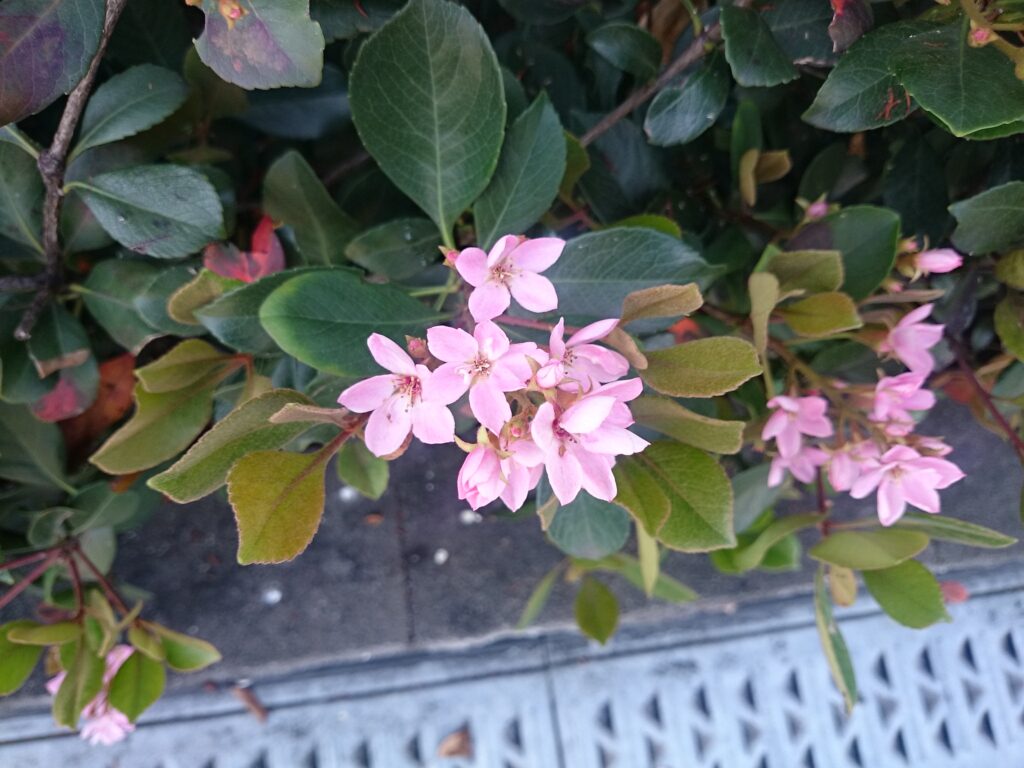
Furthermore, Japanese botanical guides state that while Rhaphiolepis indica and Rhaphiolepis umbellata have white flowers, Ternstroemia gymnanthera has pink (light red) flowers.
However, since Chinese botanical guides describe *Tenkokumodoki* as having "white or pink" flowers, it is likely that white-flowered varieties and cultivars exist in its native habitat.
Furthermore, some botanical guides suggest that some of the pink-flowered varieties are hybrids of Rhaphiolepis indica and Ternstroemia gymnanthera, so it's possible that some of the plants cultivated in Japan are hybrids.
There are only slight differences between Rhaphiolepis indica and Rhaphiolepis umbellata, at the "variety" level.
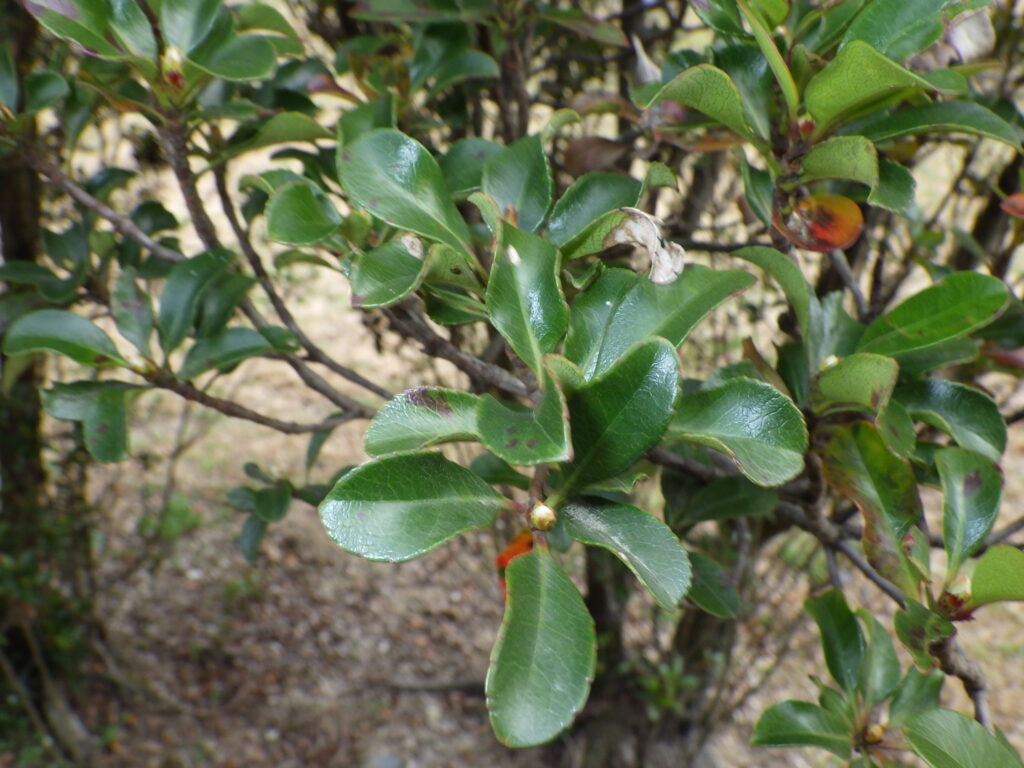
While Rhaphiolepis indica has long leaves and can grow into a tall tree, Rhaphiolepis umbellata has round leaves and tends to be shorter.
Because these mutations occur in a continuous sequence, they may not always be clearly distinguishable.
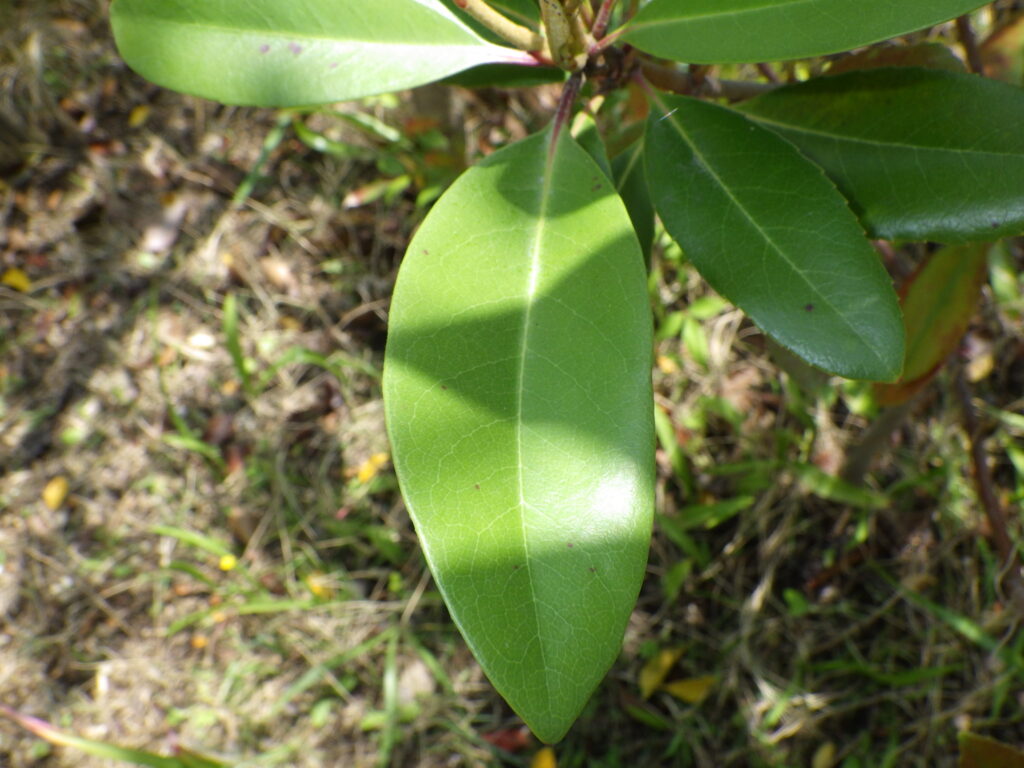
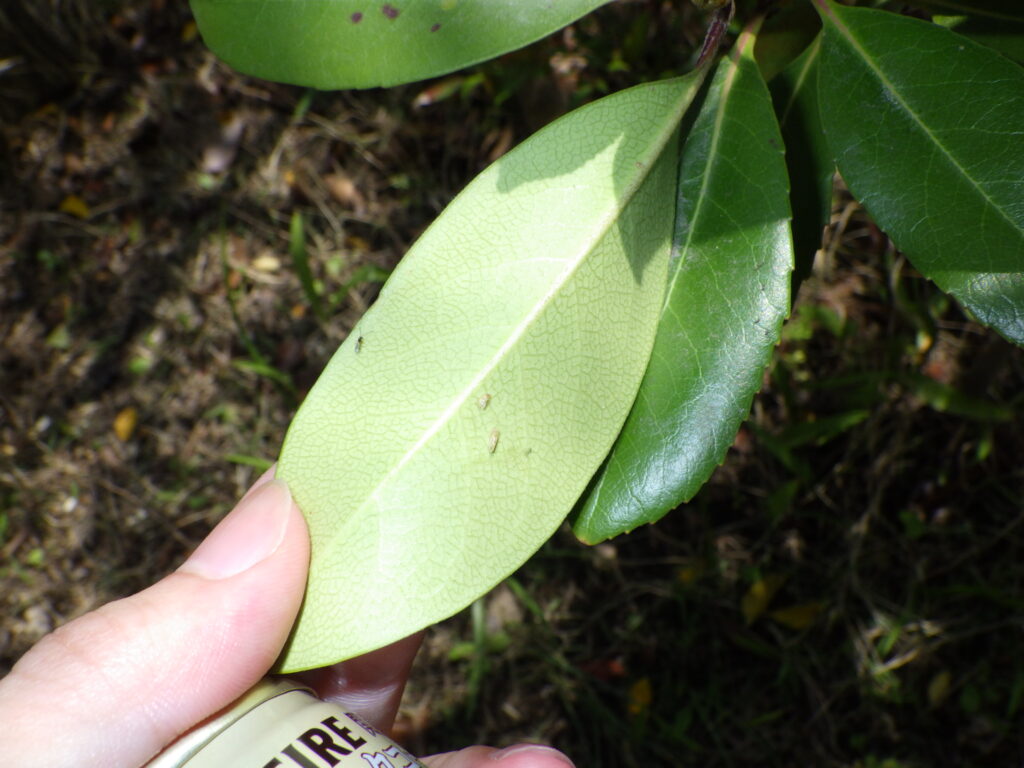
Are there any other similar species? What are the differences between this and Rhaphiolepis indica?
Rhaphiolepis indica var. umbellata f. minor (known as Rhaphiolepis umbellata f. minor overseas) is a dwarf variety that does not grow wild and is only known as a cultivated specimen. It is generally small, with tiny leaves about the size of a fingertip (Ohashi, 1988). The flowers may sometimes be pink.
Rhaphiolepis indica var. liukiuensis (known as Rhaphiolepis umbellata var. liukiuensis overseas) is a variety of Rhaphiolepis indica with long, narrow leaves, distributed in Okinawa.
Rhaphiolepis indica var. tashiroi (also known as Rhaphiolepis indica var. tashiroi overseas) is also called Shima-sharinbai. It is distributed in Japan (Ogasawara Islands) and Taiwan. Its leaves are narrowly elliptic to lanceolate-elliptic with blunt serrations, and its bracts are lanceolate, about 7 mm long (unlike Rhaphiolepis indica var. tashiroi, which has ovate to oblong, rarely obovate, or oblong-lanceolate leaves with finer blunt serrations, and its bracts are narrowly lanceolate, 2-7 mm long).
In Japan, this tree may be confused with other evergreen tree species that are commonly planted in parks. Please see our separate article for the differences between these species.
References
Hayashi, Masayuki. 2019. Tree Leaves: Expanded and Revised Edition - Identifying 1300 Species Through Real-Life Scans. Yama-kei Publishers, Tokyo. 824pp. ISBN: 9784635070447
Kanagawa Prefecture Flora Survey Association. 2018. Kanagawa Prefecture Flora 2018 (Electronic Edition). Kanagawa Prefecture Flora Survey Association, Odawara. 1803pp. ISBN: 9784991053726
Ohashi, Hiroyoshi. 1988. Classification of *Rhaphiolepis indica* species found in Japan. Journal of the Botanical Society of Japan 63(1): 1-7. ISSN: 0022-2062, https://doi.org/10.51033/jjapbot.63_1_8107
RBG Kew. 2024. The International Plant Names Index and World Checklist of Vascular Plants. Plants of the World Online. http://www.ipni.org and https://powo.science.kew.org/
Wu, ZY, Raven, PH, & Hong, DY (Eds.). 2003. Flora of China (Vol. 9 Pittosporaceae through Connaraceae). Science Press, Beijing, and Missouri Botanical Garden Press, St. Louis. ISBN: 9781930723146