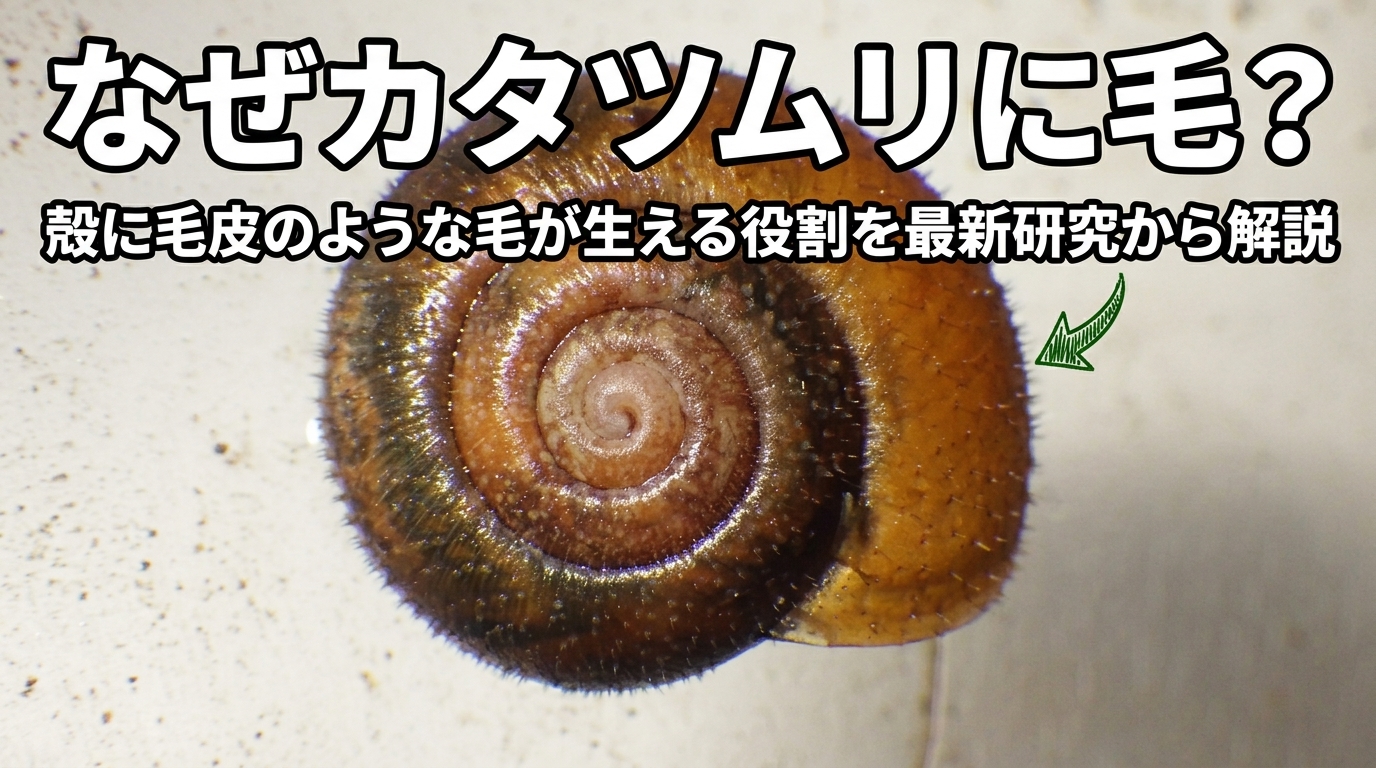
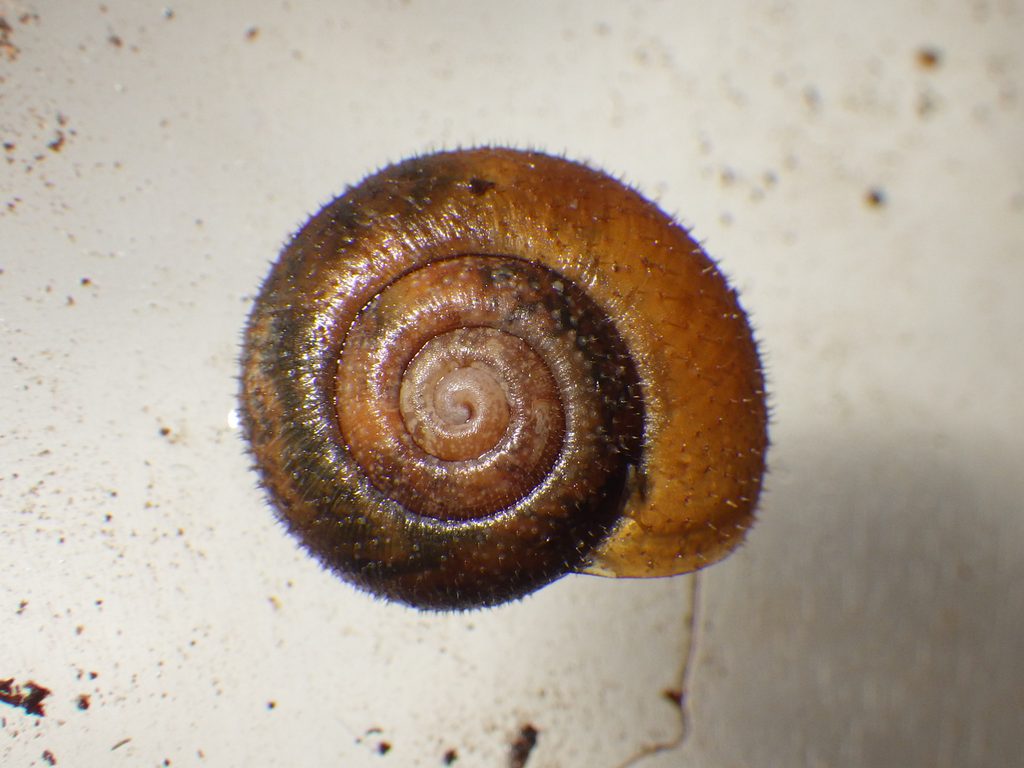
When we think of snails, we generally picture them slowly moving around with their coiled shells on their backs. But did you know that some species of snails have their shells covered in a dense layer of fine hairs?
At first glance, it looks as if the snail's shell is covered in fur. Why do snails have hair on their shells? Is it to help them live on damp leaves? Or is it to protect themselves from predators?
This question has been studied since 2005. Early research proposed the hypothesis that the hairs help the insects adhere to damp plant leaves. However, subsequent studies have suggested that the hairs may also increase the cost of movement.
Furthermore, in 2024, experimental results were published showing that the hairs on the snail's shell serve a defensive function against firefly larvae that prey on snails.
This article compares these research papers to explain why snail shells have hair and what is currently scientifically understood about it.
- What are snail hairs made of? They're not body hair, but part of the shell.
- A 2005 study explored the reason why snails grow hair.
- Snail hairs did not improve the adhesion of plants to leaves!?
- A 2024 study revealed the relationship between shell hairs and natural enemies.
- What is the purpose of the hairs on a snail's shell?
- Why don't all snails have hair?
- Summary: The role of snail hairs is not yet fully understood.
- References
What are snail hairs made of? They're not body hair, but part of the shell.
Hair-like structures are formed on the surface of the shell.
The hairs that grow on snail shells are different from the body hairs of mammals.
The shells of terrestrial snails are mainly composed of a hard, calcareous core and a thin layer of organic matter covering its surface. This outer layer is called the "periostracum," or "periostracum" in English.
The hair-like structures are formed as part of this shell. In other words, they are structures on the surface of the shell, not growing from the body's skin.
According to Pfenninger et al. (2005), these hairs are primarily composed of protein and require special tissues and mechanisms to form. The length and density of the hairs vary by species; some species appear to have shells that are hardly covered with hairs, while others give the impression of being bushy.
Hairy snails exist in multiple lineages.
Snails with hair on their shells are not limited to just one species.
The genus Trochulus, which is distributed in Europe and other regions, includes species known for having hairs on their shells. Moellendorffia diminuta, found on Amami Oshima Island in Japan, is another example of a terrestrial snail with long hairs.
Examples of snails found on the Japanese mainland include the genus *Nipponochloritis*, which includes *Aegista vulgivaga vulgivaga* and * Nipponochloritis pumila pumila* (Takeda & Nishi, 2015).
These species do not belong to the same taxonomic group. Pfenninger et al. (2005) suggest that the presence of hairy shells in multiple phylogenetically distant groups indicates that this characteristic may have arisen independently during the course of evolution.
So why have hairs, which are costly to form, been maintained throughout the course of evolution? To understand the reason, we first need to look at a 2005 study.
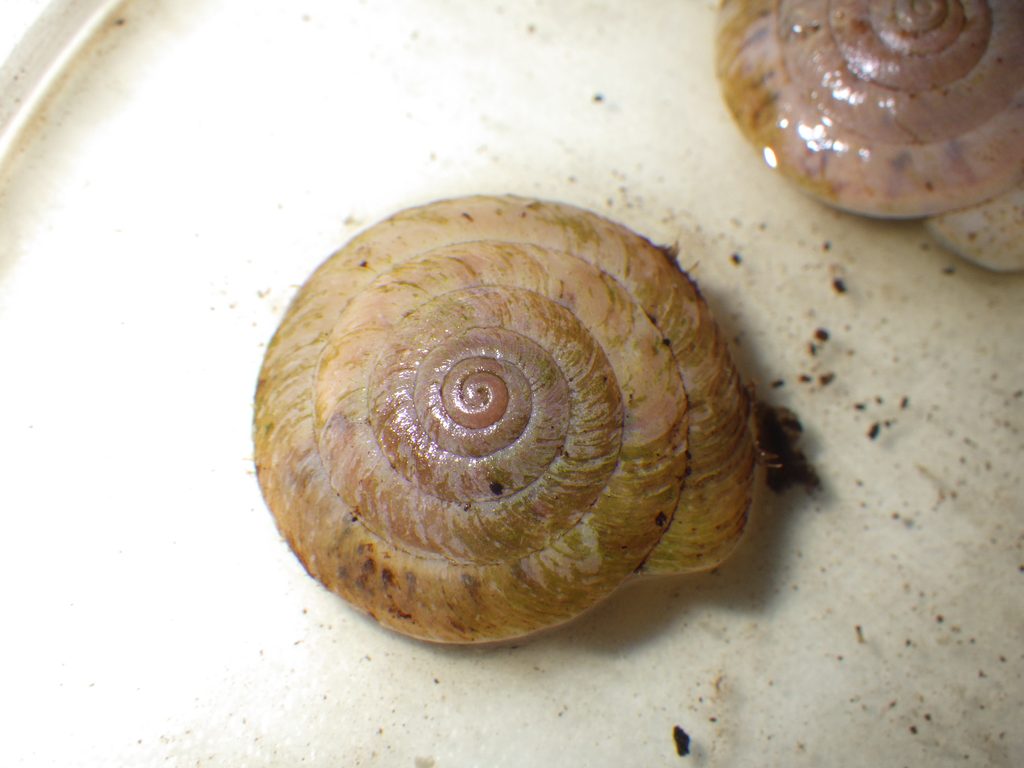
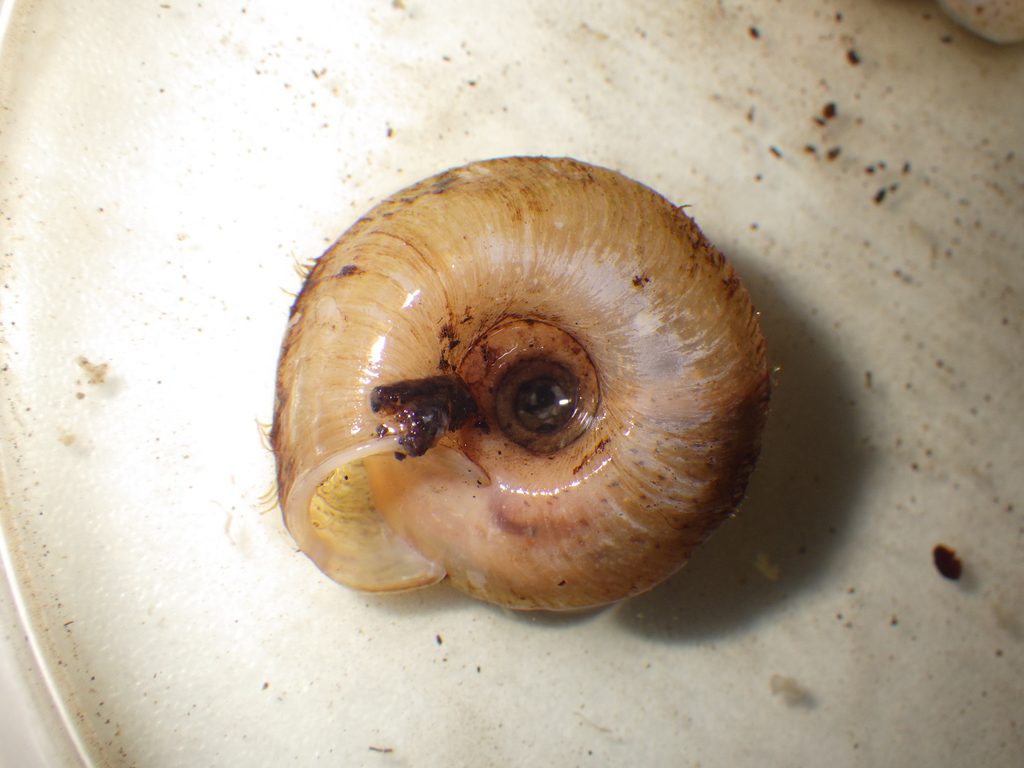
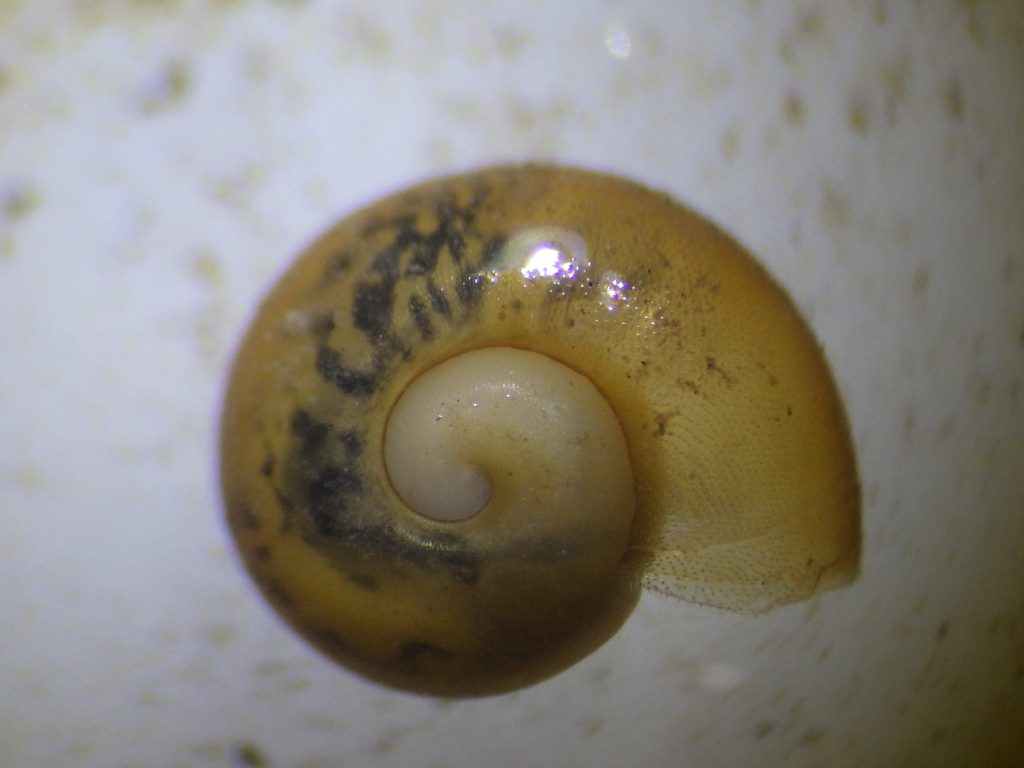
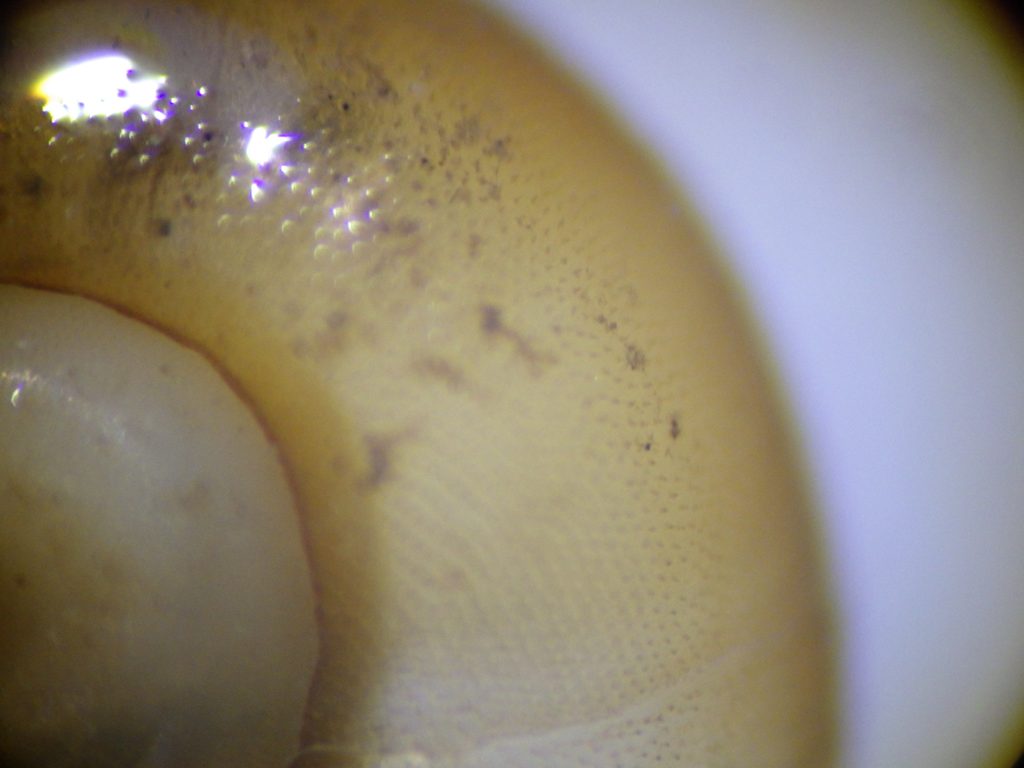
A 2005 study explored the reason why snails grow hair.
Hairy shells were associated with moist environments.
Pfenninger et al. (2005) investigated the relationship between the presence or absence of hairs on the shell and the habitat of snails of the genus Trochulus.
The study involved phylogenetic analysis using DNA information and comparative analysis of environmental conditions such as habitat humidity.
The results suggest that hairy shells may have been an ancestral feature in the group studied. Furthermore, it was found that the loss of hairs in the lineage was associated with a transition from a humid to arid environments.
These results suggest that the hairs on the shell may have provided some benefit in a humid environment.
However, simply knowing that a humid environment is related to the presence or absence of hair doesn't tell us what specific function the hair plays.
The researchers then proposed the hypothesis that the hairs on the shell might enhance its ability to adhere to damp plant leaves.
The presence of hairs makes it difficult for the shell to move from damp leaves.
In a 2005 study, the force required to move the shell on a wet leaf surface was measured, both with and without hairs on the shell.
Experiments showed that greater force was required to move the hairy shell on a wet surface. In other words, the presence of hairs made the shell more difficult to move on a moist surface (Pfenninger et al., 2005).
Following these results, the researchers revised their initial approach.
The initial hypothesis was that the hairs would weaken the effect of the water film, making movement in humid environments easier. However, experimental results showed the opposite trend.
The researchers then proposed an alternative explanation.
The hypothesis is that the hairs may benefit the snail by increasing its ability to adhere to damp plant leaves, preventing it from falling off while foraging.
Why is attachment to plant leaves important?
Snails, which live in humid environments, may become active when a film of water forms on the surface of leaves due to rain, fog, or dew.
Pfenninger et al. (2005) noted that snails of the genus Trochulus, which inhabit humid environments, use herbaceous plants with large leaves, including those of the genus Urtica, as foraging sites.
If a snail falls off a leaf, it must travel back to its feeding grounds. Since this travel takes time and energy, being able to remain attached to a leaf can be advantageous for the snail.
On the other hand, species that inhabit dry environments tend to utilize fallen, dead plants and other debris on the ground, and their ability to adhere to wet leaves may not necessarily provide the same benefits.
Thus, there is a certain consistency between the idea that the hairy shell is associated with a humid environment and that this makes attachment to leaves advantageous.
However, what is important about this study is that the researchers themselves clearly acknowledged the limitations of their hypothesis. It had not yet been proven whether the increased adherence to leaves due to the hairs actually increased the survival or reproductive success of the individuals.
Snail hairs did not improve the adhesion of plants to leaves!?
However, in 2020, the results contradicted the 2005 hypothesis.
Shvydka et al. (2020) investigated the effects of shell hairs on friction and adhesion in the terrestrial snails Trochulus hispidus, which has short hairs, and Trochulus villosulus, which has long hairs.
In this study, we focused on the presence and length of hairs on the shell, as well as the degree of surface wettability, to measure the force required to move the shell and the properties of adhesion.
The experiment revealed that the presence of hairs reduces adhesion, and it was also confirmed that Trochulus villosulus, which has longer hairs, tends to have lower adhesion compared to Trochulus hispidus, which has shorter hairs.
On the contrary, it was also confirmed that hair increases friction under humid conditions.
These results suggest that having hairs on the shell may actually have costs, such as increasing the force required for movement (Shvydka et al., 2020).
A 2024 study revealed the relationship between shell hairs and natural enemies.
The hypothesis that snail hairs adhere to damp leaves alone may not adequately explain why snail hairs have evolved.
This is where the research by Sato and Yoshikawa (2024) comes into play.
Researchers focused on the snail Moellendorffia diminuta, which has long, hairy shells, and the firefly larvae that prey on this snail.
Firefly larvae attach themselves to snail shells and prey on them.
The larvae of the Amami firefly, Pyrocoelia oshimana, which were the subject of the study, attach themselves to snail shells using a suction cup-like organ at the end of their abdomen.
After securing a stable position on the shell, the larva attacks the soft body parts of the snail.
In this type of predation, it is important to firmly attach the prey to the shell.
Researchers hypothesized that the hairs on the shell might prevent larvae from attaching themselves, thus serving as a defense mechanism for the snail.
The presence of hairs makes it difficult for predators to attach themselves to the shell.
In the experiment, the larvae of the Amami firefly were unable to adequately attach their adhesive organs to the shell of the snail *Lampyris noctiluca*, which has hairs on its shell. On the other hand, the larvae were able to attach to shells from which the hairs had been removed.
Furthermore, differences were observed in the defensive behavior of the snail *Lampyris noctiluca*, which shakes its shell to dislodge larvae.
In hairy *Lampyris noctiluca* snails, the defense success rate was 43.75%, compared to 5.56% in hairless *Lampyris noctiluca* snails. This difference was statistically significant (Sato & Yoshikawa, 2024).
These results suggest that the hairs on the shell not only change the shape of the surface, but also help prevent predators from attaching to the shell and assist the snail's own defensive behavior.
Does having long hair have any significance?
The researchers also noted that the hairs on the shell of the snail *Camponotus spp.* grow longer as it matures.
Since predators also change in body size and organ size as they grow, hair length may affect their ability to latch on.
However, the relationship between hair length and the developmental stage of the predator requires further investigation.
Furthermore, this study focused on specific snail and firefly larvae. It cannot be said that all hairy snails have the same level of protection against all predators.
Nevertheless, the 2024 study is an important finding that experimentally supports the explanation that the hairs on the shell help protect against predators.
What is the purpose of the hairs on a snail's shell?
Based on the research conducted so far, it is not possible to definitively determine the role of the hairs on the shell.
Current research can be summarized as follows:
Function to adhere to damp plants
Pfenninger et al. (2005) proposed the hypothesis that increasing the adherence of food to moist plant leaves could reduce the risk of it falling off during foraging.
However, a study by Shvydka et al. (2020) concluded that the presence of hairs does not increase adhesion, and may even increase the cost of movement, suggesting that improved adhesion may not be a real survival benefit.
Therefore, although this function was one of the promising research hypotheses, it cannot be considered an established explanation.
A function to protect oneself from predators.
Sato and Yoshikawa (2024) showed that the hairs prevent firefly larvae from attaching to the shell, thus aiding the snail's defensive behavior.
These results support the idea that the hairs on the shell serve a defensive function against specific predators.
However, it remains to be seen whether this method is effective against all types of predators, and whether it has the same effect on other hairy snails.
Other functions are also possible.
Shvydka et al. (2020) suggest that the hairs on the shell may be involved in water exchange and temperature regulation, and that other functions such as shell stability, defense against predators, and sexual selection should also be investigated.
- Regulation of water exchange (humidity control): For snails living in humid habitats, the hairs on their shells may have a function of controlling the water balance inside their bodies, such as retaining moisture (condensation) or conversely, promoting evaporation.
- Thermoregulation: The structure of the shell's surface may play some role in maintaining body temperature and preventing overheating.
- Defense against predators and parasites
- Improvement of the mechanical strength and stability of the shell
- Signals of sexual selection (partner selection) in reproduction
Why don't all snails have hair?
If the hairs on the shell offer some kind of advantage, then it seems like all snails should have them.
However, during the evolutionary process, certain characteristics do not necessarily remain common to all species.
Hair formation requires tissue and resources to create the outer layer of the shell. Additionally, the hairs may increase friction, potentially increasing the cost of movement.
A feature that is beneficial in one environment may yield little benefit or outweigh the costs in another.
A study by Pfenninger et al. (2005) found that hair loss and the transition from humid to arid environments were associated in the genus Trochulus.
This suggests that changes in the environment may also change the evolutionary significance of maintaining hair.
However, we cannot definitively conclude that humidity alone determines the presence or absence of fur. Multiple factors may be influencing the situation, such as the relationship with predators, foraging locations, and migration patterns.
Summary: The role of snail hairs is not yet fully understood.
The hairs on snail shells may not be mere decoration, but rather meaningful features that have been maintained throughout the evolutionary process. However, their function is still under investigation.
A 2005 study confirmed that the hairy shell is more likely to adhere to moist surfaces, and proposed the hypothesis that this makes it less likely to fall off plant leaves while foraging.
A 2020 study actually showed that hair reduces adhesion and also increases the cost of movement due to friction.
Then, a 2024 study experimentally showed that the hairs on the shell prevent certain predators from attaching to the snail, thus aiding in the snail's defensive behavior.
Considering all of these studies together, it is appropriate to conclude the following at this point:
- The hairs on the shell may influence friction and adhesion on moist surfaces, but there are also conclusions that contradict this.
- Experiments have shown that in certain snail species, the hairs on their shells serve a protective function against predators.
- While there is a correlation between the presence or absence of hair and the habitat, it is currently not possible to explain the evolution of hair with a single factor.
The hairs on these tiny shells may be related to their life in humid environments, their struggle against predators, and their evolutionary history.
Further research on various snail species will likely reveal more about why they have hair and under what conditions it is advantageous.
References
Pfenninger, M., Hrabáková, M., Steinke, D., & Dèpraz, A. (2005). Why do snails have hairs? A Bayesian inference of character evolution. BMC Evolutionary Biology, 5, Article 59. https://doi.org/10.1186/1471-2148-5-59
Sato, N., & Yoshikawa, A. (2024). Function of snail shell hairs in anti-predator defense. The Science of Nature, 111 (2), Article 13. https://doi.org/10.1007/s00114-024-01901-z
Shvydka, Z., Kovalev, A., & Gorb, SN (2020). The frictional and adhesive properties of the shells of terrestrial hairy snails. Journal of Zoology, 310 (3), 180-190. https://doi.org/10.1111/jzo.12742
Takeda, Shinichi & Nishi, Hirotaka. (2015). Snail Handbook. Bun-ichi Sogo Shuppan. ISBN: 9784829981306