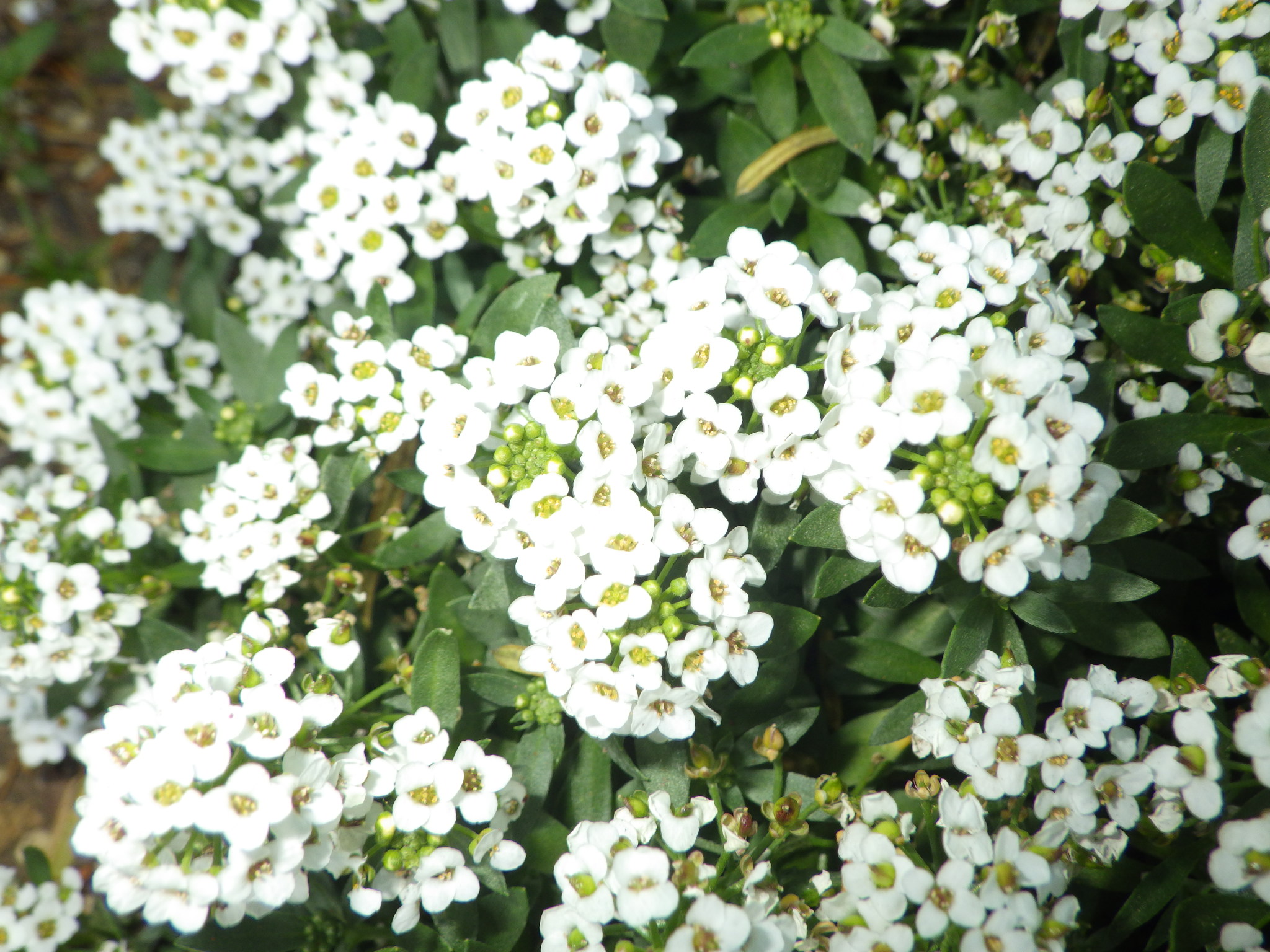
Perennial alyssum, sweet alyssum, and Iberis all belong to the Brassicaceae family. Their leaves creep horizontally, and while they have the characteristic cruciate flowers of the Brassicaceae family, their flowers are quite small, consisting of four petals. They are cute and hardy, making them frequently cultivated as ornamental plants. However, there are many closely related species and terms, making the classification quite complex. It's important to note that there are three different interpretations of "alyssum." Perennial alyssum, sweet alyssum, and Iberis can be distinguished relatively easily because their flowers are quite different, but the term "perennial alyssum" includes multiple species, making the distinction quite difficult. This article will explain the classification and morphology of alyssum species.
- What are perennial alyssum, sweet alyssum, and Iberis?
- When you say "Alyssum," there are three possible interpretations!?
- What are the differences between perennial alyssum, sweet alyssum, and Iberis?
- What are the differences between perennial alyssum (sweet alyssum) and Iberis?
- What is the difference between perennial alyssum and sweet alyssum?
- What is the difference between true alyssum and perennial alyssum?
- What is the difference between Alyssum montanam and Alyssum wulfenianum, both of which are true alyssum species?
- Are there any other similar species?
- References
What are perennial alyssum, sweet alyssum, and Iberis?
Alyssum is a general term for plants belonging to the genus Alyssum, and the most common species cultivated in horticulture are Alyssum montanum and Alyssum wulfenianum.
Perennial alyssum is a general term for a group of plants closely related to the genus Aurinia, whose roots survive the winter and which are perennial. In addition to the aforementioned genus Aurinia, it also includes Aurinia saxatilis, which was formerly included in the genus Aurinia but has been separated into the genus Aurinia.
Lobularia maritima, also known as sweet alyssum, is often simply called alyssum. While it was formerly included in the genus Lobularia, it has since been separated and is now included within the genus Lobularia. Native to the Mediterranean coast of Europe and North Africa, it is an annual or subshrub cultivated worldwide for ornamental purposes (RBG Kew, 2026). In Japan, it is mostly cultivated for ornamental purposes, but globally it is sometimes used for food.
Iberis sempervirens, also known as Tokiwa-magaribana, Tokiwa-nazuna, Iberis, or Iberis sempervirens, is commonly known as Tokiwa-magaribana in Japanese, although some sources refer to it as Tokiwa-ro-magaribana (Fuchida et al., 2014). Native to the Mediterranean coast of Europe (Spain, France, Italy, Romania, and the Balkan Peninsula), the Middle East (Turkey and Syria), and North Africa (Morocco and Algeria), it is an evergreen subshrub cultivated in Japan for ornamental purposes (RBG Kew, 2026).
All of these plants belong to the Brassicaceae family. Their leaves creep and spread horizontally, and while they have the characteristic cruciate flowers of the Brassicaceae family, they consist of four petals that are considerably smaller than typical Brassicaceae flowers. They are cute and hardy, so they are frequently cultivated as ornamental plants.
However, there are many closely related species and terms, and from a classification standpoint, the situation is complex, with academic definitions and common horticultural names intertwined.
When you say "Alyssum," there are three possible interpretations!?
If you simply refer to it as "Alyssum," there are three possible patterns.
- This is a general term for the genus Alyssum, which are scientifically recognized as alyssum species, and refers specifically to species such as Alyssum montanum and Alyssum wulfenianum.
- This is an abbreviation for sweet alyssum, and refers to Lobularia maritima.
- This is an abbreviation for perennial alyssum, and refers to a general term that includes not only the genus Aurinia but also species such as Aurinia saxatilis.
In actual conversations in Japan, "allyssum" almost always refers to sweet alyssum. However, since there is already another plant called alyssum, I think it's necessary to distinguish it by calling it "garden alyssum" or at least "sweet alyssum."
What are the differences between perennial alyssum, sweet alyssum, and Iberis?
Distinguishing between perennial alyssum, sweet alyssum, and Iberis requires observing various characteristics, but sweet alyssum and Iberis have very distinctive flowers, so they can be easily distinguished if you can see the flowers.
What are the differences between perennial alyssum (sweet alyssum) and Iberis?
Distinguishing between perennial alyssum (sweet alyssum) and Iberis (evergreen barringtonia) is easy.
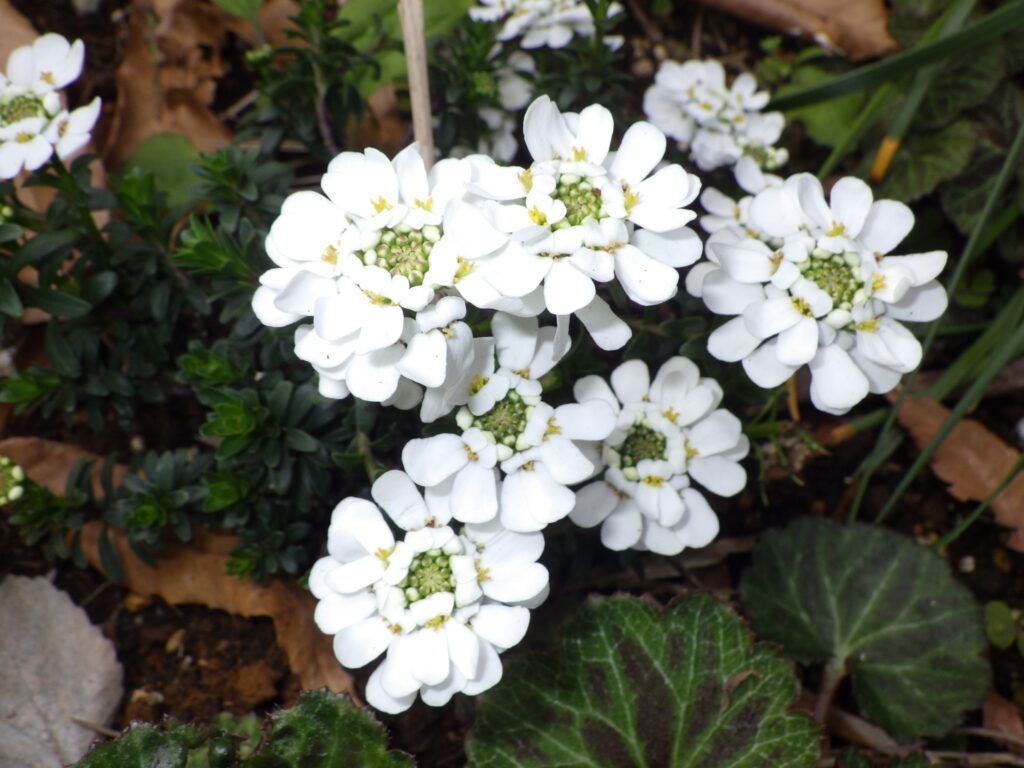
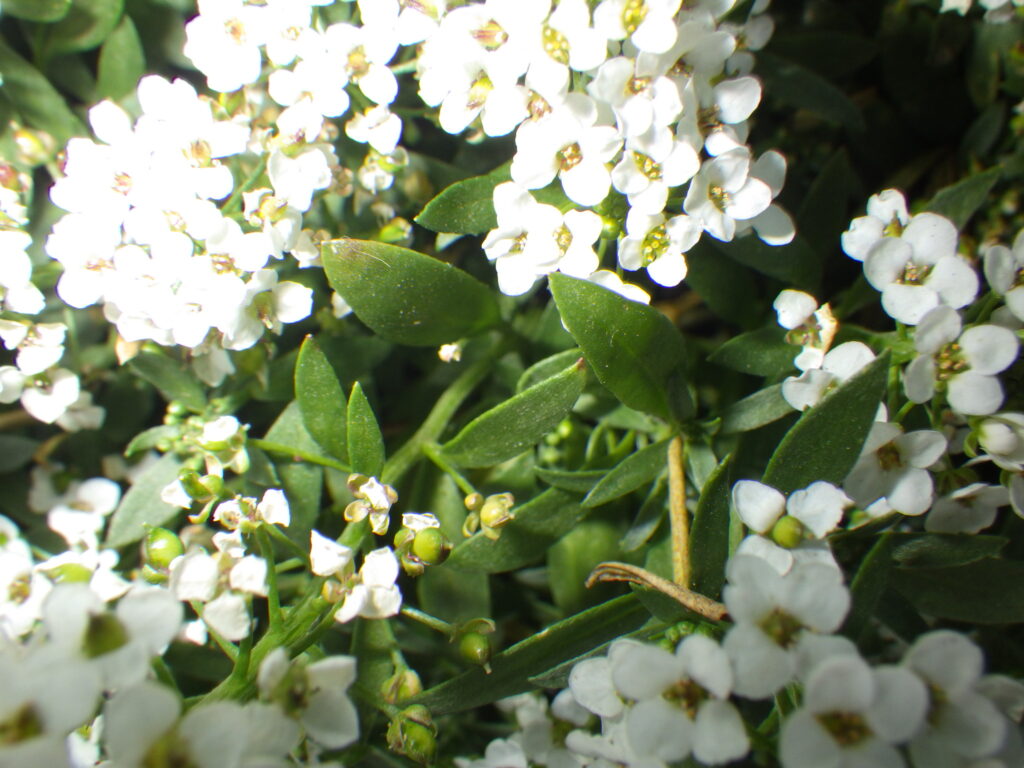
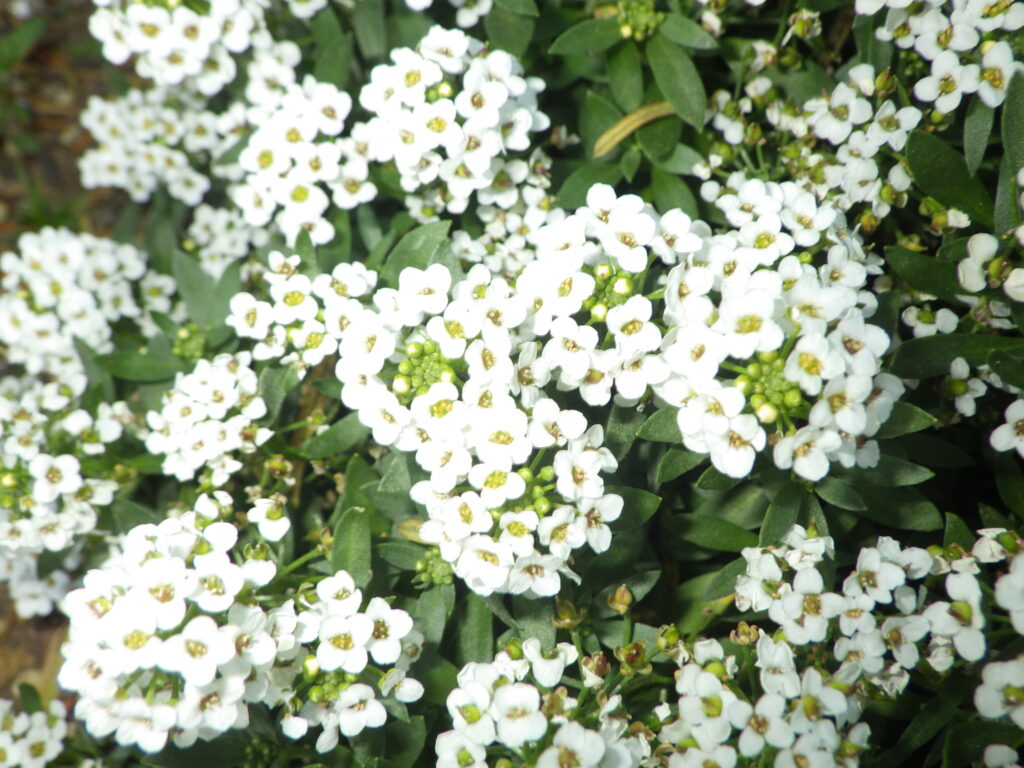
Regarding the flowers, perennial alyssum and sweet alyssum have four petals of a cruciform flower that are all almost the same shape, whereas in Iberis, the two inner petals are small, while the two outer petals are large and protrude significantly.
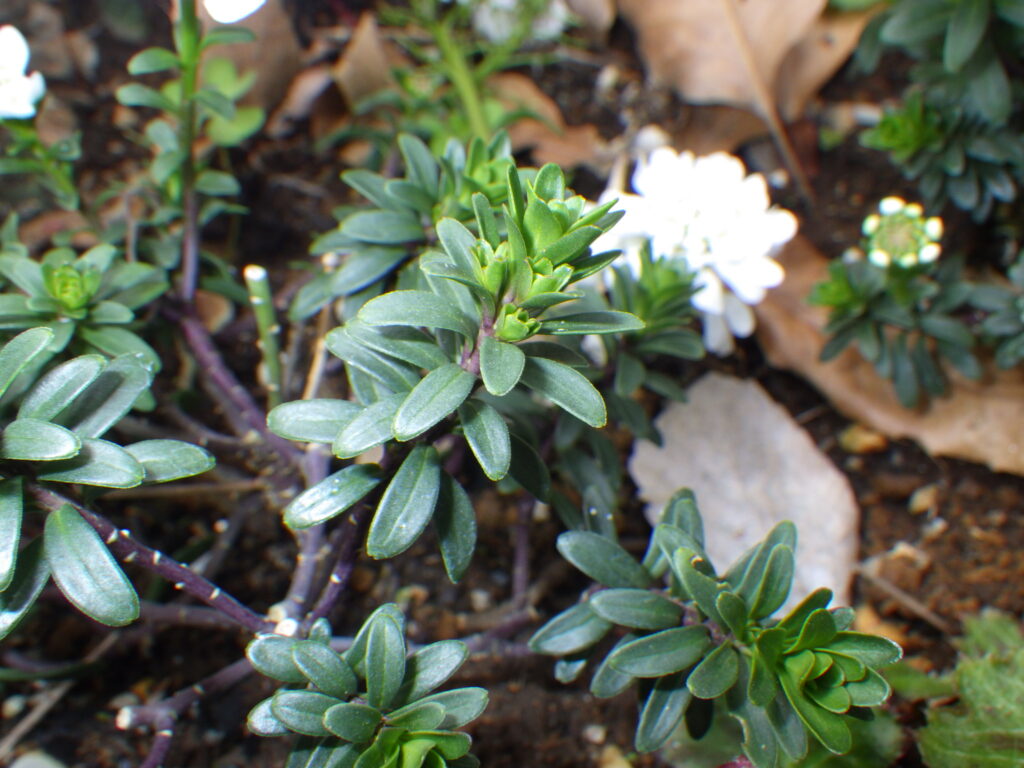
Regarding the leaves, perennial alyssum and sweet alyssum have soft, bright green leaves because they wither in winter, while Iberis leaves are dark green and tough because they are evergreen.
What is the difference between perennial alyssum and sweet alyssum?
Distinguishing between perennial alyssum and sweet alyssum is also relatively easy.
Regarding their life cycle, perennial alyssum is a perennial plant whose above-ground parts die back in winter but whose roots survive, allowing it to live on into the following years. In contrast, the original sweet alyssum species is not very cold-hardy and may only grow as an annual. However, the sweet alyssum cultivated recently is a cultivated variety called "super alyssum," which is a perennial that retains its leaves and blooms even in winter.
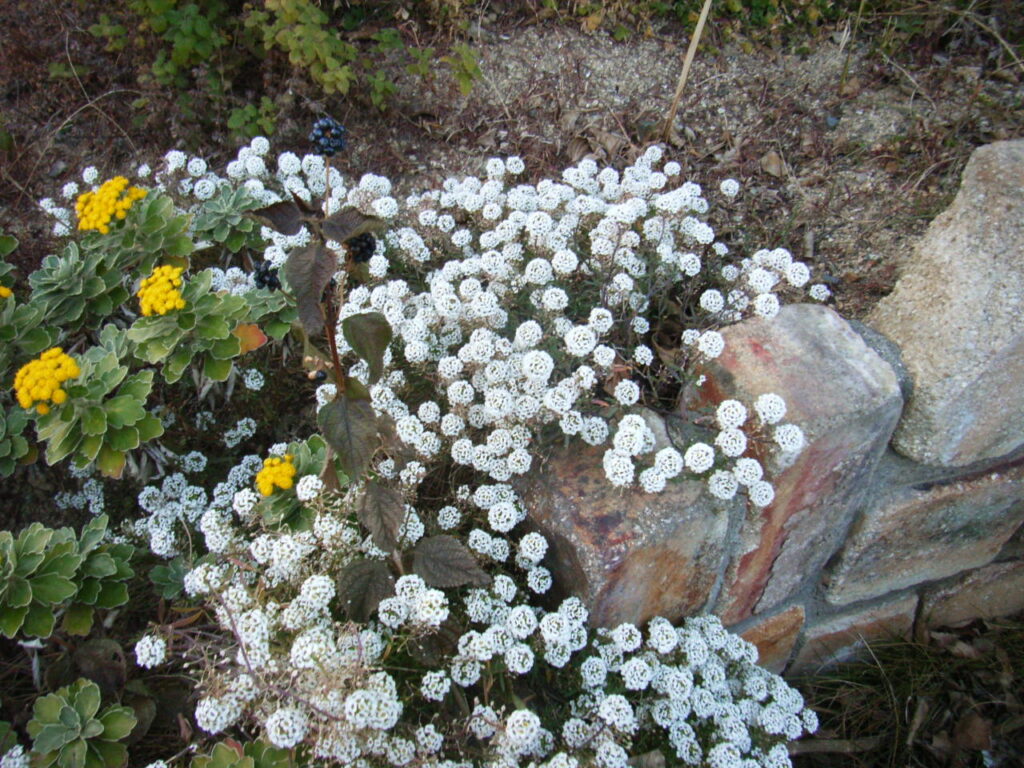
Regarding the flowers, perennial alyssum almost always has yellow, relatively large petals, while sweet alyssum has smaller petals in a variety of colors, including white, red, purple, and orange.
Regarding the inflorescence, perennial alyssum has flowers that bloom sparsely, while sweet alyssum has flowers that bloom densely.
Therefore, a major characteristic of sweet alyssum is that, combined with its smaller petals, the entire inflorescence is hemispherical in shape.
Regarding the leaves, perennial alyssum has spatulate leaf blades with rounded tips, while sweet alyssum has lanceolate leaf blades with pointed tips.
What is the difference between true alyssum and perennial alyssum?
Perennial alyssum includes true alyssum, which is scientifically classified under the genus Alyssum, and Aurinia saxatilis, which was formerly classified under the genus Alyssum but has been separated into the genus Aurinia.
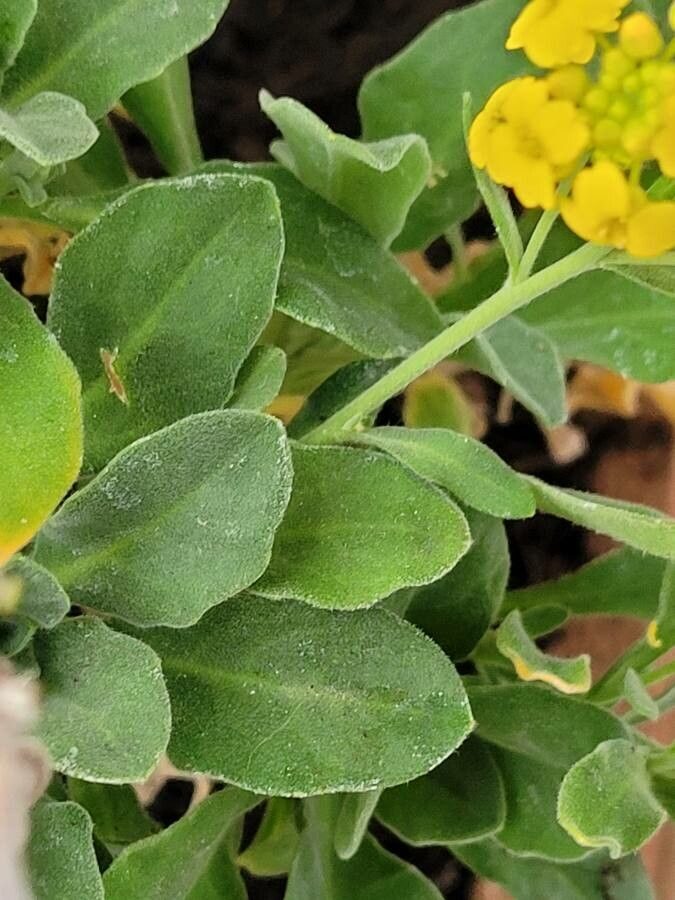
In practical terms, true alyssum does not grow very upright and does not have stellate hairs (hairs that look like stars) on its leaves, whereas Aurinia saxatiris grows slightly upright and has stellate hairs on its leaves.
From a taxonomic standpoint, true alyssum species in the genus Alyssum have one or two ovules per ovary, while those in the genus Alyssum have 4 to 40 ovules per ovary. However, confirming this difference would be difficult for the average person (Flora of North America Editorial Committee, 2010).
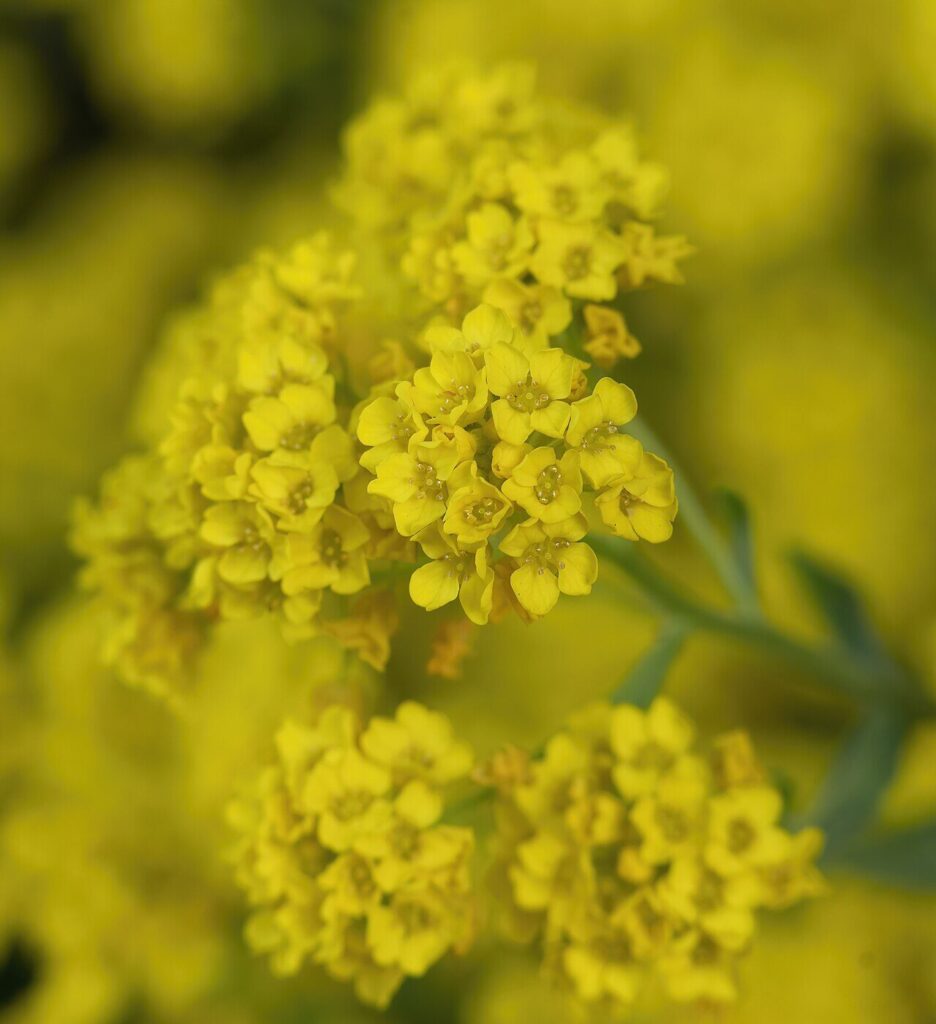
What is the difference between Alyssum montanam and Alyssum wulfenianum, both of which are true alyssum species?
True alyssum includes several other varieties.
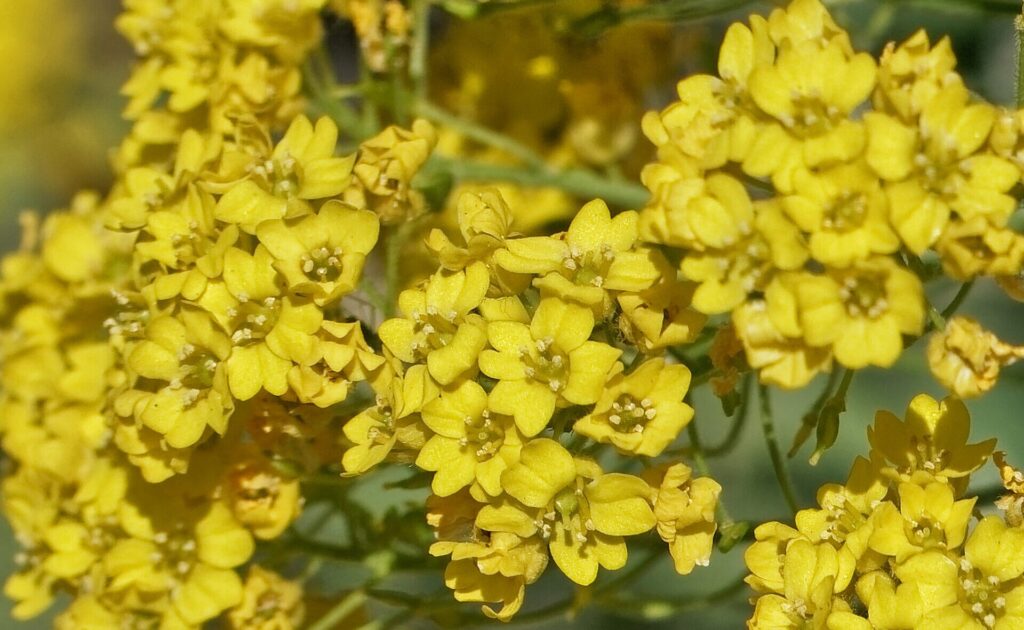
However, in horticulture, Alyssum montanum and Alyssum wulfenianum are the two most representative species, and the cultivar 'Golden Spring' of Alyssum wulfenianum is the most common.
However, I couldn't find any information on the internet, even internationally, that showed the difference between Alyssum montanam and Alyssum wulfenianum.
An old German atlas shows the difference (Röhling et al., 1833).
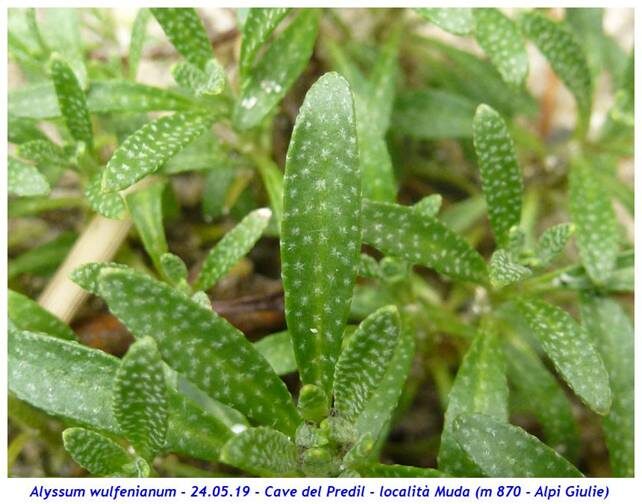
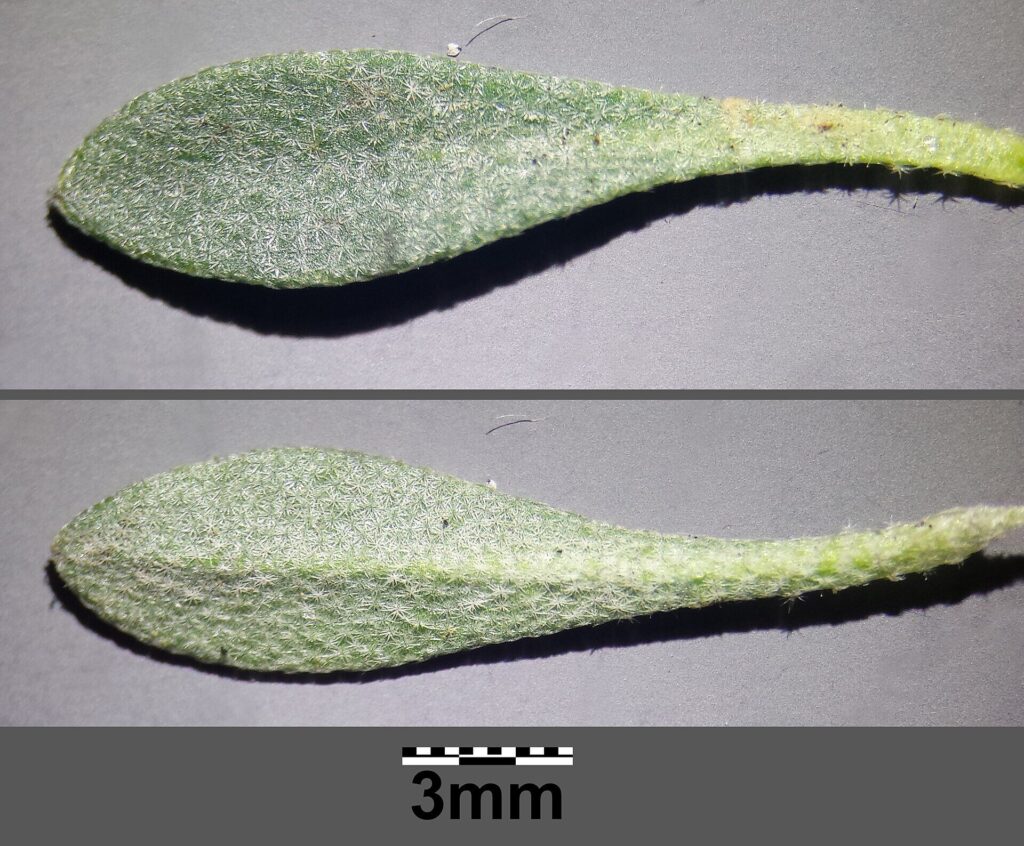
According to the study, although they are very similar, Alyssum montanum is densely covered with stellate hairs all over the plant body, whereas Alyssum wulfenianum has sparse stellate hairs all over the plant body, and may even be hairless.
From what I can see in the photos, stellate hairs can also be found in Alyssum wulfenianum, so caution is advised.
Are there any other similar species?
Although there are many closely related species around the world, I believe that the species listed here cover almost all of the species found in Japan.
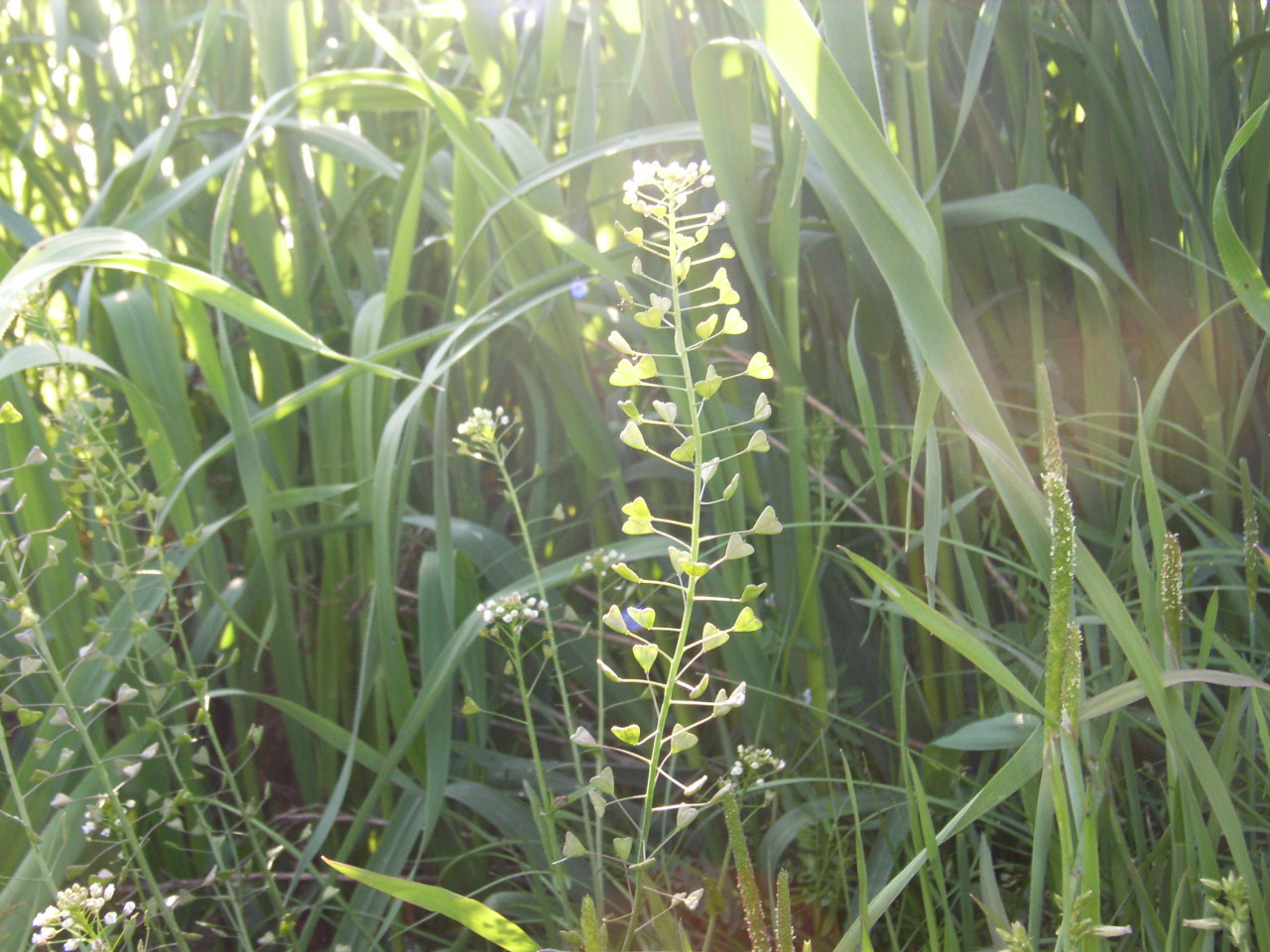
Although shepherd's purse is the species from which the Japanese name "Niwanazuna" (garden shepherd's purse) originates, they hardly resemble each other.
References
Flora of North America Editorial Committee. (2010). Flora of North America (Vol. 7 Magnoliophyta: Salicaceae to Brassicaceae). Oxford University Press. ISBN: 9780195318227
Fuchida, S., Yamamoto, S., Sawada, Y., Fujiwara, M., Oyabu, T., & Nose, K. (2014). Special Feature: "Invasive Species and Vegetation Management" - Creation of a Name Correspondence Table between Invasive Species and Horticultural Plants. Journal of the Japanese Society of Landscape Architecture, 40(2), 352-364. https://doi.org/10.7211/jjsrt.40.352
RBG Kew. (2026). The International Plant Names Index and World Checklist of Vascular Plants. Plants of the World Online. http://www.ipni.org and https://powo.science.kew.org/
Röhling, JC, Mertens, FCK, & WDJ (1833). Deutschlands Flora (Vol. 4). Wilmans. ISBN: 9781332453641, https://www.google.co.jp/books/edition/Deutschlands_Flora/LUg-AAAAcAAJ