Did you know that cockroaches can disperse plant seeds?
When you think of cockroaches, you probably picture them as pests that appear inside your home. However, some cockroaches that live under fallen leaves in forests are involved in plant reproduction.
The Satsuma cockroach, Margattea satsumana, which I'll be introducing today, is exactly that kind of cockroach.
A study published in 2026 reported that this species feeds on the fruits of a non-photosynthetic plant growing on Yakushima Island and excretes the seeds in its feces. Furthermore, this plant emits a fermented odor, which may attract nocturnal insects.
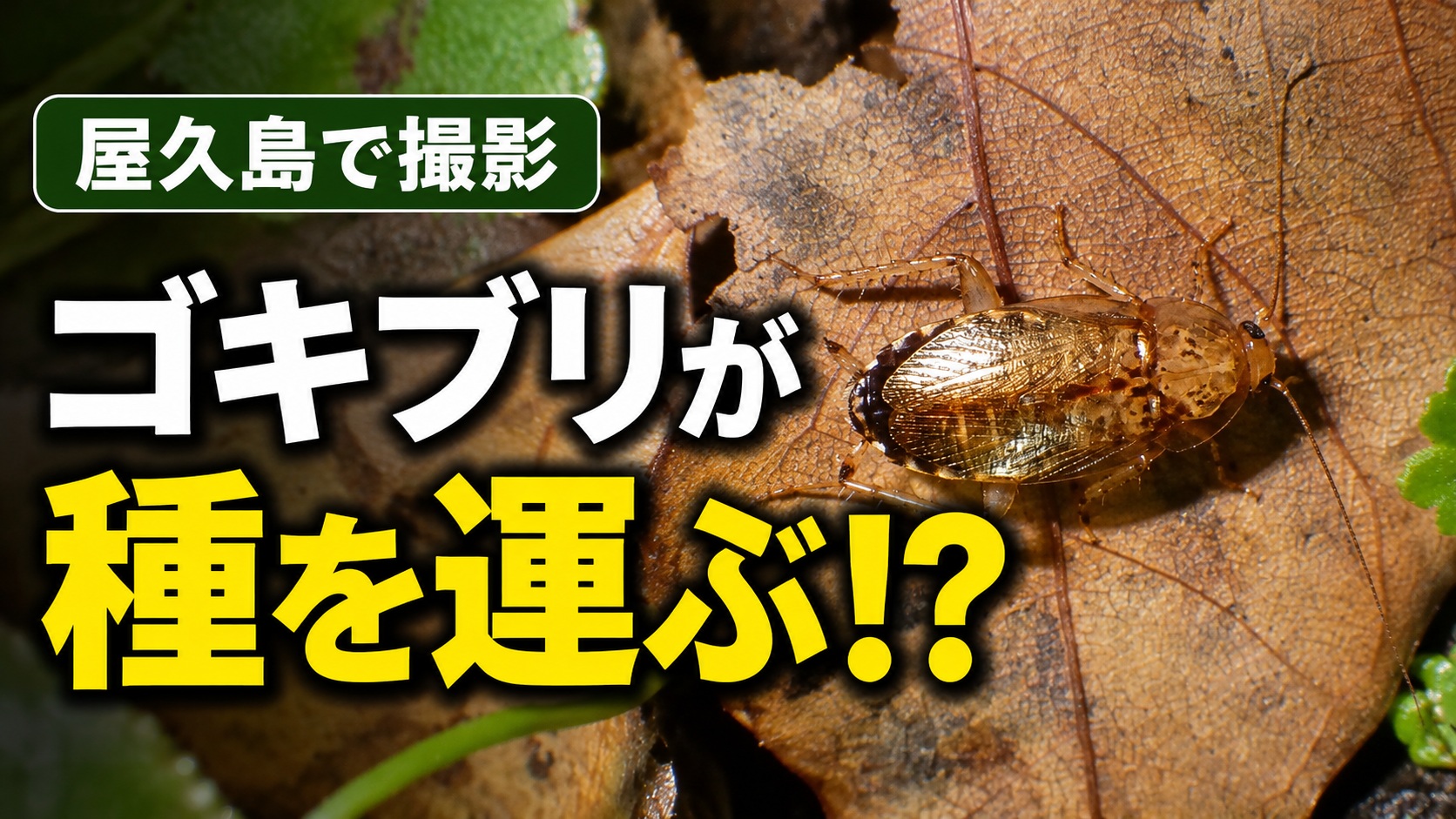
In fact, I also photographed an adult of this species on Yakushima Island in 2017.
This time, I will share my records of the Satsuma cockroach, which I photographed on Yakushima Island, and introduce the surprising relationship between cockroaches and plants that has been revealed in recent years.
- What is the Satsuma cockroach? A southern species of cockroach that has become established in Honshu.
- A Satsuma cockroach photographed on Yakushima Island in 2017.
- How to distinguish it from a Japanese dwarf cockroach
- Satsuma cockroach found among fallen leaves at the edge of the forest
- Do cockroaches disperse plant seeds? A surprising fact about their ecology revealed in 2026.
- The seeds excreted in the feces remained viable.
- The relationship between cockroaches attracted to fermentation odors and plants.
- The Satsuma cockroach was also involved in plant pollination.
- The surprising connection between insects and plants revealed by cockroaches on Yakushima Island
- References
What is the Satsuma cockroach? A southern species of cockroach that has become established in Honshu.
Margattea satsumana is a cockroach belonging to the genus Margattea in the family Blattodeidae.
Traditionally, this species was thought to be distributed in Kyushu (Oita and Kagoshima prefectures), Shikoku (Ehime prefecture), Tanegashima, the Tokara Islands, Amami Oshima, and Okinawa (Asahi et al., 2016).
However, since 2005, its establishment has been confirmed in Chiba Prefecture on Honshu (Komatsu, 2019), and in 2017, it was also collected in Suo-Oshima Town, Yamaguchi Prefecture (Kawahara, 2018).
Thus, although this species is a cockroach native to southern regions, it is known to have expanded its distribution to Honshu.
Regarding Yakushima, this species is also mentioned in the environmental impact assessment report for the Yakushima Airport runway extension project (Kagoshima Prefecture, 2024). Therefore, the existence of this species on Yakushima was already documented in environmental survey materials prior to this photographic record.
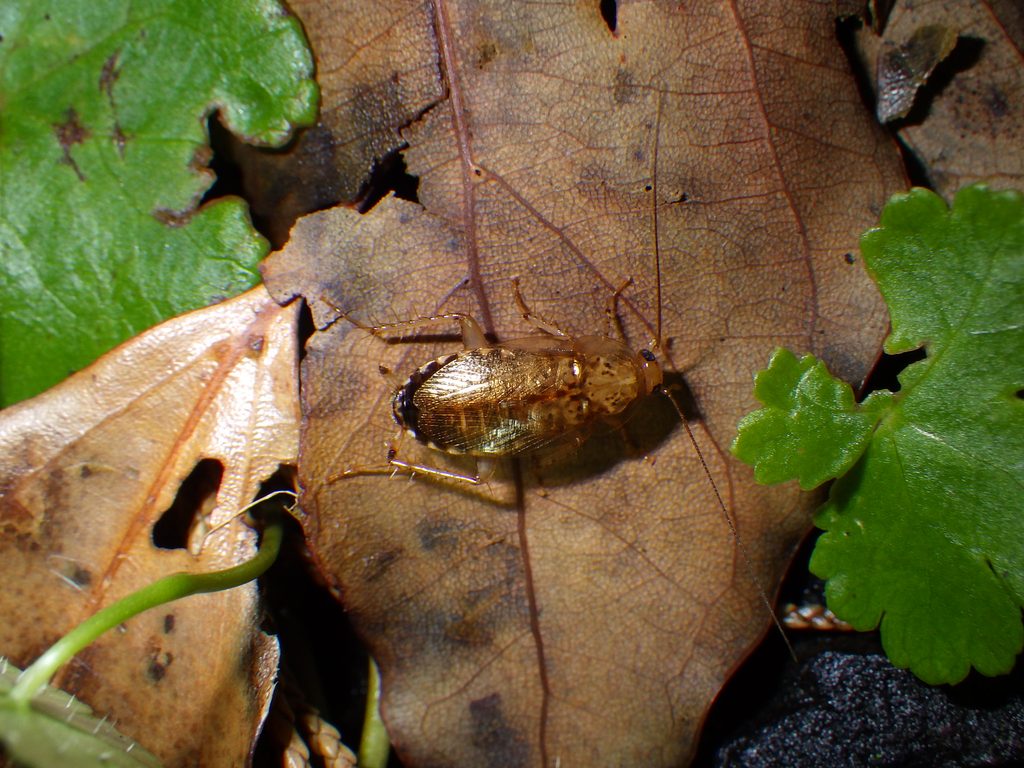
A Satsuma cockroach photographed on Yakushima Island in 2017.
On November 27, 2017, at approximately 9:30 PM, I was turning over a layer of fallen leaves at the edge of a forest in Miyanoura, Yakushima Town, Kumage District, Kagoshima Prefecture.
At that time, I photographed adult Japanese cockroaches (Opisthoplatia orientalis) and small brown cockroaches (Blattella lituricollis) on fallen leaves.
As far as I could find, there were no official reports of this species on Yakushima Island at the time, so I am presenting it here as a photographic record.
Shooting record: 1 ex. (photo), Miyanoura, Yakushima-cho, Kumage-gun, Kagoshima Prefecture, 27. 11. 2017, photographed by the author.
This record is a photographic record of the Satsuma cockroach taken in the natural environment of Yakushima Island in 2017. It is now considered to supplement previously reported distribution information.
How to distinguish it from a Japanese dwarf cockroach
The Satsuma dung cockroach exhibits characteristics of the genus Margattea, such as a broad supraanal plate and short uropods.
A related species with overlapping distribution areas is the Japanese dwarf cockroach, *Margattea kumamotonis kumamotonis*, a subspecies of the Japanese dwarf cockroach.
The two can be distinguished by their wing morphology, among other things.
In the Satsuma dwarf cockroach, the hindwings are reduced to a scale-like structure, measuring approximately 2 mm in length. Furthermore, the forewings are considered shorter than those of the common dwarf cockroach (Asahi et al., 2016).
The individual photographed this time closely matched these characteristics, leading us to identify it as a Satsuma cockroach.
Satsuma cockroach found among fallen leaves at the edge of the forest
The Satsuma cockroach can sometimes be found under fallen leaves or at the edge of forests.
In mainland Kagoshima Prefecture, this species has been collected in February from under fallen leaves in the forest floor (Komatsu et al., 2014).
In addition, in Chiba Prefecture, it has been observed in December and February on fallen leaves at the edge of forests in green spaces of reclaimed land (Komatsu, 2019).
This photoshoot on Yakushima took place in November, which is slightly earlier than these previous records, but the environment—fallen leaves and forest edges—is the same.
Asahi et al. (2016) state that this species "seems to be more common in slightly open, sunny areas than in forests."
The location for this shoot was also at the edge of a forest, which aligns with this preference for such environments.
Do cockroaches disperse plant seeds? A surprising fact about their ecology revealed in 2026.
A very interesting study on the ecology of the Satsuma cockroach was published in 2026.
Suetsugu et al. (2026) reported on seed dispersal by cockroaches and crickets for Balanophora tobiracola, a parasitic plant that does not perform photosynthesis and grows on Yakushima Island.
This plant is a non-photosynthetic plant that grows on the forest floor in dark forests. Nocturnal insects have been observed feeding on its mature fruits and surrounding tissues.
Studies have confirmed that, in addition to the Satsuma cockroach Margattea satsumana, other species such as the flat cockroach Megamareta pallidiola and the wood cricket Duolandrevus ivani also feed on fruit.
Furthermore, plant seeds were found in the droppings of these insects.
In other words, the Satsuma cockroach may not only eat plant fruits, but also be involved in seed dispersal by taking seeds into its body and excreting them with its feces.
This type of seed dispersal is called endozoochory because animals eat the fruit and excrete the seeds after they pass through their digestive tract.
Many people might find it surprising that cockroaches act as seed dispersers for plants.
It should be noted that this is not the only example; the same researchers had previously demonstrated that Monotropastrum humile also has its seeds dispersed by a type of cockroach called the Japanese brown cockroach.
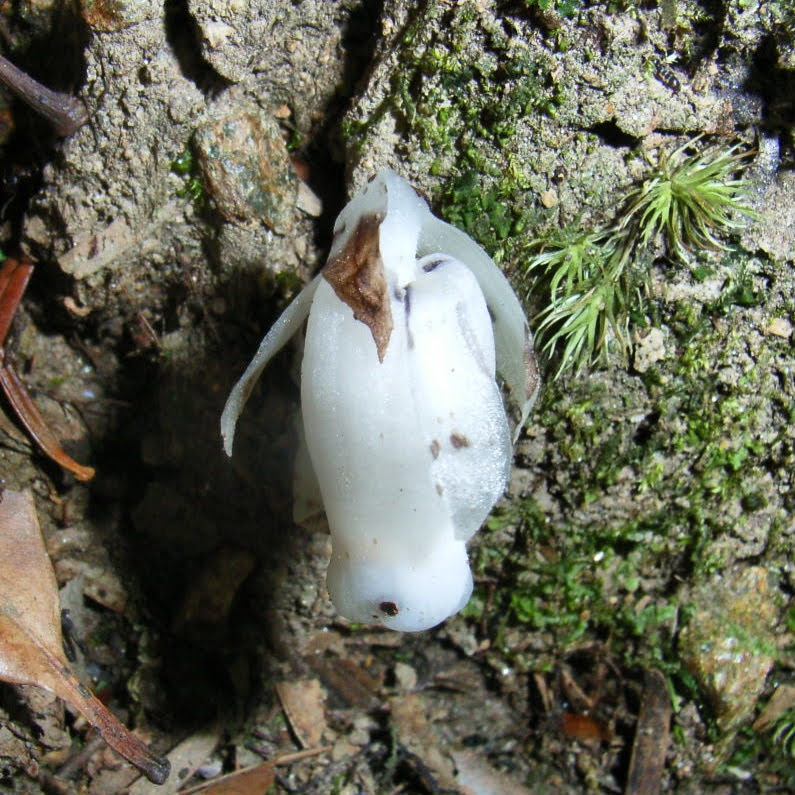
The seeds excreted in the feces remained viable.
In a study by Suetsugu et al. (2026), experiments were also conducted in which the Satsuma cockroach was fed fruit.
As a result, some of the ingested seeds were excreted intact with the feces.
The seed discharge rate by the Satsuma cockroach has been reported to be an average of 5.9 ± 2.1% (mean ± standard error).
Furthermore, when the excreted seeds were examined for viability using TTC staining, the survival rate of seeds excreted from the Satsuma cockroach was 19.5 ± 5.4%.
On the other hand, the survival rate of seeds collected directly from plant fruits was 22.1 ± 2.5%, and no significant difference was observed between the two.
These results indicate that even if the Satsuma cockroach eats the fruit, the viability of the seeds is not necessarily significantly impaired.
Of course, not all seeds expelled from the feces will germinate and successfully reproduce as plants. However, the fact that this species can disperse seeds in a viable state is of significant importance for plant reproduction.
The relationship between cockroaches attracted to fermentation odors and plants.
Even more interesting is the scent emitted by Balanophora tobiracola, a type of birdlime.
This plant is known to emit a strong, fermented odor from the parts containing its mature fruit.
Suetsugu et al. (2026) investigated volatile components emitted by plants and pointed out the possibility that fermentation-related odor components are involved in attracting insects.
The smell of fermented or decaying materials can be a signal to insects such as cockroaches that food is present.
In fact, cockroaches and crickets were observed feeding on plant fruits at night. The fermentation odor emitted by the plants may be attracting these insects.
However, the extent to which each component attracts insects, and whether the scent is produced by the plant itself or involves microorganisms, remain subjects for future research.
The Satsuma cockroach was also involved in plant pollination.
The relationship between the Satsuma cockroach and the yellow-spotted sticky bird Balanophora tobiracola is not limited to seed dispersal.
Suetsugu (2025) reported that cockroaches such as the Satsuma cockroach and ants are involved in pollination of the same plant.
It's not widely known that cockroaches visit flowers and carry pollen. However, the Satsuma cockroach can visit plant flowers and help with pollination by carrying pollen.
This study showed that visits by cockroaches and ants contribute to the sexual reproduction of plants.
In other words, the Satsuma cockroach may play two roles for plants: pollination and seed dispersal.
This relationship demonstrates that the interaction between insects and plants cannot be understood solely through the simple distinction between "pollen-carrying insects" and "seed-carrying animals."
The surprising connection between insects and plants revealed by cockroaches on Yakushima Island
The 2017 photographic records presented here are not presented as new distribution records of the Satsuma cockroach on Yakushima Island, but rather as photographic records to supplement the field observations made at the time.
Then, a 2026 study revealed a very interesting ecological pattern in this species: it eats plant fruits and excretes the seeds with its feces.
Cockroaches are often thought of as pests that promote hygiene. However, some cockroaches that live under fallen leaves in forests are involved in plant reproduction.
The Satsuma cockroach may be attracted to plants by fermentation odors, where it may visit, eat the fruit, and disperse the seeds. Furthermore, it has been reported to be involved in the pollination of the same plants.
From a single cockroach I photographed at the edge of a forest on Yakushima Island, I learned about an unexpected connection between insects and plants.
References
Asahi, Kazuya; Suzuto, Takuya; and Komatsu, Kenji (2016). Blattodea (cockroaches). In: Machida, Ryuichiro (supervisor), Standard Illustrated Guide to Orthoptera of Japan (pp. 206-227). Gakken Plus. ISBN: 9784054064478
Kagoshima Prefecture (2024). Environmental Impact Assessment Report for the Yakushima Airport Runway Extension Project. Kagoshima Prefecture. https://assess.env.go.jp/files/2_jirei/2-5_toshokokai/reports/157/yakushima_hyouka_02.pdf
Kawahara, Hiroyuki (2018). Collection of *Satsuma ditch cockroach* in Suo-Oshima Town. *Yamaguchi no Mushi* (Insects of Yamaguchi), 17, 140.
Komatsu, Kenji (2019). *Satsuma dwarf cockroach*, a species whose establishment has been confirmed in Honshu. Pestology, 34(1), 37-38. https://doi.org/10.24486/pestology.34.1_37
Komatsu, Kenji; Kawakami, Yasushi; Sakanishi, Azusa; and Uchida, Akihiko (2014). Cockroaches collected in Kagoshima Prefecture during winter, including the newly recorded species Sigmella schenklingi. Pestology, 29(1), 1-5. https://doi.org/10.24486/pestology.29.1_1
Suetsugu, K. (2025). Cockroach pollination ensures sexual reproduction in the non-photosynthetic plant Balanophora tobiracola. Plant Biology, 27 (2), 224-230. https://doi.org/10.1111/plb.13770
Suetsugu, K., Kakishima, S., & Okuyama, Y. (2026). Seed dispersal by cockroaches and crickets in a non-photosynthetic plant with fermented scents. Ecology, 107 (3), e70321. https://doi.org/10.1002/ecy.70321