Kimoto

Sponsored Link
Seed Plant Encyclopedia

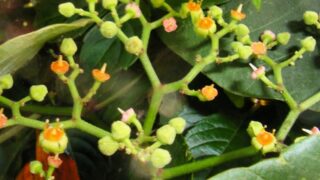
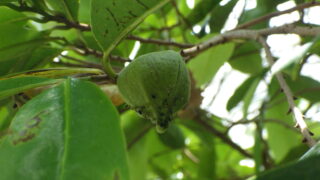
[Seed Plant Encyclopedia #032] What are the species of the Annonaceae family? Photo list

The Annonaceae family consists of evergreen, rarely deciduous, trees or shrubs, sometimes climbing woody plants. Approximately 130 genera and 2,300 species are known, found in the tropical and subtropical regions of Asia, America, and Africa. In Japan, there is one species, Monoon liukiuense, found in the Ryukyu Islands...
Seed Plant Encyclopedia

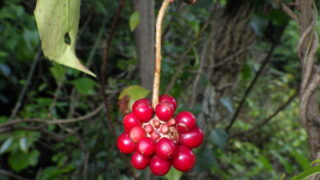
[Seed Plant Encyclopedia #020] What are the species of Schisandraceae? Photo List

The Schisandraceae family consists of evergreen or deciduous woody plants, some of which are climbing. The leaves are simple, alternate, and lack stipules. Flowers are usually solitary in the leaf axils, lacking a clear distinction between sepals and petals, and the perianth segments are separate. The fruit is an aggregate fruit, consisting of berries clustered in a spherical or tufted arrangement, or a sac...
Seed Plant Encyclopedia

[Seed Plant Encyclopedia #001] What are the species of the Cycadaceae family? Photo list

The family Cycadaceae is a family of plants belonging to the order Cycadales in the class Cycadae. All extant species are evergreen woody plants. The leaves are pinnately compound, with long, pointed leaflets. Numerous leaves grow at the tip of the stem, with the base remaining on the stem. The family is dioecious, with flowers borne terminally or laterally on the stem. The stamens (microsporophylls) are scale-like...
plant

What are the differences between wisteria, mountain wisteria, and summer wisteria? We'll explain how to distinguish between similar species! Why is it so beloved by the Japanese? Were the flowers originally for bumblebees? Do wisteria pods pop and scatter?

Wisteria floribunda, mountain wisteria, and summer wisteria remain popular legumes, so much so that trellises are still provided for them. However, distinguishing between the three species can be difficult until you become familiar with them. Examining their flowering period and the direction in which their vines twine is crucial for identification. Wisteria has a long history, and is even mentioned in the oldest document in Japan, the "Kojiki," which dates back to the Nara period...
plant

What's the difference between Japanese knotweed (Cayratia japonica) and wild grape (Vitis coignetiae)? We explain how to distinguish between similar species! Why are they exterminated? Are they actually edible? Were the wasps that visit the saucer-shaped flowers hired as bodyguards?!

Japanese knotweed (Cayratia japonica) and wild grape (Vitis coignetiae) are among the most common climbing plants in the grape family. While they belong to the same family and are both climbing plants, they can be easily distinguished by the shape of their leaves and flowers. Japanese knotweed is a target for eradication due to its strong reproductive capacity, impact on the landscape, and its ability to attract bees...
Sponsored Link