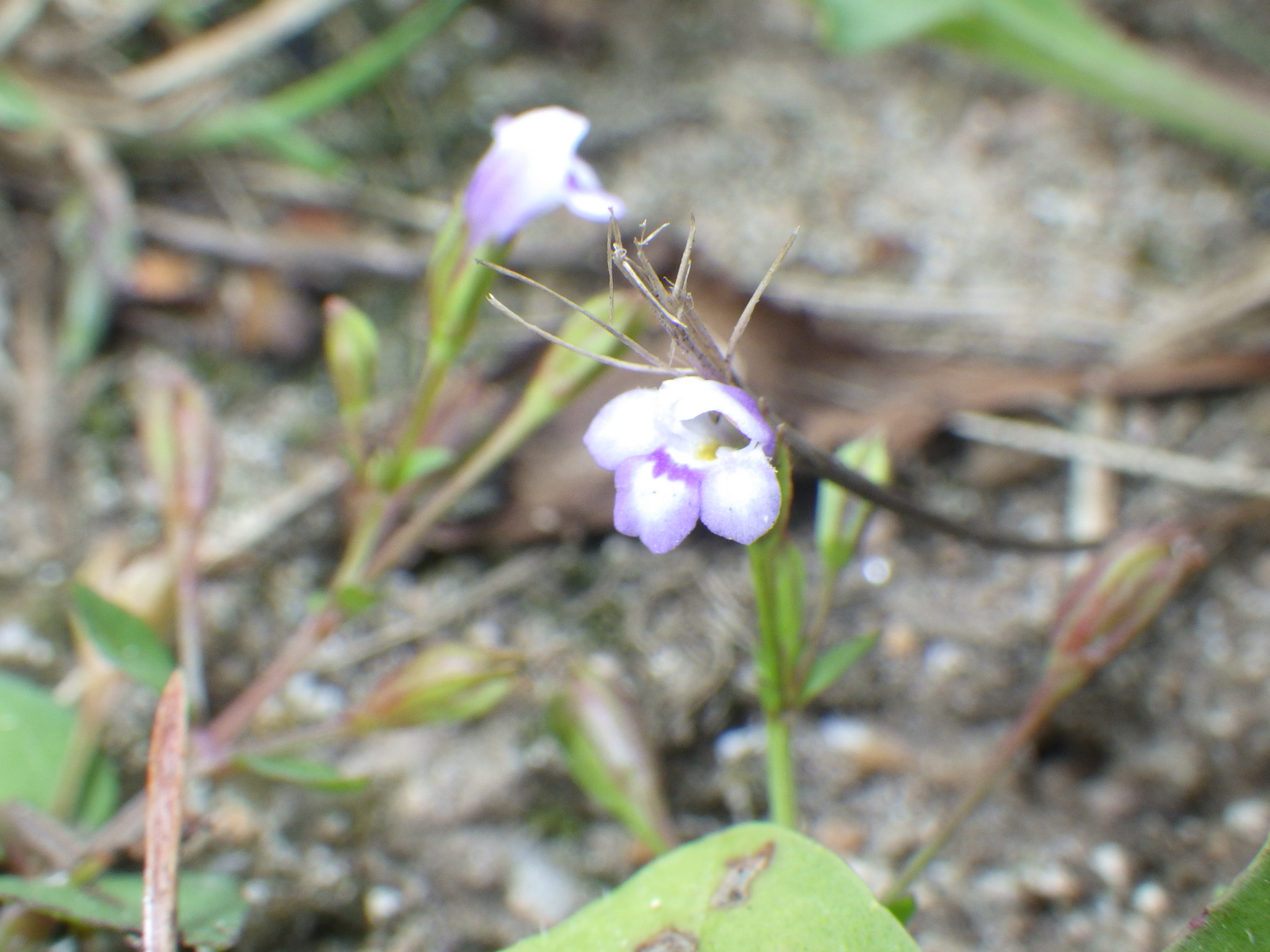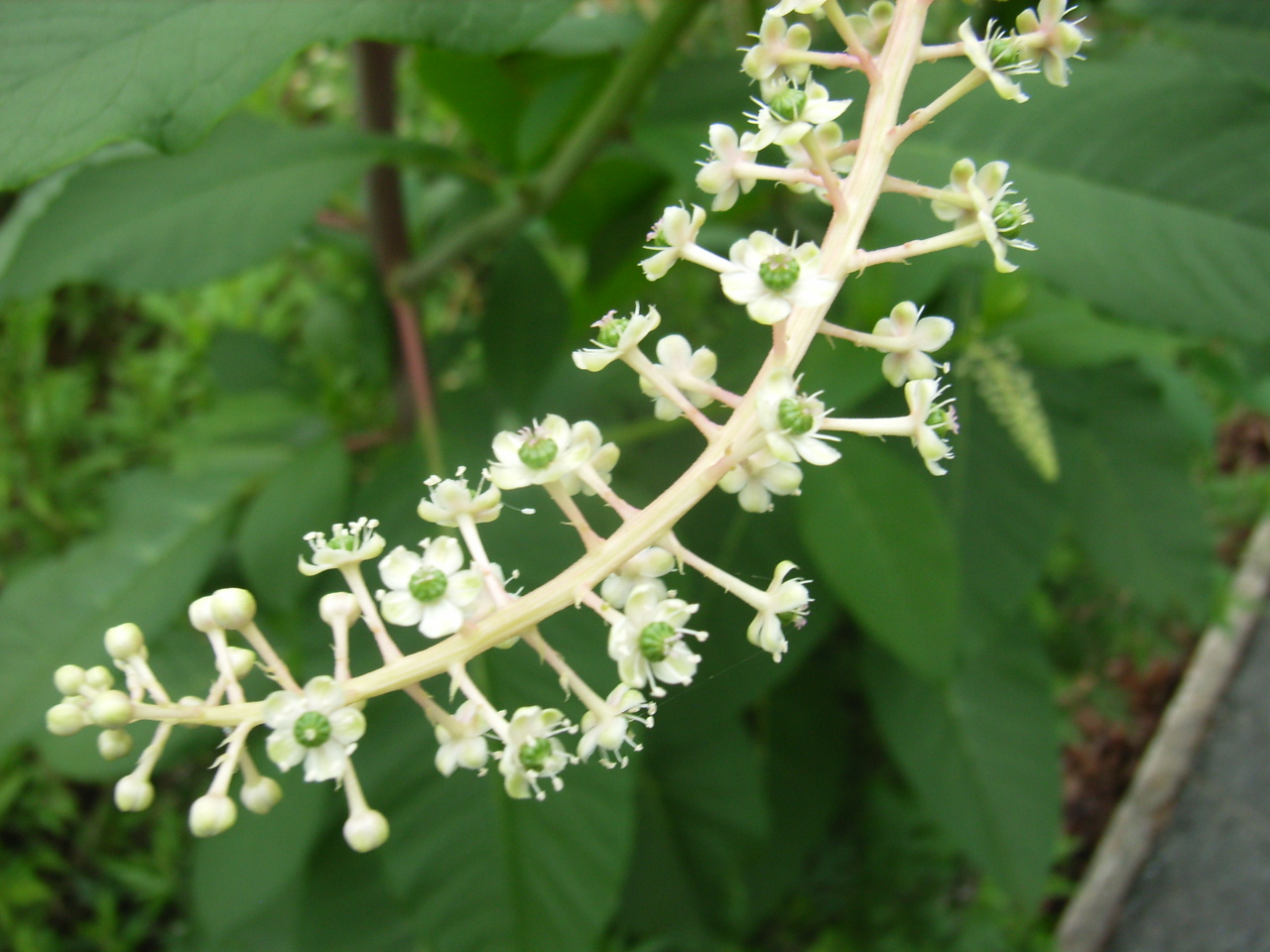
Japanese pokeweed (Phytolacca americana), American pokeweed (Phytolacca oleracea), and Japanese pokeweed (Phytolacca japonica) all belong to the Phytolaccaceae family and Phytolacca genus. Their names come from the fact that their fleshy, thick roots resemble those of burdock (Philadelphia arvensis), a member of the Asteraceae family. They are characterized by being entirely poisonous and having blackish-purple berries. However, the three species are often confused and mistaken for burdock. The three species can be distinguished by comprehensively observing their leaves, flowers, and fruits. Burdock and Japanese holly (Phytolacca americana) are sometimes called "Japanese pokeweed," which can lead to confusion with the biological Phytolacca genus, but their leaves, flowers, and fruits are all completely different. Never eat the roots of the Phytolacca genus. There have been cases of death. However, birds readily eat the fruits. This article will explain the classification, morphology, ecology, and toxicity of the Phytolacca genus.
- What are Japanese pokeweed, American pokeweed, and round pokeweed?
- What are the differences between Japanese pokeweed (Phytolacca americana), American pokeweed (Phytolacca americana var. japonica), and round pokeweed (Phytolacca americana var. japonica)?
- What are the differences between Japanese pokeweed (Phytolacca americana), Japanese pokeweed (Phytolacca americana var. japonica), and American pokeweed (Phytolacca americana var. japonica)?
- What is the difference between Japanese pokeweed (Phytolacca americana) and round pokeweed (Phytolacca americana)?
- Are there any other similar varieties? What's the difference between mountain burdock and regular burdock?
- How are the seeds dispersed? The poisonous berries are a favorite of birds!?
- References
What are Japanese pokeweed, American pokeweed, and round pokeweed?
Phytolacca acinosa, also known as mountain pokeweed, is a perennial herb distributed in Hokkaido (southwestern part), Honshu, Shikoku, and Kyushu in Japan, as well as in China, growing in forests and forest edges (Kanagawa Prefecture Flora Survey Association, 2018). The Japanese variety is believed to have escaped cultivation after being brought from China as a medicinal herb.
American pokeweed (Phytolacca americana), also known as American pokeweed, is native to North America and was introduced to Japan in the early Meiji era. It has since spread throughout Japan and is a perennial plant that grows in vacant lots and along roadsides.
Phytolacca japonica, also known as round-fruited mountain burdock, is a perennial herb distributed in Honshu (west of the Kanto region), Shikoku, and Kyushu in Japan, growing in woodlands and forest edges.
Both belong to the Phytolaccaceae family and the Phytolacca genus. Their names come from the fact that their fleshy, thick roots resemble those of the burdock plant (Philadelphia arvensis) of the Asteraceae family. They are large perennial plants, reaching a height of 1 to 1.5 meters, and are characterized by having five sepals that resemble petals, and flowering from June to September.
American pokeweed, in particular, is frequently seen even in urban areas, but despite this, all parts of the pokeweed genus contain saponins and oxalates, making them highly toxic and capable of causing food poisoning in both humans and livestock (Xu et al., 2025).
The toxic substances are most abundant in the roots, followed by the leaves, trunk, and then the fruit (Takai, 1983). There have been fatalities in China, so you should absolutely never eat it.
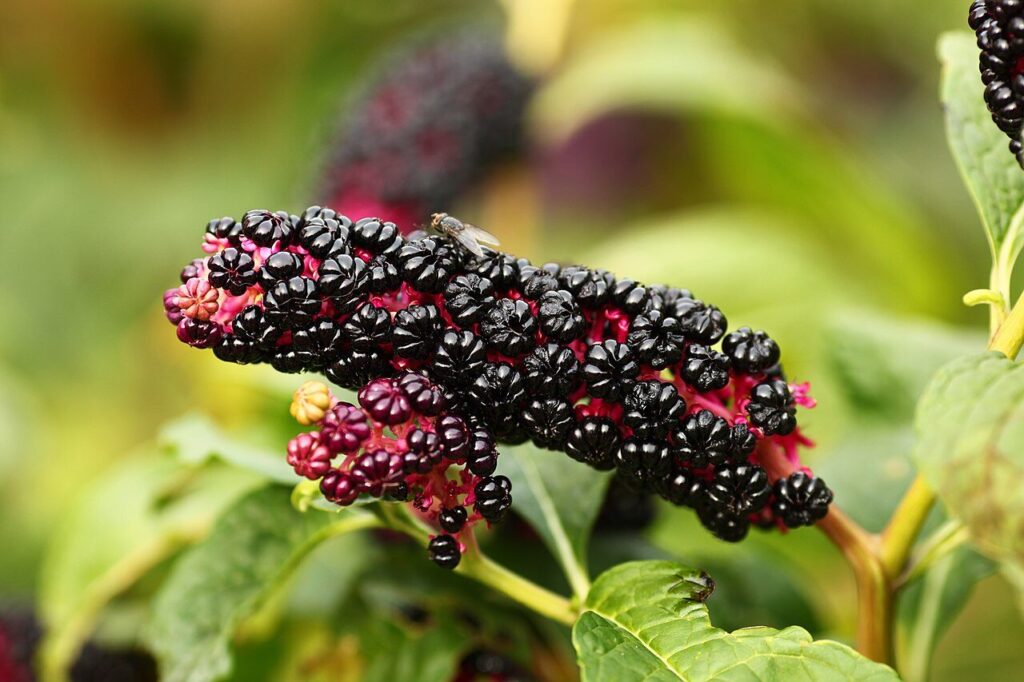
The most distinctive visual feature is its oblate, spherical, dark purple berry fruit, which immediately identifies it as a member of the Phytolacca genus. The inside is divided into schizocarps.
The fruits of the genus Phytolacca are poisonous to mammals such as humans, but are non-toxic to birds. This is strongly related to the fact that birds eat the fruits and disperse the seeds, which is why they are frequently seen on concrete in urban areas (Kaneko et al., 2012; Li et al., 2017).
However, the genus Phytolacca contains three closely related species, and many people may not be able to correctly distinguish between them. Furthermore, distinguishing it from edible burdock is also essential.
What are the differences between Japanese pokeweed (Phytolacca americana), American pokeweed (Phytolacca americana var. japonica), and round pokeweed (Phytolacca americana var. japonica)?
It is difficult to distinguish between the three species based on leaves alone; a comprehensive observation of the leaves, flowers, and fruits is necessary.
What are the differences between Japanese pokeweed (Phytolacca americana), Japanese pokeweed (Phytolacca americana var. japonica), and American pokeweed (Phytolacca americana var. japonica)?
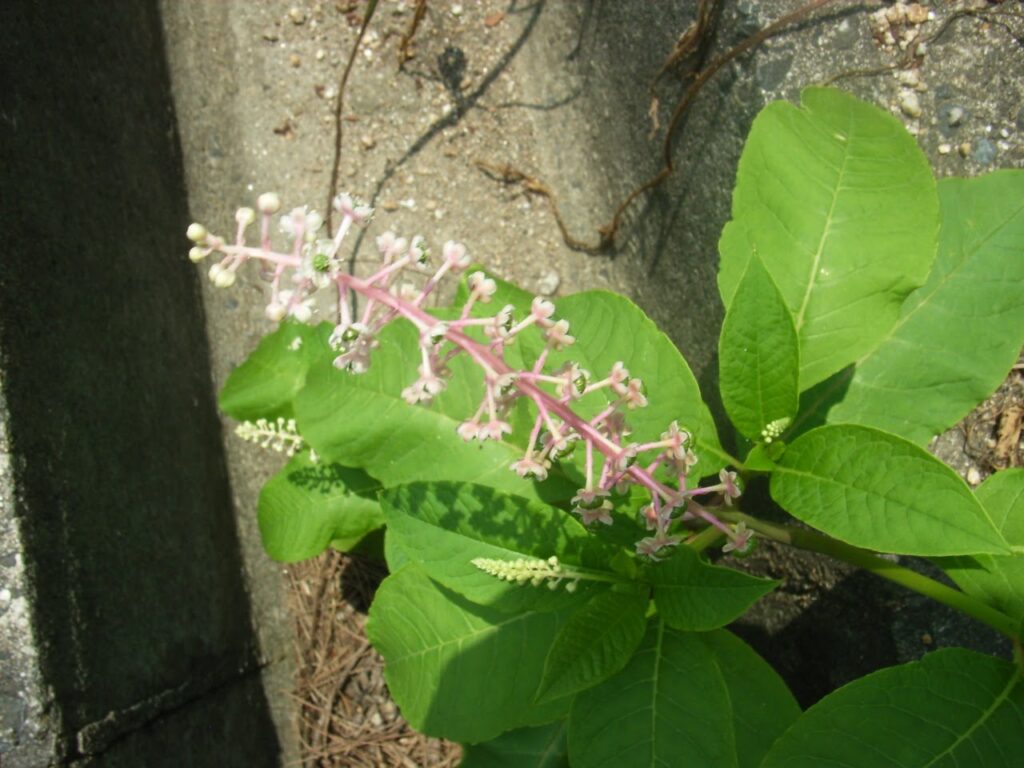
First, there is a difference between Japanese pokeweed (Phytolacca americana) and round-flowered pokeweed (Phytolacca americana var. japonica): the inflorescence stalks are short, 1-3 cm long, and erect, remaining erect even during fruiting, whereas in American pokeweed (Phytolacca americana var. japonica), the inflorescence stalks are long, 7-10 cm long, arching to drooping, and drooping during fruiting.
Furthermore, although not mentioned in the field guide, the flowers and fruits per inflorescence of Japanese pokeweed and round pokeweed appear to be quite densely packed, while the flowers and fruits per inflorescence of American pokeweed appear sparse and sparse.
Another difference is that in Japanese pokeweed, when the fruit ripens, the internal segments separate and become clearly visible, resulting in a rough appearance. In contrast, in American pokeweed and round pokeweed, the internal segments are fused together, making them invisible and resulting in a neat oval shape.
However, this is not very reliable because even in American pokeweed, schizocarps can be seen when the fruit dries. The Japanese name for round pokeweed comes from the fact that the fruit is round, but it has exactly the same characteristics as American pokeweed.
Based on the above, American pokeweed can be identified relatively easily.
In reality, what people living in urban areas mostly see is the invasive species, pokeweed (Phytolacca americana). In urban areas, you probably won't even need to worry about getting lost.
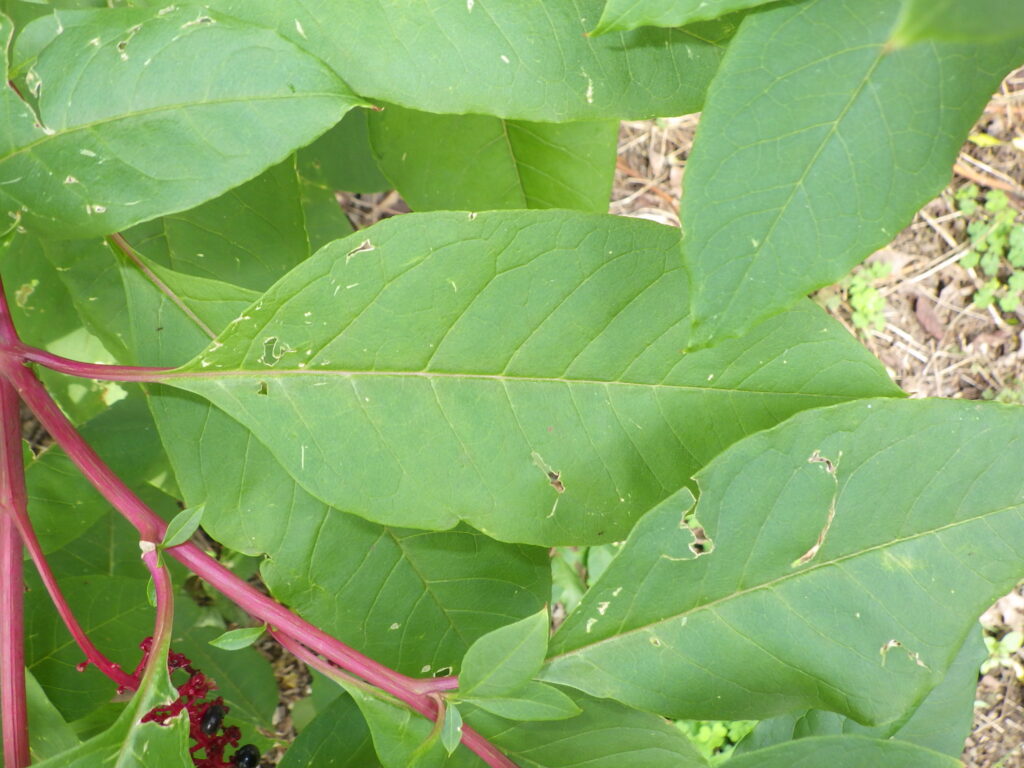
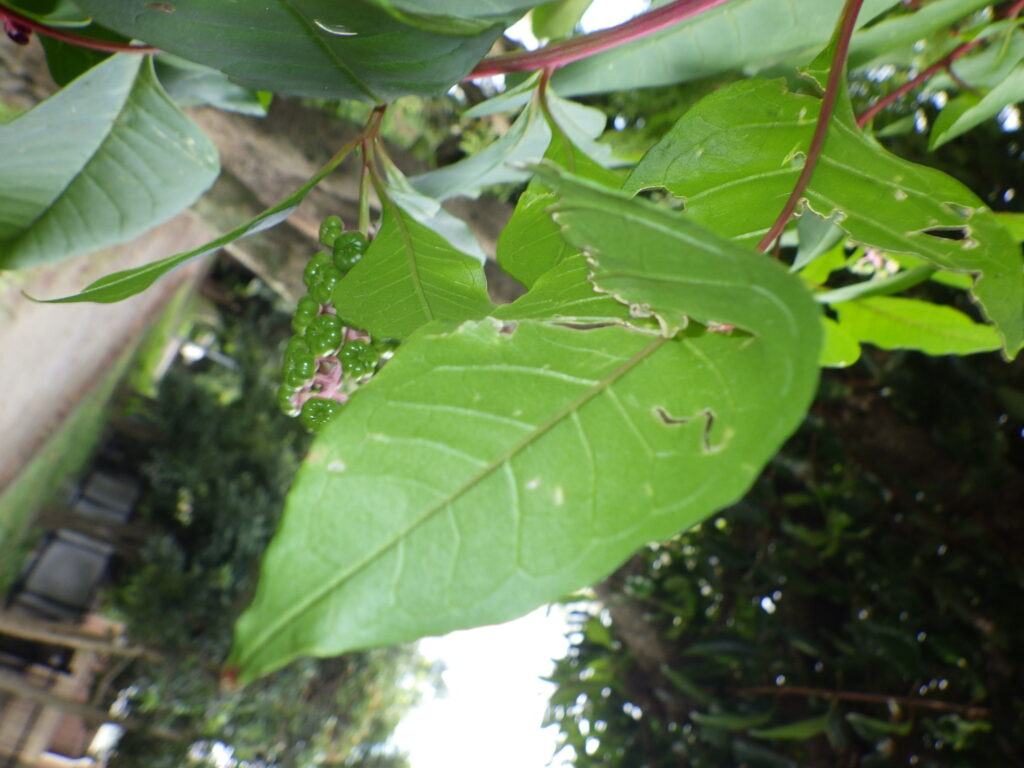
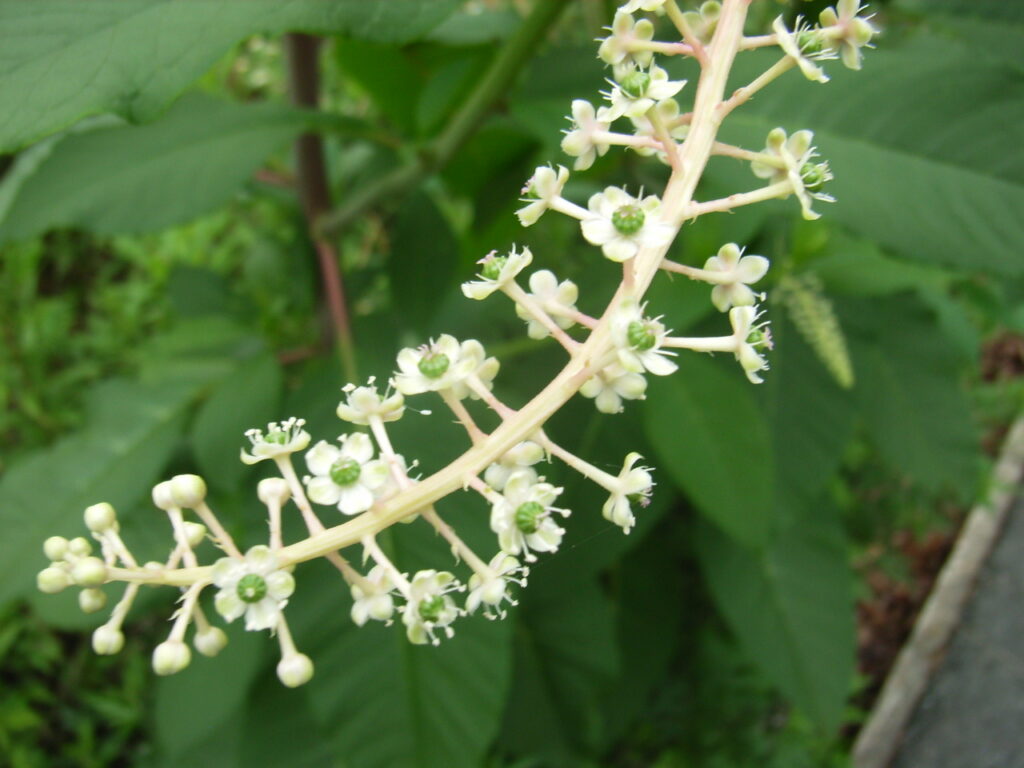
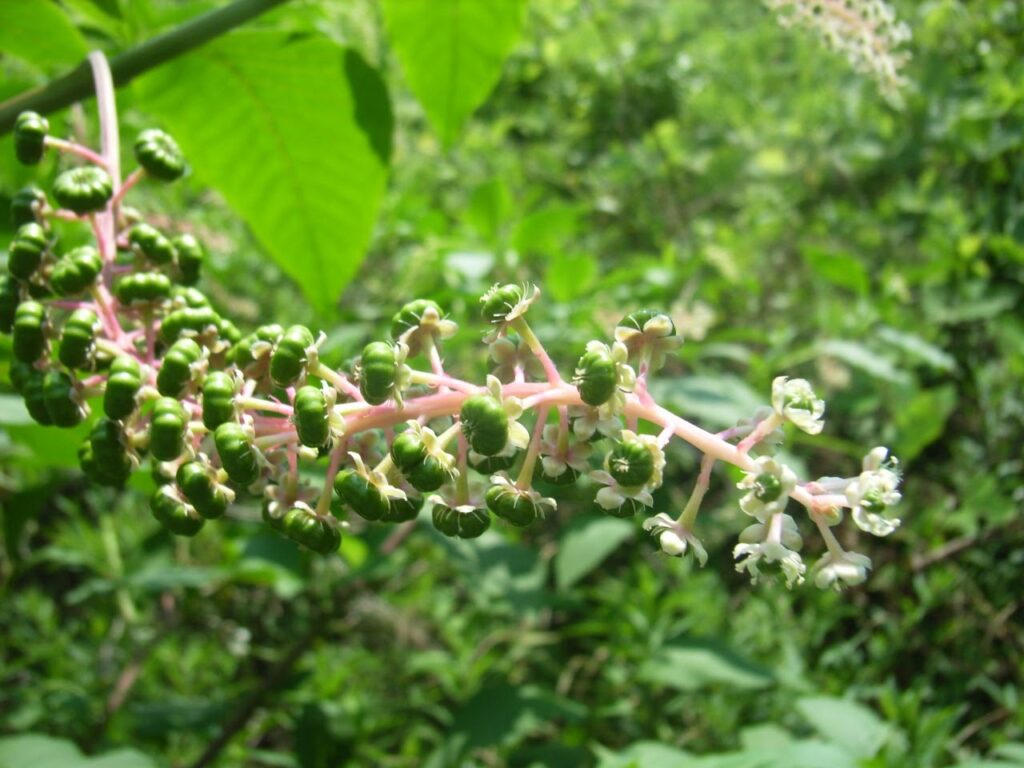
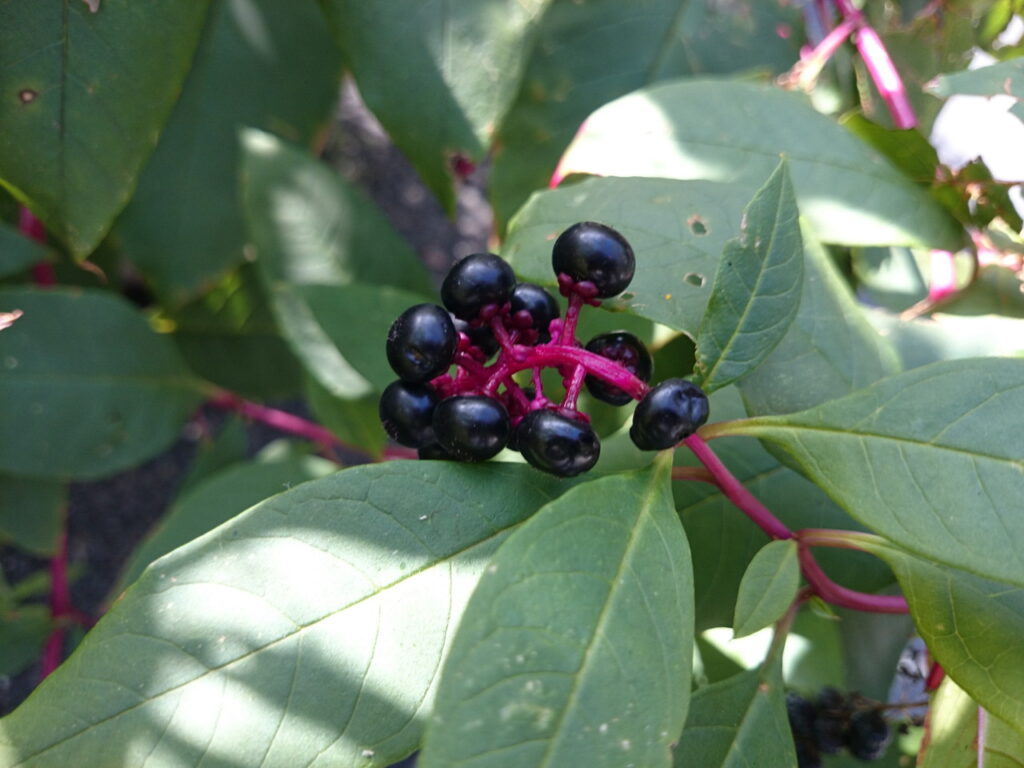
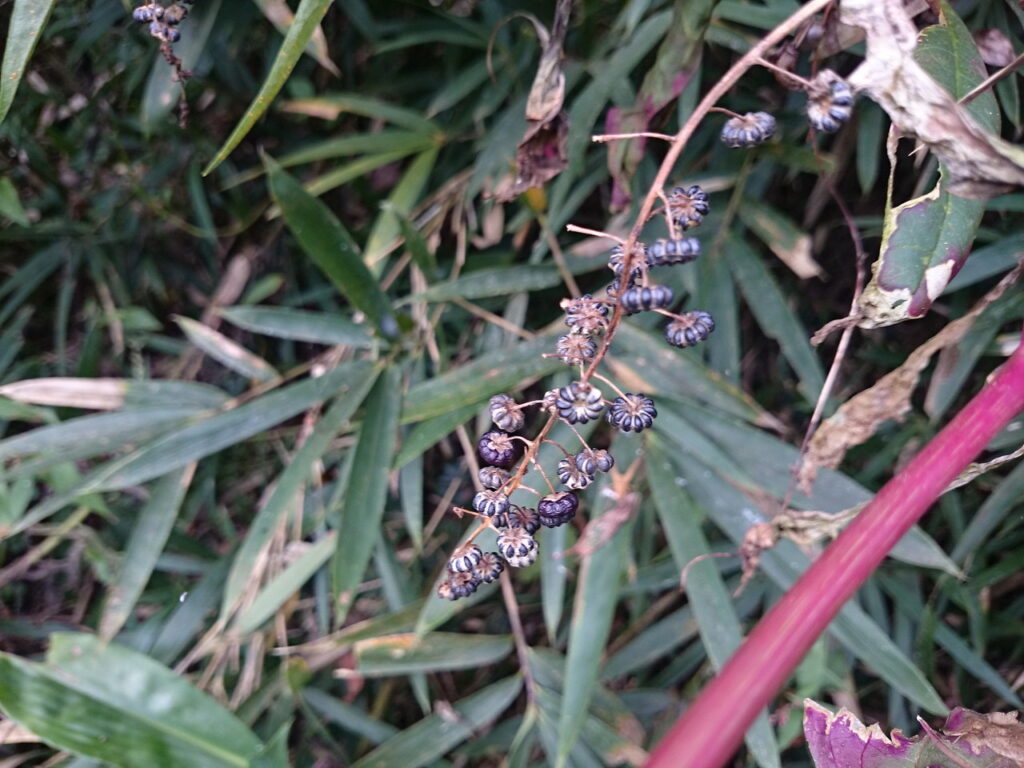
What is the difference between Japanese pokeweed (Phytolacca americana) and round pokeweed (Phytolacca americana)?
Regarding pokeweed (Phytolacca americana) and round pokeweed (Phytolacca oleracea), the differences are that pokeweed has leaves that do not have a tail-like tip, white flowers, and about 8 fruit segments, while round pokeweed has leaves that are pointed and tail-like, pale pink flowers, and about 7 to 10 fruit segments.
While that's what the botanical guide says, it's actually quite common for the flowers of *Phytolacca americana* to be white.
Therefore, distinguishing them by their leaves is the most reliable method, but since the tips of the leaves of American pokeweed are pointed like a tail, care must be taken to avoid confusing it with Japanese pokeweed.
While the surface of the seeds of Japanese pokeweed (Phytolacca americana) is almost smooth, that of round pokeweed (Phytolacca americana) has concentric stripes on its surface, most people probably don't need to check this detail.
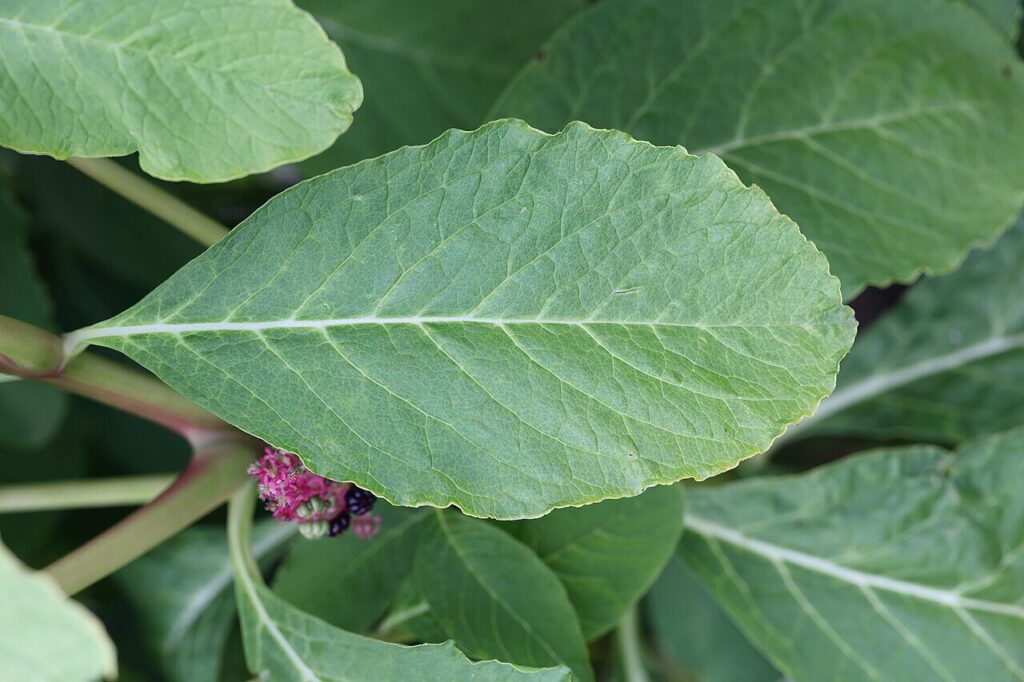
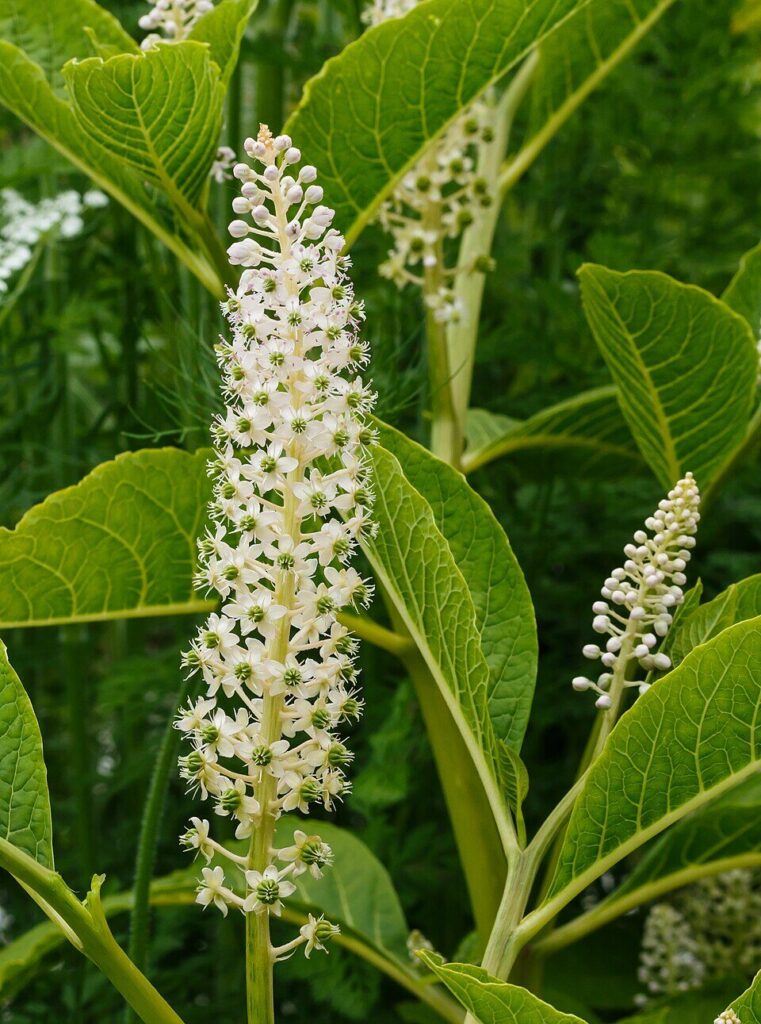
Are there any other similar varieties? What's the difference between mountain burdock and regular burdock?
No other species of the Phytolaccaceae family are known in Japan, and there are no species that can be confused with them taxonomically.
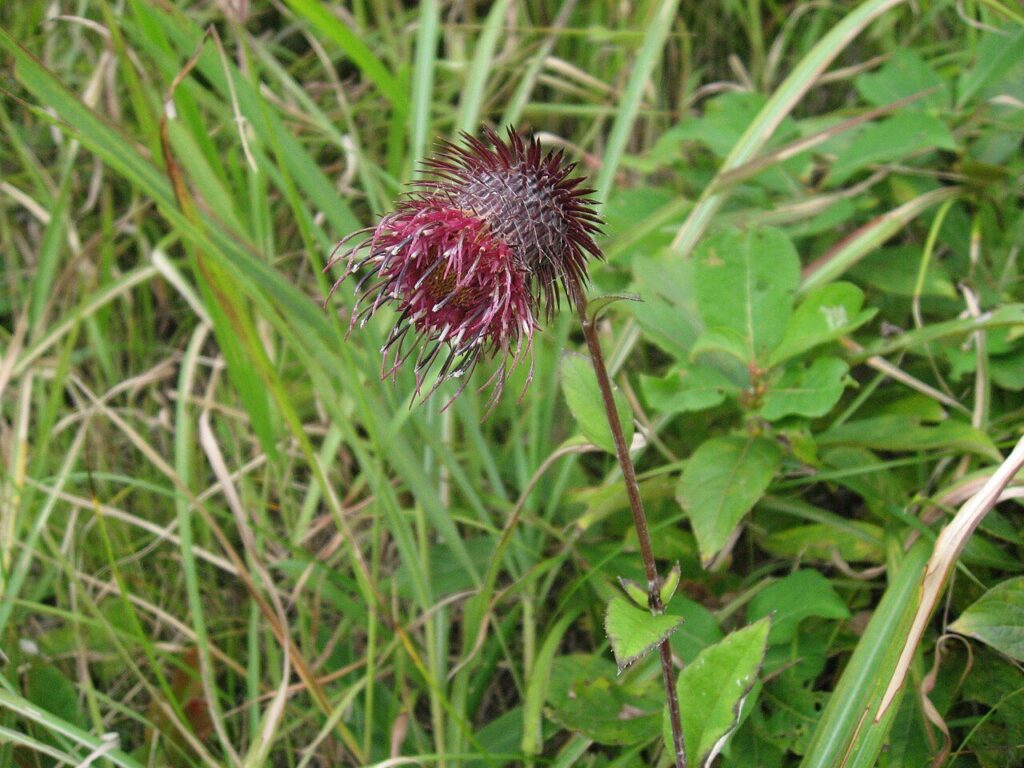
However, the roots of plants such as Arctium lappa (burdock), Cirsium dipsacolepis, Cirsium borealinipponense, Synurus palmatopinnatifidus var. indivisus, and Synurus pungens var. pungens, all belonging to the Asteraceae family, are sometimes called "yamagobo" (mountain burdock) as wild vegetables. This confusion with the scientifically recognized genus Phytolacca has led to food poisoning (Takai, 1983). There have even been fatalities, so it is absolutely essential to avoid eating the roots and fruits of yamagobo (Xu et al., 2025).
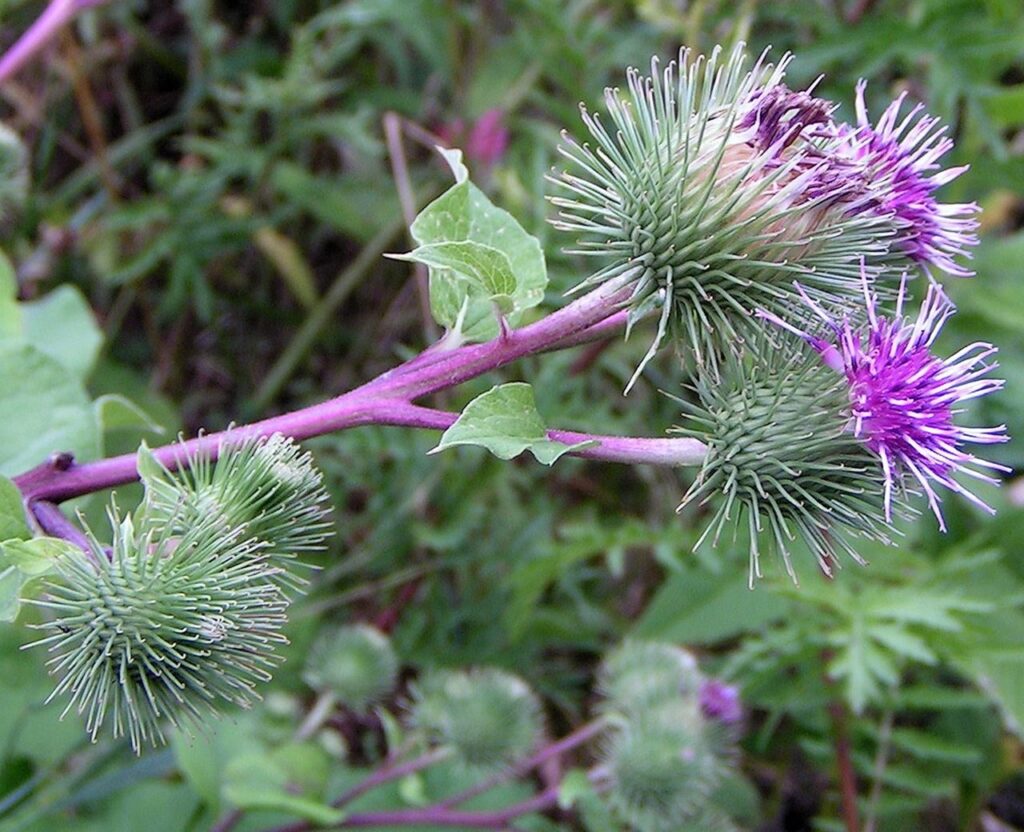
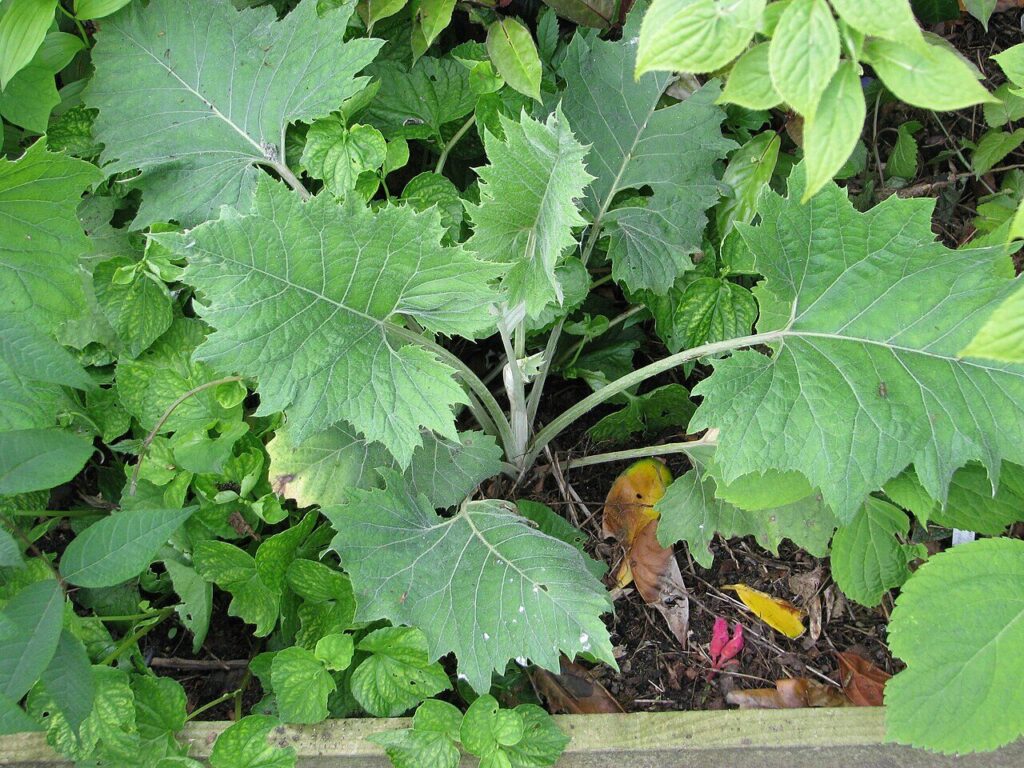
Although they are often confused, both burdock and Japanese holly belong to the Asteraceae family, and are particularly related to thistles, so their leaves, flowers, and fruits are completely different.
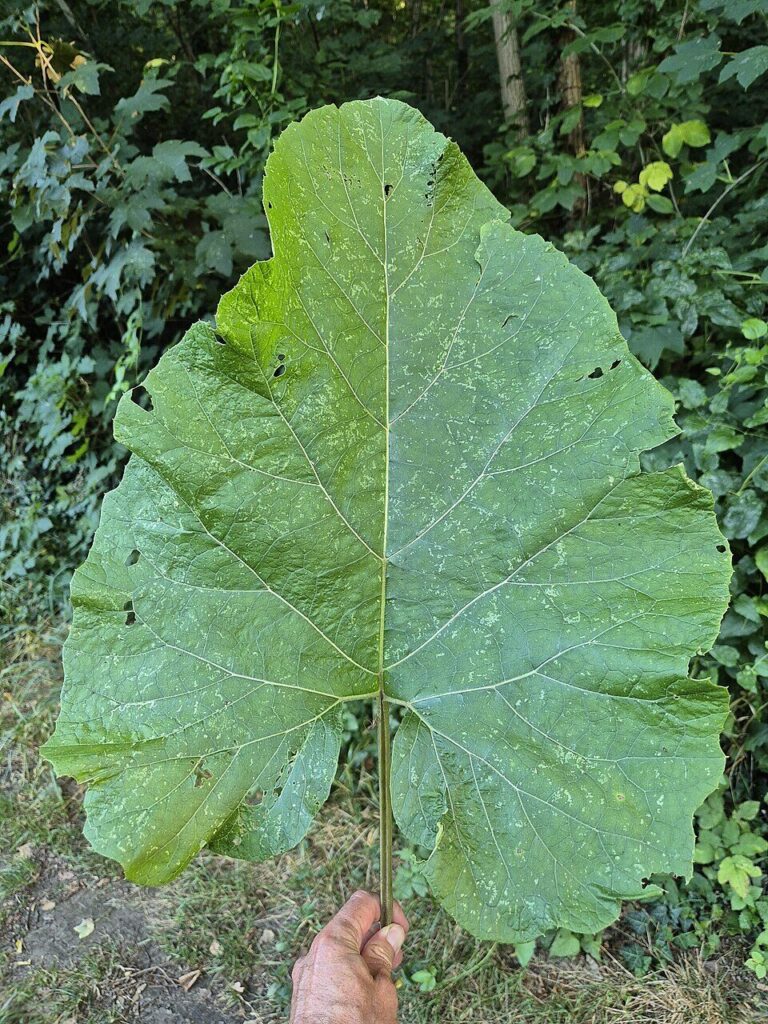
Specifically, regarding the leaves, there is a difference in that the leaves of the Phytolacca genus are entire (without serrations, or spines), whereas those of burdock and *Phytolacca americana* have serrations.
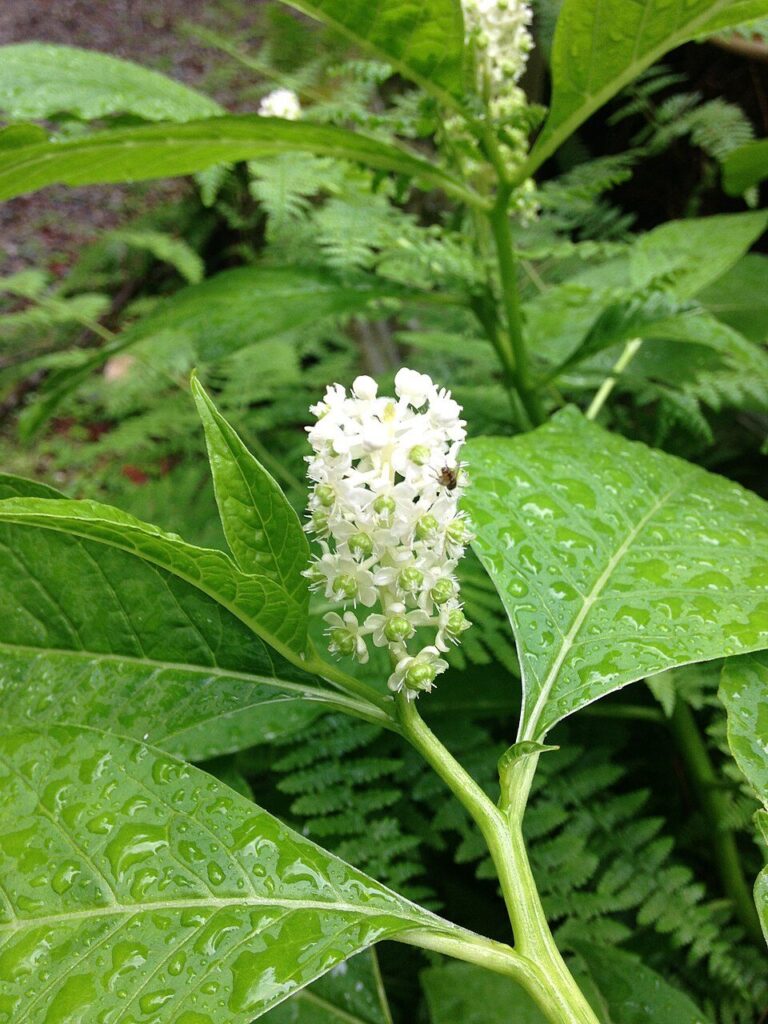
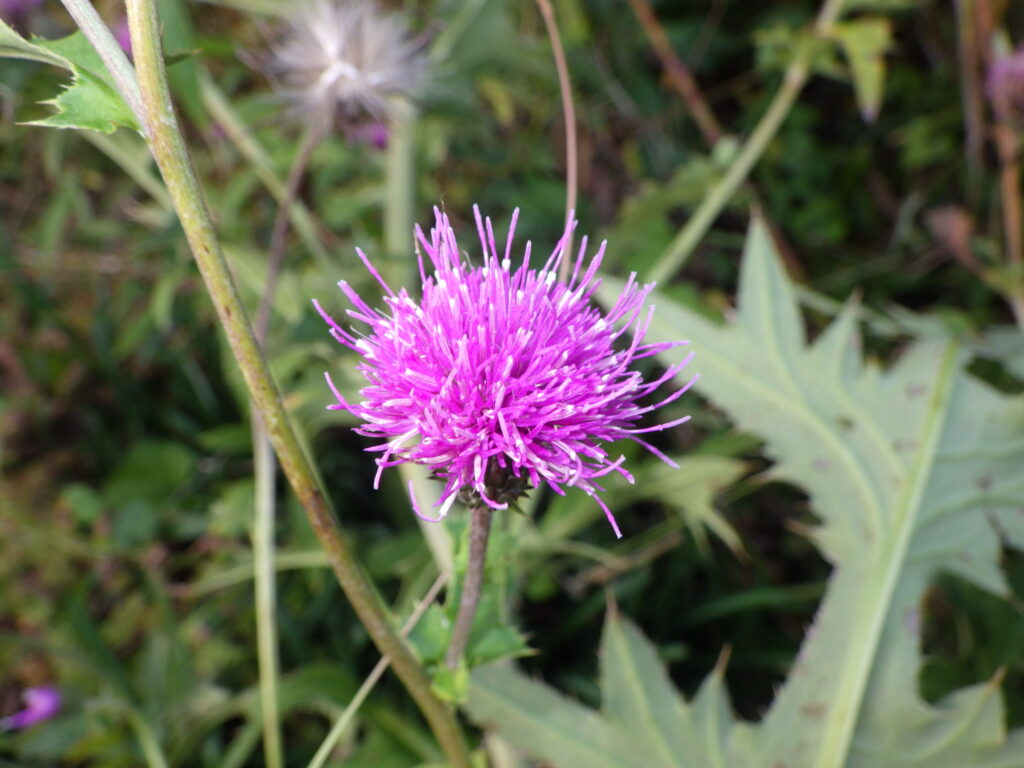
Regarding the flowers, in the Phytolacca genus, the inflorescence is racemose, and the flowers are white to red with five sepals that resemble petals, whereas in burdock and Oyamabokuchi, the inflorescence is composed of clusters of fused-petal flowers called capitulums, and they are pink, very similar to thistles.
Regarding the fruits, Phytolacca species produce flattened, spherical, blackish-purple berries that are dispersed by birds, while burdock and Phytolacca americana have achenes with a pappus that somewhat resemble dandelion seeds (which are actually also fruits), and are dispersed by wind (or by animals).
The same applies to Cirsium japonicum, Cirsium nipponicum, and Cirsium moniliforme. Please see our other article for more information on the Cirsium genus.
How are the seeds dispersed? The poisonous berries are a favorite of birds!?
The fruits of the Phytolacca genus are berries, oblate in shape, and turn blackish-purple. The inside is divided into schizocarps, which vary depending on the species, but typically consists of 7 to 10 segments.
The berries of the genus Phytolacca are poisonous to mammals such as humans, but are non-toxic to birds, and their distribution is expanded by bird dispersal (Kaneko et al., 2012; Li et al., 2017).
In Japan, there are records of it being eaten by Japanese white-eyes, Japanese bush warblers, Arctic warblers, Japanese bush hawks, and wrens (Kaneko et al., 2012).
In China, there are records of it being eaten by the white-headed hawk (Pycnonotus sinensis) and the swan hawk (Urocissa erythroryncha) (Li et al., 2017).
It is known that birds play a major role in the spread of invasive species in urban areas (Li et al., 2017).
This type of seed dispersal is likely the result of selecting birds, which are more efficient at seed dispersal, and avoiding mammals.
In the Phytolacca genus, as the fruit ripens, the pedicel turns red, and even the small pedicels and stems after the fruit has fallen off turn a deep crimson.
This is known as "morphological bicolor" and is thought to have a conspicuous effect on birds due to its contrast (Kamitani, 1999). In fact, experiments have shown that red and black bicoloration increases the likelihood of being eaten by birds in canopy gaps rather than under a closed canopy.
References
Kaneko, Naoki; Nakata, Makoto; Chiba, Akira; and Ito, Yasuo. (2012). Autumn fruit utilization by birds in coastal forests of Niigata City. Journal of the Ornithological Society of Japan, 61 (1), 100-111. https://doi.org/10.3838/jjo.61.100
Kanagawa Prefecture Flora Survey Association. (2018). Kanagawa Prefecture Flora 2018 Electronic Edition. Kanagawa Prefecture Flora Survey Association. ISBN: 9784991053726,https://flora-kanagawa2.sakura.ne.jp/efloraofkanagawa.html
Kamitani, Tomohiko. 1999. The two-color display strategy of fruits. In: Ueda, Keisuke (Ed.), Seed Dispersal: The Evolution of Mutual Aid Vol. 1 Seeds Carried by Birds (pp. 52-63). Tsukiji Shokan. ISBN: 9784806711926
Li, N., Yang, W., Fang, S., Li, X., Liu, Z., Leng, X., & An, S. (2017). Dispersal of invasive Phytolacca americana seeds by birds in an urban garden in China. Integrative Zoology, 12 (1), 26-31. https://doi.org/10.1111/1749-4877.12214
Takai, Katsumi. (1983). Food poisoning caused by pickled pokeweed. Journal of Food Hygiene, 24 (5), 510-511. https://doi.org/10.3358/shokueishi.24.510
Xu, H., Zhou, H., Wang, Q., Wan, S., Chen, W., Hu, J., & Zhao, S. (2025). Description of a fatal case of acute Phytolacca americana poisoning due to leaf ingestion in China. Toxicon, 265, 108476. https://doi.org/10.1016/j.toxicon.2025.108476