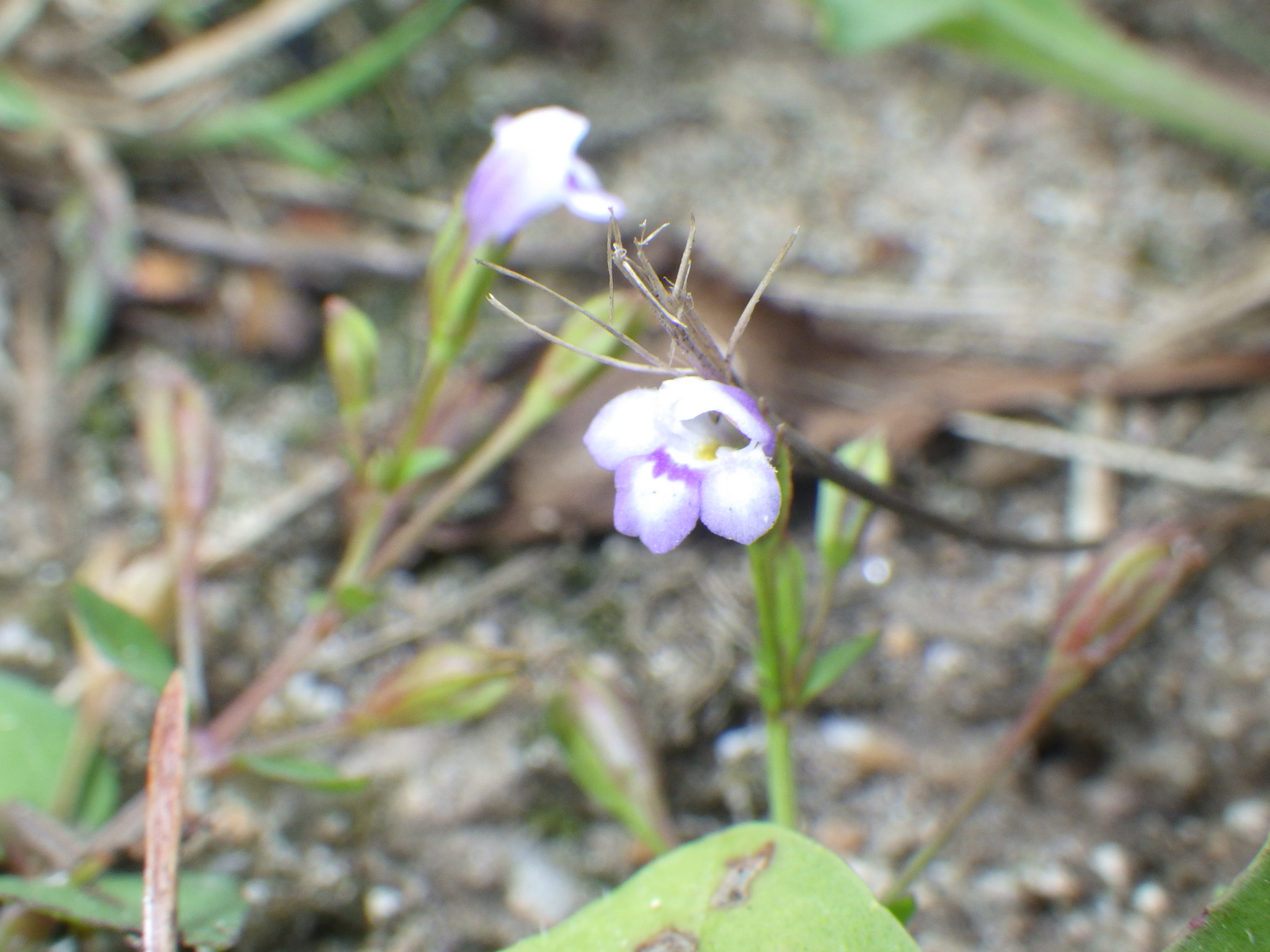
Lindernia procumbens, Lindernia maximowiczii, and Lindernia avium are all small annual herbs belonging to the Linderniaceae family. They are characterized by opposite leaves and small, lip-shaped flowers in the leaf axils. Although they are rather inconspicuous, their flowers are very similar, making them easily confused. These three species differ in their habitat, leaves, and flowers. However, the Linderniaceae family includes many other similar species, so careful identification is necessary. This article will explain the classification and morphology of the Linderniaceae family.
What are Lindernia procumbens, Lindernia maritima, and Lindernia glabra?
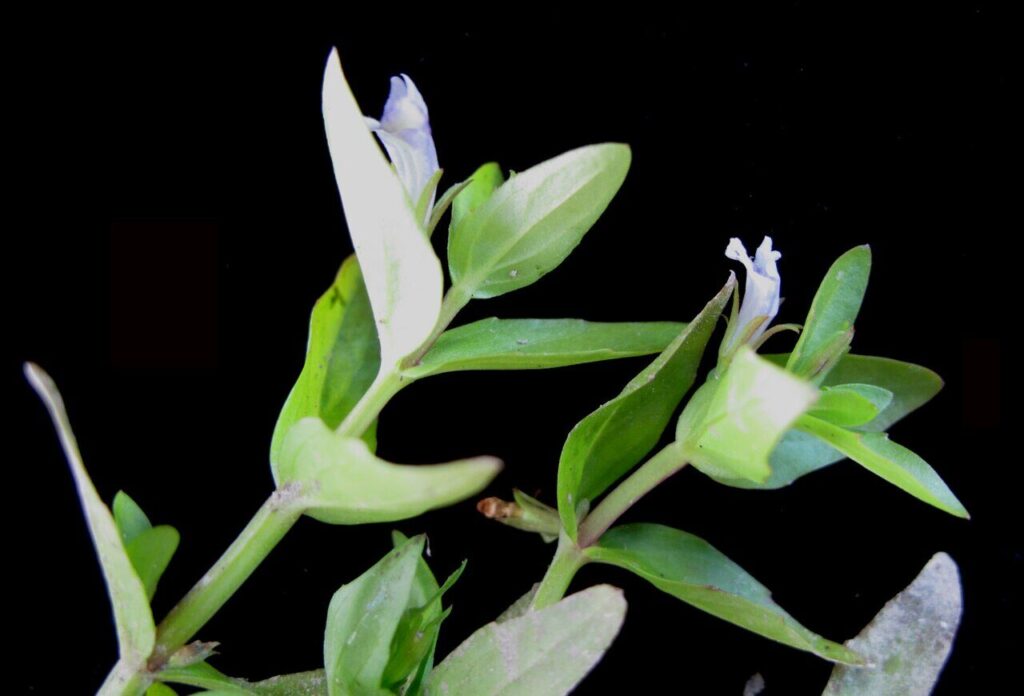
Torenia crustacea is an annual plant that grows in fields and roadsides, distributed in Hokkaido, Honshu, Shikoku, Kyushu, and the Ryukyu Islands in Japan; as well as in Korea, China, Southeast Asia, and Micronesia (Kanagawa Prefecture Flora Survey Association, 2018).
Lindernia procumbens is an annual plant that grows in rice paddies and wetlands, and is widely distributed in Honshu, Shikoku, Kyushu, and the Ryukyu Islands of Japan, as well as in tropical to temperate regions of the Northern Hemisphere.
Lindernia dubia subsp. major is a naturalized species native to North America that has become widespread since the end of World War II. It is an annual plant that grows in slightly damp places such as rice paddies.
Both belong to the Linderniaceae family and are small annual plants characterized by opposite leaves, flowers in the leaf axils, a tubular calyx with 5 lobes, a bilabiate corolla with the upper lip 2-lobed and the lower lip broadly 3-lobed, and the absence of a spur.
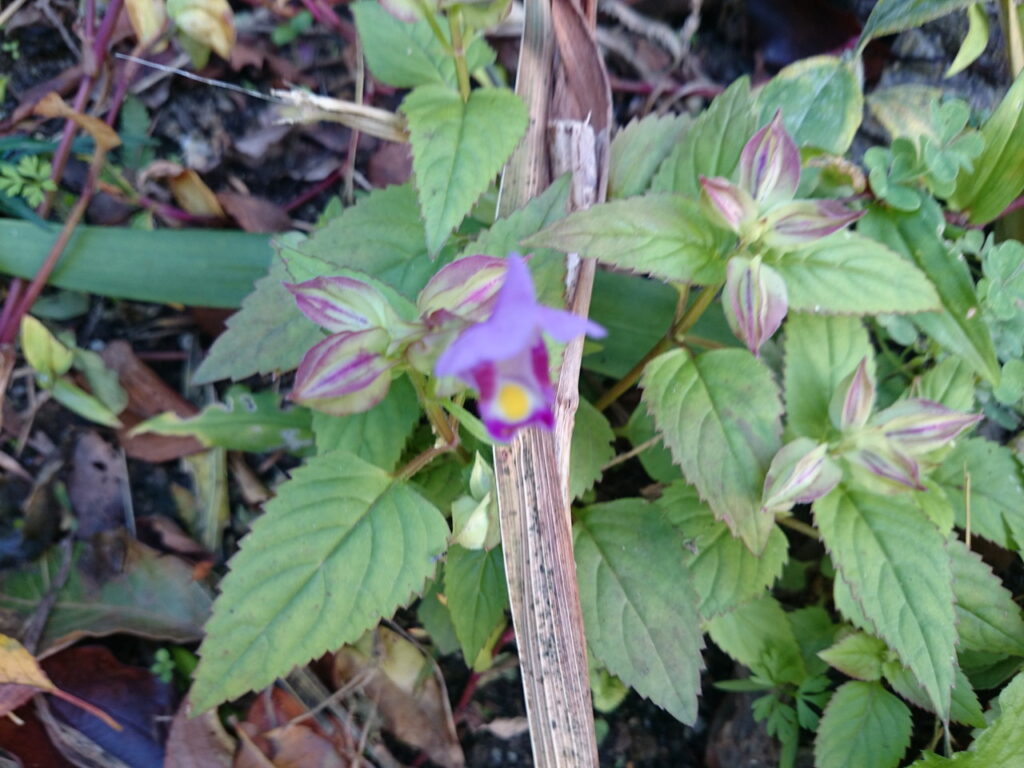
Although it is a common wild plant that grows throughout the area, its flowers are small and inconspicuous, so they are often overlooked. Furthermore, all members of the Linderniaceae family have very similar flowers, which can lead to confusion.
What are the differences between Lindernia procumbens, Lindernia maritima, and Lindernia serrata?
The family Linderniaceae includes many species, but for now we will consider three well-known species (Hayashi et al., 2013; Kanagawa Prefecture Flora Survey Association, 2018).
As a fundamental point, within the Linderniaceae family, there is a difference in that Lindernia procumbens belongs to the genus Lindernia, while Lindernia serrata and Lindernia moniliformis belong to the genus Lindernia. Therefore, there is a gap in their classification.
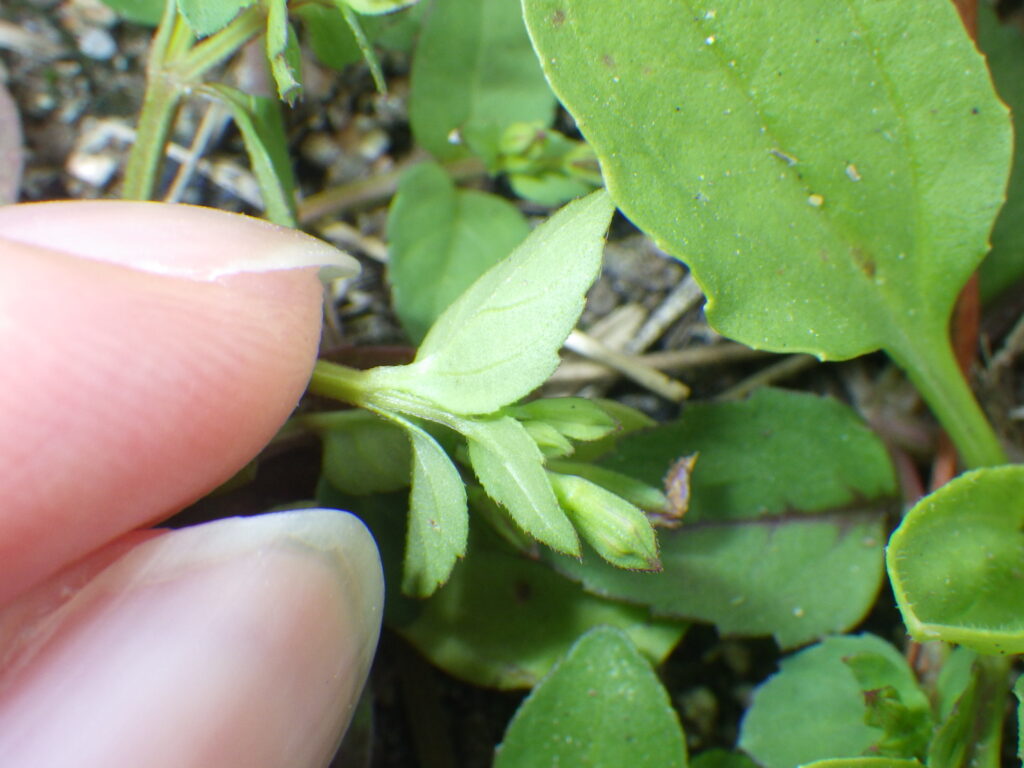
In particular, the differences are that in the genus *Lindernia* (Lindernia procumbens), the calyx is shallowly 5-lobed at the tip, and the calyx lobes are shorter than the calyx tube, while in the genus *Lindernia procumbens* (Lindernia japonica and *Lindernia mongolica*), the calyx is deeply 5-lobed almost to the base, and the calyx lobes are narrowly ovate and longer than the calyx tube.
The differences at the genus level are as described above, but there are other differences if we focus on Lindernia procumbens, Lindernia maximowiczii, and Lindernia avium.
Regarding habitat, there is a difference in that *Lindernia procumbens* grows in fields and roadsides, while *Lindernia ovalifolia* and *Lindernia procumbens* grow in rice paddies and wetlands.
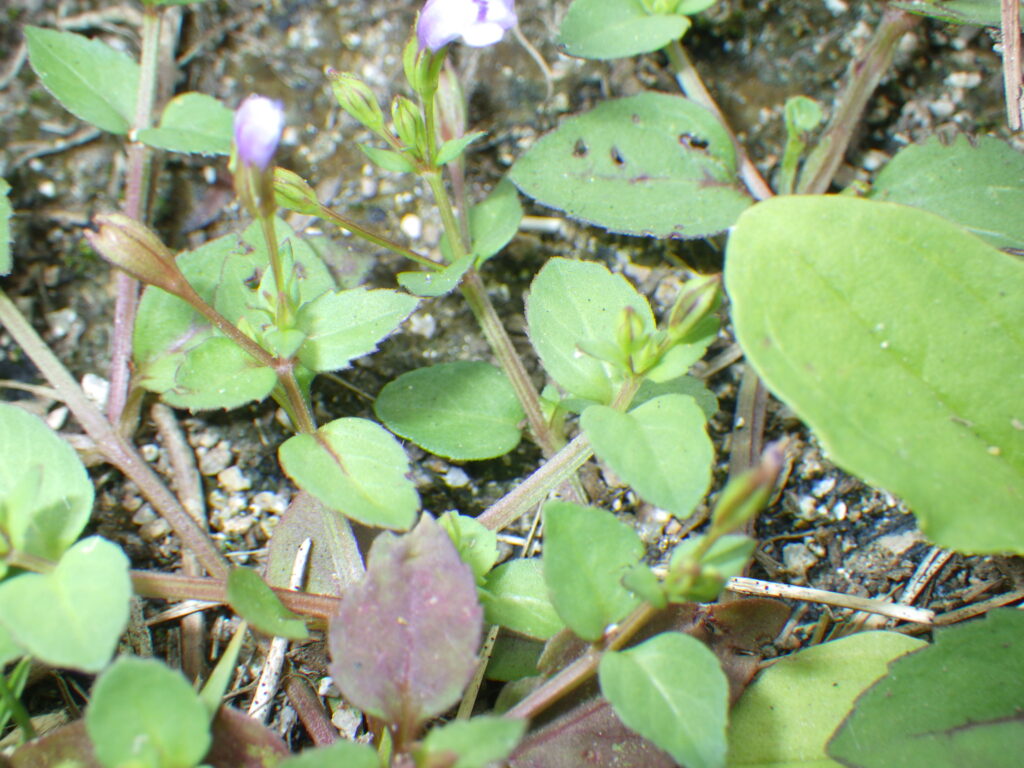
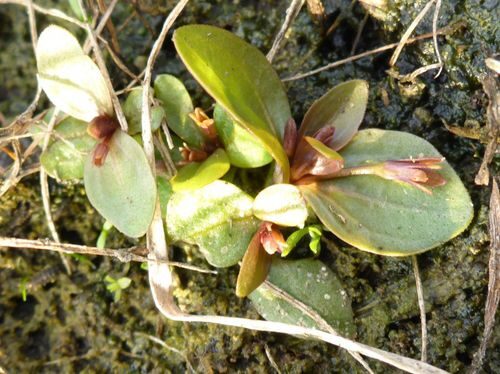
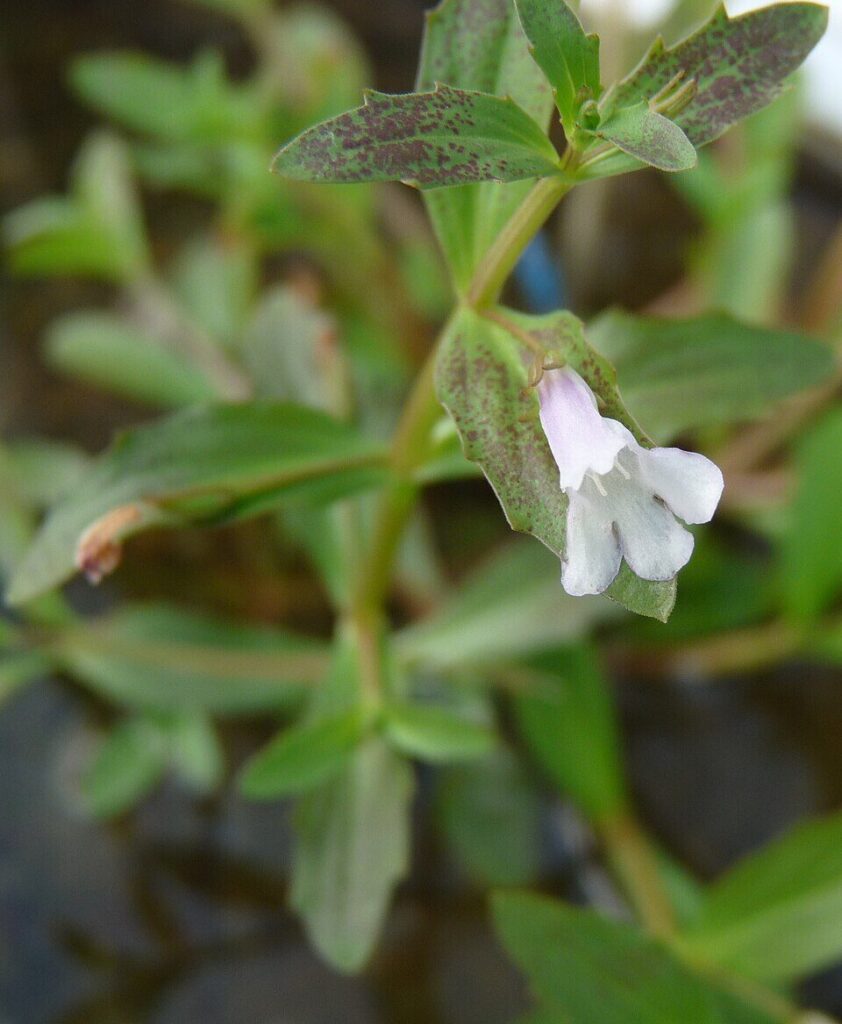
Regarding the leaves, there is a difference in shape: in *Lindernia procumbens*, the leaves are ovate to broadly ovate, while in *Lindernia japonica* and *Lindernia procumbens*, they are ovate to elliptical.
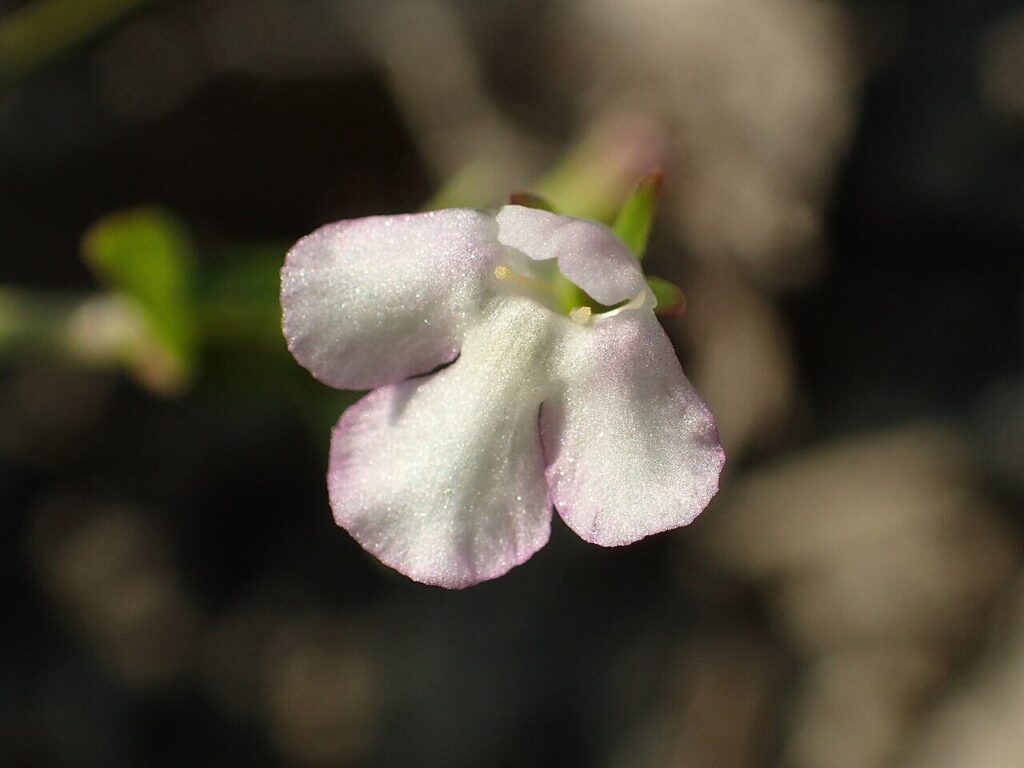
Regarding the flowers, *Lindernia procumbens* has a dark blue-purple pattern on the central lobe and the edges of the petals are slightly darker in color, whereas *Lindernia ovalifolia* and *Lindernia procumbens* do not have any special markings.
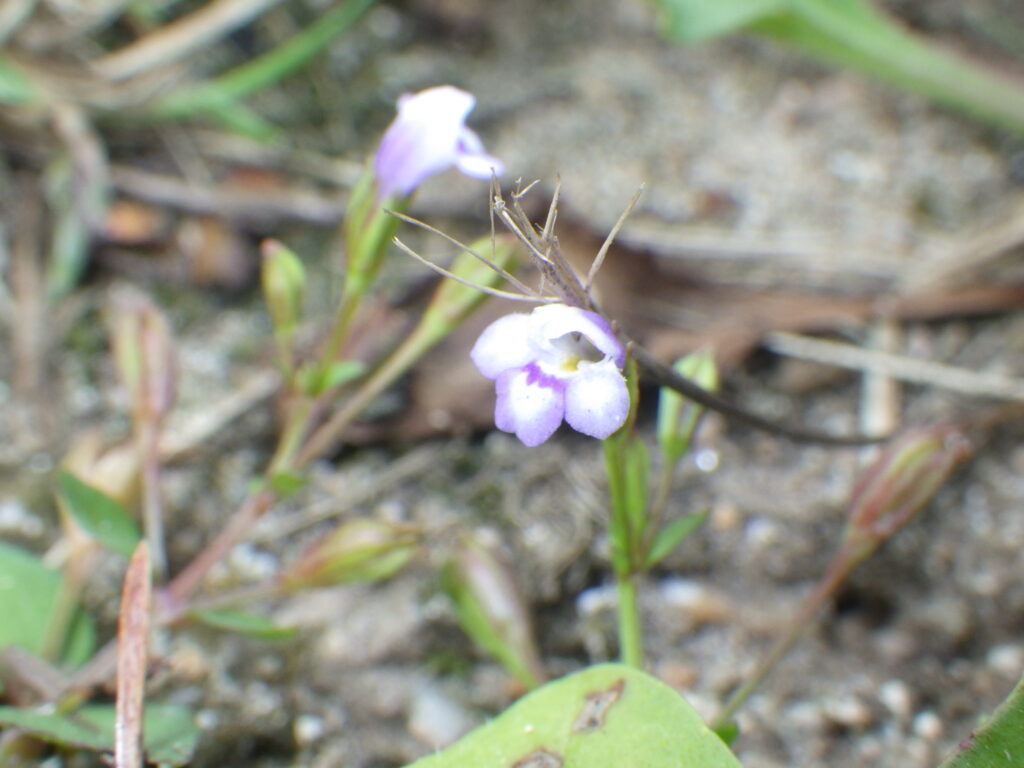
What is the difference between Azena and American Azena?
The biggest difference between Lindernia procumbens and Lindernia asiatica is that Lindernia procumbens leaves have indistinct serrations that are only slightly indented, while Lindernia asiatica leaves have a small number of serrations.
Other differences include the fact that in Lindernia procumbens, there are four stamens with anthers, the fruit tip is blunt and rounded, the seeds have no transverse ridges, and the edges are thickened longitudinally, forming a series of semicircular fin-like protrusions that look like curved, fine hairs under a magnifying glass, while in Lindernia maximowicziana, only two of the four stamens have anthers, the fruit tip is pointed, the seeds have transverse ridges, and the edges of the seeds do not have thickened areas.
Currently, American dwarf
Are there any other similar species?
Although the number of species in the Linderniaceae family is limited, there are more closely related species than one might think because their flowers are very similar.
Lindernia dubia subsp. dubia is a subspecies of Lindernia japonica and is very similar to it, but the base of its leaves is rounded to elliptical and clasps the stem, at least for leaves attached to the middle of the stem or higher. In Lindernia japonica, the base of the leaves is distinctly wedge-shaped and does not clasp the stem, even for leaves attached to the upper part of the stem.
Lindernia anagallidea has dense glandular hairs all over its body when young, which later remain on the flower stalks and fruits. Other Lindernia species usually do not have such prominent glandular hairs on their bodies. Like Lindernia procumbens, it is an introduced species, but there are only a few records of it.
Vandellia micrantha, a species of the genus Vandellia, has leaves with shallow, few, and inconspicuous serrations. Its fruit is 3 to 4 times the length of the calyx, giving it a chili pepper-like appearance, and its flowers have yellow markings.
The broad-leaved bell pepper (Bonnaya verbenifolia) and the branched bell pepper (Bonnaya grandiflora), both belonging to the genus Bonnaya, have leaves with numerous sharp, pointed serrations, fruits with pedicels as thick as the fruit body, and flowers that appear to be flattened sideways.
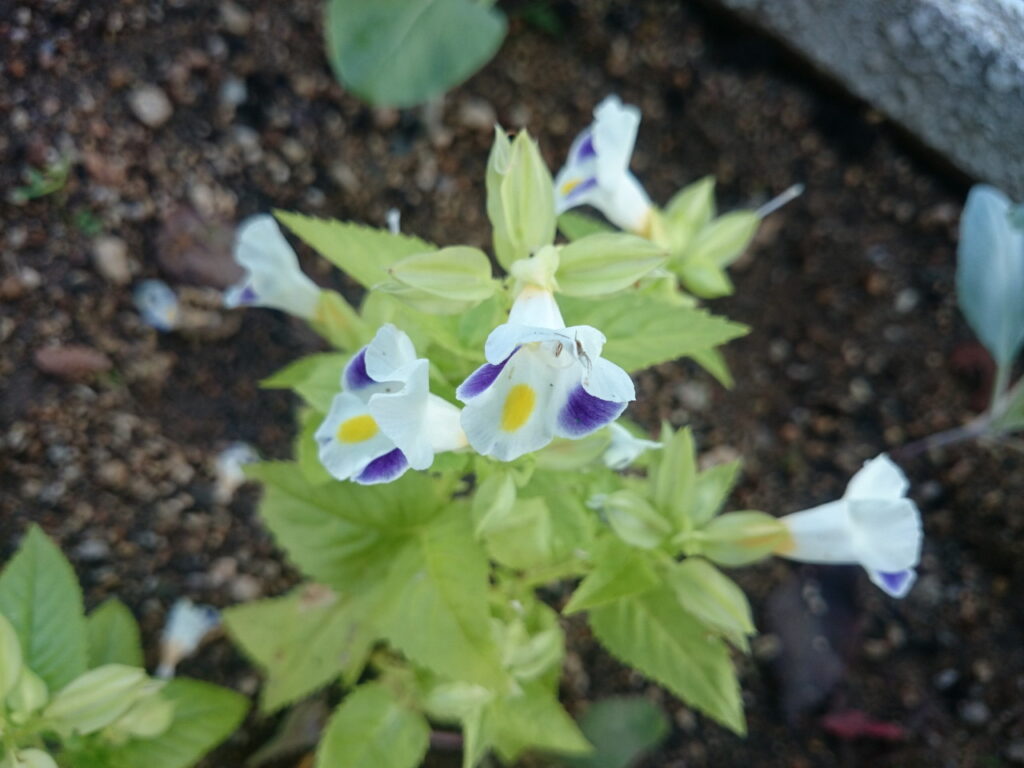
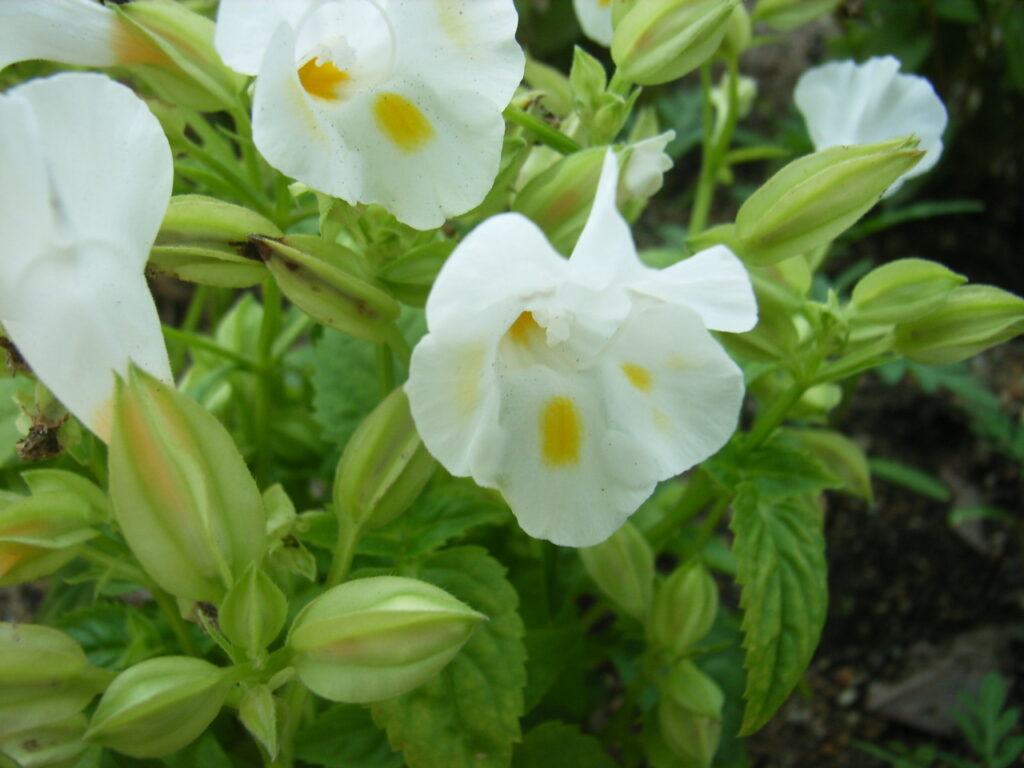
Torenia (also known as Hanaurikusa) is a cultivated variety, and while Torenia belongs to the same genus, its flowers and leaves are much larger, making them look completely different.
References
Hayashi, Yasaka, Kadota, Yuichi, and Hirano, Takahisa. (2013). Yamakei Handy Illustrated Guide 1: Wildflowers (Revised and Expanded New Edition). Yama-kei Publishers. ISBN: 9784635070195
Kanagawa Prefecture Flora Survey Association. (2018). Kanagawa Prefecture Flora 2018 Electronic Edition. Kanagawa Prefecture Flora Survey Association. ISBN: 9784991053726,https://flora-kanagawa2.sakura.ne.jp/efloraofkanagawa.html