Sponsored Link
plant

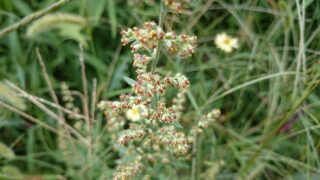
What are the differences between mugwort, wormwood (Artemisia princeps), bitter wormwood, and male wormwood? We'll explain how to distinguish between similar species! Did you know that mugwort is used not only in rice cakes but also in moxibustion and medicine?

ヨモギ・フーチバー(ニシヨモギ)・ニガヨモギ・オトコヨモギはいずれもキク科ヨモギ属に含まれ、多くの種類で町中から山野までのちょっとした空き地に優占して生えている極めて普通の多年草です。葉の下面が綿状でふわふわとしていることに加えて、キク科に...
plant

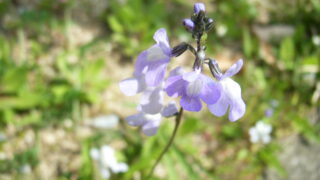
What are the differences between *Linaria japonica*, *Linaria cantoniensis*, and *Linaria thunbergii*? We explain how to distinguish between similar species! Despite their showy flowers, they are entirely self-pollinating!?

*Linaria japonica*, *Linaria cantoniensis*, and *Linaria thunbergii* all belong to the Plantaginaceae family and are herbaceous plants that bear cute, blue-colored "lip-shaped flowers" (flowers with separate upper and lower lips) with a swollen center on the lower lip. Although they are introduced species, they are frequently seen in urban areas, but their flowers...
plant

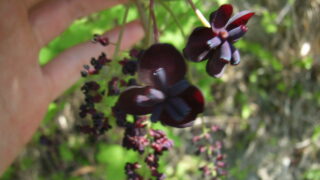
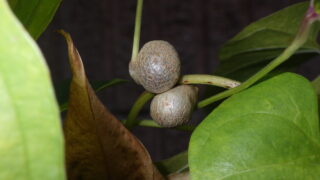
What are the differences between Akebia, Akebia trifoliata, Akebia quinata, and Stauntonia hexaphylla? We explain how to distinguish between similar species! Are the large female flowers a way to deceive insects? Who eats the fruit in the wild?

Akebia, Akebia trifoliata, Akebia quinata, and Stauntonia hexaphylla all belong to the Akebia family. They are climbing plants with palmately compound leaves, and a key characteristic is that male and female flowers bloom separately. Akebia and Akebia trifoliata, in particular, are famous for the edible white, gelatinous pulp inside their opened fruits. For many, it's a taste of the countryside from their childhood...
plant

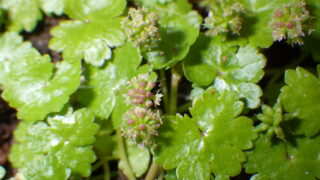
What are the differences between *Hydrocotyle japonica*, *Hydrocotyle sibthorpioides*, *Hydrocotyle japonica*, and *Hydrocotyle maximowiczii*? We'll explain how to distinguish between similar species! What insects visit these tiny flowers?

Hydrocotyle sibthorpioides, Hydrocotyle japonica, Hydrocotyle kobus, and Hydrocotyle sibthorpioides all belong to the genus Hydrocotyle in the family Araliaceae. These perennial herbs creep along the ground in slightly shaded areas of forests and other woodlands, and are notable for their small, nearly orbicular simple leaves. However, their flowers and fruits are small and inconspicuous...
plant

What are the differences between Japanese yam (Dioscorea japonica), Chinese yam (Dioscorea japonica), Japanese yam (Dioscorea tokoro), and bitter yam (Dioscorea japonica)? We explain how to distinguish between similar species! Why do they produce bulbils? Their reproductive strategies were diverse!

Japanese yam (Dioscorea japonica), Chinese yam (Dioscorea longa), Japanese yam (Dioscorea tokoro), and bitter yam (Dioscorea japonica) all belong to the genus Dioscorea in the family Dioscoreaceae. They produce edible tubers and bulbils, and are very common climbing perennial plants often seen in urban areas. The genus Dioscorea, also known as yam, is a group that includes a vast number of species...
plant

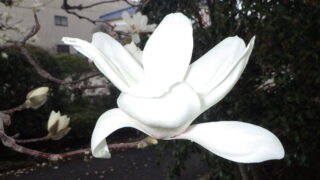
What are the differences between white magnolia, kobushi magnolia, star magnolia, and tamushiba magnolia? We'll explain how to distinguish between similar species! Is it a myth that their flowers are primitive? What is the purpose of their conspicuous red seeds?

White magnolia, kobushi magnolia, star magnolia, and tamushiba all belong to the Magnolia genus of the Magnoliaceae family. Being deciduous trees, they shed their leaves in winter, and around April, like cherry blossoms, they produce large, white, polypetalous flowers—one per branch—before the leaves appear. A key characteristic of these trees is...
plant

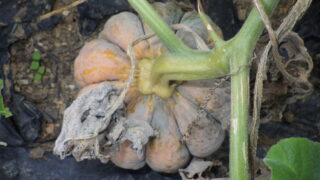
What are the differences between European pumpkins, Japanese pumpkins, and pepo pumpkins? European pumpkins are eaten in Japan, and Japanese pumpkins are eaten in the West! Were the fruits eaten by extinct animals!?

European pumpkins, Japanese pumpkins, and pepo pumpkins are all annual vining plants belonging to the Cucurbitaceae family, Cucurbita genus. Originally from the Americas, they are very popular in Japan, playing an important role in both everyday meals and Halloween celebrations. However, the three species are often confused, and their differences...
animal

What are the differences between cochineal, lac, and shellac, insects we actually eat every day? Is it true that they are found in large quantities in red foods and lipstick? Are they dangerous? Why are they used?

日本では一部地域を除いて昆虫食は極めて稀で特に都市部の若い世代ではほとんど食べる習慣がないと言えるでしょう。食糧不足に備えて昆虫食を推奨する声もありますが、「絶対に嫌!」という悲鳴がSNSを中心に聞かれます。私も昆虫を仕事にしておきながら、...
plant

Is it a myth that spices were used during the Age of Discovery to mask the smell of rotten meat? What was the real reason? Is it also a myth that they were used to improve preservation?

私は元は理系ですが世界史のコンテンツを好んで読んでいます。その中で気になる話を聞いたことがあります。それはスパイス(利用部位として茎と葉と花を除く香辛料)にはそれほど抗菌作用はなく、「スパイスが腐った肉の匂いを隠すために使われた」という説で...
animal

What are the differences, roles, functions, and ways to remember the stomachs of ruminants (tripe, honeycomb tripe, omasum, and abomasum)? Why did rumination evolve?

When you go to a yakiniku (Japanese barbecue) restaurant, you might see four parts of the cow's stomach (fore-stomach) listed as offal: mino, hachinosu, senmai, and giara. Because they have a distinctive taste and are internal organs, people either love them or hate them, but their chewy texture and compatibility with alcohol make them a popular choice...
Sponsored Link