Akichoji, Sekiyanoakichoji, and Yamahakka belong to the genus Mentha in the Lamiaceae family. These perennial herbs are found in forests and are notable for their remarkably long corollas compared to other members of the Lamiaceae family. While identification can sometimes be confusing, you can generally distinguish them by paying attention to the corolla and leaves. Identifying whether it is Yamahakka requires careful consideration, as there are eight species in the genus Mentha in Japan, but only Akichoji and Sekiyanoakichoji have remarkably long corollas. This article will explain the classification and morphology of the genus Mentha.
What are Akichouji, Sekiyanoakichouji, and Yamahakka?
Isodon longitubus, also known as autumn clove, is a perennial herb that grows in the shade of trees in the mountains from Gifu Prefecture westward to Kyushu in Japan (Kitamura et al., 1957).
Isodon effusus, also known as Sekiya-no-akichouji (Sekiya's Autumn Clove), is a perennial herb distributed along the Pacific coast of central Honshu, Japan (from Tochigi Prefecture to Aichi Prefecture), growing in woodlands and forest edges in hilly to mountainous areas from the Castanopsis/Oak zone to the Beech zone (Kanagawa Prefecture Flora Survey Association, 2018). Its Japanese name comes from "Sekiya," a hut where guards at checkpoints were stationed, and it was described based on a specimen from Hakone Seki in Kanagawa Prefecture (one of the checkpoints that existed during the Edo period).
Isodon inflexus, also known as mountain mint, is distributed in Hokkaido, Honshu, Shikoku, and Kyushu in Japan; the Korean Peninsula; and central to northeastern China. It is a perennial herb that grows in alluvial plains and mountainous areas from the oak and chestnut zones to the beech zone, including grasslands, forests, and forest edges.
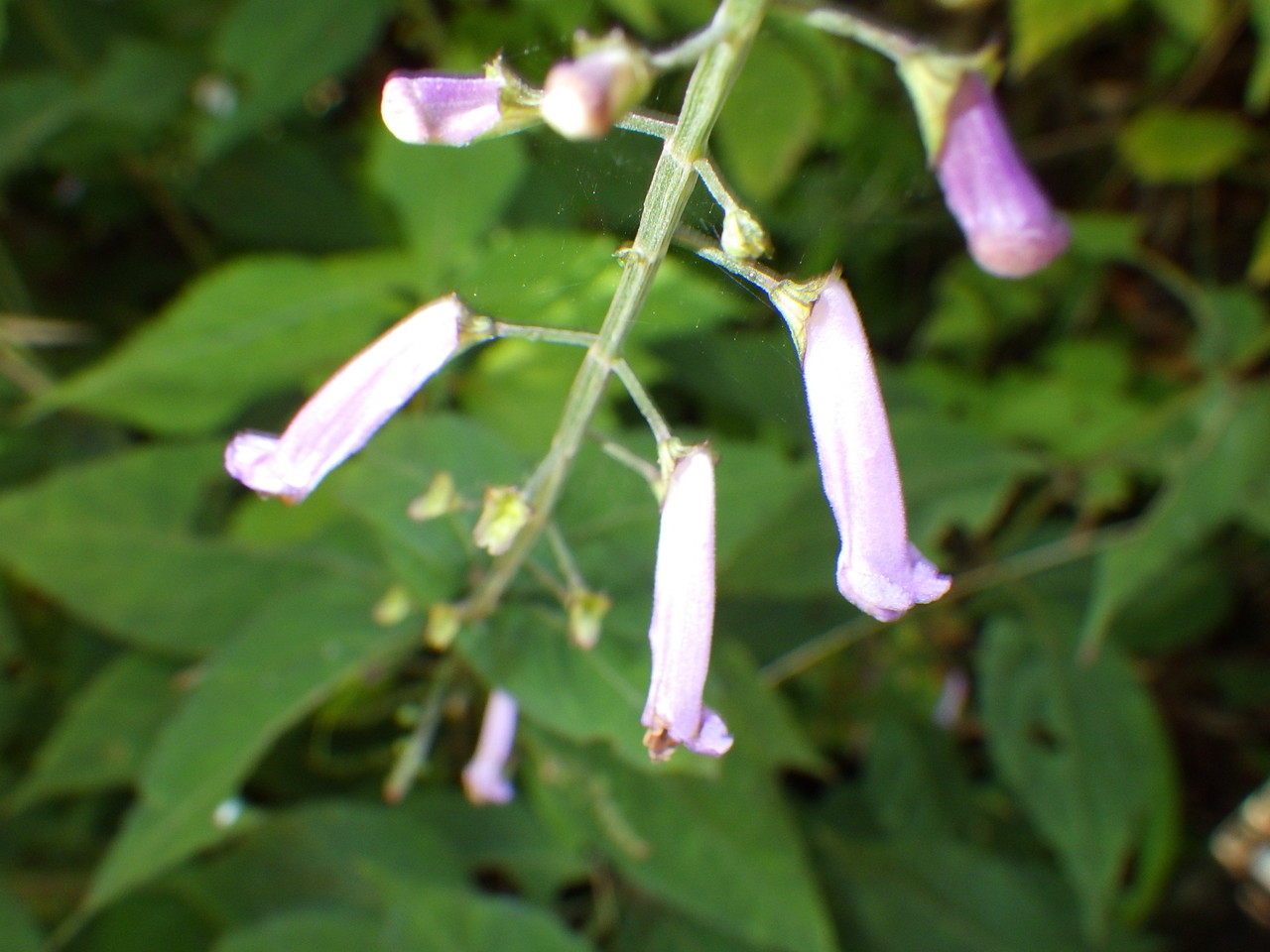
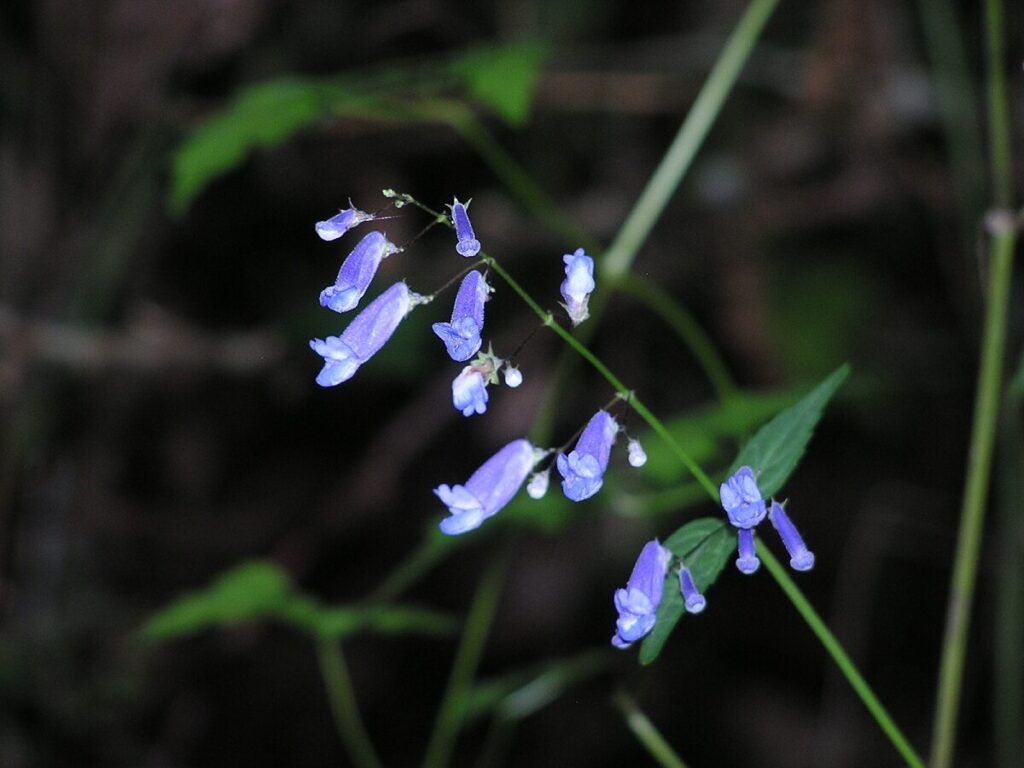
Both belong to the genus Mentha in the Lamiaceae family, and are perennial herbs found in forests. They have remarkably long corollas and conspicuous flowers, making them stand out even among Lamiaceae plants.
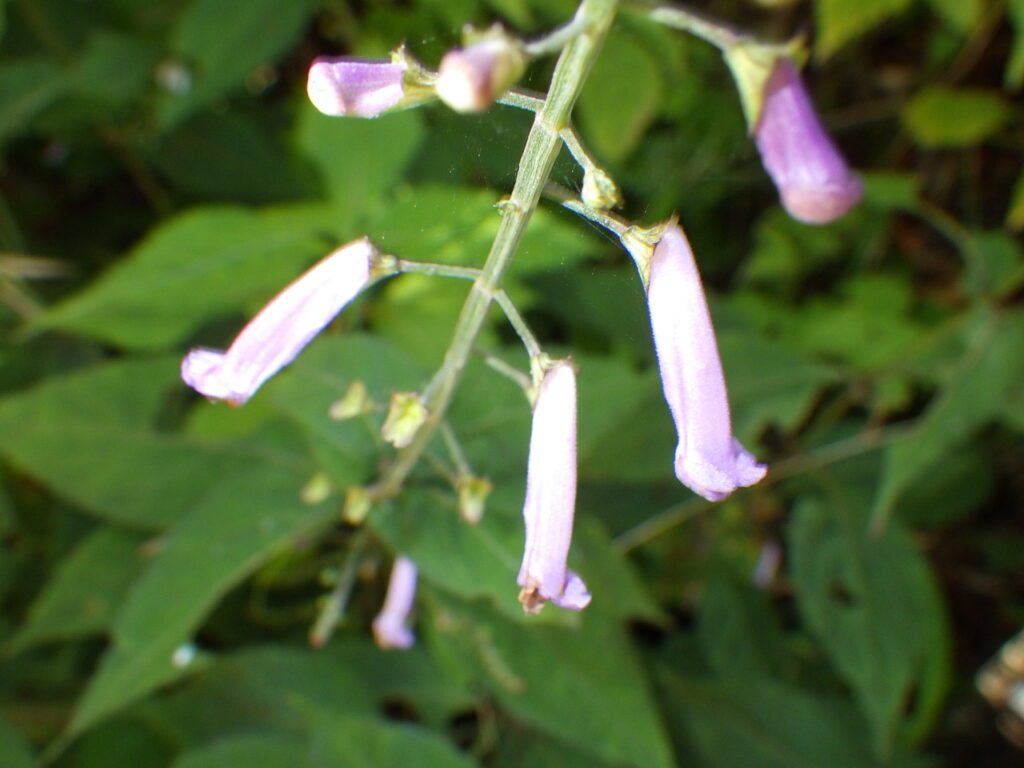
Specifically, the upper lip of the corolla is strongly recurved and shallowly four-lobed, the lower lip is boat-shaped and undivided, and the stamens extend along the lower lip.
However, you might sometimes get confused about the distinction between the three types.
What are the differences between *Akichouji*, *Sekiyanoakichouji*, and *Yamahakka*?
Since there are eight known species of the genus *Mentha* in Japan alone, it's impossible to list all the identification methods here, but we will consider methods for distinguishing three of them.
What are the differences between *Akichouji*, *Sekiyanoakichouji*, and *Yamahakka*?
The biggest difference is the corolla: in *Akichouji* and *Sekiyanoakichouji*, the corolla is 16-20 mm long with a remarkably long tube, while in *Yamahakka*, the corolla is 6-7 mm long with a short tube.
Among the genus Mentha, only Mentha japonica and Mentha japonica var. sekiyanensis have remarkably long corollas.
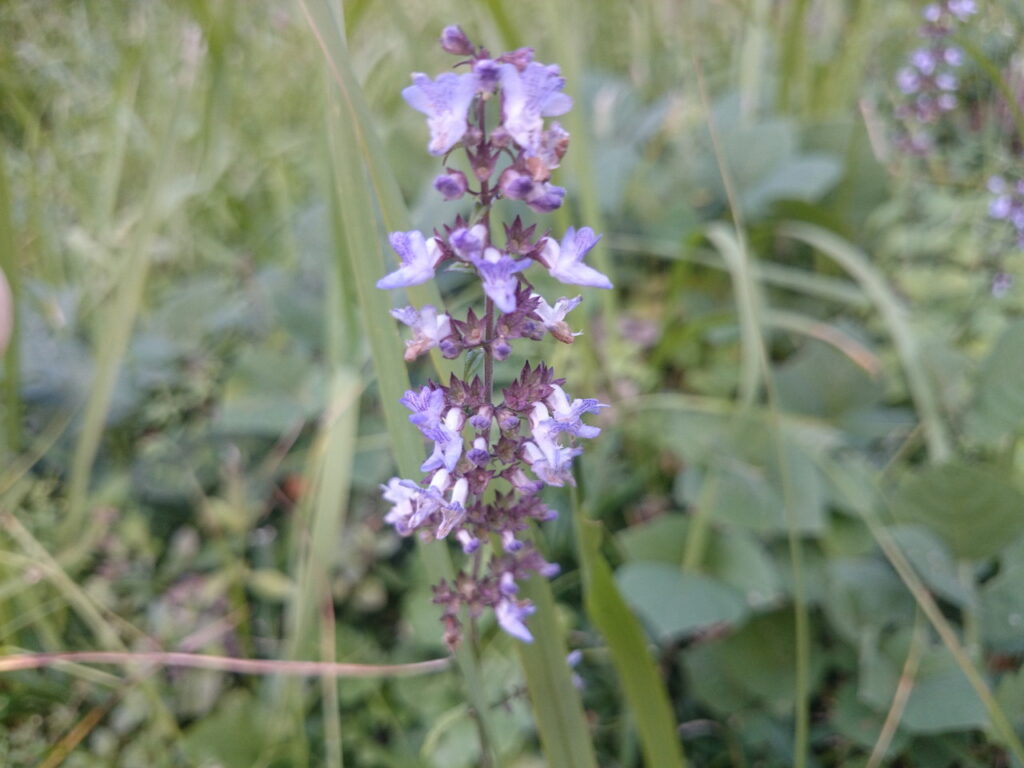
Another difference is that while *Akichouji* and *Sekiyanoakichouji* lack dark purple spots on the upper lip of the corolla, *Yamahakka* has dark purple spots on the upper lip of the corolla.
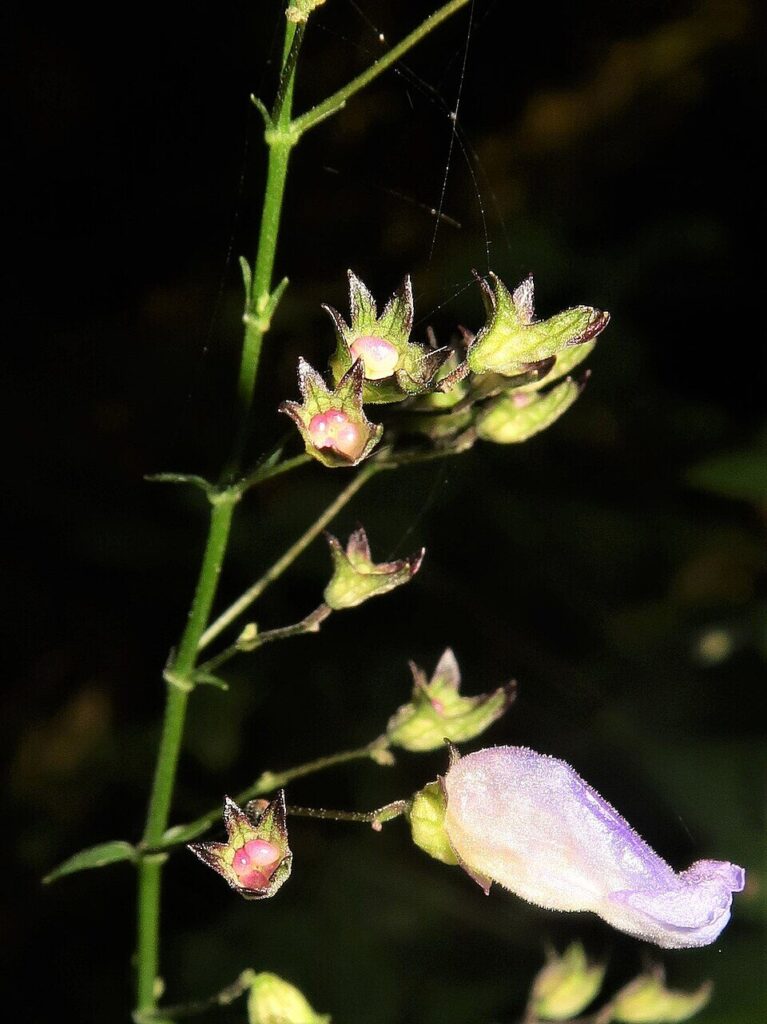
Another difference is that in *Akichouji* and *Sekiyanoakichouji*, the calyx is bilabiate, with the upper lip being 3-lobed and shorter than the lower lip which is 2-lobed, whereas in *Yamahakka*, the calyx is almost equally 5-lobed, but confirming this point may be difficult.
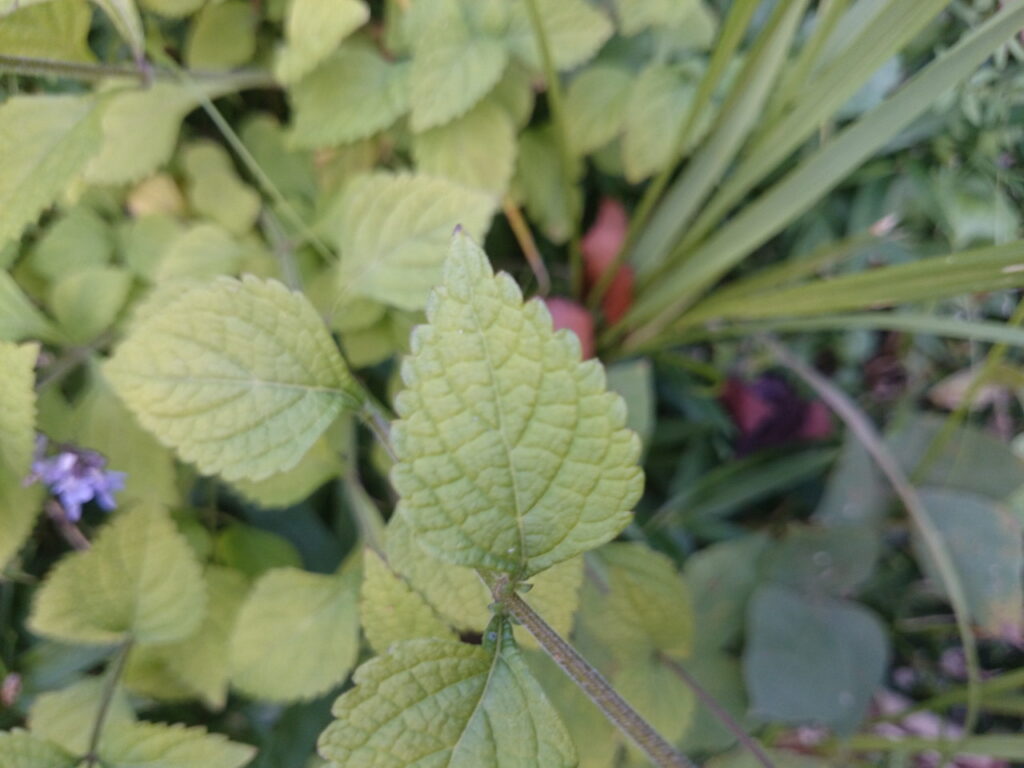
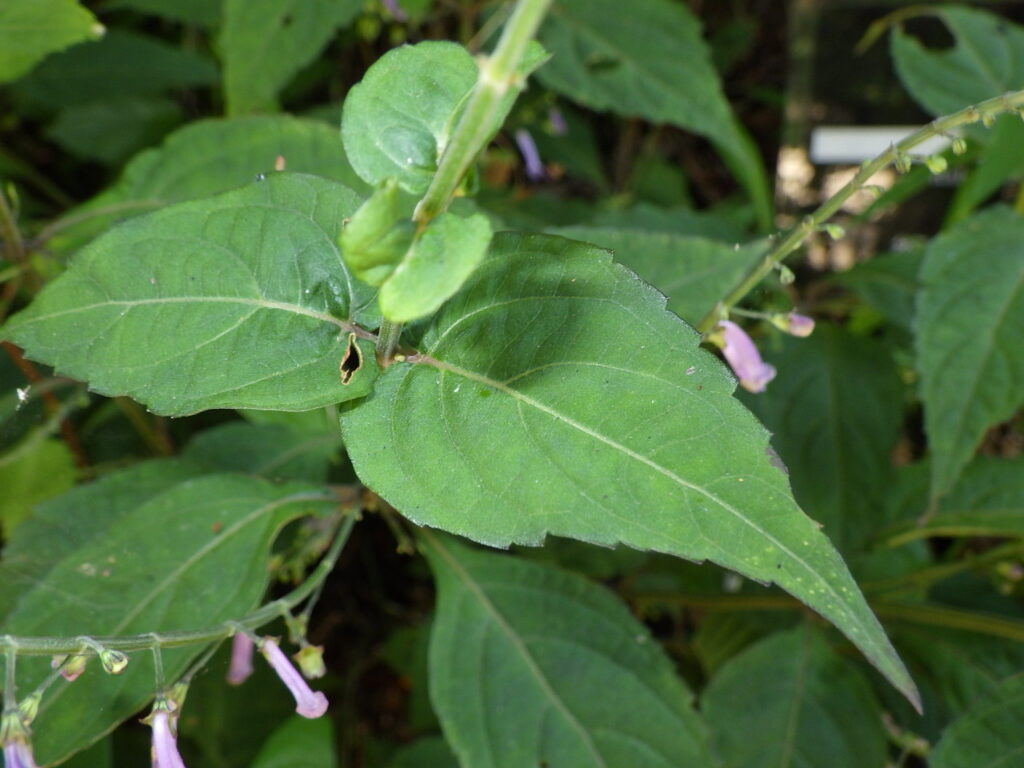
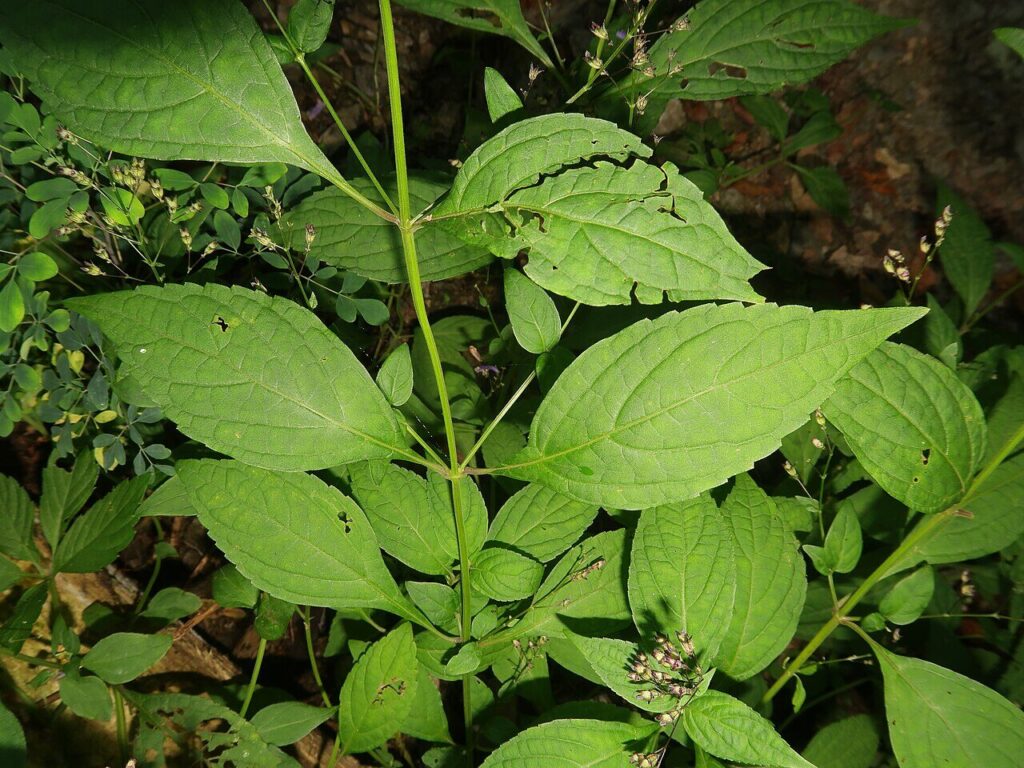
Regarding the leaves, there is a difference in that the leaf tips of *Akichouji* and *Sekiyanoakichouji* elongate into a tail-like shape, while those of *Yamahakka* do not.
What is the difference between *Akichouji* and *Sekiya no Akichouji*?
Autumn jasmine and Sekiya jasmine are very similar, making them difficult to distinguish.
However, it's important to note that while *Akichouji* is distributed from Gifu Prefecture westward to Kyushu in Japan, *Yamahakka* is distributed on the Pacific side of central Honshu (from Tochigi Prefecture to Aichi Prefecture).
Therefore, identifying them by region is the easiest method.
Morphological differences include the fact that in *Akichouji*, the pedicels are short, less than 10 mm in length, and the calyx tips are blunt, while in *Sekiya-no-akichouji*, the pedicels are long, 10-25 mm in length, and the calyx tips are pointed.
It is probably impossible to distinguish them by their leaves.
References
Kanagawa Prefecture Flora Survey Association. (2018). Kanagawa Prefecture Flora 2018 Electronic Edition. Kanagawa Prefecture Flora Survey Association. ISBN: 9784991053726,https://flora-kanagawa2.sakura.ne.jp/efloraofkanagawa.html
Kitamura, S., Murata, G., & Hori, K. (1957). Illustrated Flora of Japan in Color: Herbaceous Plants, Vol. 1 (Revised Edition). Hoikusha. ISBN: 9784586300150