Living things

Sponsored Link
07.2401 Japanese pepper (Zanthoxylum piperitum) male flower plant

What are the differences between Japanese pepper (Zanthoxylum piperitum), Chinese pepper (Zanthoxylum sibiricum), and Japanese pepper (Zanthoxylum ailanthoides)? We'll explain how to distinguish between similar species! What are their uses? What insects visit the flowers? Birds apparently love the seeds because they don't find them spicy!?

Japanese pepper (Zanthoxylum piperitum), Japanese sansho, and Japanese sansho are common species in Japan, and Japanese pepper in particular remains an essential ingredient in cooking today. All belong to the genus Zanthoxylum in the Rutaceae family, and are very similar in that they have many thorns all over the plant and odd-pinnately compound leaves consisting of an odd number of leaflets. Japanese pepper has a distinctive aroma...
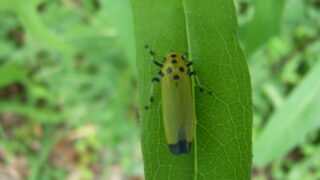
13.04002 *Tsumaguro-ooyokobai* (adult) animal

What are the differences between leafhoppers and other leafhoppers? Are they harmful? A thorough explanation of their surprising ecology and even their "vibration"-based courtship rituals.

Leafhoppers are a general term for the family Cicadellaceae, a group of insects distributed worldwide that primarily inhabit the stems and leaves of herbaceous plants. At least 20,000 species have been described globally, and currently, 190 genera and 576 species are known in Japan, making them a highly diverse and thriving group. A close relative is the planthopper...
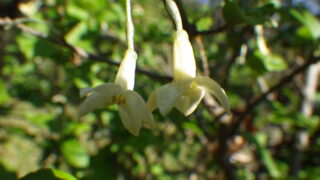
07.1847 Elaeagnus multiflora flower plant

What are the differences between autumn olive, summer olive, Chinese olive, and white olive? Can they be eaten raw? Is the "sparkle" on the leaves to prevent drying? What insects visit the flowers? Are the sweet and sour fruits very popular in nature?

Autumn olive, summer olive, Chinese olive, and white olive are all members of the Elaeagnus genus in the Elaeagnaceae family. They can be found in various locations throughout Japan, including rivers, coastlines, and forests. Their leaves are covered in shimmering stellate or scale-like hairs, and they produce pale yellow flowers consisting only of a cylindrical calyx tube, lacking petals.
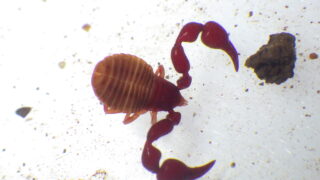
11.1825 Adult *Pseudoscorpion* (large parasitic insect), dorsal view animal

What are the different types of pseudoscorpions and how can they be collected? Are they found in Japan? This article explains their ecology and the uses of their claws.

Pseudoscorpions are a small species of arachnid that inhabit inconspicuous places such as crevices in leaves and rocks, under stones and tree bark, and in decaying trunks. They are distinguished from scorpions by the absence of a long, spiny section on the metathorax (the tail of a scorpion). As of 2023, approximately 3,400 species have been identified worldwide, and they are also widespread in Japan...
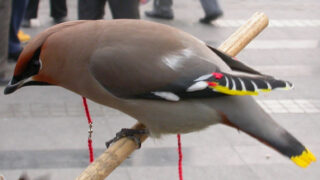
Bombycilla Garrulus Adult Bird Whole Shape animal

[How to tell them apart] What are the differences between Bohemian waxwings and Japanese waxwings? Their surprising behavior reveals their age through a red, waxy substance.

The Bohemian Waxwing and the Japanese Waxwing are both brightly colored winter birds belonging to the Waxwing genus, possessing crests and often appearing in red or yellow. They are very similar, and it can be difficult to distinguish between them. However, checking the tips of their tail feathers will allow for reliable identification, and there are subtle differences in their coloration. Their distributions differ significantly; the Bohemian Waxwing...
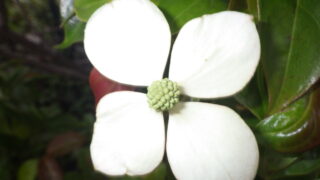
07.2851.a Cornus kousa flower plant

What are the differences between Cornus kousa, Cornus florida, and evergreen Cornus kousa? We'll explain how to distinguish between similar species! Various insects visit the flowers, but are there differences in their tendencies? There are two types of fruits: "drupe" and "aggregate fruit"!?

Cornus kousa, Cornus florida, and Cornus kousa var. serrata are three commonly planted trees with flowers featuring distinctive white bracts that resemble petals. Their white bracts are similar, and their leaf shapes are also alike, which can sometimes lead to confusion. However, these three species cannot be distinguished solely by leaf shape and color...
07.1617 Polygala japonica flower Seed Plant Encyclopedia

[Seed Plant Encyclopedia #155] What are the species of the Polygalaceae family? Photo list

All species of the Polygalaceae family found in Japan are herbaceous. The leaves are simple, alternate, and lack stipules. The flowers are bisexual and bilaterally symmetrical. There are 5 sepals. The petals are 5 in number, partially reduced or fused. There are 4 or 8 stamens, fused at the base. The ovary is superior and 2-chambered. The fruit is a capsule or drupe. [...].
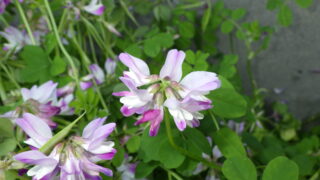
07.1520 Astragalus flower Seed Plant Encyclopedia

[Seed Plant Encyclopedia #153] What are the types of legumes? Photo list

The Fabaceae family is a large family of vascular plants, second only to the Asteraceae and Orchidaceae families in terms of the number of species it contains. It includes many useful plants used for food and other purposes, and is deeply connected to human life. It includes herbs and woody plants ranging from annual to perennial, with many being climbing or possessing tendrils...
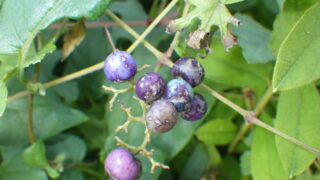
07.1452.1 Kireha no Doubu (Vitis coignetiae) Fruit Seed Plant Encyclopedia

[Seed Plant Encyclopedia #149] What are the species of the Vitaceae family? Photo list

The Vitaceae family consists of climbing woody or herbaceous plants. They ascend using modified stems called tendrils, although a few genera lack tendrils. The tendrils and leaves are opposite. Leaves are alternate, simple, or compound. Simple leaves are often palmately lobed. Inflorescences are usually opposite the leaves. The flowers are...
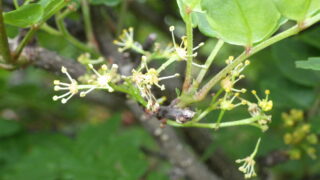
07.1439 Myriophyllum leaves Seed Plant Encyclopedia

[Seed Plant Encyclopedia #147] What are the species of the family Ophioglossaceae? Photo List

The family Haloragaceae consists of terrestrial or aquatic perennial herbs or shrubs. Leaves are opposite, whorled, or alternate. Flowers are bisexual or unisexual. Stipules are absent. The calyx tube is fused to the ovary, and there are 2-4 petals, or sometimes none. There are 2-8 stamens. The ovary is inferior. The fruit is a nut or drupe...
Sponsored Link