distribution

Sponsored Link
Posts 14444 Featured Image Why Do Snails Have Hairs animal

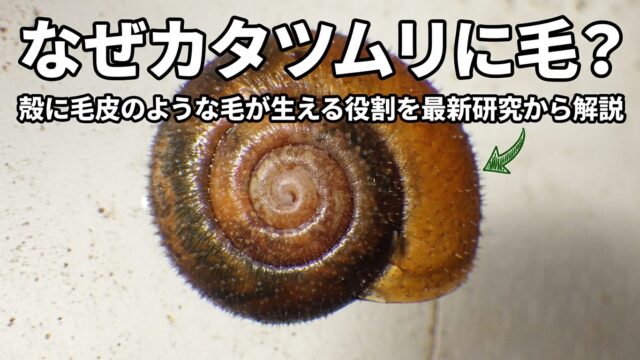
Why do snails have hair? The latest research explains the role of hair on their shells.

When we think of snails, we generally picture them slowly moving around with their coiled shells on their backs. But did you know that some snail species have their shells covered in a dense layer of fine hairs? At first glance, it almost looks like they're wearing fur. Why...?.

Posts 25331 Featured Image Why Armpits Sweat When Nervous animal

Why do we sweat under our arms when we're nervous? This article explains the role of pheromones, which communicate fear and anxiety, based on research papers.

Why do we sweat under our arms when we're nervous? This article explains everything from the physiological mechanisms behind sweating before a presentation to the effects of sweat odor on other people's emotions and brains. Based on research papers, it explores the possibility that human sweat acts as a pheromone to convey fear and anxiety, and its evolutionary significance.
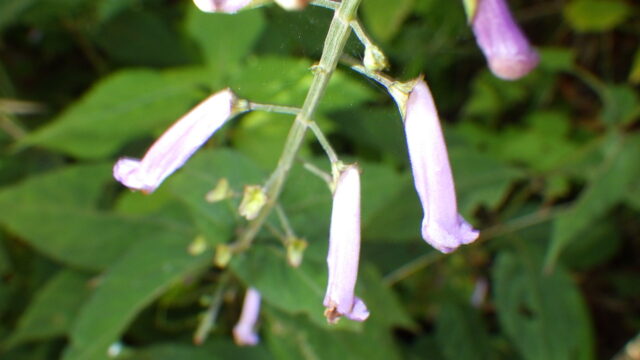
07.3563 Autumn Clerodendrum Flower plant

What are the differences between *Akichouji*, *Sekiyanoakichouji*, and *Yamahakka*? An explanation of how to distinguish between similar species.

Akichoji, Sekiyanoakichoji, and Yamahakka belong to the genus Mentha in the Lamiaceae family. They are perennial herbs found in forests, and are notable for their remarkably long corollas compared to other species in the Lamiaceae family. While identification can sometimes be confusing, focusing on the corolla and leaves will generally allow for identification. Is it Yamahakka...?.
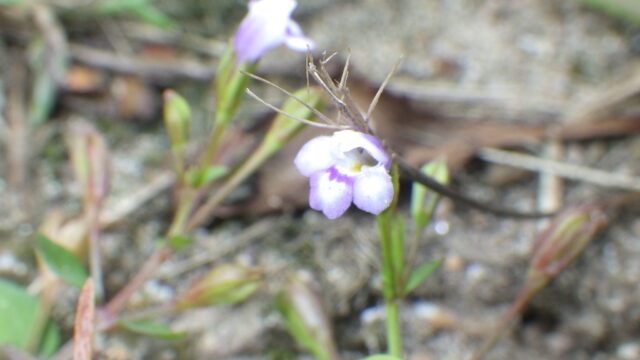
07.3453 Urikusa flower plant

What are the differences between *Lindernia procumbens*, *Lindernia dubia*, and *Lindernia ovata*? An explanation of how to distinguish between similar species.

Lindernia procumbens, Lindernia maritima, and Lindernia maximowiczii all belong to the Linderniaceae family. They are small, annual herbs characterized by opposite leaves and small, lip-shaped flowers in the leaf axils. While quite inconspicuous, their flowers are very similar, making them easily confused. These three species differ in their habitat, leaves, and flowers...
07.3319 Black Nightshade Flower plant

What are the differences between *Solanum nigrum*, *Solanum sibiricum*, *Solanum nigrum*, and *Solanum nigrum*? We'll explain how to distinguish between similar species!

Black nightshade, large black nightshade, American black nightshade, and glossy black nightshade all belong to the Solanaceae family and Solanum genus. They are very commonly seen in urban areas, and can even be found in green spaces in large cities. They are characterized by their round, black, ripening fruits, but the four species are very similar...
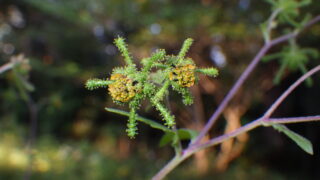
07.3866 Komenamomi flower plant

What are the differences between Menamomi, Komenamomi, and Onamomi? We explain how to distinguish between similar species! The mucus-secreting bracts are for sticking to animals!?

Both *Menamomi* and *Komenamomi* belong to the genus *Menamomi* in the Asteraceae family. Their most distinctive features are their small, yellow ray florets and the presence of stalked glandular hairs on their involucral bracts. While not particularly common, both species grow in open areas, and *Menamomi* in particular was historically used by the Japanese as a fermented food. However...
13.24534 Towada Giant Beetle (adult) animal

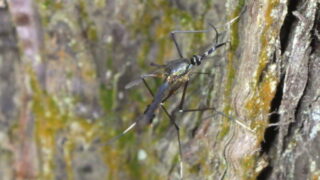
Does it not suck blood? The Towada mosquito, Japan's largest and most beautiful mosquito, is actually a "mosquito that eats other mosquitoes"!

When you think of mosquitoes, you probably imagine blood-sucking insects that are a real nuisance in the summer. However, there's a type of mosquito in Japan that doesn't suck blood at all. The Towada mosquito is harmless as an adult, doesn't suck blood, and is the largest and most beautiful mosquito in Japan...
07.0991 Barnyard grass spikelet plant

What are the differences between Barnyard Grass and Sea Barnyard Grass? An explanation of how to distinguish between similar species.

Both Barnyard grass (Barnyard grass) and sea barnyard grass (Barnyard grass) are weeds belonging to the genus Barnyard grass in the family Poaceae. They are unassuming weeds that generally prefer watery areas, but can also be found along roadsides. They are characterized by their conical inflorescences and the awns on their spikelets, but some people may have difficulty distinguishing between the two species...
07.3964 Senecio vulgaris flower plant

What are the differences between *Senecio japonica*, *Senecio crassipes*, and *Senecio stolonifera*? An explanation of how to distinguish between similar species.

Senecio vulgaris, Senecio rupestris, and Senecio rupestris all belong to the Senecio tribe (or Senecio tribe) of the Asteraceae family and are introduced weeds with the name "borogiku" (ragwort). A key characteristic is that their flower heads (capitulum) are composed solely of tubular florets. These three species have similar names...
07.2726 Dutch Cerastium Flower plant

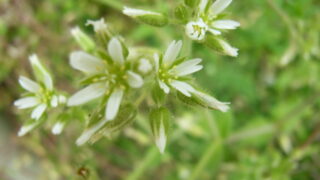
What are the differences between chickweed (Cerastium holosteoides) and Dutch chickweed (Cerastium holosteoides)? How do they differ from other chickweed species? This article explains how to distinguish between similar species.

Both *Cerastium holosteoides* and *Cerastium holosteoides* belong to the genus *Cerastium* in the family Caryophyllaceae, and are extremely common plants that grow along roadsides in spring, representing typical "weeds." However, few people may be able to accurately distinguish between the two species. Distinguishing between the two may require close observation in some cases...
Sponsored Link