Evergreen

Sponsored Link
plant

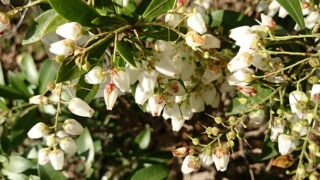
What are the differences between Pieris japonica, Pieris ryukyuensis, and Pieris japonica? We explain how to distinguish between similar species!

Japanese Andromeda, Ryukyu Andromeda, and Japanese Stewartia all belong to the Ericaceae family, have downward-facing, urn-shaped to bell-shaped flowers, and their bark can be twisted. They also all share the characteristic of being poisonous. Therefore, some people may have difficulty distinguishing them. However, Japanese Andromeda and Ryukyu Andromeda are similar...
plant

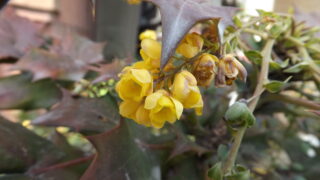
What are the differences between Mahonia japonica, Narrow-leaved Mahonia japonica, and Flat-leaved Mahonia japonica? We'll explain how to distinguish between similar species!

Mahonia japonica, Narrow-leaved Mahonia japonica, and Flat-leaved Mahonia japonica all belong to the Berberidaceae family, genus Berberis. They have odd-pinnately compound leaves with coarse, needle-like serrations and are frequently cultivated as ornamental plants due to their ease of growth. However, few people may be able to properly distinguish between the three species...
plant

What are the differences between *Tama coral* (winter coral) and *Himeta coral*? An explanation of how to distinguish between similar species.

Both Solanum sieboldii (winter coral) and Solanum nigrum belong to the Solanaceae family and are cultivated extensively for ornamental purposes because they produce attractive, round, red, ripe fruits (berries) in winter. However, in Japan, it is not always possible to properly distinguish between the two varieties, Solanum sieboldii and Solanum nigrum...
plant

What are the differences between Ophiopogon japonicus, Ophiopogon longifolius, Ophiopogon sieboldii, and Ophiopogon orchid? An explanation of how to distinguish between similar species.

Ophiopogon japonicus, Ophiopogon longifolius, Ophiopogon sieboldii, and Ophiopogon orchid all belong to the Ophiopogon genus of the Asparagaceae family (formerly Asparagaceae), and are evergreen perennial herbs often seen growing creeping along the ground in forests. Their most distinctive feature is the dark blue seeds they produce, which are easily mistaken for fruits...
plant

What are the differences between Rhaphiolepis indica, Rhaphiolepis umbellata, and Ternstroemia gymnanthera? An explanation of how to distinguish between similar species.

Rhaphiolepis indica, Rhaphiolepis umbellata, and Rhaphiolepis ternata all belong to the genus Rhaphiolepis in the family Rosaceae. While they naturally grow on coastlines, they are frequently seen planted in urban areas. However, the classification of the genus Rhaphiolepis is complex even at the species level, and there are many other species besides the three mentioned above...
plant

What are the differences between Hirado azalea, Kurume azalea, and Satsuki azalea? An explanation of how to distinguish between similar species.

Hirado azalea, Kurume azalea, and Satsuki azalea (Satsuki rhododendron) all belong to the genus Rhododendron in the family Ericaceae, and are three species that are extremely commonly cultivated even in urban areas. However, since the shape of their flowers is almost identical, some people may have trouble distinguishing them. The three species can be distinguished by the shape of their leaves...
plant

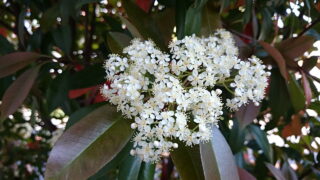
What are the differences between Photinia serrulata, Photinia glabra, and Photinia glabra (Red Robin)? An explanation of how to distinguish between similar species.

Photinia serrulata, Photinia glabra, and Photinia glabra (Red Robin) are all members of the Photinia genus in the Rosaceae family. They are native to Japan and are also commonly cultivated as privacy screens in gardens, making them very familiar trees. Their most distinctive feature is their red young leaves. However, distinguishing between these three species can be difficult...
plant

What are the differences between Ilex rotunda, Ilex crenata, Ilex serrata, and Ilex serrata? An explanation of how to distinguish between similar species.

Ilex rotunda, Ilex crenata, Ilex serrata, and Ilex serrata all belong to the Ilex genus of the family Aquifoliaceae. They not only grow in evergreen broad-leaved forests but are also frequently seen planted in parks and gardens, making them extremely familiar and common evergreen trees in Japan. They share thick leaves and beautiful red fruits...
plant

What are the differences between wild strawberries, Japanese wild strawberries, and large wild strawberries? We explain how to distinguish between similar species! It's surprisingly difficult to tell them apart!

Strawberry (Potentilla indica), Japanese wild strawberry (Potentilla fragarioides), and common wild strawberry (Potentilla indica) all belong to the genus Potentilla in the Rosaceae family. They are known as representative spring weeds in Japan, characterized by their creeping stems that spread along the ground. Occasionally, they are referred to as "wild strawberries" along with other members of the Rubus genus...
plant

What are the differences between Eurya japonica, Eurya japonica, and Sakaki? We'll explain how to distinguish between similar species! Do they bloom in early spring because they rely on bees and flies for pollination?

Hisakaki, Hamahisakaki, and Sakaki all belong to the family Cleyera (or Theaceae). Hisakaki and Sakaki, in particular, have been considered "yorishiro" (objects that house divine spirits) in Shintoism since ancient times and have been traditionally cultivated in Japan. However, their similar names may often lead to confusion...
Sponsored Link