How to use

Sponsored Link
plant

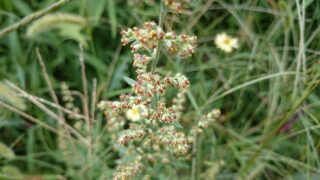
What are the differences between mugwort, wormwood (Artemisia princeps), bitter wormwood, and male wormwood? We'll explain how to distinguish between similar species! Did you know that mugwort is used not only in rice cakes but also in moxibustion and medicine?

Artemisia princeps, Artemisia japonica, Artemisia urticaria, and Artemisia japonica are all members of the Artemisia genus in the Asteraceae family, and are extremely common perennial herbs that dominate small vacant lots from urban areas to mountainous fields. In addition to having a cottony, fluffy underside to its leaves, it belongs to the Asteraceae family...
plant

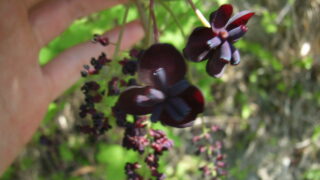
What are the differences between Akebia, Akebia trifoliata, Akebia quinata, and Stauntonia hexaphylla? We explain how to distinguish between similar species! Are the large female flowers a way to deceive insects? Who eats the fruit in the wild?

Akebia, Akebia trifoliata, Akebia quinata, and Stauntonia hexaphylla all belong to the Akebia family. They are climbing plants with palmately compound leaves, and a key characteristic is that male and female flowers bloom separately. Akebia and Akebia trifoliata, in particular, are famous for the edible white, gelatinous pulp inside their opened fruits. For many, it's a taste of the countryside from their childhood...
plant

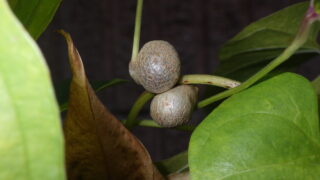
What are the differences between Japanese yam (Dioscorea japonica), Chinese yam (Dioscorea japonica), Japanese yam (Dioscorea tokoro), and bitter yam (Dioscorea japonica)? We explain how to distinguish between similar species! Why do they produce bulbils? Their reproductive strategies were diverse!

Japanese yam (Dioscorea japonica), Chinese yam (Dioscorea longa), Japanese yam (Dioscorea tokoro), and bitter yam (Dioscorea japonica) all belong to the genus Dioscorea in the family Dioscoreaceae. They produce edible tubers and bulbils, and are very common climbing perennial plants often seen in urban areas. The genus Dioscorea, also known as yam, is a group that includes a vast number of species...
plant

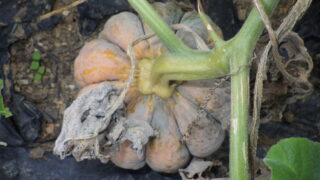
What are the differences between European pumpkins, Japanese pumpkins, and pepo pumpkins? European pumpkins are eaten in Japan, and Japanese pumpkins are eaten in the West! Were the fruits eaten by extinct animals!?

European pumpkins, Japanese pumpkins, and pepo pumpkins are all annual vining plants belonging to the Cucurbitaceae family, Cucurbita genus. Originally from the Americas, they are very popular in Japan, playing an important role in both everyday meals and Halloween celebrations. However, the three species are often confused, and their differences...
animal

What are the differences between cochineal, lac, and shellac, insects we actually eat every day? Is it true that they are found in large quantities in red foods and lipstick? Are they dangerous? Why are they used?

In Japan, except in some regions, eating insects is extremely rare, and it's safe to say that it's almost unheard of among younger generations, especially in urban areas. While some advocate for insect consumption as a way to prepare for food shortages, cries of "Absolutely not!" are heard, mainly on social media. Even though I work with insects, I still...
plant

Is it a myth that spices were used during the Age of Discovery to mask the smell of rotten meat? What was the real reason? Is it also a myth that they were used to improve preservation?

I originally have a science background, but I enjoy reading world history content. I came across something interesting in that context. It was the idea that spices (spices excluding stems, leaves, and flowers) don't have much antibacterial properties, and that "spices were used to mask the smell of rotten meat"...
animal

What are the origins of rhythm and time signatures (2/4, 4/4, 3/4)? An explanation of their evolutionary and historical origins!

When you take up listening to music, singing, or dancing as hobbies, you naturally develop an interest in rhythm and time signatures. However, if you try to pinpoint the origins of these things, you might find it difficult to answer. Because we often find ourselves naturally moving to rhythms, we might not even question it...
plant

What's the difference between Japanese star anise (Illicium anisatum) and Japanese star anise (Illicium verum)? We'll explain how to distinguish between these similar species! Japanese star anise protects graves, while Japanese star anise protects life!?

Both Japanese star anise (Illicium anisatum) and Japanese star anise (Illicium verum) belong to the genus Illicium in the family Schisandraceae. They are evergreen plants with glossy leaves, and their most distinctive feature is their fruit: a follicle-like fruit consisting of eight follicles arranged radially. Both are considered very important plants both domestically and internationally...
plant

What are the differences between Menamomi, Komenamomi, and Onamomi? We explain how to distinguish between similar species! The mucus-secreting bracts are for sticking to animals!?

Both *Menamomi* and *Komenamomi* belong to the genus *Menamomi* in the Asteraceae family. Their most distinctive features are their small, yellow ray florets and the presence of stalked glandular hairs on their involucral bracts. While not particularly common, both species grow in open areas, and *Menamomi* in particular was historically used by the Japanese as a fermented food. However...
plant

What are the differences between poppies, common poppies, and long-headed poppies? How do they differ from Icelandic poppies? We'll explain how to distinguish between similar species! Did humans themselves evolve the "Devil Fruit," which has both significant merits and demerits?

Poppies, including the common poppy, thick-flowered poppy, and long-headed poppy, all belong to the genus Papaver in the family Papaveraceae and are collectively known as poppies. They are very popular as ornamental plants due to their beautiful, large single flowers and are widely cultivated. However, despite being poisonous and prone to naturalization, they are difficult to identify...
Sponsored Link