form

Sponsored Link
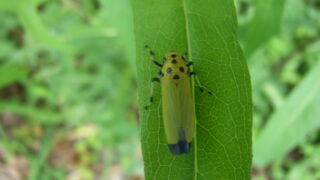
13.04002 *Tsumaguro-ooyokobai* (adult) animal

What are the different species of leafhoppers? How do they differ from planthoppers? Are they harmful? What do they eat? Did they communicate through "vibrations"? What is the role of their body color?

Leafhoppers are a general term for the family Cicadellaceae, a group of insects distributed worldwide that primarily inhabit the stems and leaves of herbaceous plants. At least 20,000 species have been described globally, and currently, 190 genera and 576 species are known in Japan, making them a highly diverse and thriving group. A close relative is the planthopper...
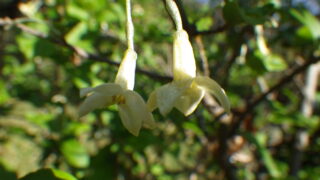
07.1847 Elaeagnus multiflora flower plant

What are the differences between autumn olive, summer olive, Chinese olive, and white olive? Can they be eaten raw? Is the "sparkle" on the leaves to prevent drying? What insects visit the flowers? Are the sweet and sour fruits very popular in nature?

Autumn olive, summer olive, Chinese olive, and white olive are all members of the Elaeagnus genus in the Elaeagnaceae family. They can be found in various locations throughout Japan, including rivers, coastlines, and forests. Their leaves are covered in shimmering stellate or scale-like hairs, and they produce pale yellow flowers consisting only of a cylindrical calyx tube, lacking petals.
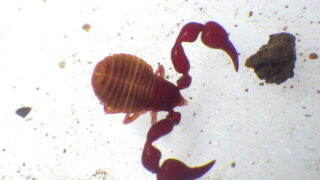
11.1825 Adult *Pseudoscorpion* (large parasitic insect), dorsal view animal

What are the species of pseudoscorpion? Are they found in Japan? How are they collected? What do they eat? What is the purpose of their crab-like "claws"?

Pseudoscorpions are a small species of arachnid that inhabit inconspicuous places such as crevices in leaves and rocks, under stones and tree bark, and in decaying trunks. They are distinguished from scorpions by the absence of a long, spiny section on the metathorax (the tail of a scorpion). As of 2023, approximately 3,400 species have been identified worldwide, and they are also widespread in Japan...
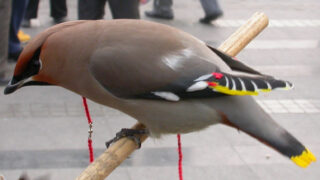
Bombycilla Garrulus Adult Bird Whole Shape animal

What are the differences between Bohemian waxwings and Japanese waxwings? What is their distribution? What are their summer and winter habits? What is the role of their crest feathers and red waxy substance? Can you tell their age from the waxy substance?!

The Bohemian Waxwing and the Japanese Waxwing are both brightly colored winter birds belonging to the Waxwing genus, possessing crests and often appearing in red or yellow. They are very similar, and it can be difficult to distinguish between them. However, checking the tips of their tail feathers will allow for reliable identification, and there are subtle differences in their coloration. Their distributions differ significantly; the Bohemian Waxwing...
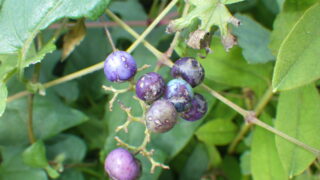
07.1452.1 Kireha no Doubu (Vitis coignetiae) Fruit Seed Plant Encyclopedia

[Seed Plant Encyclopedia #149] What are the species of the Vitaceae family? Photo list

The Vitaceae family consists of climbing woody or herbaceous plants. They ascend using modified stems called tendrils, although a few genera lack tendrils. The tendrils and leaves are opposite. Leaves are alternate, simple, or compound. Simple leaves are often palmately lobed. Inflorescences are usually opposite the leaves. The flowers are...
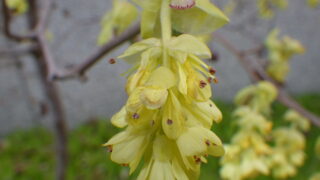
07.1342 Corylopsis spicata flower Seed Plant Encyclopedia

[Seed Plant Encyclopedia #137] What are the species of Hamamelidaceae? Photo List

The Hamamelidaceae family consists of deciduous or evergreen trees or shrubs, often covered in stellate hairs. Leaves are alternate, simple or palmate, and petiolate. They have deciduous stipules. Flowers are bisexual or unisexual, radially symmetrical, rarely bilaterally symmetrical, axillary, capitate, or conchoidal...
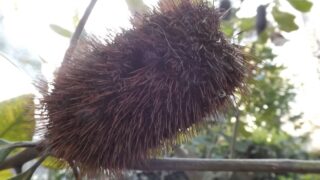
07.1323.c Swamp Banksia Flower Seed Plant Encyclopedia

[Seed Plant Encyclopedia #128] What are the species of the Proteaceae family? Photo list

The Proteaceae family consists entirely of evergreen plants, mostly woody, with some herbaceous. The flowers are bisexual, with a tubular perianth (without distinction between sepals and petals) that is four-lobed at the tip, each bearing a single stamen. The pistil is single, with a superior ovary, and develops into fruits such as nuts. The inflorescence is a raceme or spike...
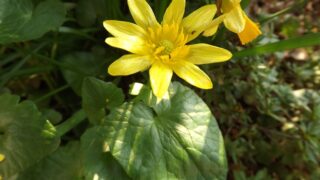
07.1292.a Lesser Celandine Flower Seed Plant Encyclopedia

[Seed Plant Encyclopedia #124] What are the species of the Ranunculaceae family? Photo list

The Ranunculaceae family mostly consists of perennial herbs, but some are annuals or biennials, and occasionally shrubs. Leaves can be alternate or opposite, and leaf shape varies considerably. Flowers are radially or bilaterally symmetrical, and many have sepals that resemble petals. Some petals are missing...
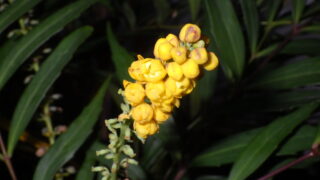
07.1174.a Narihirahiiragi Nandina (flower) Seed Plant Encyclopedia

[Seed Plant Encyclopedia #123] What are the species of the Berberidaceae family? Photo list

Berberidaceae are perennial herbs or shrubs. Their leaves are alternate and can be simple or compound. The sepals are arranged in groups of three in 3-4 whorls, or two in 4 whorls; the outer 1-2 whorls are smaller and fall off quickly during flowering, while the inner 2 whorls are larger and petal-like. The petals are 2 or...
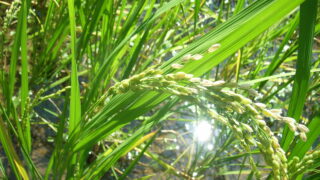
07.0908 Rice spikelets Seed Plant Encyclopedia

[Seed Plant Encyclopedia #116] What are the types of grasses? Photo list

The grass family (Poaceae) consists of annual to perennial herbs, or plants with woody, perennial stems. The stem, called a "culm," has septa at the nodes, and the rest of the stem is hollow or contains pith. Leaves are arranged alternately in two rows and consist of a leaf blade and a leaf sheath. The leaf blade is often linear, and the leaf sheath is wide...
Sponsored Link