distribution

Sponsored Link
07.3673 Ilex rotunda (female flower) plant

What are the differences between Ilex rotunda, Ilex crenata, Ilex serrata, and Ilex serrata? An explanation of how to distinguish between similar species.

Ilex rotunda, Ilex crenata, Ilex serrata, and Ilex serrata all belong to the Ilex genus of the family Aquifoliaceae. They not only grow in evergreen broad-leaved forests but are also frequently seen planted in parks and gardens, making them extremely familiar and common evergreen trees in Japan. They share thick leaves and beautiful red fruits...
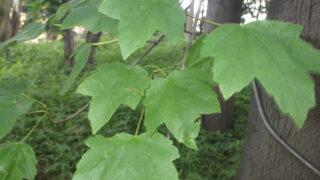
07.2393.a American Flowering Tree (Acer palmatum) upper surface of the leaf plant

What are the differences between Japanese honeysuckle and American honeysuckle? An explanation of how to distinguish between similar species.

Japanese maple (Acer pycnanthum) and American maple (Acer pycnanthum) are both members of the Acer genus in the Sapindaceae family, characterized by their beautiful autumn foliage. In spring, Japanese maple blooms with red flowers before its leaves open, which is the origin of its Japanese name. However, these trees look similar and can be difficult to distinguish. Although there are differences in leaf size and shape, there is considerable individual variation, so differentiation is not always easy. This article focuses on the classification of Japanese maple and American maple.
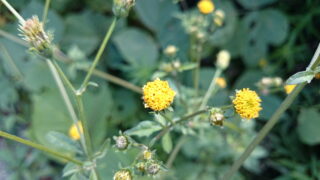
07.3860 Bidens pilosa flower head plant

What are the differences between Bidens pilosa, Bidens frondosa, Bidens pilosa, and Bidens serrata? An explanation of how to distinguish between similar species.

Bidens pilosa, Bidens frondosa, Bidens pilosa, and Bidens serrata are all annual plants belonging to the Bidens genus of the Asteraceae family. Their most distinctive feature in relation to humans is that their fruits are "burrs." They grow along roadsides and around bodies of water, clinging to animal fur and human clothing...
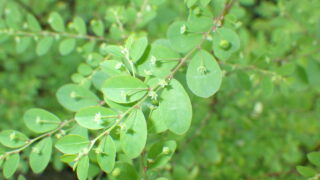
07.2124.a Long-leaved lilyflower plant

What are the differences between *Phyllanthus urinaria*, *Phyllanthus urinaria*, and *Phyllanthus longifolius*? An explanation of how to distinguish between similar species.

Phyllanthus urinaria, Phyllanthus sempervirens, and Phyllanthus longifolius all belong to the Phyllanthus genus of the Phyllanthaceae family. These annual plants grow in fields and roadsides, and are notable for their numerous small, orange-like green to red fruits rather than their flowers. These three species are among the most frequently found in the Phyllanthus genus...
07.1609 Wild cowpea flower plant

What are the differences between Rhynchospora tetrandra, Rhynchospora tokiri, and Vigna angularis? An explanation of how to distinguish between similar species.

Tankirimame, Tokirimame, and Nosasage all belong to the legume family and are common climbing perennial herbs found in the forest edges of Japan. They share several characteristics, including trifoliate compound leaves, butterfly-shaped flowers that bloom from summer to autumn, and yellow flowers, which can sometimes make them difficult to distinguish. However, these three...
07.2788 Hinatainokozuchi flower plant

What are the differences between *Achyranthes japonica* and *Achyranthes bidentata*? An explanation of how to distinguish between similar species.

Both *Achyranthes japonica* (also known as *Achyranthes japonica var. spp.*) and *Achyranthes japonica* belong to the genus *Achyranthes* in the family Amaranthaceae, and are fairly common perennial herbs in Japan. Their most distinctive feature, and one that affects humans the most, is that their fruits are "burrs." Walking along the edge of a forest, they can easily snag your clothes...
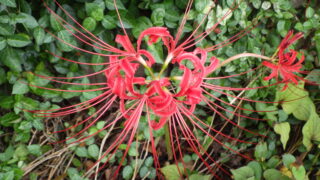
07.0543 Red Spider Lily Flower plant

What are the differences between Lycoris radiata (Red Spider Lily), Lycoris radiata var. alba, Lycoris radiata var. alba, and Lycoris radiata var. alba? An explanation of how to distinguish between similar species.

Lycoris radiata (red spider lily), Lycoris radiata var. alba, Lycoris radiata var. alba, and Lycoris aurea are all perennial plants belonging to the Lycoris genus of the Amaryllidaceae family. They are very familiar to Japanese people due to their toxicity and the clusters of flowers they produce in autumn. However, there are many varieties...
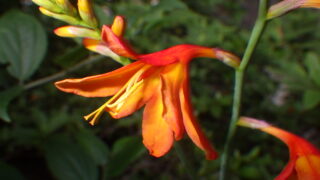
07.0513 Crocosmia flower 2 plant

What are the differences between Crocosmia gracilis, Crocosmia gracilis, and Crocosmia japonica? An explanation of how to distinguish between similar species.

Both *Crocosmia crocosmia* (also known as *Trocosmia crocosmia*) and *Montbretia* (also known as *Trocosmia crocosmia*) belong to the genus *Trocosmia* in the Iridaceae family and are perennial plants native to Africa. They are commonly cultivated as ornamental plants, share the common characteristics of having underground bulbs and producing red flowers, and are often confused...
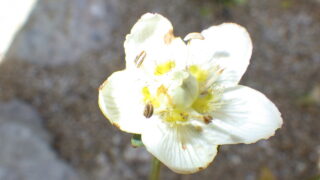
07.2060 Parnassia palustris flower plant

What are the differences between Parnassia palustris, Parnassia japonica, and Parnassia japonica? We'll explain how to distinguish between similar species! What are the structures of their flowers and fruits?

Parnassia palustris, Parnassia japonica, and Parnassia japonica are all perennial herbs belonging to the genus Parnassia in the family Celastraceae. Their names are similar, and their leaves and flowers are morphologically alike, which can sometimes make identification difficult. These three species can be distinguished primarily by the number of lobes in the staminodes of the flower...
07.2253 Red-flowered Geranium (Geranium thunbergii) flower plant

What are the differences between Geranium thunbergii, Geranium carolinianum, Geranium thunbergii, and Geranium erianthum? We'll explain how to distinguish between similar species! What are the structures of their flowers and fruits?

Geranium thunbergii, American cranesbill, three-leaved cranesbill, and common cranesbill all belong to the Geranium genus of the Geraniaceae family. Their flowers and leaves are very similar, making identification difficult. More than 18 species have been confirmed in Japan, so it's impossible to introduce them all here, but those found in lowland areas...
Sponsored Link