culture

Sponsored Link
plant

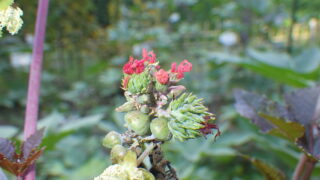
How toxic is castor bean? What are its components? What are the uses of castor oil? Why is it considered safe despite being toxic? Its flowers are pollinated by both wind and insects! Its seeds are dispersed automatically and by ants!

Castor bean is a perennial plant said to originate from northeastern Africa, cultivated worldwide for commercial and ornamental purposes, and sometimes naturalized. It's almost impossible to mistake it for anything else. Its seeds, called "himashi," are rich in oil, and the extracted "castor oil" is used in cosmetics, shampoos, soaps, and more...
plant

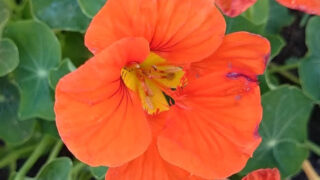
What are some species similar to nasturtiums (nasturtiums)? Are they edible? What are their nutritional values? What is their history? Were the flower's depressions used as resting places for beetles?

Nasturtiums (also known as nasturtiums or trumpet japonica) are native to Peru and are cultivated in Japan primarily as ornamental plants, either annuals or perennials. They are popular for their distinctive flowers and unusual leaves. While they have many Japanese names, I personally don't recommend calling them simply "nasturtiums" as it can be confusing...
plant

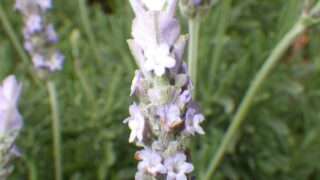
What are the differences between English lavender, French lavender, and Dentata lavender? How to distinguish between similar varieties! What are the effects of their essential oils? Why are there buds mixed in with the flowers? Were the seeds dispersed by sheep?!

Lavender is extremely popular in gardening, known for its purple flowers and renowned for its medicinal properties. However, few articles properly explain the differences between various types of lavender. The visual differences in lavender are not simply variations in "cultivar," but rather entirely different species. Here are three representative types...
plant

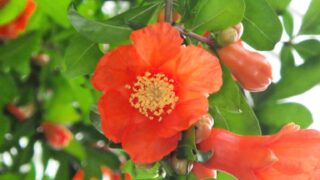
What are the differences between pomegranates, dwarf pomegranates, and flowering pomegranates? What is their history? What are their health benefits? Is the saying "birds visit the flowers" a myth? What part of the pomegranate is referred to as the "fruit"?

Pomegranates are native to Iran and northern India and are cultivated worldwide. While there are no closely related species in Japan, making differentiation relatively easy, several cultivated varieties are known, with the dwarf pomegranate (Pomegranate japonica) and the flowering pomegranate (Pomegranate humilis) being representative examples. The leaves of the pomegranate and dwarf pomegranate are...
plant

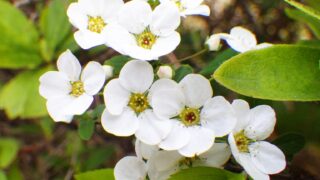
What are the differences between Spiraea thunbergii, Spiraea cantoniensis, and Lycaena phlaeas? We explain how to distinguish between similar species! Did you know that flies surprisingly love the flowers of Spiraea thunbergii in gardens?

Spiraea thunbergii, Spiraea cantoniensis, and Spiraea thunbergii are representative species of the Spiraea genus in Japan, blooming with white flowers in spring. They are also cultivated for ornamental purposes. Distinguishing between them is relatively easy; you can quickly tell them apart by examining the inflorescence and flower shape. Their leaf shapes are also distinctive, so if you look closely, you can identify them even when they are not in bloom...
plant

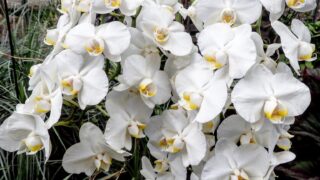
There are differences between Phalaenopsis orchids and other similar species! We'll explain how to distinguish between them! Why are they so popular? What's their history? Did the flowers attach pollen clumps to the backs of insects?! But the species is unknown?

Phalaenopsis orchids are very popular in Japan as high-end potted plants and cut flowers. They are the number one orchid species in terms of both production volume and value. However, they are also known as "Phalaenopsis," which can be confusing. Biologically, however, the terms refer to different species, with Phalaenopsis being the "Phalae..." orchid.
plant

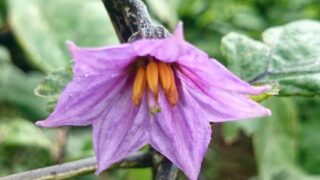
What are the differences between eggplant and nightshade? What is the origin and evolution of eggplant? Why is nightshade disliked? Does its flower pollinate by vibration? Why are nightshade fruits poisonous?

Both eggplant (Nasu) and nightshade (Nightshade japonica) share the name "eggplant" and have similar flower shapes, so those unfamiliar with them might confuse them. However, eggplant and nightshade are completely different species. Eggplant is a cultivated plant that does not grow wild and has no thorns, while nightshade is a wild plant...
plant

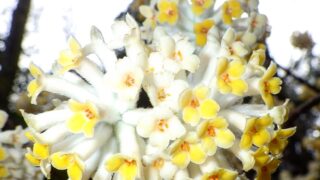
What are the differences between Mitsumata and Ganpi? We'll explain how to distinguish between these similar species! Why is Mitsumata used as the raw material for Japanese banknotes? Do flowers require insects with long mouths to thrive?

Both Mitsumata and Ganpi belong to the Thymelaeaceae family and are used to make washi (Japanese paper). Their flowers are quite similar in shape. However, despite being in the same family, Mitsumata and Ganpi belong to different genera, and a closer examination of their flowering periods and inflorescence shapes reveals various differences. Ganpi was the first to be used for washi...
plant

What are the differences between Erythrina variegata, Erythrina crista-galli (American Erythrina), and Coral Tree? We explain how to distinguish between similar species! Is it an invasive species in Okinawa? Why is it Okinawa's prefectural flower? Did the Erythrina genus evolve its pollination strategy using hummingbirds in the New World?

The three species of Erythrina variegata (Deigo), Erythrina variegata (American Erythrina), and Coral Tree (Erythrina crista-galli) are relatively common in Japan and are cultivated for ornamental purposes. They are sometimes confused with each other because they have red flowers and trifoliate compound leaves. While the leaves are very similar, careful observation of the leaflet shape, thorns, and petioles is important...
plant

What are the differences between Aburachan, Kuromoji, Yamakoubashi, Dankoubai, and Shiromoji? Do beetles come to the flowers in early spring seeking a mate? Surprising ecological findings revealed by the latest research!

Lindera obtusiloba, Lindera umbellata, Lindera japonica, Lindera umbellata, and Lindera umbellata are representative species of the Lindera genus, five deciduous shrubs with entire leaves that commonly grow in Japanese forests. Identifying them requires considerable practice, but they can be distinguished by carefully examining the leaves, phyllotaxy, and buds. They are primarily used for their fragrances and oils...
Sponsored Link