fallen leaves

Sponsored Link
plant

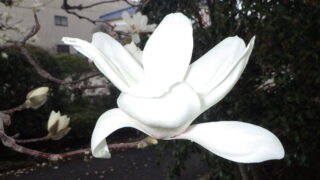
What are the differences between white magnolia, kobushi magnolia, star magnolia, and tamushiba magnolia? We'll explain how to distinguish between similar species! Is it a myth that their flowers are primitive? What is the purpose of their conspicuous red seeds?

White magnolia, kobushi magnolia, star magnolia, and tamushiba all belong to the Magnolia genus of the Magnoliaceae family. Being deciduous trees, they shed their leaves in winter, and around April, like cherry blossoms, they produce large, white, polypetalous flowers—one per branch—before the leaves appear. A key characteristic of these trees is...
plant

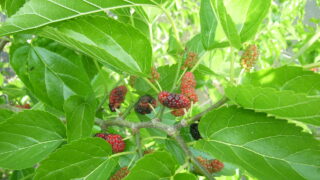
What are the differences between Morus alba, Morus serrata, and Broussonetia papyrifera? We'll explain how to distinguish between these similar species!

Both Morus alba and Morus serrata belong to the genus Morus in the family Moraceae and are deciduous shrubs commonly found along the edges of forests in Japan. Both are well-known for their use in sericulture (silkworm farming). Morphologically, a major characteristic is the presence of hairless upper leaves, a mix of undivided leaves and lobed leaves with a distinctive 3-5 incisions. However, 2...
plant

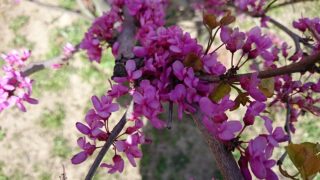
What are the differences between Japanese redbud (Cercis chinensis), American redbud (Cercis chinensis), and European redbud (Cercis rupestris)? We'll explain how to distinguish between these similar species!

The most distinctive feature of the Japanese redbud (Cercis chinensis), American redbud (Cercis rupestris), and European redbud (Cercis rupestris) is that, like cherry blossoms, they are covered in dense clusters of pink to purple, butterfly-shaped flowers characteristic of the legume family in spring before the leaves unfurl. While the Japanese redbud, cultivated for centuries, is well-known, the American redbud and European redbud have become increasingly popular in recent years...
plant

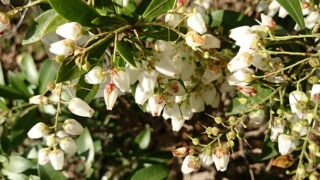
What are the differences between Pieris japonica, Pieris ryukyuensis, and Pieris japonica? We explain how to distinguish between similar species!

Japanese Andromeda, Ryukyu Andromeda, and Japanese Stewartia all belong to the Ericaceae family, have downward-facing, urn-shaped to bell-shaped flowers, and their bark can be twisted. They also all share the characteristic of being poisonous. Therefore, some people may have difficulty distinguishing them. However, Japanese Andromeda and Ryukyu Andromeda are similar...
plant

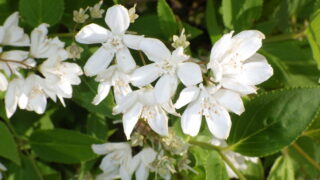
What are the differences between Deutzia, Deutzia crenata, and Deutzia gracilis? We'll explain how to distinguish between similar species! Could Deutzia be the origin of hedges?

Deutzia, Deutzia gracilis, and Deutzia crenata all belong to the Deutzia genus of the Hydrangeaceae family. It is believed that their name, "Utsugi" (hollow tree), comes from the fact that, except for the young branches, the inside of the branches is hollow. In Japan, they have a history of being planted as a guide for rice planting, and are also said to be the origin of hedges...
plant

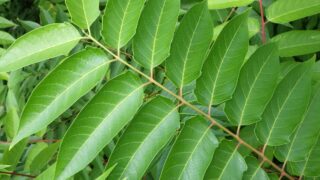
What are the differences between *Pyrus pyrifolia*, *Ailanthus altissima*, and *Lucifer praecox*? An explanation of how to distinguish between similar species.

Both *Pachypodium sibiricum* and *Ailanthus altissima* belong to the Simaroubaceae family and are deciduous trees sometimes planted in Japan. *Ailanthus altissima*, in particular, is known for its rapid growth and widespread naturalization worldwide. However, they share similarities, such as having odd-pinnately compound leaves, so those unfamiliar with them might not distinguish them...
plant

What are the differences between Enkianthus perulatus, Enkianthus campanulatus, and Rhododendron molle? An explanation of how to distinguish between similar species.

Enkianthus perulatus, Enkianthus campanulatus, and Rhododendron molle all belong to the genus Enkianthus in the family Ericaceae. Enkianthus perulatus and Enkianthus campanulatus are particularly commonly seen cultivated as garden trees and park trees. Their downward-facing, urn-shaped flowers are charming. However, the shape of their leaves...
plant

What are the differences between Zelkova, Japanese elm, and Japanese elm? An explanation of how to distinguish between similar species.

Zelkova serrata, Japanese elm, and Japanese elm all belong to the elm family. In Japan, they are commonly seen growing wild in forests and are also very commonly cultivated as street trees. All three have beautiful autumn foliage, which can sometimes lead to confusion. Of the three, the zelkova belongs to the genus Zelkova...
plant

What are the differences between Japanese hackberry (Enoki), Japanese hackberry (Ezoensis), and Chinese hackberry (Mukunoki)? An explanation of how to distinguish between similar species.

Japanese hackberry (Enoki), Japanese hackberry (Ezoensis), and Chinese zelkova (Aphananthe aspera) all belong to the Cannabaceae family. Japanese hackberry and Chinese zelkova, in particular, are extremely common trees in Japan. They have been used for timber, and young trees are frequently seen along roadsides in urban areas. To distinguish them, check the shape of their leaves...
plant

What are the differences between butterbur, leopard plant, and large leopard plant? An explanation of how to distinguish between similar species.

Butterbur, Farfugium japonicum, and Large-leaved Farfugium all belong to the Asteraceae family, and are very similar in that they have heart-shaped to kidney-shaped leaves, and are also edible. Because both have been used in Japan since ancient times, some people may confuse them.
Sponsored Link