ecology

Sponsored Link
Seed Plant Encyclopedia

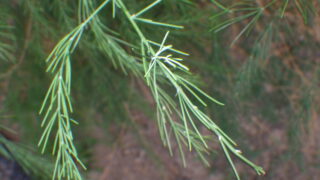
[Seed Plant Encyclopedia #087] What are the species of the Asparagaceae family? Photo list

The Asparagaceae family, also known as the Asparagaceae family, consists of perennial herbs, woody plants, or vines. They have rhizomes or bulbs. Leaves are alternate, opposite, or whorled, and may be clustered at the base of the stem. The terminal branches may also be leaf-like (Asparagus genus, Ruscus aculeatus...).
Seed Plant Encyclopedia

[Seed Plant Encyclopedia #086] What are the species of the Amaryllidaceae family? Photo list

The Amaryllidaceae family typically consists of perennial herbs with bulbs and basal leaves. The flowers are bisexual and radially or bilaterally symmetrical. They are borne in terminal umbels or singly on the flower stalk, with an involucre at the base of the inflorescence. They have three outer perianth segments and three inner perianth segments, and some also have a corona...
Seed Plant Encyclopedia

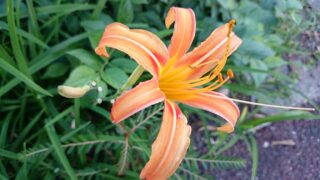
[Seed Plant Encyclopedia #085] What are the species of Hemerocallisaceae? Photo List

The family Asphodelaceae, also known as the Asphodeloideae family, is characterized by its linear leaves and flower stalks that rise from between the leaf clusters. (Asphodeloideae includes genera such as Asphodelus, Kniphofia, and Aloe...).
Seed Plant Encyclopedia

[Seed Plant Encyclopedia #083] What are the species of the Iridaceae family? Photo list

The Iridaceae family consists of annual or perennial herbs. They have rhizomes, corms, or bulbs underground. The leaves are sword-shaped, flattened, alternate, and strabiate. The flowers are bisexual and radially or bilaterally symmetrical. There are three inner and three outer perianth segments, either identical in shape or with larger outer segments, fused at the base...
Seed Plant Encyclopedia

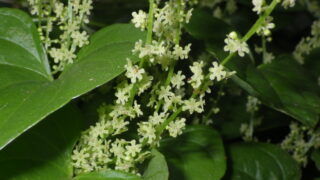
[Seed Plant Encyclopedia #058] What are the species of the Dioscoreaceae family? Photo list

The family Dioscoreaceae consists of herbaceous or climbing plants, comprising over 630 species across three genera distributed worldwide, primarily in tropical and subtropical regions. In Japan, only the genus Dioscorea is found. This article provides a comprehensive, field-guide-style introduction to plants of the Dioscoreaceae family. Basic information is available from the Kanagawa Prefectural Botanical Garden...
Seed Plant Encyclopedia

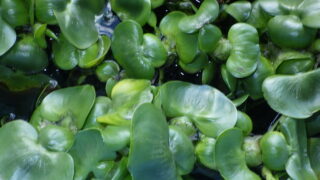
[Seed Plant Encyclopedia #045] What are the species of the Hydrocharitaceae family? Photo list

The family Hydrocharitaceae consists of annual or perennial aquatic plants that grow in freshwater or saltwater. Their morphology is extremely diverse. The base of the leaves often forms a leaf sheath, containing 2 to 10 or more small scales. They are monoecious or dioecious, with inflorescences...
Seed Plant Encyclopedia

[Seed Plant Encyclopedia #028] What are the species of the Magnoliaceae family? Photo list

The Magnoliaceae family consists of evergreen or deciduous woody plants. The leaves are simple and alternate. The perianth segments are separate and whorled, exhibiting triperality. The stamens and pistils are numerous and arranged spirally. Approximately 300 species across two genera are known in the temperate and subtropical regions of Asia and America, with 7 species in one genus found in Japan...
plant

How dangerous is the poison in oleanders? Why are they a symbol of peace in Hiroshima? The oleander flower, which doesn't secrete nectar, mimics an endangered species!?

Oleander is a common ornamental tree found in various locations throughout Japan, such as in parks and as street trees. However, it originally thrives in the Mediterranean and Southeast Asia. While there are various theories, it's said that 5 to 15 leaves are a lethal dose, and although extremely rare, there have been reports of poisoning in Japan. Furthermore, the smoke from burning oleander is also toxic...
animal

The mysterious fly known as the bee-like hoverfly, which is born and lives on tree sap, can it sting? Is it harmful?

Are you familiar with the hoverfly known as the false bee hoverfly? At first glance, it looks exactly like a bee, but hoverflies are actually a type of fly, so they won't sting you and are harmless. Its bright colors are thought to be a form of mimicry. Although it's actually a type of hoverfly...
plant

What are the differences between persimmon (Diospyros kaki), Japanese persimmon (Diospyros serrata), and mountain persimmon (Diospyros margaritacea)? We'll explain how to distinguish between similar species! Where are they native to? What's the difference between astringent and sweet persimmons? What insects visit the flowers? Who eats them in nature?

The Japanese persimmon (kaki) has been cultivated in Japan since ancient times and is a fruit and plant strongly associated with Japanese culture. While closely related species exist, the Japanese persimmon is easily distinguishable by the size of its fruit. However, when distinguishing by leaves alone, it resembles the Japanese dwarf persimmon (Diospyros kaki), the Ryukyu dwarf persimmon (Diospyros ryukyuensis), and the evergreen persimmon (Diospyros kaki), and subtle differences...
Sponsored Link