evolution

Sponsored Link
Posts 18617 Featured Image Adlerian Psychology Scientific Evidence animal

Is Adlerian psychology suspicious? Is it dubious? Is it pseudoscience? How much of it is actually proven? We'll explain the scientific basis and common misconceptions!

If we were to summarize Adlerian psychology in one sentence, it would be: "A psychology that fosters the ability to live in cooperation with others (community feeling) by choosing one's own life (self-determination), acting in accordance with one's purpose (teleology), and letting go of unnecessary control over others (separation of tasks)." However, his psychology...

Posts 16293 Featured Image Origin Of Rhythm And Meter animal

What are the origins of rhythm and time signatures (2/4, 4/4, 3/4)? An explanation of their evolutionary and historical origins!

When you take up listening to music, singing, or dancing as hobbies, you naturally develop an interest in rhythm and time signatures. However, if you try to pinpoint the origins of these things, you might find it difficult to answer. Because we often find ourselves naturally moving to rhythms, we might not even question it...
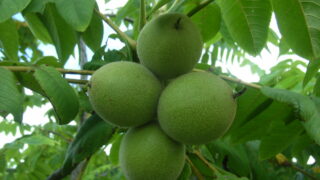
07.1974 Japanese Walnut (Pseudocarp) plant

What are the differences between Japanese walnut, black walnut, dwarf walnut, and Japanese walnut? We'll explain how to distinguish between similar species! Did the hard fruit evolve specifically for squirrels and mice?!

Japanese walnut (Juglans mandshurica), Japanese walnut (Juglans regia), Japanese walnut (Juglans mandshurica), and Japanese walnut (Juglans rhoifolia) all belong to the Juglandaceae family and are deciduous trees characterized by odd-pinnately compound leaves with serrated edges. They grow in Japanese forests, and in the case of Japanese walnut, Japanese walnut, and Japanese walnut, the so-called "walnut nuts" are found inside the false fruits and hard fruits...
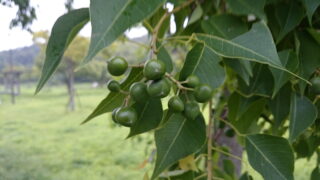
07.2093 Chinese tallow tree (Unripe fruit) plant

What are the differences between Chinese tallow tree and Japanese wax tree? We explain how to distinguish between similar species! Why did the white seeds, which contain a lot of fat, evolve?

Both the Chinese tallow tree (Toxicodendron sylvaticum) and the Japanese wax tree (Toxicodendron succedaneum) are deciduous trees, and both share the name "haze." This name comes from the fact that their fruits or seeds contain a large amount of fat, which has historically been used as wax. However, perhaps because of this, the Chinese tallow tree and the Japanese wax tree are often confused...
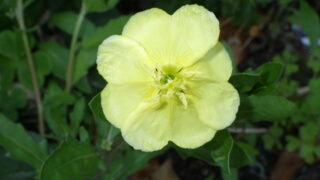
07.2321 Evening Primrose Flower plant

What are the differences between evening primroses (Oenothera biennis), dwarf evening primroses (Oenothera japonica), common evening primroses (Oenothera parviflora), and large evening primroses (Oenothera biennis)? We'll explain how to distinguish between similar species! Why did they evolve to bloom in the evening?

Evening primrose (Oenothera biennis), small evening primrose (Oenothera japonica), common evening primrose (Oenothera parviflora), and large evening primrose (Oenothera japonica) are all herbaceous plants belonging to the genus Oenothera in the family Onagraceae. Although they are introduced species, they are frequently seen in urban areas. Among the Oenothera species, these four species differ from the flowers we usually see, as they bloom in the evening with four petals...
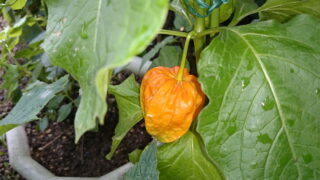
07.3308 Chinese Lantern Plant (Physalis) Fruit plant

What are the differences between ground cherries, edible ground cherries (strawberry tomatoes), and tomatoes? We'll explain how to distinguish between similar varieties! Are three types of "edible ground cherries" being confused?

Ground cherries, edible ground cherries (strawberry tomatoes), and tomatoes all belong to the nightshade family and are characterized by producing red fruits. Edible ground cherries are sold under names such as "edible ground cherry" and "strawberry tomato," and there is some confusion about their relationship to ground cherries and tomatoes...
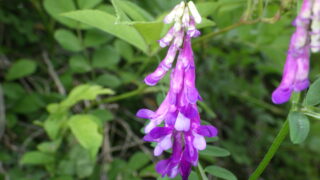
07.1569.a Vicia cracca (Japanese Vicia) inflorescence 2 plant

What are the differences between Vicia cracca, Hairy Vetch, Slender Vicia cracca, and Velvet Vicia? We explain how to distinguish between similar species! Was the nectar stolen from the flowers without restraint?!

Vicia cracca, hairy vetch, slender vetch, and velvet vetch all belong to the Vicia genus of the Fabaceae family. They are characterized by numerous purple, butterfly-shaped flowers (10-30 in number) arranged in racemes in spring, and by having five or more pairs of leaflets. From a distance, they are very similar...
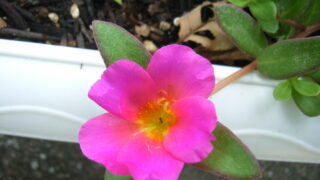
07.2842.a Portulaca grandiflora (Pink-flowered variety) plant

What are the differences between purslane, portulaca, and moss rose? We'll explain how to distinguish between similar species! The secret to their strength lies in the simultaneous use of two special types of photosynthesis!?

Purslane, Portulaca grandiflora, and Portulaca oleracea all belong to the Portulacaceae family and Portulaca genus. Their most distinctive feature is their glossy, succulent leaves. Due to their hardiness, they are cultivated and naturalized in urban areas, especially Portulaca grandiflora and Portulaca oleracea...
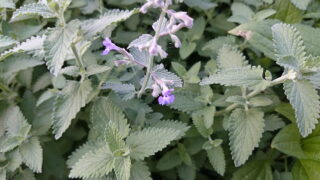
07.3495.a Catmint leaves plant

What's the difference between catmint and catnip? How does it differ from mint? We'll explain how to distinguish between similar species! Why does it intoxicate cats? And is it actually a mosquito repellent?!

Catmint and catnip belong to the genus Nepeta in the Lamiaceae family and are perennial plants widely cultivated in Japan as herbs or for ornamental purposes. While their large corolla with a protruding upper lip is a distinctive feature, their most notable characteristic is the "silver vine reaction" that intoxicates felines...
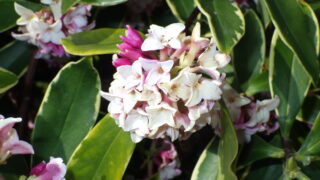
07.2504.3 *Daphne odora* (flower) plant

What are the differences between daphne and pepper tree? What are the differences between lilac, white jasmine, gardenia, and rhododendron? We'll explain how to distinguish between similar species! Why did the fragrance of flowers evolve?

Daphne odora and pepper trees both belong to the genus Daphne in the family Thymelaeaceae, and share the characteristics of wrinkled, distorted leaves and fragrant flowers. While they may appear similar, Daphne odora is only cultivated, while pepper trees only grow wild, and morphologically they also differ...
Sponsored Link