evolution

Sponsored Link
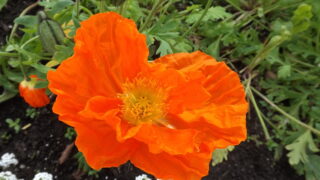
07.1132.a Siberian poppy, red flower shape plant

What are the differences between poppies, common poppies, and long-headed poppies? How do they differ from Icelandic poppies? We'll explain how to distinguish between similar species! Did humans themselves evolve the "Devil Fruit," which has both significant merits and demerits?

Poppies, including the common poppy, thick-flowered poppy, and long-headed poppy, all belong to the genus Papaver in the family Papaveraceae and are collectively known as poppies. They are very popular as ornamental plants due to their beautiful, large single flowers and are widely cultivated. However, despite being poisonous and prone to naturalization, they are difficult to identify...
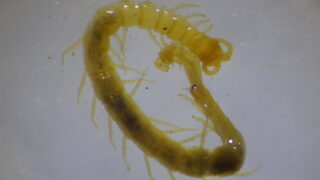
11.3529 Japanese Centipede (Adult, Full Form) animal

What is the role of the strangely enlarged final legs of the *Centipede* species? Could they be a secret weapon for aggressively defending against predators?!

The term "female centipedes" refers to a group of centipedes belonging to the genus *Scylla* in the family Scolopendridae, order Scolopendromorpha. These centipedes are burrowing and rarely seen by the average person, but their most striking feature is their strangely enlarged final gait. While there have been various theories regarding the function of this final gait,...
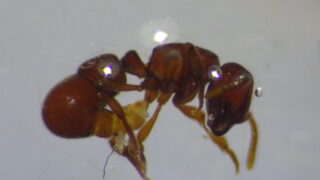
13.09580 Morishita's ant, female, adult, worker, side view animal

The hooked ant is an ant that only eats "insect eggs"!? Unraveling the mystery of its "hook" shaped abdomen!

When you hear the word "ant," you might picture a black insect crawling on the ground. However, there are actually many unknown species of ants living underground, and among them, the Hooked Ants and Pterodactylus ants have a very unique shape with a hook-shaped abdomen. Their appearance is...
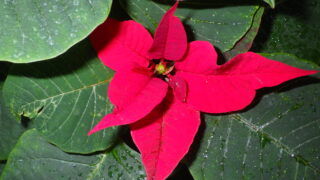
07.2106 Deutzia crenata (Red bract type) Bracts plant

What are the differences between poinsettias, Epipactis thunbergii, and false Epipactis thunbergii? We'll explain how to distinguish between similar species! Is it a myth that poinsettias are poisonous?!

Poinsettias, Euphorbia hederacea, and Euphorbia leucocephala all belong to the Euphorbia genus of the Euphorbiaceae family. While widely cultivated for ornamental purposes, they also sometimes become naturalized. Their most striking feature is their bright red or white, conspicuous petal-like "bracts"...
07.0593.3 White Banana Ophiopogon Flower plant

What are the differences between Ophiopogon japonicus, Ophiopogon longifolius, Ophiopogon sieboldii, and Ophiopogon orchid? An explanation of how to distinguish between similar species.

Ophiopogon japonicus, Ophiopogon longifolius, Ophiopogon sieboldii, and Ophiopogon orchid all belong to the Ophiopogon genus of the Asparagaceae family (formerly Asparagaceae), and are evergreen perennial herbs often seen growing creeping along the ground in forests. Their most distinctive feature is the dark blue seeds they produce, which are easily mistaken for fruits...
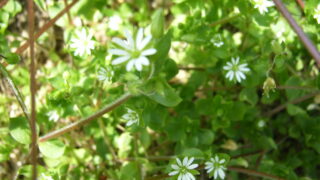
07.2709.a Stellaria media (whole plant) plant

What are the differences between common chickweed, green chickweed, and cow chickweed? We'll explain how to distinguish between similar species! There are even differences in their survival strategies!?

Common chickweed, green chickweed, and large chickweed all belong to the genus Stellaria in the family Caryophyllaceae, and are representative Japanese weeds that can almost certainly be found if you observe roadsides. In Japan, they are one of the seven spring herbs and are familiar to people as they are eaten in seven-herb rice porridge. However, these three species are usually referred to simply as "chickweed"...
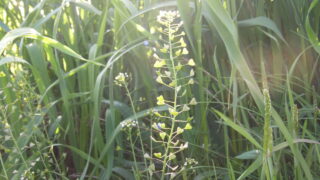
07.2573 Shepherd's Purse (Capsella bursa-pastoris) inflor plant

What are the differences between Shepherd's Purse, Lepidium virginicum, Lepidium thunbergii, and Arabidopsis thunbergii? An explanation of how to distinguish between similar species.

Shepherd's purse, lacecap shepherd's purse, dog shepherd's purse, and Arabidopsis thaliana all belong to the Brassicaceae family, and among them, the one with the name "shepherd's purse" is a representative weed of Japan. It is characterized by flowering in early spring and quickly producing flat fruits. However, despite its fame, these four species...
07.0564 Agave (full form) plant

What are the differences between agave and yucca? We'll explain how to distinguish between similar species! Is it a myth that they live for 100 years? Is it a myth that they're used to make tequila?

Agave, agave, Yucca, and Yucca all belong to the Asparagaceae family (formerly known as the Asparagaceae family). They are characterized by their large size, sometimes reaching the height of a child or adult, and their monocotyledonous leaves with parallel veins. Their impressive presence and drought tolerance...
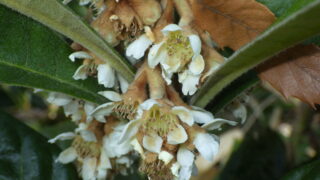
07.1717 Loquat flower plant

What's the difference between loquat (Biwa) and wild fig (Inubiwa)? How do they differ from apricots, persimmons, and mangoes? We'll explain how to distinguish between similar species! Insects and small birds visit loquat blossoms that bloom in winter!?

The loquat (Ficus microcarpa) is an evergreen tree native to China, cultivated worldwide for its edible fruit. In Japan, it is frequently cultivated not only for food but also for ornamental purposes. A similar-sounding species, the deciduous shrub known as *Ficus erecta*, is often confused with the loquat due to its oval-shaped, fruit-like structure...
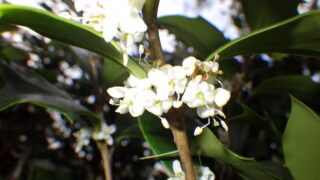
07.3368 Holly flower plant

What are the differences between holly (Ilex crenata) and holly osmanthus? What are the differences between Ilex crenata, European holly, and holly mauve? We'll explain how to distinguish between similar species! Are the two types of leaves a result of evolution?

Both holly (Ilex crenata) and holly osmanthus belong to the Oleaceae family and Osmanthus genus, and can be seen cultivated even in urban areas. Young holly trees are also frequently seen in forests. Morphologically, both have serrated leaves, which is why these two species are often confused...
Sponsored Link