evolution

Sponsored Link
plant

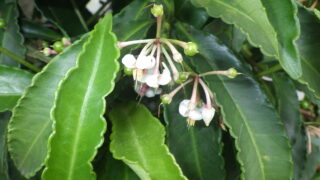
What are the differences between Ardisia japonica, Ardisia crenata, Ardisia crenata, and Citrus tachibana? We explain how to distinguish between similar species! Is the idea that they "fix nitrogen with their leaves" a myth?!

Ardisia japonica, Ardisia crenata, Ardisia japonica, and Ardisia trifoliata all belong to the genus Ardisia in the family Primulaceae. They grow wild in evergreen forests, but because they bear red, spherical fruits in autumn and winter, they are widely cultivated as ornamental shrubs, along with plants like Ardisia crenata (a member of the Chloranthaceae family). In Japan...
plant

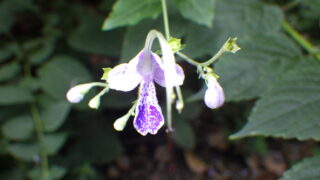
What are the differences between Clerodendrum trichotomum and Clerodendrum frequens? An explanation of how to distinguish between similar species.

Both Clerodendrum trichotomum and Clerodendrum sibiricum belong to the mint family and are sometimes cultivated for ornamental purposes. Their most significant commonality is the similar shape of their flowers. Specifically, both have very long stamens and pistils that curve downwards (curl) and protrude far from the flower. Therefore...
plant

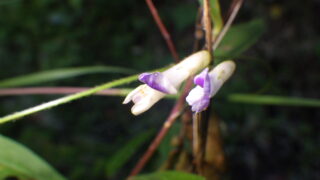
What are the differences between wild beans, wild beans, and soybeans? An explanation of how to distinguish between similar species.

Both wild soybean (Amphicarpaea rhynchophylla) and climbing soybean (Glycine soja) are annual vines belonging to the legume family. In Japan, they grow in very similar environments such as embankments, grasslands, and forest edges. Their trifoliate compound leaves are also similar in shape, which can lead to confusion. However, there are differences at the genus level, and these differences are clearly evident in the leaves, flowers, and fruits...
plant

What's the difference between rosemary and Westringia (Australian rosemary)? How is it different from lavender? We'll explain how to distinguish between similar species! Do bees love the flowers? Ants are both allies and enemies to the fruit!?

Rosemary (Rosemary) and Westringia (Australian rosemary) both belong to the mint family and have similar names. They are commonly planted in Japan as ornamental plants, and their leaves and flowers look quite similar. However, rosemary is native to Europe and North Africa, while Australian rosemary...
plant

What are the differences between *Lampranthus erythrosora* and *Lampranthus sanguineus* (cold-hardy *Lampranthus sanguineus*)? We'll explain how to distinguish between similar species! Why are the leaves "squishy"? What insects visit the pink flowers? Do the fruits swell when humidity increases?

The ice plant *Lampranthus* and the hardy ice plant *Lampranthus 'Hanaranzan'* are native to South Africa and are two extremely popular ornamental plants in Japan. You'll see them everywhere you go. These succulents, with their plump leaves and showy pink flowers, are quite unusual for Japan...
plant

What are the differences between Campanula punctata and Campanula punctata? How do they differ from Adenophora triphylla? We'll explain how to distinguish between similar species! Only bumblebees visit the flowers long enough for fireflies to enter!? Do the seeds even cross the ocean!?

Both Campanula punctata and Campanula punctata are perennial herbs belonging to the Campanulaceae family, and are very common in Japan, both as wildflowers and cultivated plants. They are classified as the same species, differing only at the variety level. Their flower corollas are identical, urn-shaped, and their color ranges from white to reddish-purple, making them difficult to distinguish...
plant

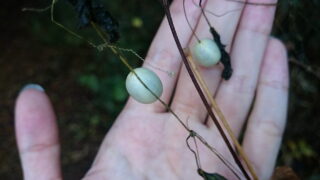
What are the differences between *Melophyllum uliginosum* and *Melophyllum okinawaense*? How do they differ from *Tricholoma cucumeroides* species? We'll explain how to distinguish between similar species! Is the pollination method unknown? Do birds like these cute fruits? Are they edible for humans?

Both *Melo serrulata* and *Melo okinawaensis* belong to the Cucurbitaceae family and are climbing annuals. Morphologically, they share similarities, including small flowers and smooth, hairless fruit surfaces. Furthermore, Google search suggestions are sometimes incorrect, making it difficult to distinguish between them without prior observation...
plant

What are the differences between Fraxinus lanuginosa, Fraxinus sieboldiana, and Fraxinus japonica? How do they differ from Fraxinus sieboldiana and Fraxinus japonica? We'll explain how to distinguish between similar species! Did the flowers use both wind and insects for pollination? What is the purpose of the wings on the fruit?

Fraxinus lanuginosa, Fraxinus sieboldiana, and Fraxinus japonica all belong to the genus Fraxinus in the family Oleaceae. They are very similar in that they have odd-pinnately compound leaves, and their leaf and flower shapes are particularly similar compared to other species in the Fraxinus genus. Therefore, it can sometimes be difficult to distinguish between them. What are Fraxinus lanuginosa and Fraxinus japonica...?.
plant

What are the differences between *Tatsunamisou*, *Kobano-tatsunamisou*, *Okata-tatsunamisou*, and *Namikisou*? We explain how to distinguish between similar species! Do bees like the flowers? And are raindrops important for the fruit?!

Scutellaria indica, Scutellaria baicalensis, Scutellaria japonica, and Scutellaria verna all belong to the genus Scutellaria in the Lamiaceae family. They are often confused in horticulture, and because they frequently grow in forest edges and on the forest floor, their large, swollen corollas are similar in shape, making them difficult to distinguish by observation alone. The genus Scutellaria includes...
plant

What are the differences between Japanese pepper (Zanthoxylum piperitum), Chinese pepper (Zanthoxylum sibiricum), and Japanese pepper (Zanthoxylum ailanthoides)? We'll explain how to distinguish between similar species! What are their uses? What insects visit the flowers? Birds apparently love the seeds because they don't find them spicy!?

Japanese pepper (Zanthoxylum piperitum), Japanese sansho, and Japanese sansho are common species in Japan, and Japanese pepper in particular remains an essential ingredient in cooking today. All belong to the genus Zanthoxylum in the Rutaceae family, and are very similar in that they have many thorns all over the plant and odd-pinnately compound leaves consisting of an odd number of leaflets. Japanese pepper has a distinctive aroma...
Sponsored Link