herbaceous

Sponsored Link
plant

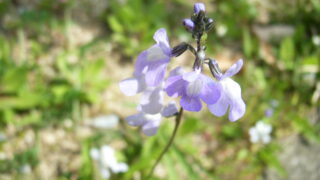
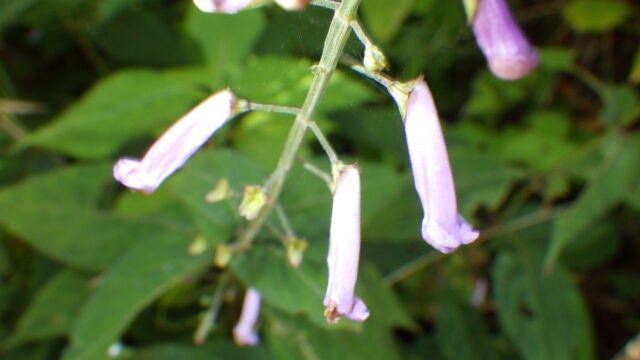
What are the differences between *Linaria japonica*, *Linaria cantoniensis*, and *Linaria thunbergii*? We explain how to distinguish between similar species! Despite their showy flowers, they are entirely self-pollinating!?

*Linaria japonica*, *Linaria cantoniensis*, and *Linaria thunbergii* all belong to the Plantaginaceae family and are herbaceous plants that bear cute, blue-colored "lip-shaped flowers" (flowers with separate upper and lower lips) with a swollen center on the lower lip. Although they are introduced species, they are frequently seen in urban areas, but their flowers...
animal

Why shouldn't we exterminate bears to the point of extinction? A complete explanation of the benefits of bears (Asian black bears and brown bears)!

In Japan, the Japanese black bear (Ursus thibetanus japonicus) is found on Honshu and Shikoku, while the Hokkaido brown bear (Ursus arctos yesoensis) is found on Hokkaido. In 2025, these bears were projected to be active in populated areas...
plant

What's the difference between *Tenningiku* and *Otenningiku*? We'll explain how to distinguish between these similar species! Actually, telling them apart is quite difficult...?

Both *Lysimachia japonica* and *Lysimachia japonica* are herbaceous plants belonging to the genus *Lysimachia* in the Asteraceae family. They are characterized by their spherical or convex receptacle and the bicolored ray florets. Due to their beautiful colors, they are sometimes cultivated for ornamental or landscaping purposes...
plant

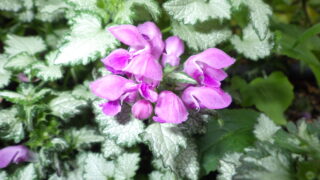
What are the differences between Lamium, Lamium amplexicaule, and Lamium purpureum? We'll explain how to distinguish between similar species!

Both *Lamium purpureum* and *Lamium purpureum* are herbaceous plants belonging to the genus *Lamium* in the Lamiaceae family. In horticulture, they are called "Lamium," and because *Lamium purpureum* is also known as "Lamium purpureum," they are often confused in search results. However, biologically, they are all...
plant

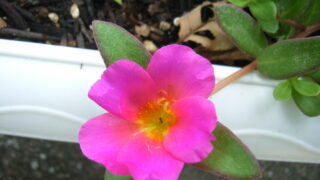
What are the differences between purslane, portulaca, and moss rose? We'll explain how to distinguish between similar species! The secret to their strength lies in the simultaneous use of two special types of photosynthesis!?

Purslane, Portulaca grandiflora, and Portulaca oleracea all belong to the Portulacaceae family and Portulaca genus. Their most distinctive feature is their glossy, succulent leaves. Due to their hardiness, they are cultivated and naturalized in urban areas, especially Portulaca grandiflora and Portulaca oleracea...
plant

What are the differences between Goosegrass, Digitaria sanguinalis, and Digitaria sanguinalis? An explanation of how to distinguish between similar species.

Digitaria sanguinalis, Digitaria sanguinalis, and Digitaria sanguinalis are all members of the grass family and are extremely common herbaceous plants and weeds that can be found growing everywhere from urban to rural areas from summer to autumn. Their most significant common feature is that they all produce several racemes, or inflorescences. Their names are similar...
plant

What are the differences between Boehmeria japonica, Boehmeria nivea, Ramie, and Urtica dioica? An explanation of how to distinguish between similar species.

Boehmeria japonica, Boehmeria nivea, Ramie, and Urtica dioica all belong to the Urticaceae family and share the characteristic of having leaves with fine veins and serrations. They are common herbaceous plants that grow in mountains and fields. Boehmeria japonica and Ramie are also well-known for their use as fibers. However, the classification of the Urticaceae family is complex...
plant

What are the differences between Japanese hackberry (Enoki), Japanese hackberry (Ezoensis), and Chinese hackberry (Mukunoki)? An explanation of how to distinguish between similar species.

Japanese hackberry (Enoki), Japanese hackberry (Ezoensis), and Chinese zelkova (Aphananthe aspera) all belong to the Cannabaceae family. Japanese hackberry and Chinese zelkova, in particular, are extremely common trees in Japan. They have been used for timber, and young trees are frequently seen along roadsides in urban areas. To distinguish them, check the shape of their leaves...
plant

What are the differences between Lespedeza bicolor, Lespedeza thunbergii, Lespedeza cyanea, and Lespedeza thunbergii? An explanation of how to distinguish between similar species.

Lespedeza bicolor, Lespedeza thunbergii, Lespedeza thunbergii, and Lespedeza thunbergii are all perennial herbs belonging to the genus Lespedeza in the family Fabaceae. They are particularly small, less than 10mm in length, and do not develop woody tissue. A major common feature is that their petals are primarily white with purple markings that serve as nectar guides, making them difficult to distinguish...
plant

What are the differences between Dutch strawberries, wild strawberries, raspberries, and mock strawberries? This article explains how to distinguish between similar species.

Strawberry (Strawberry), Rubus parvifolius (Japanese raspberry), Rubus buergeri (wild strawberry), Raspberry (Japanese raspberry), and Strawberry (Indian strawberry) all belong to the Rosaceae family and are generally recognized as relatives of the "strawberry" with their small, red, berry-like fruits. However, among these, Strawberry and Raspberry...
Sponsored Link