toxicity

Sponsored Link
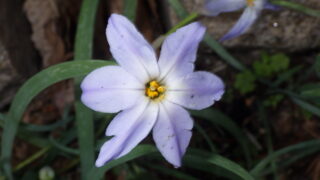
07.0540 Hananira purple flower type flower plant

What are the differences between Ipheion uniflorum, Ipheion leek, and Ipheion japonica? We'll explain how to distinguish between similar species! Are they edible?

All three species—Ipheion uniflorum, Allium sibiricum, and Allium sibiricum—belong to the Amaryllidaceae family, Allioideae subfamily, and share the name "nira" (leek). They are common perennial plants found in fields and urban areas. However, their confusing names can make it difficult for those unfamiliar with these three species to distinguish between them...
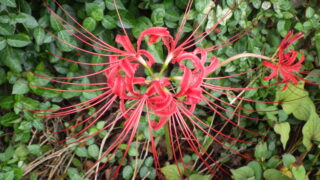
07.0543 Red Spider Lily Flower plant

What are the differences between Lycoris radiata (Red Spider Lily), Lycoris radiata var. alba, Lycoris radiata var. alba, and Lycoris radiata var. alba? An explanation of how to distinguish between similar species.

Lycoris radiata (red spider lily), Lycoris radiata var. alba, Lycoris radiata var. alba, and Lycoris aurea are all perennial plants belonging to the Lycoris genus of the Amaryllidaceae family. They are very familiar to Japanese people due to their toxicity and the clusters of flowers they produce in autumn. However, there are many varieties...
07.3142 Paederia scandens (Japanese honeysuckle) inflorescence plant

What are the differences between Paederia scandens and Paederia japonica? What are the varieties and cultivars? How can we distinguish between similar species? What are the components of the foul odor? Are the flowers only for small bees? Are the fruits a favorite of birds?

Both Paederia scandens and Paederia japonica belong to the genus Paederia in the family Rubiaceae and are climbing herbs. They are well-known for the strong, foul odor they emit when their leaves are crushed, but the overall shape of their leaves is similar, and their flowers are identical. Combined with the confusion in their classification, they may sometimes be mistaken for each other...
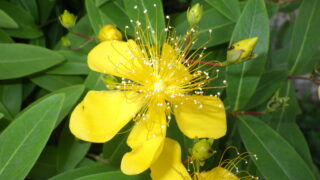
07.2236 Hypericum patulum flower plant

What are the differences between Hypericum patulum, Hypericum patulum, Hypericum humile (Hidcote), and Hypericum patulum? An explanation of how to distinguish between similar species.

Hypericum patulum, Hypericum patulum, Hypericum humile (Hidcote), and Hypericum patulum are all evergreen shrubs belonging to the Hypericaceae family, genus Hypericum, and are cultivated in Japan for ornamental purposes. They are frequently seen in urban areas and are very popular for their yellow flowers, but their characteristics...
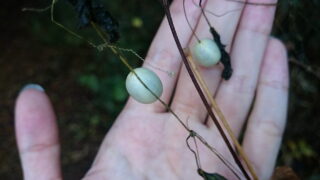
07.2007 Sparrow Gourd Fruit plant

What are the differences between *Melophyllum uliginosum* and *Melophyllum okinawaense*? How do they differ from *Tricholoma cucumeroides* species? We'll explain how to distinguish between similar species! Is the pollination method unknown? Do birds like these cute fruits? Are they edible for humans?

Both *Melo serrulata* and *Melo okinawaensis* belong to the Cucurbitaceae family and are climbing annuals. Morphologically, they share similarities, including small flowers and smooth, hairless fruit surfaces. Furthermore, Google search suggestions are sometimes incorrect, making it difficult to distinguish between them without prior observation...
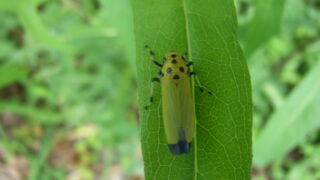
13.04002 *Tsumaguro-ooyokobai* (adult) animal

What are the different species of leafhoppers? How do they differ from planthoppers? Are they harmful? What do they eat? Did they communicate through "vibrations"? What is the role of their body color?

Leafhoppers are a general term for the family Cicadellaceae, a group of insects distributed worldwide that primarily inhabit the stems and leaves of herbaceous plants. At least 20,000 species have been described globally, and currently, 190 genera and 576 species are known in Japan, making them a highly diverse and thriving group. A close relative is the planthopper...
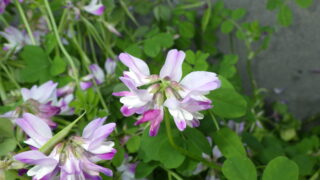
07.1520 Astragalus flower Seed Plant Encyclopedia

[Seed Plant Encyclopedia #153] What are the types of legumes? Photo list

The Fabaceae family is a large family of vascular plants, second only to the Asteraceae and Orchidaceae families in terms of the number of species it contains. It includes many useful plants used for food and other purposes, and is deeply connected to human life. It includes herbs and woody plants ranging from annual to perennial, with many being climbing or possessing tendrils...
07.0003.a Futamata-maou (a type of flower) - whole form Seed Plant Encyclopedia

[Seed Plant Encyclopedia #004] What are the species of the Ephedra family? Photo list

The Ephedraceae family generally consists of shrubs, sometimes vines, and rarely small trees. It includes only the genus Ephedra. It is distributed across southwestern North America, southern Europe, northern Africa, southwestern and central Asia, northern China, and western South America, and is widely found in arid regions. Temperate regions...
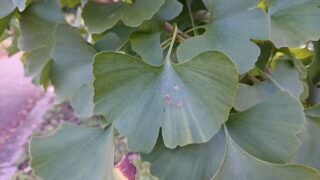
07.0002 Ginkgo leaf Seed Plant Encyclopedia

[Seed Plant Encyclopedia #003] What are the species of the Ginkgo family? Photo list

The Ginkgoaceae family consists of deciduous trees. The leaves are flattened and spread out, with veins repeatedly branching dichotomously from the base of the petiole, becoming parallel veins that reach the upper leaf margin. They are dioecious; male flowers bear numerous anthers on a slender stalk. Female flowers typically have two ovules facing upwards at the end of the pedicel. Fertilization occurs...
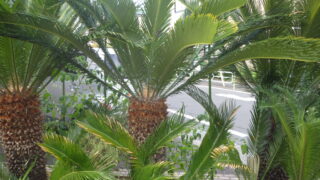
07.0001 Cycad (full form) Seed Plant Encyclopedia

[Seed Plant Encyclopedia #001] What are the species of the Cycadaceae family? Photo list

The family Cycadaceae is a family of plants belonging to the order Cycadales in the class Cycadae. All extant species are evergreen woody plants. The leaves are pinnately compound, with long, pointed leaflets. Numerous leaves grow at the tip of the stem, with the base remaining on the stem. The family is dioecious, with flowers borne terminally or laterally on the stem. The stamens (microsporophylls) are scale-like...
Sponsored Link