toxicity

Sponsored Link
plant

What's the difference between mountain azaleas and rhododendrons? We'll explain how to distinguish between similar species! Research has revealed that bumblebees are also essential for flowers that are supposedly specialized in attracting butterflies!

The Japanese azalea (Rhododendron kaempferi) is a representative species of wild azalea in Japan, while the Japanese azalea (Rhododendron molle) is famous for being poisonous. Both belong to the Rhododendron genus of the Ericaceae family and are representative species of red wild azaleas, so you might get them confused. However, you can distinguish them by checking the shape of their leaves and how the flowers are arranged. These two species...
animal

Why are the "thighs" of the longhorn beetle *Tetragnatha japonica* so thick? Was it an evolutionary adaptation to hold down females?! Recent research reveals clues in closely related species! A scientific approach to "sexual conflict."

Are you familiar with the insect known as the "Peach-thick Longhorn Beetle"? It gathers on flowers from spring to early summer and is one of the most commonly seen longhorn beetles in Honshu. Its most distinctive feature is its thick hind legs. Have you ever wondered why this is the case...?.
animal

The rare spider *Euphyllia japonica*, which preys on its victims by spinning silk from its mouth, can be found in your home!

When you imagine a spider, how do you picture it producing silk? A common misconception is that it produces silk from its mouth. In reality, spiders have organs called "spinnerets" on their abdomen from which they produce silk. Spiders typically don't produce silk from their mouths...
plant

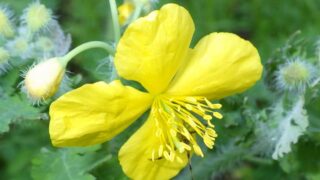
What are the differences between Greater Celandine and Japanese Kerria? We'll explain how to distinguish between similar species! Are they poisonous? Why do Greater Celandine flowers bloom at an angle?

Both *Chelidonium majus* and *Cornus kousa* are wild species of the poppy family, composed of four yellow petals, so it can be difficult to distinguish between them. Their leaves can be differentiated by the presence or absence of serrations on the leaflets, and their flowers are almost identical, but there are differences in the arrangement of the inflorescence and the shape of the stamens and pistils...
plant

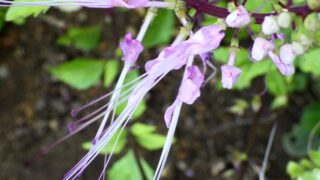
What species resembles *Cat's Whiskers* (Kumiskuching)? We'll explain how to distinguish them, and reveal that butterflies specialize in visiting the flowers! What are the effects of Kumiskuching tea?

*Cat's Whiskers* (Kumiskuching) is a popular ornamental horticultural plant in Japan, known for its long stamens. In Okinawa, it's called *Kumiskuching* and is sometimes used to make *Kumiskuching* tea. Several closely related species exist within the same genus, but they don't resemble each other very much. Japan...
plant

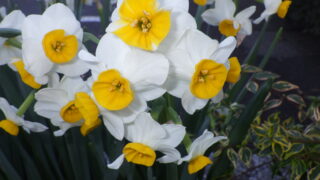
There are differences between Japanese daffodils and regular daffodils! Are they poisonous? How do they differ from chives? Where are they native to? Why did the flowers evolve to bloom in winter?

Daffodils are a very popular ornamental plant in Japan, blooming in winter. However, a little research reveals that they are sometimes referred to as "Japanese daffodils" (Nihon-zuisen) or simply "daffodils." Is there a difference between Japanese daffodils and regular daffodils? Japanese daffodils are native to China...
plant

There are differences between plumeria and Indian jasmine! We'll explain how to distinguish between similar species! When did it arrive in Hawaii? Is it poisonous? Were the flower's flashy colors and scent an evolutionary adaptation to deceive moths?!

Plumeria is a popular garden plant known for its vibrant, large flowers and fragrance, symbolizing the tropics. However, it is also known as Indian jasmine. The terms "plumeria" and "Indian jasmine" may have different meanings. In Japan, "Indian jasmine" often refers to a single, common variety...
plant

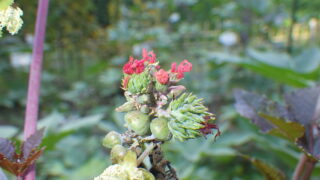
How toxic is castor bean? What are its components? What are the uses of castor oil? Why is it considered safe despite being toxic? Its flowers are pollinated by both wind and insects! Its seeds are dispersed automatically and by ants!

Castor bean is a perennial plant said to originate from northeastern Africa, cultivated worldwide for commercial and ornamental purposes, and sometimes naturalized. It's almost impossible to mistake it for anything else. Its seeds, called "himashi," are rich in oil, and the extracted "castor oil" is used in cosmetics, shampoos, soaps, and more...
plant

What species are similar to Macleaya cordata? Is it toxic? What types of alkaloids does it contain? Is it medicinal? Did the flower's "petals" have been genetically altered to resemble "stamens"?

Macleaya cordata is a perennial herb that grows in wastelands and roadsides, and can occasionally be seen in urban areas. It belongs to the poppy family, and while no similar plants have been identified in Japan, several varieties are known, differing slightly in leaf morphology. The toxicity of Macleaya cordata is its most well-known characteristic; cutting the stem...
plant

What are the differences between wintersweet (Chimonanthus praecox) and wintersweet (Chimonanthus praecox var. japonica)? Is it poisonous? Is there a reason why wintersweet flowers bloom in the middle of winter? The wintersweet's minority strategy!

Wintersweet (Chimonanthus praecox) is native to China and is used as a garden tree in Japan. Although not widely known, its seeds and leaves are poisonous, so caution is necessary. Wintersweet and Chimonanthus praecox can be distinguished by the color of their flowers. Wintersweet blooms in the middle of winter, when other plants are not in bloom...
Sponsored Link