Recently, bed bugs appeared in my apartment.
Bed bugs (Cimex lectularius) are indoor pests belonging to the genus Cimex in the family Cordycepsidae, order Hemiptera. In Japan, they were once nearly extinct after World War II due to the widespread use of effective insecticides, but have begun to increase again since around 2000 due to the ban on the use of DDT and the increase in inbound tourism (Hirao, 2010).
I never imagined that I, someone who works with insects, would be bitten by bed bugs. In a way, it was fortunate that I was able to take many photos of bed bugs (?), but I was bitten 6 to 10 times every night on the backs of my hands, arms, and neck, and on top of that, I became ill and caught a cold, so it was a very painful experience.
Therefore, here I would like to summarize the ecology of bed bugs, along with my personal experience from their initial infestation to eradication, and refer to relevant literature.
In conclusion, there are limits to what you can do to get rid of them yourself, and if you want a quick solution, I think it's best to rely on a pest control company. Even I, who loves cleaning and lives a semi-minimalist lifestyle, felt that way, so I think there are probably no exceptions.
The reason is that while laundry and commercially available insecticides (excluding pyrethroids) are effective, liquid sprays or gaseous fumigations do not spread sufficiently throughout a real house with a lot of clutter, and since insecticides are ineffective against eggs, continuous pest control is necessary after hatching.
Depending on the company, many also use other methods such as high or low temperature insecticide application, sealing gaps, trapping, and visual inspection, resulting in a completely different level of service.
Contrary to what is advertised, the extermination costs are typically over 100,000 yen, which is quite expensive. However, considering the certainty and time saved, I believe it's well worth the payment.
I think self-extermination is only feasible for those who are prepared to fight for a long time.
This article summarizes a real-life experience review of bed bugs, from their discovery to eradication, along with information about their ecology.
- The first sign of trouble: From bite marks and symptoms to realizing "it might be bed bugs."
- Where are they hiding in your house? A complete guide to finding bed bugs in your home.
- First aid measures taken: Washing, drying, and cleaning
- Attempting to exterminate pests yourself: The effectiveness and limitations of insecticide sprays.
- But it still doesn't go away... The recurrence revealed the "pitfalls of amateur pest control."
- I learned about professional pest control methods and typical costs by consulting with a pest control company.
- The process leading up to the day of the pest control service and the number of days it took for complete eradication.
- Measures to prevent recurrence and ensure it never happens again
- Summary: Early detection and correct diagnosis are key when it comes to bed bugs.
- References
The first sign of trouble: From bite marks and symptoms to realizing "it might be bed bugs."
The first physical abnormality I noticed
The first symptoms of bed bugs appeared in mid-April. After visiting a friend's house with a large group of people, I developed slightly itchy red spots around my wrists, and at first I thought it might be due to a viral cold. I had previously developed similar spots from a viral cold, and I actually developed chills and caught a cold afterward, so I was convinced that "this must be a cold caused by being with other people."
This cold lingered for quite a while, with persistent runny nose, cough, and sneezing, and even a loss of taste. Although tests showed it wasn't coronavirus or influenza, it worsened to the point where I developed cough-variant asthma even after recovering.
After recovering from my cold, my health improved somewhat, except for my cough-variant asthma. However, for some reason, the spots on my skin continued to increase rather than subside.
It was at this point that I finally started to think, "Could this possibly be caused by an insect rather than a cold...?"
This was because I had prior knowledge of the issue. During my graduate studies, I heard through word of mouth that there was talk at the public health center about an increase in bed bugs, and I did some research on it myself.
Just in case, I lifted the mattress I always use and examined the mesh part, and found something very small wriggling. I picked it up with my usual tweezers and examined it with a stereomicroscope... and there it was. It was a bed bug.
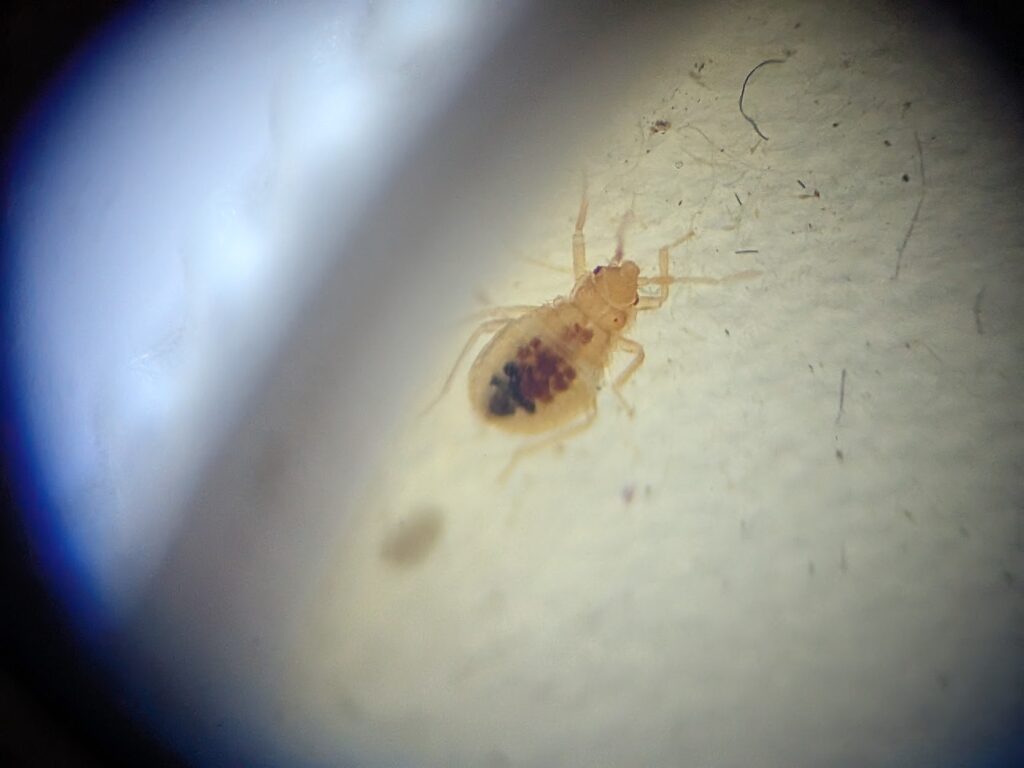
I discovered it so easily and even took a picture, but in reality, it's not that simple.
The media often focuses on the adult form, which is large, brown, and relatively conspicuous. However, the first-instar larva, newly hatched from the egg, is only about 1.5 mm long, and only those with very keen eyesight can spot it against a white background. Most people would simply overlook it.
Even more cleverly, and this is a common characteristic among insects, bed bugs will stop moving when they sense they've been detected, such as by vibrations. Mammals, including humans, find it extremely difficult to spot something that isn't moving.
Furthermore, since most people don't have tweezers or a stereomicroscope, they probably wouldn't be able to catch a first-instar larva and definitively identify it as a bed bug.
In that respect, I think we were quite fortunate to have discovered it so early.
Most people would be wise to be suspicious based on the symptoms of bite marks.
Characteristics of bite marks and differences from tick bites
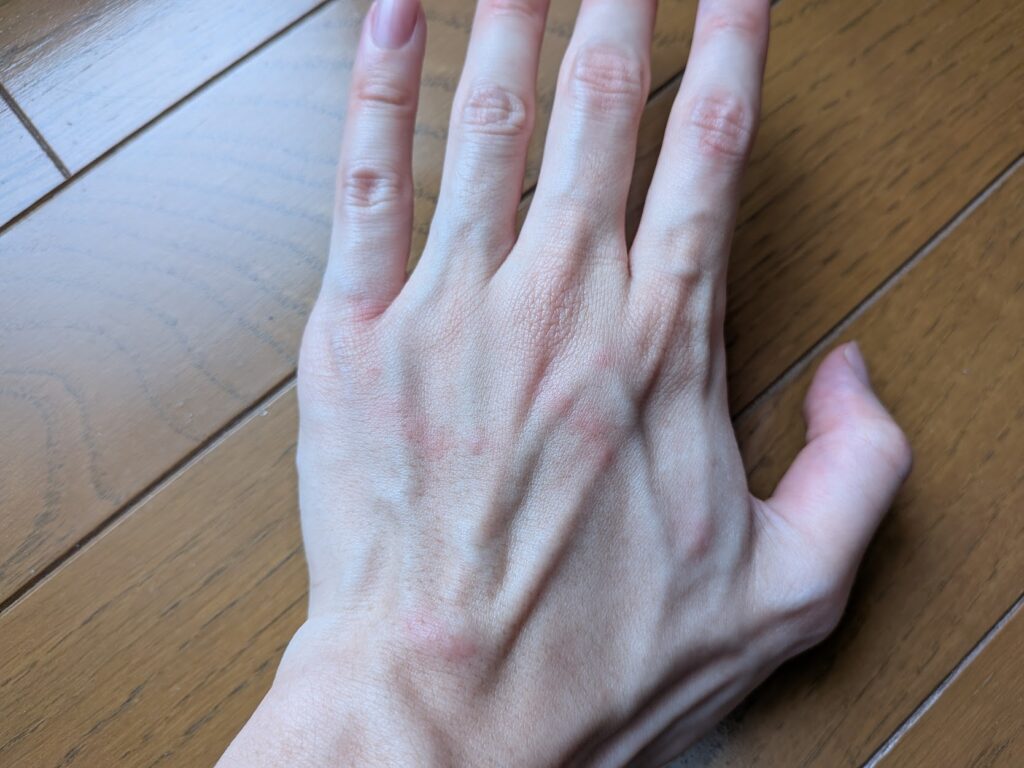
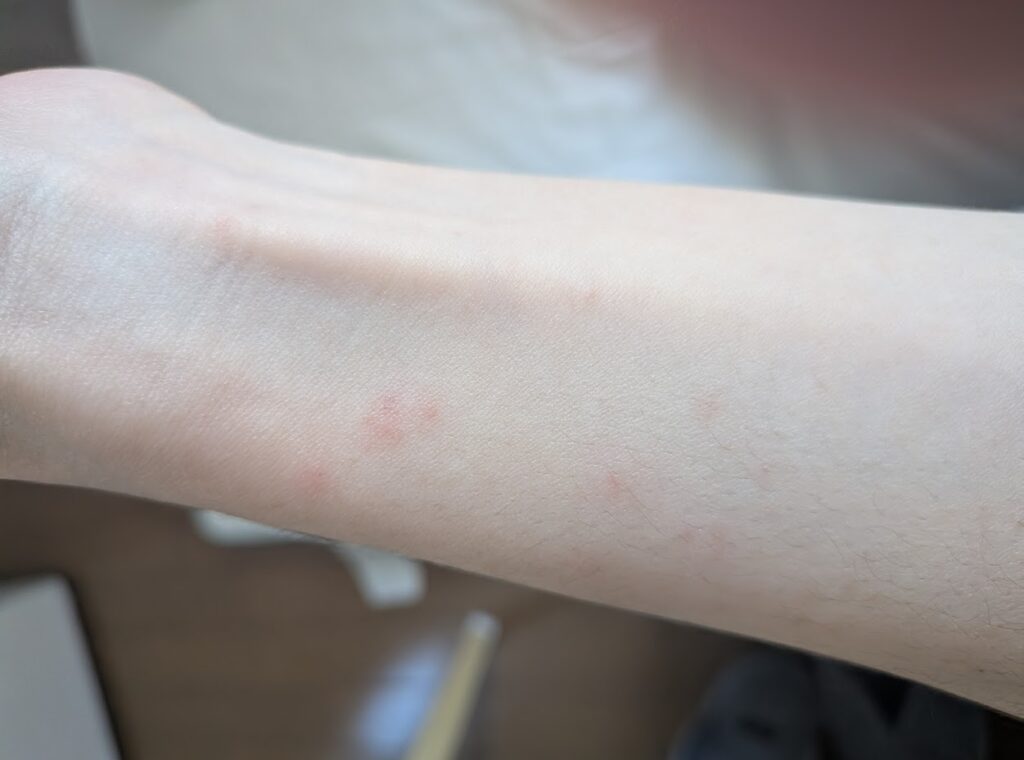
In the case of bed bugs, they concentrate their bites on the arms, legs, and neck, and unlike fleas, lice, mosquitoes, and ticks, the red bite spots often appear in a straight line or zigzag pattern with 3 to 5 spots close together (Akhoundi et al., 2023). This pattern is called "breakfast, lunch, and dinner." In reality, they are only active at night, so this is merely a name based on imagery.
There are various theories as to why this pattern occurs, so I will omit them here. For more details, please refer to Doggett et al. (2012).
The spots may become raised or turn into blisters, and the itchiness varies depending on the stage of larval development and individual differences, ranging from an itch as mild as a mosquito bite to an itchiness so severe that you can't help but scratch.
Because I was sleeping in long sleeves and long pants at the time, the area I was bitten in was limited, mainly the back of my hands, wrists, and the front of my neck. If you notice that exposed areas are being bitten regularly every morning, you can strongly suspect bed bugs. However, in my case, even though I was wearing long sleeves, they often managed to burrow into my forearms and up to my elbows and bite me.
Unfortunately, bed bugs are nocturnal and inject an anesthetic when they bite, like mosquitoes, so you rarely notice you've been bitten, and by morning they've hidden away in the shade, leaving almost no trace (Akhoundi et al., 2023).
At night, people toss and turn in their sleep, and it seems like bed bugs could be crushed at any moment, but normally, you never see any signs of bed bugs being crushed.
This is likely due to their high speed of movement and their extremely flattened shape. As someone who studied biology, I was impressed in a way, thinking, "Evolution is amazing!", but it can also be said that they have some troublesome characteristics.
The bite itself usually heals naturally within one to two weeks without treatment, so there is no need to worry (Akhoundi et al., 2023). There is currently no evidence that they transmit dangerous infections like mosquitoes.
Being bitten is very stressful, but try to stay calm, wash the bite with soap and water, and apply a topical steroid or antihistamine (Akhoundi et al., 2023). Scratching is the worst thing you can do. I didn't have a severe case, so I managed without medication. In Japan, I think it would be something like Lindelon Vs ointment or Muhi.
Ideally, I would recommend going to a hospital for an examination, but even then, there's no guarantee that there will be a doctor who is knowledgeable about bed bugs (Doggett et al., 2012). Ultimately, even if you decide to call a pest control company, you'll need to collect actual insects or take photographs as evidence. If you're unsure, I think it's more reliable to have a pest control company examine it directly rather than going to a hospital.
Where are they hiding in your house? A complete guide to finding bed bugs in your home.
Whether you're trying to get rid of bed bugs yourself or hiring someone to do it, the first step is to find out where the bed bugs are hiding during the day.
Hiding places indicated in the literature
Bed bugs tend to spread mainly in bedrooms because they feed on blood at night.
Studies have shown that within bedrooms, the incubation rates are 85% in beds, 52% in bedding, 37% in baseboards and carpets, 26% in furniture such as lamps and dressing tables, 25% in sofas and chairs, 14% in walls and ceilings, and 6% in clothing (Hirao, 2010).
In severe cases, they may enter electrical outlets, pipes, and air ducts, but this is rare (Delaunay, 2012). While there is a small possibility they could enter electrical appliances, this is usually uncommon and therefore a low priority.
Hiding places that were actually confirmed at home
Ultimately, what I was able to confirm with my own eyes was the inside of the mesh of the folding mattress, the top and middle of the curtain, the corner of the flooring between the mattress and the curtain, and the inside of the bench stool next to the mattress.
In other words, it was only found around the bed, and conversely, I didn't see it around the desk, kitchen, bathroom, or toilet. If I had left it as it was, it would have likely spread to other rooms.
Regarding bathrooms and shower rooms, bed bugs are vulnerable to water and find it difficult to climb on the smooth surfaces, making them less likely to invade (Delaunay, 2012).
First, I think it's best to thoroughly search around your bedding. The larvae are yellowish-white, and the adults are brown, so they can be difficult to spot depending on the background color, and the first-instar larvae are very small. Shining your phone's flashlight on them will make them easier to find.
Another sign is what's called bloody feces, which, horribly, can be found in the corners of a room, consisting of feces mixed with your digested blood. Check for this as well.
Bed bugs are related to stink bugs, and when they attack, they emit a sour odor. In severe cases, this odor may linger strongly (Delaunay, 2012).
First aid measures taken: Washing, drying, and cleaning
If you discover bed bugs, the first thing to do as emergency measures is to thoroughly wash, dry, and clean your home. This method has been noted in literature (Hirao, 2010). However, don't expect this to completely eliminate them.
The effects of washing and drying
Regarding washing, it has been confirmed that all adults, larvae, and eggs are killed by washing in 60°C water and tumble drying at 40°C or higher for at least 30 minutes, or by dry cleaning (Hirao, 2010).
This can be done in a home washing machine with a drum-type dryer or at a laundromat. While there is insufficient evidence for using only a dryer, bed bug exterminators recommended running it on a high setting for 40 minutes.
It is said that even regular room-temperature washing is effective against everything except the eggs, and when I washed curtains that couldn't be put in the dryer, I found the dried-up corpses of large bed bugs.
Vacuuming and sun drying in practice
Vacuuming is effective in reducing the number of bed bugs, as it not only sucks them up but also physically kills them with the force of the suction.
It has been confirmed that 97.4% of adult insects die within a week, and the remaining insects all die within eight days. It is also known that 100% of larvae die within one day (Tanaka & Tanaka, 2017).
However, since I only had a Swiffer-type mop, I couldn't expect this effect. I could see with the naked eye that the Swiffer-type mop was wiping away the larvae, but I think it's inferior to suction.
Sun-drying is also effective; it has been found that wrapping them in a black plastic bag and turning them over so that both sides are exposed to the sun can kill insects by reaching temperatures above 80°C, although this is quite a time-consuming process.
Attempting to exterminate pests yourself: The effectiveness and limitations of insecticide sprays.
However, simply washing, drying, and cleaning has its limits. In fact, it didn't go away with just that.
So, although I was hesitant to use it if possible, I decided to try it out and used insecticide.
Ingredients and effects of commercially available insecticides
There are four types of active ingredients in commercially available insecticides used for bed bugs: pyrethroids, organophosphates, carbamates, and metadiamides (brofranilide).
However, even if major pyrethroid-based insecticides are labeled "effective against bed bugs!", they have little effect on bed bugs today. Specifically, this includes products like LEC's "Balsan One Touch Smoke Type" and Earth Pharmaceutical's "Medicinal Bed Bug Cockroach Earth."
The bed bugs that have reinvaded Japan have developed resistance to pyrethroid insecticides and are a population known as "super bed bugs." It's like a monstrous evolution, reminiscent of Doma from Demon Slayer, but such evolution actually occurs in many insects. It's an ability gained through the sacrifice of countless corpses, and is the result of natural selection (or artificial selection).
Actual experiments have shown that pyrethroid-based fumigants have a mortality rate of less than 30% even after 72 hours, and spray formulations have a mortality rate of less than 60% (Kurashima, 2024).
Organophosphates and carbamates have traditionally been effective, with a 100% eradication rate reported after three weeks (Muto, 2015).
However, bed bugs that have developed resistance to organophosphate and carbamate insecticides have now been identified both domestically and internationally, and it has been pointed out that these insecticides may become ineffective in the future (Suga, 2022). They may still be effective in 2026, but their effectiveness may decrease year by year.
Broflanilide is a new drug and can be used without problems for the time being. One study showed an eradication rate of 95% or higher after two weeks (Kurashima, 2024).
Therefore, always check the active ingredients on the label before purchasing insecticide. Many people are buying pyrethroid-based insecticides and suffering because they are ineffective.
The product I used this time was Earth Pharmaceutical's "Zerono Night Cockroach and Bed Bug Spray, 1-Push Type, 60 Uses".
This product contains broflanilide (brand name: Tenevenal) as its active ingredient.
I used this product for about a week, spraying three times into the air daily and three times on the areas where I had previously found bed bugs. The manufacturer recommends using less, so please proceed at your own risk.
As a result, I started seeing about 3 to 5 bed bugs in a near-death state every day. I think it played a role in steadily reducing their numbers.
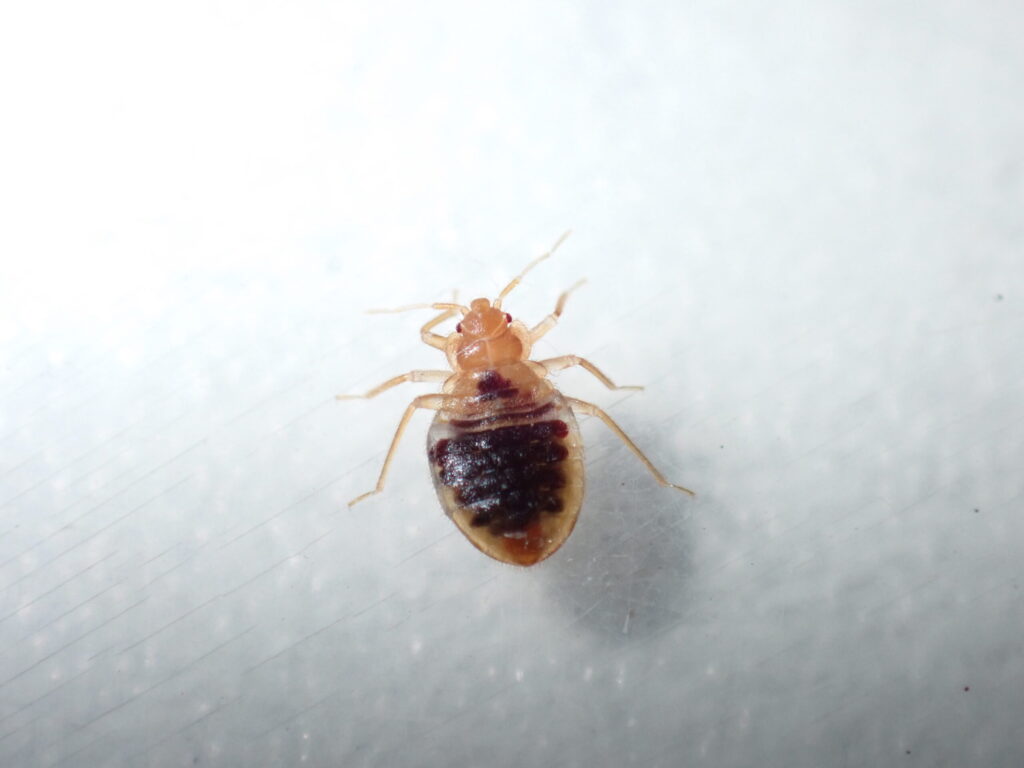
While cleaning further, I discovered an adult insect in a near-death state, which was likely the parent of all the larvae that had entered the room!
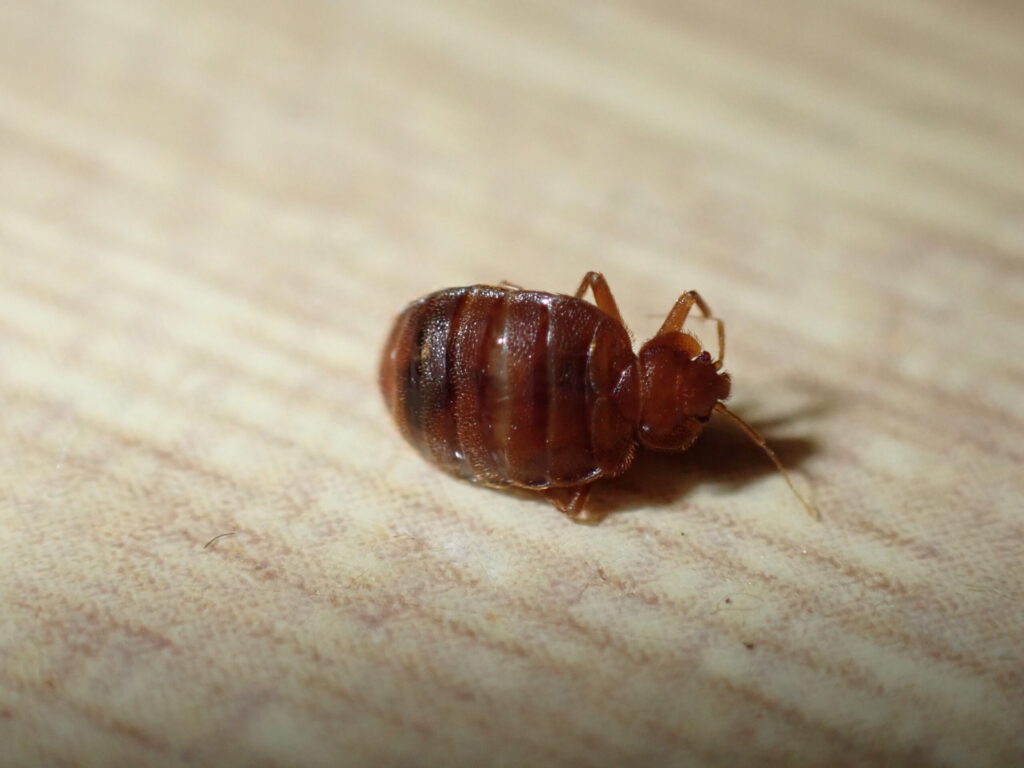
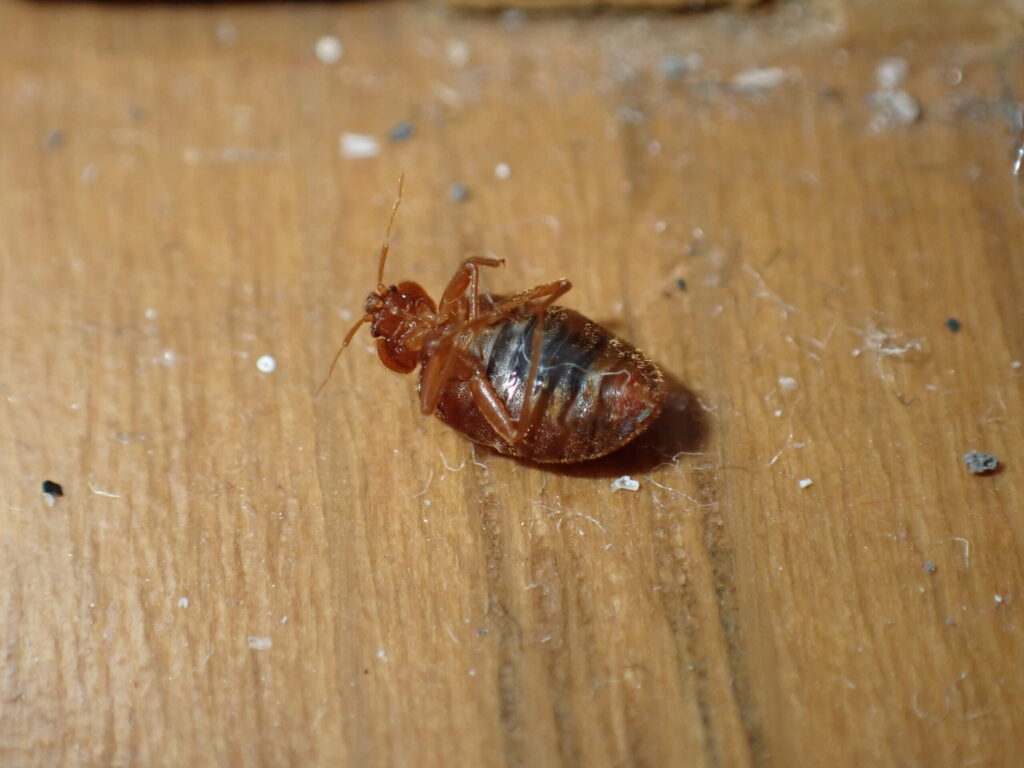
While cleaning, I found several first-instar larvae on the quick wiper. Since wiping will wipe away the insecticide, be sure to spray it again after cleaning.
Other options include LEC's "Balsan Ambush Spray" (carbamate-based) and Earth Pharmaceutical's "Zerononight G Cockroach and Bed Bug Fumigation Agent for 6-8 Tatami Mats" (broflanilide). I haven't tried these myself, so they might be better depending on the situation.
Precautions when using insecticides
However, these drugs are not without risk to humans. Although it is unlikely to be these drugs, there have been deaths from bed bug pesticides overseas (Laborde-Castérot et al., 2024). Currently, these drugs have been tested and are used as safe, but there is no knowledge of long-term exposure, and the future is uncertain.
The insecticide DDT was once considered harmless and was misused as a "miracle drug." Bed bugs also saw a decline in numbers due to DDT (Akhoundi et al., 2023), and were nearly extinct in Japan. However, DDT has now been confirmed to be carcinogenic and is no longer used except in a very limited number of regions (Le Couteur & Burreson, 2003).
Remember that no medicine is completely harmless, and use it in moderation.
But it still doesn't go away... The recurrence revealed the "pitfalls of amateur pest control."
I combined several possible control methods, but to put it simply, I couldn't eradicate them on my own in about two weeks. Even after using insecticides, I continued to get bitten in multiple places every day.
There could be several possible causes.
The problem recurs after evacuating to a different location.
First, while washing and drying clothes and cleaning can reduce their numbers, if these aren't done simultaneously, bed bugs that have fled to another location will return to the same spot.
I actually washed my curtains and sheer curtains once, but after a while I started seeing bed bugs on them again. I couldn't dry them at a high temperature, so it's possible that eggs remained.
It's possible to get it to last if you wash it many times, but it requires a lot of patience.
Furthermore, there are parts that are impossible to wash, dry, or clean, no matter how hard you try, such as the inside of a mattress or an air conditioner. If they take refuge in those areas, there's nothing we can do.
Prolonged duration due to house structure and mass egg-laying
Regarding insecticides, the aforementioned claim of 100% eradication is merely the result of experiments. In reality, houses have complex layouts, and with a lot of furniture and other items, there are many gaps through which insects can enter, so they may not penetrate rooms so easily.
Furthermore, since people typically clean their homes frequently, the chemicals are wiped away. In fact, there is even a theory that the chemicals might be more effective in a dirty room (Kurashima, 2024).
Furthermore, the concentration of commercially available medications may be too low.
More importantly, these insecticides, which act on the insect nervous system, have virtually no effect on eggs that are immobile and protected by their shells. Experiments have shown that even when various insecticides are sprayed directly on the eggs, the survival rate exceeds 80% (Hinson et al., 2016).
Furthermore, a female bed bug lays an average of 131.9 to 155.7 eggs in her lifetime (Polanco et al., 2011c). Another study suggests 200 to 500 eggs (Akhoundi et al., 2023). She doesn't lay all of these eggs at once, but rather a few at a time after each blood-feeding, laying about five eggs per day.
Therefore, if, like me, adult insects lay eggs in your room, even if the medication is effective against the hatched individuals, a long battle is inevitable.
I learned about professional pest control methods and typical costs by consulting with a pest control company.
Based on these results, I decided to hire a pest control company (extermination service).
The reason I decided to hire a professional was that, although the insecticide spray was effective, I felt it would prevent the situation from escalating and that I couldn't be sure it would completely eradicate the problem.
But the biggest deciding factor was when my parents told me, "We have pets, so please don't come back home until the bed bugs are gone" (laughs).
Bed bugs also opportunistically feed on the blood of pets. In other words, although it is not their primary food source like human blood, there is clear evidence that they feed on the blood of dogs, cats, rabbits, and birds such as chickens when the opportunity arises (Black et al., 2021).
I was originally supposed to attend a memorial service at my parents' house, but I couldn't go because of bed bugs. When I think about the risk of spreading bed bugs to other people and causing them trouble in the future, I think it was the right decision to hire a professional exterminator.
Costs and scope of work revealed in the estimate
I think it's best to get quotes from several companies. I requested quotes from two companies, a large corporation and a small to medium-sized enterprise.
While the large company responded quickly to my email, they provided an estimate without actually coming to my house to inspect the condition. In contrast, the small company came to my house the same day, inspected the condition, and prepared an estimate. As a result, although the small company's initial estimate was higher, I decided to go with them.
I want to believe that bed bug extermination is unlikely to be a complete failure, but I think it's worth considering not only the price, but also whether they are quick to act rather than just talk, whether they can actually find first-instar larvae in your home, and whether they advertise themselves as being good at bed bug extermination as well as general pest control.
While some companies advertise prices online as starting from 40,000 yen for a single-person apartment, you will almost certainly not get paid that price.
This is because a second extermination is almost certainly carried out two weeks after the first. This is a standard extermination method because, as mentioned above, the pesticide is ineffective while the eggs are still in the egg stage, so treatment is necessary after the eggs have hatched (Campbell & Miller, 2017). It takes 4 to 12 days for the eggs to hatch (Akhoundi et al., 2023). You should be wary of any company that doesn't follow this procedure.
It might seem like a gray-area advertisement that misleads customers, but even ordinary businesses do this (probably due to price competition), so it's probably best not to judge a business's quality based solely on its price.
I ultimately paid around 140,000 yen for the extermination, including the guarantee, but if you live alone, the price might be a bit lower. However, I compromised because I wanted it done quickly. In any case, I think it's guaranteed to cost over 100,000 yen.
Below is a list of some potential service providers; please feel free to refer to them (I haven't used them myself).
| service | Operating company | Main features | Strengths of our response | point |
|---|---|---|---|---|
R Cleaning | FireWorks Co., Ltd. | In addition to house cleaning, we also offer pest and vermin control services. | It has a high affinity with cleaning services. It boasts a track record of over 500,000 completed projects, including related services, and over 1,500 Google reviews. | For those who want to consult about not only pest control but also house cleaning. |
Pest control company | Assist Co., Ltd. | A nationwide service specializing in pest and vermin control. | They utilize a nationwide network of affiliated and partner stores. They offer 24/7 service, on-site surveys, estimates, and free travel expenses. | For those who want to consult as soon as possible, from anywhere in the country. |
Sanitary Pest Control Hotline 110 | Sharing Technology Co., Ltd. | Specializing in "sanitary pests" such as mites, fleas, and bed bugs. | Nationwide service, available 24 hours a day, 365 days a year. Consultations, on-site surveys, and estimates are free. Prices start from ¥20,000 (tax included). | For those who want to consult a specialist about bed bugs themselves. |
Pest First | First Co., Ltd. | A locally-based service that handles a wide range of pest control, including termites, cockroaches, and bees. | We primarily serve the 23 wards of Tokyo. We accept inquiries 24 hours a day, 7 days a week, and offer free surveys and free estimates. | For people in Tokyo's 23 wards who need immediate advice on urgent pest problems. |
Street Corner Pest Control Consultation Center | Travelbook Co., Ltd. | A service that provides consultation and referrals to pest control companies. | Consultations, on-site surveys, and estimates are free. We operate through a system that introduces partner contractors, primarily serving the Kanto and Tokai regions. We also offer post-construction warranty and inspection services. | For those who want to reduce the hassle of searching for multiple pest control companies themselves and want to be introduced to a company that meets their requirements. |
Differences in pest control methods among different companies
Pest control methods vary from company to company. Some use only chemicals, while others combine various methods. If a company offers a guarantee period, any choice should be fine, but if you are hesitant about the use of chemicals, a company that advertises using minimal chemicals might be a better option.
The following are typical pest control methods used by professional exterminators.
- Heat treatment: Kill insects with high-temperature steam.
- Cooling treatment: Kill insects with dry ice or similar methods.
- Vacuum treatment: Use a powerful vacuum cleaner to suck up the bed bugs.
- Chemical treatment: Applying chemicals. This often involves applying liquids to corners of rooms, in addition to fumigation and spraying.
- Sealing treatment: Seal small gaps in the corners of the room with a hardening resin.
- Capture and treatment: Place bed bug traps (bed bug traps) in the corners of the room to directly capture and kill them and prevent re-infestation.
Warranty periods vary from company to company, but they are often 3 months, 6 months, or 1 year from the second application.
Considering the life cycle of bed bugs, it takes 4 to 12 days for eggs to hatch (Akhoundi et al., 2023), and about 1.2 to 1.3 months for them to develop from egg to adult (Polanco et al., 2011a). Their life cycle is 2 months (Izri et al., 2020), so theoretically, 3 months might be sufficient.
However, there's always a possibility that they could be brought in from outside, or hidden in household items and accidentally emerge, stinging you again a few months later, so six months might be a safer timeframe.
Bed bugs are often said to be able to survive for over a year without feeding on blood on the internet, but one study showed that first-instar larvae live for an average of 13.8–36.3 days, and fifth-instar larvae and adults live for an average of 41.5–142.6 days, suggesting that this claim might be an exaggeration (Polanco et al., 2011b). Another study yielded similar results (Akhoundi et al., 2023).
If we take these numbers at face value, it seems unlikely that we'll see any results for at least six months.
The process leading up to the day of the pest control service and the number of days it took for complete eradication.
I think they can start the work within a few days. In my case, they inspected the site on the same day as my initial contact, and performed the first extermination five days later. I scheduled the second extermination two weeks later. So, it took 19 days from the initial contact to complete extermination, but I stopped getting bitten six days after the first extermination.
Preparation before construction
There may be things you need to do yourself before the day the contractor arrives.
In a common scenario, household items, excluding large furniture and appliances, must be bagged. This is to isolate bed bugs from the room. Bed bugs are thought to be unable to climb smooth plastic bags.
However, bed bugs are said to be able to break through thin plastic and get out, so you will need thick 30L or 45L transparent plastic bags that are at least 0.04mm thick. This task is quite difficult; it's almost like moving house.
These plastic bags aren't usually found in regular supermarkets, but you might be able to buy them at home improvement stores. I bought a pack of 30 45L transparent heavy-duty garbage bags (0.05mm thick) at Kohnan, but if you're willing to pay an extra fee, the service provider can provide them, so that's fine if you don't want to think about it too much. Some service providers might even include them in their plans from the start.
These bags cannot be returned until the second treatment, two weeks later, completes the extermination. In other words, be prepared to live with the bags for at least two weeks.
Furthermore, customers were encouraged to use coin laundries for washing, drying, or dry cleaning of clothes that can be washed and dried.
From here on, this is the method used by the company I hired, so it may differ depending on the company.
Details of the first and second construction phases
For the first treatment, I went out, and the aforementioned chemicals were applied and sprayed throughout the room, gaps were sealed, and bed bug traps were set up. I was told it would take about half a day, but in my case, since the room was small, it was finished in about 3 hours. That's the speed of a professional!
Backpacks and bags used when going out are also subject to pest control, but these were visually inspected and treated with insecticide. Bags containing frequently used items were also treated with insecticide at that time.
On the first night after the treatment, I felt like I was still being bitten in a few places, but when I returned home the following evening, I found three dead insects. I think the insecticide applied to the corners of the room had worked. I haven't been bitten since then.
For the second treatment, if bed bugs remain in the room, the work will be performed in the same room as the first treatment, but the bags will also be checked to ensure that no bed bugs remain.
The second application was carried out in almost the same way as the first, without the application or spraying of chemicals or sealing of gaps.
Measures to prevent recurrence and ensure it never happens again
Possible entry points
I still don't fully understand why bed bugs have appeared in my house.
Since bed bugs do not reproduce asexually, they must mate, making it unlikely that a single larva would enter a house and reproduce. The most likely scenario is that a mated adult bed bug entered the house.
I've only been able to find one female adult at home, so this is the pattern I'm currently considering. I started experiencing stinging symptoms around May, but the exterminator suggested that the insects might have entered the house around December.
However, there are many possible entry points, and we are unable to pinpoint a specific one.
Generally, outbreaks have been reported in all forms of accommodation and transportation, including hotels, trains, airplanes, and ships (Delaunay, 2012).
In my case, there are two possible scenarios.
One possibility is that I brought bed bugs back with me from my travel destination. I'm quite comfortable in small spaces, so I often use capsule hotels when traveling alone. However, there are many international tourists due to the inbound tourism trend, and I was careless, so adult bed bugs may have gotten into my backpack or jacket. I was staying at a capsule hotel in Tokyo around January. Checking the 'Bed Bugs Map Japan', it seems that there was a bed bug infestation there about two years ago.
Another possibility is that they got mixed in with a package. Because of my job, I have specimen samples sent to my home in cardboard boxes, and I also frequently make purchases online from Amazon and other retailers, so it's possible that adult bed bugs got mixed in with one of those packages.
Hotel and luggage measures
Are there any preventative measures that individuals can take? Regarding hotels, the following methods have been suggested in research (Delaunay, 2012; Hentley et al., 2017).
- Upon arrival, use a flashlight to quickly check the bedding area, and if you find any suspicious signs, do not use that room.
- Check the seams and piping of the mattress.
- Check the corners of the bed frame.
- Check the top of the curtain.
- Check the gaps between pillows and sofas.
- Black spots (blood and feces), bloodstains, eggs, and larvae were observed.
- Since bed bugs are a type of stink bug, they emit a sour smell, so check for a strong odor.
- Place your belongings away from the bed (such as in the bathroom). Bed bugs are less likely to enter bathrooms and shower rooms because they are vulnerable to water, slippery, and difficult to climb. If there is no suitable place, place them on a chair or similar object in the center of the room, away from the walls.
- Seal your belongings in a large plastic bag. Smooth plastic bags make it difficult for bed bugs to climb.
- For exposed skin, use mosquito repellent spray containing DEET. In Japan, examples include Earth Pharmaceutical's "Saratect."
- Sleep with clothes on. You're less likely to get bitten through fabric.
- Store your pajamas in a separate plastic bag.
- Don't leave worn clothes lying around. Experiments have shown that soiled clothing absorbs human odors, attracting bed bugs and providing them with a "foothold" for movement. Put clothes you've taken off into a plastic bag immediately.
- Upon returning home, immediately do the laundry, and wash or dry any suspected clothing at a high temperature. As mentioned above, this has an insecticidal effect, including killing eggs.
- Don't bring your suitcase straight into the house. Wash it in the bathroom if possible.
Another option is to avoid hotels that have a history of bed bug infestations. 'Bed Bugs Map Japan' compiles evidence-based bed bug sighting records on Google Maps (Bed Bugs Map Japan, 2026). While this may be helpful, along with the hotel's attitude towards bed bugs, it should only be used as a reference; there's still a good chance bed bugs could be found in hotels not listed.
However, even considering all of the above, I think it's difficult to implement a perfect intrusion prevention measure. While some hotels will properly exterminate the pests, there are also cases where they turn a blind eye, so a societal approach may be necessary.
The current price range for bed bug extermination makes it difficult for low-income individuals to afford it, which could lead to the spread of the infestation.
Once they get into your house, cleaning alone won't prevent them from breeding. I have very few possessions and I clean fairly often because I like it, but they still breed in my house.
Summary: Early detection and correct diagnosis are key when it comes to bed bugs.
Naturally, bed bugs grow the more blood they suck.
If left unattended, a single female can lay approximately 5 eggs per day, averaging 131.9 to 155.7 eggs in a room, and if it's in your own private room, these offspring will be raised solely on your blood.
These insects will never disappear even if left unchecked; in fact, they can even inbreed, allowing the next generation to grow (Fountain et al., 2014). Studies have shown that colonies can be founded by a single adult female, and that their genetic diversity is extremely low.
If there is no pest control and the population has a normal food supply, the number of eggs and larvae will increase exponentially. Even under the harsh assumption of starvation where females do not lay eggs daily, simulations show that the population doubles every 13 days (Polanco et al., 2011a).
At first, you might dismiss it as something like a mosquito bite, but once they grow into adults, their numbers multiply exponentially (like rats), and it becomes impossible to control.
Let's take some measures before that happens.
The best option is to hire a reputable pest control company, but if that's not possible, be sure to use multiple methods, such as washing and drying clothes, using a vacuum cleaner, and using insecticides other than pyrethroids.
I hope this article will be of some help to those suffering from bed bug infestations.
References
Akhoundi, M., Zumelzu, C., Sereno, D., Marteau, A., Brun, S., Jan, J., & Izri, A. (2023). Bed bugs (Hemiptera, Cimicidae): a global challenge for public health and control management. Diagnostics, 13 (13), 2281. https://doi.org/10.3390/diagnostics13132281
Bed Bugs Map Japan. (2026, May 17). Bed Bugs Map Japan. https://bedbugsmapjapan.com/
Black, MK, Chandler, JG, Trout Fryxell, RT, & Vail, KM (2021). The Common Bed Bug (Hemiptera: Cimicidae) Does Not Commonly Use Canines and Felines as a Host in Low-Income, High-Rise Apartments. Journal of Medical Entomology, 58 (6), 2040-2046. https://doi.org/10.1093/jme/tjab070
Campbell, BE, & Miller, DM (2017). A method for evaluating insecticide efficacy against bed bug, Cimex lectularius, eggs and first instars. Journal of Visualized Experiments: JoVE, 121, 55092. https://doi.org/10.3791/55092
Delaunay, P. (2012). Human travel and traveling bedbugs. Journal of Travel Medicine, 19 (6), 373-379. https://doi.org/10.1111/j.1708-8305.2012.00653.x
Doggett, SL, Dwyer, DE, Peñas, PF, & Russell, RC (2012). Bed bugs: clinical relevance and control options. Clinical Microbiology Reviews, 25 (1), 164-192. https://doi.org/10.1128/CMR.05015-11
Fountain, T., Duvaux, L., Horsburgh, G., Reinhardt, K., & Butlin, RK (2014). Human-facilitated metapopulation dynamics in an emerging pest species, Cimex lectularius. Molecular Ecology, 23 (5), 1071-1084. https://doi.org/10.1111/mec.12673
Hentley, WT, Webster, B., Evison, SE, & Siva-Jothy, MT (2017). Bed bug aggregation on dirty laundry: a mechanism for passive dispersal. Scientific Reports, 7 (1), 11668. https://doi.org/10.1038/s41598-017-11850-5
Hinson, KR, Benson, EP, Zungoli, PA, Bridges Jr, WC, & Ellis, BR (2016). Egg Hatch Rate and Nymphal Survival of the Bed Bug (Hemiptera: Cimicidae) After Exposure to Insecticide Sprays. Journal of Economic Entomology, 109 (6), 2495-2499. https://doi.org/10.1093/jee/tow223
Hirao, Soichi. (2010). The resurgence of bed bugs and the current status of control efforts. Journal of Sanitary Zoology, 61 (3), 211-221. https://doi.org/10.7601/mez.61.211
Izri, A., & Parola, P. (2020). Bedbugs. New England Journal of Medicine, 382 (23), 2230-2237. https://doi.org/10.1056/NEJMcp1905840
Sugama, Toru. (2022). Search for novel insecticidal components against organophosphate-resistant bed bugs. Bulletin of the Japan Environmental Sanitation Center, 49, 4. ISSN: 0389-0805, https://www.jesc.or.jp/Portals/0/center/library/shoho/2021shoho4.pdf
駒形修. (2024). トコジラミの基本的な性質. 生活と環境, 69(2), 4-8. https://www.jesc.or.jp/Portals/0/center/library/seikatsu%20to%20kankyo/202403_Komagata.pdf
Komatsu, Kenji & Nakamura, Harumi. (2023). Survey of the habitat of tropical bed bugs and other bed bugs in Japan from 2019 to 2021. Journal of Sanitary Zoology, 74(4), 157-160. https://doi.org/10.7601/mez.74.157
Kurashima, Yuki. (2024). Practical evaluation of the novel insecticide component brofuranilide against bed bugs. Insecticide Research Group Handbook, 94, 10-16. https://www.jsmez.org/wp-content/uploads/2024/09/2024_94.pdf
Laborde-Castérot, H., Vodovar, D., Ortiz De Zevallos, A., Caré, W., Nisse, P., Bargel, S., … & Langrand, J. (2024). Trends in poisoning associated with the use of insecticides for bed bug infestations: a 20-year retrospective study in France. Scientific Reports, 14 (1), 16868. https://doi.org/10.1038/s41598-024-67727-x
Le Couteur, PC, & Burreson, J. (2003). Napoleon's buttons: How 17 molecules changed history. Tarcher. ISBN: 9781585422203 [=(2011). Spices, explosives, pharmaceuticals—17 chemicals that changed world history. Chuokoron-Shinsha. ISBN: 9784120043079]
Muto, Atsuhiko. (2015). Bed bugs and their effective control methods. Ministry of Health, Labour and Welfare. https://www.mhlw.go.jp/content/10900000/001332555.pdf
Polanco, AM, Brewster, CC, & Miller, DM (2011a). Population growth potential of the bed bug, Cimex lectularius L.: a life table analysis. Insects, 2 (2), 173-185. https://doi.org/10.3390/insects2020173
Polanco, AM, Miller, DM, & Brewster, CC (2011b). Survivorship during starvation for Cimex lectularius L. Insects, 2 (2), 232-242. https://doi.org/10.3390/insects2020232
Polanco, AM, Miller, DM, & Brewster, CC (2011c). Reproductive potential of field-collected populations of Cimex lectularius L. and the cost of traumatic insemination. Insects, 2 (3), 326-335. https://doi.org/10.3390/insects2030326
Tanaka, Toyokazu & Tanaka, Toshio. (2017). Insecticidal effects on bed bug bodies and eggs by vacuum cleaners and dry ice treatment. Pestology, 32 (2), 63-67. https://doi.org/10.24486/pestology.32.2_63