animal

Sponsored Link
animal

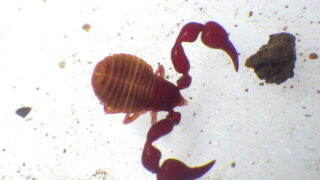
What are the species of pseudoscorpion? Are they found in Japan? How are they collected? What do they eat? What is the purpose of their crab-like "claws"?

Pseudoscorpions are a small species of arachnid that inhabit inconspicuous places such as crevices in leaves and rocks, under stones and tree bark, and in decaying trunks. They are distinguished from scorpions by the absence of a long, spiny section on the metathorax (the tail of a scorpion). As of 2023, approximately 3,400 species have been identified worldwide, and they are also widespread in Japan...
animal

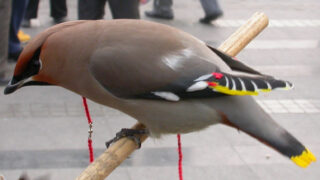
What are the differences between Bohemian waxwings and Japanese waxwings? What is their distribution? What are their summer and winter habits? What is the role of their crest feathers and red waxy substance? Can you tell their age from the waxy substance?!

The Bohemian Waxwing and the Japanese Waxwing are both brightly colored winter birds belonging to the Waxwing genus, possessing crests and often appearing in red or yellow. They are very similar, and it can be difficult to distinguish between them. However, checking the tips of their tail feathers will allow for reliable identification, and there are subtle differences in their coloration. Their distributions differ significantly; the Bohemian Waxwing...
animal

List of references for identifying terrestrial and aquatic insects (continuously being edited)

This article compiles literature for identifying insects. The focus is primarily on literature containing identification keys that allow for reliable species identification. While all taxonomic groups are covered, this is based on personal needs and observations, and therefore is not a comprehensive collection...
animal

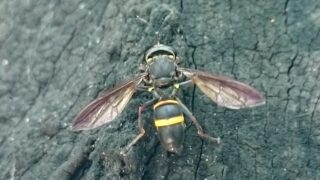
The mysterious fly known as the bee-like hoverfly, which is born and lives on tree sap, can it sting? Is it harmful?

Are you familiar with the hoverfly known as the false bee hoverfly? At first glance, it looks exactly like a bee, but hoverflies are actually a type of fly, so they won't sting you and are harmless. Its bright colors are thought to be a form of mimicry. Although it's actually a type of hoverfly...
animal

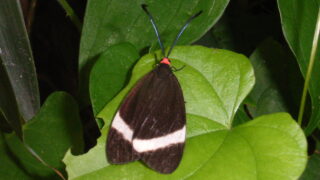
What are the species of moths in the family Zygaenidae? Are they poisonous? Are they harmful? What is the purpose of their bright colors?

The Zygae family, exemplified by species like the firefly moth and the bamboo grass moth, is known for its bright, diurnal colors. But do you know why they have such striking colors? It turns out they possess a powerful poison that produces cyanide, and these colors serve as a "warning signal"...
animal

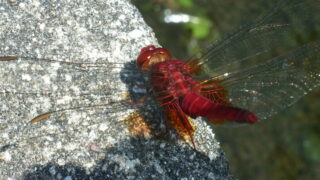
What kind of dragonfly is a "red dragonfly"? Why does it turn red? Why does the common skimmer dragonfly turn blue? Two scientific reasons have been revealed. It turns out it's actually "sunscreen"!?

The "red dragonfly" is a creature so familiar to Japanese people that it even has its own children's song. The group commonly referred to as "red dragonfly" is a general term for dragonflies whose males turn red. Taxonomically, it's not a single group but rather a collective term for several separate groups, such as the Sympetrum and Scarlet Skimmer genera.
animal

Why are the "thighs" of the longhorn beetle *Tetragnatha japonica* so thick? Was it an evolutionary adaptation to hold down females?! Recent research reveals clues in closely related species! A scientific approach to "sexual conflict."

Are you familiar with the insect known as the "Peach-thick Longhorn Beetle"? It gathers on flowers from spring to early summer and is one of the most commonly seen longhorn beetles in Honshu. Its most distinctive feature is its thick hind legs. Have you ever wondered why this is the case...?.
animal

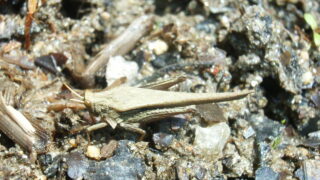
The spines on the spiny grasshopper, which inhabits wetlands, are actually a defense mechanism to protect itself from frogs! A rational defense strategy combined with feigning death!

Are you familiar with the grasshopper known as the spiny grasshopper? It's a relatively common creature in Honshu, especially in rice paddies. Surprisingly, this species has been found to protect itself from predation by frogs through a combination of two mechanisms: spines on its body and a behavior called feigning death...
animal

The rare spider *Euphyllia japonica*, which preys on its victims by spinning silk from its mouth, can be found in your home!

When you imagine a spider, how do you picture it producing silk? A common misconception is that it produces silk from its mouth. In reality, spiders have organs called "spinnerets" on their abdomen from which they produce silk. Spiders typically don't produce silk from their mouths...
animal

Reporting on the first record of the Japanese land planarian (Bipalium nipponense) and its first record in Hyogo Prefecture! (Paper published in 'Nature Study')

This article contains a draft of the report "Records of the land planarian in Hyogo Prefecture," which was published in the following journal. Citation: Kenichi Ikeda and Atsuya Ikeda. 2022. Records of the land planarian in Hyogo Prefecture. Nature Study 68(5): 6. ISS...
Sponsored Link