plant

Sponsored Link
plant

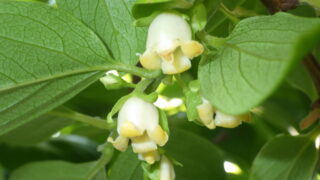
What are the differences between persimmon (Diospyros kaki), Japanese persimmon (Diospyros serrata), and mountain persimmon (Diospyros margaritacea)? We'll explain how to distinguish between similar species! Where are they native to? What's the difference between astringent and sweet persimmons? What insects visit the flowers? Who eats them in nature?

The Japanese persimmon (kaki) has been cultivated in Japan since ancient times and is a fruit and plant strongly associated with Japanese culture. While closely related species exist, the Japanese persimmon is easily distinguishable by the size of its fruit. However, when distinguishing by leaves alone, it resembles the Japanese dwarf persimmon (Diospyros kaki), the Ryukyu dwarf persimmon (Diospyros ryukyuensis), and the evergreen persimmon (Diospyros kaki), and subtle differences...
plant

What's the difference between mountain azaleas and rhododendrons? We'll explain how to distinguish between similar species! Research has revealed that bumblebees are also essential for flowers that are supposedly specialized in attracting butterflies!

The Japanese azalea (Rhododendron kaempferi) is a representative species of wild azalea in Japan, while the Japanese azalea (Rhododendron molle) is famous for being poisonous. Both belong to the Rhododendron genus of the Ericaceae family and are representative species of red wild azaleas, so you might get them confused. However, you can distinguish them by checking the shape of their leaves and how the flowers are arranged. These two species...
plant

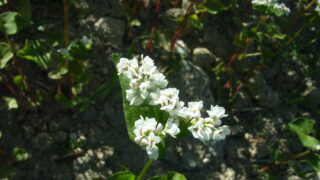
What are the differences between buckwheat (soba), Tartary buckwheat (Tartary buckwheat), and Shakuchiri buckwheat (Shakuchiri buckwheat)? We explain how to distinguish between similar varieties! Is buckwheat's origin in mountainous regions? Why do Japanese people eat it as noodles? Are honeybees the only insects that visit its flowers?

Buckwheat, Tartary buckwheat, and Japanese buckwheat are all species that can be found in Japan, either cultivated or naturalized. Buckwheat, in particular, is indispensable to Japanese people as a noodle dish, but few people can distinguish between these three species as plants. These three species differ in the way their flowers grow, the shape of their fruits, etc.
plant

What species resembles the egret orchid? The flowers are visited by hawk moths! And not only that, tiny insects called thrips also play an important role in pollination! What is the "Egret Orchid Legend"?

The egret orchid (Habenaria radiata) is a perennial plant that inhabits slightly damp areas and is a popular choice for gardening. Unfortunately, due to the decline of its wetland habitat and illegal harvesting, it is listed as near-threatened on the Ministry of the Environment's Red List. There are many closely related species, and many that share the name "egret orchid," but this particular species has a flattened stem resembling a heron...
plant

What are the differences between Impatiens textorii, Impatiens noli-tangere, and Balsam? We explain how to distinguish between similar species! While the flowers are supposed to be exclusively for bumblebees, many other insects also sneak onto them! The competition between Impatiens textorii and Impatiens noli-tangere was fierce!

Impatiens textorii, Impatiens noli-tangere, and Balsam are three species with boat-shaped flowers. At first glance, all three flowers look similar, and Impatiens textorii and Impatiens noli-tangere are particularly alike, as they sometimes inhabit the same wetlands. However, they can be distinguished by carefully observing the overall hairs and the color and shape of the flowers. Also, just looking at the leaves...
plant

What are the differences between sunflowers, dwarf sunflowers, and white sunflowers? We'll explain how to distinguish between similar varieties! Is it a myth that sunflowers face the sun? Why are they the national flowers of Russia and Ukraine?

Sunflowers are said to face the sun, giving them a cheerful and bright image, and they are now very familiar plants in Japan. Originally from North America, there are many species, but the types of sunflowers found in Japan are limited, mostly consisting of the common sunflower, dwarf sunflower, and dusty sunflower. Humans and sunflowers...
plant

What are the differences between *Broussonetia papyrifera* and *Broussonetia kozoa*? Do *Broussonetia papyrifera* flowers burst open? What is the history of *Broussonetia papyrifera*? Are its fruits edible?

Both *Broussonetia papyrifera* and *Broussonetia erythrorhizon* have been used as paper since ancient times, and *Broussonetia papyrifera* can still be found in familiar green spaces today. However, some literature suggests that the distinction between these two species is not very clear, and they have historically been confused with each other. However...
plant

What are the differences between *Lithospermum erythrorhizon* and *Lithospermum erythrorhizon*? We explain how to distinguish between similar species! Do the flowers have a secret that allows them to be pollinated even in the shade?

While *Lithospermum erythrorhizon* and *Lithospermum erythrorhizon* have similar names and may be confused, there is a significant difference: *Lithospermum erythrorhizon* is a native species, while *Lithospermum erythrorhizon* is a cultivated variety. The shape of the leaves and flowers are also distinctly different. *Lithospermum erythrorhizon*...
plant

What species resembles the Bletilla striata (purple orchid)? Recent research has revealed that the flowers not only deceive bees, but also utilize male bees for courtship!

Bletilla striata is a perennial plant naturally distributed from Honshu to Okinawa in Japan, but wild specimens are classified as near-threatened. On the other hand, it's also a popular ornamental plant, and can be seen in almost every town. While it was once thought that the wild population in Japan consisted of escaped cultivated plants, it is now believed that the wild population is...
plant

What are the differences between *Neolitsea sericea* and *Quercus acuta*? We'll explain how to distinguish between these similar species! What are their uses? Does the difference in flower color affect their ecology?

Both *Neolitsea sericea* and *Quercus acuta* are evergreen trees belonging to the *Neolitsea* genus that are naturally distributed in Japan. Therefore, you may often see them in the wild, but their leaves are very similar in shape, which can lead to confusion. However, you can reliably distinguish them by examining the whiteness of the underside of the leaves and the color of their fruits...
Sponsored Link