ecology

Sponsored Link
plant

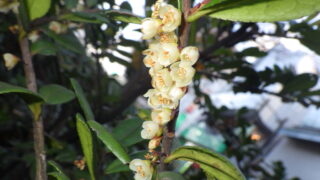
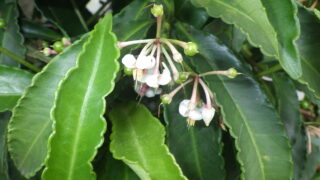
What are the differences between Eurya japonica, Eurya japonica, and Sakaki? We'll explain how to distinguish between similar species! Do they bloom in early spring because they rely on bees and flies for pollination?

Hisakaki, Hamahisakaki, and Sakaki all belong to the family Cleyera (or Theaceae). Hisakaki and Sakaki, in particular, have been considered "yorishiro" (objects that house divine spirits) in Shintoism since ancient times and have been traditionally cultivated in Japan. However, their similar names may often lead to confusion...
plant

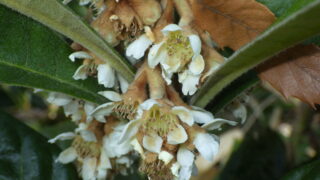
What's the difference between loquat (Biwa) and wild fig (Inubiwa)? How do they differ from apricots, persimmons, and mangoes? We'll explain how to distinguish between similar species! Insects and small birds visit loquat blossoms that bloom in winter!?

The loquat (Ficus microcarpa) is an evergreen tree native to China, cultivated worldwide for its edible fruit. In Japan, it is frequently cultivated not only for food but also for ornamental purposes. A similar-sounding species, the deciduous shrub known as *Ficus erecta*, is often confused with the loquat due to its oval-shaped, fruit-like structure...
plant

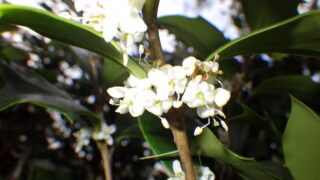
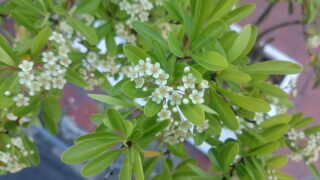
What are the differences between holly (Ilex crenata) and holly osmanthus? What are the differences between Ilex crenata, European holly, and holly mauve? We'll explain how to distinguish between similar species! Are the two types of leaves a result of evolution?

Both holly (Ilex crenata) and holly osmanthus belong to the Oleaceae family and Osmanthus genus, and can be seen cultivated even in urban areas. Young holly trees are also frequently seen in forests. Morphologically, both have serrated leaves, which is why these two species are often confused...
plant

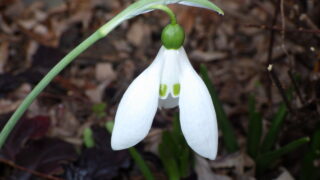
What are the differences between snowdrops (Euphorbia marginata) and snowflakes (Euphorbia hederacea)? We explain how to distinguish between similar species! The "green" color of the perianth segments has various roles!?

Snowdrops and snowflakes both belong to the Amaryllidaceae family and are very commonly cultivated in Japan as ornamental plants that bloom in winter. Both are native to Europe, and because they are both white with green spots and have similar names, they are often confused...
Blog Management

This article explains how to retrieve the text of an image caption and assign it to the Alt attribute (alternative text) using JavaScript and PHP (using ChatGPT).

Have you ever thought, while working on web development or managing a website, "Wouldn't it be great if I could specify the Alt attribute (alternative text) at the same time as adding a caption to an image?" Generally, captions are for the user (human) viewing the image, so the Alt attribute is...
plant

What are the differences between snake gourd, yellow snake gourd, and wild gourd? We explain how to distinguish between similar species! Is the "creepy" appearance of the flowers a result of evolution?!

Trichosanthes cucumeroides, Trichosanthes cucumeroides, and Trichosanthes spp. all belong to the Trichosanthes genus of the Cucurbitaceae family. They are herbaceous plants that share several common characteristics: they produce large, fused-petal flowers with a finely divided corolla resembling lace, and they bear fairly large, yellow to red fruits for wild species. Trichosanthes cucumeroides and Trichosanthes spp....
plant

What are the differences between Ardisia japonica, Ardisia crenata, Ardisia crenata, and Citrus tachibana? We explain how to distinguish between similar species! Is the idea that they "fix nitrogen with their leaves" a myth?!

Ardisia japonica, Ardisia crenata, Ardisia japonica, and Ardisia trifoliata all belong to the genus Ardisia in the family Primulaceae. They grow wild in evergreen forests, but because they bear red, spherical fruits in autumn and winter, they are widely cultivated as ornamental shrubs, along with plants like Ardisia crenata (a member of the Chloranthaceae family). In Japan...
plant

What are the differences between Coreopsis lanceolata, Coreopsis grandiflora, Coreopsis radicans, and Coreopsis lanceolata? How do they differ from Cosmos sulphureus? This article explains how to distinguish between similar species.

Coreopsis lanceolata, Coreopsis grandiflora, Coreopsis humilis, and Coreopsis radicans all belong to the genus Coreopsis in the Asteraceae family. While they have few distinguishing features, they are annual or biennial plants that give the impression of being "very showy yellow chrysanthemums with single to double flowers." Coreopsis grandiflora, in particular, is an exception...
plant

What are the differences between *Achyranthes japonica* and *Achyranthes bidentata*? An explanation of how to distinguish between similar species.

Both *Achyranthes japonica* (also known as *Achyranthes japonica var. spp.*) and *Achyranthes japonica* belong to the genus *Achyranthes* in the family Amaranthaceae, and are fairly common perennial herbs in Japan. Their most distinctive feature, and one that affects humans the most, is that their fruits are "burrs." Walking along the edge of a forest, they can easily snag your clothes...
plant

What are the differences between Buddleja japonica, Buddleja davidii, Buddleja stolonifera, and Buddleja buergeriana? We'll explain how to distinguish between similar species! Butterflies aren't the only visitors to the flowers! Are the seeds dispersed by the wind?

Buddleja japonica, Buddleja stolonifera, Buddleja gracilis, and Buddleja davidii all belong to the Buddleja genus of the Scrophulariaceae family. Their most distinctive feature is the inflorescence they produce at the top of their stems, each flower possessing a long corolla tube. Buddleja stolonifera is particularly popular in horticulture due to its strong fragrance...
Sponsored Link