Evergreen

Sponsored Link
plant

What are the differences between Christmas roses, Lenten roses, and hellebores? We'll explain how to distinguish between similar species! Actually, I've only ever seen Lenten roses!?

Both Christmas roses and Lenten roses belong to the genus Helleborus in the Ranunculaceae family, and in Japan, they are frequently cultivated as ornamental plants because they bloom during the winter. Extensive breeding efforts have resulted in large-flowered and double-flowered varieties. However, due to the diversity of varieties...
plant

What's the difference between Fatsia japonica and Fatsia japonica? We'll explain how to distinguish between similar species! The glossy leaves are actually a sunbathing spot for insects!?

Both Fatsia japonica and Fatsia japonica belong to the Araliaceae family and are evergreen trees most characterized by their large, palmately lobed leaves. Both can be observed both outdoors and in gardens. They share many other similarities, which can sometimes lead to confusion. However, distinguishing between them is relatively easy, based on leaf size, hairiness, etc.
plant

What are the differences between Clematis terniflora, Clematis patens, and Clematis japonica? An explanation of how to distinguish between similar species.

Clematis terniflora, Clematis patens, and Clematis japonica all belong to the genus Clematis in the Ranunculaceae family and are climbing semi-shrubs found in Japanese forests. They share several common features, including compound leaves, flowers with white sepals instead of petals, and feathery fruits, which can sometimes make them difficult to distinguish.
plant

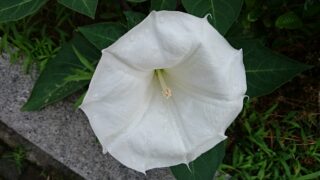
What are the differences between Datura, Datura stramonium, Datura stramonium, and Datura arborescens? An explanation of how to distinguish between similar species.

Datura stramonium, Datura stramonium, and Datura arborescens all belong to the Solanaceae family and are cultivated as ornamental plants, as well as being well-known as poisonous and medicinal plants. They are also collectively called "Datura" or "Datura" from their genus name. However, these...
plant

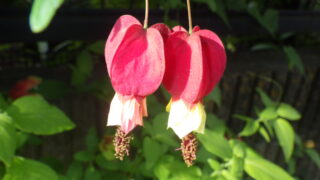
There are differences between Abutilon and Abutilon humilis! What are the differences between Abutilon humilis and Abutilon variegata? We explain how to distinguish between similar species.

In horticulture, the term "Abutilon" is frequently used, usually referring to a specific species rather than just one. However, it's become somewhat confusing: in horticulture, it refers to three species—Abutilon humilis, Abutilon leucocephala, and Abutilon variegata—while in academic contexts, it refers to all members of the genus Abutilon, including Abutilon humilis and Abutilon leucocephala...
plant

What are the differences between Liriope muscari, Liriope japonica, and Liriope serrata? An explanation of how to distinguish between similar species.

Liriope muscari, Liriope japonica, and Liriope serrata are all evergreen perennial herbs belonging to the genus Liriope in the family Asparagaceae, growing in forests. They are cultivated as ornamental plants and are often confused with each other due to their similar-looking flowers and leaves. Distinguishing between them is difficult, but recording the leaf width, number of flowers, and flower stalk length can help...
plant

What are the differences between Lantana (Lantana scabrida), Lantana bicolor, and Lippia nodiflora? We'll explain how to distinguish between similar species! What are the structures of their flowers and fruits?

Lantana (Lantana camtschatica) and Lantana camtschatica var. japonica both belong to the genus Lantana in the family Verbenaceae, and are evergreen shrubs characterized above all by their colorful and showy flowers. In Japan, both are frequently planted and can also be found growing wild. Therefore, it can sometimes be confusing to distinguish between them...
Seed Plant Encyclopedia

[Seed Plant Encyclopedia #155] What are the species of the Polygalaceae family? Photo list

All species of the Polygalaceae family found in Japan are herbaceous. The leaves are simple, alternate, and lack stipules. The flowers are bisexual and bilaterally symmetrical. There are 5 sepals. The petals are 5 in number, partially reduced or fused. There are 4 or 8 stamens, fused at the base. The ovary is superior and 2-chambered. The fruit is a capsule or drupe. [...].
Seed Plant Encyclopedia

[Seed Plant Encyclopedia #143] What are the species of the Crassulaceae family? Photo list

The Crassulaceae family consists entirely of succulent herbs or shrubs, often with enlarged rhizomes or roots. The leaves are simple. The flowers are radially symmetrical, mostly hermaphroditic, but some genera are unisexual, monoecious, or dioecious. The calyx is somewhat fleshy, green (sometimes reddish)...
Seed Plant Encyclopedia

[Seed Plant Encyclopedia #142] What are the species of the Saxifragaceae family? Photo list

The family Saxifragaceae consists of herbaceous plants. Leaves are alternate or opposite, simple or compound. Most are deciduous, but some are evergreen. Stipules are present or absent. Inflorescences are cymose, sometimes racemes or panicles. Flowers are bisexual, dioecious, or dioecious, and radially symmetrical...
Sponsored Link