How to use

Sponsored Link
plant

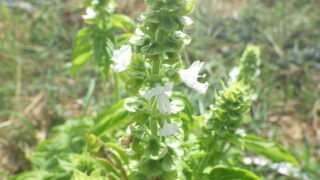
What are the differences between basil, sweet basil, holy basil, and lemon basil? We'll explain how to distinguish between similar varieties! What are the structures of their flowers and fruits?

Basil, sweet basil, holy basil, and lemon basil all belong to the Ocimum genus of the Lamiaceae family, are native to Asia, and share the common characteristic of having edible leaves. Therefore, many people may not know the differences in their shapes or uses. When we say "basil," we are generally referring to all members of the Ocimum genus of the Lamiaceae family...
plant

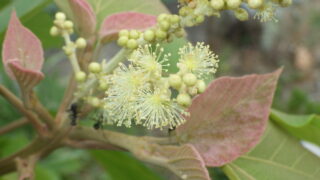
What are the differences between Mallotus japonicus, Mallotus japonicus, and Quercus dentata? We'll explain how to distinguish between similar species! Mallotus japonicus has hairs on its surface and an impenetrable defense against ants!?

Both *Mallotus japonicus* and *Mallotus japonicus* are deciduous trees belonging to the Euphorbiaceae family, and they share the characteristic of having extrafloral nectaries at the base of their leaves. Therefore, it can sometimes be difficult to distinguish between them. Furthermore, the Japanese name "Akamegashiwa" includes the word "kashiwa," which is similar to oak...
plant

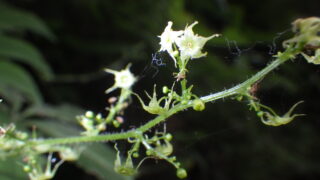
What are the differences between Gynostemma pentaphyllum, Cayratia japonica, and Hydrangea macrophylla (Amacha)? We'll explain how to distinguish between similar species! What are their uses? What is the structure of their flowers and fruits?

Amachazuru is a perennial vine that grows in mountainous areas and thickets in Japan, but it is often confused with Japanese knotweed (Yabugarashi) and amacha (sweet tea). Both Amachazuru and Yabugarashi have similar leaves (palm-foot compound leaves) and fruits (berries), and they are quite similar...
plant

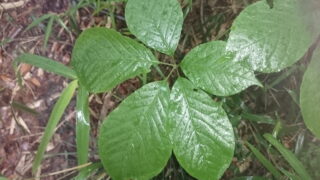
What are the differences between Aralia elata, Kalopanax septemlobus, Kalopanax septemlobus, and Aralia elata? We'll explain how to distinguish between similar species! What are their uses? What is the structure of their flowers and fruits?

Aralia cordata, Kalopanax septemlobus, Kalopanax septemlobus, and Aralia elata all belong to the Araliaceae family and are deciduous trees. Their inflorescences, flowers, and fruits are very similar, and their young leaves are edible. Therefore, they can sometimes be confused. However, you can distinguish them by checking whether the leaves are compound or simple, and by examining the thorns on the branches...
plant

What's the difference between rosemary and Westringia (Australian rosemary)? How is it different from lavender? We'll explain how to distinguish between similar species! Do bees love the flowers? Ants are both allies and enemies to the fruit!?

Rosemary (Rosemary) and Westringia (Australian rosemary) both belong to the mint family and have similar names. They are commonly planted in Japan as ornamental plants, and their leaves and flowers look quite similar. However, rosemary is native to Europe and North Africa, while Australian rosemary...
plant

What are the differences between Fraxinus lanuginosa, Fraxinus sieboldiana, and Fraxinus japonica? How do they differ from Fraxinus sieboldiana and Fraxinus japonica? We'll explain how to distinguish between similar species! Did the flowers use both wind and insects for pollination? What is the purpose of the wings on the fruit?

Fraxinus lanuginosa, Fraxinus sieboldiana, and Fraxinus japonica all belong to the genus Fraxinus in the family Oleaceae. They are very similar in that they have odd-pinnately compound leaves, and their leaf and flower shapes are particularly similar compared to other species in the Fraxinus genus. Therefore, it can sometimes be difficult to distinguish between them. What are Fraxinus lanuginosa and Fraxinus japonica...?.
plant

What's the difference between okra and tororo aoi (flower okra)? How to distinguish between similar species! What are the uses? Bees love the flowers! What happens to unripe okra if left unattended?

Okra and Abelmoschus manihot both belong to the Malvaceae family, and are used by humans due to the viscous nature of parts of their bodies. Morphologically, they share similarities: their leaves are palmate with 3-9 lobes, their flowers have a protruding "column" (a fused structure of stamens and pistils), and their corollas are white...
plant

What are the differences between gardenias and small gardenias? What are the varieties? How can you distinguish between similar species? What are the uses? Is the sweet scent due to hawk moths? What is the role of the fruit's pigments in nature?

Gardenias are indispensable plants to the Japanese people, both as wild plants, ornamental plants, and food additives. While there is a known variety called *Gardenia jasminoides* (small gardenia), both share similar flower shapes, opposite or whorled leaves, and are evergreen, with glossy leaves, entire margins, and typically pointed tips.
plant

What are the differences between Japanese pepper (Zanthoxylum piperitum), Chinese pepper (Zanthoxylum sibiricum), and Japanese pepper (Zanthoxylum ailanthoides)? We'll explain how to distinguish between similar species! What are their uses? What insects visit the flowers? Birds apparently love the seeds because they don't find them spicy!?

Japanese pepper (Zanthoxylum piperitum), Japanese sansho, and Japanese sansho are common species in Japan, and Japanese pepper in particular remains an essential ingredient in cooking today. All belong to the genus Zanthoxylum in the Rutaceae family, and are very similar in that they have many thorns all over the plant and odd-pinnately compound leaves consisting of an odd number of leaflets. Japanese pepper has a distinctive aroma...
plant

What are the differences between autumn olive, summer olive, Chinese olive, and white olive? Can they be eaten raw? Is the "sparkle" on the leaves to prevent drying? What insects visit the flowers? Are the sweet and sour fruits very popular in nature?

Autumn olive, summer olive, Chinese olive, and white olive are all members of the Elaeagnus genus in the Elaeagnaceae family. They can be found in various locations throughout Japan, including rivers, coastlines, and forests. Their leaves are covered in shimmering stellate or scale-like hairs, and they produce pale yellow flowers consisting only of a cylindrical calyx tube, lacking petals.
Sponsored Link