form

Sponsored Link
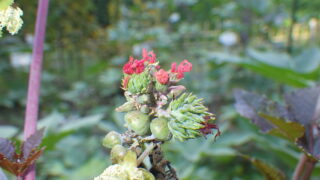
07.2088 Castor bean (female flower) plant

How toxic is castor bean? What are its components? What are the uses of castor oil? Why is it considered safe despite being toxic? Its flowers are pollinated by both wind and insects! Its seeds are dispersed automatically and by ants!

Castor bean is a perennial plant said to originate from northeastern Africa, cultivated worldwide for commercial and ornamental purposes, and sometimes naturalized. It's almost impossible to mistake it for anything else. Its seeds, called "himashi," are rich in oil, and the extracted "castor oil" is used in cosmetics, shampoos, soaps, and more...
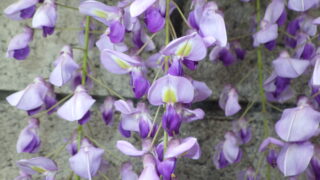
07.1510 Wisteria Flower plant

What are the differences between wisteria, mountain wisteria, and summer wisteria? We'll explain how to distinguish between similar species! Why is it so beloved by the Japanese? Were the flowers originally for bumblebees? Do wisteria pods pop and scatter?

Wisteria floribunda, mountain wisteria, and summer wisteria remain popular legumes, so much so that trellises are still provided for them. However, distinguishing between the three species can be difficult until you become familiar with them. Examining their flowering period and the direction in which their vines twine is crucial for identification. Wisteria has a long history, and is even mentioned in the oldest document in Japan, the "Kojiki," which dates back to the Nara period...
Macleaya Cordata Flower plant

What species are similar to Macleaya cordata? Is it toxic? What types of alkaloids does it contain? Is it medicinal? Did the flower's "petals" have been genetically altered to resemble "stamens"?

Macleaya cordata is a perennial herb that grows in wastelands and roadsides, and can occasionally be seen in urban areas. It belongs to the poppy family, and while no similar plants have been identified in Japan, several varieties are known, differing slightly in leaf morphology. The toxicity of Macleaya cordata is its most well-known characteristic; cutting the stem...
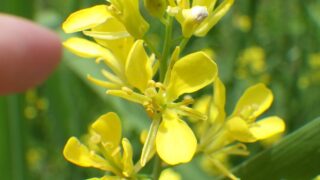
Brassica Juncea Flower plant

What are the differences between mustard greens, rapeseed, European rapeseed, and black mustard? How do their uses differ? Why did they evolve to be spicy? Brassica plants, essential for Japanese mustard and salad oil, have increased fruit production thanks to insect visits!

Brassica napus, rapeseed, European rapeseed, and black mustard are four species of yellow flowers that bloom in spring and belong to the Brassicaceae family. Their flower shapes are almost identical, and their habitats are also nearly the same. Furthermore, there are many closely related species, making identification extremely confusing. This complexity is such that even researchers sometimes misidentify them. Recent research has revealed...
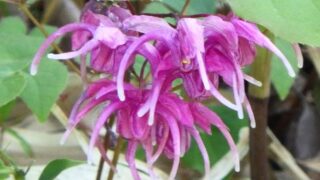
Epimedium Grandiflorum Var Thunbergianum Flower plant

What are the differences between Epimedium grandiflorum and Epimedium sempervirens? What are the different species in the Epimedium genus? Why do the flower shapes and colors differ depending on the species? What kinds of insects visit the flowers?

Both Epimedium grandiflorum and Epimedium sempervirens are wild species famous for their anchor-shaped flowers, and are also known as cultivated varieties due to their unique flower shapes. Because the differences are so subtle when focusing solely on flower shape, distinguishing them can be difficult. They rarely coexist in nature...
Clerodendrum Trichotomum Var Trichotomum Flower plant

What are the differences between Clerodendrum trichotomum, Clerodendrum sibiricum, Clerodendrum humile, and Clerodendrum sibiricum? We'll explain how to distinguish between similar species! Do the leaves really smell? Do the flowers rely on both moths and butterflies for pollination?

Clerodendrum trichotomum, named for the foul odor of its leaves, is a tree distributed in East Asia. Several varieties and closely related species are known. These can be distinguished mainly by the length of the stamens on the flowers and the amount and shape of the hairs on the leaves. While the leaves do have an odor, not everyone finds it smelly; some people may find it unpleasant...
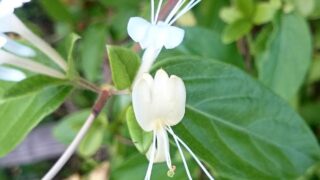
Lonicera Japonica Flower plant

What are the differences between honeysuckle, dwarf honeysuckle, beach honeysuckle, and golden honeysuckle? We'll explain how to distinguish between similar species! Why do their flowers have different shapes? Why do some bloom in the evening?

Japanese honeysuckle (Lonicera japonica) is the most common species in Japan, frequently found both in the wild and in gardens. Several closely related species are known, and four species—Japanese honeysuckle (Lonicera japonica), Japanese honeysuckle (Lonicera japonica var.
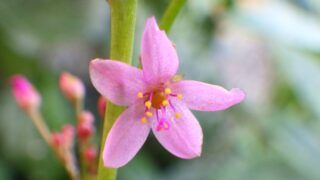
Talinum Paniculatum Flower plant

What are the differences between Portulaca grandiflora and Portulaca triangularis? How to distinguish between similar species! Where is it native? Why is it called "three o'clock grass"? There were hardly any insects visiting the flowers! Is it true that the fruit "bursts open" to scatter the seeds?

Portulaca grandiflora and Portulaca triangularis are two species of Portulaca grandiflora that produce pink flowers. Both are found in Japan as invasive species, either as cultivated plants or through escaped growth. Both species are native to the Americas. These two species differ in many ways, including the arrangement of the inflorescence, the presence or absence of ridges on the flower stalk, the size of the petals, and the shape of the stigma...
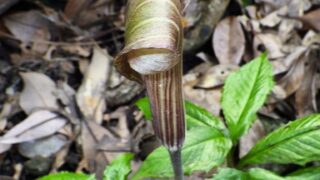
Arisaema Limbatum Spathe plant

What are the differences between Arisaema ringens, Arisaema serratum, and Arisaema serratum? The flowers have a terrifying life cycle: they trap fungus gnats for pollination! Are the fruits a favorite of birds?

Arisaema ringens, Arisaema serratum, and Arisaema serratum are representative species within the Arisaema genus. The Arisaema genus is extremely similar in shape, making it a difficult group to distinguish. Frankly speaking, distinguishing between species in the Arisaema genus is extremely difficult. Even in terms of classification, regional variations...
Acalypha Australis F Velutina Flower plant

What's the difference between Enokigusa and Enoki? We'll explain how to distinguish between similar species! What are Nagaba Enokigusa and Velvet Enokigusa? These unassuming flowers are pollinated in two ways!?

While *Enokigusa* (Japanese hackberry) is a common species found along roadsides and in fields in flat areas, those unfamiliar with it may easily confuse it with the Japanese hackberry (*Enoki*), as its name suggests. Although they share some similarities, such as leaf veins, serrations, and pointed tips, their classifications are fundamentally different, with a major difference being whether they are herbaceous or woody plants...
Sponsored Link