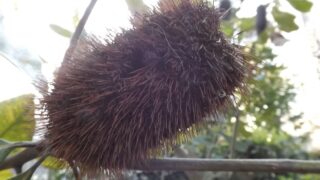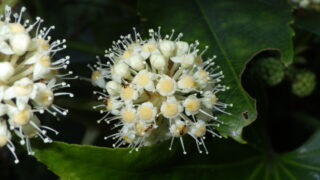
insect

Sponsored Link
07.4216 Fatsia japonica flower plant

What's the difference between Fatsia japonica and Fatsia japonica? We'll explain how to distinguish between similar species! The glossy leaves are actually a sunbathing spot for insects!?

Both Fatsia japonica and Fatsia japonica belong to the Araliaceae family and are evergreen trees most characterized by their large, palmately lobed leaves. Both can be observed both outdoors and in gardens. They share many other similarities, which can sometimes lead to confusion. However, distinguishing between them is relatively easy, based on leaf size, hairiness, etc.
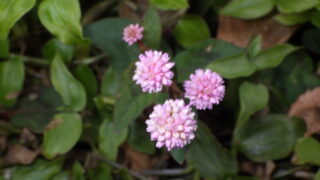
07.2679.a Polygonum capitatum flower plant

What are the differences between Polygonum capitatum and Polygonum capitatum? An explanation of how to distinguish between similar species.

Both Polygonum capitatum and Polygonum persicaria belong to the genus Polygonum in the family Polygonaceae. They are among the most common perennial herbs in the genus Polygonum, and Polygonum persicaria in particular can be found very commonly on the stone walls of houses in urban areas. While the genus Polygonum contains a vast number of species, these two species share morphological similarities...
07.3881 Giant ragweed (male flower) plant

What are the differences between ragweed and giant ragweed? What are the differences between goldenrod, goldenrod, and hawkweed? We'll explain how to distinguish between similar species.

Ragweed and giant ragweed are both annual weeds belonging to the genus Ragweed in the Asteraceae family, and are best known for causing "ragweed pollen allergy" in humans. This is because ragweed flowers are wind-pollinated, and to achieve this, the male and female flower heads are elongated...
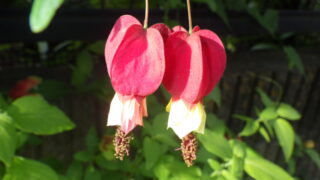
07.2463 Ukitsuriboku flower plant

There are differences between Abutilon and Abutilon humilis! What are the differences between Abutilon humilis and Abutilon variegata? We explain how to distinguish between similar species.

In horticulture, the term "Abutilon" is frequently used, usually referring to a specific species rather than just one. However, it's become somewhat confusing: in horticulture, it refers to three species—Abutilon humilis, Abutilon leucocephala, and Abutilon variegata—while in academic contexts, it refers to all members of the genus Abutilon, including Abutilon humilis and Abutilon leucocephala...
07.3874.a Galinsoga fragarioides (flower) plant

What's the difference between Galinsoga parviflora and Galinsoga stolonifera? We explain how to distinguish between similar species! Only hoverflies were visiting the flowers!? The seeds not only travel on the wind, but they also stick to surfaces!?

Both Galinsoga parviflora and Galinsoga stolonifera belong to the genus Galinsoga in the Asteraceae family. Although native to the Americas, they are now extremely common weeds in disturbed areas of Japan. The differences in the shape of their flowers are subtle from a distance, and it may be difficult to distinguish them if you only vaguely remember them. However...
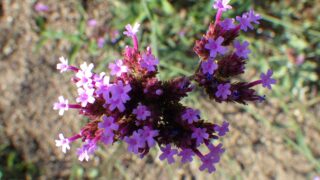
07.3664.a Willow flower 2 plant

What are the differences between Verbena bonariensis, Verbena bonariensis, Verbena bonariensis, and Verbena serrata? We explain how to distinguish between similar species! The length of the flower tube attracts different insects! Are the fruits dispersed by gravity?

Verbena bonariensis, Verbena bonariensis, Verbena bonariensis, and Verbena serrata all belong to the genus Verbena in the family Verbenaceae, and are a group within the genus Verbena that have undivided leaves. They generally have a stiff texture, ridged stems, and form dense inflorescences, and are commonly found along roadsides in urban areas...
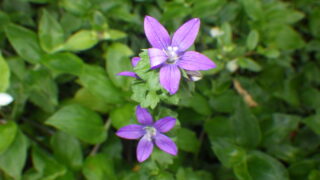
07.3718 Bellflower plant

What are the differences between Campanula punctata, Campanula punctata, and Campanula punctata? We'll explain how to distinguish between similar species! What role do "cleistogamous flowers" play? Did the fruit release seeds through holes?

Both Campanula punctata and Campanula punctata are annual plants native to North America, belonging to the Campanulaceae family and Campanula genus. In present-day Japan, they are naturalized species and frequently seen in urban areas. Because they grow in almost the same locations, and both have purple, five-lobed flowers at the top, distinguishing them in the wild can be difficult...
07.1439 Myriophyllum leaves Seed Plant Encyclopedia

[Seed Plant Encyclopedia #147] What are the species of the family Ophioglossaceae? Photo List

The family Haloragaceae consists of terrestrial or aquatic perennial herbs or shrubs. Leaves are opposite, whorled, or alternate. Flowers are bisexual or unisexual. Stipules are absent. The calyx tube is fused to the ovary, and there are 2-4 petals, or sometimes none. There are 2-8 stamens. The ovary is inferior. The fruit is a nut or drupe...
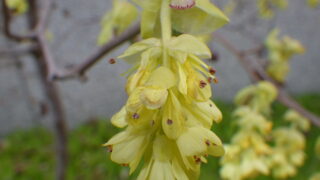
07.1342 Corylopsis spicata flower Seed Plant Encyclopedia

[Seed Plant Encyclopedia #137] What are the species of Hamamelidaceae? Photo List

The Hamamelidaceae family consists of deciduous or evergreen trees or shrubs, often covered in stellate hairs. Leaves are alternate, simple or palmate, and petiolate. They have deciduous stipules. Flowers are bisexual or unisexual, radially symmetrical, rarely bilaterally symmetrical, axillary, capitate, or conchoidal...
07.1323.c Swamp Banksia Flower Seed Plant Encyclopedia

[Seed Plant Encyclopedia #128] What are the species of the Proteaceae family? Photo list

The Proteaceae family consists entirely of evergreen plants, mostly woody, with some herbaceous. The flowers are bisexual, with a tubular perianth (without distinction between sepals and petals) that is four-lobed at the tip, each bearing a single stamen. The pistil is single, with a superior ovary, and develops into fruits such as nuts. The inflorescence is a raceme or spike...
Sponsored Link