Japanese holly (Ilex crenata) is well-known for being commonly cultivated in gardens as hedges, but it is originally a species that grows wild in Japan. Distinguishing it from other species is not difficult, as its leaves are distinctive, although the distinction is not particularly clear. However, there are many cultivated varieties, and distinguishing them can be a little difficult. This article will show how to distinguish between several cultivated varieties, focusing on Japanese holly (Ilex crenata) and Japanese holly (Ilex crenata var. japonica). They can mainly be distinguished by the way the leaves are arranged and shaped. It should be noted that it is a completely different plant from boxwood (Ilex crenata). Its flowers seem to be quite popular, with a large number of insects visiting them, both in terms of species and individual numbers. However, the reason for this is unknown due to insufficient research. Seed dispersal relies on birds, and it seems to be a popular food source for birds as well, but there is insufficient research on which birds prefer it and what nutrients it contains. This article will explain the classification, pollination ecology, and seed dispersal of Japanese holly.
- What are the differences between Ilex crenata, Buxus microphylla, Buxus microphylla, and Buxus sieboldiana?
- There are few research examples, but it seems to be very popular with various insects?
- Ilex crenata is black, spherical in shape, and its seeds are dispersed by birds.
- Are there any other similar species?
- References
- Source
What are the differences between Ilex crenata, Buxus microphylla, Buxus microphylla, and Buxus sieboldiana?
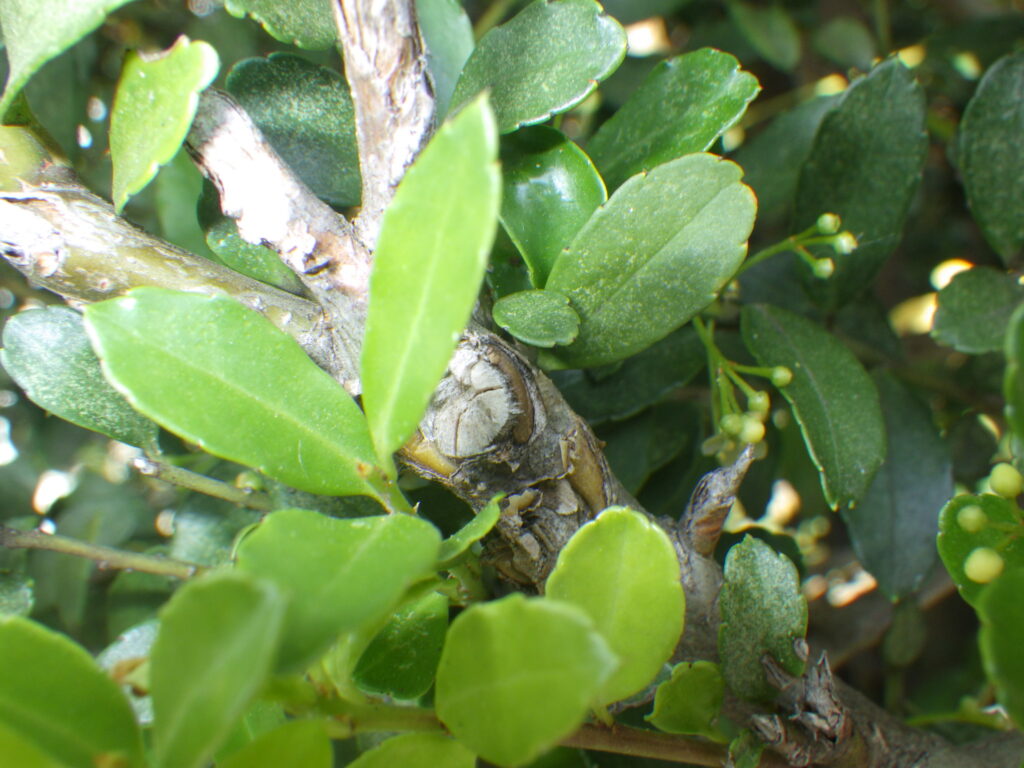
Ilex crenata var. crenata, also known as Japanese holly (Ilex crenata var. crenata), is an evergreen small tree distributed in Honshu (south of Iwate Prefecture), Shikoku, and Kyushu, and is widely found in secondary forests on hills and mountainous areas (Hayashi, 2014; Kanagawa Prefecture Flora Survey Association, 2018). It is also cultivated in gardens and cemeteries, and there are many varieties. It is dioecious, meaning it has separate male and female plants.
Although there are many species in the genus Ilex of the family Aquifoliaceae, which includes Japanese holly (Ilex crenata), there are no species that are difficult to distinguish from each other, except for the large-leaved holly (Ilex crenata var. crenata f. latifolia), which is common in warm coastal areas, and the rare Japanese holly (Ilex rugosa), which is common in forests, due to their small leaves.
However, since there are several horticultural varieties, it can be difficult to distinguish between them. In particular, we will explain how to distinguish between Kinnmetsuge (Golden-budded Boxwood) and Mametsuge (Bean Boxwood) f. bullata, which are frequently searched for.
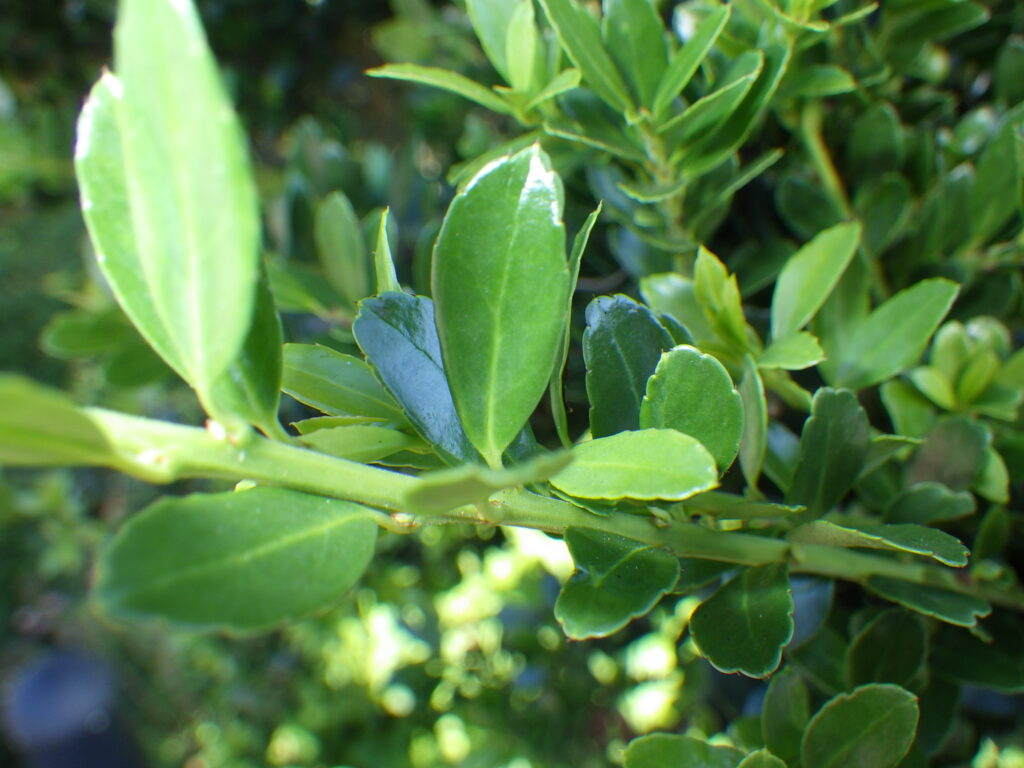
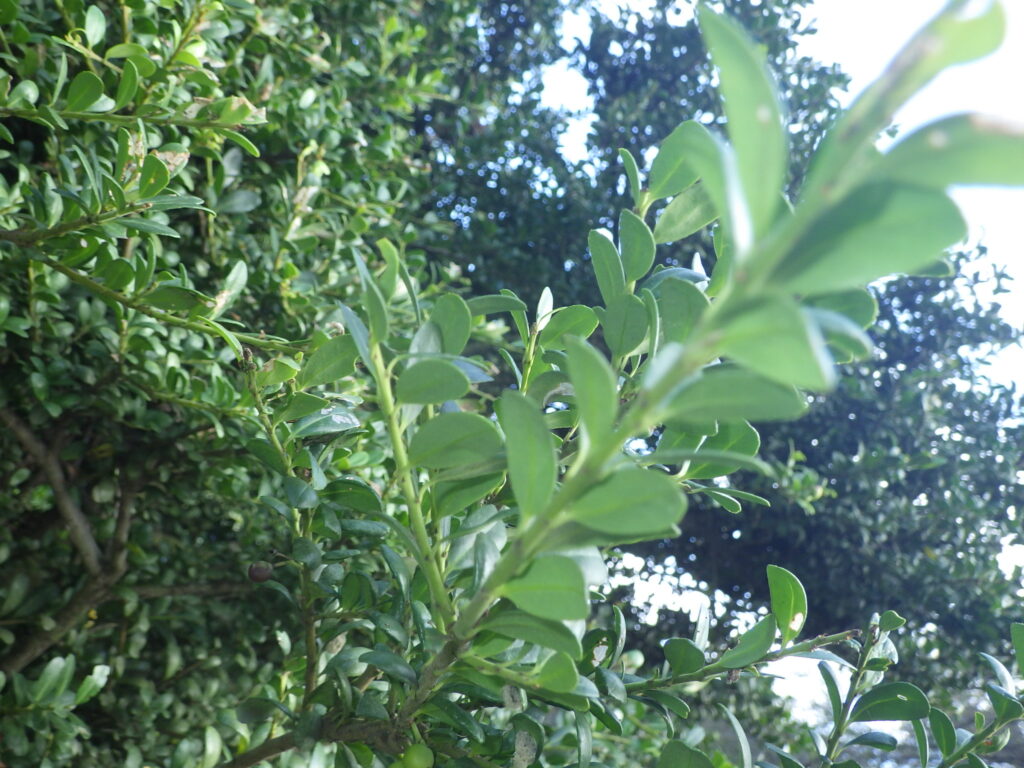
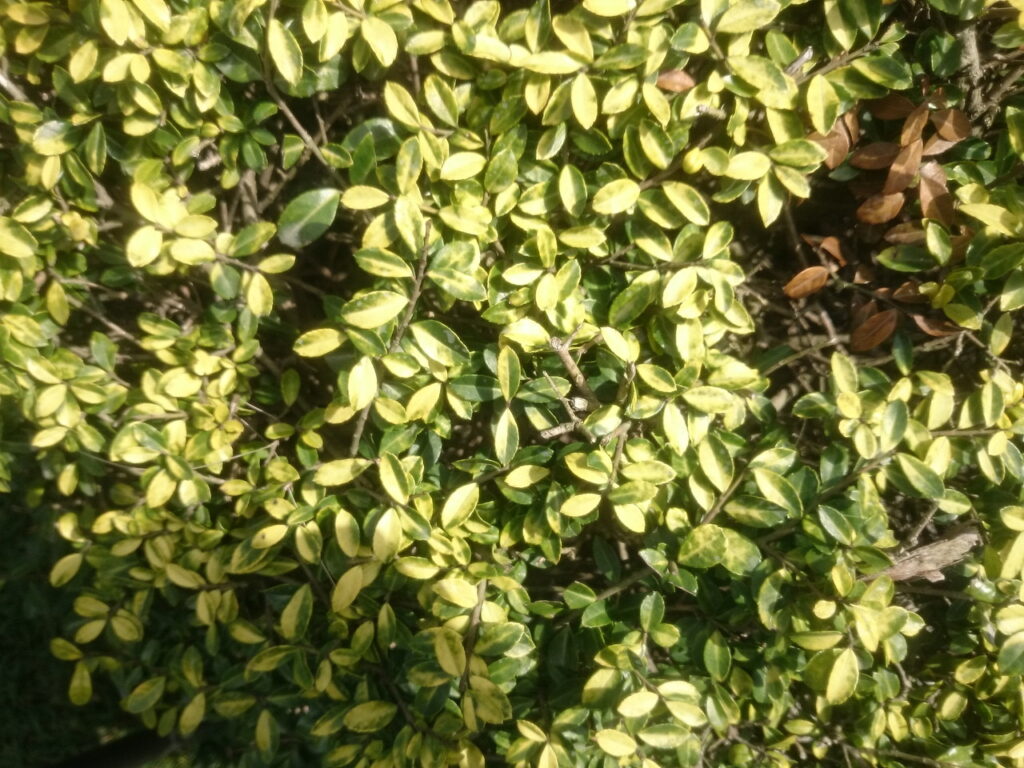
The main difference between Japanese holly and Japanese boxwood is that while the young leaves of Japanese holly are indistinguishable from mature leaves, the young leaves of Japanese boxwood are yellow. This is the most significant difference. However, once the young leaves are gone, it becomes difficult to distinguish between the two.
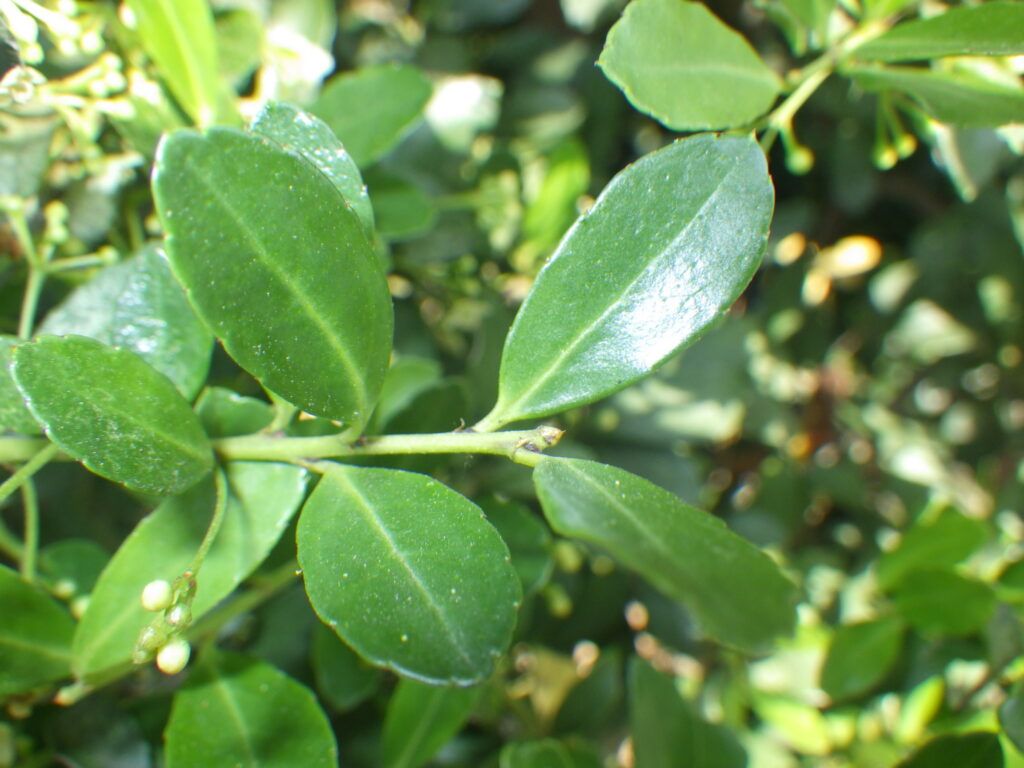
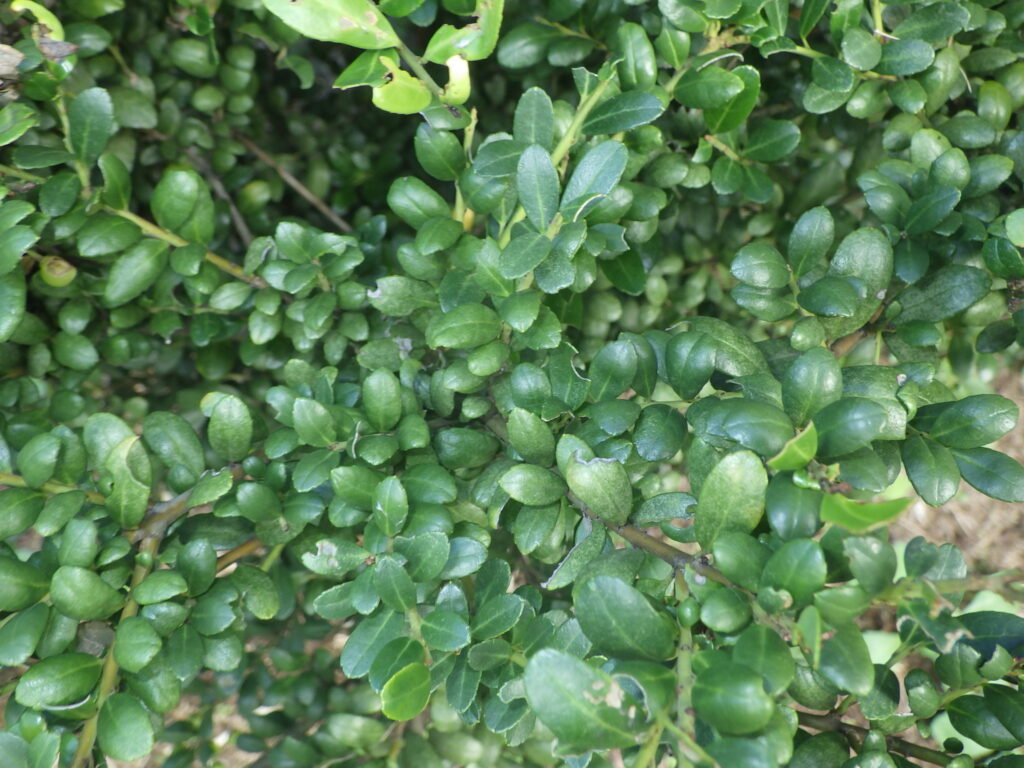
There are other differences between Japanese holly (Ilex crenata) and golden boxwood (Buxus microphyllus). Japanese holly has relatively few leaves and is sparse, while golden boxwood has relatively many leaves and appears dense from the outside. Also, Japanese holly has large, nearly oblong leaves, while golden boxwood has small, nearly circular leaves. This is probably because they were selected to have dense foliage for use as screens in horticulture.
There also seems to be a variety called Golden Gem, but while the leaves of the common boxwood (Buxus microphylla) return to their original color as it grows, the Golden Gem variety turns yellow-green when it matures.
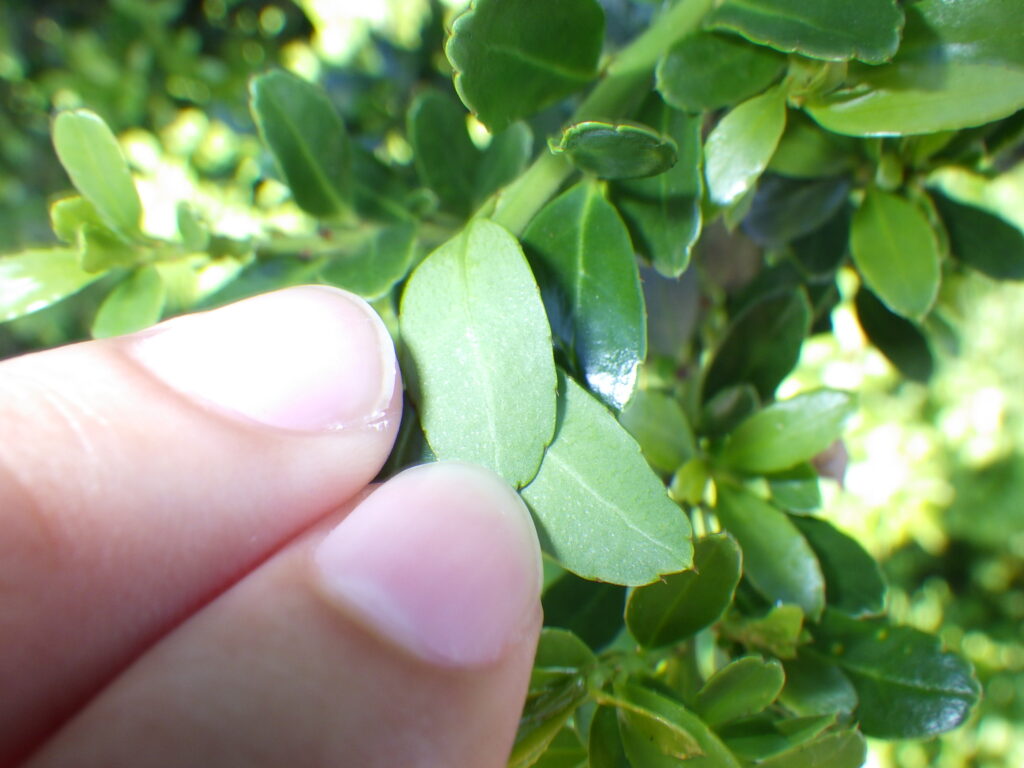
On the other hand, the difference with Japanese holly is that while Japanese holly has flat leaves with only slight bends along the main vein, Japanese holly has leaves that curve upwards. This should be easy to spot.
In addition to these, there are many other varieties, including Ilex crenata f. microphylla, Ilex crenata f. longifolia with linear-elliptical leaves, Ilex nummularia f. nummularia with tortoise-shell shaped leaves, and Ilex crenata f. watanabeana with yellow fruits.
The aforementioned Ilex crenata var. latifolia can be distinguished from Ilex crenata by its larger leaves, rounded leaf tips, serrated edges, and reddish-yellowish-green mature leaves. This characteristic is limited to the wild species.
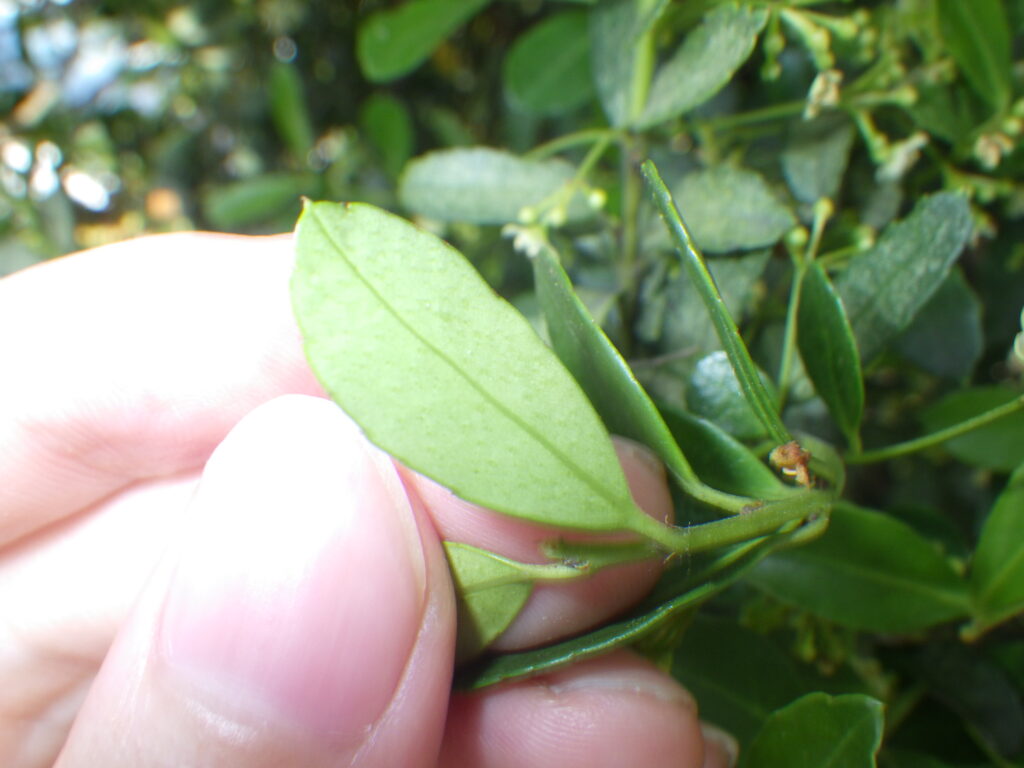
The Japanese holly (Ilex crenata) is named after the boxwood (Tsuga japonica), which belongs to the Buxaceae family and is a completely different classification. In Japanese holly, the leaves are alternate and have serrated edges, while in Japanese boxwood (Tsuga japonica), the leaves are opposite, entire, and have notched or rounded tips.
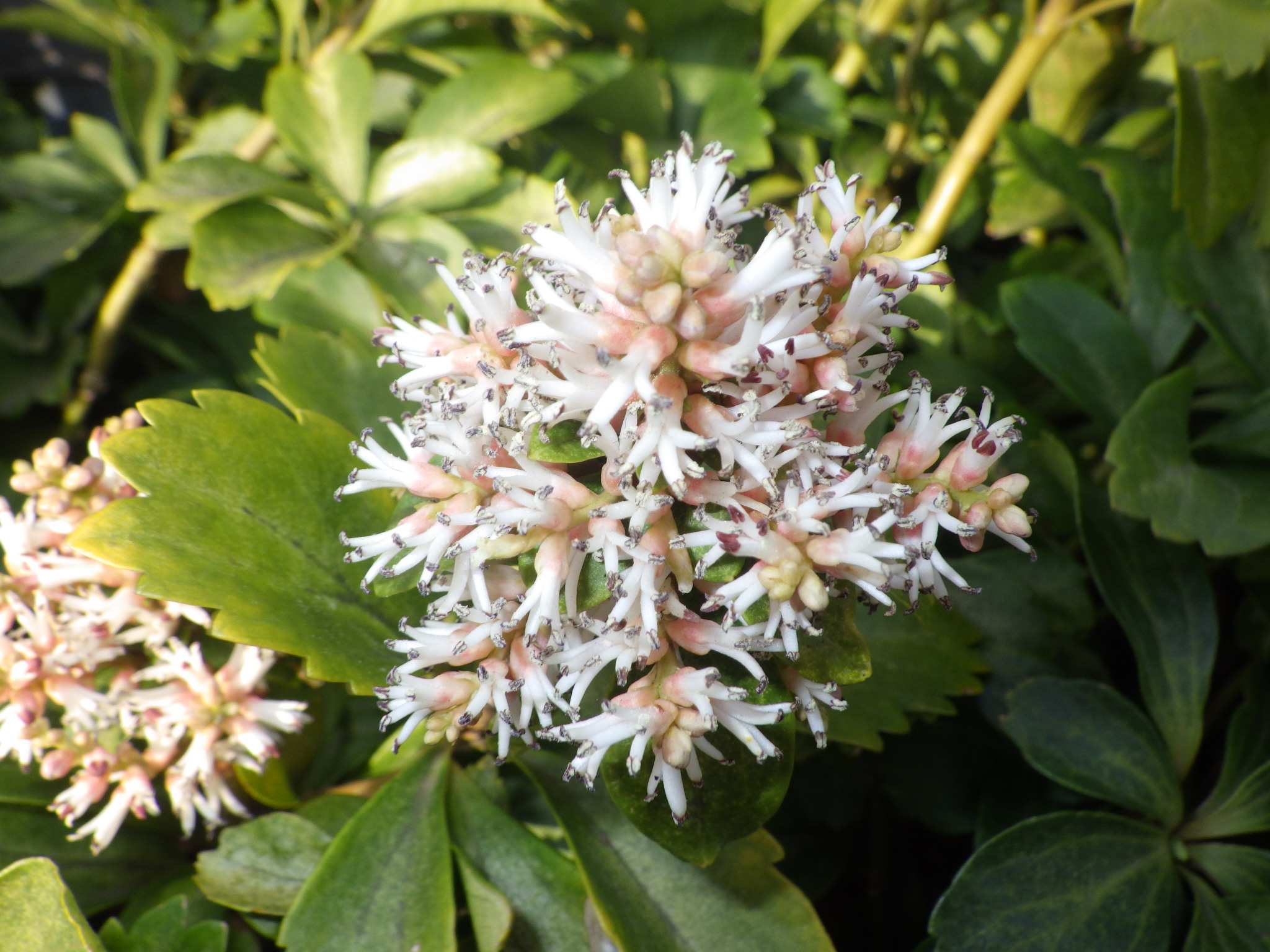

There are few research examples, but it seems to be very popular with various insects?
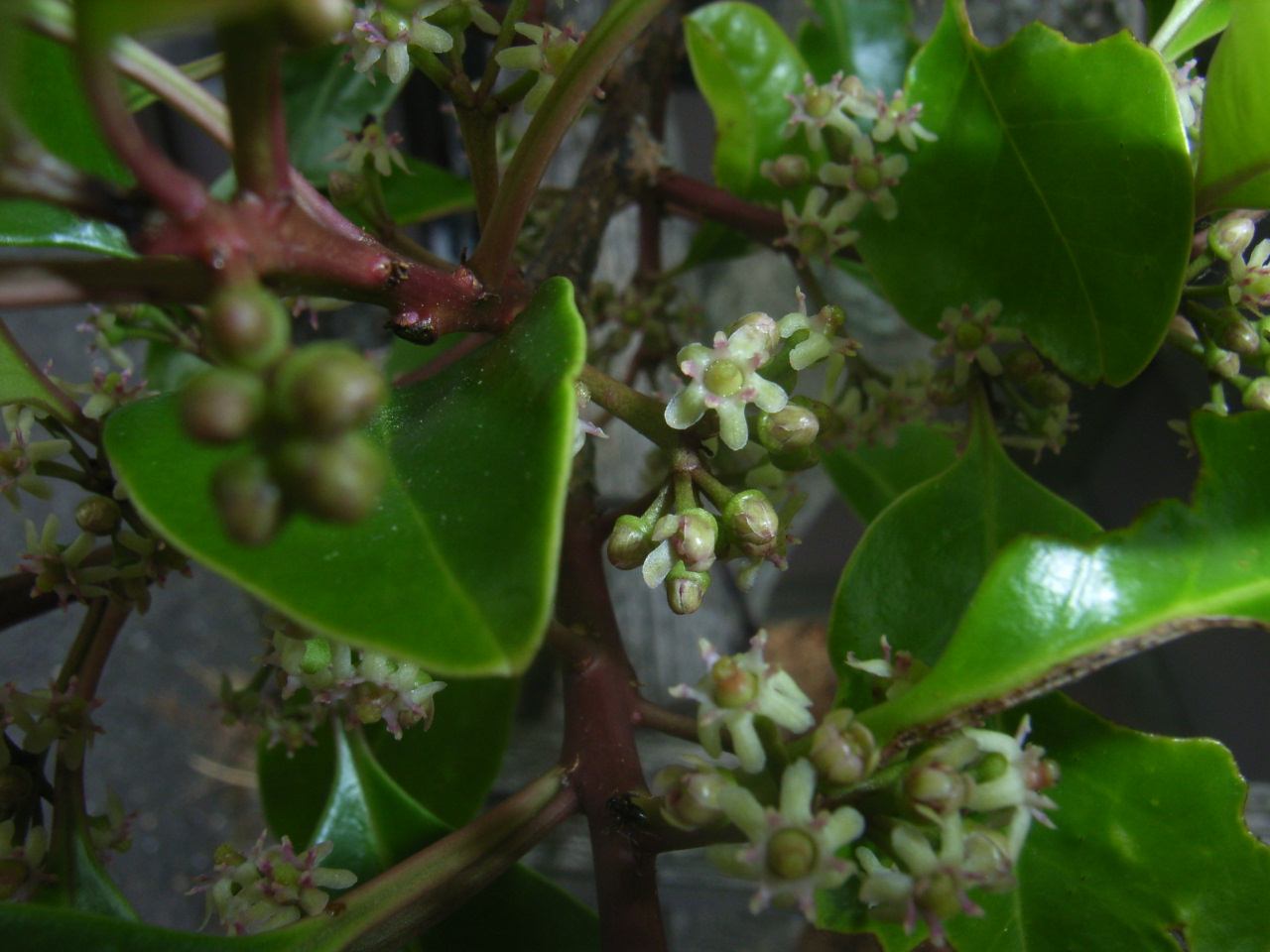
The flowering period is from June to July. Male plants produce male flowers consisting only of stamens, while female plants produce female flowers consisting only of pistils. The flowers are white, composed of four petals, and, as far as humans can see, they don't seem to have many distinctive features.

It's very inconspicuous and easily overlooked, but perhaps because it produces countless flowers, it seems to be quite popular with insects. Studies have recorded visits from Japanese honeybees, European honeybees, and the pale blue butterfly (Fujiwara & Yamaguchi, 2020; Nanba, 2020), but I've actually seen on the internet that it's visited by small ants, hoverflies, a species of blowfly, a small green flower beetle, and a species of click beetle. According to these reports, not only are many species attracted, but the number of individuals visiting is also large. A small species of thrips can be seen in this photograph. However, the reason for its popularity is unclear due to insufficient research. I hope for further research in the future.
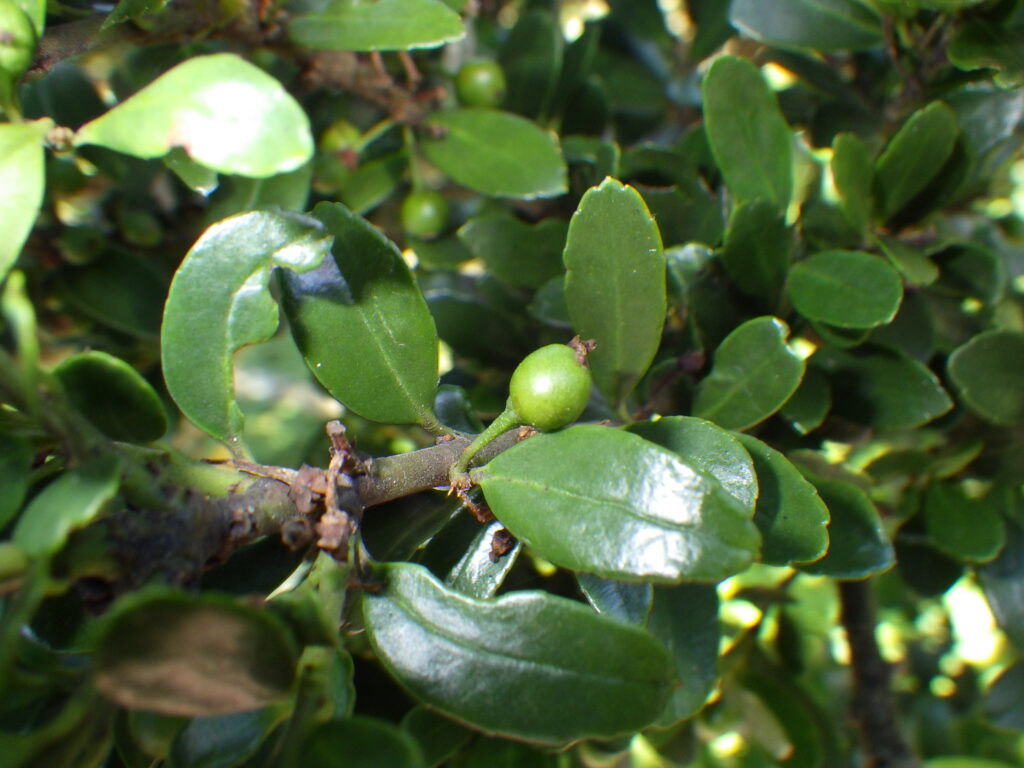
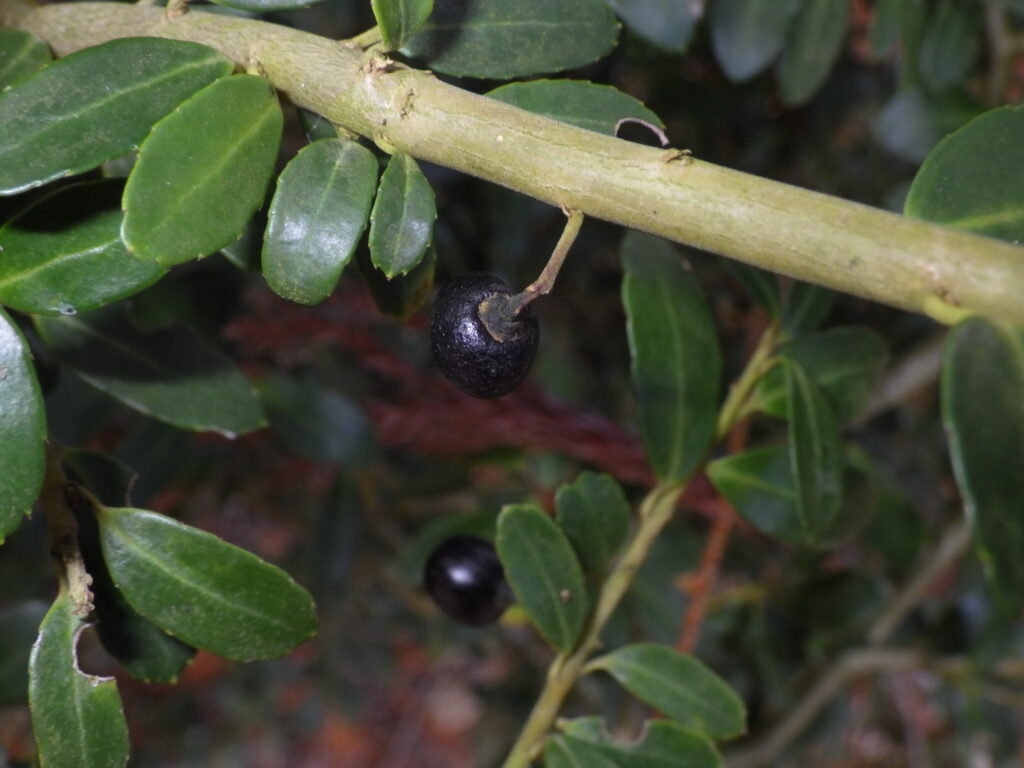
Ilex crenata is black, spherical in shape, and its seeds are dispersed by birds.
The fruit is black and spherical, and the seeds are dispersed by birds (Karasawa, 1978; Fujiwara and Yamaguchi, 2020).
A study conducted in urbanized areas of eastern Tokyo and western Chiba Prefecture investigated seeds contained in the droppings of fruit-eating birds (Karasawa, 1978). The results showed that among the eight species with an occurrence rate of 50% or higher and 50 or more specimens collected, Japanese holly (Ilex crenata) was included. Since this study included planted individuals in urban areas, it is unclear whether the results are similar in forests, but since young Japanese holly trees are certainly seen all over the forest, it seems certain that it is a favorite of birds.
However, this study did not clarify which specific birds prefer the fruit. Other observations have shown that pigeons, bulbuls, and thrushes eat it (Kanouchi, 2021), so it is possible that these birds are the main ones that eat the fruit and disperse the seeds.
However, it is unclear how the black, spherical shape of the fruit, unlike red fruit, affects birds' preferences. This is something we hope will be explored in future research.
Are there any other similar species?
Tsuruga is very similar to Ilex crenata, but it rarely grows in forests, its trunk creeps along the ground, and its leaves have a net-like pattern of wrinkles.
While there are many other species in the Ilex genus besides Ilex crenata, as mentioned above, their leaves are large and not very similar. Please check out the other article for more information.
References
Fujiwara, Ayumi & Yamaguchi, Kikuji. 2020. Seasonal changes in flowering plants at Miyagi Gakuin Women's University: A survey of honeybee nectar and pollen source plants on the university campus. Research Report of the Institute for Living Environment Sciences 52: 19-24. ISSN: 1346-6534, https://doi.org/10.20641/00000488
Hayashi, Masayuki. 2014. 1100 Tree Leaves Identified Through Real-Life Scans. Yama-kei Publishers, Tokyo. 759pp. ISBN: 9784635070324
Kanagawa Prefecture Flora Survey Association. 2018. Kanagawa Prefecture Flora 2018 (Electronic Edition). Kanagawa Prefecture Flora Survey Association, Odawara. 1803pp. ISBN: 9784991053726
Kanouchi, Takuya. 2021. Handbook of Wild Birds and Tree Nuts (Revised and Expanded Edition). Bun-ichi Sogo Shuppan, Tokyo. 104pp. ISBN: 9784829981672
Karasawa, Koichi. 1978. A study on the diet and seed dispersal of fruit-eating birds in urban areas. Birds 27(1): 1-20. https://doi.org/10.3838/jjo1915.27.1
Source
This article is a significantly expanded version of a piece originally published in the following book.