Hypericum patulum, Hypericum patulum, Hypericum humile (Hidcote), and Hypericum patulum are all evergreen shrubs belonging to the Hypericaceae family, genus Hypericum, and are cultivated in Japan for ornamental purposes. They are frequently seen in urban areas and are very popular for their yellow flowers, but distinguishing them at a glance is difficult. Hypericum patulum and Hypericum humile are especially often confused. However, these four species have clear differences and can be distinguished by carefully observing their leaves and flowers. The flowers have five petals, and although there is insufficient research on the yellow flowers, they are thought to be attracted to bees, especially honeybees. The flowers may seem simple, but they reflect ultraviolet light, making them appear in different colors to visiting insects. The fruit is a capsule, and the seeds are thought to be dispersed by gravity and wind. This article will explain the classification, morphology, pollination ecology, and seed dispersal of Hypericum patulum, Hypericum patulum, Hypericum humile, and Hypericum patulum.
- What are Hypericum patulum, Hypericum patulum, Hypericum humile (Hidcote), and Hypericum patulum?
- What are the differences between Hypericum patulum, Hypericum patulum, Hypericum humile (Hidcote), and Hypericum patulum?
- Are there any other similar species?
- What is the structure of a flower?
- How is pollination done?
- What is the structure of the fruit?
- What are the seed dispersal methods?
- References
What are Hypericum patulum, Hypericum patulum, Hypericum humile (Hidcote), and Hypericum patulum?
Hypericum patulum, also known as golden stye plum, is an evergreen shrub native to Sichuan Province, China, that grows in open forests, thickets, cliffs in valleys, and along roadsides (Wu et al., 2007). Currently, it is widely cultivated as an ornamental plant in southwestern China, Japan, India, and South Africa, and has become naturalized in some areas. In Honshu, Shikoku, and Kyushu in Japan, it can sometimes be found growing wild in damp, rocky areas in mountainous stream areas near populated areas. The Japanese name "Kinshibai" (金糸梅) comes from the fact that its stamens resemble golden threads, and it is said to resemble plum blossoms.
Hypericum monogynum, also known as 'Biyoyanagi' (meaning "beauty willow"), is an evergreen shrub native to southwestern China and Taiwan, growing on mountain slopes, roadsides, and in dry thickets (Wu et al., 2007). It is now widely cultivated as an ornamental plant in Japan, South Africa, East Asia, South Asia, Australia, Central America, Northern Europe, Western Europe, Mauritius, and the West Indies, and occasionally becomes naturalized in Japan.
Hypericum calycinum, also known as European gypsum, is a creeping evergreen shrub native to Bulgaria and Turkey, growing in wastelands, roadsides, open hillsides, and gravelly beaches (RBG Kew, 2023). It is now cultivated in Japan, Europe, the Caucasus, and New Zealand, and has also naturalized in some areas.
Hypericum x hidcoteense, also known as Hypericum 'Hidcote', is an evergreen shrub that is a hybrid of Hypericum patulum and H. x cyathiflorum (Maggi et al., 2008). H. x cyathiflorum is a hybrid of Hypericum hookerianum and H. addingtonii. It is frequently cultivated in Japan for ornamental purposes. In Japan, its scientific name is sometimes given as Hypericum 'Hidcote', but the above scientific name is adopted in 'Plants of the World Online', so we will follow that here (RBG Kew, 2023). It has also been given as Hypericum patulum 'Hidcote', but this is considered a clear mistake as it is not a horticultural variety of Hypericum patulum. Furthermore, regarding alternative names, the scientific name is in Latin, so the correct pronunciation is actually "Hypericum hidcote," but "Hypericum hidcote" has become established. There is also the spelling "Hidecote." To avoid confusion, we will refer to it as Tairin-kinshibai from now on. Tairin means "large flower" in kanji.
Both belong to the Hypericum genus of the Hypericaceae family and are evergreen shrubs cultivated in Japan for ornamental purposes. They are frequently seen in urban areas and are very popular for their opposite, entire leaves with almost no petioles and yellow flowers, but distinguishing them at a glance is difficult. In particular, Hypericum patulum and Hypericum sieboldii were once considered the same as Hypericum patulum, as mentioned above, and even today, some websites still contain incorrect descriptions.
Since Hypericum patulum is relatively rare, it is likely to be confused with Hypericum patulum, which has a similar flower shape, and therefore overlooked.
What are the differences between Hypericum patulum, Hypericum patulum, Hypericum humile (Hidcote), and Hypericum patulum?
However, there are clear differences among these four species (Wu et al., 2007; Heenan, 2014; Kanagawa Prefecture Flora Survey Association, 2018; Hayashi, 2019). First, let's look at the leaves.
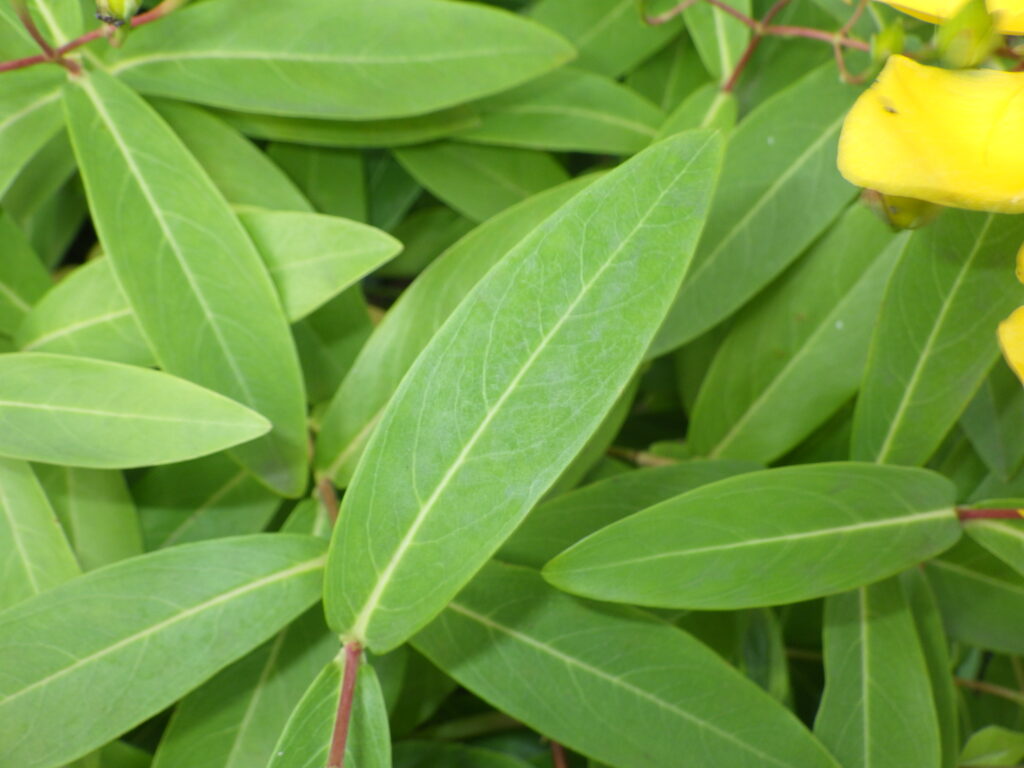
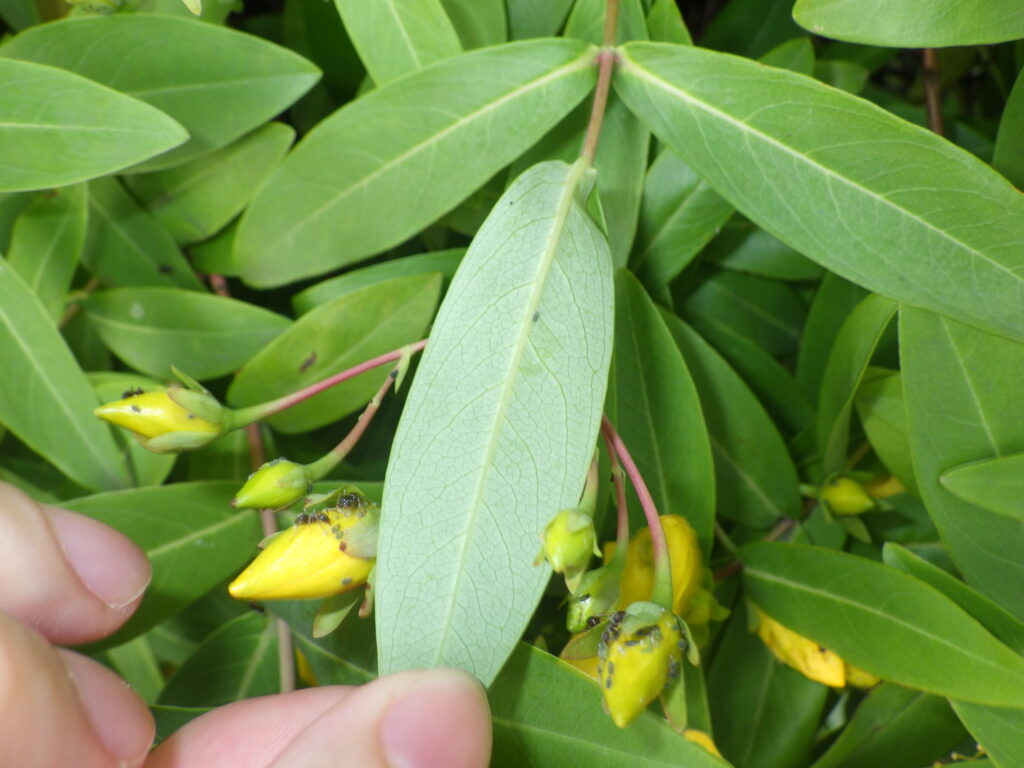
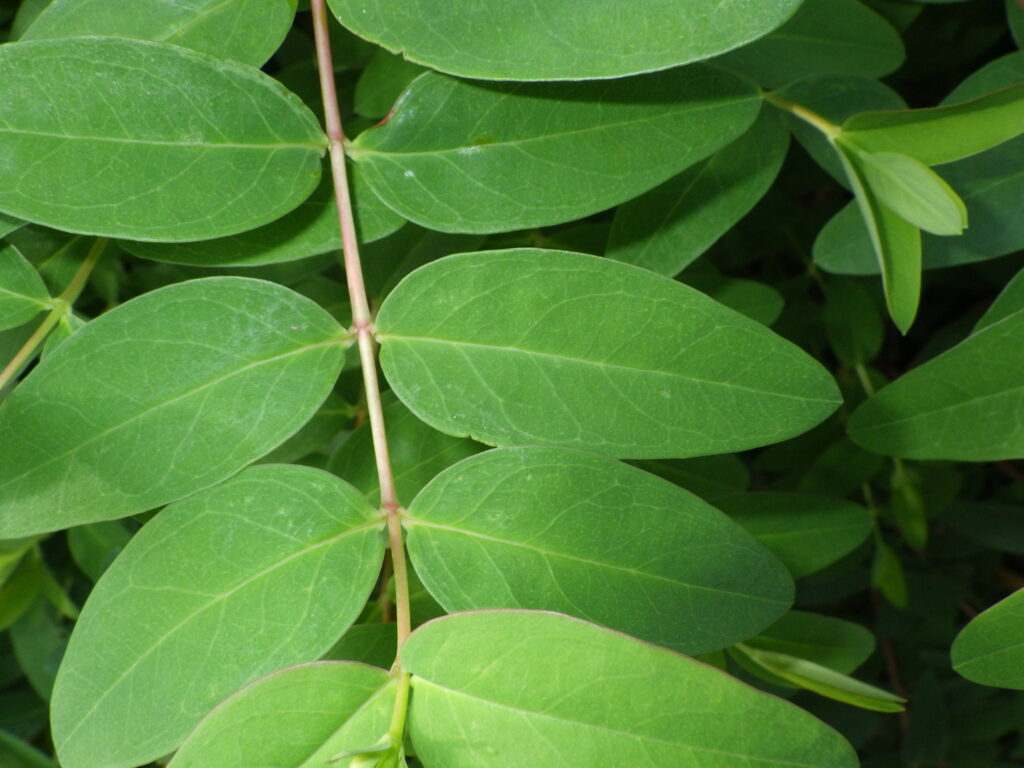
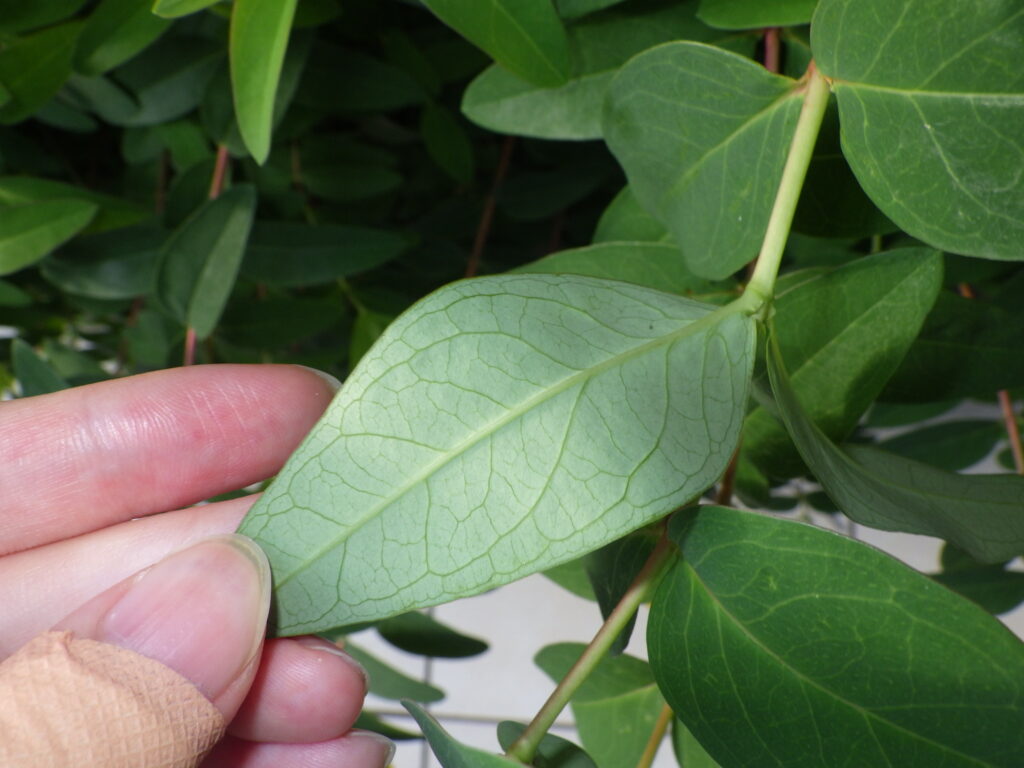
In Hypericum patulum, the leaves are arranged flat, and the underside is mostly powdery white with almost no visible veins. In contrast, in other species such as Hypericum patulum, Hypericum patulum, and Hypericum sieboldii, the leaves are arranged at different angles at each node, and although the underside is powdery white, the veins are visible.
Regarding the remaining three species, Hypericum patulum has oval to lanceolate leaves with relatively pointed tips, while Hypericum patulum and Hypericum sempervirens have oval to ovate leaves with relatively rounded tips.
Regarding Hypericum patulum and Hypericum patulum, Hypericum patulum does not have any special coloration on the leaf margins, and the leaf veins are clearly visible down to the fine lateral veins, whereas Hypericum patulum has red leaf margins, and although the lateral veins are visible, the finer details are not.
While the leaves also have distinctive features, distinguishing them solely by their leaves might be difficult. There are also differences in the flowers.
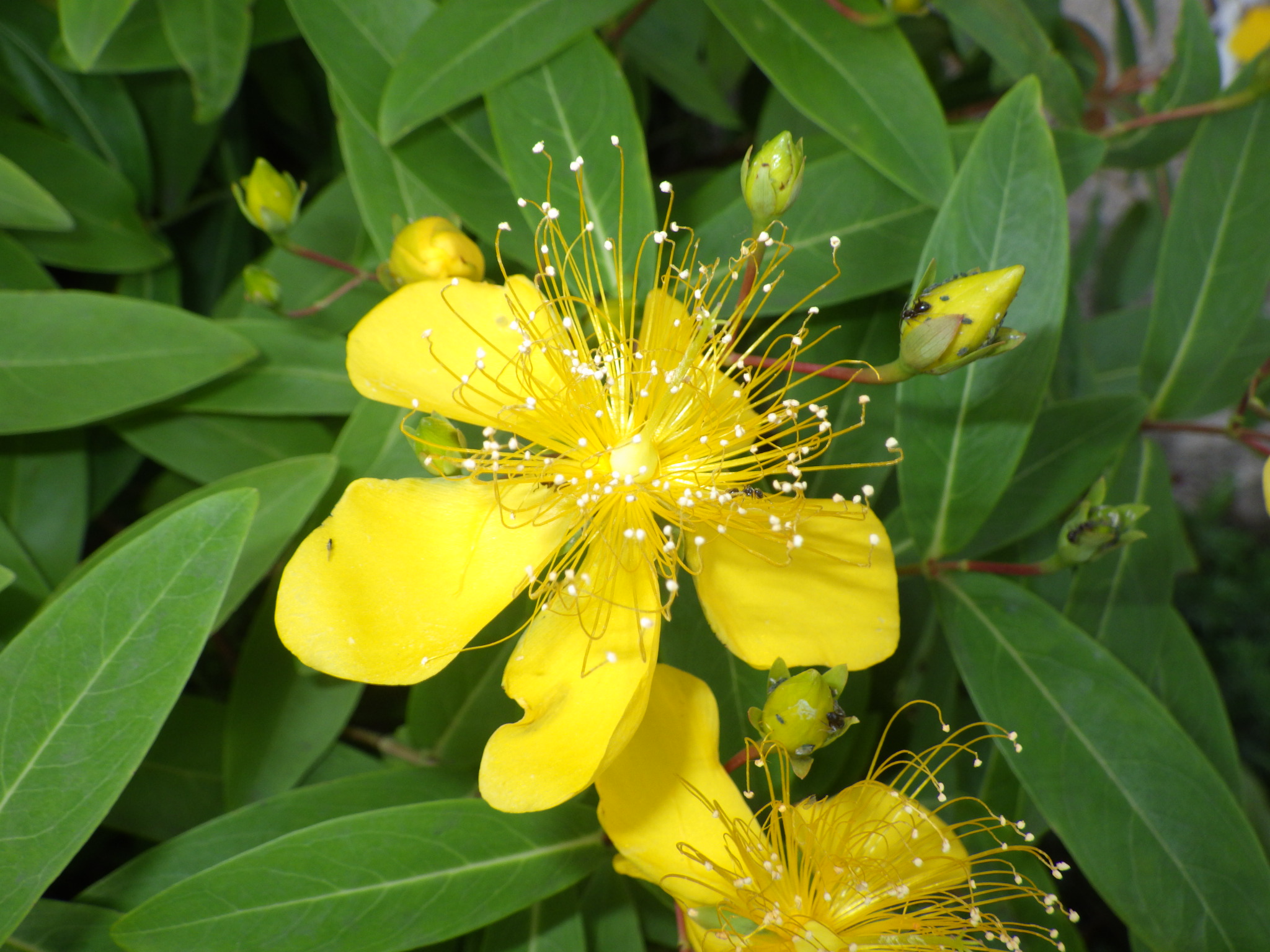
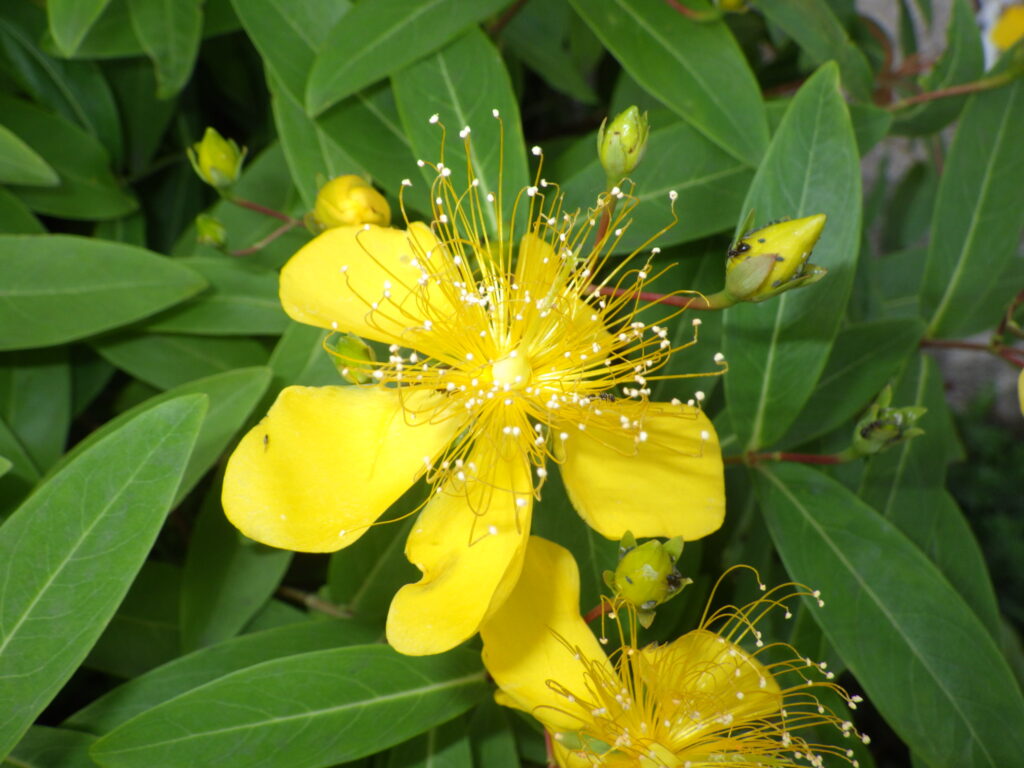
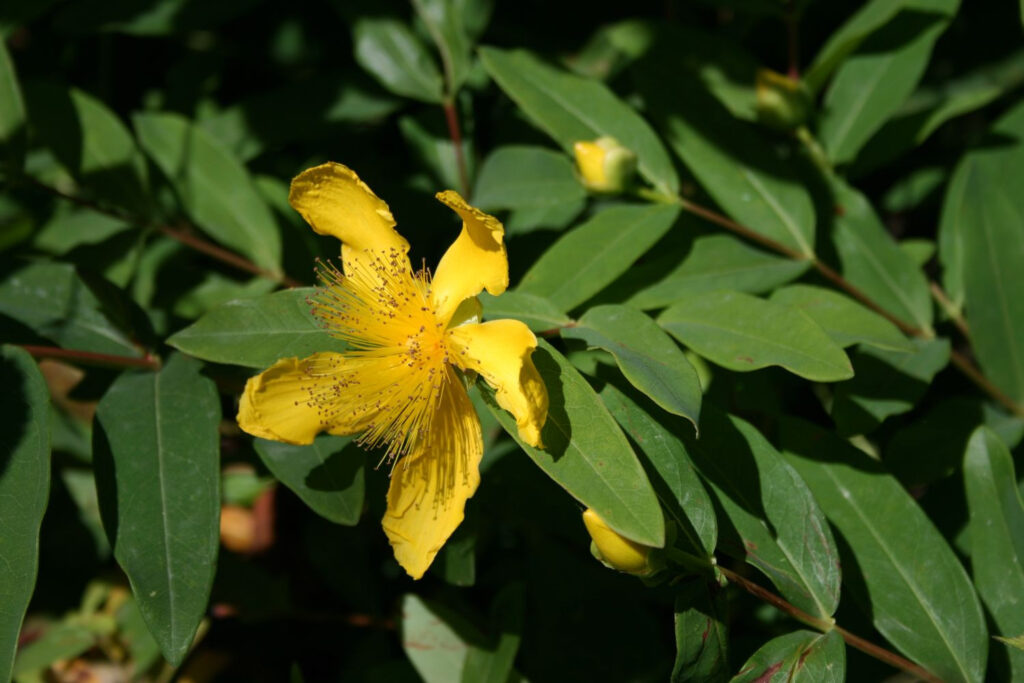
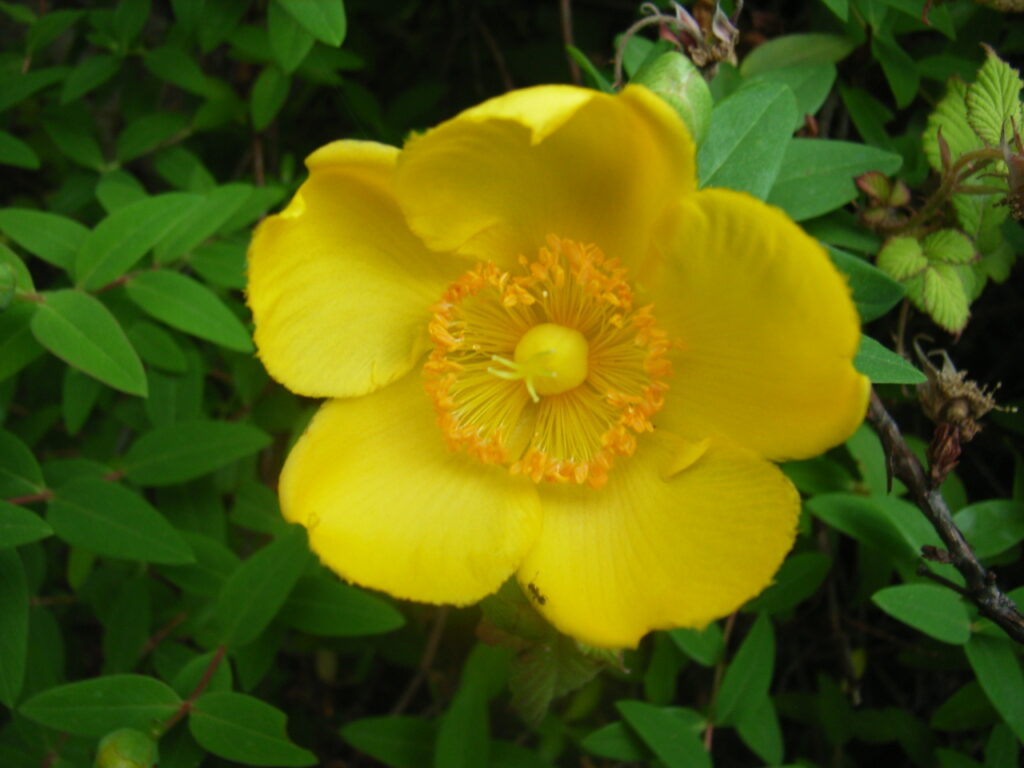
In Hypericum patulum and Hypericum patulum var. sieboldianum, the stamens are clearly shorter, measuring less than 9 mm, while in Hypericum patulum and Hypericum patulum var. sieboldianum, the stamens are clearly longer, measuring 17-30 mm.
Regarding Hypericum patulum and Hypericum patulum var. spp., the difference is that Hypericum patulum has small, unincised petals that form a cup shape and do not fully open, while Hypericum patulum var. spp. has large, incised petals that open completely flat.
Regarding Hypericum patulum and Hypericum patulum, the difference is that in Hypericum patulum, the anthers (the tips that release pollen) of the stamens are yellow, while in Hypericum patulum, the anthers are orange to red.
I believe you will definitely be able to distinguish them using the above information.



Are there any other similar species?
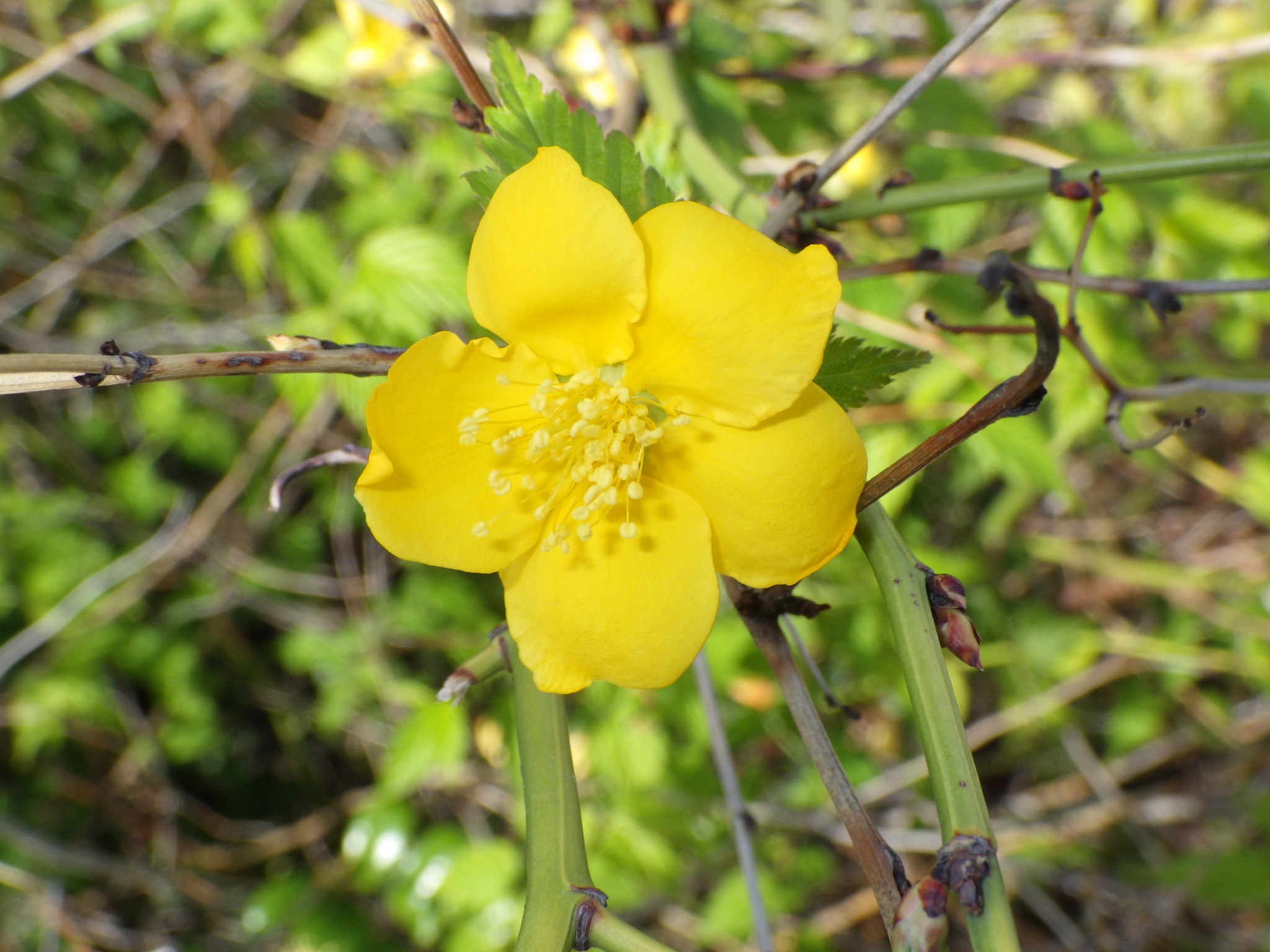
The difference between Hypericum patulum and Kerria japonica (a member of the rose family) also seems to be a frequently searched topic. Please see our separate article for details on this difference.
What is the structure of a flower?
In the Hypericum genus, flowers are commonly arranged in cymose inflorescences, with a deeply five-lobed calyx and five yellow, overlapping petals. The four species listed here have particularly large corollas within the Hypericum genus.
Hypericum patulum blooms from May to July. Each inflorescence bears 1 to 15 flowers. The pedicels are 2 to 4 (up to 7) mm long. The flowers are 2.5 to 4 cm in diameter and deeply cup-shaped. The sepals are 5 to 10 mm long. The petals are 1.2 to 1.8 cm long and 1 to 1.4 cm wide, 1.5 to 2 times the length of the sepals. There are 50 to 70 stamens in a bundle, the longest being 7 to 12 mm, 0.4 to 0.5 times the length of the petals. The ovary is 5 to 6 mm long and 3.5 to 4 mm wide. The style is 4 to 5.5 mm long, 0.75 to 0.95 times the length of the ovary.
Hypericum patulum blooms from May to July. The inflorescence has 1 to 15 (up to 30) flowers. The pedicels are 0.8 to 2.8 (up to 5) cm long. The flowers are 3 to 6.5 cm in diameter. The sepals are 4.5 to 13 mm long and 1.5 to 6 mm wide. The petals are golden yellow to lemon yellow, 2 to 3.4 cm long and 1 to 2 cm wide, 2.5 to 4.5 times the length of the sepals, entire, and without glandular dots. The stamens are in bundles of 5, each containing 25 to 35 stamens. The stamens are longer than the petals, with the longest stamens measuring 1.8 to 3.2 cm. The ovary is 2.5 to 5 mm long and 2.5 to 3 mm wide. The style is 1.2 to 2 cm long, 3.5 to 5 times the length of the ovary.
Hypericum patulum blooms from June to July. It has five petals, 25-40mm long, that open wide. The stamens, numbering 90-120 per cluster, are longer than the petals and quite conspicuous. The anthers are reddish. The style is 12-20mm long.
Hypericum patulum blooms from May to July. The petals open at a wide angle, almost flat, and usually have shallow notches at the tips. There are many stamens, and they are shorter than half the length of the petals.
How is pollination done?
The conspicuous yellow flowers are clearly insect-pollinated, but there is little research on the specific pollinating insects that visit these four species.
I could not find any research on Hypericum patulum.
A study conducted in Nara Prefecture recorded that 25 Japanese honeybees and 3 European honeybees visited Hypericum patulum within a 10-minute period (Tatsuno & Osawa, 2016). However, this study did not record all insects that visited Hypericum patulum, so it is unclear whether only honeybees visit it. Nevertheless, it seems to be a popular plant among honeybees.
A study conducted in Nara Prefecture on Hypericum patulum showed that over 90% of visitors were bees, with only a small number of hoverflies (Yokoi et al., 2008). Another study conducted in Miyagi Prefecture recorded, although qualitatively, the presence of European honeybees (Fujiwara and Yamaguchi, 2020). It should be noted that these studies used the term "Hypericum patulum," but it is likely that they were referring to Hypericum patulum.
While I couldn't find any studies that directly observed pollinating insects in Hypericum patulum, there is a related study (Gronquist et al., 2001).
While the flowers of Hypericum patulum appear uniformly yellow to humans, they possess "ultraviolet light" that is visible to pollinating insects such as honeybees, meaning that insects perceive them differently.
This "ultraviolet color" is produced by two pigments: flavonoids and dearomatized isoprenylated phloroglucinol (DIP). Flavonoids function as ultraviolet pigments in the petals, while DIP is present in high concentrations in the anthers and ovary walls of the flower, attracting pollinating insects. Experiments have shown that it also provides resistance and toxicity to the larvae (caterpillars) of Utetheisa ornatrix, a close relative of the moth Utetheisa ornatrix, thus providing a defensive function.
It's interesting that it possesses two functions, but currently it's unknown whether the same substance exists in other species of the Hypericum genus. It seems likely that honeybees also visit Hypericum patulum, but again, the proportion of honeybees among all pollinating insects is unknown.
In summary, it seems that bees, especially honeybees, are attracted to this substance, but we look forward to further research.
What is the structure of the fruit?
The fruits of the Hypericaceae family are usually capsules. A capsule is a type of dry fruit (dry fruit) in which a single fruit consists of multiple fused, sac-like pericarps.
The capsules of Hypericum patulum are 0.9–1.1 cm long and 8–10 mm wide. The seeds are 1–1.2 mm long and dark brown.
The capsules of Hypericum patulum are 6-10 mm long and 4-7 mm wide. The seeds are dark reddish-brown and about 2 mm long.
The capsules of Hypericum patulum are 10-20 mm long and oval-shaped. The seeds are reddish-brown, 1.5-2 mm long, and have a reticulate surface.
The capsules of Hypericum patulum are about 1 cm long.
What are the seed dispersal methods?
The capsule dries out when ripe, releasing the seeds from within. Gravity dispersal occurs to some extent, but since the seeds are very small, wind dispersal probably also occurs frequently, although there is no research on this.
However, other studies of the Hypericum genus suggest that in Hypericum perforatum, most seeds fall near the parent plant, and the maximum distance dispersed by wind is estimated to be around 10m per year (Harris & Gill, 1997). H. canariense and H. balearicum are also believed to be wind-dispersed (Seguí et al., 2021; Afonso et al., 2022).
References
Afonso, L., Esler, K., Gaertner, M., & Geerts, S. 2022. The invasive alien Hypericum canariense in South Africa: Management, cost, and eradication feasibility. South African Journal of Botany 146: 685-694. https://doi.org/10.1016/j.sajb.2021.11.032
Fujiwara, Ayumi & Yamaguchi, Kikuji. 2020. Seasonal changes in flowering plants at Miyagi Gakuin Women's University: A survey of honeybee nectar and pollen source plants on the university campus. Research Report of the Institute for Living Environment Sciences 52: 19-24. ISSN: 1346-6534, https://doi.org/10.20641/00000488
Gronquist, M., Bezzerides, A., Attygalle, A., Meinwald, J., Eisner, M., & Eisner, T. 2001. Attractive and defensive functions of the ultraviolet pigments of a flower (Hypericum calycinum). Proceedings of the National Academy of Sciences 98(24): 13745-13750. https://doi.org/10.1073/pnas.231471698
Harris, JA, & Gill, AM 1997. History of the introduction and spread of St. John's wort (Hypericum perforatum L.) in Australia. Plant Protection Quarterly 12(2): 52-56. https://caws.org.nz/PPQ1112/PPQ12-2pp052-56Harris.pdf
Hayashi, Masayuki. 2019. Tree Leaves: Expanded and Revised Edition - Identifying 1300 Species Through Real-Life Scans. Yama-kei Publishers, Tokyo. 824pp. ISBN: 9784635070447
Heenan, PB 2014. Hypericaceae. In: I. Breitwieser, PJ Brownsey, PB Heenan, & AD Wilton (Eds.), Flora of New Zealand – Seed Plants. Fascicle 1. Manaaki Whenua Press. ISBN: 9780478347630, https://doi.org/10.7931/J2MW2F2B, https://www.nzflora.info/factsheet/taxon/Hypericum-calycinum.html
Kanagawa Prefecture Flora Survey Association. 2018. Kanagawa Prefecture Flora 2018 (Electronic Edition). Kanagawa Prefecture Flora Survey Association, Odawara. 1803pp. ISBN: 9784991053726
Maggi, F., Tirillini, B., Vittori, S., Sagratini, G., Ricciutelli, M., & Papa, F. 2008. Essential oil composition of Hypericum 'Hidcote'. Journal of Essential Oil Research 20(6): 539-541. https://doi.org/10.1080/10412905.2008.9700083
RBG Kew. 2023. The International Plant Names Index and World Checklist of Vascular Plants. Plants of the World Online. http://www.ipni.org and https://powo.science.kew.org/
Seguí, N., Jiménez, MA, & Cursach, J. 2021. Local conditions effects on seed germination of Hypericum balearicum L. in response to temperature. Flora 282: 151896. https://doi.org/10.1016/j.flora.2021.151896
Tatsuno, M., & Osawa, N. 2016. Flower visitation patterns of the coexisting honey bees Apis cerana japonica and Apis mellifera (Hymenoptera: Apidae). Entomological Science 19(3): 255-267. https://doi.org/10.1111/ens.12206
Yokoi, Tomoyuki; Habe, Akifumi; Katori, Ikuo; and Sakuraya, Yasuyuki. 2008. Diversity of pollinating insect communities at Kinki University Nara Campus. Kinki University Faculty of Agriculture Bulletin 41: 77-94. ISSN: 0453-8889, http://id.nii.ac.jp/1391/00005214/
Wu, ZY, Raven, PH & Hong, DY (Eds.). 2007. Flora of China (Vol. 13 Clusiaceae through Araliaceae). Science Press, Beijing, and Missouri Botanical Garden Press, St. Louis. ISBN: 9781930723597